
 en
en
 Español
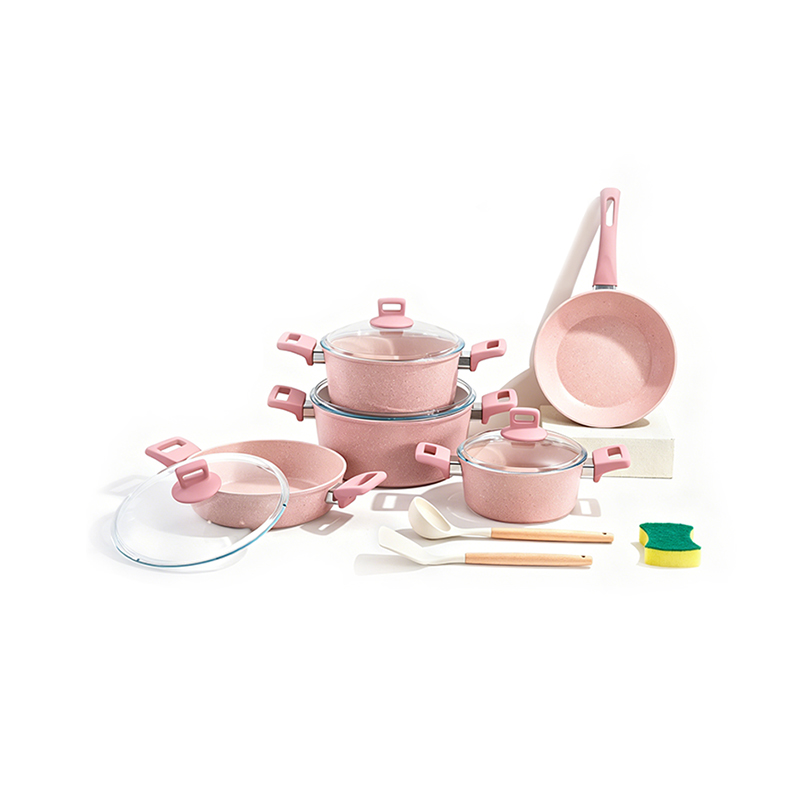
This cookware set features a non-stick coating, even heat conduction, and multi-...
See Details
Are Shared Lids Changing the Way Cookware Sets Are Designed
Date:Oct 02, 2026
Cookware sets have traditionally included a dedicated lid for each covered pot or pan. That approach is straightforward, but it can create a storage problem as the number of pieces increases. Different lid diameters, handles, and shapes quickly occupy valuable cabinet space. Recent cookware designs are moving toward interchangeable and universal lids, creating a different approach to how a Cookware Set With Lids can be structured.
Some current sets already use shared tempered-glass lids across multiple cookware bodies. Other products use universal lids designed to cover several diameter ranges. Meyer, for example, offers universal lids covering cookware from approximately 6.25 to 11 inches across three lid sizes.
One Lid Can Serve Several Cookware Pieces
The basic idea is simple: cookware pieces with compatible rim diameters can share the same lid. A 24 cm saucepan and a similarly sized sauté pan may not need separate covers, provided their rim dimensions and profiles support the same lid.
- Matching diameter: The lid needs to sit securely around the cookware rim.
- Compatible rim profile: Similar rim geometry helps maintain a stable fit.
- Suitable depth: A lid design needs enough clearance for different cookware shapes.
- Stable handle: The knob or handle should remain easy to grip during repeated use.
Some commercial sets take this concept further. Gotham Steel's StackMaster cookware uses interchangeable tempered-glass lids across saucepans, stockpots, fry pans, and skillets.
Shared Lids Can Change How Sets Are Planned
A shared-lid concept affects more than the lid itself. Designers can create cookware bodies around several standardized diameter groups rather than giving every vessel a completely independent cover.
That approach can influence the overall structure of a Cookware Set With Lids. Instead of six cookware bodies requiring six different lids, a collection might use three lid sizes across six vessels. All-Clad's D3 Everyday cookware, for example, specifically highlights interchangeable lids as part of its set design.
Standardized Sizes Become More Important
- Small diameter: Useful for saucepans and compact cooking vessels.
- Medium diameter: Can cover several everyday pans with similar rim dimensions.
- Large diameter: Suitable for wider skillets, sauté pans, and larger pots.
Standardized sizing can also make replacement easier. A buyer does not necessarily need to find an exact lid designed for a single pan model; a compatible shared-size lid may provide another option.
Storage Is Becoming Part of Lid Design
Cookware storage has become increasingly relevant as kitchens become more compact. Several large glass lids can be awkward to stack because their knobs and raised profiles prevent them from sitting completely flat.
Universal lid systems address this issue through flatter profiles or stackable structures. Meyer currently offers three universal stainless-steel lids with diameter ranges covering 6.25–11 inches, while another universal glass lid design covers 8, 8.75, and 9.5-inch cookware.
- Fewer individual lids: Reduces the number of separate objects inside a cabinet.
- Stackable profiles: Can help create a more compact storage arrangement.
- Standardized handles: Make several lids easier to organize together.
- Clear glass: Allows food to remain visible without removing the cover.
Glass Adds Another Layer of Function
Tempered glass has become a common choice for cookware lids because it allows users to monitor food without repeatedly lifting the cover. A glass lid can also incorporate a steam vent to release pressure during cooking.
Current products demonstrate several technical variations. Some tempered-glass lids are designed for oven temperatures around 500°F, while universal glass lids may use lower oven ratings depending on the handle and construction.
This means buyers should examine the complete lid specification rather than assuming every glass lid has identical heat resistance.
Does Shared-Lid Design Have Limits?
Shared lids are not automatically compatible with every pot and pan. Diameter is only part of the equation. Rim shape, handle position, pouring spouts, strainer features, and cookware depth can affect whether a lid works properly.
Universal-lid products also define specific diameter ranges rather than promising unrestricted compatibility. One current design covers 8–8.75–9.5-inch cookware, while another universal system divides coverage across small, medium, and large lids.
Could Shared Lids Become a Standard Set Feature?
The concept has clear potential because it connects product design with everyday storage. A Cookware Set With Lids can provide several pots and pans without creating the same number of separate covers.
Future cookware collections may therefore place greater emphasis on standardized rim diameters, interchangeable lids, stackable profiles, and multi-purpose cover designs. Rather than treating each lid as an accessory belonging to a single pan, designers can treat the lid as a shared component within the entire cookware system.
That shift changes how a cookware set is measured. The useful question is no longer simply how many pots, pans, and lids are included. The relationship between those components can matter just as much, especially for kitchens where cabinet space and organized storage are important considerations.
Recommended Articles
Product Category
Related products
-
-
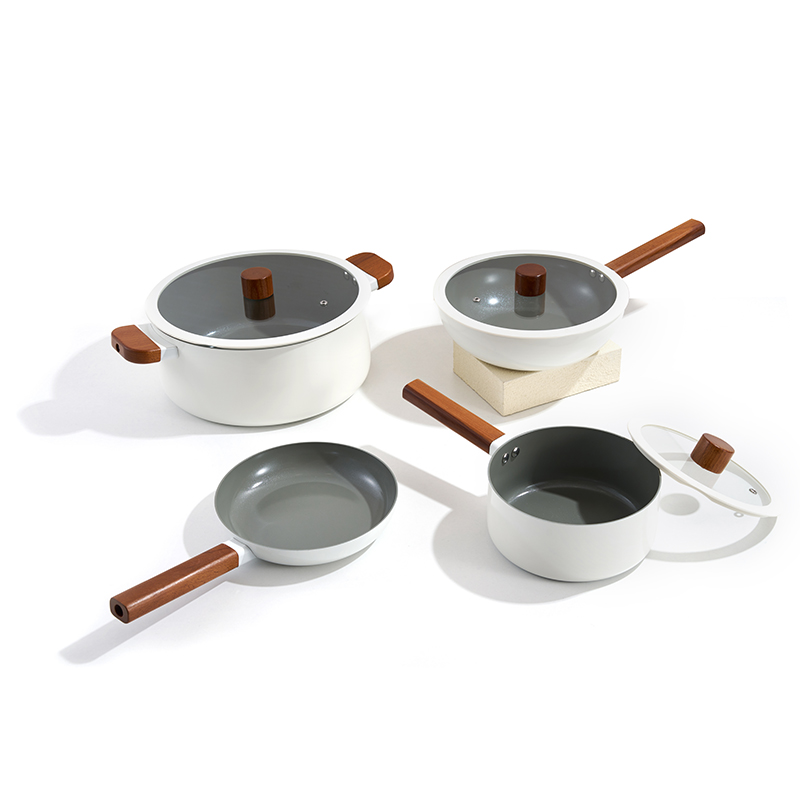
This cookware set has a ceramic non-stick inner liner, a heat-resistant wooden h...
See Details -
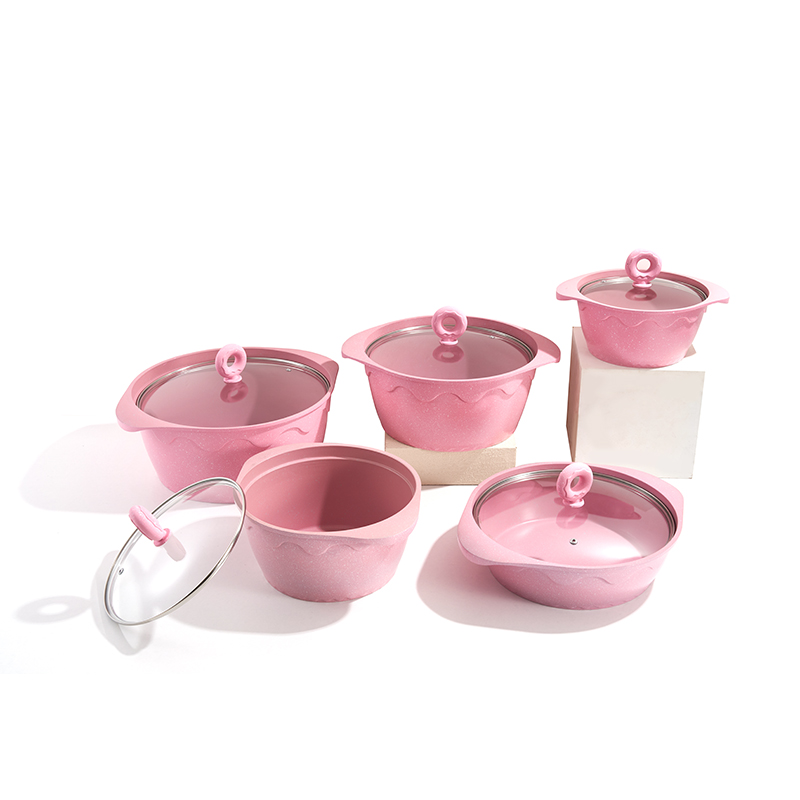
This cookware set is made of food-grade non-stick material, with a unique eye-ca...
See Details -
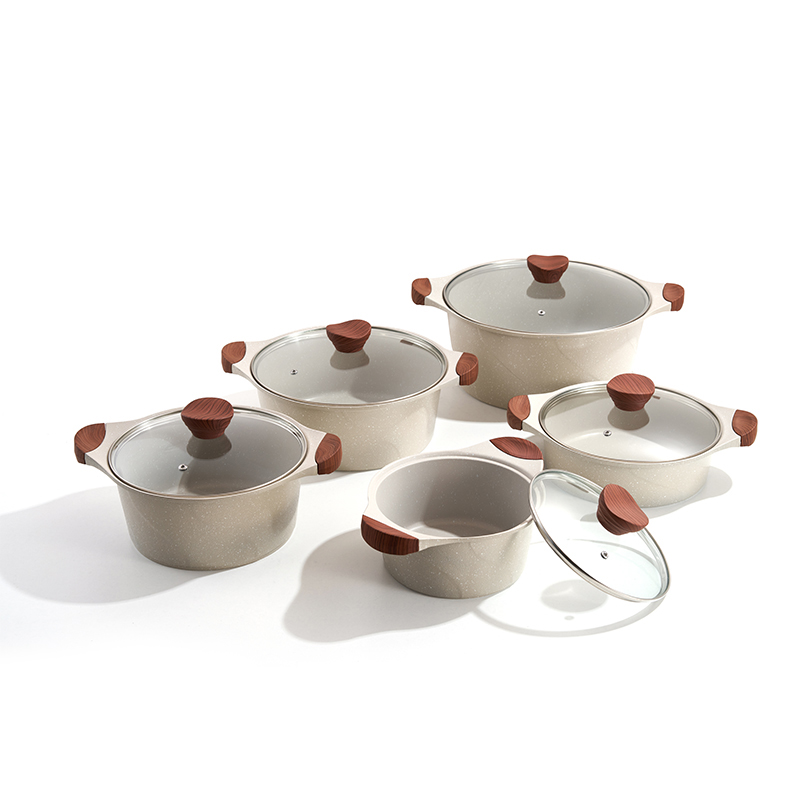
This off-white cookware set is made of wear-resistant non-stick material, with w...
See Details
Whether you're looking for bulk purchases or have any custom requirements, We are here to offer the best
solutions for you.
tiffany.zhong@echocn-trading.com
PHONE
+86-19561173975
+86-19557020621 (Hazel Wu)
ADD
Room 301, Unit 3014, No. 175 Qifeng Avenue, Wenqiao Town, Taizhou, Zhejiang, China
Fill Out the Form for More Information
Copyright © Zhejiang Echo Industry And Trade Co., Ltd.
All Rights Reserved.

China Cookware Set Manufacturer