
 en
en
 Español
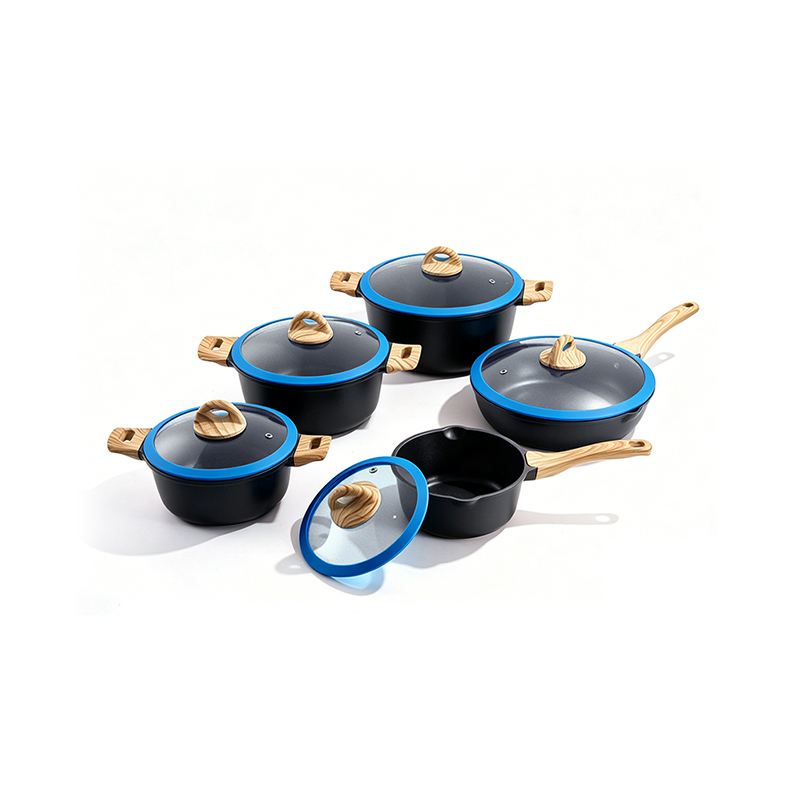
This cookware set features a non-stick coating, even heat conduction, and multi-...
See Details
Is a 5-Piece Cookware Set Enough for Everyday Meals
Date:Sep 25, 2026
Cookware collections do not need to contain a dozen different pieces to handle everyday meals. The real question is whether the available shapes and capacities match the cooking habits of the household. A well-planned 5 pcs Cookware Set can cover several routine tasks through a combination of frying, simmering, sautéing, and boiling cookware.
Current 5-piece collections show different approaches to the same concept. Some sets combine a 10–10.5-inch frying pan with a 1.5–3-quart saucepan and a larger stockpot, while other designs replace the stockpot with a sauté pan.
Piece Count Does Not Tell the Whole Story
Five pieces may sound limited until the set composition is examined. Lids are commonly counted as individual pieces, meaning a five-piece package can contain only three cookware bodies plus two lids.
- Frying pan: Useful for eggs, vegetables, meat, pancakes, and quick reheating.
- Saucepan: Suitable for sauces, grains, small portions of soup, and boiling.
- Stockpot or Dutch oven: Provides additional capacity for pasta, soups, stews, and batch cooking.
- Lids: Help retain moisture and heat while also expanding the range of dishes that can be prepared.
This structure explains why some manufacturers describe their 5-piece sets as starter or essential collections. The value comes from covering several cooking functions rather than simply increasing the number printed on the box.
Size Determines How Far the Set Can Go
Cookware dimensions have a direct connection with meal size. An 8-inch frying pan may suit breakfast portions or side dishes, while a 10-inch model provides more surface for family meals. Saucepan capacity also changes the type of cooking that feels comfortable.
Commercial examples show considerable variation. One current five-piece set uses an 8.5-inch frying pan, a 2-quart saucepan, and a 3.5-quart stockpot. Another uses a 10.5-inch skillet, a 1.5-quart saucepan, and a 6-quart stockpot.
- 8–9 inch pan: Practical for smaller portions and compact kitchens.
- 10–10.5 inch pan: Offers more cooking surface for family meals.
- 1.5–2 quart saucepan: Works well for sauces, oatmeal, grains, and smaller servings.
- 3–6 quart larger pot: Provides additional room for soup, pasta, and batch cooking.
Meal Variety Matters More Than Set Size
A household preparing simple breakfasts, stir-fries, pasta, and small soups may find a 5 pcs Cookware Set highly practical. The same set may feel restrictive for people who regularly prepare several dishes simultaneously or cook large quantities.
Meal patterns therefore provide a better reference point than piece count. Someone who prepares sauces frequently may benefit from a dedicated saucepan. A household making large batches of soup may place greater value on a deeper pot. Frequent frying and searing may justify a wider skillet.
Think About the Meals You Repeat
- Breakfast-focused cooking: A frying pan and small saucepan can handle eggs, oatmeal, and sauces.
- Weeknight meals: A skillet plus medium saucepan provides flexibility for vegetables, meat, grains, and sauces.
- Family cooking: Larger cookware capacity becomes more important for pasta, soup, and shared dishes.
- One-pan meals: A deep sauté pan can replace several specialized pieces for certain recipes.
Storage Can Change the Practical Value
Compact cookware collections can also appeal to kitchens with limited cabinet space. Nesting designs allow smaller vessels to sit inside larger ones, reducing the footprint of the complete collection. A five-piece set with compatible diameters can therefore occupy less storage space than several individually purchased pans.
Lid design deserves attention here. Some cookware collections use interchangeable lids, allowing a single lid to fit multiple vessels. Such arrangements can reduce storage requirements while keeping the set visually organized.
Who May Need More Than Five Pieces?
Five pieces may not cover every cooking style. Home cooks who prepare multiple courses at the same time, use specialty cookware, or regularly cook for larger groups may need additional vessels.
- Large households: Additional capacity can prevent several cooking stages from competing for the same pot.
- Frequent entertainers: Extra skillets and saucepans can support simultaneous dishes.
- Specialty cooking: Woks, grill pans, steamers, or Dutch ovens may complement a basic set.
Could Five Pieces Be Enough?
Yes, provided the combination reflects actual cooking habits. A 5 pcs Cookware Set built around useful sizes can provide a practical foundation without filling cabinets with rarely used pieces. Current product designs demonstrate that five-piece collections can cover frying, sautéing, simmering, boiling, and larger-batch cooking through carefully chosen cookware bodies and lids.
The number five is therefore less important than the relationship between cookware shape, capacity, lid configuration, and everyday recipes. A thoughtfully arranged set can serve as a compact kitchen foundation, while households with broader cooking routines may prefer adding individual pieces later.
Recommended Articles
Product Category
Related products
-
-
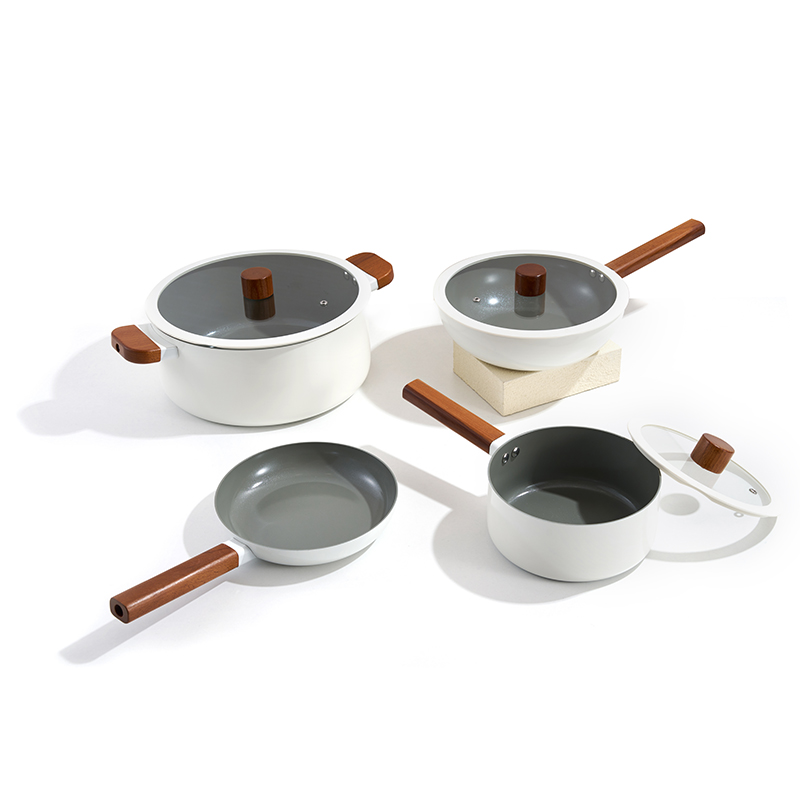
This cookware set has a ceramic non-stick inner liner, a heat-resistant wooden h...
See Details -
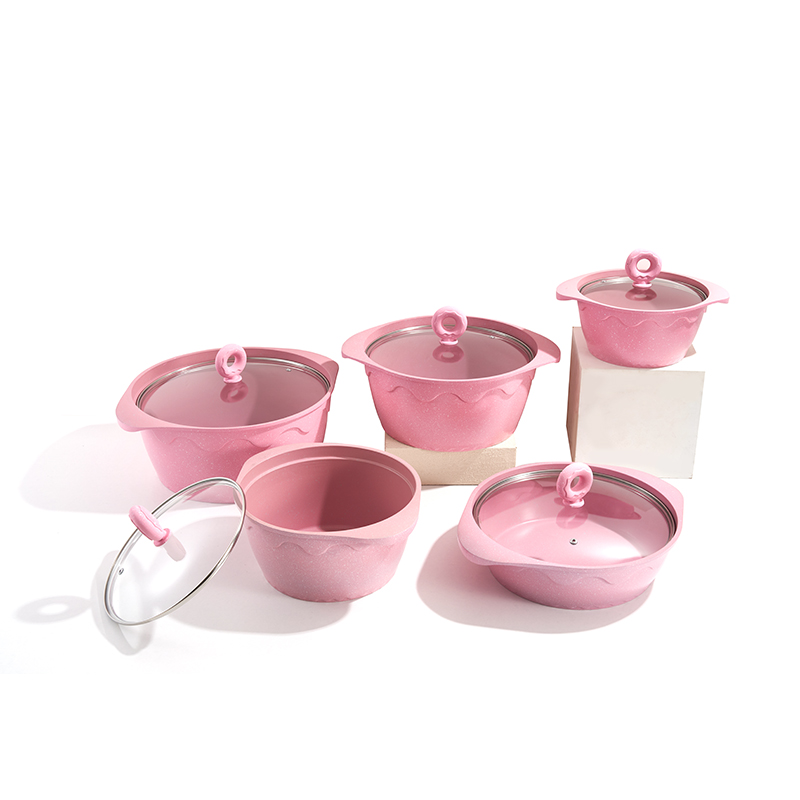
This cookware set is made of food-grade non-stick material, with a unique eye-ca...
See Details -
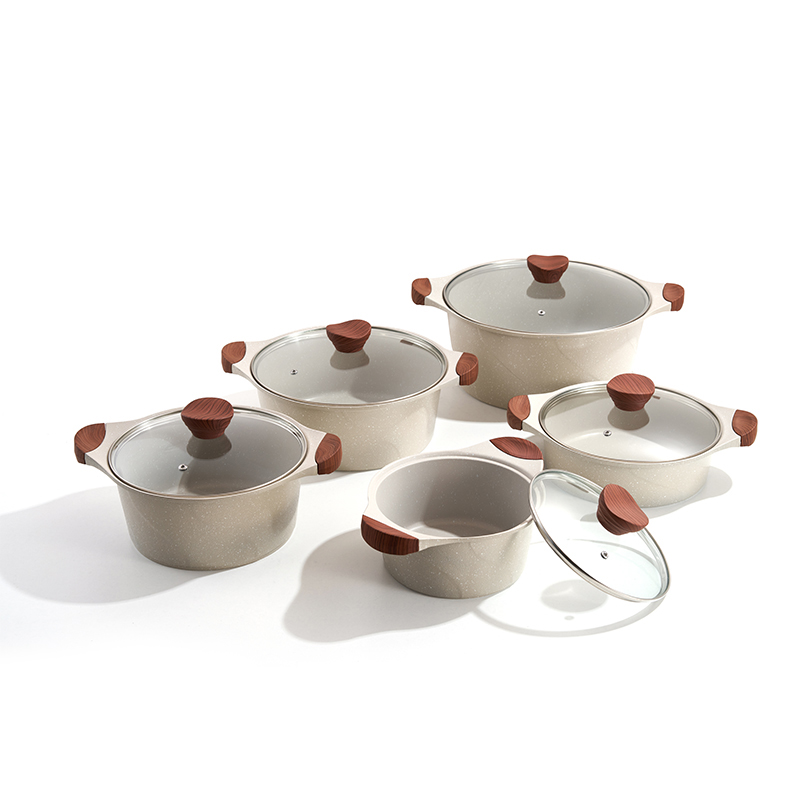
This off-white cookware set is made of wear-resistant non-stick material, with w...
See Details
Whether you're looking for bulk purchases or have any custom requirements, We are here to offer the best
solutions for you.
tiffany.zhong@echocn-trading.com
PHONE
+86-19561173975
+86-19557020621 (Hazel Wu)
ADD
Room 301, Unit 3014, No. 175 Qifeng Avenue, Wenqiao Town, Taizhou, Zhejiang, China
Fill Out the Form for More Information
Copyright © Zhejiang Echo Industry And Trade Co., Ltd.
All Rights Reserved.

China Cookware Set Manufacturer