
 en
 Español
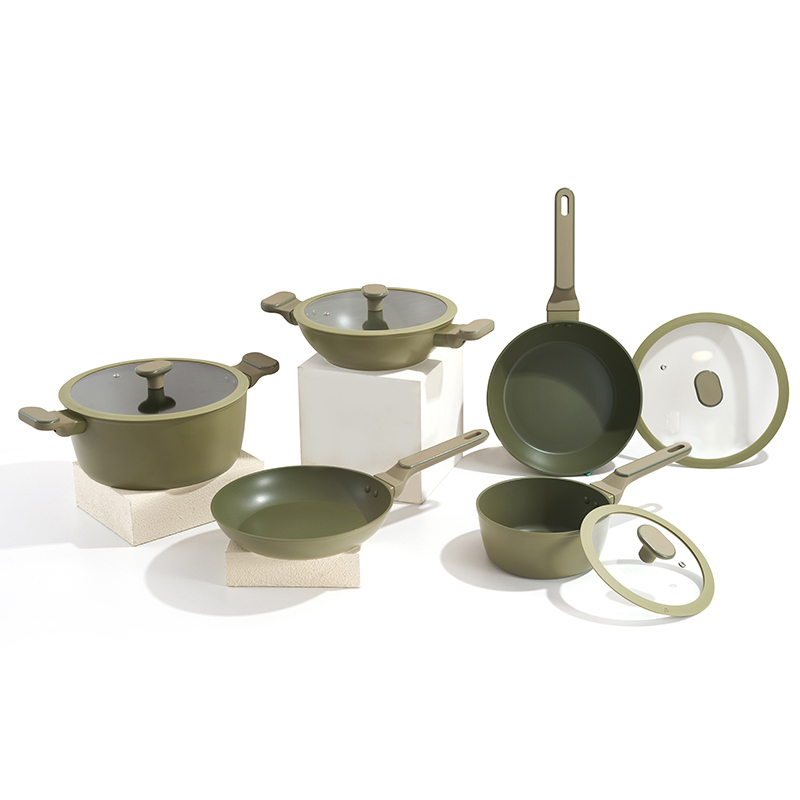
This cookware set features a non-stick coating, even heat conduction, and multi-...
See Details
Planning a Full Cookware Set: Which Configurations Suit Different Markets
Date:Nov 13, 2026
A cookware set is not simply a collection of pots and pans packed into one carton. Its configuration determines how well the product range meets household cooking habits, retail positioning, and regional market expectations. A set designed for a small apartment may not satisfy a large family, while a premium collection intended for cooking enthusiasts requires a different combination of materials and cookware sizes.
At Echo Kitchenware, we work with international buyers to understand these differences during cookware sourcing and product development. Planning a full kitchen cookware set requires careful consideration of piece counts, product dimensions, material combinations, and packaging requirements. A well-planned assortment can help distributors manage inventory while giving retailers a clearer product offering.

1. Start with the Target Customer and Sales Channel
Before confirming the cookware combination, buyers should identify the intended customer group and distribution channel. These factors influence the number of pieces, price positioning, and product specifications.
- Small households and apartment users: Compact collections with approximately 5–8 cookware pieces can cover everyday cooking without occupying excessive storage space.
- Family households: Sets containing 8–12 functional pieces may include different saucepan capacities, frying pans, and a stockpot for preparing multiple dishes.
- Cooking enthusiasts: More specialized collections can incorporate sauté pans, deeper cooking pots, and additional frying pan sizes.
- Gift and retail channels: Coordinated designs, attractive packaging, and clearly presented product combinations can support wedding, housewarming, and seasonal sales.
Our recommendation is to establish the target retail position before finalizing the product list. This helps avoid unnecessary accessories or oversized collections that may increase packaging and shipping costs.
2. Match Cookware Configurations to Regional Markets
Cooking habits, household sizes, kitchen layouts, and purchasing preferences differ across regions. These differences should be reflected in cookware assortment planning.
North American Market
Buyers targeting the United States and Canada may consider family-oriented collections with multiple frying pans, saucepans, and a larger stockpot. Common pan diameters such as 20 cm, 24 cm, and 28 cm provide flexibility for different cooking tasks. Induction compatibility and oven-safe specifications may also be important selling considerations.
European Market
European collections can emphasize practical saucepan combinations, frying pans, and cooking pots with space-efficient designs. Compatibility with induction, gas, electric, and ceramic cooktops should be confirmed according to the intended market. Nesting designs may also help retailers address storage concerns in smaller kitchens.
Asian Market
Buyers serving Asian households may consider deeper cookware, woks, smaller saucepans, and products suitable for stir-frying, steaming, and boiling. A configuration that includes a wok alongside conventional pots and pans can provide greater relevance to local cooking routines.
3. Choose the Right Material Combination
Material selection influences product positioning, cooking performance, maintenance requirements, and manufacturing costs. Stainless steel cookware is widely used in household collections because of its durability and clean appearance.
At Echo Kitchenware, we suggest considering the following options during assortment development:
- Stainless steel cookware: Suitable for saucepans, stockpots, and general-purpose cooking vessels. Buyers can evaluate 304 stainless steel food-contact surfaces and multi-layer base construction.
- Non-stick frying pans: Useful for everyday frying and foods that require easier release and cleaning.
- Multi-ply cookware: Stainless steel combined with an aluminum core can improve heat distribution across the cooking surface.
- Glass lids: Tempered glass lids allow users to monitor cooking without repeatedly removing the cover.
A coordinated collection does not necessarily require every item to use identical construction. The key is maintaining consistent appearance, functional compatibility, and clearly defined quality requirements.
4. Plan Piece Counts and Accessories Carefully
Piece count is an important consideration in cookware retail, but buyers should distinguish between the number of cookware vessels and the total number of packaged components. Lids, removable handles, and accessories may also be included in advertised set counts.
A practical configuration example includes:
- One 20 cm saucepan with lid.
- One 24 cm saucepan with lid.
- One 24 cm frying pan.
- One 28 cm frying pan.
- One 24 cm stockpot with lid.
- Additional kitchen accessories according to the target market.
This combination can serve as a starting point for a family-oriented stainless steel collection. Actual dimensions, capacities, and included components should be adjusted according to buyer requirements.
5. Consider Packaging, Branding, and Procurement Coordination
Cookware sets involve multiple components, making packaging design an important part of product development. Each item needs appropriate protection against scratches, movement, and impact during transportation.
Our team recommends discussing these details before production:
- Packaging structure: Confirm carton dimensions, internal dividers, protective sleeves, and stacking arrangements.
- Private-label branding: Coordinate logo placement, product labels, instruction manuals, and retail packaging artwork.
- Product combinations: Define the exact cookware models, lid quantities, and accessory specifications in the purchase documentation.
- Quality inspection: Check individual components and complete boxed sets to prevent missing items or incorrect combinations.
- Order coordination: Confirm production schedules, packaging approval, shipment arrangements, and documentation requirements.
6. Develop Flexible Cookware Collections with Echo Kitchenware
A successful cookware assortment begins with a clear understanding of the destination market. Household size, cooking habits, retail channels, material preferences, and packaging requirements all influence the final configuration.
At Echo Kitchenware, we support cookware sourcing and product development discussions for international buyers. Whether your project involves a compact starter collection, a family-oriented stainless steel range, or a customized private-label assortment, our team can discuss product combinations and relevant manufacturing specifications.
Contact Echo Kitchenware to discuss your cookware collection requirements and OEM/ODM cooperation opportunities.
Recommended Articles
Product Category
Related products
-
-
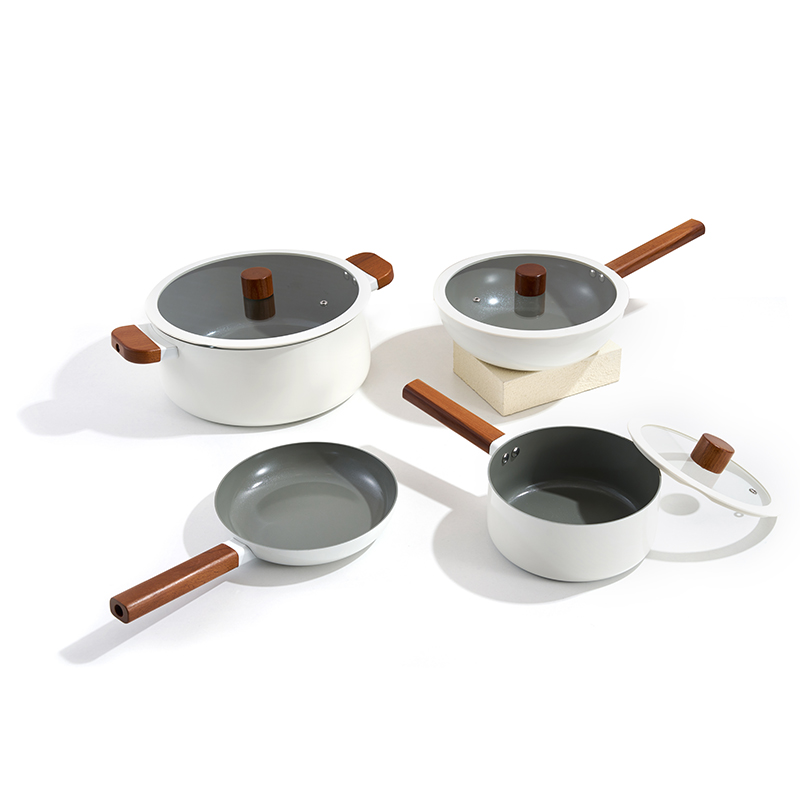
This cookware set has a ceramic non-stick inner liner, a heat-resistant wooden h...
See Details -
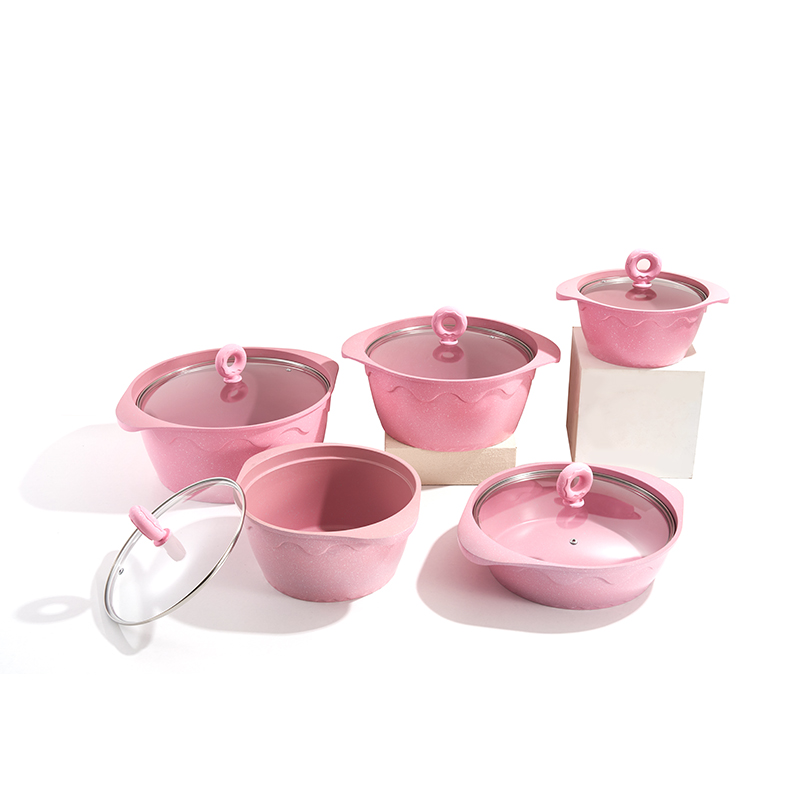
This cookware set is made of food-grade non-stick material, with a unique eye-ca...
See Details -
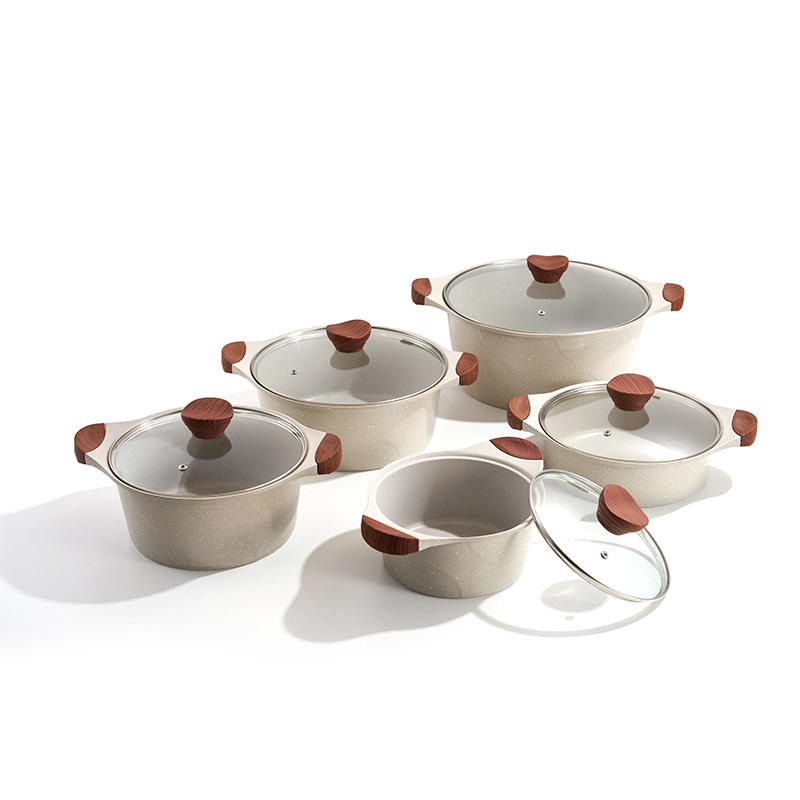
This off-white cookware set is made of wear-resistant non-stick material, with w...
See Details
Whether you're looking for bulk purchases or have any custom requirements, We are here to offer the best
solutions for you.
tiffany.zhong@echocn-trading.com
PHONE
+86-19561173975
+86-19557020621 (Hazel Wu)
ADD
Room 301, Unit 3014, No. 175 Qifeng Avenue, Wenqiao Town, Taizhou, Zhejiang, China
Fill Out the Form for More Information
Copyright © Zhejiang Echo Industry And Trade Co., Ltd.
All Rights Reserved.

China Cookware Set Manufacturer