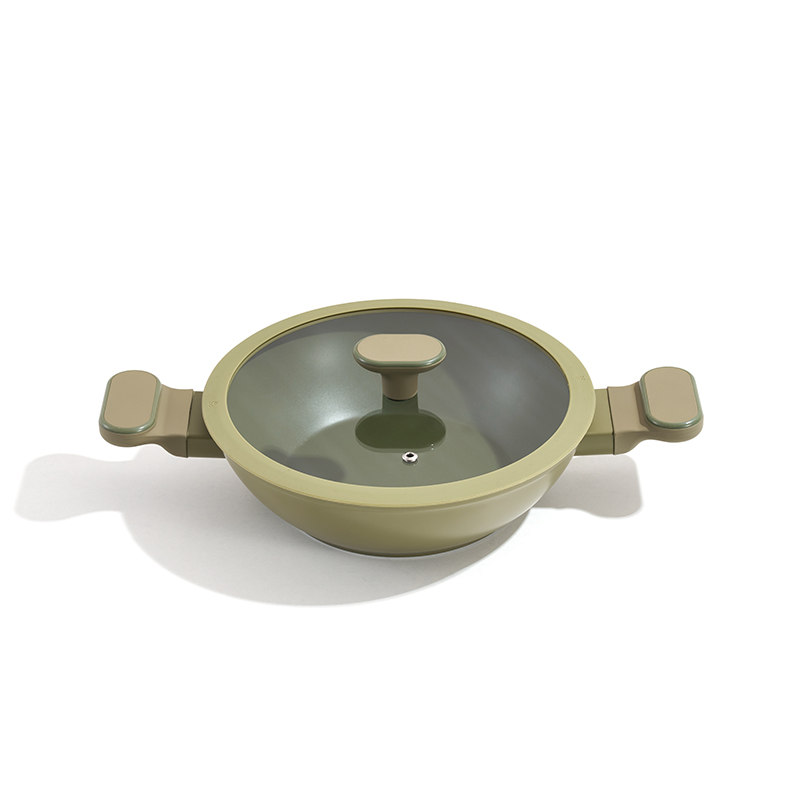
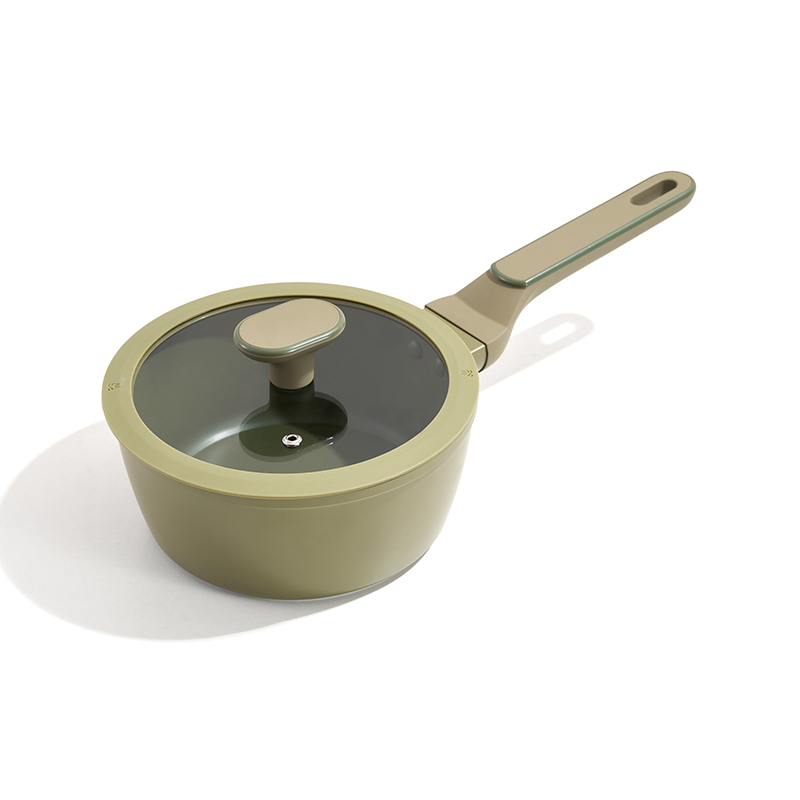
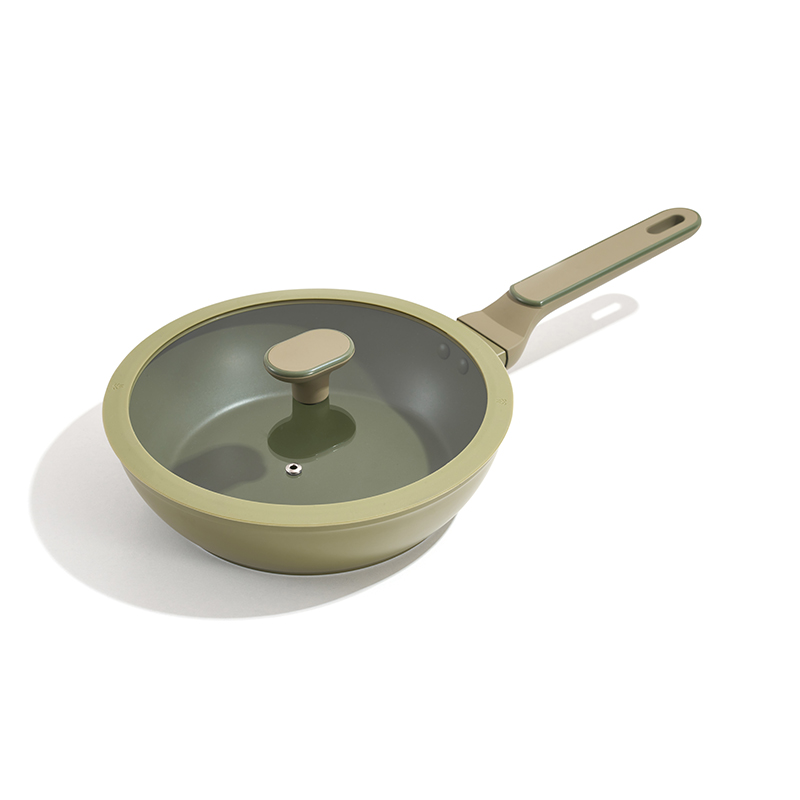
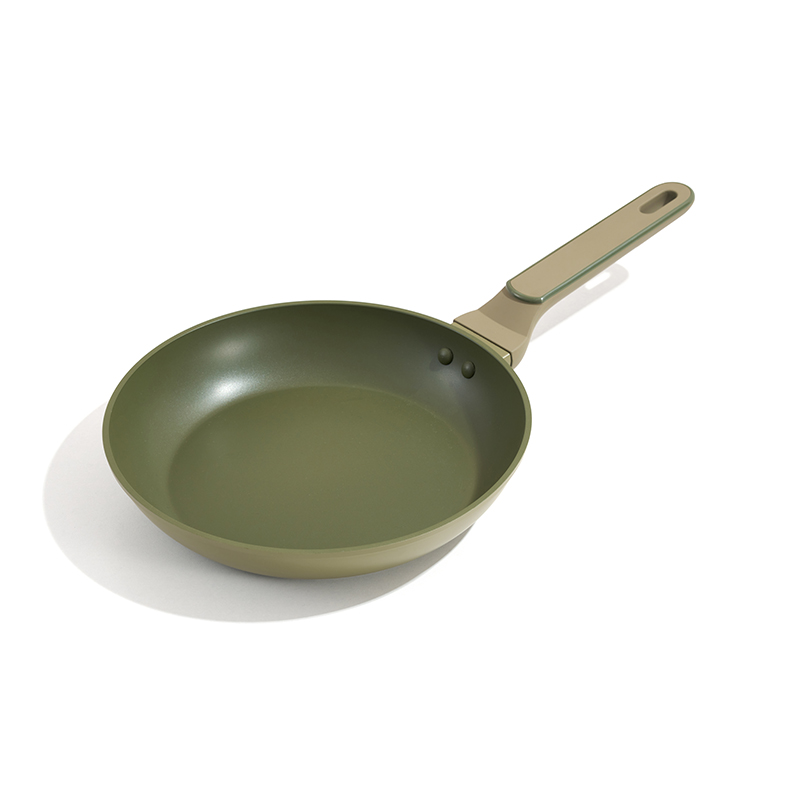
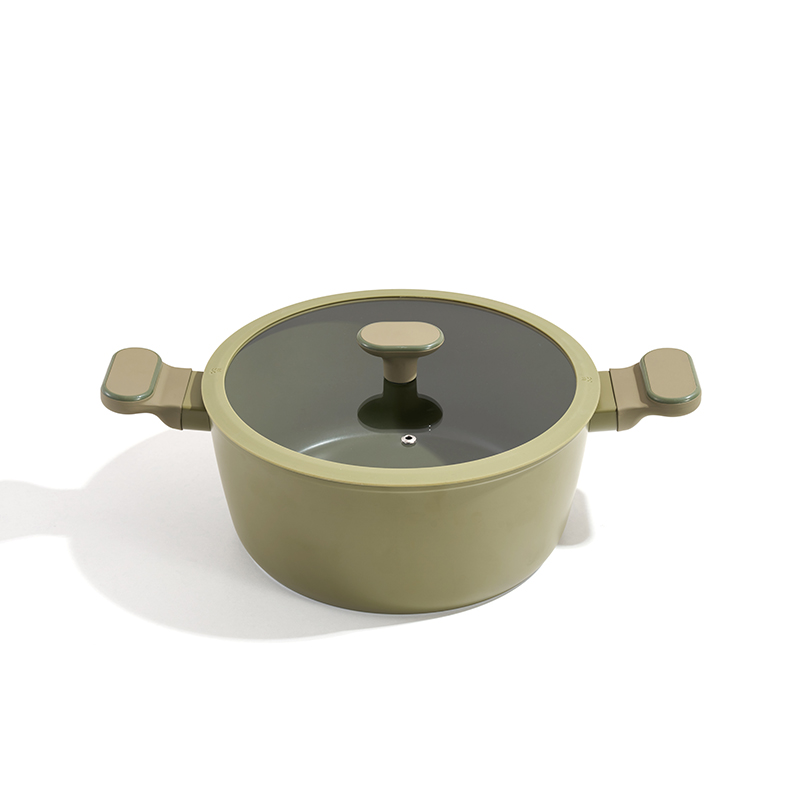
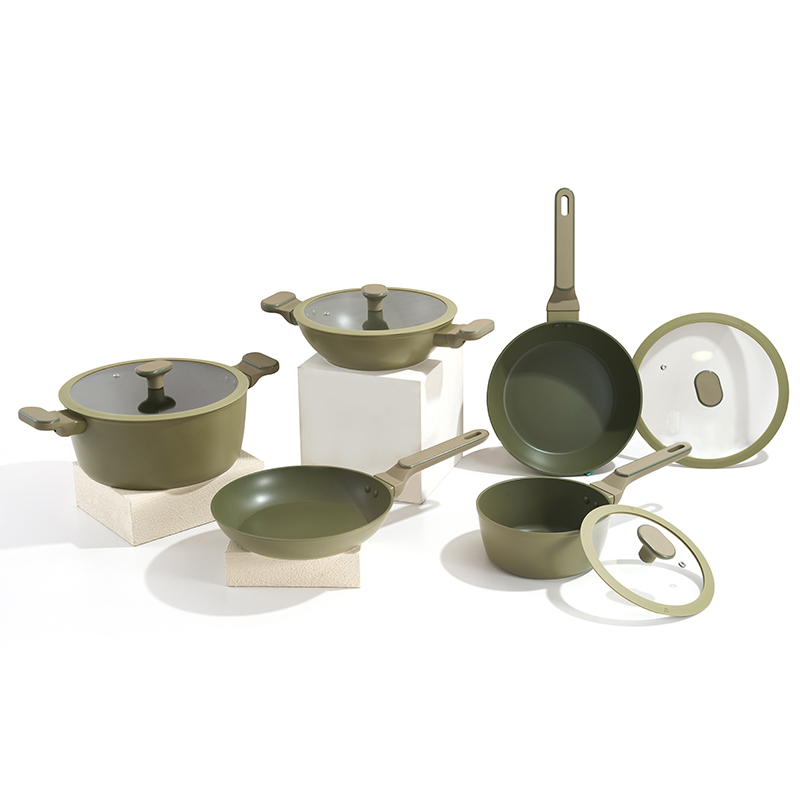
Will a durable aluminum pot set really survive daily cooking without warping or leaching?
What makes an aluminum pot set genuinely durable:
Thickness matters most – Pots with walls at least 3mm thick resist warping under high heat. Cheap sets use 1.5mm stamped aluminum that bends when you crank the burner.
Hard-anodized vs. bare aluminum – Hard-anodized surfaces rate 8–9 on the Mohs hardness scale (similar to sapphire). Bare aluminum rates around 2–3. The anodizing process grows an oxide layer that's part of the metal, not a coating that peels.
Reinforced base plates – Quality sets embed a stainless steel or copper disc into the bottom. This prevents the “oil runs to the edge” problem and makes the pot induction-compatible.
Rivetless or sealed rivets – Cheap rivets trap moisture and corrode from the inside. Durable sets use welded handles or sealed stainless rivets that don't react with aluminum.
Flat, machined bottoms – A true flat base (not convex) sits evenly on glass-top stoves. Test this in the store by pressing a straight edge across the bottom.
What durability does NOT mean:
You can still scratch hard-anodized aluminum with steel wool. You still shouldn't leave tomato sauce in an uncoated pot overnight. Durable means long-lasting, not indestructible.
How does an Aluminum Fry Pan perform in use?
How an aluminum fry pan performs in real kitchens depends entirely on its construction type. Here's what actually happens on the stove.
With a hard-anodized fry pan (no non-stick coating):
- Heats up in 30–45 seconds on gas – faster than stainless, slower than bare aluminum
- Browns chicken skin evenly across the whole surface, not just in the center
- Reacts instantly when you turn the heat down – no lingering hot spots
- Releases food moderately well if you use enough oil; eggs will stick without fat
- Handle stays cooler than cast iron but gets hot after 8–10 minutes
With a bare aluminum fry pan (commercial kitchen style):
- Heats almost immediately – great for tossing vegetables in a wok motion
- Develops dark discoloration from acidic foods like peppers or tomatoes
- Warps visibly if you run cold water over a hot pan
- Requires careful drying; otherwise, white oxidation spots appear
With a non-stick coated aluminum fry pan:
- Slides eggs effortlessly with minimal butter
- Loses non-stick properties after 12–18 months of regular use
- Cannot handle metal utensils – even a metal spatula edge leaves scratches
- Fails if overheated above 500°F (the coating blisters)
Better used for each type:
Hard-anodized for everyday sauteing and searing. Bare aluminum for high-volume commercial stir-frying (think diner breakfasts). Non-stick coated for low-fat cooking and delicate fish. No single aluminum fry pan does everything well – match the type to your cooking style.
How an aluminum casserole is manufactured – from molten metal to your oven
Most home cooks never think about the factory steps behind their casserole dish. Here's what the process actually looks like for a quality piece.
Step 1 – Melting and alloying
Virgin aluminum ingots (plus recycled scrap) are melted at 1,300°F (700°C). Manganese, magnesium, or silicon gets added depending on the desired hardness. Cookware-grade alloys typically use 3000 or 5000 series aluminum.
Step 2 – Forming the shape
Two methods dominate:
Die casting – Molten aluminum is injected into a steel mold under 10,000+ psi. This creates thick, uniform walls with complex handle shapes cast as one piece. Used for premium casseroles.
Stamping – A flat aluminum disc is pressed into a casserole shape using progressive dies. Faster and cheaper, but produces thinner walls that warp more easily.
Step 3 – Trimming and machining
The raw casting gets trimmed of flash (excess metal that seeped between mold halves). CNC machines cut the rim perfectly flat so the lid seals properly.
Step 4 – Surface treatment
Hard anodizing – The casserole is submerged in sulfuric acid and electrified. A controlled oxidation layer grows 30–50 microns deep. This takes 45–60 minutes per batch.
Polishing – For bare aluminum, wheels with abrasive compounds create a reflective finish (mostly decorative; food sticks to it).
Step 5 – Handle attachment and finishing
Cast handles need no attachment. Stamped casseroles get stainless steel or silicone handles riveted on. Finally, the entire piece is cleaned in an ultrasonic bath to remove manufacturing residues before packaging.
Quality check: Reputable brands test each batch for wall thickness consistency and pinhole leaks. A well-made aluminum casserole should last 15–20 years of normal use.

 en
en
 Español