
 en
 Español
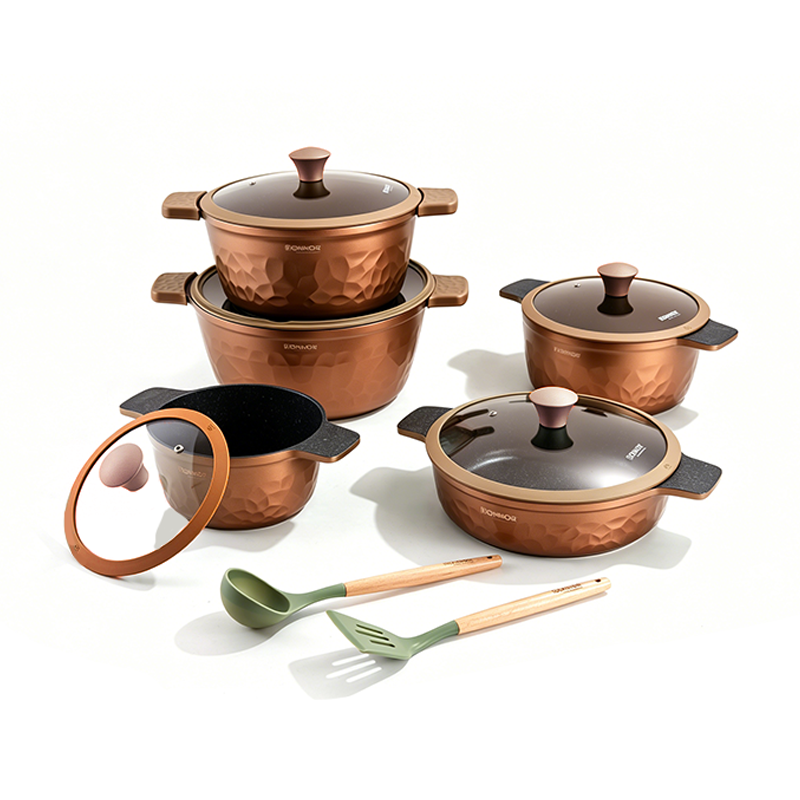
This cookware set features a non-stick coating, even heat conduction, and multi-...
See Details
Premium Cookware Sourcing: Which Quality Standards Matter to Buyers
Date:Nov 06, 2026
Premium cookware is judged by more than its appearance or retail price. Buyers entering the high-end kitchenware market need to consider material composition, manufacturing consistency, cooking performance, food contact safety, and long-term durability. A product with an attractive finish may generate initial interest, but its actual value depends on how reliably it performs during repeated household use.
At Echo Kitchenware, we understand that professional buyers, importers, wholesalers, and private-label brands need dependable manufacturing partners who can support their quality expectations. Our approach to high end kitchen pots and pans focuses on practical product evaluation and manufacturing details that matter throughout the procurement process. Understanding these standards helps buyers establish clear specifications, reduce quality risks, and build a consistent cookware range.
1. Material Composition Sets the Foundation for Cookware Quality
Material selection affects heat distribution, structural strength, corrosion resistance, product weight, and maintenance requirements. Buyers should examine the material specification rather than relying entirely on general descriptions such as premium metal or heavy-duty construction.
Common Materials Used in Premium Cookware
- Cast iron: Known for heat retention and structural strength, cast iron cookware is suitable for frying pans, Dutch ovens, skillets, and other products designed for sustained cooking temperatures. Buyers should review casting consistency, surface condition, wall thickness, and enamel or seasoning requirements.
- Stainless steel: Stainless steel offers corrosion resistance, durability, and a clean appearance. Grades such as 304 stainless steel are widely used in food-contact applications. Buyers should confirm the actual alloy grade, surface finish, and construction details.
- Aluminum: Aluminum provides relatively low weight and efficient heat transfer. Its thickness and structural design influence resistance to deformation during repeated heating and cooling.
- Multi-layer construction: Combining stainless steel with an aluminum or copper core can improve heat distribution while retaining a durable cooking surface. Buyers should check the layer arrangement, bonding quality, and compatibility with intended cooking equipment.
At Echo Kitchenware, we encourage buyers to define material requirements according to the intended product category and target market. Material certificates, alloy composition records, and physical sample inspections provide useful evidence during supplier evaluation.
2. Manufacturing Precision Determines Product Consistency
Even suitable raw materials cannot guarantee consistent cookware quality without controlled manufacturing processes. Variations in casting, forming, machining, welding, polishing, and surface treatment may affect the finished product.
Our manufacturing evaluation focuses on several practical details:
- Wall thickness consistency: Uneven material distribution can affect heat transfer and structural stability. Buyers can request dimensional measurements at multiple positions on the cookware body.
- Rim and edge finishing: Smooth edges, consistent rolling, and properly finished pouring areas improve handling and reduce concerns about sharp edges or uneven surfaces.
- Handle attachment: Rivets, welds, and other connection methods should withstand repeated handling and normal cooking loads. Buyers should examine attachment strength and alignment.
- Surface treatment: Polishing, seasoning, enamel application, and external finishing should remain consistent across production batches.
- Dimensional accuracy: Diameter, depth, capacity, lid fit, and base flatness should match the approved technical drawings.
For example, a cast iron frying pan with a nominal diameter of 26 cm should maintain the agreed dimensions and construction specifications throughout production. Buyers may also request wall thickness measurements and product weight tolerances to establish clear acceptance criteria.
These details are particularly relevant to distributors purchasing high end kitchen pots and pans under their own brands. Consistent manufacturing helps maintain product specifications across repeat orders and different cookware models.
3. Cooking Performance Requires Measurable Testing
Product appearance alone cannot demonstrate cooking performance. Buyers should request appropriate performance evaluations based on the cookware material, construction, and intended application.
Important Performance Tests
- Heat distribution testing: Evaluates temperature differences across the cooking surface. Uneven heating may affect cooking results and user experience.
- Thermal shock resistance: Assesses the product's ability to withstand specified temperature changes without cracking, deformation, or other damage.
- Handle strength testing: Evaluates the attachment and structural strength of handles under defined loading conditions.
- Base stability testing: Checks whether the cookware maintains stable contact with the cooking surface under specified conditions.
- Corrosion resistance testing: Examines the resistance of relevant metal surfaces and finishes to moisture, salts, and acidic substances.
- Coating durability testing: For coated products, abrasion, adhesion, scratch resistance, and food-release performance should be evaluated using suitable methods.
Buyers supplying cookware to European markets can review EN 12983-1, which covers general requirements for domestic cookware used on stovetops. Its testing scope includes handle requirements, coating suitability, heat distribution, and compatibility with different heat sources.
At Echo Kitchenware, we consider performance requirements an important part of product specification discussions. Rather than relying on broad descriptions such as durable or heat-resistant, buyers should define the intended testing method, operating conditions, and acceptable results.
4. Food Contact Safety Must Match the Destination Market
Food contact compliance is a significant consideration in international cookware procurement. Different countries and regions apply different regulatory frameworks, so buyers need to identify applicable requirements before confirming product specifications.
Several regulatory references deserve attention:
- United States: FDA food contact requirements may apply depending on the materials and substances used in cookware construction.
- European Union: Regulation (EC) No 1935/2004 establishes general requirements for materials and articles intended to come into contact with food.
- Germany: LFGB-related testing may be relevant to food-contact products supplied to the German market.
- China: Applicable GB 4806 standards cover food-contact materials and articles.
Compliance evaluation should consider every relevant food-contact component rather than focusing exclusively on the main cookware body. Depending on the design, lids, coatings, enamel surfaces, silicone components, and other accessories may require separate assessment.
Buyers should request relevant laboratory reports and verify the following information:
- Material descriptions and tested product models.
- Applicable regulations and testing methods.
- Test results and laboratory identification.
- Sample descriptions and production specifications.
- Whether the reports correspond to the final product configuration.
At Echo Kitchenware, we recognize that compliance documentation needs to correspond to the actual product supplied. Buyers should communicate their destination markets and applicable requirements during the initial project discussion so that testing arrangements can be evaluated appropriately.
5. Surface Finishing and Appearance Need Clear Acceptance Criteria
Premium cookware often competes in retail environments where visual presentation influences purchasing decisions. However, appearance standards should be supported by measurable inspection requirements.
Different cookware materials require different finishing evaluations:
- Cast iron cookware: Check casting marks, enamel coverage, surface irregularities, seasoning condition, and visible defects.
- Stainless steel cookware: Inspect polishing uniformity, discoloration, scratches, weld marks, and surface cleanliness.
- Non-stick cookware: Evaluate coating coverage, thickness, adhesion, scratches, and visible surface inconsistencies.
- Enamel cookware: Examine color consistency, edge coverage, pinholes, chips, and coating integrity.
Buyers can establish visual inspection samples and defect classification rules before mass production. Agreed inspection references help purchasing teams and manufacturing personnel apply the same acceptance criteria during quality checks.
6. Quality Control Should Cover the Entire Production Process
A reliable quality management approach involves more than inspecting finished products before shipment. Material verification, production monitoring, and final inspection all contribute to manufacturing consistency.
Recommended Quality Control Stages
- Incoming Material Inspection: Verify raw material specifications, supplier documentation, dimensions, and visible material defects before production.
- In-Process Quality Control: Monitor forming, casting, machining, welding, coating, polishing, and assembly according to the approved production requirements.
- Final Quality Inspection: Check dimensions, appearance, product weight, accessories, functionality, and packaging before order release.
- Batch Traceability: Maintain relevant production and inspection records to support quality investigations and repeat-order consistency.
Buyers sourcing high end kitchen pots and pans should also clarify how non-conforming products are identified, separated, and handled. A documented corrective action process can help address recurring production issues and improve communication between the purchasing team and factory.
7. Supplier Evaluation Should Include More Than Product Samples
A sample can demonstrate the appearance and basic performance of a cookware item, but it cannot independently establish the supplier's ability to maintain consistent production quality. Buyers need a broader understanding of manufacturing capabilities and project coordination.
At Echo Kitchenware, we recommend reviewing the following areas during supplier discussions:
- Manufacturing capabilities: Understand the production processes, available equipment, and cookware categories supported by the factory.
- Product development: Discuss drawing confirmation, material adjustments, sample development, and customization requirements.
- Quality documentation: Review inspection records, material specifications, testing reports, and relevant quality procedures.
- Production planning: Confirm production scheduling, capacity allocation, order progress reporting, and shipment coordination.
- Packaging support: Clarify carton specifications, protective materials, labeling, barcode requirements, and private-label packaging arrangements.
- After-sales communication: Establish procedures for handling quality feedback, replacement discussions, and corrective actions.
These considerations help buyers distinguish between a supplier that can provide individual samples and a manufacturing partner capable of supporting an ongoing cookware business.
8. Build a Practical Cookware Procurement Checklist
Before issuing a purchase order, buyers can use the following checklist to organize technical and commercial requirements:
| Evaluation Area | Key Information to Confirm |
| Material | Alloy grade, cast iron composition, material thickness, and surface treatment. |
| Dimensions | Diameter, depth, wall thickness, capacity, weight, and base flatness. |
| Construction | Handle attachment, lid fit, edge finishing, and structural integrity. |
| Performance | Heat distribution, thermal resistance, coating durability, and cooking compatibility. |
| Food Safety | Applicable regulations, laboratory reports, and food-contact material documentation. |
| Quality Control | Inspection stages, defect classification, sampling plans, and batch records. |
| Commercial Terms | Quotation details, order quantities, packaging specifications, and delivery arrangements. |
Completing these checks before production helps reduce specification misunderstandings and provides a clearer basis for supplier performance evaluation. Buyers should also retain an approved reference sample and the corresponding technical documentation for future orders.
Recommended Articles
Product Category
Related products
-
-
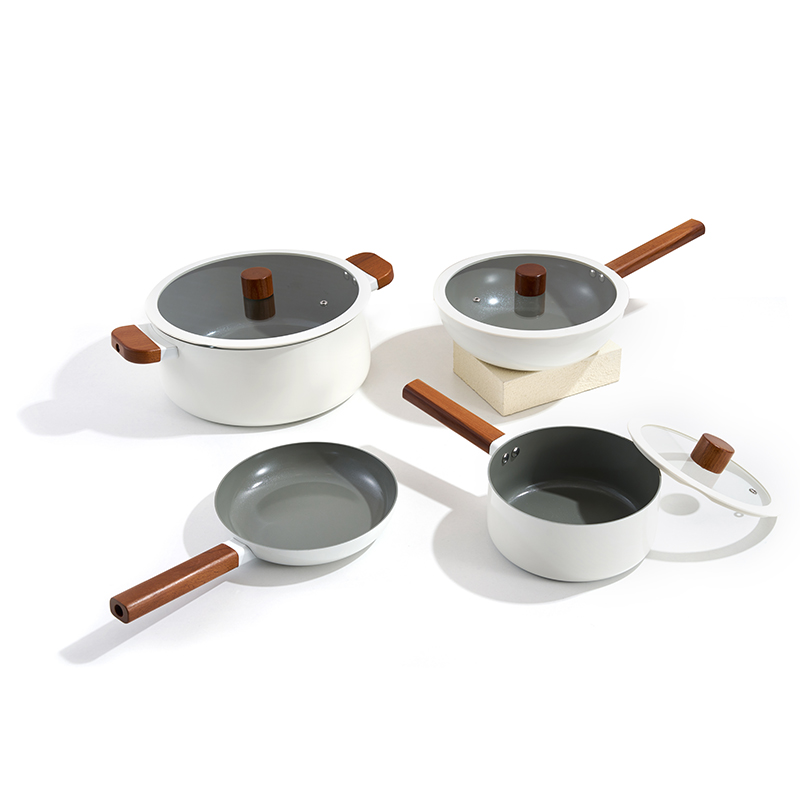
This cookware set has a ceramic non-stick inner liner, a heat-resistant wooden h...
See Details -

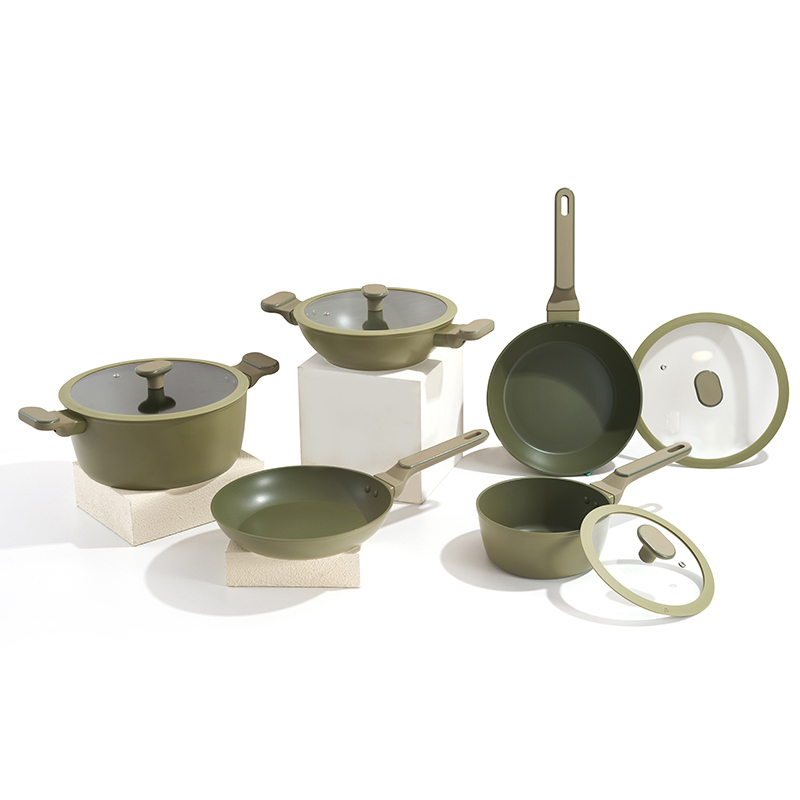
This cookware set is made of food-grade non-stick material, with a unique eye-ca...
See Details -
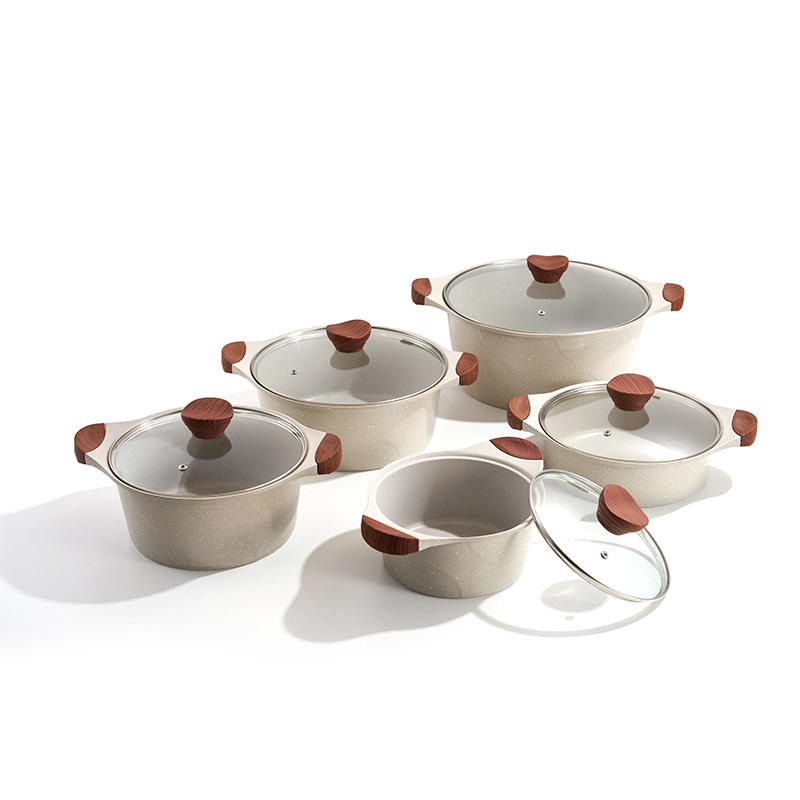
This off-white cookware set is made of wear-resistant non-stick material, with w...
See Details
Whether you're looking for bulk purchases or have any custom requirements, We are here to offer the best
solutions for you.
tiffany.zhong@echocn-trading.com
PHONE
+86-19561173975
+86-19557020621 (Hazel Wu)
ADD
Room 301, Unit 3014, No. 175 Qifeng Avenue, Wenqiao Town, Taizhou, Zhejiang, China
Fill Out the Form for More Information
Copyright © Zhejiang Echo Industry And Trade Co., Ltd.
All Rights Reserved.

China Cookware Set Manufacturer