
 en
en
 Español
This cookware set features a non-stick coating, even heat conduction, and multi-...
See Details
Can Stylish Cookware Sets Become Part of Kitchen Décor
Date:Sep 18, 2026
Cookware has traditionally been stored inside cabinets and brought out only during meal preparation. Modern kitchen layouts are changing that habit. Open shelving, hanging racks, kitchen islands, and visible countertops give pots and pans a much larger visual role. Recent kitchen design coverage shows growing interest in cookware that contributes to the appearance of the room rather than remaining hidden behind cabinet doors.
This shift creates space for the High-Appearance Design Cookware Set, where color, silhouette, surface finish, handle details, and lid design become part of the product experience. The idea does not mean sacrificing cooking functionality. Instead, visual design becomes another layer of product development.
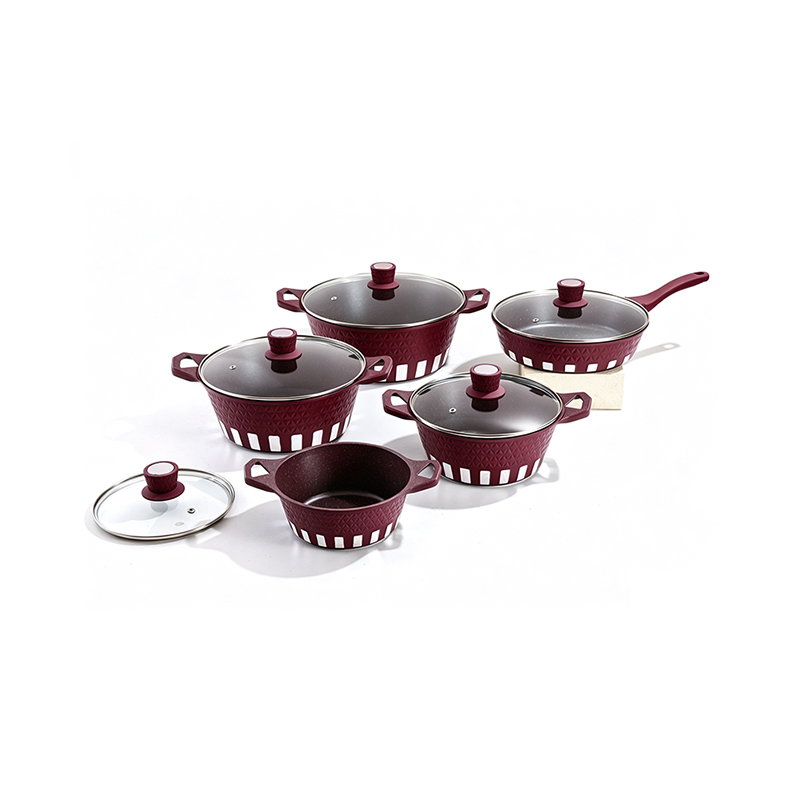
Color Can Establish a Kitchen's Visual Identity
Color is often the easiest cookware detail to notice. Neutral tones can blend with white, wood, stone, or metallic kitchen finishes, while deeper colors can create contrast against light countertops. Current kitchen design discussions also point toward warmer metals, colored finishes, and more personalized palettes rather than relying exclusively on traditional stainless-steel appearances.
- Soft neutral shades: Work well with minimalist and contemporary interiors.
- Deep colors: Create stronger visual contrast around cooktops and open shelves.
- Muted earthy tones: Pair naturally with wood cabinetry, stone surfaces, and warm decorative elements.
- Metallic finishes: Add a more technical or modern appearance.
A coordinated color system can also make several cookware pieces look like a single collection rather than unrelated kitchen tools.
Silhouette Matters Beyond Color
Shape gives cookware another way to influence the surrounding space. A saucepan with a gently curved body can create a softer visual impression, while a straight-sided sauté pan may suit a more geometric kitchen. Lid proportions, rim profiles, and handle angles can further change how a complete set looks on a shelf.
High-Appearance Design Cookware Set products may therefore use consistent design language across different sizes. A 20 cm frying pan, 24 cm sauté pan, and 28 cm skillet can share similar handles, surface treatments, and body contours while serving different cooking purposes.
Small Details Create Collection Consistency
- Matching handles: Give different cookware pieces a unified appearance.
- Consistent lid knobs: Reinforce the visual identity of the complete set.
- Uniform surface treatment: Helps different cookware bodies appear visually related.
- Controlled proportions: Prevent very large and small pieces from looking disconnected.
Can Cookware Replace Some Decorative Elements?
Visible cookware can serve a practical decorative role because it already occupies useful kitchen space. A carefully arranged pan on an open shelf does not require a separate decorative object, while a frequently used pot placed near the cooktop remains accessible.
This concept fits the growing interest in functional displays. Kitchen designers increasingly recommend combining attractive items with everyday utility rather than filling open shelves with objects that have no practical purpose.
Cookware display can also work through repetition. Several pieces sharing the same color family or finish can create visual rhythm across a shelf. Different diameters add variation without breaking the overall design language.
Surface Finish Changes the Overall Impression
Glossy, matte, brushed, hammered, and textured surfaces can produce very different visual effects even with the same cookware shape. A glossy exterior reflects more surrounding light, while a matte finish tends to create a softer appearance. Brushed metallic surfaces can provide a more technical look.
Surface treatment also interacts with lighting. Under pendant lights or strong kitchen LEDs, reflective finishes can become prominent visual features. Softer textures may appear more subdued, helping cookware blend with cabinetry and countertops.
Design Still Needs Practical Dimensions
Visual appeal alone does not make a cookware collection useful. Product dimensions still need to support everyday cooking. Typical cookware bodies may range from approximately 18–30 cm across, while handle lengths, wall heights, and lid diameters need to remain proportionate to the vessel.
- Body size: Determines cooking capacity and countertop presence.
- Handle geometry: Influences both appearance and grip position.
- Lid profile: Affects stacking height and the visual proportions of the set.
- Storage compatibility: Determines whether attractive pieces can remain visible without creating clutter.
Could Design Become Part of the Product Value?
The answer increasingly appears to be yes. Cookware now sits closer to home décor, particularly in kitchens with open shelving and visible preparation areas. Brands are already presenting cookware as products that can remain on countertops or shelves rather than being hidden after every use.
A High-Appearance Design Cookware Set can therefore combine several roles: cooking equipment, storage-friendly kitchenware, and part of the room's visual identity. Color coordination, body geometry, surface finish, handle design, and practical dimensions all contribute to that transition. The result is cookware designed not only to be used, but also to look appropriate within the space where it lives.
Recommended Articles
Product Category
Related products
-
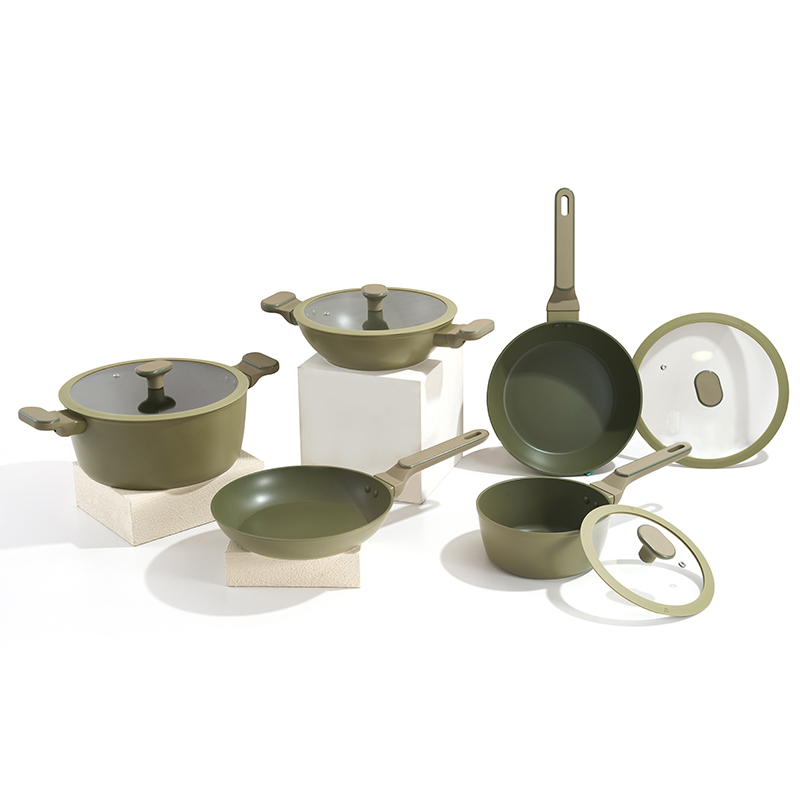
-
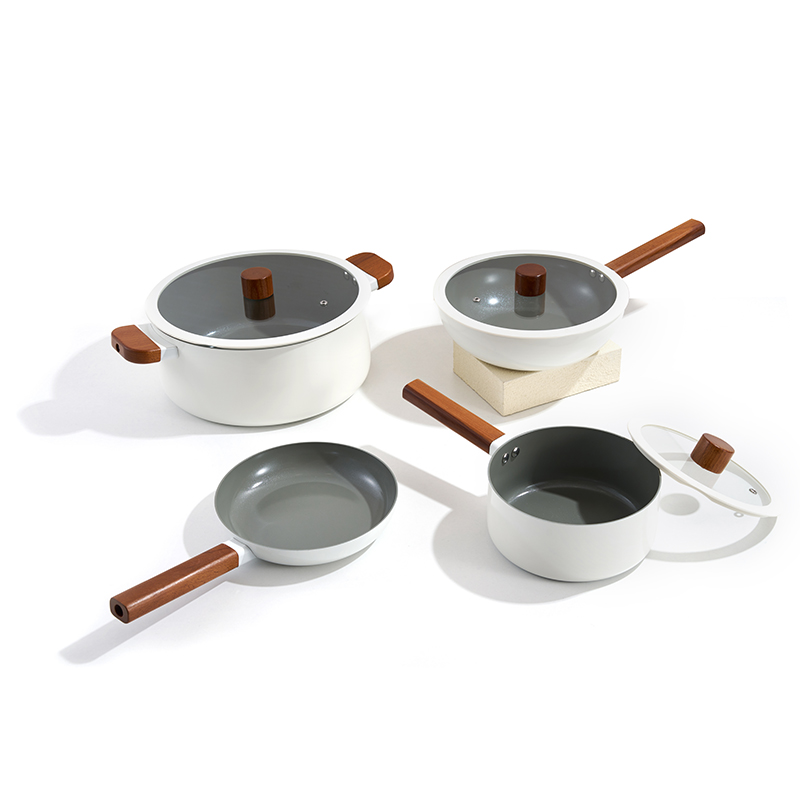
This cookware set has a ceramic non-stick inner liner, a heat-resistant wooden h...
See Details -
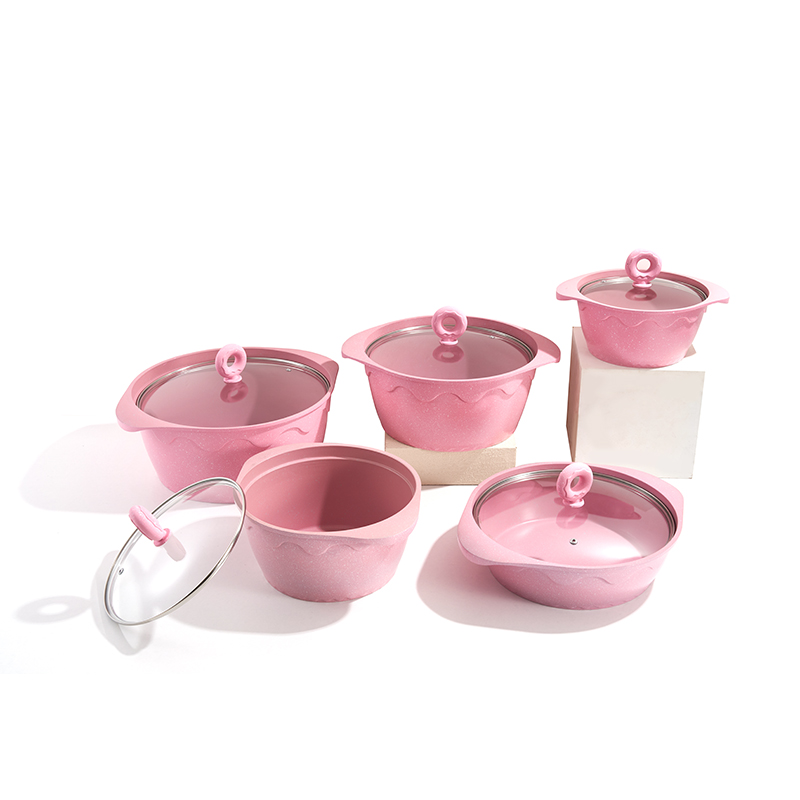
This cookware set is made of food-grade non-stick material, with a unique eye-ca...
See Details -
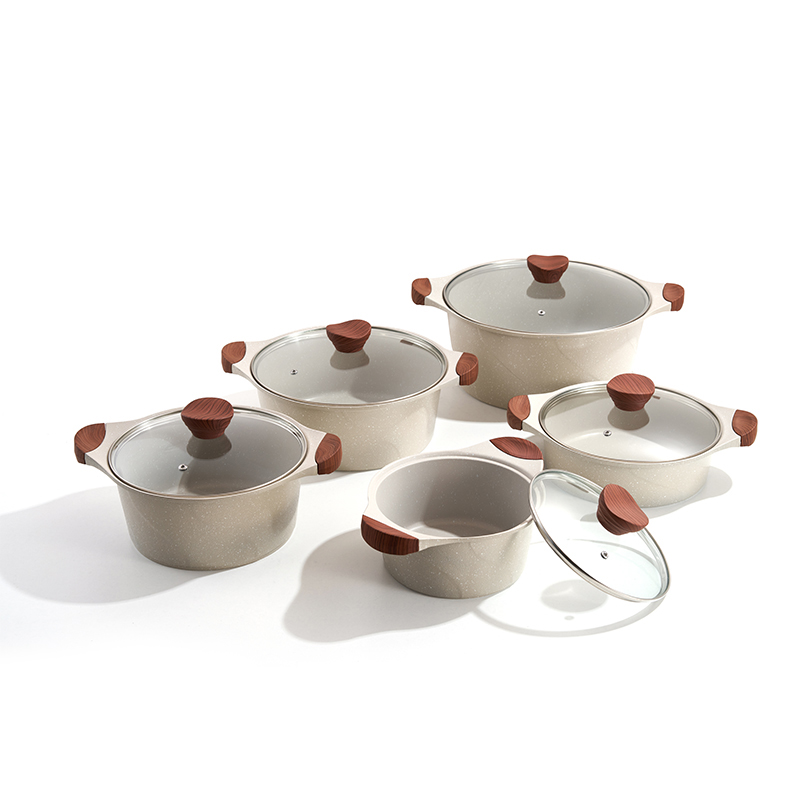
This off-white cookware set is made of wear-resistant non-stick material, with w...
See Details
Whether you're looking for bulk purchases or have any custom requirements, We are here to offer the best
solutions for you.
tiffany.zhong@echocn-trading.com
PHONE
+86-19561173975
+86-19557020621 (Hazel Wu)
ADD
Room 301, Unit 3014, No. 175 Qifeng Avenue, Wenqiao Town, Taizhou, Zhejiang, China
Fill Out the Form for More Information
Copyright © Zhejiang Echo Industry And Trade Co., Ltd.
All Rights Reserved.

China Cookware Set Manufacturer