
 en
en
 Español
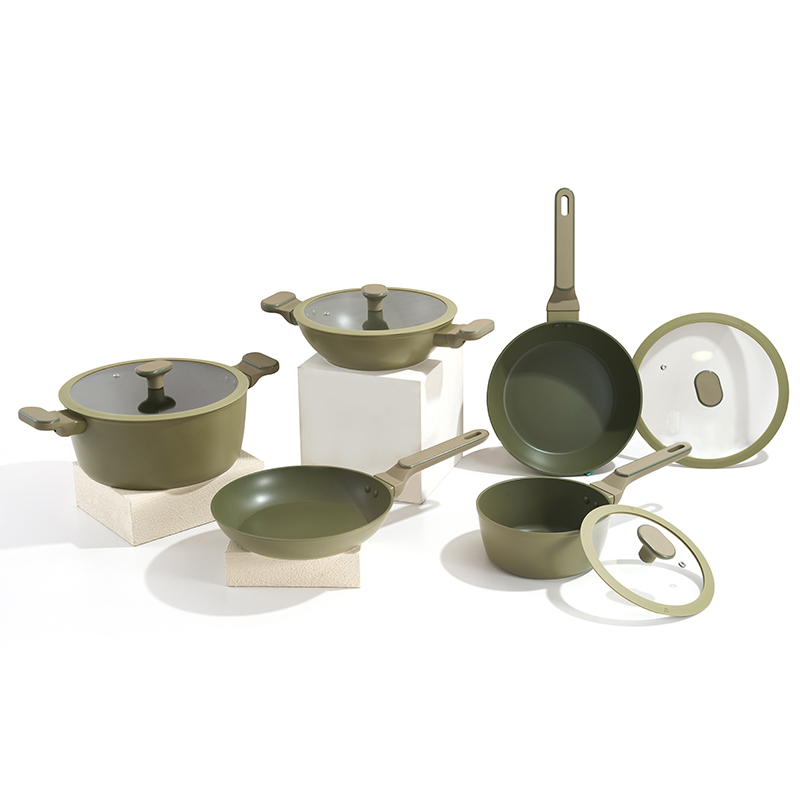
This cookware set features a non-stick coating, even heat conduction, and multi-...
See Details
Pressed Aluminum Cookware: How Does Shape Affect Cooking
Date:Sep 11, 2026
Cookware shape is more than a visual feature. The diameter of the base, height of the sidewalls, curvature between the bottom and sides, and overall depth can change how food contacts the cooking surface and how heat moves through the pan. These details become particularly relevant with Pressing Aluminum Cookware, where flat aluminum sheets or discs are formed into specific shapes through mechanical or hydraulic pressure.
Unlike cast cookware, pressed aluminum starts from sheet material with a defined thickness. Forming operations can include deep drawing, trimming, wall forming, and base shaping. The final geometry depends heavily on the tooling used during production.
Base Diameter Sets the Cooking Zone
The bottom of a pan determines how much of its surface directly interacts with the heat source. A broad, flat base provides a larger contact area, which can be useful for frying, sautéing, and preparing food that needs to remain spread across the pan.
- Small base diameter: Concentrates cooking activity into a compact area and works well with smaller burners.
- Medium base: Offers a practical balance between cooking space and handling weight.
- Wide base: Provides more room for steaks, vegetables, pancakes, or multiple portions.
Heat behavior also depends on the relationship between the burner diameter and cookware base. A very large pan placed over a small heating zone may have a hotter center than its outer regions, regardless of the aluminum material.

Sidewall Height Changes Cooking Style
Wall height creates another noticeable difference. A shallow frying pan exposes more food directly to the cooking surface and makes turning ingredients easier. Deeper saucepans and casseroles provide additional volume for liquids, sauces, and ingredients that need room to simmer.
Pressing Aluminum Cookware can be formed into different wall heights by changing the punch and die dimensions. Deep-drawing operations may also use multiple forming stages for deeper shapes, helping reduce excessive thinning or cracking during production.
Common Shape Differences
- Low and wide: Suitable for frying, searing, and sautéing.
- Deep and narrow: Useful for boiling, sauces, and liquid-based recipes.
- Wide with moderate depth: Supports family-size cooking while retaining a broad cooking surface.
Curved Transitions Influence Food Movement
The area connecting the base and sidewall deserves attention. A sharp transition creates a different cooking surface from a rounded transition. Curved geometry can make it easier to move a spatula around the pan and can provide a smoother path for ingredients during stirring.
Modern pressing and die-forming techniques can also create surface patterns and controlled transitions across the base and sidewalls. Research into stamped cookware surfaces shows that tooling can transfer designed textures onto both flat and curved areas of a cookware body.
Thickness Still Follows the Shape
Shape cannot be separated from material thickness. Pressed cookware is commonly produced from relatively thin aluminum sheet, with some commercial designs using approximately 1.5–2.5 mm walls.
During deep drawing or pressing, material flow can change thickness at different locations. Corners, deep sidewalls, and curved sections therefore require careful tooling control. A well-designed forming process aims to keep the finished body within the intended dimensional range.
- Shallow profiles generally require less deformation during forming.
- Deep profiles demand greater material movement and more controlled forming stages.
- Rounded corners can support smoother material flow during pressing.
- Flat bases provide predictable contact with the stovetop.
Shape Also Affects Storage and Handling
Cooking performance is not the only consideration. A set containing differently shaped pots and pans needs to work within real kitchen storage conditions. Nestable bodies can reduce the space required inside cabinets, while matching diameters can simplify stacking.
Handle position matters as well. A wide pan with a long handle requires more clearance than a compact saucepan. Helper handles can improve control with larger cookware, especially once the pan contains substantial amounts of food.
Shape Is Part of the Performance Equation
Pressing Aluminum Cookware demonstrates how manufacturing geometry can influence everyday cooking. Base diameter affects the usable heating zone, wall height changes capacity and cooking style, while curved transitions influence food movement and material forming.
Rather than judging a pressed aluminum pan by appearance alone, buyers can examine its base dimensions, depth, wall profile, handle arrangement, and compatibility with their usual cooking methods. The shape of the cookware ultimately determines how its aluminum body interacts with heat, food, utensils, and the kitchen environment.
Recommended Articles
Product Category
Related products
-
-
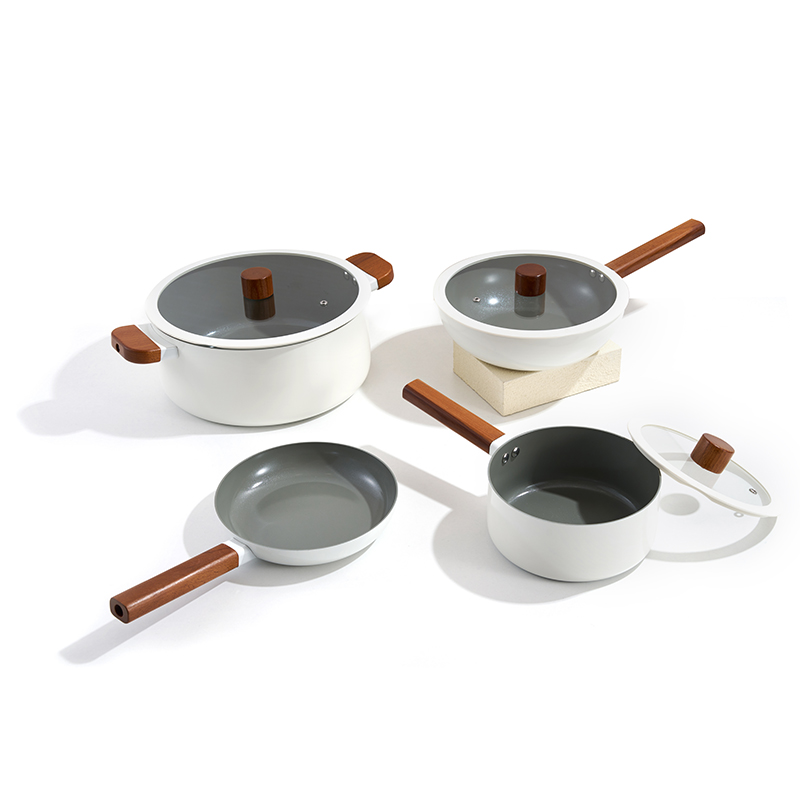
This cookware set has a ceramic non-stick inner liner, a heat-resistant wooden h...
See Details -
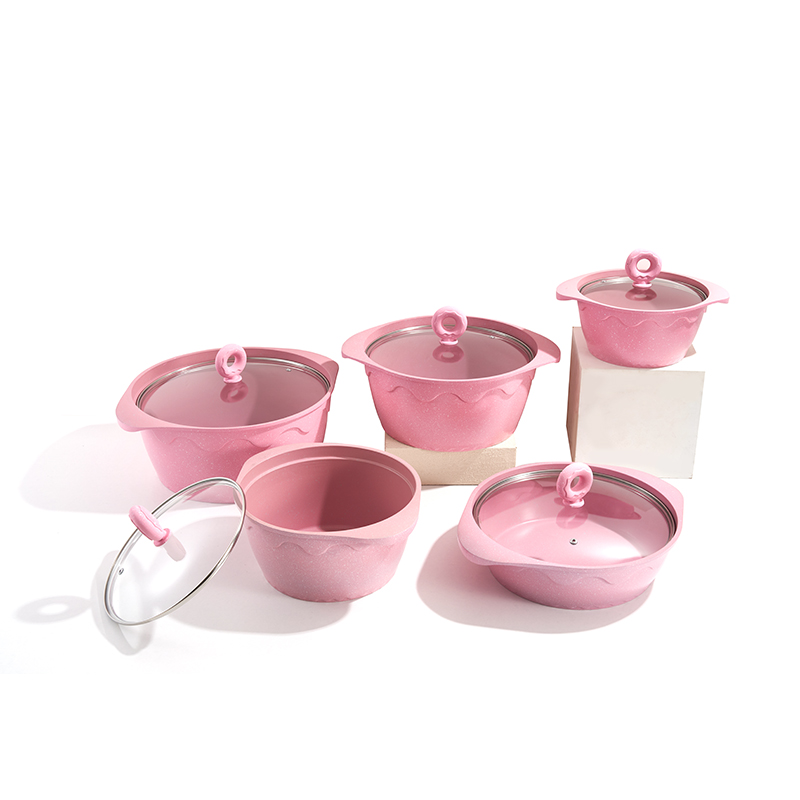
This cookware set is made of food-grade non-stick material, with a unique eye-ca...
See Details -
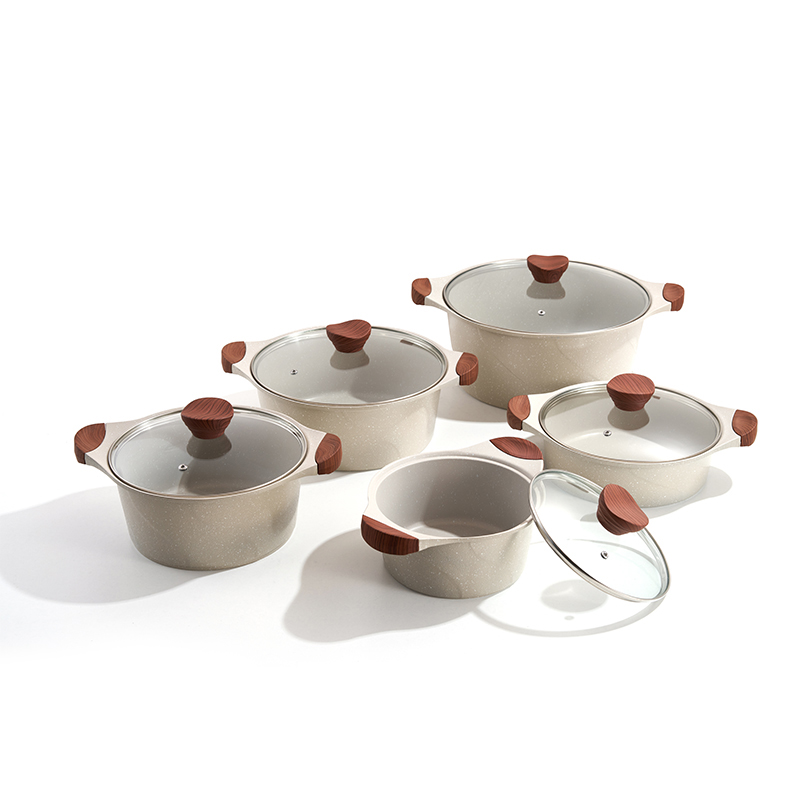
This off-white cookware set is made of wear-resistant non-stick material, with w...
See Details
Whether you're looking for bulk purchases or have any custom requirements, We are here to offer the best
solutions for you.
tiffany.zhong@echocn-trading.com
PHONE
+86-19561173975
+86-19557020621 (Hazel Wu)
ADD
Room 301, Unit 3014, No. 175 Qifeng Avenue, Wenqiao Town, Taizhou, Zhejiang, China
Fill Out the Form for More Information
Copyright © Zhejiang Echo Industry And Trade Co., Ltd.
All Rights Reserved.

China Cookware Set Manufacturer