
 en
en
 Español
This cookware set features a non-stick coating, even heat conduction, and multi-...
See Details
Does Die-Cast Aluminum Cookware Heat More Evenly
Date:Sep 04, 2026
Heat distribution is a major factor behind consistent cooking results. A pan may reach a high temperature quickly, yet uneven heating can create browned edges, undercooked centers, or localized scorching. Aluminum has strong thermal conductivity, making it widely used for cookware bodies. Die-casting adds another dimension by allowing manufacturers to create cookware with controlled wall and base thicknesses.
Die-Cast Aluminum Cookware Set products can therefore provide a balanced combination of heat response, structural stability, and cooking surface coverage. Product construction still matters, though. Alloy composition, base thickness, flatness, coating structure, and the connection between the cookware body and heat source all influence actual performance.
Why Aluminum Spreads Heat Quickly
Aluminum transfers thermal energy considerably faster than stainless steel. Typical cast aluminum alloys can have thermal conductivity around 120–170 W/m·K, while pure aluminum can reach approximately 205 W/m·K. The exact value depends on alloy composition and casting characteristics.
- Rapid lateral heat movement: Heat entering the base can spread toward surrounding areas rather than remaining concentrated directly above the burner.
- Reduced temperature differences: Better thermal transfer can help narrow the temperature gap between the center and outer cooking surface.
- Responsive temperature changes: Aluminum reacts relatively quickly to changes in burner output, giving cooks more direct control.
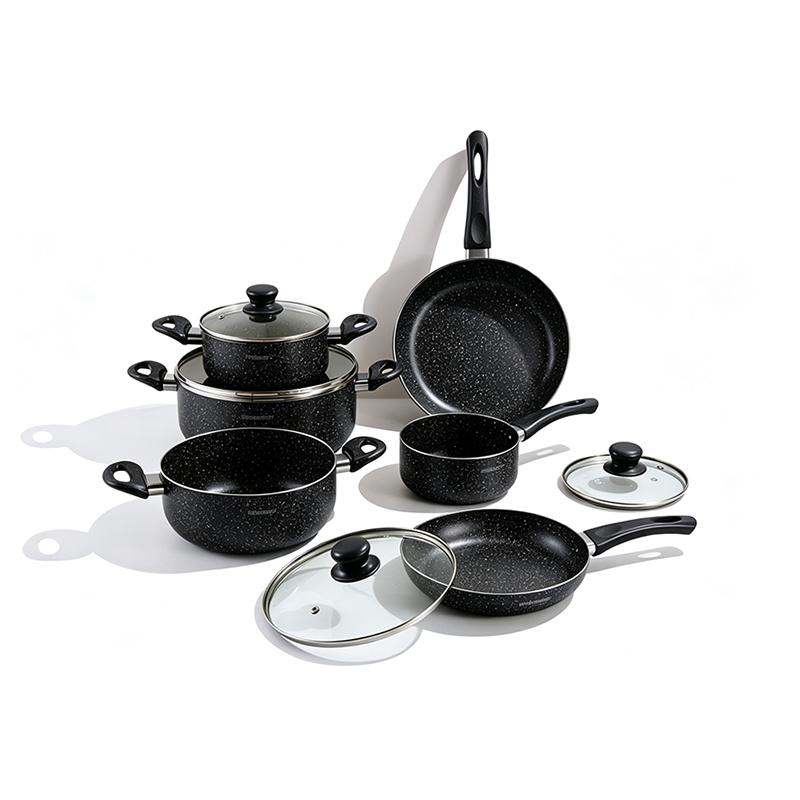
Thickness Changes the Heating Pattern
Material alone does not guarantee uniform heating. Base thickness plays a significant role in how heat moves through cookware. Commercial cast aluminum cookware commonly uses bases within roughly the 2–8 mm range, with thicker constructions providing greater thermal mass and structural support.
Some Die-Cast Aluminum Cookware Set products use a base around 4.5 mm thick. Such a structure can provide a useful balance between heat distribution, weight, and handling.
- Thin bases: Heat can travel quickly, but temperature changes from the burner may become more noticeable across the cooking surface.
- Moderate thickness: Additional material can help stabilize temperature and spread heat across a wider area.
- Very thick construction: More thermal mass can improve temperature stability, though added weight may affect everyday handling.
Base Design Matters Alongside the Aluminum Body
Cookware designed for induction cooking often requires a magnetic layer because aluminum itself does not normally respond to an induction field. Manufacturers may integrate a stainless-steel plate or magnetic base beneath the aluminum body. This layer also affects how heat reaches the cooking surface.
Some current Die-Cast Aluminum Cookware Set designs combine aluminum construction with an extended induction base. Such layouts are intended to spread heat across the usable cooking area while supporting compatibility with gas, electric, ceramic, and induction cooktops.
Shape Can Influence Hotspot Formation
Pan geometry deserves attention as well. A broad, relatively flat base gives heat more surface area to travel across before reaching the sidewalls. Deep casseroles, sauté pans, and frying pans may therefore behave differently even with the same aluminum alloy.
- Flat frying surfaces support broad contact with the heat source.
- Curved sidewalls can influence how heat moves upward from the base.
- Consistent wall thickness helps create more predictable thermal behavior across the cookware body.
Research on die-cast aluminum components also demonstrates that alloy properties and thickness can affect thermal behavior, showing why material and geometry need to be evaluated together rather than separately.
What Should Buyers Look at?
Temperature uniformity is only part of the product equation. Buyers evaluating a Die-Cast Aluminum Cookware Set can also examine base thickness, cookware diameter, induction compatibility, coating construction, handle design, lid configuration, and overall weight.
A well-designed set does not simply rely on aluminum's natural conductivity. The casting structure, base architecture, dimensions, and surface system work together to determine how evenly heat reaches food. That combination explains why two aluminum cookware sets with similar appearances can deliver noticeably different cooking experiences.
Recommended Articles
Product Category
Related products
-
-
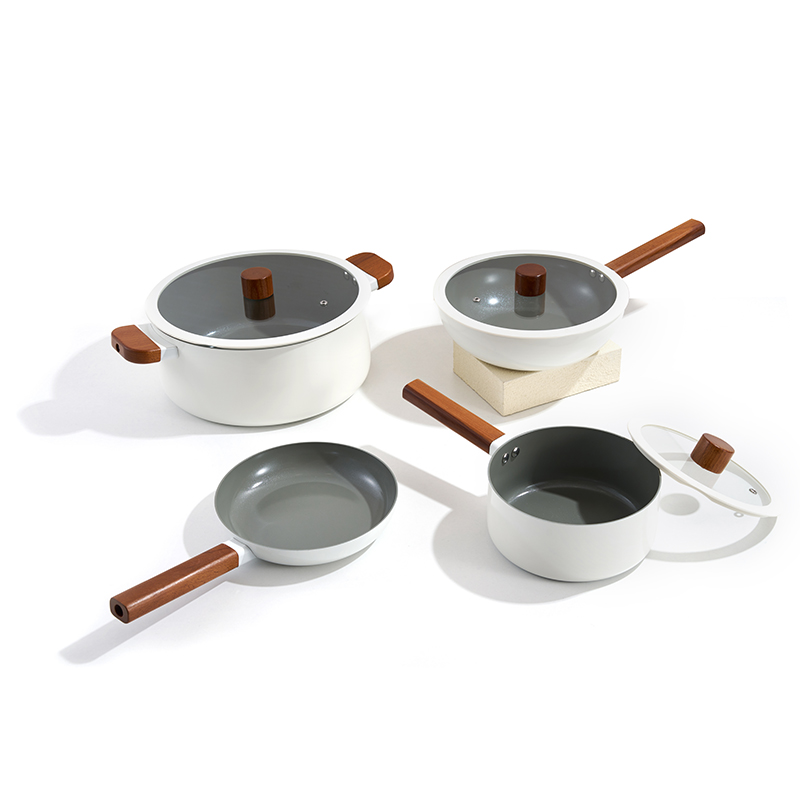
This cookware set has a ceramic non-stick inner liner, a heat-resistant wooden h...
See Details -
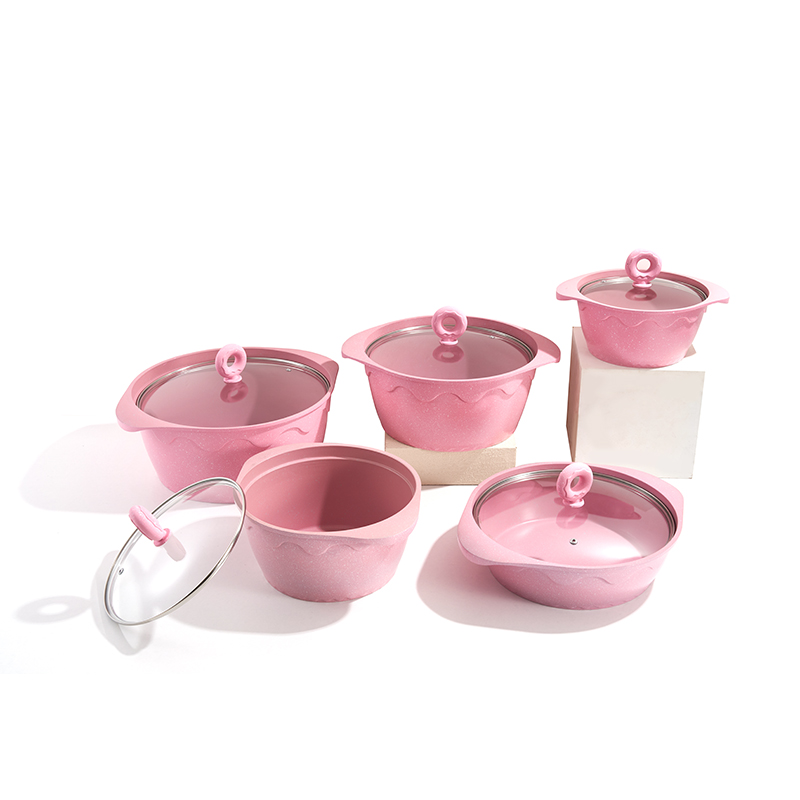
This cookware set is made of food-grade non-stick material, with a unique eye-ca...
See Details -
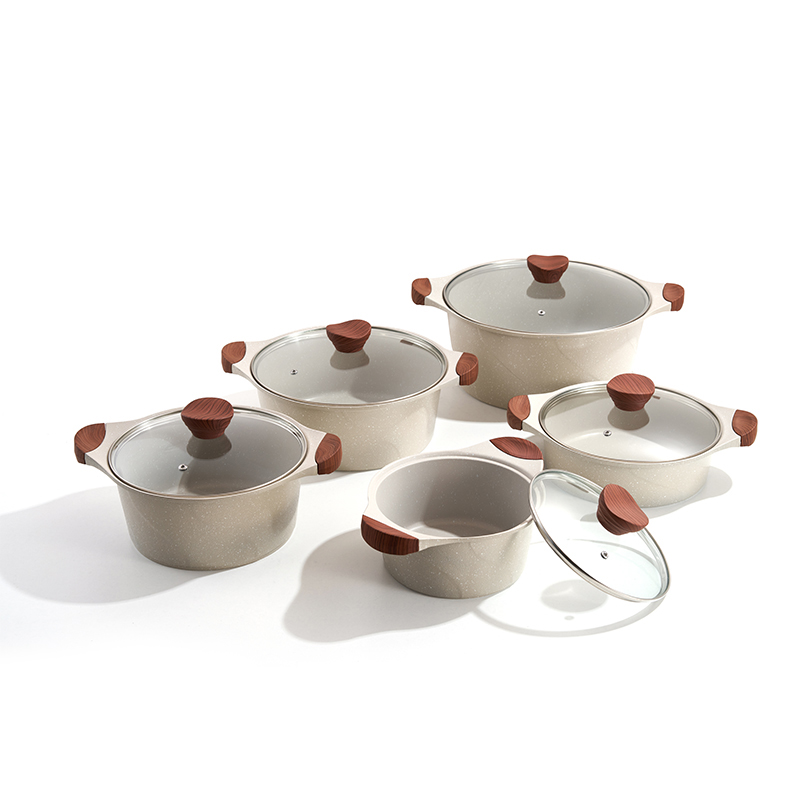
This off-white cookware set is made of wear-resistant non-stick material, with w...
See Details
Whether you're looking for bulk purchases or have any custom requirements, We are here to offer the best
solutions for you.
tiffany.zhong@echocn-trading.com
PHONE
+86-19561173975
+86-19557020621 (Hazel Wu)
ADD
Room 301, Unit 3014, No. 175 Qifeng Avenue, Wenqiao Town, Taizhou, Zhejiang, China
Fill Out the Form for More Information
Copyright © Zhejiang Echo Industry And Trade Co., Ltd.
All Rights Reserved.

China Cookware Set Manufacturer