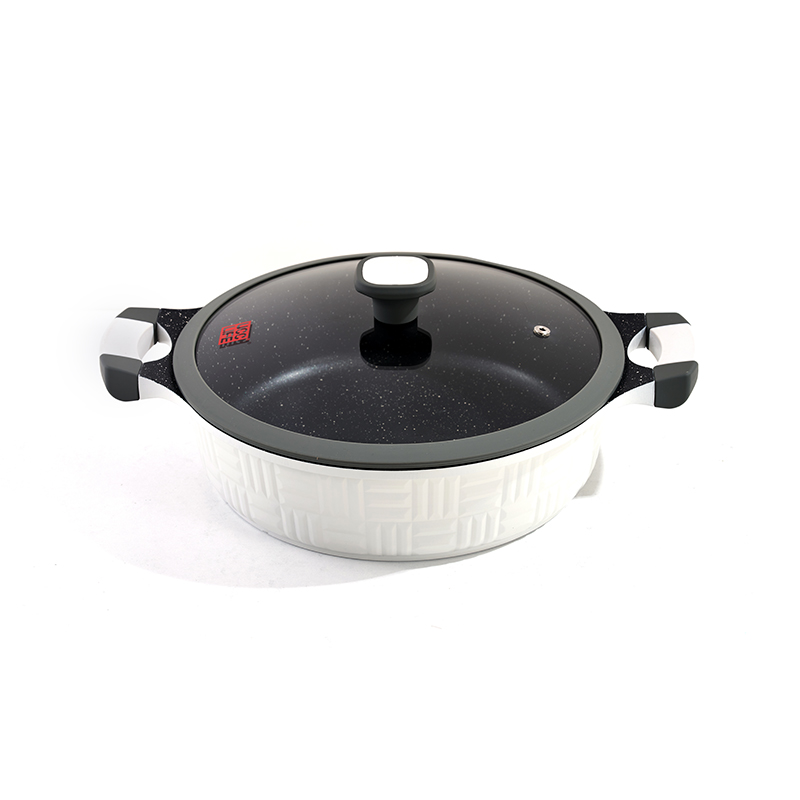
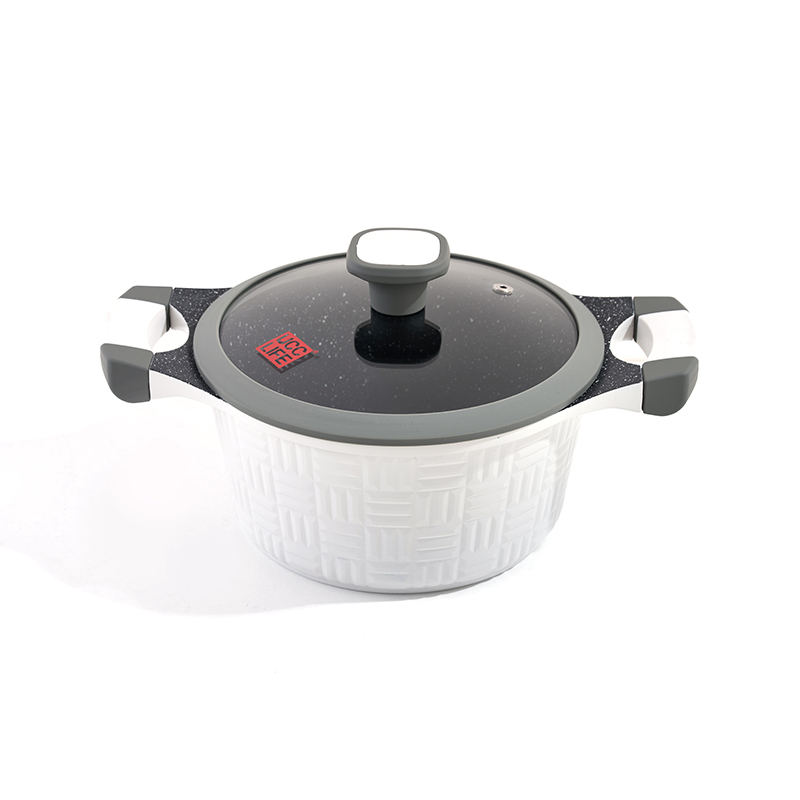
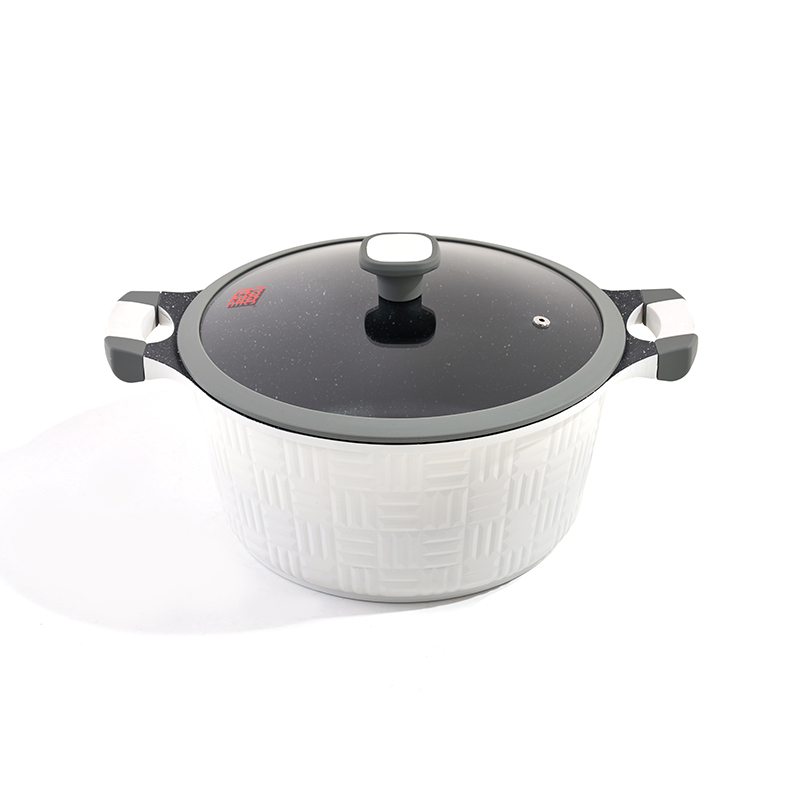
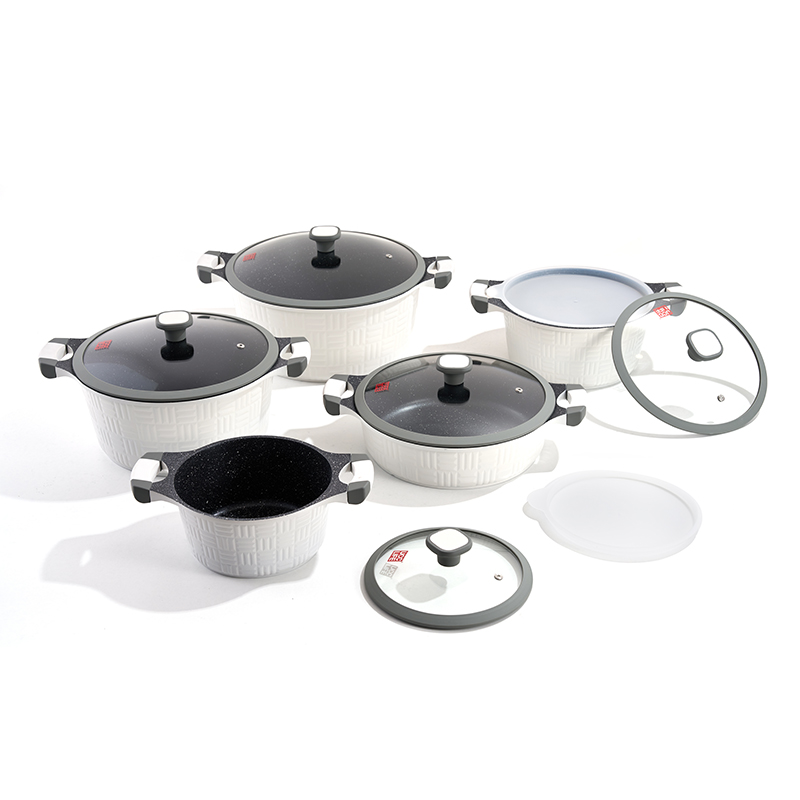
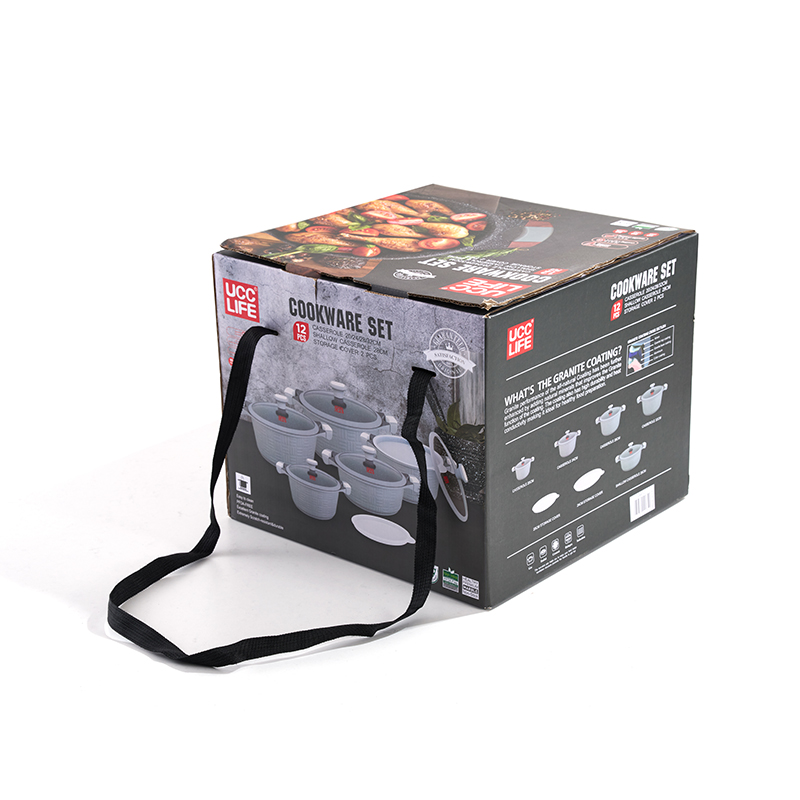
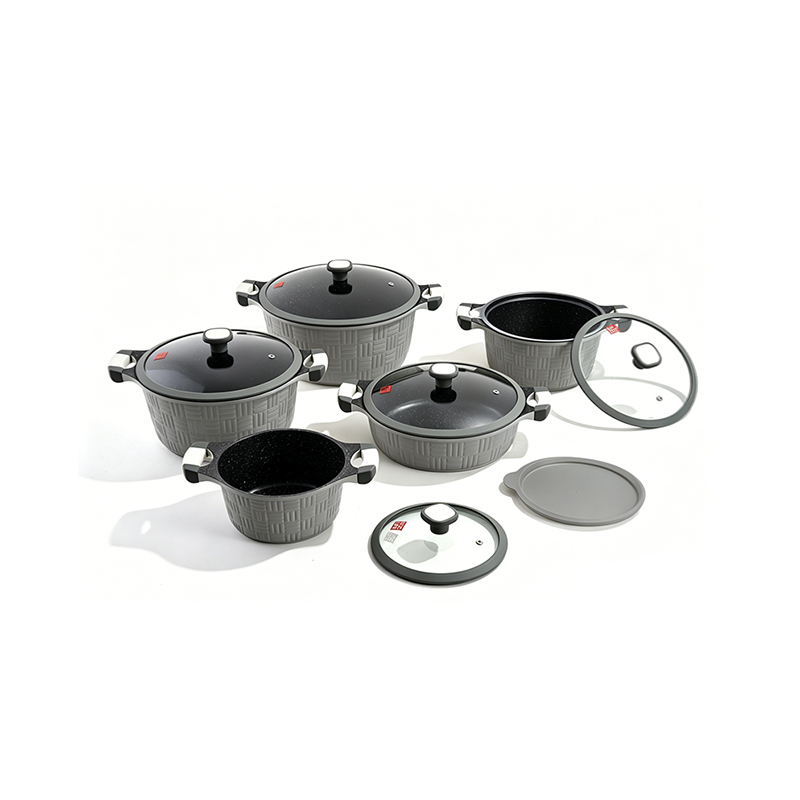
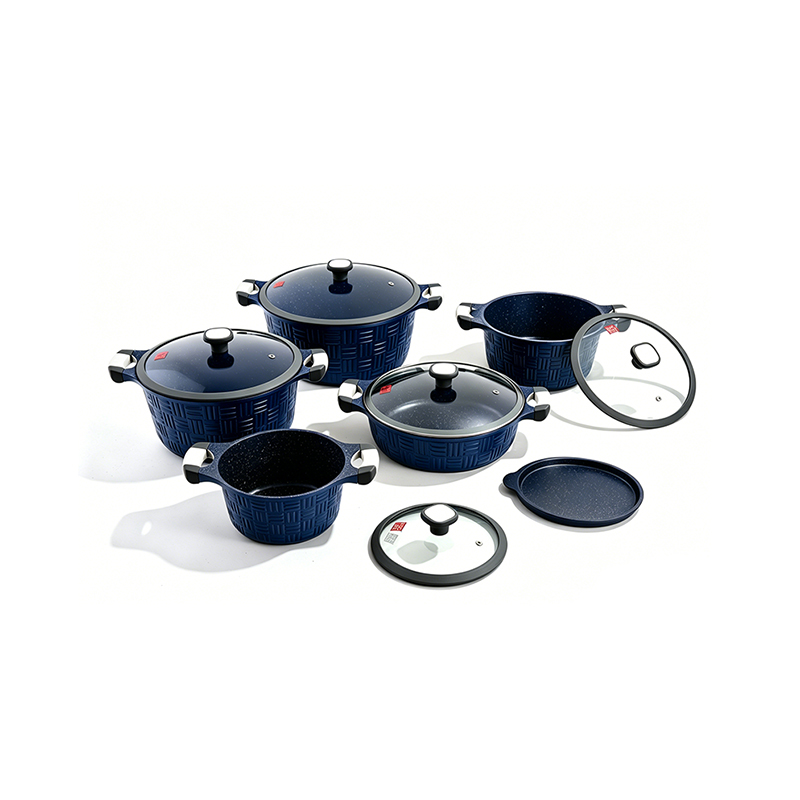
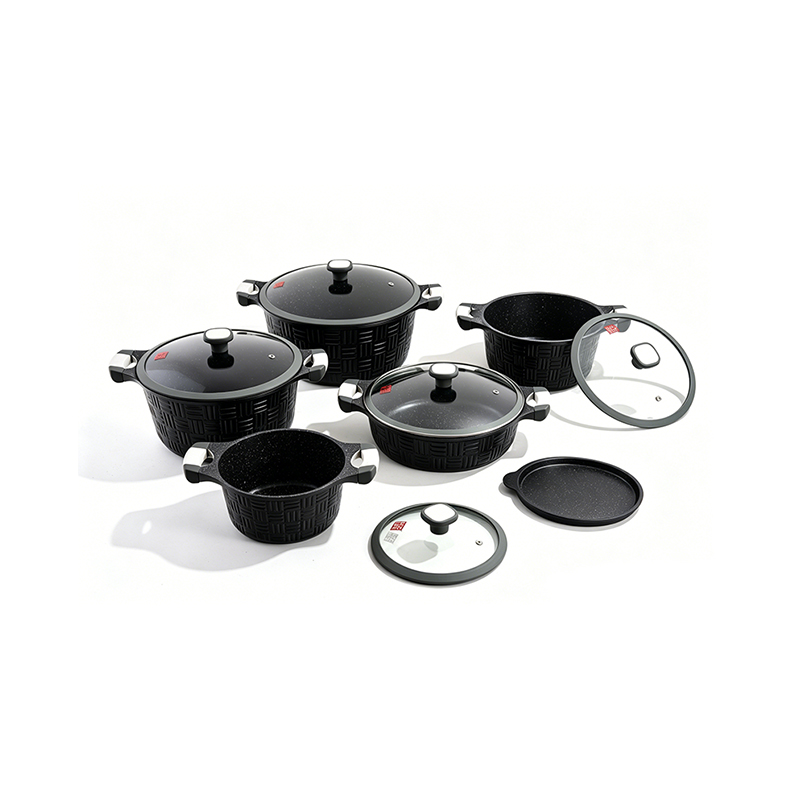
Features of Die-Cast Aluminum Cookware Set
A die-cast aluminum cookware set is made by injecting molten aluminum into a steel mold under high pressure. The result is a single-piece body with no rivets, no seams, and noticeably thicker walls than stamped aluminum. This process creates pans that feel almost as heavy as cast iron but heat up nearly as fast as standard aluminum.
Key features worth knowing before you shop:
Even heat distribution – The thickness (usually 4–5mm at the base) eliminates hot spots. Pancakes brown uniformly without a dark ring in the center.
Induction-ready base – Most die-cast sets include a magnetic stainless steel plate embedded in the bottom, making them work on induction stoves (pure aluminum is not magnetic).
No loose rivets – Handles are cast as part of the body, then coated. Nothing to tighten or trap food debris.
Oven-safe limits – Typically up to 400–500°F (200–260°C), depending on the handle coating. Always check the specific brand.
Heavy but manageable – A 10-inch die-cast skillet weighs around 3–4 lbs, compared to 1.5 lbs for standard aluminum and 8 lbs for cast iron.
Non-stick coating friendly – The smooth, pore-free surface accepts PTFE or ceramic coatings better than rough cast aluminum, reducing the chance of early peeling.
The downside? Die-cast aluminum is brittle. Dropping a pan can crack the metal, not just dent it. And the weight, while lower than cast iron, still surprises cooks used to cheap stamped pans.
What foods should absolutely not be cooked using Die-Cast Aluminum Cookware?
Even a high-quality die-cast aluminum cookware set has limits. Certain foods actively damage the pan or create health risks if cooked improperly. Here’s what to keep off the heat:
Highly acidic long-simmered dishes – Tomato sauce, wine-based braises, or lemon curds cooked for over 30 minutes can pit the aluminum if the non-stick coating has even a microscopic scratch. The acid reacts with exposed aluminum, creating dark spots and a metallic taste.
Dry-toasted spices – Heating cumin seeds, peppercorns, or sesame seeds without oil requires temperatures above 500°F. Most die-cast non-stick coatings degrade at that heat, releasing fumes.
Frozen foods straight from the freezer – The thermal shock of frozen vegetables or a cold steak hitting a hot die-cast surface can crack the thick aluminum. Thaw first.
Canned beans or artichokes – These are packed in acidic brines. Simmering them for more than 10–15 minutes in a scratched die-cast pan accelerates leaching.
Overly salty brines – High-concentration salt water left to cool in the pan can create galvanic corrosion points, especially around the stainless steel induction plate.
The safe rule: use die-cast aluminum for eggs, stir-fries, grains, and quick sautéed vegetables. Save your enameled cast iron or stainless steel for long-cooking acidic stews. If you notice the non-stick layer flaking, stop cooking immediately—exposed aluminum underneath is not meant for direct food contact.
What is the most common material used for Wear-Resistant Aluminum Cookware Sets?
The common material used for wear-resistant aluminum cookware sets is hard-anodized aluminum, not die-cast alone. Hard-anodizing involves submerging aluminum in an acid bath and running an electrical current through it. This grows a thick aluminum oxide layer directly from the metal itself. That oxide layer is harder than steel, non-reactive, and resistant to scratches, corrosion, and abrasion. Die-cast aluminum provides the thick, even body; hard-anodizing treats the surface. Many premium wear-resistant sets combine both: a die-cast core for heat retention and a hard-anodized exterior to resist daily dings and dishwasher wear.
Is cooking with a Wear-Resistant Aluminum Cookware Set beneficial for your health?
The answer depends entirely on the surface you cook on. If the set is hard-anodized (not just coated), the aluminum oxide layer is inert. It will not leach into food, even when cooking acidic dishes. That makes it safer than bare aluminum pans, which can transfer trace amounts of the metal into simmering sauces. If the set has a non-stick coating over die-cast aluminum, the health benefit comes from needing less cooking oil—good for calorie-conscious cooks. However, once that coating scratches, the underlying aluminum becomes exposed. Cooking in a scratched non-stick die-cast pan is not acutely dangerous, but repeated use may add small amounts of aluminum to food. For long-term peace of mind, choose hard-anodized die-cast without an internal non-stick layer, or replace coated pans as soon as the surface shows wear.

 en
en
 Español