
 en
 Español
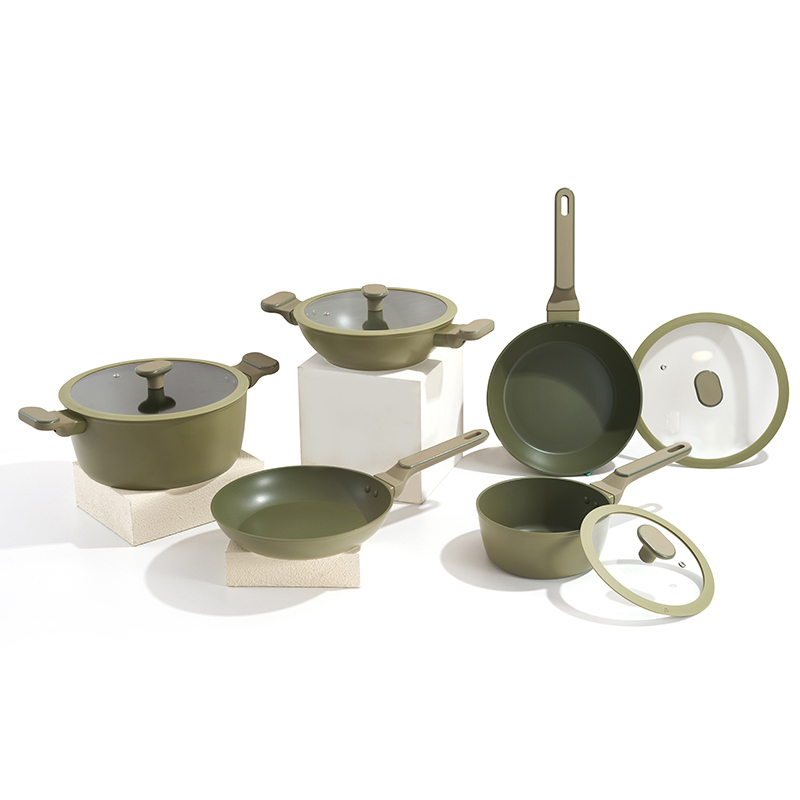
This cookware set features a non-stick coating, even heat conduction, and multi-...
See Details
Cast Iron Dutch Oven with Iron Lid: Heat-Retaining Performance for Everyday Slow Cooking
Date:Aug 12, 2026
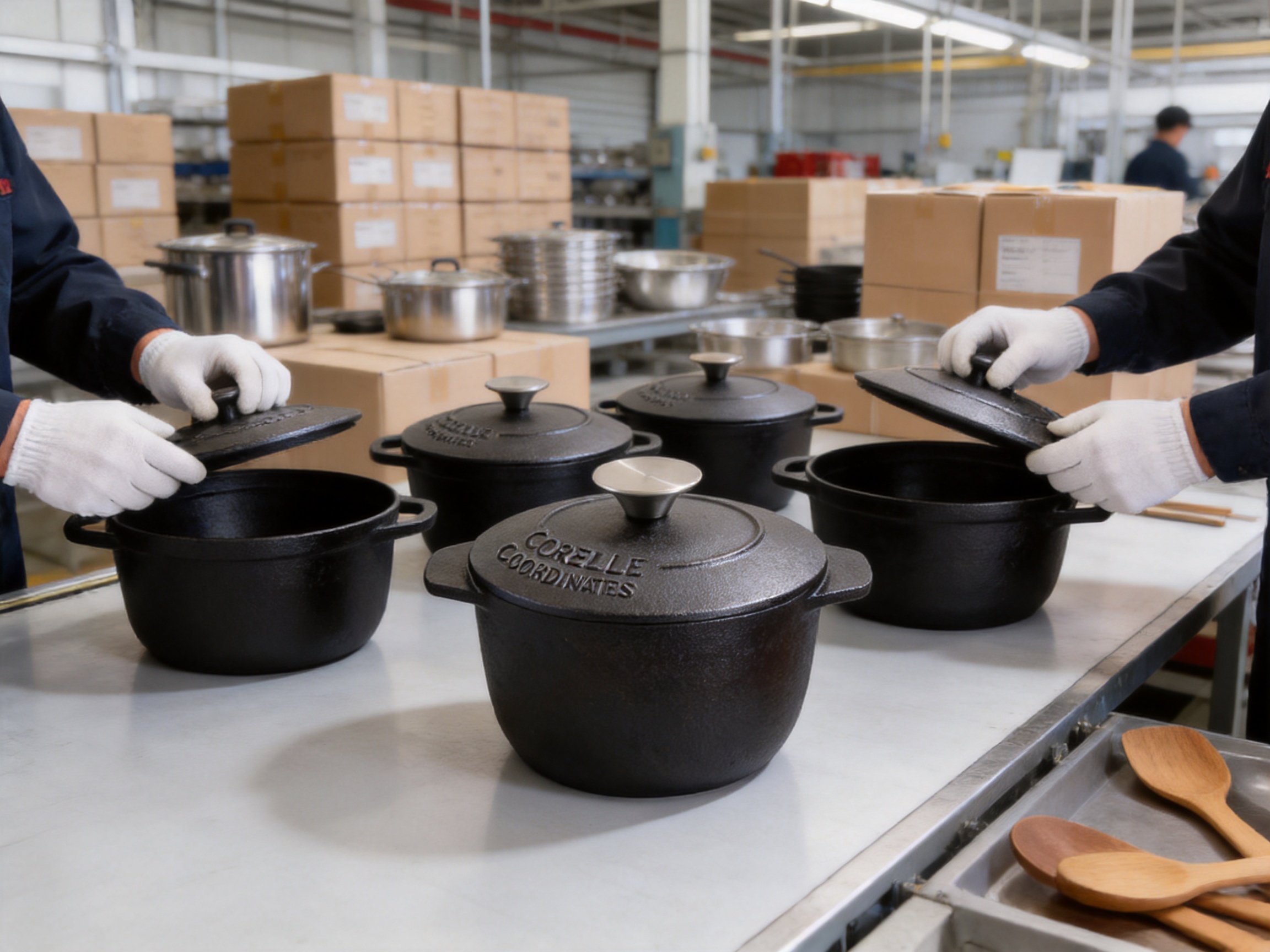
Cast iron cookware has remained a trusted choice in kitchens for generations because it combines exceptional heat retention, dependable durability, and remarkable versatility. The Cast Iron Dutch Oven with Iron Lid is designed around these qualities, offering a solid cast iron body, a matching iron lid, and sturdy integrated handles for practical cooking and safe handling. It is suitable for braising, baking, slow cooking, and other gas stovetop applications where steady, consistent heat is important.
This cookware is developed for buyers who value long service life, functional design, and reliable cooking performance. It is also a practical product for kitchenware distributors, cookware retailers, hospitality suppliers, and private-label buyers seeking a durable iron cookware item with broad market appeal. Its compact 16 × 11 cm size makes it suitable for individual portions, side dishes, compact kitchens, tabletop presentation, and small-batch cooking.
Manufactured and supplied by Zhejiang Echo Industry And Trade Co., Ltd., the product forms part of a wider cookware and kitchen accessory portfolio that includes aluminum cookware, stainless steel cookware, cast iron cookware, and kitchen utensils. Through product variety, sourcing support, ODM and OEM services, certification assistance, flexible MOQs, and sustainable product development, the company aims to support buyers from initial product selection through supply-chain fulfillment.
1. Why Cast Iron Remains a Preferred Cookware Material
Cast iron is valued first for its thermal behavior. Unlike many thin cookware materials that heat quickly but lose heat rapidly, cast iron absorbs and stores heat over an extended period. Once the cookware has reached the desired temperature, it can maintain a stable cooking environment even when ingredients are added. This characteristic is particularly useful for braising, slow cooking, simmering, baking, and other methods that benefit from steady heat rather than sudden temperature changes.
The material also distributes heat gradually across the cooking surface and surrounding walls. Although cast iron generally requires more time to preheat than lightweight aluminum, its heat stability can improve cooking consistency. A dish prepared in a cast iron vessel can continue cooking evenly after the heat is reduced, making the cookware useful for recipes that need controlled, moderate temperatures.
Another important advantage is mechanical strength. Cast iron is a dense, rigid material that can withstand demanding kitchen use when handled correctly. The solid construction gives the Dutch oven a substantial feel and helps it resist the flexing, denting, and deformation that may occur with thinner cookware. For commercial buyers and households seeking products with a long usable life, this durability can be a significant selling point.
Cast iron is also highly versatile. It can be used for stovetop cooking, baking, roasting, and serving, depending on the specific design and care instructions. The Cast Iron Dutch Oven with Iron Lid is designed for gas stovetop cooking and is especially well matched to recipes that require a covered cooking environment. The lid helps retain moisture and heat, while the heavy body supports slow and even cooking.
2. Product Overview
The Cast Iron Dutch Oven with Iron Lid consists of a solid cast iron body and a matching iron lid. This coordinated construction provides a stable cooking vessel with a closely related lid material, giving the product a cohesive appearance and functional balance. The integrated handles are built into the cookware body, providing practical lifting points without relying on detachable components.
The product is listed under the Iron Cookware category and carries SKU XQ03. Its stated size is 16 × 11 cm. This compact format may be attractive to consumers looking for a smaller Dutch oven for individual meals, side dishes, dips, baked portions, stews, or limited-quantity recipes. It can also complement larger cookware collections by serving a different purpose rather than competing directly with full-size family cooking pots.
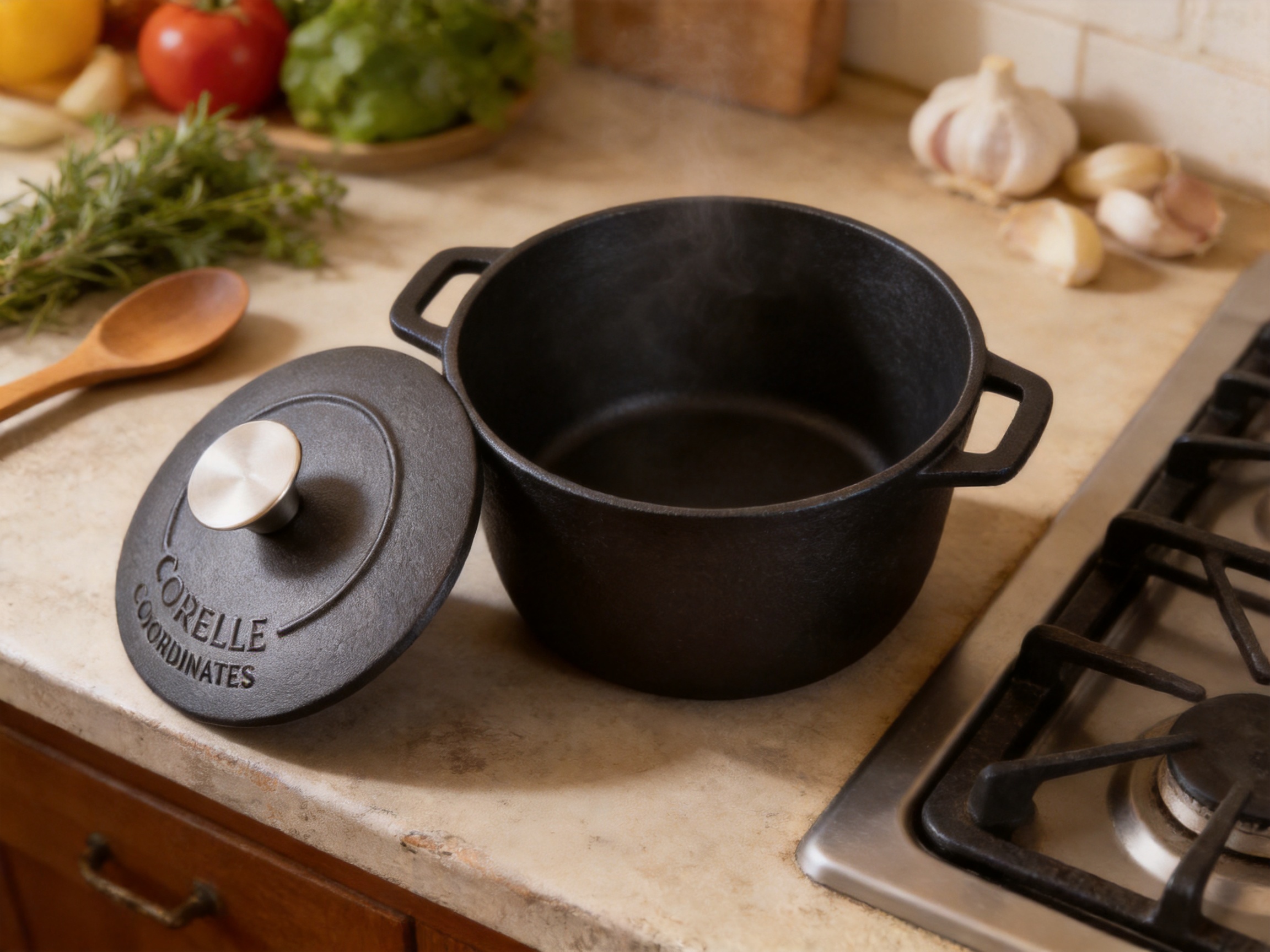
The product is specifically designed for gas stovetop cooking. Gas users can benefit from the cookware’s ability to retain heat while the integrated handles provide a firm grip for repositioning the pot. As with all cookware, the flame should remain within the base area and should not extend up the sides. This helps protect the cookware, improve energy use, and reduce the risk of excessive overheating.
The matching lid supports covered cooking techniques. Keeping a lid on the pot can help reduce moisture loss, preserve aromas, and maintain a more stable temperature during slow cooking. For braised dishes, the covered environment can help soften ingredients over time. For baking-style applications, the enclosed space can contribute to a more controlled cooking atmosphere.
| Product Attribute | Specification or Feature | Practical Benefit |
|---|---|---|
| Product name | Cast Iron Dutch Oven with Iron Lid | Suitable for covered cooking, braising, baking, and slow cooking |
| SKU | XQ03 | Supports product identification and purchasing management |
| Category | Iron Cookware | Positioned for durable cookware and cast iron product ranges |
| Material | Cast iron body and iron lid | Strong structure, heat retention, and long service potential |
| Size | 16 × 11 cm | Compact format for small portions and space-conscious kitchens |
| Handles | Integrated handles | Convenient lifting and reduced reliance on attached hardware |
| Recommended heat source | Gas stovetop | Designed for controlled gas cooking applications |
| Packaging option one | 1 unit; carton size 13 × 17 × 17 cm | Suitable for individual product packing and order handling |
| Packaging option two | 4 units; carton size 35 × 27 × 17 cm | Suitable for grouped distribution and wholesale shipment |
3. Heat Retention and Cooking Consistency
One of the strongest advantages of this Dutch oven is its capacity to retain heat. When the cast iron body is preheated gradually, it creates a stable base for cooking. This is especially useful when preparing foods that benefit from a gentle, continuous temperature, such as stews, braised vegetables, slow-cooked meat, baked grains, and thick sauces.
Heat retention can also improve the transition from stovetop cooking to serving. A cast iron pot remains warm for a longer period after removal from the burner than many lightweight cookware alternatives. This makes it useful for meals served directly at the table, although appropriate heat protection should always be used because the handles and body may remain hot.
The heavy structure is advantageous when adding relatively cool ingredients. Thin cookware can experience sharp temperature changes that cause cooking conditions to fluctuate. Cast iron tends to absorb this change more gradually. While the user still needs to preheat responsibly and avoid sudden thermal shock, the material is well suited to recipes requiring a steady cooking rhythm.
For buyers comparing this product with lightweight aluminum cookware, the main difference is the balance between speed and stability. Aluminum often heats rapidly and is easy to handle, but it may cool faster when ingredients are added. Cast iron usually takes longer to heat and weighs more, yet it offers stronger heat retention and a more substantial cooking experience. The choice depends on the target customer and cooking application, but the Dutch oven is particularly competitive where slow, controlled heat is a priority.
4. A Versatile Vessel for Multiple Cooking Methods
4.1 Braising
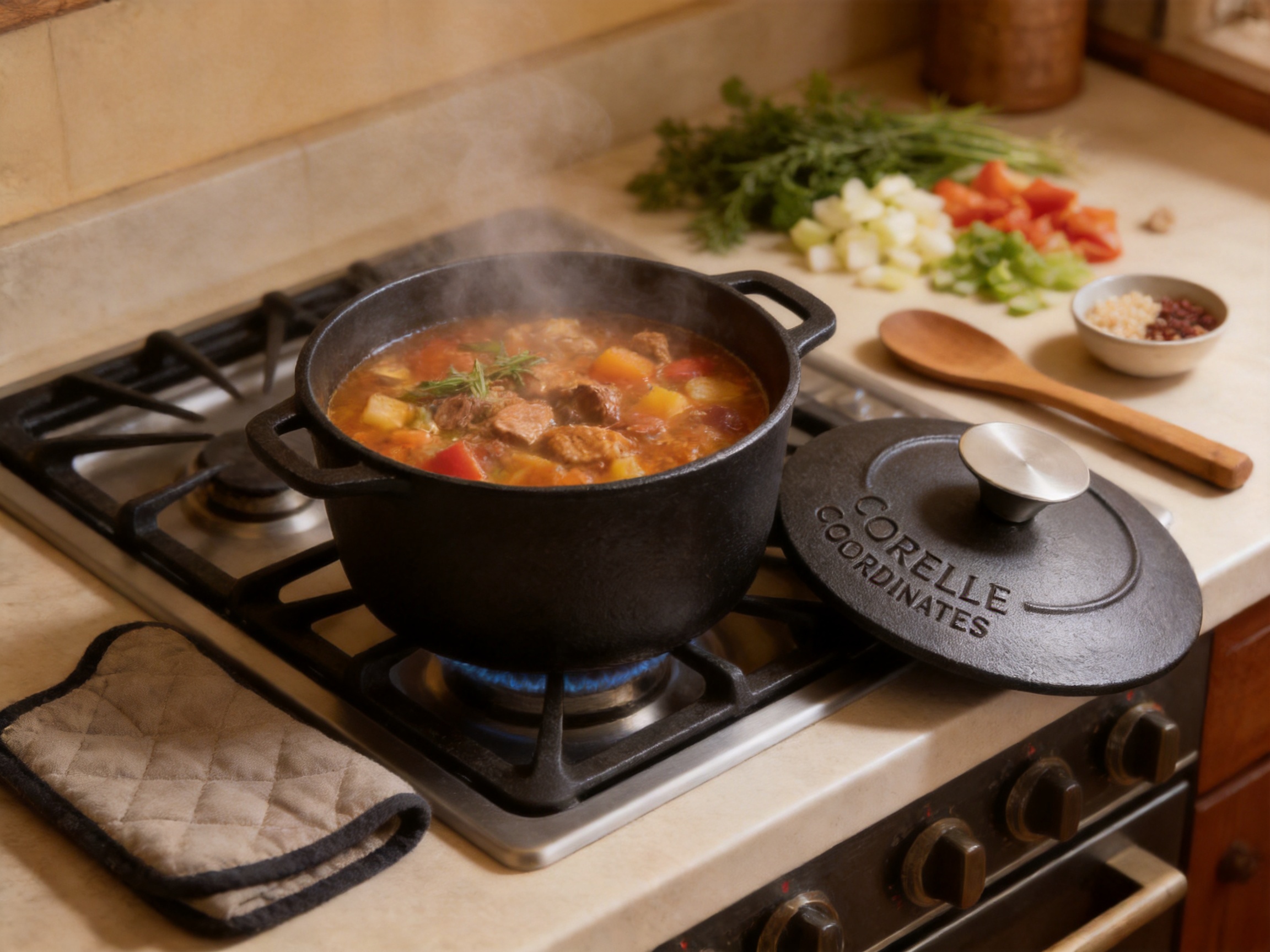
Braising combines browning with slow cooking in a covered vessel. The cast iron body provides a strong heat base, while the iron lid helps retain moisture during the longer cooking stage. The compact size is appropriate for small servings or carefully portioned recipes. Users can prepare tender vegetables, poultry portions, small cuts of meat, legumes, and other ingredients that benefit from gradual cooking.
The product’s heat-retaining behavior can help reduce the need for constant temperature adjustment. Once the pot has been heated and the burner is set appropriately, the cookware can support a stable cooking process. Users should still monitor the dish and follow recipe-specific instructions because cooking performance depends on ingredient quantity, burner strength, liquid volume, and cookware placement.
4.2 Baking
Cast iron is widely associated with baking because it provides a steady, enclosed cooking environment. A covered Dutch oven can be used for small breads, baked vegetables, individual casseroles, and other recipes that benefit from retained heat. The matching lid can help maintain moisture during the initial part of cooking, while the dense body supports even heat exposure.
The compact format may be especially attractive for single-serving or small-batch baking. It can help reduce the need to use a large oven vessel for a small amount of food. For retailers, this creates an opportunity to position the product not only as a traditional stew pot but also as a compact baking and serving tool.
4.3 Slow Cooking
Slow cooking requires patience, stable heat, and a vessel that can maintain a consistent environment. The cast iron construction is naturally suited to this method. The lid helps limit evaporation, and the body continues to hold heat when the burner is reduced to a low setting.
Suitable recipes may include soups, beans, vegetable preparations, grains, sauces, and small portions of braised meat. The user should avoid overheating the empty pot and should introduce ingredients according to the recipe. Gradual heating is important for both safe operation and long-term cookware care.
4.4 Stovetop-to-Table Presentation
The Dutch oven can also contribute to a practical serving presentation. Its compact shape and solid construction give it a traditional, substantial appearance. A meal prepared in the cookware can be served directly after the pot has been placed on a suitable heat-resistant mat or trivet. This can reduce the number of serving dishes required and help retain warmth during the meal.
However, the body, lid, and handles can become extremely hot. Anyone moving or serving the pot should use appropriate heat-resistant protection and warn other diners, especially children, about the hot surface.
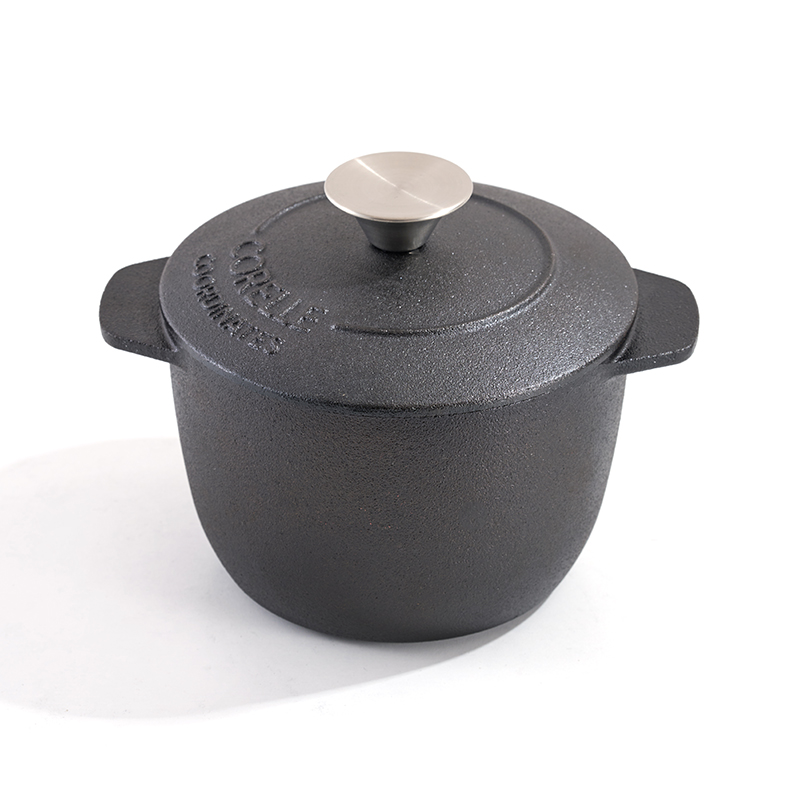
Cast Iron Dutch Oven with Iron Lid
5. Construction Advantages Over Competing Cookware
The product’s competitive value comes from the combination of material, lid design, size, and integrated handling features. Each element addresses a common consumer need: reliable cooking, durability, convenient use, and long-term value.
5.1 Solid Cast Iron Body
A solid cast iron body provides a dense cooking base and substantial side-wall construction. Compared with lightweight cookware, it is less likely to flex during use and can provide stronger resistance to everyday mechanical stress. The dense material also supports the product’s heat retention performance.
For wholesalers and retailers, solid construction can be communicated as a durability benefit rather than a disposable or short-term cookware feature. Consumers who purchase cast iron often expect an item that can remain in the kitchen for years when properly cared for. This supports a value proposition based on service life rather than the lowest initial price.
5.2 Matching Iron Lid
The matching iron lid is more than an aesthetic accessory. A lid helps contain heat and moisture and supports covered cooking. A coordinated lid also makes the product more complete at the point of sale, avoiding the need for customers to purchase a separate cover that may not fit correctly.
The lid allows the cookware to support a wider selection of recipes. Without a cover, a small pot may be limited to open cooking. With a cover, it can be used for stewing, braising, baking, reheating, and moisture-sensitive dishes. This increases the number of use cases that retailers can present in product descriptions and promotional materials.
5.3 Integrated Handles
Integrated handles offer a direct and sturdy way to lift the cookware. Because they are part of the cookware structure, they do not depend on screws, rivets, or detachable fittings for basic attachment. This can simplify handling and contribute to a traditional cast iron appearance.
Users should remember that integrated handles become hot during cooking. The correct practice is to use dry, heat-resistant gloves or a suitable handle cover. A wet cloth should not be used as a substitute because moisture can transfer heat rapidly and create a burn risk.
5.4 Compact Size
The 16 × 11 cm size distinguishes this model from larger Dutch ovens intended for family-sized meals. Its compact format can appeal to single households, couples, small kitchens, campers using suitable gas cooking equipment, restaurants serving individual portions, and hospitality businesses seeking attractive tableware.
Smaller cookware can also support portion control and reduce unnecessary food preparation. It may be easier to store than a full-size Dutch oven, particularly in apartments, compact vacation homes, and professional kitchens with limited shelf space. Buyers should confirm the exact capacity required for their market, as the listed dimensions describe external or product sizing information rather than a stated liquid volume.
6. Product Development and Manufacturing Strengths
Zhejiang Echo Industry And Trade Co., Ltd. positions itself as a kitchenware supplier and manufacturing partner based in Zhejiang, China. Zhejiang is recognized as an important manufacturing and export region, with established industrial networks serving international buyers. The company’s product range includes aluminum cookware, stainless steel cookware, cast iron cookware, and kitchen utensils, allowing buyers to consolidate multiple product categories through one supplier.
The company’s manufacturing strength is reflected in its focus on practical cookware construction and broad product coverage. Rather than limiting its supply capability to one material, it works across several cookware categories. This is valuable for importers and distributors that need coordinated collections, such as a cookware set supported by matching utensils, aluminum frying pans, stainless steel pots, and iron cookware products.
Product manufacturing begins with material selection and design planning. For cast iron cookware, the body and lid must be formed with attention to wall thickness, shape, handle integration, and dimensional consistency. The casting process must create a stable structure capable of supporting the weight and thermal demands associated with cast iron cooking. After forming, the product requires finishing, inspection, cleaning, and packaging procedures appropriate to the intended market.
While the supplied product information does not specify individual machinery models, proprietary formulas, or named factory certifications, the company’s stated services indicate an organized approach to product development and supply. Its support includes ODM and OEM customization, product certification assistance, flexible minimum order quantities, and sustainable and healthy product development. These capabilities can help buyers adapt cookware for different channels, market requirements, packaging programs, and brand strategies.
6.1 Design and Engineering Coordination
Cookware performance depends on the relationship between geometry, material thickness, lid fit, handle shape, and heat-source compatibility. A professional supplier must coordinate these elements before production begins. For this Dutch oven, the body and lid are designed as a matching set, and the integrated handles are part of the overall product structure.
Design coordination is important for OEM and ODM projects. Buyers may require adjustments to dimensions, surface treatment, handle styling, packaging, logos, or color presentation. A supplier with experience across multiple cookware materials can help compare the functional implications of these changes and identify a suitable product direction.
6.2 Production Process Considerations
Cast iron manufacturing commonly involves several controlled stages. Raw material preparation is followed by melting and casting into a prepared mold. Once the cast body and lid have been formed, excess material and casting irregularities are removed. Surfaces are then finished and inspected. Depending on the required treatment and market specification, additional seasoning, coating, or protective processing may be applied.
Dimensional control is especially important for a Dutch oven because the lid must work effectively with the body. A lid that is too loose may release excessive heat and moisture, while one that is too tight may be inconvenient to remove. The contact relationship between the body and lid should therefore be checked during quality inspection.
Handle integrity is another key consideration. Integrated handles must be shaped to support lifting and must not contain sharp or uncomfortable edges. The finished cookware should be checked for casting defects, surface irregularities, unstable placement, and other issues that could affect customer satisfaction or safe use.
6.3 Quality Control and Order Inspection
For international buyers, quality control is not limited to the individual product. It also includes packaging accuracy, carton counts, labeling, product identification, and shipment consistency. The listed packaging information provides two distribution options: one carton containing one unit with a stated carton size of 13 × 17 × 17 cm and a stated carton weight of 5 kg, and another carton configuration containing four units with a stated carton size of 35 × 27 × 17 cm and a stated carton weight of 20.5 kg.
These figures should be confirmed against the final purchase order, because packaging specifications can vary according to protective materials, labeling, destination requirements, and customization. Even so, the presence of individual and grouped carton data helps buyers plan warehousing, freight calculation, and retail distribution.
Inspection programs may include visual checks, dimensional checks, handle checks, lid-fit checks, packaging checks, and order-quantity verification. Buyers can discuss the required inspection standard with the supplier before production. If a destination market has specific food-contact or cookware requirements, the buyer should also request the applicable documentation and certification assistance before shipment.
6.4 Flexible OEM and ODM Support
OEM support is useful when a buyer already has a defined brand, packaging concept, or product specification. ODM support is valuable when the buyer wants assistance developing a product or adapting an existing model to a particular market. For the Dutch oven, possible project discussions may include packaging artwork, instruction manuals, carton markings, logo placement, size variations, set combinations, and sales-channel positioning.
Flexible MOQs can be particularly helpful for small and medium-sized buyers. A new retailer may need to test demand before committing to a large volume. A regional distributor may want to introduce the product in stages. A supplier that can discuss practical order quantities may reduce entry barriers while helping the buyer build a broader cookware line over time.
7. Supply-Chain Benefits for International Buyers
One-stop sourcing is a central advantage of working with a supplier that handles multiple kitchenware categories. Instead of coordinating separate vendors for aluminum cookware, stainless steel cookware, cast iron products, and utensils, a buyer can explore a broader product program through one business relationship.
This can simplify communication, product selection, sampling, quotation management, packaging coordination, and shipment planning. It may also help retailers create more coherent collections. For example, a buyer could combine the compact cast iron Dutch oven with stainless steel saucepans, aluminum frying pans, and wooden or nylon utensils to develop a complete kitchen assortment.
Coordinated sourcing can also support seasonal promotions. The Dutch oven may be promoted during winter cooking campaigns, holiday gift periods, camping seasons, or restaurant equipment programs. Other cookware categories can be added to the same campaign to increase average order value and create a more complete customer proposition.
International buyers should provide clear information about target markets, required labeling, packaging language, shipment terms, testing expectations, and intended sales channels. Early communication reduces the risk of changes late in the production process. The supplier’s certification assistance service can be discussed as part of this planning process, although buyers remain responsible for confirming the legal requirements applicable to their own markets.
8. Positioning the Dutch Oven Against Alternative Materials
Every cookware material has strengths and limitations. The Cast Iron Dutch Oven with Iron Lid should be positioned according to its advantages rather than compared only on weight or heating speed.
8.1 Compared with Aluminum Cookware
Aluminum cookware is often lighter and heats quickly. It can be convenient for rapid frying and everyday handling. Cast iron, by contrast, is heavier and slower to preheat but generally holds heat longer. The Dutch oven is therefore better suited to customers who prioritize slow cooking, thermal stability, sturdy construction, and traditional cookware performance.
8.2 Compared with Stainless Steel Cookware
Stainless steel is valued for its corrosion resistance, clean appearance, and compatibility with many cooking environments. Cast iron offers a different experience, emphasizing heat retention and substantial construction. The matching iron lid and dense body provide a covered cooking format that may be especially attractive for braising and slow cooking.
8.3 Compared with Thin Iron Cookware
Thin iron products may have a lower shipping weight and potentially lower purchase cost, but a solid cast iron vessel can provide a stronger sense of quality and stability. The weight is part of the product’s functional identity. Buyers seeking a durable, traditional cookware item may prefer the solid construction of this model.
8.4 Compared with Nonstick Cookware
Nonstick cookware is popular for easy food release and simple low-fat cooking. However, nonstick surfaces require careful utensil selection and temperature management. This Dutch oven is intended for a different segment: customers who value heavy-duty cast iron construction, long service potential, and slow-cooking performance. The care instructions specifically recommend wooden, nylon, or non-stick cooking utensils and advise against metal or sharp utensils.
9. Care and Maintenance Instructions
Proper maintenance is essential for preserving the appearance and performance of cast iron cookware. Before first use, wash the product according to the supplier’s instructions. Hand washing is recommended to help preserve the appearance of the cookware.
After cooking, use hot, soapy water with a soft cloth or sponge. Avoid abrasive materials that may scratch or damage the surface. Do not use metal or sharp cooking utensils. Wooden, nylon, or suitable non-stick utensils are recommended for food preparation.
Do not overheat the empty pot. Cast iron can tolerate high temperatures in appropriate cooking conditions, but heating an empty vessel excessively may damage the cookware or create unnecessary safety risks. Ingredients or cooking liquid should be added according to the recipe, and the heat should be controlled progressively.
The flame or heat source should not extend beyond the base of the item. Excessive side flame can heat the handles and outer walls unnecessarily and may increase the risk of burns or damage. Gas burners should be adjusted so that the flame remains appropriately contained beneath the cookware.
If the pan severely overheats, users should not touch it. The cooker should be turned off, and the cookware should be left to cool completely. Attempting to move an overheated cast iron pot can cause serious burns because the body, lid, and handles may remain at dangerous temperatures.
The cookware must not be used in a microwave. Cast iron and iron components are not suitable for microwave use. Users should also avoid sudden temperature changes, such as placing a very hot pot on a cold or wet surface or adding cold liquid to extremely hot cookware, unless the cooking instructions specifically support that method.
Care guidance should be included with the retail product in clear language. For international sales, buyers may request translated instructions or customized packaging text. This is an important part of customer education because correct care can increase product satisfaction and reduce avoidable complaints.
10. Retail and Wholesale Applications
The compact Dutch oven has multiple commercial applications. Kitchenware retailers can offer it as an entry-level cast iron product for customers who want to experience traditional cooking without purchasing a large vessel. Department stores and home-goods retailers can position it as a compact cooking and serving item. Online sellers can present it through recipe-led marketing focused on braising, baking, and slow cooking.
Restaurant suppliers may find the product suitable for individual portions, side dishes, table presentation, or specialty menu items. Its integrated handles and matching lid support a recognizable Dutch oven presentation. Hospitality businesses can consider it for guesthouses, cooking schools, food demonstrations, and culinary gift programs, subject to their operational and safety requirements.
Gift retailers can include the product in cooking-themed collections. A bundle may combine the Dutch oven with heat-resistant gloves, wooden utensils, recipe cards, or other kitchen accessories. Since the product is compact, it may be easier to package as a gift than a large family-sized Dutch oven.
Distributors should consider how the product fits into their existing cookware assortment. It can serve as a premium iron cookware item alongside lighter aluminum products and polished stainless steel ranges. Offering multiple materials allows customers to choose cookware based on cooking style, budget, weight preference, and maintenance expectations.
11. Packaging, Carton Planning, and Logistics
Cast iron cookware requires protective packaging because its weight can create impact risks during handling and transport. The product should be packed in a way that limits movement inside the carton and protects the body, lid, handles, and visible surfaces from contact damage.
The supplied information lists an individual carton configuration with one unit, a carton size of 13 × 17 × 17 cm, a CBM of 0.0038 m³, and a carton weight of 5 kg. It also lists a four-unit configuration with a carton size of 35 × 27 × 17 cm, a CBM of 0.0161 m³, and a carton weight of 20.5 kg. These specifications provide a starting point for shipment planning and warehouse calculations.
Because the product is dense, weight may be a more important logistics factor than volume. Buyers should verify gross weight, net weight, pallet configuration, carton strength, stacking limits, and destination handling requirements. The stated carton data should also be checked for consistency with the final packaging design, especially if customized inserts or additional protective materials are added.
Clear SKU identification is useful for inventory control. The XQ03 designation can help buyers distinguish this model from other cookware products and can be incorporated into purchase orders, carton labels, warehouse systems, and sales documentation.
12. Sustainability and Long-Term Product Value
Durable cookware can support a more sustainable consumption model when it remains in use for a long period. A product designed for repeated cooking may reduce the need for frequent replacement compared with lower-durability alternatives. The long-lasting construction of cast iron is therefore relevant not only to performance but also to product lifecycle value.
Long service life depends on responsible use and maintenance. Following the care instructions, avoiding overheating, using suitable utensils, and hand washing can help preserve the cookware. Retailers can communicate these practices as part of the product experience rather than treating care information as an afterthought.
The company states that it is developing sustainable and healthy product solutions. Buyers interested in this area can discuss material choices, packaging reduction, carton optimization, product longevity, and market-specific documentation with the supplier. Sustainability claims should be matched with appropriate evidence and should be presented accurately in customer-facing materials.
From a purchasing perspective, durability may also improve the value of logistics and marketing investment. A product that remains useful for years can encourage positive reviews, repeat business, and stronger consumer trust. For distributors, a dependable cookware item can become a stable part of a core product line rather than a short-lived seasonal item.
13. Recommended Product Messaging
Effective product communication should focus on practical benefits that customers can understand. Recommended themes include solid cast iron construction, matching iron lid, excellent heat retention, stable cooking performance, sturdy integrated handles, compact size, and suitability for braising, baking, and slow cooking.
Marketing content should also explain that cast iron requires gradual preheating, careful handling, and appropriate cleaning. Being transparent about the cookware’s weight and maintenance requirements can help attract the right customers and reduce mismatched expectations.
For business buyers, the messaging can emphasize product completeness, category versatility, packaging options, SKU management, OEM and ODM support, and the supplier’s broader cookware portfolio. The product is not merely a single pot; it can be part of a coordinated kitchenware program supplied through a company with experience across multiple cookware materials.
Suggested retail language may describe the item as a compact cast iron Dutch oven for covered stovetop cooking, small-batch braising, individual baking, and slow-cooked meals. Buyers should avoid unsupported claims regarding oven use, dishwasher safety, induction compatibility, nonstick performance, or specific certifications unless these features have been verified for the final product version.
14. Q&A
Q1: What is the main material of the Dutch oven?
The product has a cast iron body and a matching iron lid. This construction provides a dense, durable vessel with strong heat retention.
Q2: What cooking methods is it designed to support?
It is suitable for braising, baking, slow cooking, and other covered cooking applications. It is designed for gas stovetop cooking according to the supplied product information.
Q3: What is the product size?
The listed size is 16 × 11 cm. This is a compact format suitable for small portions, side dishes, individual servings, and space-conscious kitchens. Buyers should request confirmed capacity information if liquid volume is important for their market.
Q4: Does the product include a lid?
Yes. It includes a matching iron lid designed to help retain heat and moisture during covered cooking.
Q5: Does it have handles?
Yes. The cookware has sturdy integrated handles for lifting and repositioning. The handles become hot during cooking, so users should always use suitable heat protection.
Q6: Can metal utensils be used?
No. The care instructions recommend avoiding metal or sharp utensils. Wooden, nylon, or suitable non-stick cooking utensils should be used instead.
Q7: How should the product be cleaned?
Use hot, soapy water with a soft cloth or sponge. Hand washing is recommended to preserve the appearance of the cookware.
Q8: Can the empty pot be heated?
The pot should not be overheated while empty. Users should heat it gradually and follow appropriate cooking practices.
Q9: Can it be used in a microwave?
No. The product must not be used in a microwave.
Q10: How should the gas flame be adjusted?
The flame or heat source should not extend beyond the base of the cookware. Keeping the flame contained beneath the base helps reduce unnecessary heating of the sides and handles.
Q11: What should a user do if the pot severely overheats?
The user should not touch the cookware. The cooker should be turned off, and the pot should be left to cool completely before any cleaning or handling is attempted.
Q12: What packaging options are listed?
The supplied information lists a one-unit carton measuring 13 × 17 × 17 cm, with a stated CBM of 0.0038 m³ and carton weight of 5 kg. It also lists a four-unit carton measuring 35 × 27 × 17 cm, with a stated CBM of 0.0161 m³ and carton weight of 20.5 kg. These details should be confirmed before final shipment.
Q13: Can buyers request OEM or ODM services?
The company states that it provides ODM and OEM customization. Buyers can discuss packaging, product details, branding, order quantities, and market-specific requirements with the supplier.
Q14: Can the supplier provide other cookware categories?
Yes. The company supplies aluminum cookware, stainless steel cookware, cast iron cookware, and kitchen utensils, supporting one-stop cookware sourcing.
Q15: Does the company assist with certification requirements?
The company states that it provides product certification assistance. Buyers should identify the regulations and documentation required in their target market and confirm the applicable documentation for the exact product order.
15. Why This Product Is a Strong Addition to a Cookware Portfolio
The Cast Iron Dutch Oven with Iron Lid combines the features most commonly associated with traditional cast iron cookware: strong heat retention, durable construction, covered cooking capability, and a substantial, long-lasting design. Its compact size gives it a distinct position within the market, allowing it to serve individual portions and small-batch cooking rather than duplicating the role of a large Dutch oven.
Its competitive advantage is based on function. The solid cast iron body supports stable cooking temperatures. The matching iron lid helps retain moisture and heat. Integrated handles provide practical lifting points. The product can support braising, baking, slow cooking, and gas stovetop use. Together, these features make it more versatile than a basic open pot while retaining the traditional identity of iron cookware.
For importers and distributors, the product is strengthened by the supplier’s broader business capabilities. Zhejiang Echo Industry And Trade Co., Ltd. offers access to multiple cookware categories, one-stop sourcing, ODM and OEM customization, flexible MOQs, certification assistance, and sustainable product development. These services can help buyers build a complete product range instead of sourcing isolated items from multiple vendors.
As with any cast iron product, successful use depends on proper care. Customers should wash it by hand, use soft cleaning materials, avoid sharp and metal utensils, prevent empty overheating, control the gas flame, and handle the cookware only after it has cooled or with appropriate heat protection. When these instructions are followed, the product can deliver dependable performance and long-term value.
For consumers, it is a compact and versatile cooking vessel designed for steady heat and traditional preparation. For commercial buyers, it is a practical addition to an iron cookware category supported by an experienced kitchenware supplier. Its combination of material strength, matching lid design, integrated handles, and supply-chain flexibility makes it suitable for retail, hospitality, foodservice, gift, and private-label applications.
References
1. Product specification sheet for Cast Iron Dutch Oven with Iron Lid, SKU XQ03, supplied in the product materials.
2. Product care instructions for cast iron and iron cookware, supplied in the product materials.
3. General culinary guidance on braising, baking, and slow cooking with heavy cookware.
4. General cookware material comparisons covering cast iron, aluminum, stainless steel, and nonstick cookware.
5. Supplier information for Zhejiang Echo Industry And Trade Co., Ltd., including cookware categories, OEM and ODM services, sourcing support, flexible MOQs, certification assistance, and sustainable product development.
Product: Cast Iron Dutch Oven with Iron Lid
Recommended Articles
Product Category
Related products
-
-
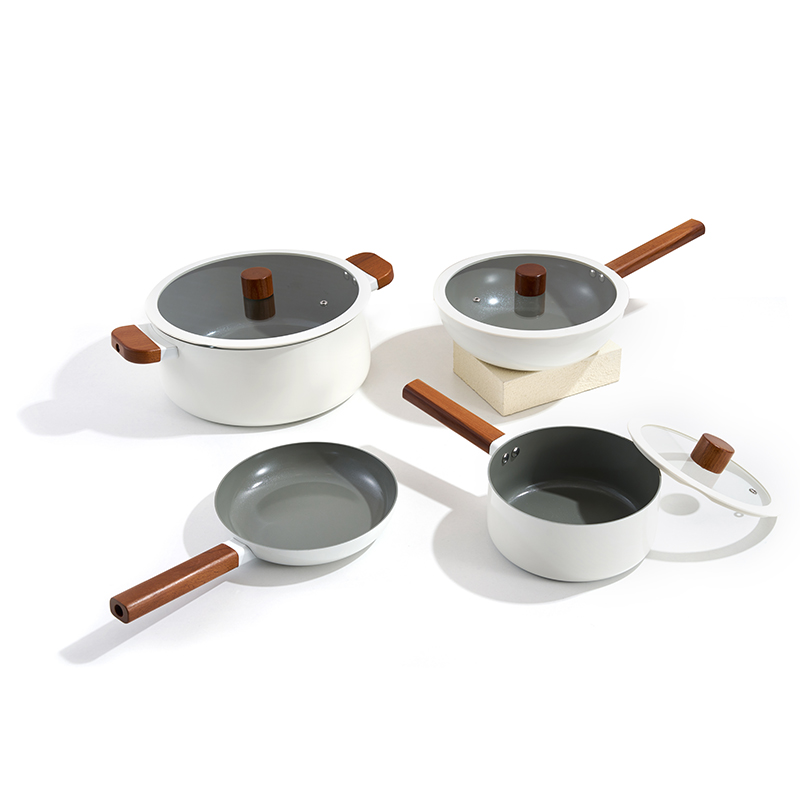
This cookware set has a ceramic non-stick inner liner, a heat-resistant wooden h...
See Details -
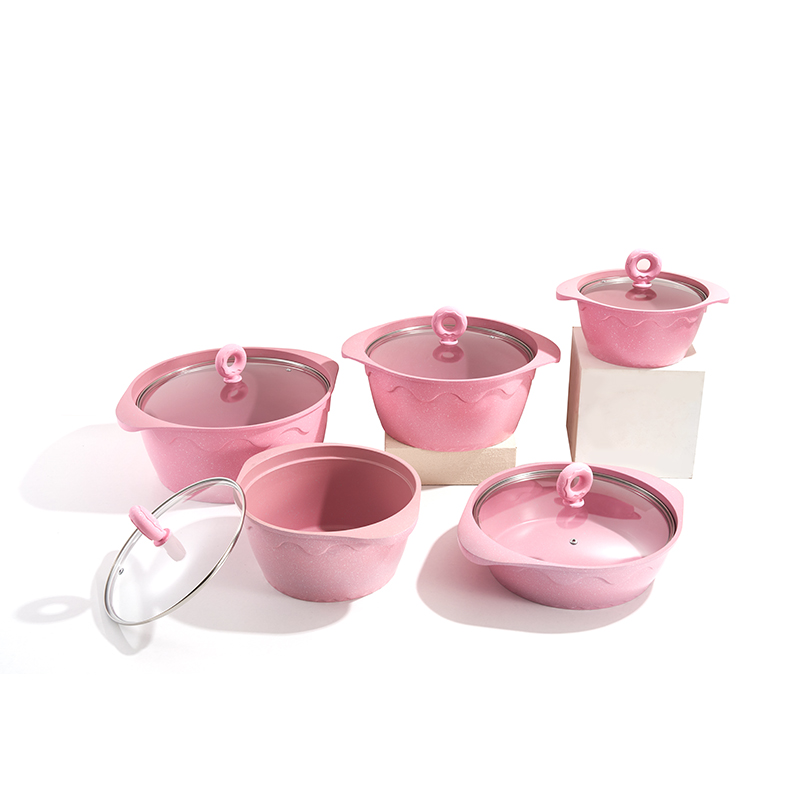
This cookware set is made of food-grade non-stick material, with a unique eye-ca...
See Details -
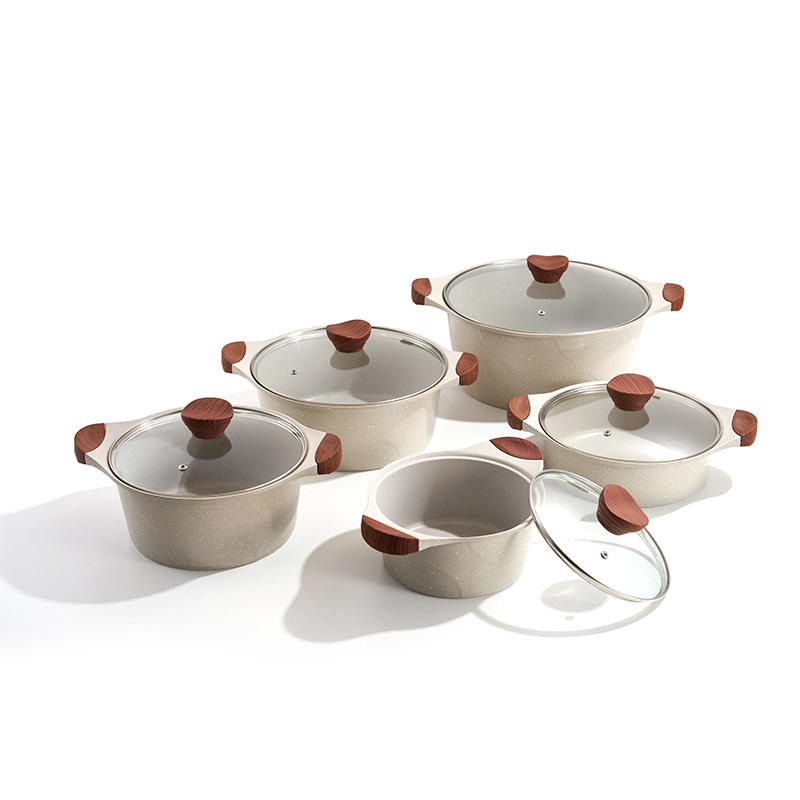
This off-white cookware set is made of wear-resistant non-stick material, with w...
See Details
Whether you're looking for bulk purchases or have any custom requirements, We are here to offer the best
solutions for you.
tiffany.zhong@echocn-trading.com
PHONE
+86-19561173975
+86-19557020621 (Hazel Wu)
ADD
Room 301, Unit 3014, No. 175 Qifeng Avenue, Wenqiao Town, Taizhou, Zhejiang, China
Fill Out the Form for More Information
Copyright © Zhejiang Echo Industry And Trade Co., Ltd.
All Rights Reserved.

China Cookware Set Manufacturer