
 en
 Español
This cookware set features a non-stick coating, even heat conduction, and multi-...
See Details
Multi-Function Nonstick Aluminum Cookware Set for Modern Kitchens
Date:Aug 14, 2026
Choosing the right cookware set can influence every part of the cooking experience, from preparation and heat control to cleaning and long-term maintenance. A well-designed set should offer more than attractive appearance. It should provide practical shapes, dependable performance, convenient handling, compatibility with different cooking appliances, and a surface that is easy to care for after every meal.
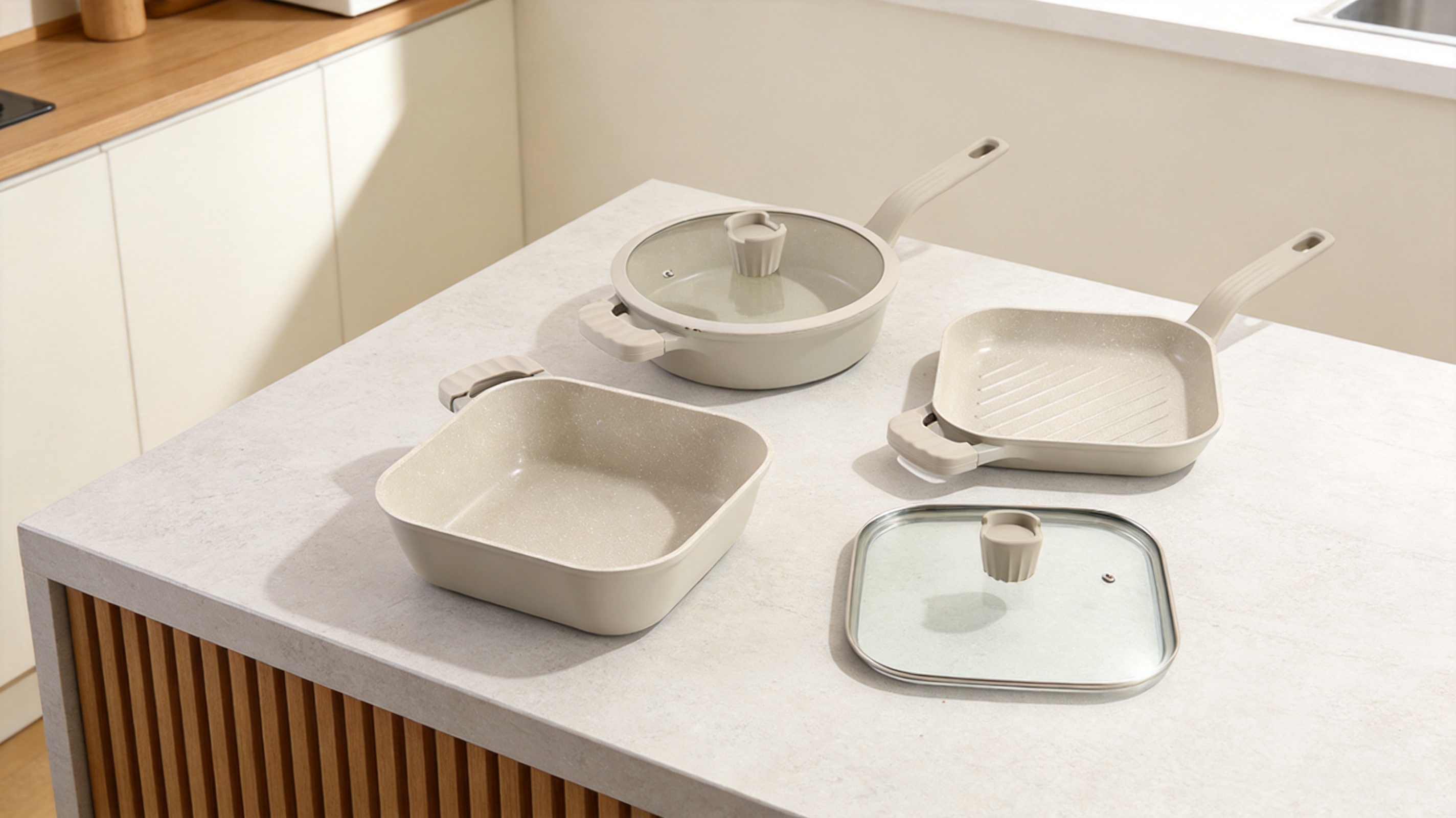
The OCEAN WAVE Nonstick Aluminium Pot and Pan Set is designed around these expectations. It combines a light beige, granite-speckled appearance with a versatile selection of cookware shapes, including a square deep casserole, a round frypan with glass lid, and a square grill pan. This combination allows one coordinated set to support frying, grilling, simmering, braising, boiling, and family-style serving.
Rather than focusing on a single type of pan, the set is developed as a multi-function cookware solution for homes, retailers, hospitality projects, and kitchenware distributors. Its food-grade non-stick interior, aluminum construction, practical capacities, and minimalist Nordic styling make it suitable for consumers who want cookware that looks refined while remaining functional for daily use.
For buyers and importers, the product also represents a flexible sourcing opportunity. Zhejiang Echo Industry And Trade Co., Ltd. provides a broader cookware supply platform covering aluminum cookware, stainless steel cookware, cast iron cookware, and kitchen utensils. Its capabilities include one-stop sourcing, OEM and ODM customization, product certification assistance, flexible minimum order quantities, and sustainable product development.

OCEAN WAVE Nonstick Aluminium Pot and Pan Set
Why a Multi-Function Cookware Set Is Valuable
Many cookware collections are assembled piece by piece. A consumer may purchase a frying pan, a saucepan, a grill pan, and a casserole at different times, often resulting in mismatched sizes, inconsistent coatings, and storage difficulties. A coordinated set solves many of these problems by offering several cooking formats with a unified appearance and complementary capacities.
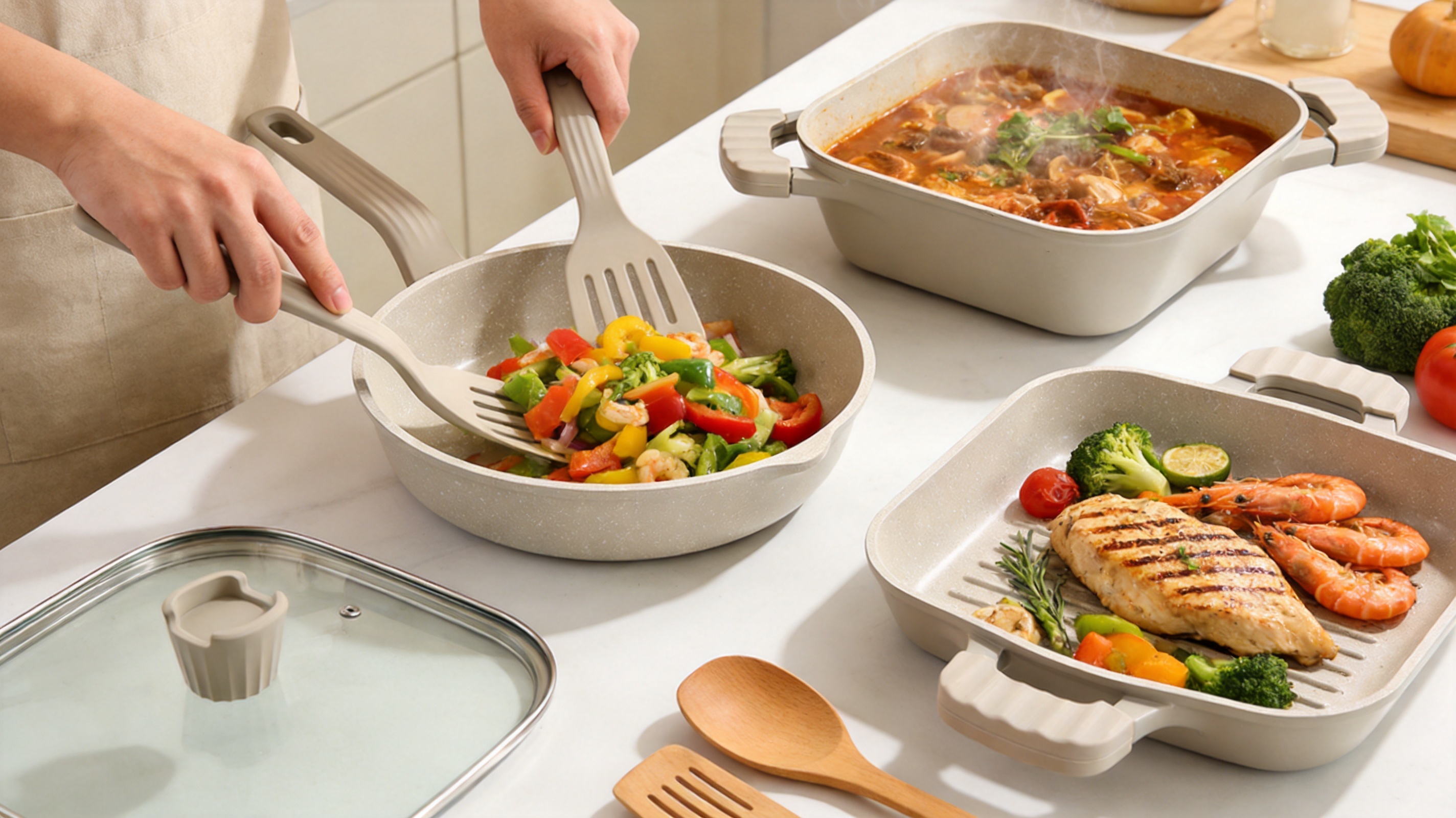
The OCEAN WAVE set is organized around the cooking tasks that occur most frequently in modern households. The frypan is suitable for sautéing vegetables, frying eggs, searing meat, preparing pancakes, and reheating food. The grill pan provides raised cooking surfaces for grilling meat, seafood, sandwiches, and vegetables. The square casserole offers a deeper body for soups, stews, pasta dishes, one-pot meals, and slow cooking on the stovetop.
This variety creates a practical advantage over a basic pot-and-pan combination. A conventional set may contain several round vessels with similar functions, while this product introduces different shapes and cooking surfaces. The square forms increase the usable cooking area and provide a distinctive presentation style. They can also make it easier to arrange ingredients in a single layer when grilling or browning.
A multi-function set can also reduce the need for excessive kitchen equipment. Instead of buying separate products for frying, grilling, and casserole cooking, buyers can obtain a coordinated group that serves several purposes. This is especially useful in apartments, compact kitchens, vacation homes, student residences, and other spaces where storage is limited.
For retailers, a multi-function design can simplify product positioning. The set can be marketed as a complete cooking solution rather than as an isolated pan. It is suitable for seasonal promotions, wedding and housewarming gifts, new-home packages, kitchen upgrades, and private-label cookware collections.
Product Overview and Design Concept
The design language of the cookware is based on a light beige body with granite-like speckling. This color approach is softer and more contemporary than traditional black cookware, while the speckled finish provides visual texture and helps create a premium appearance on store shelves and in product photography.
The minimalist Nordic-inspired styling supports a wide range of kitchen interiors. It can complement modern white kitchens, natural wood finishes, neutral countertops, and contemporary apartment décor. Because the appearance is restrained rather than heavily decorated, the cookware can appeal to consumers with different tastes and can be incorporated into private-label collections with a clean visual identity.
The product combines decorative appeal with practical shape selection. The round frypan is familiar and versatile, while the square casserole and square grill pan give the collection a distinctive profile. The result is a set that can be displayed as a coordinated family of products and used as a matching group in the kitchen.
The cookware is developed from aluminum, a material widely valued in kitchenware for its relatively light weight and efficient heat transfer. Compared with heavier cookware materials, aluminum can be easier to lift, move, and handle during daily cooking. This is particularly important for larger casserole sizes, which may be used for family meals and contain substantial quantities of food.
The interior is described as food-grade non-stick. This surface is intended to reduce food adhesion, support lower-fat cooking, and make cleaning easier after use. Non-stick performance is especially beneficial for foods that commonly cling to cookware, including eggs, pancakes, delicate fish, and sticky sauces.
The set also includes a frypan with glass lid options. A transparent lid allows users to monitor food without repeatedly removing the cover. This can help retain heat and moisture during simmering while giving the cook a direct view of the cooking process.
Available Shapes and Capacities
The product range includes multiple size options, allowing distributors and buyers to select configurations for different market requirements. The listed dimensions and capacities cover individual cooking needs as well as larger family meals.
| Cookware Type | Dimensions | Approximate Capacity | Typical Applications |
|---|---|---|---|
| Grill Pan | 24 × 24 × 4.5 cm | 1.7 L | Grilling vegetables, meat, seafood, sandwiches, and smaller portions |
| Grill Pan | 28 × 28 × 5 cm | 3.0 L | Family-size grilling and batch cooking |
| Frypan with Glass Lid | 24 × 6.5 cm | 2.2 L | Frying, sautéing, reheating, and covered cooking |
| Frypan with Glass Lid | 26 × 6.9 cm | 2.7 L | Daily cooking for couples and small families |
| Frypan with Glass Lid | 28 × 7.5 cm | 3.5 L | Family meals, one-pan dishes, and larger portions |
| Square Casserole | 28 × 28 × 8.9 cm | 5.3 L | Stews, soups, pasta, braised dishes, and group meals |
| Square Casserole | 24 × 24 × 8.5 cm | 3.5 L | Compact family cooking and smaller households |
The range gives buyers flexibility in assortment planning. A retailer may choose a compact configuration for urban consumers or combine the larger casserole with the 28-centimeter frypan and grill pan for family-oriented markets. The availability of several dimensions also makes it possible to create tiered product offerings at different price points.
The square casserole is particularly useful for cooking dishes that benefit from a broad base and deep walls. Its listed 5.3-liter capacity makes it suitable for preparing larger quantities of soup, stew, curry, pasta, rice dishes, or braised food. The smaller 3.5-liter option can serve couples, small families, or consumers who prefer lighter cookware.
The grill pans offer a choice between a compact 24-centimeter format and a larger 28-centimeter format. The smaller option is convenient for individual meals and limited stovetop space, while the larger model is more suitable for family portions and entertaining.
The three frypan options provide further flexibility. A 24-centimeter pan may be suitable for everyday portions, while the 26- and 28-centimeter versions provide additional space for larger meals. The deeper profiles, ranging from 6.5 to 7.5 centimeters, can support more than shallow frying and may be used for sautéing, simmering, and covered recipes.
Food-Grade Non-Stick Interior
The non-stick interior is one of the most important functional features of the cookware. A smooth, food-grade surface is designed to reduce sticking during cooking and help users release food with less effort. This can be valuable when preparing foods that are easily damaged, such as fish fillets, omelets, crepes, and soft vegetables.
Non-stick cooking can also support reduced oil usage. Although individual recipes and cooking preferences vary, a surface that releases food easily may allow users to cook with less added fat than they would need when using an uncoated or rough cooking surface. This gives the product additional appeal in markets where lighter cooking methods and easy meal preparation are important purchasing factors.
Another advantage is simplified cleanup. When sauces, starches, and proteins are less likely to bond strongly to the surface, the user can generally clean the cookware using hot, soapy water and a soft cloth or sponge. Easy cleaning saves time and makes the cookware more attractive for frequent use.
The coating should be treated as a performance surface rather than as an indestructible layer. The supplied care guidance specifically advises users not to use metal or sharp cooking utensils. Wooden, nylon, or non-stick-safe utensils are recommended because they are less likely to scratch or damage the interior.
Proper temperature management is also important. Users should not overheat the cookware while it is empty. If a pan becomes severely overheated, the recommended approach is to turn off the cooker and allow the cookware to cool completely without touching it immediately. This instruction helps reduce the risk of accidental burns and protects the product from unnecessary thermal stress.
For retailers, clear care guidance is an important part of customer satisfaction. Non-stick cookware performs best when users understand how to protect the cooking surface. Packaging, instruction cards, online listings, and customer service materials can all reinforce the recommended use of compatible utensils, moderate heat, and gentle cleaning methods.
Aluminum Construction and Handling Benefits
Aluminum is a practical material for cookware because it offers a useful balance between weight, heat transfer, and manufacturability. A cookware body made from aluminum can be easier to handle than a comparable heavy cast-iron vessel. This matters when lifting a deep casserole from the stovetop, transferring a frypan between burners, or washing cookware after a meal.
The relatively light handling characteristic can benefit a broad consumer base, including older users, apartment residents, and home cooks who prefer cookware that is easy to move. It can also improve the experience of commercial buyers who need products that are convenient for display, packing, shipping, and inventory management.
Aluminum cookware is also well suited to forming different silhouettes. The material can be shaped into round and square bodies, deep walls, and broad cooking bases. This design flexibility supports the varied geometry of the OCEAN WAVE collection, allowing one product family to include both familiar and distinctive formats.
The square design is more than a visual detail. A square cooking surface can make efficient use of the available base area, particularly when arranging ingredients such as vegetables, meat portions, or sandwiches. The deep square casserole also offers a broad internal layout that can be useful for layered dishes and larger recipes.
While cookware performance depends on the complete construction, including the base, coating, handles, lids, and forming precision, the aluminum body provides an appropriate foundation for a versatile everyday set. Buyers should evaluate the specific configuration, compatibility requirements, packaging, and certification documentation with the supplier for their intended market.
Compatibility with Different Stovetops
The product description identifies the cookware as compatible with all stovetops. This broad compatibility is a major commercial advantage because household cooking equipment varies considerably by country, region, and consumer segment.
Some homes use gas burners, while others rely on electric, ceramic, or induction cooking surfaces. A cookware item designed for broad stovetop use can appeal to a larger customer base and reduce the need for retailers to divide their assortment according to appliance type.
For consumers, all-stovetop compatibility makes the set more adaptable when moving to a new home or changing kitchen appliances. It can also be useful for rental properties, furnished apartments, and gift purchases, where the buyer may not know the exact cooking surface used by the recipient.
Although the product is described as suitable for all stovetops, buyers should confirm the technical construction and applicable testing documentation for their specific sales market, especially when induction compatibility is a key requirement. Product listings should present compatibility information accurately and consistently with the approved specifications.
The care instructions also advise users not to allow flames or other heat sources to extend beyond the base of the cookware. This is a practical recommendation for gas cooking. Keeping the heat source under the base can help protect the exterior, handles, and surrounding surfaces while supporting more controlled energy use.
Practical Cooking Applications
Frying and Sautéing
The frypan is suitable for everyday cooking tasks such as frying eggs, preparing omelets, browning meat, sautéing onions, cooking vegetables, and warming leftovers. The non-stick interior can help with food release, while the available 24-, 26-, and 28-centimeter sizes allow users to match the pan to the quantity being prepared.
The deeper side profiles increase versatility compared with a very shallow skillet. Users may prepare dishes that begin with frying and finish with simmering, such as tomato-based sauces, vegetable medleys, chicken dishes, and one-pan pasta recipes. The glass lid option can help maintain moisture and heat during covered cooking.
Grilling
The grill pan provides a dedicated surface for indoor grilling. It can be used for vegetables, chicken, fish, burgers, sandwiches, and other foods that benefit from contact with raised cooking lines. Indoor grilling can be convenient when outdoor cooking is not practical because of weather, limited space, or apartment living.
The two grill pan sizes make it easier to serve different household needs. The compact pan can suit individual meals, while the larger version offers additional cooking space for families or entertaining. The square outline also provides a distinctive cooking area that can accommodate longer ingredients and multiple portions.
Casserole Cooking
The square casserole is designed for deeper cooking. It can support soups, stews, curries, braised dishes, pasta recipes, rice meals, and other foods that require additional volume. A deep body helps reduce splashing during stirring and gives the cook more room to combine ingredients.
The larger 5.3-liter size can be valuable for meal preparation and batch cooking. Preparing several portions at once can reduce daily cooking time and make the product useful for families, meal planners, and consumers who prepare food in advance.
Serving and Presentation
The neutral beige color and granite-speckled finish allow the cookware to transition from stovetop to table in suitable serving situations. A casserole can be placed at the center of a dining table for shared meals, reducing the need to transfer food into a separate serving dish.
This presentation potential adds value for consumers who appreciate coordinated tableware and informal family dining. It can also be useful for lifestyle retailers that present cookware as part of a complete kitchen and dining concept rather than as a purely technical appliance.
Advantages Over Conventional Cookware Collections
Coordinated Functionality
One advantage of this set is the combination of multiple cooking formats in one coordinated design. Conventional collections may include several pieces that perform almost identical functions. This product instead combines a frypan, grill pan, and deep casserole, creating a broader range of cooking possibilities.
Distinctive Square Forms
The square grill pan and square casserole distinguish the collection from standard round cookware. The geometry creates a more contemporary visual identity and may provide a broad, efficient cooking area. For retailers, distinctive shape can improve shelf recognition and help a product stand apart from generic cookware sets.
Lightweight Everyday Handling
Compared with heavier cookware categories, aluminum construction can offer a more manageable user experience. Consumers may find it easier to lift, store, wash, and reposition the cookware during cooking. This practical benefit becomes increasingly important as cookware sizes and capacities increase.
Easy-Clean Surface
The food-grade non-stick interior is designed to reduce sticking and simplify cleaning. This can provide an advantage over uncoated cookware for users who prioritize quick meal preparation and low-effort maintenance.
Broad Market Compatibility
All-stovetop compatibility expands the potential customer base. Retailers can present the cookware to consumers using different household cooking technologies rather than limiting the product to a single appliance category.
Multiple Size Choices
The range of dimensions provides assortment flexibility. Buyers can select products for compact kitchens, small households, large families, or different regional preferences. This is more adaptable than a single fixed-size cookware offer.
Contemporary Appearance
The light beige granite-speckled finish offers an alternative to the overwhelmingly common black or metallic cookware appearance. Its Nordic-inspired simplicity can support premium positioning, lifestyle marketing, and coordinated kitchen collections.
Care and Maintenance Guidance
Correct maintenance is essential to preserving the appearance and performance of non-stick cookware. The product should be washed before first use to remove any residue from manufacturing, packaging, or transportation.
After cooking, users should allow the cookware to cool to a safe temperature before washing. Sudden temperature changes can place unnecessary stress on cookware materials, while handling a hot pan can create a burn risk.
Hot, soapy water and a soft cloth or sponge are recommended for cleaning. Abrasive pads, harsh scouring materials, and sharp cleaning tools should be avoided because they may damage the non-stick surface or affect the appearance of the exterior.
Metal and sharp cooking utensils should not be used. Wooden, nylon, silicone, or other utensils specifically identified as safe for non-stick cookware are more appropriate. Retailers may wish to offer compatible utensils as complementary products, creating a convenient accessory bundle for customers.
The cookware should not be overheated while empty. A pan without food or liquid can reach high temperatures quickly. Users should begin with an appropriate heat level and avoid leaving empty cookware unattended on an active burner.
When using a gas flame, the flame should remain beneath the base and should not extend up the sides. This can help prevent unnecessary heat exposure to the exterior and handles. The same principle applies to other heat sources: the energy should be controlled so that it is concentrated on the base.
The product should not be used in a microwave. Cookware should also be stored carefully to reduce contact between pieces. If stacking is necessary, a soft protective layer may help prevent exterior or interior abrasion.
Hand washing is recommended to help preserve the appearance of the cookware. Although cleaning methods may vary by market and product configuration, hand washing gives users greater control over water temperature, detergent, handling, and contact with other kitchen items.
Manufacturing and Product Development Strengths
The supplier behind the product is Zhejiang Echo Industry And Trade Co., Ltd., a kitchenware company based in Zhejiang, China. Zhejiang is widely recognized as an important manufacturing and export region, with established industrial networks serving global household and kitchenware markets.
The company describes itself as a dynamic and professional kitchenware supplier with export experience across different countries and cities. Its product portfolio includes aluminum cookware, stainless steel cookware, cast iron cookware, and kitchen utensils. This broad category coverage gives buyers access to more than one material or product type through a single supply partner.
The product itself reflects several important stages of cookware development. These include material selection, body forming, surface preparation, non-stick coating application, exterior finishing, component matching, dimensional control, packaging development, and final inspection. Each stage contributes to the finished cooking experience and to the product’s suitability for commercial distribution.
Aluminum cookware manufacturing requires consistency in body shape, wall profile, base dimensions, and surface condition. Accurate forming helps ensure that lids, handles, and other components fit correctly. Consistency also supports stable product appearance across production batches, which is important for retailers selling coordinated sets.
The non-stick interior requires controlled surface preparation and coating application. A reliable manufacturing process should manage cleanliness, coating uniformity, curing conditions, and visual inspection. These controls help support consistent release performance and reduce defects that could affect customer satisfaction.
The granite-speckled appearance also requires attention to color consistency and exterior finish. A coordinated product collection should maintain a similar tone and pattern across the frypan, grill pan, and casserole. This is particularly important when the products are photographed together or displayed as a complete set.
Quality control should also cover dimensional accuracy, lid fit, handle attachment, surface appearance, coating integrity, packaging protection, and labeling. The supplier’s ability to support product certification assistance can help buyers organize the documentation required for their target markets.
Rather than treating manufacturing as a simple order-taking activity, the company states that it aims to become an R&D-driven supply chain partner for small and medium-sized kitchenware buyers. This direction is valuable for customers who need help developing new product concepts, adapting designs, selecting materials, and building a differentiated cookware assortment.

OEM, ODM, and One-Stop Sourcing Potential
Different buyers require different levels of customization. Some importers need a ready-made product with standard specifications, while others want a private-label design with customized colors, packaging, logos, or accessories. A supplier that can support both standard and customized programs gives buyers more flexibility as their business develops.
OEM services may allow a buyer to apply its own brand identity to an existing product configuration, subject to technical and commercial requirements. This can include customized packaging, labels, instruction materials, color coordination, and product presentation.
ODM services can support buyers seeking a more differentiated product concept. In this model, the supplier’s product development and manufacturing experience can contribute to design refinement, cookware combinations, size selection, material decisions, and market-oriented presentation.
For smaller and medium-sized buyers, flexible minimum order quantities can be especially important. Large fixed commitments may create inventory pressure, particularly when a new product is being tested. Flexible purchasing arrangements can help importers evaluate market response before expanding their assortment.
One-stop sourcing is another practical strength. Buyers interested in building a complete kitchenware range may source aluminum cookware, stainless steel cookware, cast iron cookware, and utensils from the same supplier. This can simplify communication, reduce the number of vendor relationships, and support more coordinated purchasing and packaging programs.
A broader product portfolio also helps retailers build collections around consumer needs. For example, the non-stick aluminum set can serve everyday cooking, stainless steel products can address durability-focused segments, cast iron can appeal to traditional cooking enthusiasts, and utensils can complete the kitchen package.
Product certification assistance can further support international sales. Requirements vary according to destination market, product material, food-contact regulations, labeling rules, packaging standards, and retail channel. Buyers should discuss the exact documentation and testing requirements for their intended countries before finalizing a commercial program.
Quality and Supply Chain Considerations for Buyers
When evaluating a cookware supplier, buyers should consider more than the appearance of a sample. They should review material specifications, coating information, product dimensions, weight, packaging structure, handle design, lid construction, heat-source compatibility, and care instructions.
For the OCEAN WAVE set, buyers may also wish to confirm whether all listed pieces are sold as a complete set or selected individually. The product information includes several size choices for each cookware type, making it important to define the exact assortment before placing an order.
Packaging should protect the non-stick surfaces and exterior finish during international transportation. Individual separators, protective materials, carton strength, and drop-resistance planning can help reduce damage. Packaging design should also communicate the product’s key features, available sizes, cooking applications, and care instructions clearly.
Consistency between product samples and mass production is another important consideration. Buyers should approve reference samples and define acceptable standards for color, granite-speckle distribution, surface finish, dimensions, coating appearance, and component assembly.
Inspection planning may include pre-production review, in-process checks, and final random inspection. Depending on the buyer’s requirements, testing may address coating adhesion, heat performance, handle stability, lid fit, dimensional tolerances, packaging integrity, and food-contact compliance.
Clear communication is especially important when products are customized. Technical drawings, approved color references, packaging artwork, barcode information, carton markings, and inspection standards should be confirmed in writing. This reduces the possibility of misunderstandings and supports smoother production management.
Because the company offers a variety of cookware categories, buyers may also be able to consolidate orders. Combining products into a broader shipment can improve purchasing efficiency, although the final commercial benefits will depend on order quantities, packaging dimensions, destination, and logistics arrangements.
Positioning for Retail and Wholesale Markets
The cookware set can be positioned in several market segments. Its contemporary appearance and multi-function design may appeal to home and lifestyle retailers that emphasize kitchen aesthetics. Its practical capacities and easy-clean surface can support mainstream household channels. Its customization potential can make it suitable for private-label wholesalers and regional distributors.
For retail presentation, the key message is convenience with coordinated style. The product gives consumers several useful cookware formats while maintaining a unified appearance. Images and packaging can show the three main shapes together, helping shoppers understand that the set offers more than a conventional frying-pan combination.
For online sales, product pages should provide accurate dimensions, capacities, material information, stovetop compatibility, care instructions, and an explanation of the intended cooking applications. Clear size comparisons can help shoppers select the correct configuration and reduce returns caused by misunderstanding.
For wholesale buyers, the strongest selling points may include the range of size options, broad stovetop compatibility, neutral visual design, non-stick interior, and supplier support for OEM and ODM programs. These features can help a distributor adapt the product to different channels and regional preferences.
The set can also be included in promotional themes such as healthy home cooking, compact-kitchen organization, modern family meals, beginner cookware, and seasonal gifting. Its light beige appearance may be particularly suitable for lifestyle photography featuring natural materials, neutral interiors, and contemporary dining environments.
Responsible Use and Long-Term Product Value
Long-term value depends on both product construction and user behavior. A non-stick surface can remain more attractive and functional when protected from metal utensils, overheating, sharp objects, and abrasive cleaning. Providing clear instructions is therefore part of the product experience rather than an optional afterthought.
The recommendation to hand wash the cookware helps preserve its appearance and gives users a straightforward maintenance routine. Washing after use with warm or hot soapy water and a soft sponge can remove ordinary food residue without aggressive scrubbing.
Consumers should also select the appropriate pan size for the recipe. Overfilling a pan can affect cooking control, while using a very large pan for a small amount of food may encourage unnecessary overheating. Matching the cookware to the meal can improve performance and help users get the most from the set.
Responsible product development can also involve material efficiency, durable design, reduced packaging waste, and longer service life. The company identifies sustainable and healthy product development as part of its broader service direction. Buyers interested in these areas can discuss specific material, packaging, and production requirements during product planning.
Frequently Asked Questions
What pieces are included in the cookware range?
The range includes grill pans, frypans with glass lids, and square casseroles. Multiple sizes and capacities are listed, allowing buyers to select a suitable combination for different households and markets.
Is the cookware suitable for all stovetops?
The product description identifies the cookware as compatible with all stovetops. Buyers should confirm detailed technical specifications and applicable testing documentation for the exact configuration and destination market, particularly when induction use is essential.
What is the main benefit of the non-stick interior?
The food-grade non-stick interior is designed to help reduce food sticking, support easier food release, and simplify cleaning. It may also allow users to prepare some foods with less added oil, depending on the recipe and cooking method.
Can metal utensils be used?
No. Metal and sharp cooking utensils should not be used because they may scratch or damage the non-stick surface. Wooden, nylon, silicone, or other utensils approved for non-stick cookware are recommended.
How should the cookware be cleaned?
Use hot, soapy water with a soft cloth or sponge. Hand washing is recommended to help preserve the cookware’s appearance and surface. Abrasive scrubbers and harsh cleaning tools should be avoided.
Can the cookware be placed in a microwave?
No. The cookware should not be used in a microwave.
What should users do if a pan overheats?
If the cookware severely overheats, users should turn off the cooker and leave the pan to cool completely without touching it immediately. This helps reduce the risk of burns and allows the cookware to return to a safe temperature.
Why is the square shape useful?
The square shape gives the collection a distinctive modern appearance and provides a broad cooking area. It can be useful for arranging ingredients in a single layer and for preparing larger or differently shaped foods.
Which size is suitable for a small household?
The 24-centimeter grill pan, 24-centimeter frypan, and 24-centimeter square casserole provide compact options. The best choice depends on serving size, cooking habits, storage space, and the desired assortment.
Which products are suitable for larger family meals?
The 28-centimeter grill pan, 28-centimeter frypan, and 28-centimeter square casserole offer larger capacities. The 5.3-liter casserole is especially suitable for batch cooking, soups, stews, and shared meals.
Can the product be customized for private-label sales?
The supplier provides OEM and ODM customization services. Buyers can discuss branding, packaging, colors, product combinations, and other commercial requirements with the company before confirming a program.
Does the supplier offer other kitchenware categories?
Yes. The company provides aluminum cookware, stainless steel cookware, cast iron cookware, and kitchen utensils. This supports one-stop sourcing for buyers building a broader kitchenware collection.
Can the supplier assist with product certification?
The company lists product certification assistance among its services. Buyers should provide the destination markets and intended sales channels so that the required documentation and testing can be discussed accurately.
Why is supplier experience important for this product?
Cookware requires coordination between material selection, forming, coating, finishing, assembly, inspection, packaging, and export preparation. An experienced supplier can help buyers manage these details and develop a more consistent product program.
Conclusion
The OCEAN WAVE Nonstick Aluminium Pot and Pan Set combines everyday cooking functionality with a distinctive contemporary appearance. Its food-grade non-stick interior is designed for easy food release and cleaning, while the aluminum construction supports manageable handling and efficient cookware development.
The combination of a frypan, grill pan, and square casserole gives the collection broader use than a basic pot-and-pan assortment. Multiple capacities allow buyers to serve compact households, family kitchens, and different retail segments. The light beige granite-speckled finish and minimalist Nordic styling provide a visual alternative to ordinary black or metallic cookware.
For consumers, the product offers a coordinated solution for frying, grilling, sautéing, simmering, and batch cooking. For retailers and importers, it provides a flexible platform for standard sales, private-label programs, promotional collections, and broader kitchenware sourcing.
The supplier’s strengths extend beyond one cookware series. Zhejiang Echo Industry And Trade Co., Ltd. offers access to multiple cookware materials, kitchen utensils, OEM and ODM services, certification assistance, flexible MOQs, and one-stop sourcing. Its stated goal of developing into an R&D-driven supply chain partner is relevant to buyers seeking more than a simple transaction.
With appropriate care, accurate product communication, and suitable market positioning, this multi-function cookware collection can serve as a practical and attractive addition to modern kitchenware assortments worldwide.
References
1. Product specification and care information supplied for the OCEAN WAVE Nonstick Aluminium Pot and Pan Set, SKU DL07.
2. Supplier company information for Zhejiang Echo Industry And Trade Co., Ltd., including product categories and sourcing services.
3. General cookware care principles for non-stick surfaces, including utensil selection, temperature control, and hand-washing recommendations.
4. General kitchenware product-development considerations covering material selection, coating application, dimensional control, inspection, packaging, and export preparation.
Product: OCEAN WAVE Nonstick Aluminium Pot and Pan Set
Recommended Articles
Product Category
Related products
-
-
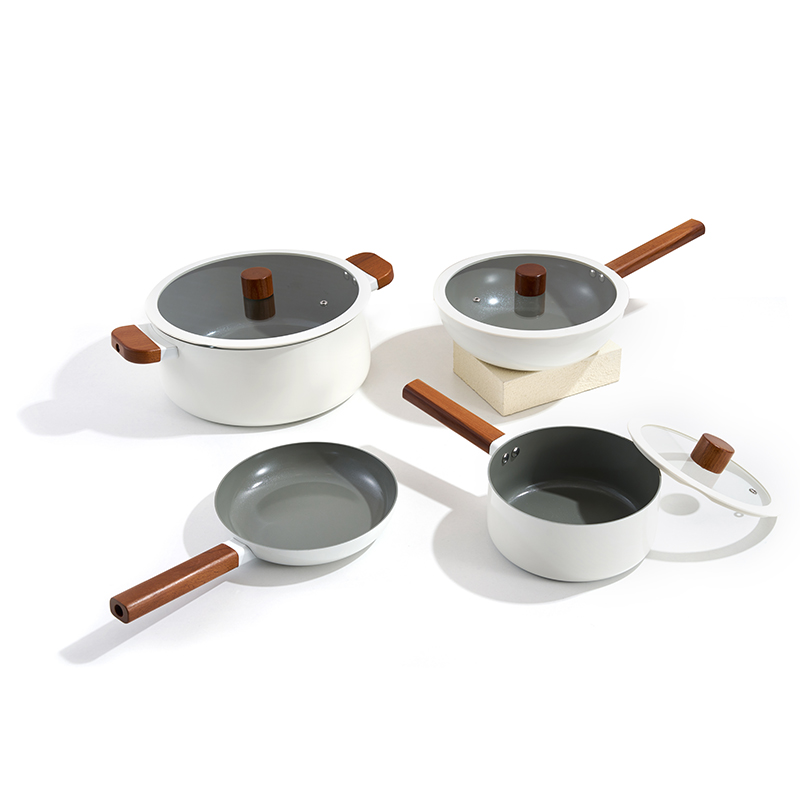
This cookware set has a ceramic non-stick inner liner, a heat-resistant wooden h...
See Details -
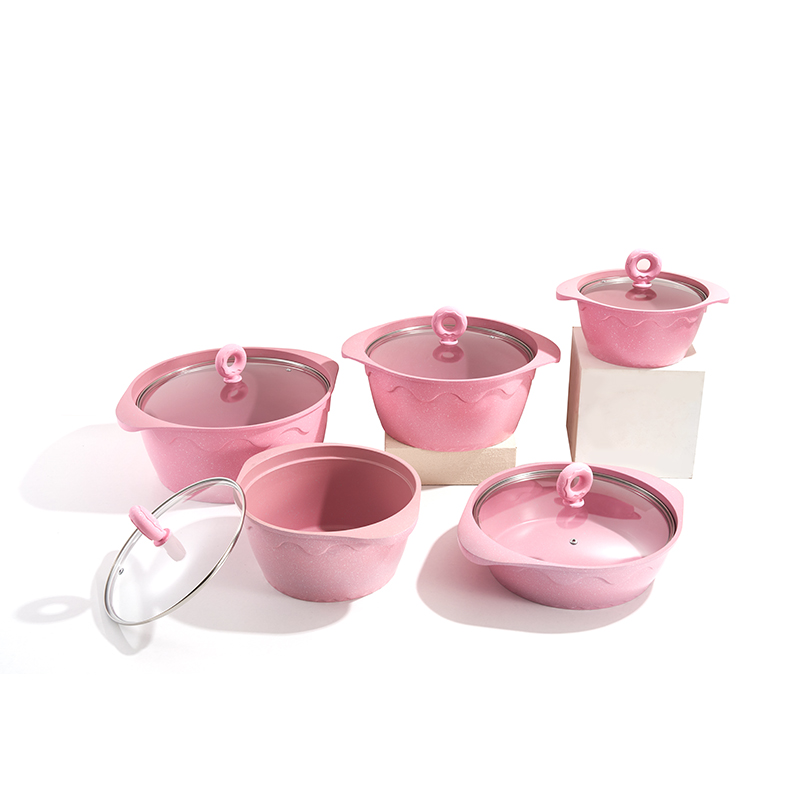
This cookware set is made of food-grade non-stick material, with a unique eye-ca...
See Details -
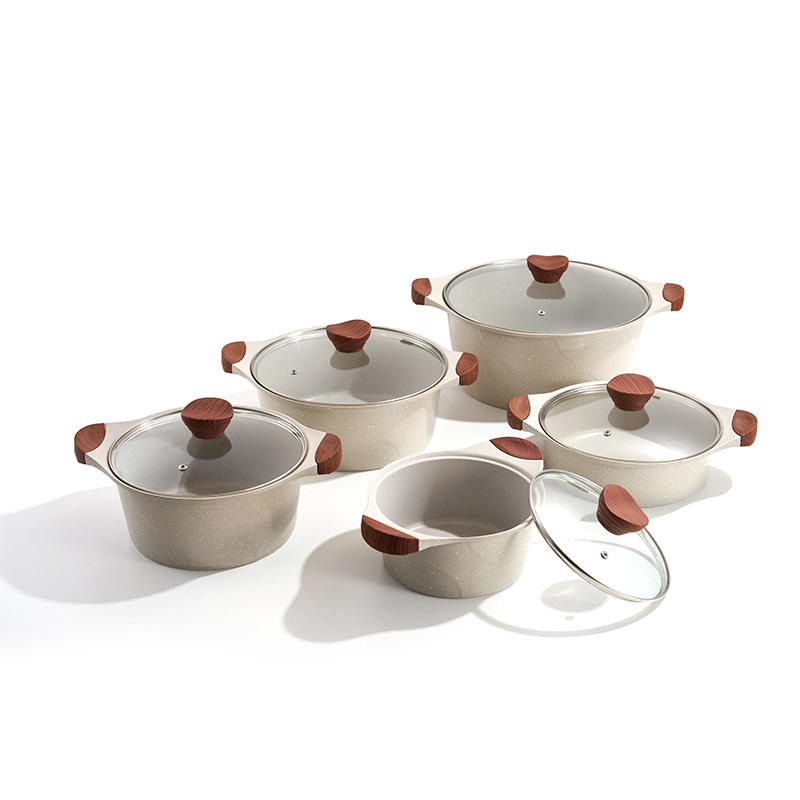
This off-white cookware set is made of wear-resistant non-stick material, with w...
See Details
Whether you're looking for bulk purchases or have any custom requirements, We are here to offer the best
solutions for you.
tiffany.zhong@echocn-trading.com
PHONE
+86-19561173975
+86-19557020621 (Hazel Wu)
ADD
Room 301, Unit 3014, No. 175 Qifeng Avenue, Wenqiao Town, Taizhou, Zhejiang, China
Fill Out the Form for More Information
Copyright © Zhejiang Echo Industry And Trade Co., Ltd.
All Rights Reserved.

China Cookware Set Manufacturer