
 en
 Español
This cookware set features a non-stick coating, even heat conduction, and multi-...
See Details
How to Choose a Versatile Aluminum Cookware Set for Everyday Cooking
Date:Aug 10, 2026
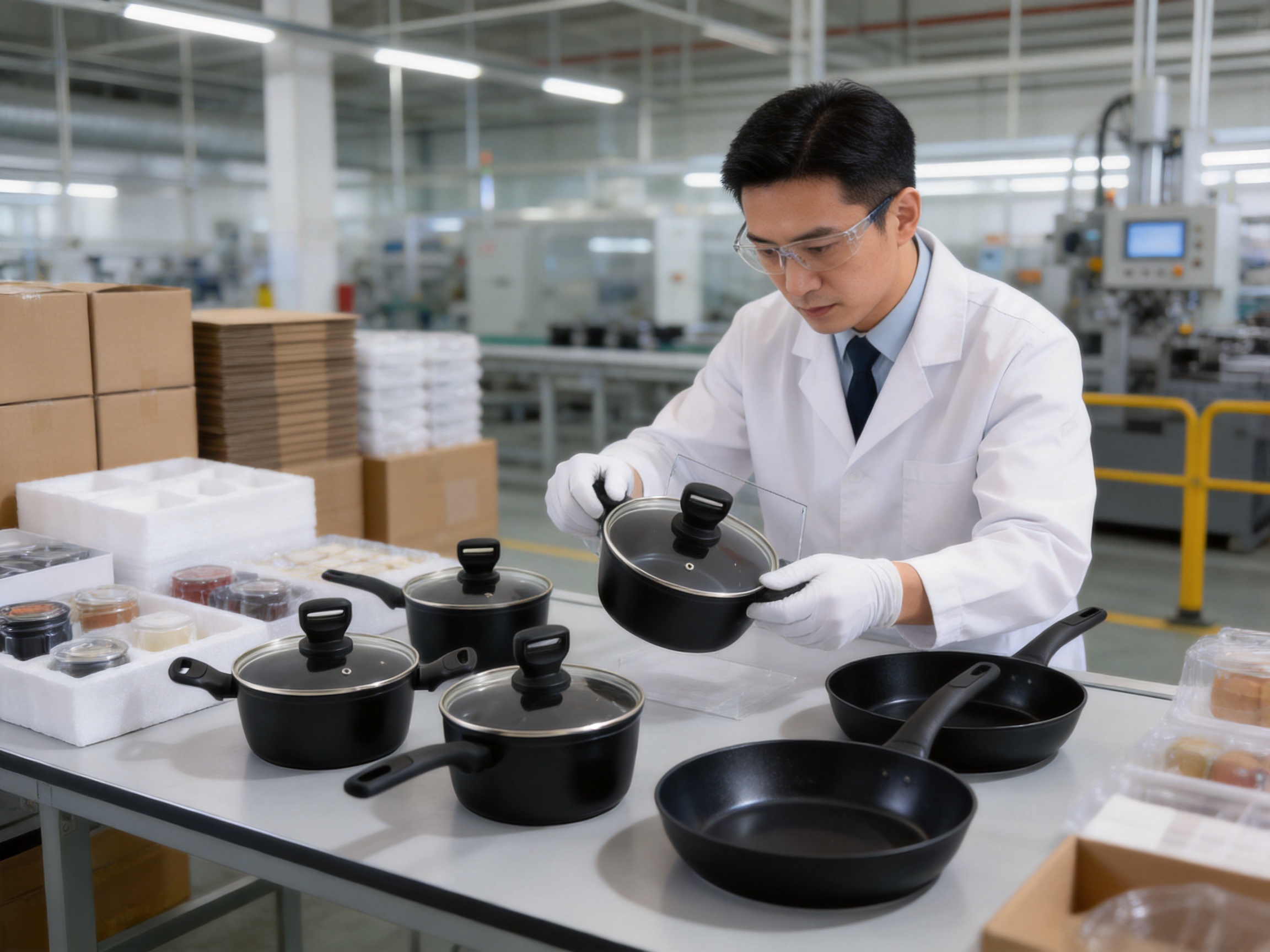
A dependable cookware set is one of the most useful investments in any kitchen. Rather than purchasing individual pans at random, a coordinated set can provide the essential shapes and sizes needed for boiling, simmering, frying, reheating, sautéing, and preparing family meals. The VELA B-Series Aluminium Pot and Pan Set is designed around this practical idea: offer a broad selection of everyday cookware in lightweight aluminum, combine it with a food-grade non-stick interior, and provide a simple black appearance suitable for modern kitchens.
For households, restaurants, catering businesses, hospitality projects, retailers, and professional kitchenware buyers, the value of a cookware set depends on more than appearance. Buyers need to consider material performance, cooking compatibility, size selection, cleaning requirements, durability, packaging, customization possibilities, supply reliability, and after-sales support. This article examines the product in detail and explains why a multi-size aluminum cookware set can compete effectively with isolated single-piece products and less flexible cookware collections.
Product Overview
The VELA B-Series Aluminium Pot and Pan Set is an everyday cookware collection made from aluminum. It includes different saucepan, stockpot, and frypan dimensions to support a wide range of cooking tasks. The set is presented in a minimalist black style, giving it a coordinated appearance while helping it fit naturally into both traditional and contemporary kitchen environments.
Its principal design features include a food-grade non-stick interior, easy-clean construction, compatibility with all stovetops, and a selection of multiple sizes. These characteristics address several common consumer requirements at the same time. Users want cookware that heats efficiently, does not require excessive oil, can be cleaned without unnecessary effort, and works on the cooking equipment already available in the home or commercial kitchen.
The product is identified by SKU DL11 and is made from aluminum. The listed dimensions cover smaller saucepans, medium and larger stockpots, and a broad range of frypans. Because the collection contains multiple sizes, it can be offered as a complete set, a configurable assortment, or a product family with different combinations for various markets.
For importers and distributors, this flexibility is especially useful. A retailer may need a compact package for smaller households, a larger family-oriented set, or a combination selected for regional cooking habits. A cookware supplier that can provide several related dimensions from one product range can simplify sourcing, merchandising, inventory planning, and product photography.

VELA B-Series Aluminium Pot and Pan Set
Why Aluminum Remains a Popular Cookware Material
Aluminum has long been used in cookware because it offers a favorable balance between weight, thermal responsiveness, manufacturing flexibility, and cost. Compared with many heavier alternatives, aluminum cookware is easier to lift, move, store, and handle during daily cooking. This is an important advantage for households that prepare several dishes in one session, as well as for commercial kitchens where staff may repeatedly move pots and pans throughout the day.
Aluminum also responds relatively quickly to changes in heat. When a user adjusts the cooker, the cookware can react without the long delay associated with some heavier materials. This makes aluminum suitable for common tasks such as sautéing vegetables, warming sauces, pan-frying ingredients, and boiling smaller quantities of food.
Another advantage is manufacturing adaptability. Aluminum can be formed into saucepans, pots, and frypans in many different shapes and dimensions. This allows manufacturers to create a coordinated product family instead of offering only one standard size. For consumers, a range of sizes means that a small portion of sauce does not need to be prepared in an oversized pot, while a large family meal does not need to be divided into several undersized pans.
Aluminum is also well suited to surface treatments and non-stick systems. The food-contact interior of the B-Series is designed to make cooking and cleaning more convenient. When used and maintained according to the care instructions, a non-stick surface can reduce food adhesion and help users cook with less oil. This is particularly attractive to buyers seeking practical cookware for everyday meals rather than specialized professional equipment alone.
Complete Cooking Coverage Through Multiple Sizes
The central strength of this product is its multi-size configuration. The listed saucepan sizes include 16 × 8.0 cm, 18 × 8.5 cm, and 20 × 9.6 cm. These smaller and medium dimensions are suitable for heating milk, preparing sauces, cooking grains, warming soup, boiling eggs, and making side dishes.
The listed frypan range includes 18 × 4.1 cm, 20 × 4.4 cm, 22 × 4.4 cm, 24 × 4.7 cm, 26 × 4.8 cm, 28 × 5 cm, 30 × 5.3 cm, and 32 × 5.3 cm. This broad selection makes it possible to match the pan diameter to the quantity of food being prepared. Smaller frypans are useful for individual servings, breakfast foods, and compact cooking areas. Larger frypans can support family meals, stir-frying, shallow frying, and preparing several portions at once.
The product information also lists stockpot dimensions of 20 × 6.1 cm, 24 × 6.6 cm, 26 × 7.0 cm, 28 × 7.3 cm, 32 × 7.8 cm, and 34 × 8.1 cm. A second stockpot size group is listed as 18 × 8.5 cm, 20 × 9.6 cm, 22 × 10 cm, 24 × 10.6 cm, 26 × 12.3 cm, and 28 × 12.7 cm. These dimensions indicate that the collection may support different pot profiles or configuration options. Buyers should confirm the exact final assortment, diameter, height, capacity, lid arrangement, and packaging format before placing a production order.
From a product planning perspective, the variety is valuable because kitchens rarely perform only one type of cooking. A saucepan may be used for sauces and small servings, a frypan for quick meals, and a stockpot for soup, pasta, vegetables, or larger batches. Providing these functions in one coordinated range is more convenient than requiring customers to purchase unrelated cookware from several brands.
Practical Applications by Cookware Type
| Cookware type | Available size examples | Typical applications | Primary buyer benefit |
|---|---|---|---|
| Saucepan | 16 × 8.0 cm, 18 × 8.5 cm, 20 × 9.6 cm | Sauces, grains, milk, eggs, reheating, side dishes | Compact control for smaller quantities |
| Stockpot | 20 × 6.1 cm to 34 × 8.1 cm | Soup, pasta, vegetables, boiling, batch cooking | Useful capacity for family and commercial meals |
| Stockpot option | 18 × 8.5 cm to 28 × 12.7 cm | Deeper cooking, stews, liquid-based recipes | Choice of profile and cooking depth |
| Frypan | 18 × 4.1 cm to 32 × 5.3 cm | Frying, sautéing, pancakes, eggs, meat, vegetables | Flexible portion and diameter selection |
Food-Grade Non-Stick Interior
The non-stick interior is one of the most important features for daily use. Food-grade surface design is intended for contact with ingredients during normal cooking and supports a smoother cooking experience. Food is less likely to adhere firmly to the surface when the pan is used correctly, which can reduce the amount of oil required and simplify the removal of cooked ingredients.
A non-stick surface is particularly useful for foods that commonly stick to uncoated cookware. Eggs, pancakes, delicate fish, sautéed vegetables, and certain sauces can be easier to handle when the cooking surface has a suitable release performance. The result is not only more convenient cooking but also a cleaner presentation and less food waste left behind in the pan.
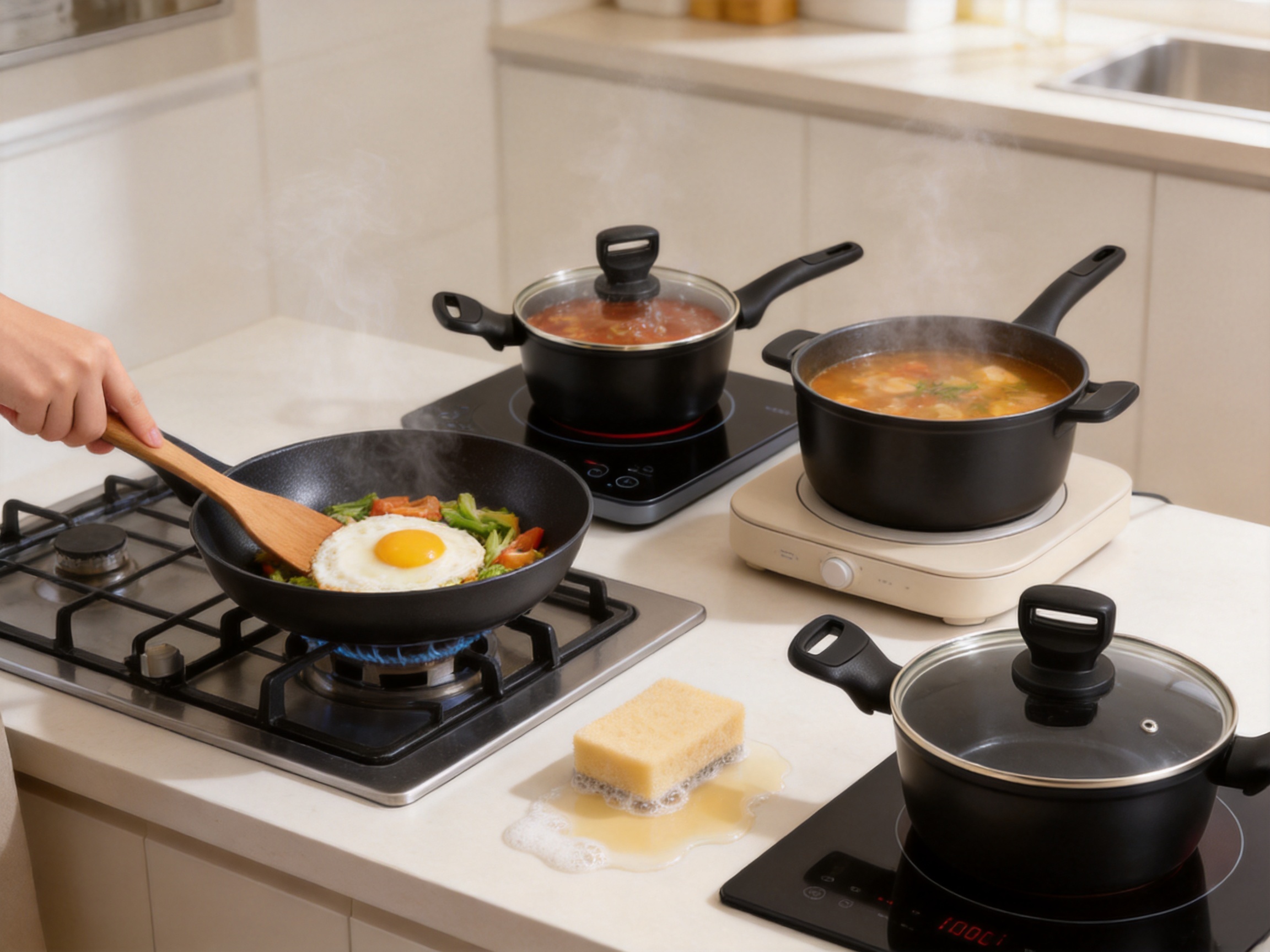
Non-stick cookware also provides a practical advantage during cleanup. Instead of requiring aggressive scraping or prolonged soaking, users can generally clean the cookware with hot, soapy water and a soft cloth or sponge, as recommended for this product. This can be valuable for busy families and commercial users who need to turn cookware around quickly between meals.
However, non-stick performance depends on correct care. The use of metal or sharp utensils can scratch or damage the interior. Wooden, nylon, or non-stick-safe utensils are recommended. Users should also avoid overheating an empty pan, because extreme heat can shorten the life of the surface and affect its appearance or performance. The care instructions are therefore an important part of the product value: proper use helps the cookware deliver consistent service over a longer period.
Compatibility with All Stovetops
The product is described as compatible with all stovetops. This feature increases its market reach because households and commercial kitchens may use different heating systems, including gas, electric, ceramic, and induction equipment. Retailers can therefore present the cookware to a wider customer base instead of limiting it to users of one particular cooker type.
Universal stovetop compatibility also improves convenience when customers move homes or replace kitchen appliances. A cookware set that continues to work after a change from gas to electric or from electric to induction has a longer practical life from the buyer’s perspective.
Although the product information states all-stovetop compatibility, buyers should confirm the exact base construction and technical testing requirements for their target market, especially when induction performance is important. Different regions may apply specific labeling, testing, or documentation standards. Confirming these details before mass production helps ensure that packaging claims accurately reflect the final product configuration.
Safe stovetop use also requires attention to flame and heat placement. The heat source should not extend beyond the base of the item. Excessive side heat can affect handles, exterior surfaces, and the surrounding cooking area. Users should select a burner that matches the base diameter and maintain a suitable heat level for the recipe.
Advantages Over Basic Single-Piece Cookware
One of the clearest competitive advantages of the B-Series concept is its breadth. A single inexpensive pan may satisfy one cooking task, but it cannot provide the versatility of a coordinated saucepan, stockpot, and frypan range. Consumers who purchase individual pieces may also encounter mismatched handles, different surface colors, inconsistent cleaning requirements, and uneven storage needs.
A coordinated set solves many of these problems. The black minimalist appearance creates a unified look across the kitchen. The common material and surface concept provide a more consistent user experience. A retailer can merchandise the collection as a complete solution, while a distributor can offer multiple set combinations under one product family.
The range also supports better portion control. Small pans can be used for small quantities, reducing the need to heat a large surface unnecessarily. Larger pans can handle batch cooking more efficiently than several small pieces. This flexibility can help users manage time, ingredient quantities, and cooking space more effectively.
Compared with heavier cookware, aluminum can be easier to handle. This is particularly important for users who find large cast iron or thick steel cookware difficult to lift. Compared with uncoated aluminum, the non-stick interior offers a more convenient cooking and cleaning experience. Compared with a narrow product line, the multiple size options provide stronger retail and sourcing flexibility.
These advantages do not mean that every cookware material is inferior to aluminum. Stainless steel, cast iron, and other materials each have their own strengths. Rather, the B-Series is competitive because it combines lightweight aluminum construction, non-stick convenience, broad sizing, universal stovetop positioning, and a simple appearance in one commercially practical range.
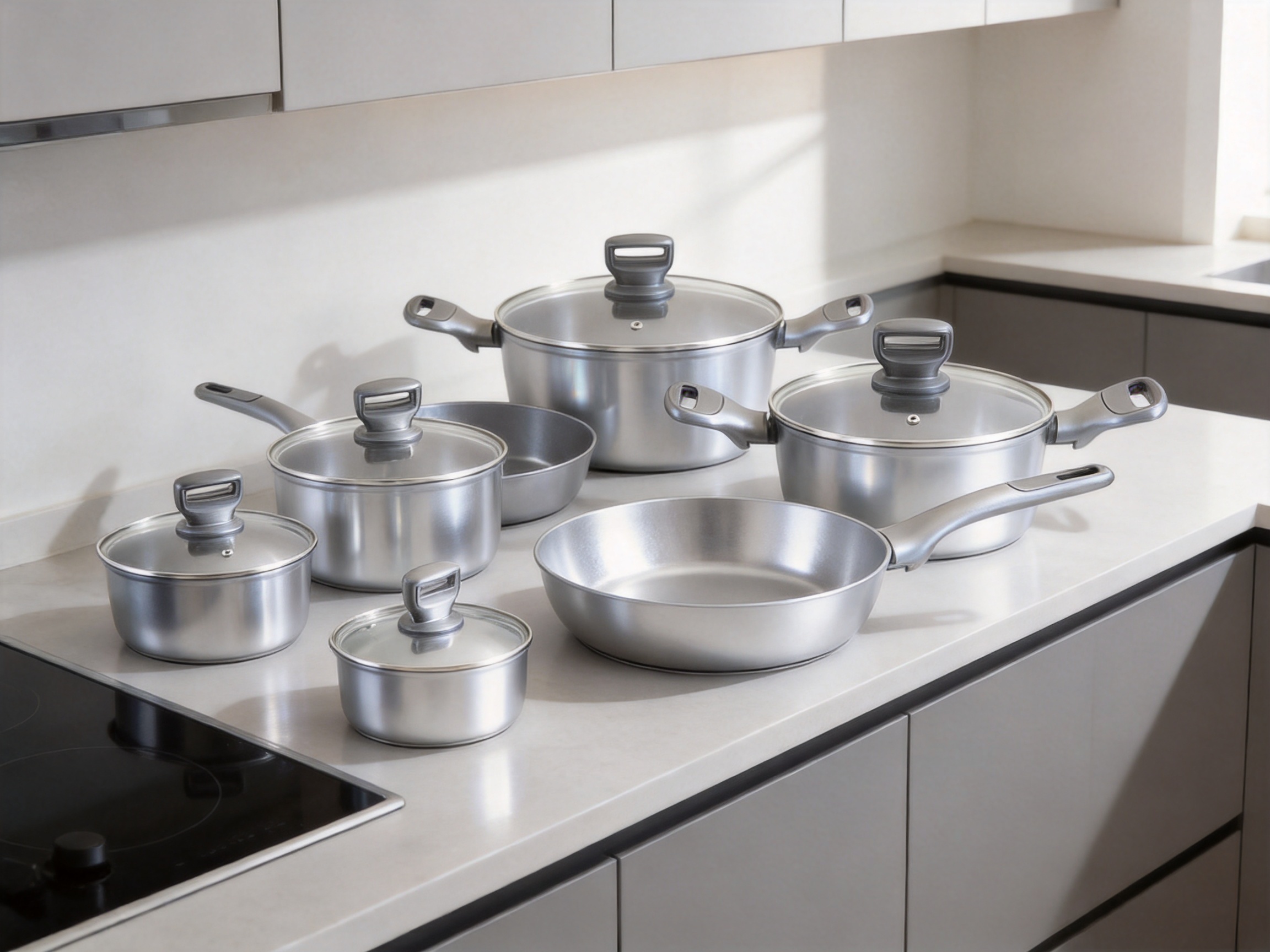
Minimalist Design for Modern Retail and Kitchen Spaces
The black exterior and understated styling give the cookware a broad visual appeal. The appearance is suitable for customers who prefer contemporary kitchen products without elaborate decorative elements. A minimalist design can also make the product easier to coordinate with other appliances, utensils, and kitchen accessories.
For retailers, neutral black cookware is generally easy to position across several market segments. It can be presented as an affordable everyday set, a practical housewarming gift, a student kitchen solution, or a coordinated option for family kitchens. It can also be included in hospitality and rental property packages where a consistent and professional appearance is desirable.
Visual simplicity can support efficient packaging and merchandising. Product photographs can focus on the cookware shape, surface, size differences, and practical functions rather than complex decorative details. A consistent range image may help customers understand that the collection includes related items that can be purchased together.
For original equipment manufacturing and private-label buyers, the simple design may also provide a useful foundation for customization. Depending on project requirements, buyers can discuss branding, packaging artwork, labels, instructions, color variations, handle specifications, lid options, and set combinations with the supplier.
Manufacturing and Supply-Chain Strengths
The supplier, Zhejiang Echo Industry And Trade Co., Ltd., is based in Taizhou, Zhejiang, China. Zhejiang is widely recognized as an important manufacturing and export region with established industrial networks. A location within this type of supply environment can support access to component suppliers, packaging resources, logistics services, tooling capabilities, and experienced production labor.
The company positions ECHO KITCHENWARE as a professional kitchenware supplier serving international buyers. Its stated product coverage includes aluminum cookware, stainless steel cookware, cast iron cookware, and kitchen utensils. This broader category capability is important for customers seeking a one-stop sourcing partner rather than a supplier limited to one product type.
A multi-category supplier can help buyers consolidate purchasing activities. Instead of communicating with separate factories for aluminum pans, stainless steel products, iron cookware, and utensils, a buyer may be able to coordinate several product groups through one supply-chain relationship. This can simplify quotation management, sample review, packaging discussions, export documentation, and shipment planning.
The company also identifies ODM and OEM customization as part of its service offering. ODM support can be useful when a buyer wants to select from existing product concepts while adjusting the assortment, appearance, packaging, or specifications. OEM support is more suitable when the buyer has a defined brand identity, artwork, product requirement, or market-specific configuration.
Production Process Considerations
Manufacturing a reliable aluminum cookware set involves several stages. The exact process may vary according to the final design, but a professional project normally begins with specification confirmation. This includes reviewing material, body thickness, pan dimensions, surface treatment, handle structure, lid design, base requirements, coating system, packaging, and intended market standards.
After the specifications are confirmed, aluminum material is formed into the required cookware body. Depending on the construction method, this may involve pressing, stamping, spinning, casting, or other forming operations. Accurate tooling and process control are important because the body shape affects stability, usable capacity, stacking, heat distribution, and compatibility with lids or accessories.
The surface preparation stage is equally important. The cookware body must be properly cleaned and prepared before a non-stick coating system is applied. Consistent preparation helps support adhesion and appearance. Coating application requires controlled conditions, including suitable layer thickness, curing temperature, and production timing. The final surface should be inspected for uniformity, visible defects, and functional consistency.
Where stovetop compatibility is required, the base and construction must be evaluated against the intended heating systems. The supplier and buyer should confirm whether the final model uses a special induction base, a bonded plate, or another structure. This is especially important for accurate technical claims and customer expectations.
Assembly may include the installation of handles, brackets, lids, knobs, and other components. These parts should be checked for alignment, stability, heat resistance, and secure attachment. A cookware product may have an attractive body and coating, but handle security and assembly quality are also fundamental to safe everyday use.
Quality control should continue through final inspection and packing. A professional quality program may include checks for dimensions, coating appearance, surface defects, handle attachment, flatness, balance, lid fit, packaging protection, labeling, and quantity accuracy. For export orders, inspection procedures should be aligned with the buyer’s purchase specification and the applicable destination-market requirements.
Why Process Control Matters to Buyers
For importers, a supplier’s process capability can be more important than a low initial quotation. Inconsistent dimensions can affect nesting and packaging. Uneven coating can reduce customer satisfaction. Poorly fitted lids can lead to complaints. Weak handles can create safety concerns. Inaccurate carton markings can complicate warehouse operations. A structured manufacturing and inspection process helps reduce these risks.
Because the B-Series includes many dimensions, production coordination is particularly important. Each size must be associated with the correct tooling, surface treatment, handle configuration, packaging insert, barcode, and carton information. The more variations a product family contains, the more valuable careful production planning becomes.
Buyers should request approved samples before mass production and maintain a written specification for every size. Sample approval can cover appearance, weight, dimensions, coating color, handle position, lid fit, packaging, and labeling. This creates a practical reference for production inspection and helps prevent misunderstandings between the buyer and supplier.
Customization for International Markets
Different markets may have different preferences for cookware size, color, handle shape, packaging language, and set composition. The B-Series format is suitable for discussing these variations because it already includes a broad family of products. A buyer may choose a compact set for apartments, a larger set for family kitchens, or a mixed assortment for retail shelves.
Packaging customization can include the outer carton design, product photography, instruction leaflets, barcode placement, brand presentation, language selection, and care information. Clear care instructions are particularly important for non-stick cookware. Including guidance about utensil selection, cleaning, empty-pan heating, microwave restrictions, and safe cooling can help consumers use the product correctly.
Product customization should always be evaluated against production quantity, tooling cost, lead time, and target price. A minor artwork change may be relatively simple, while a new handle, body shape, lid, or base structure may require tooling and testing. Early discussion allows the buyer and supplier to identify which changes are commercially realistic.
Certification assistance is also listed among the company’s services. Buyers should identify the required documents and tests for the destination country before production begins. Requirements may relate to materials, food contact, coatings, labeling, packaging, chemical restrictions, or general product safety. The exact obligations vary by market, so project-specific verification remains essential.
Care and Maintenance Instructions
Correct care is necessary to preserve the appearance and performance of the cookware. Before first use, the pans should be washed. This removes dust or residues that may remain from manufacturing, packing, or transport.
Users should avoid metal or sharp cooking utensils. Wooden, nylon, silicone, or other utensils specifically identified as suitable for non-stick cookware are preferable. Sharp edges can damage the interior, while repeated contact with metal tools may create scratches that reduce the smoothness and release performance of the coating.
For cleaning, hot soapy water and a soft cloth or sponge are recommended. Abrasive pads, harsh scraping, and aggressive cleaning methods should be avoided unless specifically approved for the product. Hand washing is recommended to help preserve the appearance of the cookware. Even when a product may technically tolerate certain cleaning methods, gentler care is generally better for long-term surface preservation.
An empty pan should not be overheated. Cookware heats quickly, and an empty vessel can reach a high temperature faster than expected. Users should add ingredients or suitable cooking liquid before applying high heat and should monitor the cooking process rather than leaving an empty pan on an active burner.
The flame or heat source should not extend beyond the base. Excess heat around the sides can affect exterior finishes, handles, and nearby surfaces. Selecting a burner that corresponds to the cookware base helps improve energy use and protects the product.
If a pan severely overheats, the cooker should be turned off and the cookware should be left to cool completely. Users should not touch an overheated pan immediately or attempt to move it without suitable protection. Sudden contact with a very hot surface can cause burns, and rapid cooling may create unnecessary thermal stress.
The cookware should not be used in a microwave. Aluminum is not suitable for microwave use because metal can cause arcing and damage the appliance. This restriction should be clearly stated in the product instructions and, where appropriate, on the packaging.
Value for Retailers, Distributors, and Project Buyers
For retailers, the product offers several merchandising advantages. A multi-size cookware range can be displayed as a complete set while still allowing individual pieces or selected combinations to be promoted. The black finish can support a consistent visual presentation, and the variety of sizes creates opportunities for good-better-best pricing structures.
For distributors, the collection can serve different customer groups without requiring a completely separate supplier relationship for every size. A distributor may supply household retailers, hospitality businesses, rental apartments, student housing projects, or promotional programs. The ability to discuss flexible minimum order quantities and product configurations can be useful when entering a new market or testing demand.
For restaurant and catering buyers, the most important considerations may be capacity, handling, replacement availability, and compatibility with existing stoves. The range of frypan and pot sizes can help match cookware to different preparation tasks. However, commercial buyers should evaluate expected usage intensity and confirm whether the selected configuration is appropriate for professional operating conditions.
For private-label brands, the product provides a foundation for developing a coherent kitchenware line. The buyer can potentially combine the aluminum set with stainless steel cookware, iron cookware, or kitchen utensils from the supplier’s broader product portfolio. A coordinated assortment can strengthen brand recognition and improve the efficiency of catalog development.
How the Product Compares with Alternative Materials
Stainless steel cookware is valued for its resistance, appearance, and broad use in many kitchens. It can be highly durable, but uncoated stainless steel may require more attention to heat control and cooking technique to prevent food from sticking. The aluminum B-Series focuses more directly on lightweight handling and non-stick convenience.
Iron cookware is known for heat retention and robust construction. Its weight, maintenance requirements, seasoning needs, and slower response to temperature changes may not suit every user. Aluminum cookware offers a lighter alternative for fast, routine cooking and easier movement around the kitchen.
Uncoated aluminum cookware can provide responsive heating and low weight, but it may not offer the same food-release experience as a non-stick interior. The B-Series combines aluminum’s practical material benefits with a surface designed to make cooking and cleaning easier.
Low-quality cookware sets may appear attractive because of their low purchase price, but the total value depends on how consistently the products perform and how well they meet customer expectations. A professional supplier relationship, clear specifications, suitable inspection, and appropriate care instructions can help distinguish a well-managed cookware program from a purely price-driven product.
Recommended Buyer Evaluation Checklist
Before ordering the cookware set, buyers should confirm the precise contents of the package. The product information includes several saucepan, stockpot, and frypan dimensions, but a final order should identify exactly which pieces are included in each set. Buyers should also confirm whether lids, handles, accessories, and protective separators are included.
Material details should be documented clearly. The supplier states that the product is made from aluminum, but buyers may wish to confirm the aluminum grade, body thickness, base construction, coating system, and any applicable food-contact documentation.
Stovetop compatibility should be verified for the intended market. If induction compatibility is a primary selling point, the buyer should request the relevant technical confirmation or test documentation and ensure that the product labeling matches the approved construction.
Appearance should be reviewed through approved samples. The buyer can assess the black color, gloss or matte level, rim finish, handle design, logo placement, surface uniformity, and overall proportions. These details influence perceived quality and should be agreed before bulk production.
Packaging should be reviewed for both retail presentation and shipping protection. Cookware can be vulnerable to scratches, dents, and coating damage if products move inside the carton. Appropriate inner protection, stacking arrangements, carton strength, and drop-handling considerations are important for international transport.
Finally, buyers should discuss production capacity, lead time, inspection arrangements, sample approval, payment terms, shipping documents, and communication procedures. A supplier’s ability to manage these commercial details is part of the overall product value.
Suggested Product Positioning
The B-Series can be positioned as a practical, versatile, and accessible cookware solution. It is not limited to one cooking style or one customer type. Its strongest message is the combination of everyday usability and assortment flexibility.
For consumer marketing, suitable themes may include easy daily cooking, multi-size convenience, simple cleanup, lightweight handling, modern black styling, and compatibility with different stovetops. Marketing claims should remain consistent with verified product specifications and should avoid promising performance beyond the tested design.
For business-to-business marketing, the focus can include coordinated product sourcing, flexible assortment planning, OEM and ODM support, one-stop kitchenware supply, export experience, and assistance with certification-related requirements. Buyers often value dependable communication and specification control as much as the physical product itself.
The product may also be suitable for seasonal promotions, housewarming packages, wedding and gift programs, student accommodation, rental property furnishing, and new-home starter collections. The multi-size format makes it easier to build bundles around different budgets and household sizes.
Questions and Answers
What material is used for the cookware set?
The cookware is made from aluminum. Aluminum is valued for its lightweight handling, responsive heating, and suitability for forming cookware in multiple sizes and shapes.
Does the set have a non-stick interior?
Yes. The product is described as having a food-grade non-stick interior intended to support easier cooking and cleaning. Users should use suitable utensils and follow the recommended care instructions to protect the surface.
What cookware pieces are available?
The product family includes saucepans, stockpots, and frypans. Several dimensions are listed for each category. The exact pieces included in a particular set should be confirmed with the supplier before ordering.
What frypan sizes are listed?
The listed frypan dimensions range from 18 × 4.1 cm to 32 × 5.3 cm. The available diameter examples are 18, 20, 22, 24, 26, 28, 30, and 32 cm, with corresponding heights shown in the product information.
What saucepan sizes are listed?
The listed saucepan sizes are 16 × 8.0 cm, 18 × 8.5 cm, and 20 × 9.6 cm.
What stockpot sizes are listed?
Two stockpot size groups are provided. One group ranges from 20 × 6.1 cm to 34 × 8.1 cm, while another ranges from 18 × 8.5 cm to 28 × 12.7 cm. Buyers should confirm whether these represent different profiles, configurations, or product options.
Can the cookware be used on different stovetops?
The product is described as compatible with all stovetops. For a commercial order, especially one intended for induction use, buyers should request confirmation of the final base construction and relevant testing or documentation.
Can metal utensils be used?
Metal or sharp utensils should not be used because they may scratch or damage the non-stick interior. Wooden, nylon, silicone, or non-stick-safe utensils are recommended.
How should the cookware be cleaned?
Use hot, soapy water with a soft cloth or sponge. Hand washing is recommended to help preserve the appearance and surface of the cookware.
Can the cookware be placed in a microwave?
No. The product should not be used in a microwave. Aluminum cookware is not suitable for microwave heating.
What should be done if a pan overheats?
Turn off the cooker and allow the pan to cool completely. Do not touch or move a severely overheated pan immediately, as it may cause burns.
Can the product be customized?
The supplier states that it provides ODM and OEM customization. Buyers can discuss branding, packaging, set composition, product specifications, and other project requirements directly with the supplier. Custom features may affect tooling, minimum order quantities, testing, and lead time.
What services does the supplier provide?
The company states that it offers one-stop cookware solutions, a wide product variety, ODM and OEM customization, product certification assistance, flexible minimum order quantities, and sustainable and healthy product development.
Is the cookware suitable for professional kitchens?
The cookware may be considered for restaurants, catering operations, hospitality projects, and other commercial uses, but the exact suitability depends on the cooking intensity, heat levels, cleaning procedures, and selected configuration. Commercial buyers should evaluate samples and confirm technical requirements before purchase.
Conclusion
The VELA B-Series Aluminium Pot and Pan Set is built around a clear and useful proposition: provide a coordinated selection of saucepans, stockpots, and frypans in lightweight aluminum with a food-grade non-stick interior and a minimalist black appearance. Its broad size range allows users to prepare both small portions and larger meals, while all-stovetop positioning increases its relevance across different markets.
Its advantages over narrower or less coordinated cookware offerings include size flexibility, consistent styling, easier cleaning, lightweight handling, and the convenience of sourcing several cooking functions within one product family. For retailers and importers, the range also creates opportunities for different set combinations, private-label presentation, and broader kitchenware category development.
The supplier’s Zhejiang manufacturing base, multi-category kitchenware capabilities, ODM and OEM services, certification assistance, and one-stop sourcing approach can provide additional value for international buyers. As with any cookware project, the strongest results depend on accurate specifications, approved samples, appropriate quality control, careful packaging, and clear confirmation of stovetop compatibility and market requirements.
For everyday users, correct care remains essential. Avoiding metal utensils, preventing empty-pan overheating, using gentle cleaning methods, keeping heat within the base, and allowing overheated cookware to cool safely can help preserve the non-stick surface and overall appearance. With responsible use and a well-managed supply program, this aluminum cookware range can serve as a practical foundation for modern household and commercial kitchen collections.
References
1. Product specification sheet for the VELA B-Series Aluminium Pot and Pan Set, SKU DL11.
2. Supplier-provided cookware care and maintenance instructions.
3. General technical references on aluminum cookware forming, surface preparation, and non-stick coating application.
4. General food-contact cookware safety and product quality-control guidance.
5. General retail and commercial kitchenware sourcing practices for OEM and ODM projects.
Product: VELA B-Series Aluminium Pot and Pan Set
Recommended Articles
Product Category
Related products
-
-
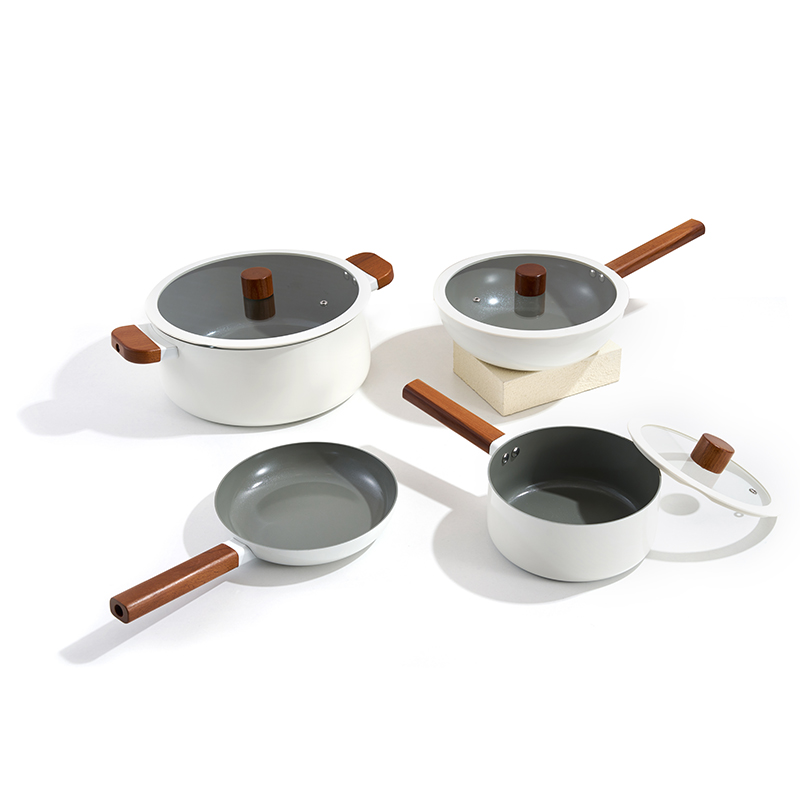
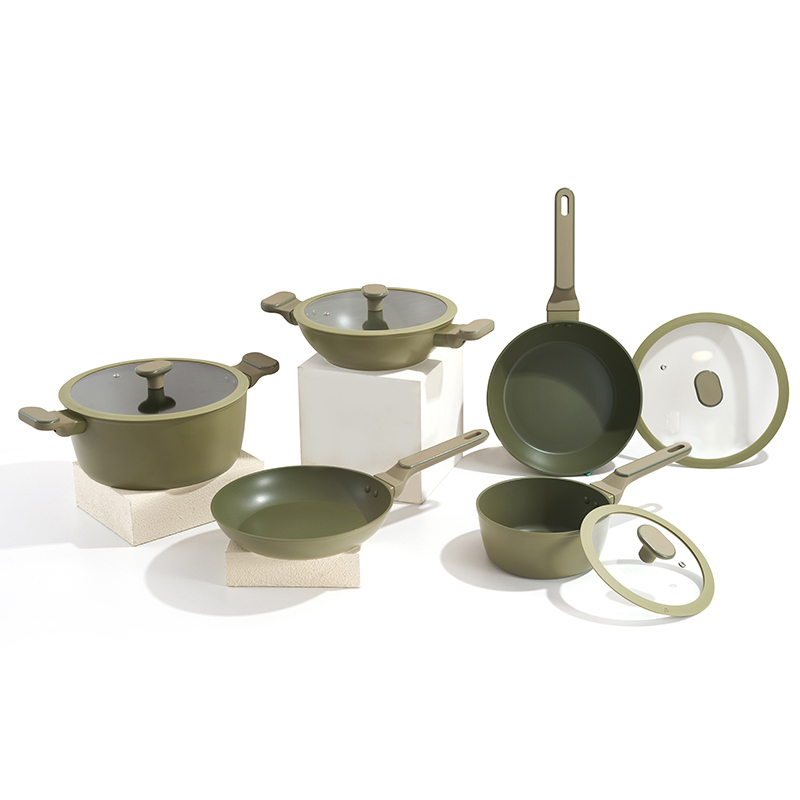
This cookware set has a ceramic non-stick inner liner, a heat-resistant wooden h...
See Details -
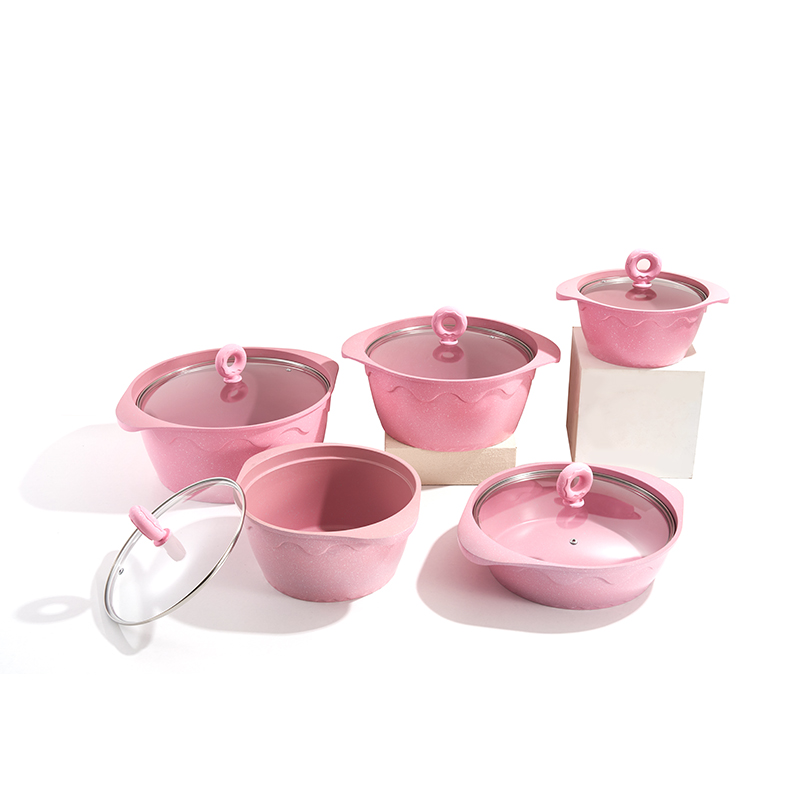
This cookware set is made of food-grade non-stick material, with a unique eye-ca...
See Details -
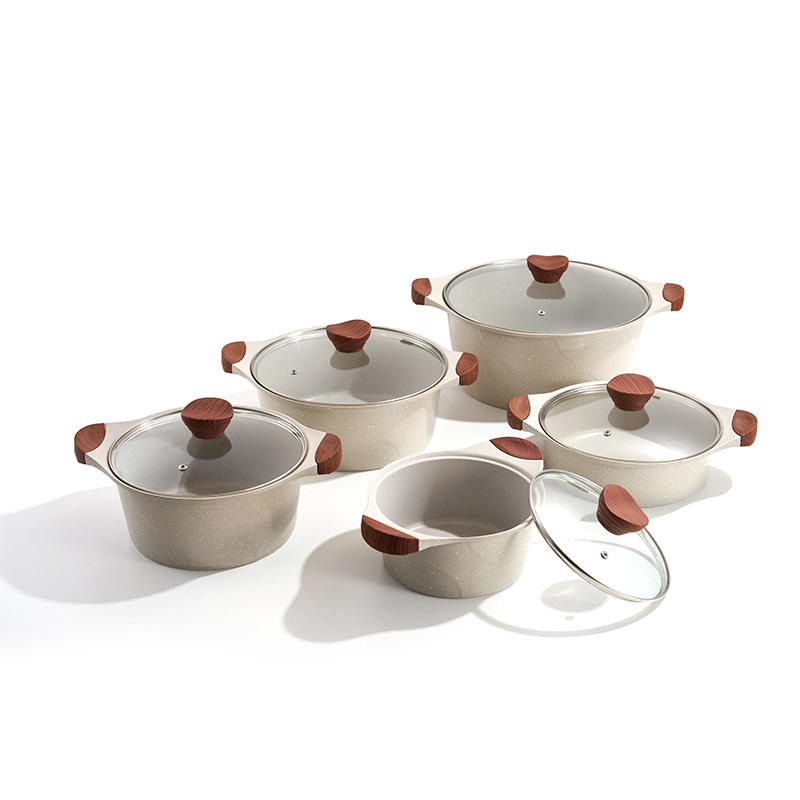
This off-white cookware set is made of wear-resistant non-stick material, with w...
See Details
Whether you're looking for bulk purchases or have any custom requirements, We are here to offer the best
solutions for you.
tiffany.zhong@echocn-trading.com
PHONE
+86-19561173975
+86-19557020621 (Hazel Wu)
ADD
Room 301, Unit 3014, No. 175 Qifeng Avenue, Wenqiao Town, Taizhou, Zhejiang, China
Fill Out the Form for More Information
Copyright © Zhejiang Echo Industry And Trade Co., Ltd.
All Rights Reserved.

China Cookware Set Manufacturer