
 en
en
 Español
This cookware set features a non-stick coating, even heat conduction, and multi-...
See Details
Why Do Die Cast Sets Lose Shape Over Time
Date:Jun 05, 2026
A die cast aluminum cookware set often enters the market with claims of strong structure and stable performance, yet some users still notice gradual deformation after extended use. That observation usually connects with thermal stress patterns, alloy composition, and long-term exposure to uneven heating cycles rather than simple material weakness.
Die casting technology forms cookware by injecting molten aluminum into steel molds under high pressure. This creates a dense shell structure with fewer internal voids compared with thin stamped aluminum pans, improving rigidity and heat response. Still, structural behavior changes slightly after repeated heating and cooling cycles, especially under high flame settings or dry heating conditions.
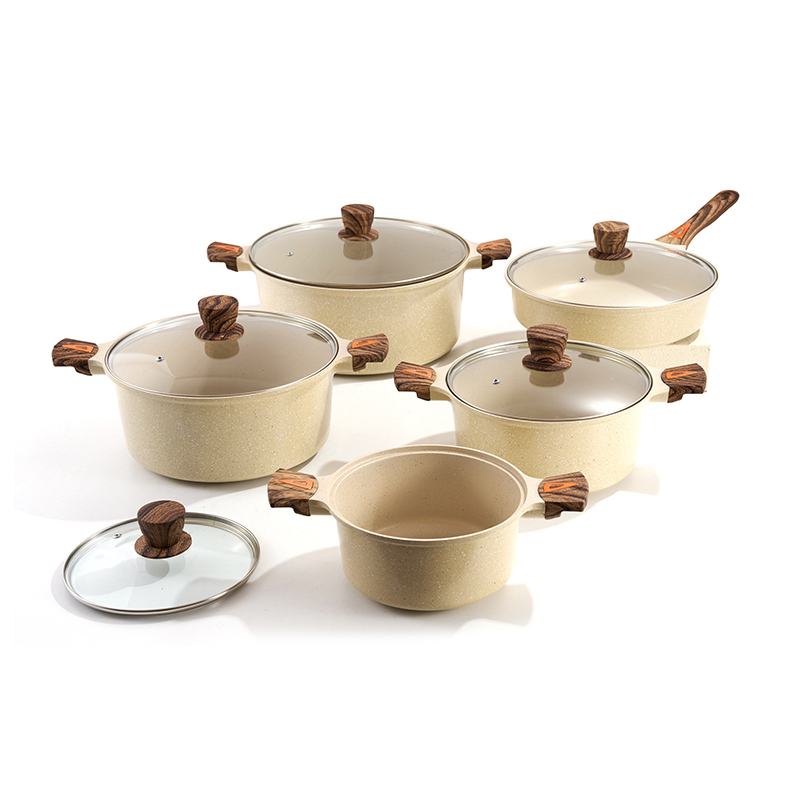
Heat Stress Behavior in Die Cast Cookware
Thermal Expansion Pressure Zones
Metal expands under heat. Aluminum expands more rapidly than stainless steel, which allows quick response during cooking but also creates internal stress gradients.
- Base and sidewalls may heat at different speeds
- Expansion rates vary across thickness zones
- Repeated cycles can accumulate microscopic strain
Over time, these micro-adjustments can slightly alter flatness, especially on thinner cookware bases.
Mold Density Variation Factor
Die cast cookware is not always identical in density across the entire structure. Complex mold geometry may create:
- Slight thickness imbalance near handles
- Reinforced rims with slower cooling rates
- Core sections with faster solidification
These variations influence how stress distributes across the body during long-term use.
Structural Stability vs Everyday Usage Patterns
High Flame Exposure Effects
Direct high flame use introduces localized heating points. Aluminum conducts heat rapidly, but sudden temperature spikes can still create uneven expansion.
Common usage patterns influencing shape stability:
- Dry heating empty cookware
- Extended high-heat searing sessions
- Gas burners concentrated under small base zones
Aluminum’s fast conduction helps reduce extreme hotspots, yet not eliminate temperature gradients.
Coating Layer Interaction
Most modern cookware includes non-stick or anodized coatings. These layers influence thermal behavior:
- Coating expands at different rates than metal base
- Repeated heating can weaken adhesion in micro zones
- Surface tension differences may affect flatness perception
Die cast structures remain stable, but surface changes sometimes create the impression of warping even when the metal core remains intact.
Material & Engineering Factors Behind Long-Term Shape Changes
Alloy Composition Differences
Aluminum cookware uses various alloy blends to balance weight, strength, and machinability. Higher recycled content may introduce:
- Slightly inconsistent grain structure
- Minor variation in thermal fatigue resistance
- Different hardness zones across cast sections
These differences rarely affect early usage but can influence long-term rigidity.
Cooling Rate During Manufacturing
Cooling speed after mold filling affects internal structure:
- Rapid cooling → tighter grain formation
- Slower cooling → more relaxed molecular alignment
This variation contributes to long-term mechanical behavior under heat cycles.
Technical Comparison Table
| Feature | Die Cast Aluminum Cookware | Thin Stamped Aluminum Cookware |
| Heat Response | Fast and uniform | Fast but uneven |
| Structural Strength | High density body | Lower rigidity |
| Warping Resistance | Strong under normal use | Higher deformation risk |
| Thermal Stress Handling | Moderate to high stability | Lower stability |
| Weight | Medium | Light |
| Long-term Shape Retention | Generally stable | More prone to bending |
Real-World Factors That Influence Shape Retention
Burner Size Mismatch
A burner larger than cookware base creates uneven heating zones. That imbalance accelerates expansion stress on edges.
Sudden Temperature Change
Rapid transition between hot surface and cold water exposure introduces thermal shock:
- Outer rim contracts faster than base
- Internal stress increases temporarily
- Repeated exposure can gradually shift geometry
Load Distribution During Cooking
Heavy ingredients concentrated in one area may not affect metal directly, but can exaggerate slight deformation over time if combined with uneven heating.
Observed Structural Performance in Practical Use
Die cast aluminum cookware set designs are engineered to maintain shape stability under standard kitchen conditions. Dense casting improves resistance against deformation compared with lighter aluminum forms .
Field usage feedback often highlights:
- Stable flat base during moderate heat cooking
- Minimal bending under normal stovetop cycles
- Slight sensitivity under extreme continuous heat exposure
These behaviors align with aluminum’s natural thermal properties rather than manufacturing defects.
Design Features That Improve Stability
Reinforced Rim Construction
Thicker rim sections reduce flexing during heating cycles and help maintain circular geometry.
Encapsulated Base Design
Some cookware integrates multi-layer bases to distribute heat more evenly across the bottom surface, reducing localized stress.
Controlled Wall Thickness Gradient
Engineers sometimes design gradual thickness transitions to balance heat expansion forces.
Die cast aluminum cookware set performance depends heavily on heat habits and structural design balance. Material strength provides a stable foundation, while long-term shape retention is influenced more by usage intensity and thermal consistency than by casting process alone.
Proper thermal management allows the structure to remain consistent across years of cooking cycles, even under frequent kitchen demands.
Recommended Articles
Product Category
Related products
-
-
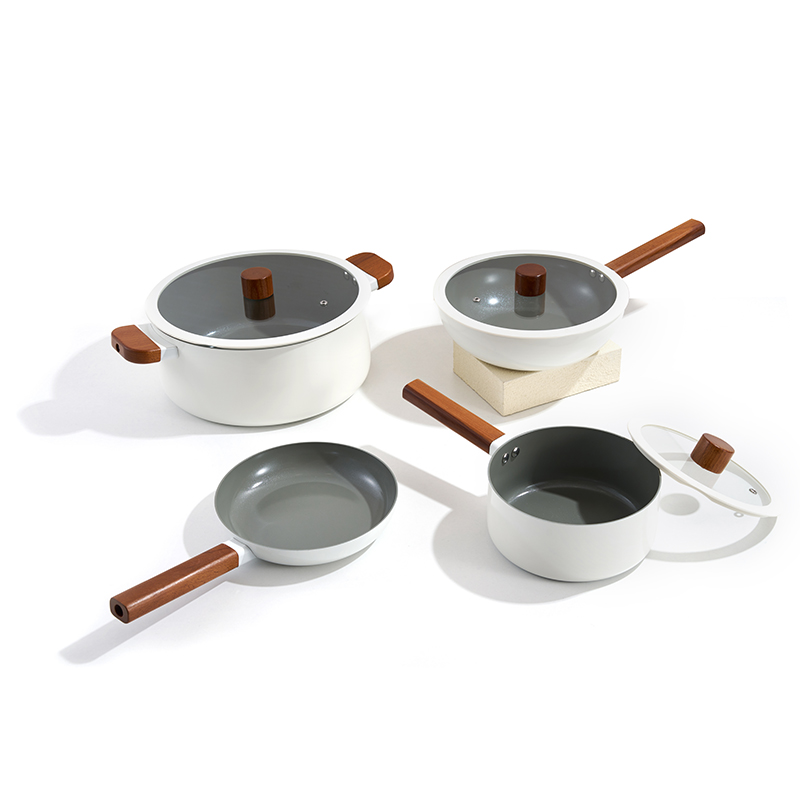
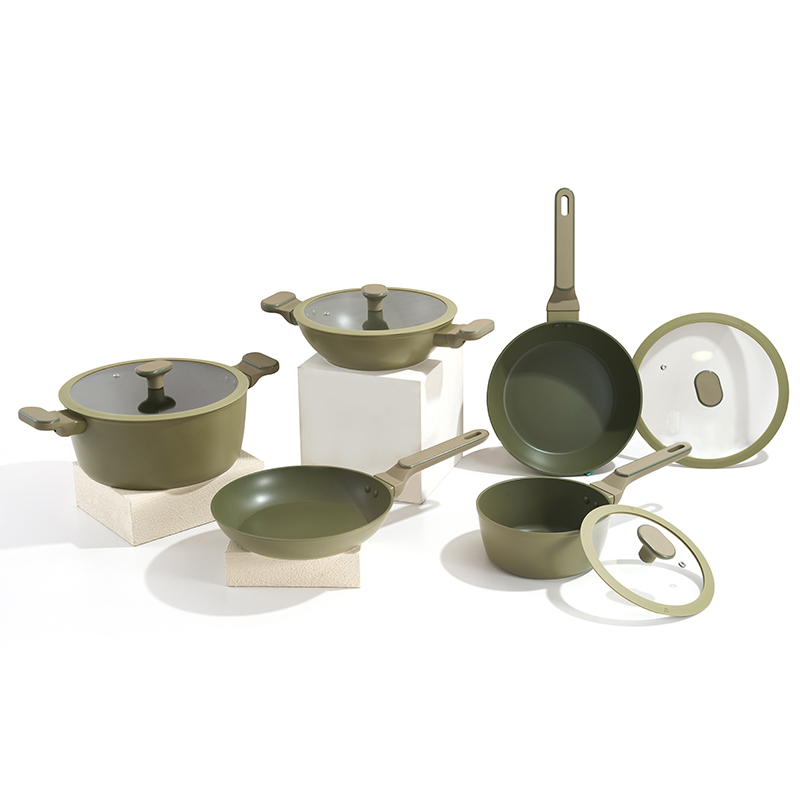
This cookware set has a ceramic non-stick inner liner, a heat-resistant wooden h...
See Details -
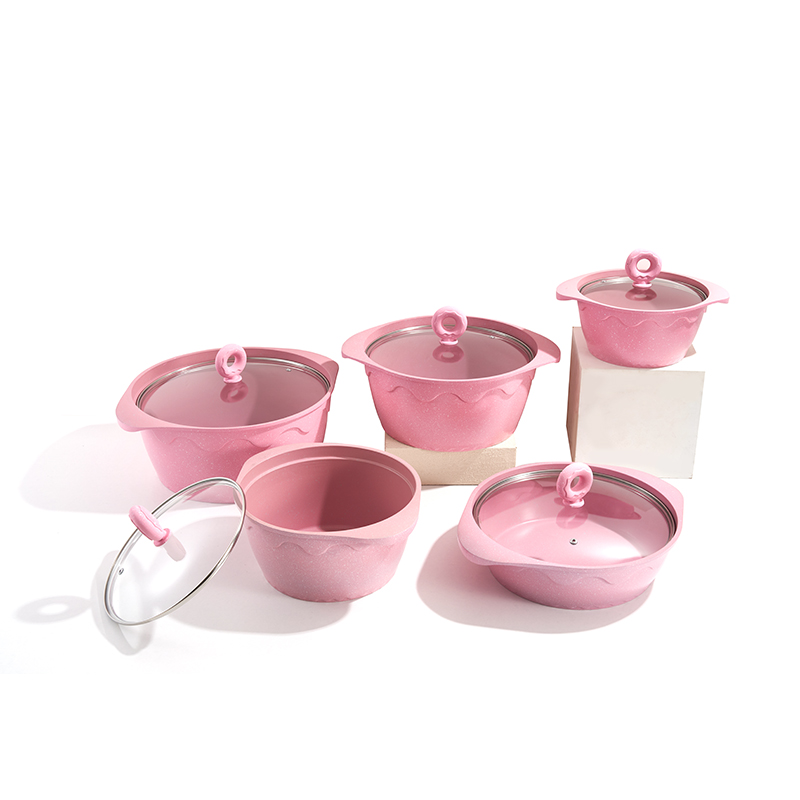
This cookware set is made of food-grade non-stick material, with a unique eye-ca...
See Details -
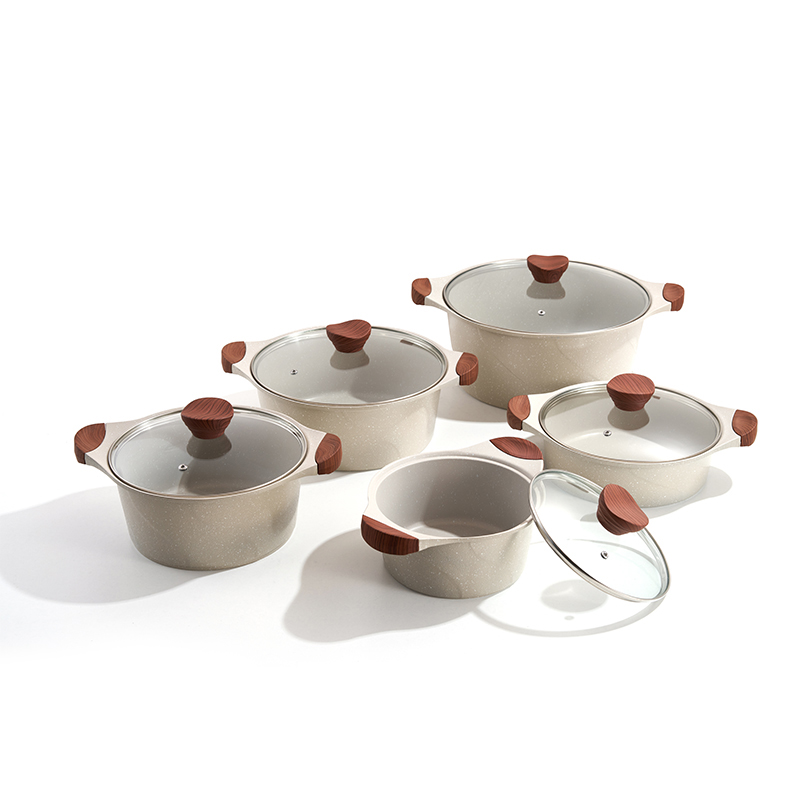
This off-white cookware set is made of wear-resistant non-stick material, with w...
See Details
Whether you're looking for bulk purchases or have any custom requirements, We are here to offer the best
solutions for you.
tiffany.zhong@echocn-trading.com
PHONE
+86-19561173975
+86-19557020621 (Hazel Wu)
ADD
Room 301, Unit 3014, No. 175 Qifeng Avenue, Wenqiao Town, Taizhou, Zhejiang, China
Fill Out the Form for More Information
Copyright © Zhejiang Echo Industry And Trade Co., Ltd.
All Rights Reserved.

China Cookware Set Manufacturer