
 en
en
 Español
This cookware set features a non-stick coating, even heat conduction, and multi-...
See Details
Do pressed aluminum cookware sets outperform traditional cast aluminum in real cooking conditions
Date:Jul 17, 2026
Aluminum cookware has become a popular choice for modern kitchens because it combines fast heat transfer with relatively low weight. Yet shoppers often encounter two manufacturing styles that appear similar but perform differently during everyday cooking: pressed aluminum and cast aluminum. Product descriptions frequently emphasize lightweight construction or superior heat distribution, making it difficult to determine which design actually performs better.
Cooking performance depends on far more than appearance. Manufacturing methods influence wall thickness, structural stability, heat response, coating adhesion, and long-term durability. Rather than asking which technology is universally better, it makes more sense to evaluate how each performs under practical cooking conditions.
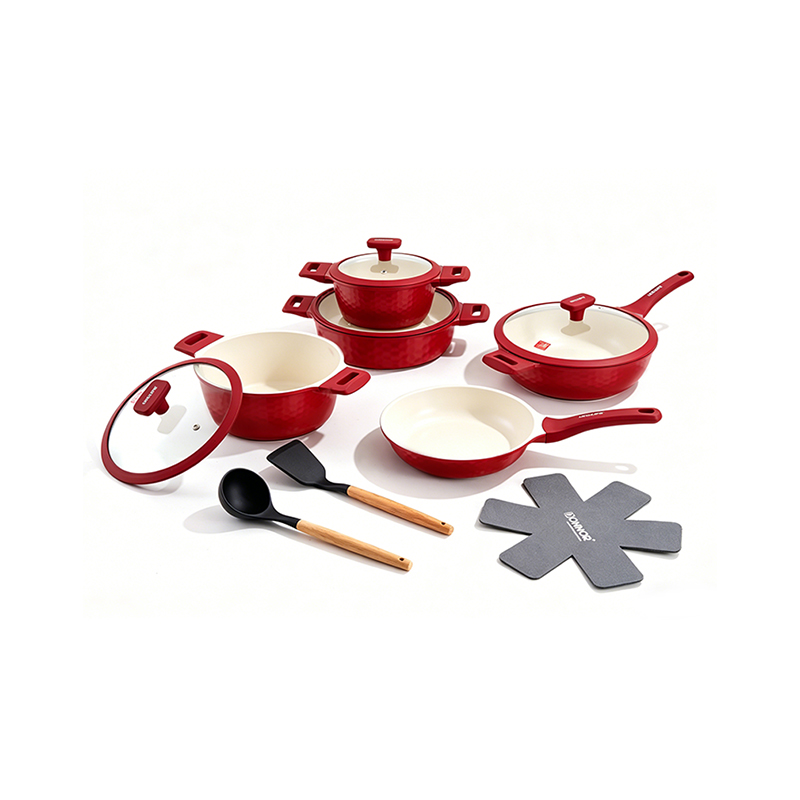
How Pressed Aluminum Cookware Is Manufactured
A pressing aluminum cookware set is produced by placing an aluminum sheet into a hydraulic press that forms the cookware into its final shape. This process allows efficient production while maintaining consistent dimensions.
Pressed cookware generally uses thinner aluminum compared with cast products, resulting in lighter weight and faster heat response. Typical wall thickness ranges between 1.8 mm and 3.0 mm, depending on product positioning and intended applications.
- Lower overall weight improves handling during everyday cooking.
- Rapid manufacturing supports consistent production quality.
- Quick heating response shortens preheating time.
- Lower material consumption contributes to competitive pricing.
These characteristics explain why pressed aluminum cookware remains widely used in household kitchens around the world.
Understanding Traditional Cast Aluminum Construction
Cast aluminum cookware follows a different manufacturing route. Molten aluminum is poured into molds before cooling into its final shape. This process creates thicker cookware bodies that store more thermal energy during cooking.
Many cast aluminum pans feature wall thicknesses above 4 mm, giving them greater structural rigidity and improved heat retention compared with thinner pressed cookware.
- Higher thermal mass maintains cooking temperature after cold ingredients are added.
- Rigid construction helps reduce deformation during extended heating.
- Complex cookware shapes are easier to manufacture through casting.
- Stable heat retention benefits slow cooking applications.
These properties make cast aluminum suitable for recipes that require longer cooking cycles.
Heat Distribution During Daily Cooking
Heat distribution plays a significant role in cookware performance. Aluminum itself offers thermal conductivity of approximately 205 W/m·K, allowing rapid heat transfer regardless of manufacturing method. The difference comes from cookware thickness and structural design rather than the aluminum material alone.
Pressed cookware heats rapidly after contacting the burner, making it suitable for everyday tasks such as eggs, vegetables, pancakes, and quick sautéing.
Cast aluminum responds more slowly during preheating but maintains temperature more consistently throughout the cooking process.
- Pressed cookware reacts quickly to burner adjustments.
- Cast cookware provides steadier temperatures during extended cooking.
- Thicker cookware bodies reduce sudden temperature fluctuations.
Neither approach automatically delivers better cooking results because different recipes require different thermal behavior.
Weight Makes a Noticeable Difference
Daily kitchen use involves much more than heating food. Carrying cookware, pouring sauces, tossing vegetables, and washing pans all become easier with lighter products.
A pressing aluminum cookware set often weighs considerably less than comparable cast aluminum cookware while still providing sufficient structural strength for ordinary household cooking.
- Reduced wrist fatigue during repeated cooking tasks.
- Convenient storage because of lighter construction.
- Simpler handling for larger frying pans and saucepans.
These practical advantages explain why lightweight cookware continues attracting many home cooks.
Surface Coatings Matter as Much as Manufacturing
Modern cookware performance depends not only on the aluminum body but also on the protective coating applied to the cooking surface.
Both pressed and cast aluminum cookware commonly receive multilayer non-stick or ceramic coatings designed to improve food release while protecting the aluminum substrate.
- Three-layer non-stick coatings improve scratch resistance.
- Ceramic coatings provide alternative food-contact surfaces.
- PFOA-free systems have become increasingly common across premium cookware.
Long-term cooking performance depends heavily on coating adhesion and proper daily maintenance rather than manufacturing method alone.
Durability Under Continuous Kitchen Use
Durability is often associated with thicker cookware, yet product quality also depends on alloy composition, forming accuracy, coating technology, and manufacturing consistency.
Cast aluminum generally resists deformation because of its thicker structure, while pressed cookware continues improving through better aluminum alloys and optimized forming technologies. High-quality pressed cookware performs reliably during normal household cooking provided excessive overheating is avoided.
- Stable flat bases improve contact with induction or electric cooktops.
- Improved coating adhesion extends usable service life.
- Controlled manufacturing tolerances enhance product consistency.
Which Cookware Fits Different Cooking Styles?
Cooking habits vary from one household to another, making product suitability highly dependent on daily routines.
Pressed aluminum cookware often matches kitchens where quick preparation, easy handling, and rapid heating are priorities.
Cast aluminum becomes attractive for recipes requiring longer simmering, steady temperatures, and greater thermal stability.
- Quick breakfasts benefit from fast heat response.
- Slow braising benefits from higher heat retention.
- Everyday family meals can perform well using either cookware style with quality coatings.
Performance Depends on the Entire Product, Not One Manufacturing Method
Comparing pressed aluminum with traditional cast aluminum reveals that each manufacturing process offers practical strengths under different cooking conditions. Lightweight handling, responsive heating, and efficient production make a pressing aluminum cookware set an attractive option for many kitchens. Cast aluminum continues to provide dependable heat retention and structural stability for recipes requiring longer cooking times.
Rather than viewing one manufacturing method as universally superior, buyers benefit more by comparing aluminum thickness, coating technology, base construction, food-contact certifications, and overall build quality. Those technical details influence cooking performance far more than the production process alone, allowing cookware to deliver reliable results throughout years of everyday use.
Recommended Articles
Product Category
Related products
-
-
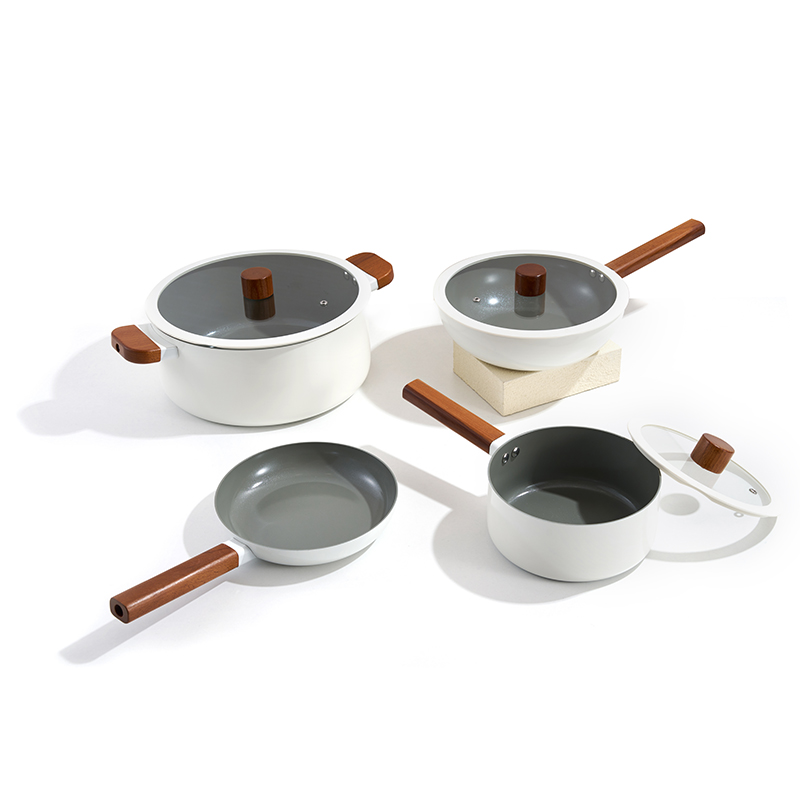
This cookware set has a ceramic non-stick inner liner, a heat-resistant wooden h...
See Details -
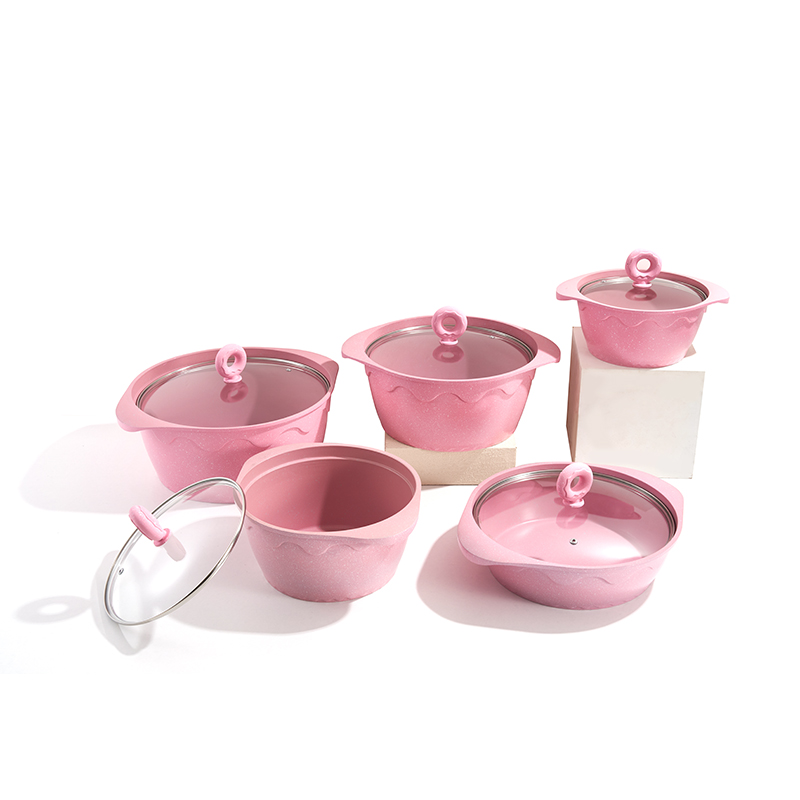
This cookware set is made of food-grade non-stick material, with a unique eye-ca...
See Details -
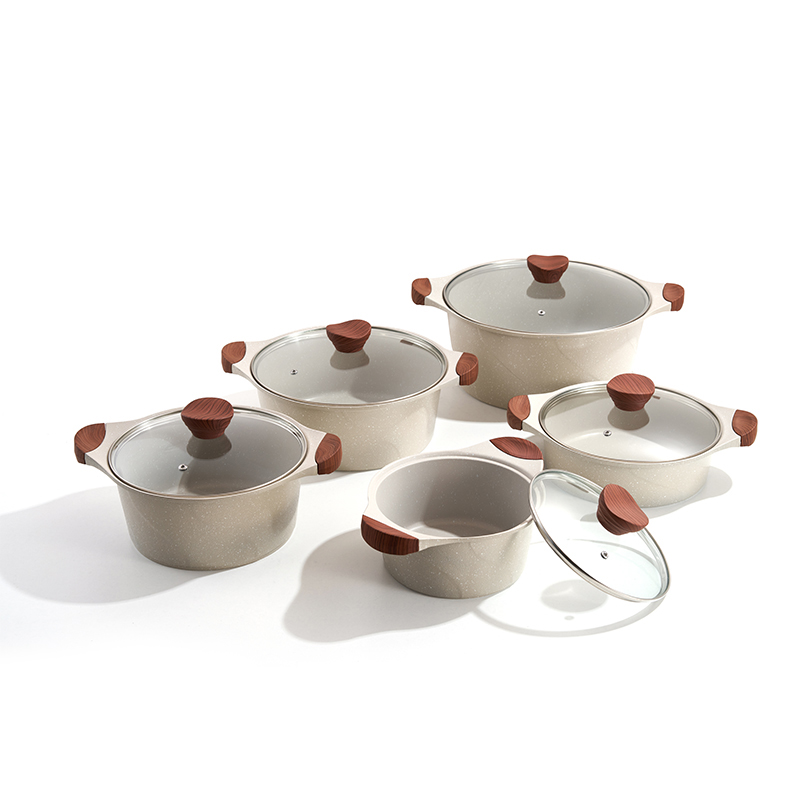
This off-white cookware set is made of wear-resistant non-stick material, with w...
See Details
Whether you're looking for bulk purchases or have any custom requirements, We are here to offer the best
solutions for you.
tiffany.zhong@echocn-trading.com
PHONE
+86-19561173975
+86-19557020621 (Hazel Wu)
ADD
Room 301, Unit 3014, No. 175 Qifeng Avenue, Wenqiao Town, Taizhou, Zhejiang, China
Fill Out the Form for More Information
Copyright © Zhejiang Echo Industry And Trade Co., Ltd.
All Rights Reserved.

China Cookware Set Manufacturer