
 en
en
 Español
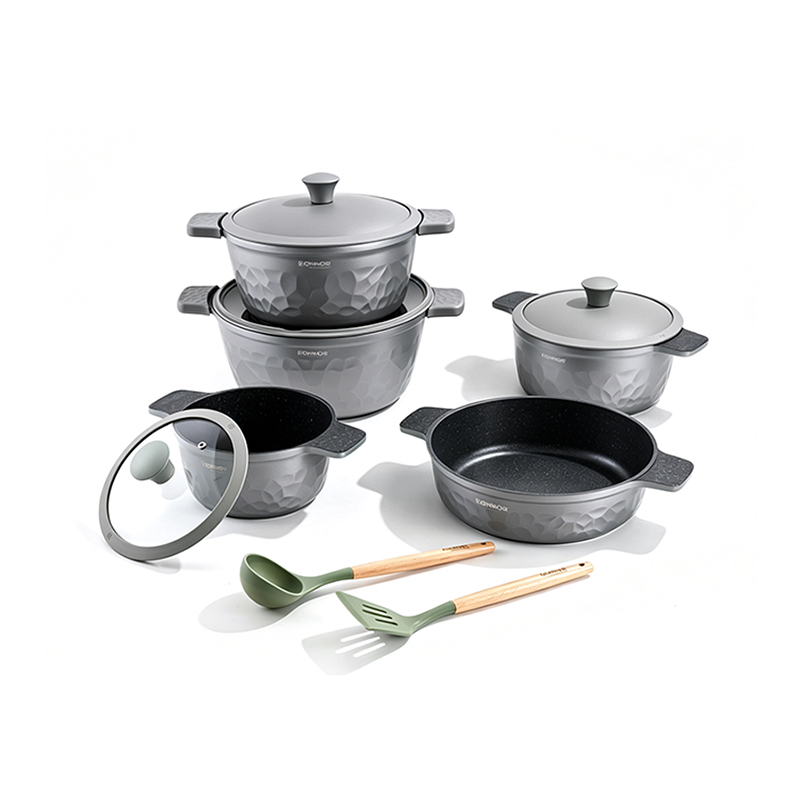
This cookware set features a non-stick coating, even heat conduction, and multi-...
See Details
Is wear resistance enough to define modern aluminum cookware safety standards
Date:Jul 03, 2026
Modern aluminum cookware has moved far beyond simple metal pans. Today’s market focuses heavily on coating stability, structural density, and chemical safety claims such as PFOA-free or PFAS-free labeling. Among these factors, wear resistance is often promoted as a key quality indicator. Yet the real question remains whether surface durability alone can represent a complete safety benchmark for cookware used in daily cooking.
Research on aluminum cookware shows that safety depends on a combination of surface sealing, coating chemistry, and how the material behaves under heat and abrasion. A highly wear-resistant surface may reduce scratches and metal exposure, but it does not automatically guarantee chemical stability or long-term inertness under all cooking conditions.
Wear Resistance and Its Real Technical Role
Wear resistance refers to how well a cookware surface withstands friction, utensil contact, thermal expansion stress, and cleaning abrasion. In aluminum cookware, this property is usually achieved through hard anodizing or multi-layer coatings.
- Hard anodized aluminum forms an aluminum oxide layer with hardness significantly higher than untreated aluminum, improving scratch resistance and surface stability.
- Coated systems often combine anodized substrates with PTFE or ceramic layers to enhance both slip performance and protection.
- Forged aluminum structures reduce porosity, improving density and minimizing weak points that can accelerate surface wear.
These improvements clearly extend cookware lifespan. However, durability does not always correlate directly with food safety, especially under high heat or acidic cooking conditions.
Safety Standards Go Beyond Surface Strength
Modern cookware safety standards evaluate multiple layers of risk, not just abrasion resistance. Aluminum exposure, coating chemistry, and thermal decomposition behavior all play important roles.
Even high-quality aluminum cookware with strong surface protection may still raise questions around leaching under extreme conditions. Studies indicate that anodization significantly reduces aluminum migration, but the barrier is not absolute in all environments.
- Chemical stability determines whether coatings remain inert under heat and acidic food contact.
- Migration control evaluates whether aluminum ions can transfer into food during prolonged cooking.
- Thermal resistance thresholds define safe temperature ranges for PTFE, ceramic, or hybrid coatings.
These aspects show that wear resistance is only one component of a broader safety framework.
Where Wear Resistance Meets Real Cooking Conditions
A wear resistant aluminum cookware set is often marketed as a long-life solution with enhanced durability against scratches and corrosion. Structurally, such sets usually combine forged aluminum bases with reinforced non-stick layers.
Despite this, actual kitchen use introduces variables that test far more than surface hardness. Acidic ingredients, repeated high-heat cycles, and abrasive cleaning tools influence how coatings degrade over time.
- Acidic foods such as tomato-based sauces can accelerate interaction with exposed metal areas if coatings weaken.
- High-temperature cooking may affect polymer stability in PTFE layers or reduce the lifespan of ceramic coatings.
- Utensil interaction plays a major role in microscopic surface wear, even in reinforced cookware systems.
These factors reveal that mechanical durability alone cannot fully represent real-world safety performance.
Coating Chemistry as a Parallel Safety Layer
Another dimension of cookware safety comes from coating composition. Modern aluminum cookware often uses PTFE-based non-stick surfaces or ceramic sol-gel coatings, each with distinct behavior profiles.
PTFE coatings are chemically stable under normal cooking conditions but can degrade at excessive temperatures. Ceramic coatings avoid PFAS-related concerns but may lose non-stick performance faster under abrasion stress.
- PFOA-free labeling indicates manufacturing improvements but does not define the full chemical structure of the coating.
- PFAS-free claims reflect a broader shift away from persistent fluorinated compounds.
- Coating integrity determines whether protective layers continue isolating aluminum from food.
This means safety evaluation must consider both chemical composition and physical durability together.
Structural Design and Manufacturing Influence
Beyond coatings, production methods significantly affect cookware behavior. Pressed and forged aluminum cookware sets differ in density, heat distribution, and long-term stability.
Forging processes compress aluminum under high pressure, reducing internal voids and improving structural uniformity. This enhances resistance to deformation and improves coating adhesion, indirectly supporting safety performance over time.
- Pressed aluminum cookware typically offers lighter weight and cost efficiency.
- Forged aluminum cookware provides higher density and more stable heat conduction.
- Multi-layer base designs improve thermal distribution and reduce hot spots.
These structural choices indirectly influence how long coatings remain effective, which ties back into safety performance.
Rethinking Safety Standards in Cookware Design
Modern cookware evaluation cannot rely on a single parameter. Wear resistance improves usability and extends product lifespan, yet it does not fully define safety boundaries.
A comprehensive safety perspective must combine mechanical durability, chemical inertness, coating stability, and thermal behavior. Only through this multi-layer assessment can aluminum cookware be properly evaluated for long-term kitchen use.
As consumer awareness increases around PFOA-free and eco-friendly cookware claims, the industry continues shifting toward integrated material systems rather than single-feature design. Wear resistance remains important, but it functions as one layer within a broader safety architecture rather than a standalone definition.
Recommended Articles
Product Category
Related products
-
-
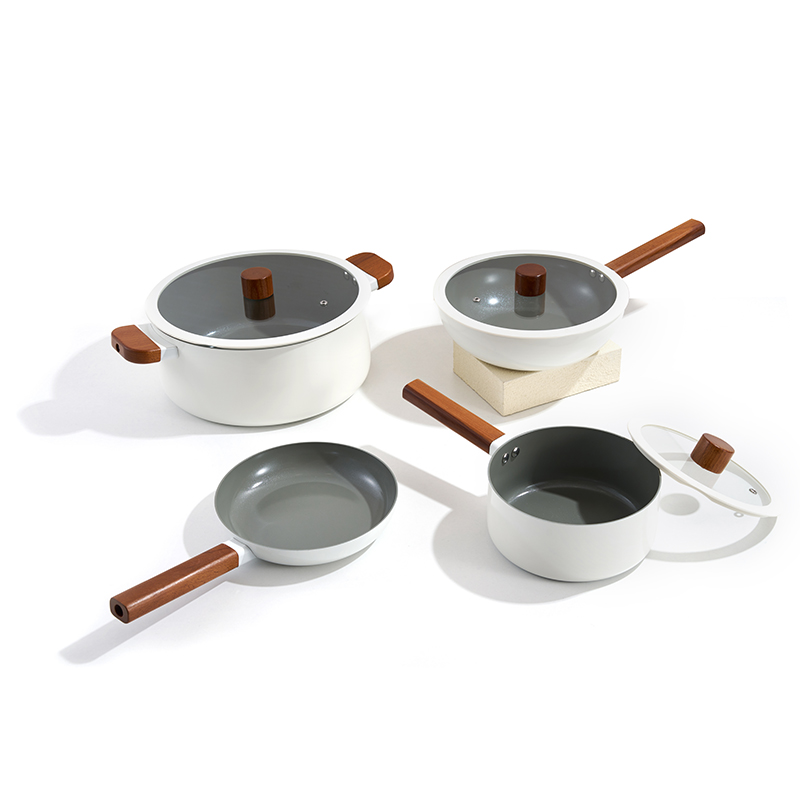
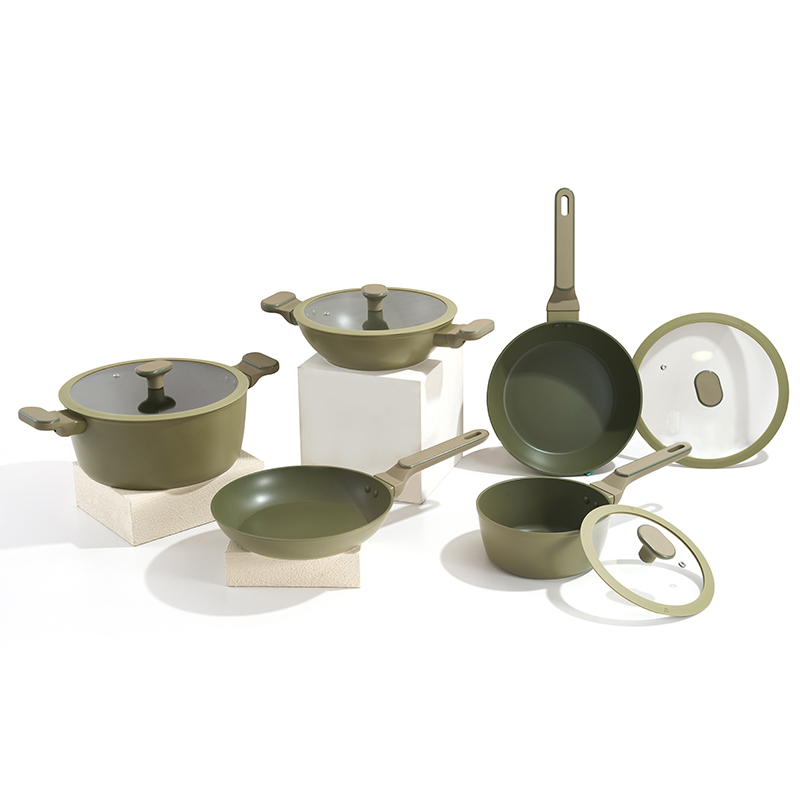
This cookware set has a ceramic non-stick inner liner, a heat-resistant wooden h...
See Details -
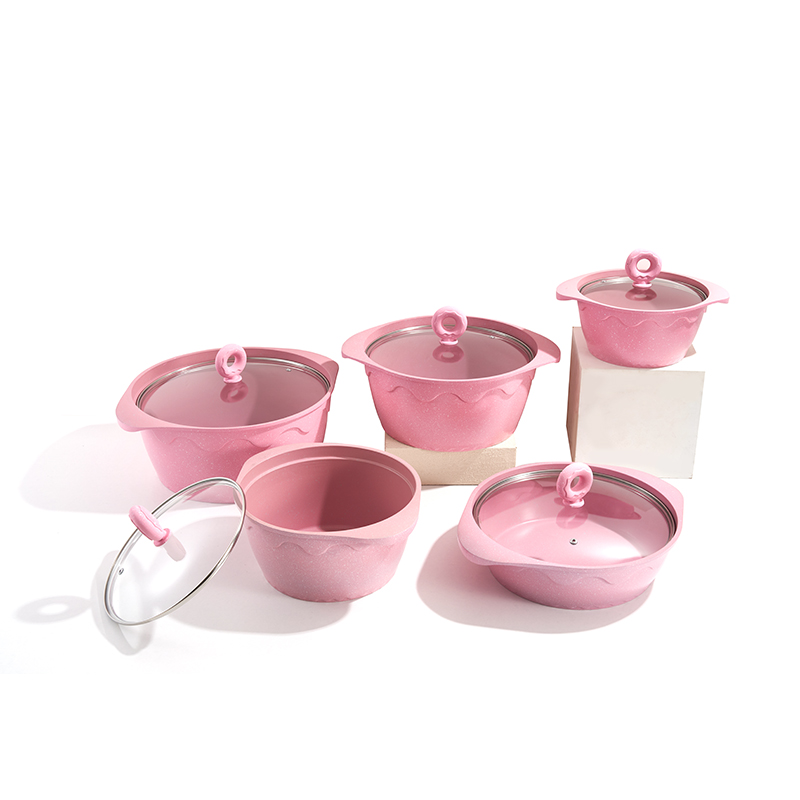
This cookware set is made of food-grade non-stick material, with a unique eye-ca...
See Details -
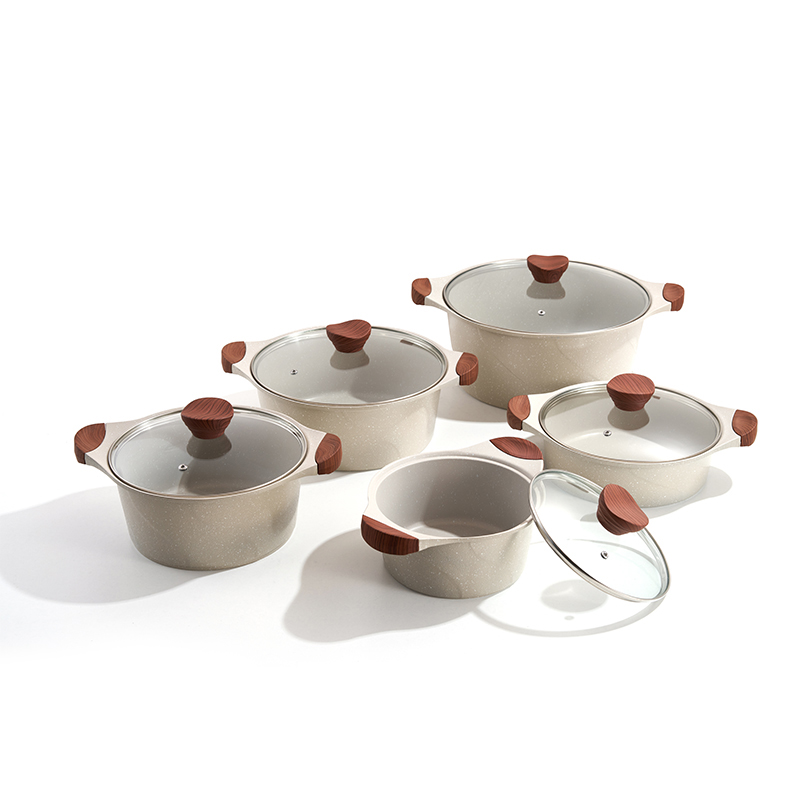
This off-white cookware set is made of wear-resistant non-stick material, with w...
See Details
Whether you're looking for bulk purchases or have any custom requirements, We are here to offer the best
solutions for you.
tiffany.zhong@echocn-trading.com
PHONE
+86-19561173975
+86-19557020621 (Hazel Wu)
ADD
Room 301, Unit 3014, No. 175 Qifeng Avenue, Wenqiao Town, Taizhou, Zhejiang, China
Fill Out the Form for More Information
Copyright © Zhejiang Echo Industry And Trade Co., Ltd.
All Rights Reserved.

China Cookware Set Manufacturer