
 en
en
 Español
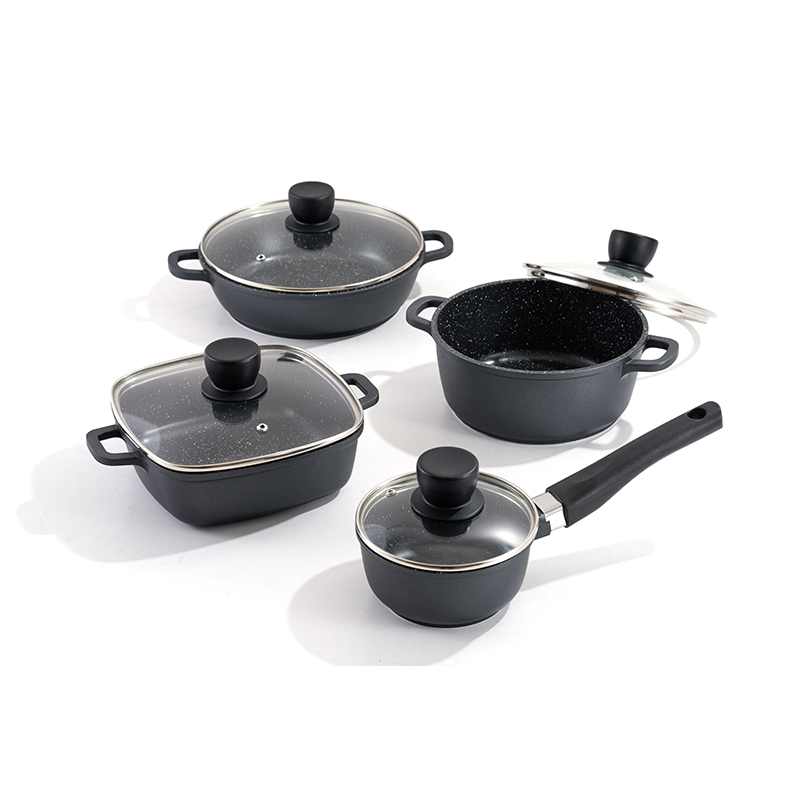
This cookware set features a non-stick coating, even heat conduction, and multi-...
See Details
Is Fast Heating Cookware Hard to Control Cooking
Date:Jun 26, 2026
A fast heat conduction aluminum pot set often feels impressive at the start of cooking. Oil spreads quickly, water reaches boiling point in a short time, and temperature changes react almost instantly to burner adjustments. That responsiveness creates efficiency, yet it also introduces a layer of control difficulty that many home cooks notice during precise recipes.
Heat speed and heat stability are not the same property. Aluminum transfers energy rapidly across its surface, but that same speed can make temperature management feel less forgiving compared with slower-reacting metals like stainless steel or cast iron. Research on aluminum cookware behavior shows that its high conductivity improves cooking speed while increasing sensitivity to heat fluctuations during stove cycling.
Rapid Heat Response and Control Sensitivity
Temperature Changes React Instantly
Aluminum responds almost immediately to flame adjustments.
- Burner increase raises surface temperature quickly
- Heat reduction reflects within seconds across the base
- Small flame shifts create noticeable cooking differences
This responsiveness supports fast cooking tasks but reduces the “buffer zone” that helps stabilize temperature during delicate cooking stages.
Limited Thermal Buffer Effect
Cookware with high heat capacity materials stores energy more slowly, smoothing fluctuations. Aluminum behaves differently:
- Heat enters and exits quickly
- Surface temperature follows burner output closely
- Less stored heat remains after flame reduction
That direct energy transfer makes precision timing more demanding, especially for sauces or sugar-based mixtures.
Why Control Feels Difficult in Practice
Burner Cycling Influence
Modern gas and electric burners do not deliver constant output. They cycle heat levels to maintain set temperatures.
- Heat surges during active cycles
- Short cooling periods between cycles
- Aluminum reflects each change almost immediately
That constant feedback loop can make cooking feel unpredictable even though the material itself is performing correctly.
Food Reaction Lag Mismatch
Different foods respond to heat at different speeds:
- Thin liquids adjust temperature rapidly
- Dense proteins lag behind surface heat changes
- Sugars and fats shift behavior at narrow temperature ranges
Aluminum’s quick response sometimes exposes this mismatch more clearly, especially in recipes requiring gradual temperature transitions.
Structural and Material Influences on Control
Thin Base Acceleration Effect
A fast heat conduction aluminum pot set often uses thinner structures to maximize responsiveness.
- Heat reaches food quickly through base
- Temperature gradients form faster during burner changes
- Small adjustments create visible cooking differences
Data on cookware warping and heat stress shows that thin aluminum bases concentrate heat in central zones under burners, increasing variability during cooking cycles .
Alloy Density Variation
Not all aluminum behaves identically. Variations in alloy composition affect heat behavior:
- Higher purity aluminum increases responsiveness
- Alloyed structures slightly slow thermal reaction
- Reinforced bases distribute heat more evenly but reduce speed
These differences shape how controllable the cookware feels during active cooking.
Cooking Scenarios Where Control Becomes Challenging
Sugar Caramelization Stages
Caramelization requires narrow temperature windows:
- Small heat increases accelerate browning sharply
- Slight overheating shifts flavor from sweet to bitter
- Rapid cooling interrupts texture formation
Aluminum’s fast reaction can compress these stages into shorter time frames, requiring closer attention.
Sauce Reduction Management
Reduction processes depend on controlled evaporation rates:
- Rapid boiling removes liquid quickly
- Sudden heat drop slows reduction unexpectedly
- Surface bubbling changes immediately with flame adjustments
While aluminum helps reach boiling quickly, maintaining a steady reduction rhythm may require frequent burner modulation.
Protein Searing Balance
Searing involves surface browning without burning:
- High heat creates quick crust formation
- Excess heat leads to uneven browning patches
- Heat reduction must happen at precise timing
Fast conduction can make timing adjustments more sensitive than expected.
Heat Control Comparison Table
| Cookware Type | Heat Response Speed | Control Stability | Cooking Forgiveness |
| Fast aluminum conduction set | Very fast | Moderate | Lower |
| Die-cast aluminum cookware | Fast | Balanced | Medium |
| Stainless steel cookware | Medium | High | High |
| Cast iron cookware | Slow | Very high after preheat | Very high |
| Copper core cookware | Very fast | Moderate to high | Medium |
Engineering Approaches That Improve Control
Layered Base Design
Modern cookware often uses multiple layers to balance responsiveness and stability:
- Aluminum core accelerates heat transfer
- Stainless steel exterior stabilizes structure
- Bonding layer smooths temperature spikes
This combination reduces abrupt temperature swings without removing responsiveness entirely.
Increased Thermal Mass Zones
Some designs introduce thicker base sections:
- Heat storage improves temperature steadiness
- Reaction speed becomes slightly slower
- Cooking behavior becomes more predictable
This approach trades a small amount of speed for better manageability.
Surface Geometry Optimization
Base shaping influences how heat spreads:
- Flat bases distribute heat evenly across contact area
- Slight curvature affects liquid pooling and convection
- Reinforced center zones reduce localized overheating
Practical Control Strategies in Use
Gradual Flame Adjustment
Instead of sharp burner changes, slower adjustments help stabilize heat transfer patterns in aluminum cookware.
Preheating Stabilization
Allowing cookware to reach a uniform temperature before adding ingredients improves predictability:
- Heat distribution becomes more consistent
- Temperature spikes reduce
- Cooking response becomes easier to manage
Matching Pan Size to Burner Output
Alignment between burner diameter and cookware base reduces uneven heating patterns that exaggerate control sensitivity.
A fast heat conduction aluminum pot set offers clear advantages in speed and efficiency, but that same responsiveness changes the cooking experience. Temperature reacts quickly, which rewards attentive control but reduces tolerance for abrupt adjustments.
Control difficulty does not indicate poor quality. It reflects the physical nature of aluminum as a highly conductive material. With adjusted cooking habits and balanced burner usage, the same responsiveness becomes an advantage rather than a challenge, especially for recipes that benefit from quick heat transitions.
Recommended Articles
Product Category
Related products
-
-
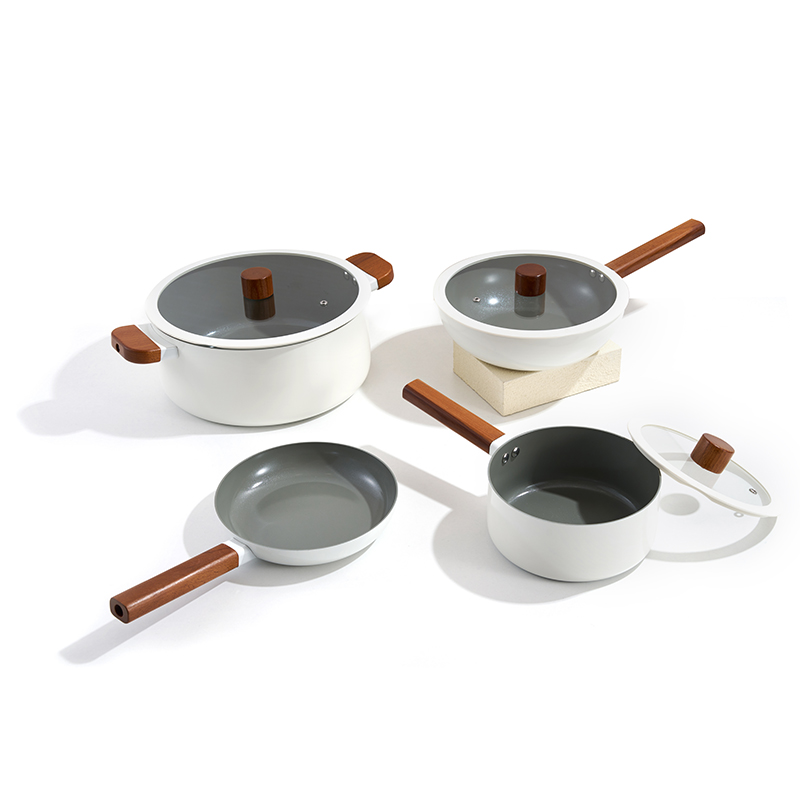
This cookware set has a ceramic non-stick inner liner, a heat-resistant wooden h...
See Details -
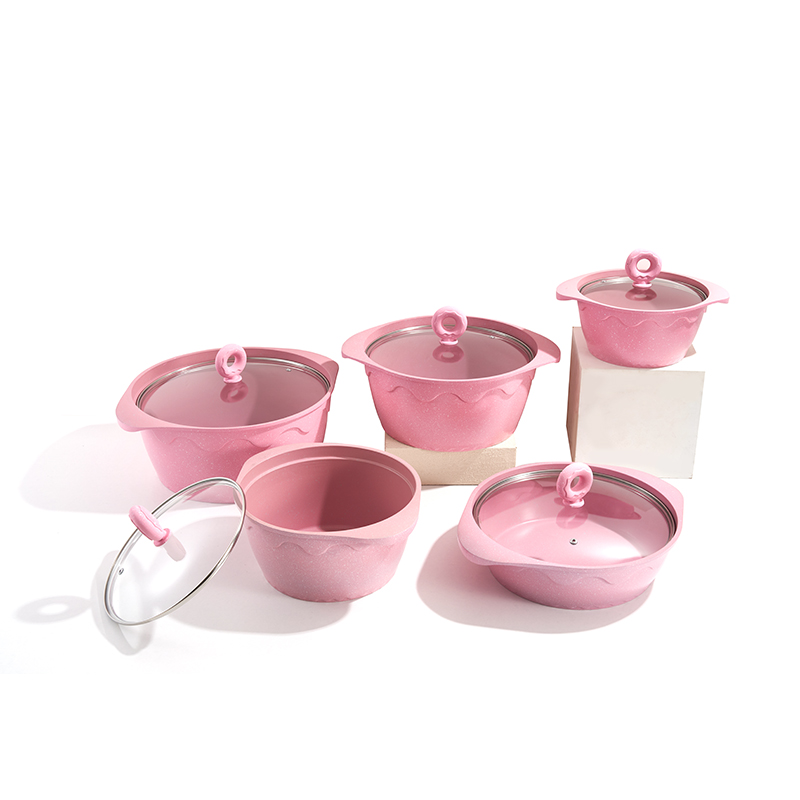
This cookware set is made of food-grade non-stick material, with a unique eye-ca...
See Details -
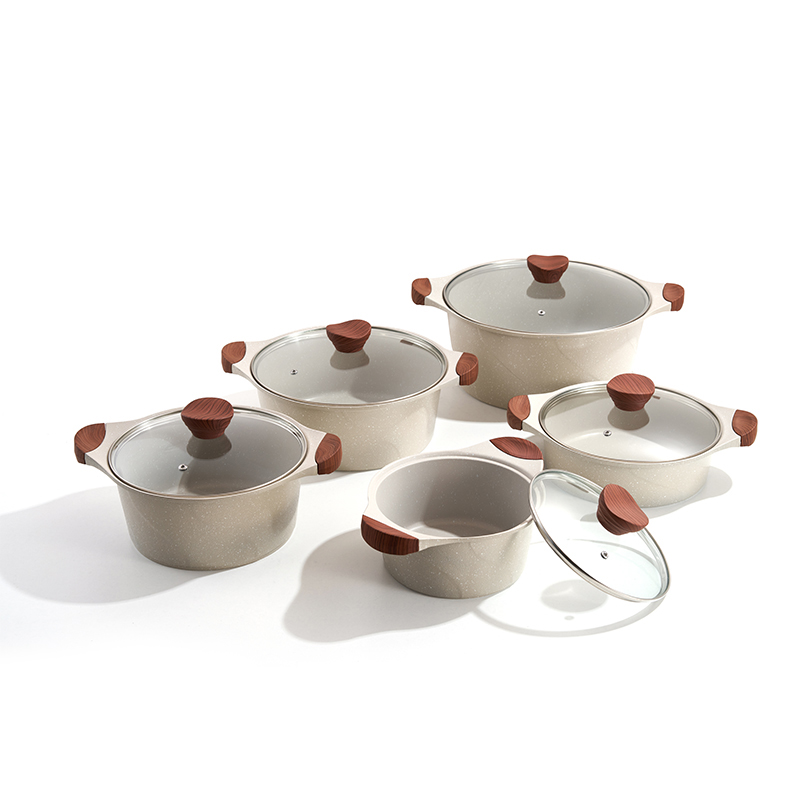
This off-white cookware set is made of wear-resistant non-stick material, with w...
See Details
Whether you're looking for bulk purchases or have any custom requirements, We are here to offer the best
solutions for you.
tiffany.zhong@echocn-trading.com
PHONE
+86-19561173975
+86-19557020621 (Hazel Wu)
ADD
Room 301, Unit 3014, No. 175 Qifeng Avenue, Wenqiao Town, Taizhou, Zhejiang, China
Fill Out the Form for More Information
Copyright © Zhejiang Echo Industry And Trade Co., Ltd.
All Rights Reserved.

China Cookware Set Manufacturer