
 en
en
 Español
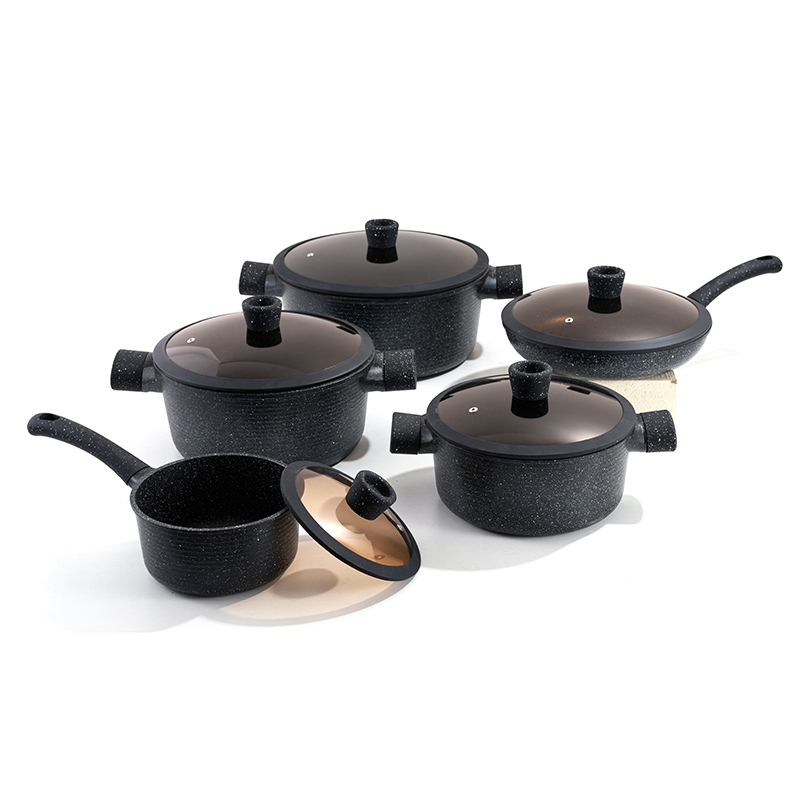
This cookware set features a non-stick coating, even heat conduction, and multi-...
See Details
Can Durable Aluminum Pots Handle High Heat Daily
Date:Jun 12, 2026
A durable aluminum pot set is often promoted as a long-term kitchen solution, especially for households that cook frequently under strong heat conditions. Real-world usage shows a more nuanced picture: structural resilience depends not only on material strength but also on thickness, alloy quality, and heating behavior over time.
Aluminum remains widely used because of its excellent thermal response. It transfers heat rapidly across the cooking surface, which helps reduce temperature lag during boiling, sautéing, and simmering. That same responsiveness, however, creates sensitivity under sustained high-temperature exposure, where thermal stress becomes more noticeable over repeated cycles.
Heat Resistance Behavior in Daily Cooking
Rapid Expansion Under Continuous Flame Exposure
Aluminum reacts quickly to heat input, expanding faster than many other cookware materials. This property supports fast cooking but also introduces mechanical strain.
- Base expands sooner than sidewalls under strong flame
- Temperature imbalance develops during extended heating
- Repeated cycles gradually influence flatness stability
Research on cookware deformation shows that uneven expansion over time is a key contributor to base distortion in aluminum cookware structures .
High-Temperature Load Tolerance Thresholds
Most aluminum cookware sets are engineered for medium-to-high cooking ranges rather than extreme heat.
Typical performance range:
- Safe cooking zone: medium to medium-high heat
- Short bursts: high heat searing capability
- Extended exposure: gradual stress accumulation risk
Aluminum softens slightly under elevated temperatures, meaning prolonged overheating increases susceptibility to shape shifts, especially in thinner pots .
Structural Durability Factors in Aluminum Pots
Wall Thickness and Base Reinforcement
Durability strongly depends on how much material supports the cooking surface.
Common construction styles:
- Thin-pressed aluminum: lightweight, quicker heat response, lower rigidity
- Die-cast aluminum: denser structure, improved shape retention
- Reinforced base designs: multi-layer bottom improves heat spread
Thicker aluminum significantly reduces deformation risk because it distributes thermal load across a wider structure instead of concentrating stress in a single zone .
Alloy Composition Stability
Not all aluminum behaves the same under heat. Alloy blending influences:
- Grain structure stability
- Resistance to micro-deformation
- Long-term rigidity under repeated heating cycles
Higher-grade aluminum alloys typically maintain shape better under frequent high-heat cooking compared with lower-cost blends used in entry-level cookware sets.
Real Kitchen Stress Scenarios
High Flame Stir-Frying Cycles
Frequent stir-frying places cookware under repeated thermal cycling:
- Fast heating followed by brief cooling during ingredient addition
- Continuous repositioning of food creates uneven surface load
- Edge zones may remain cooler than center zones
This repeated imbalance can gradually influence base stability in lightweight aluminum pots.
Empty Heating Practices
Heating an empty pot is one of the most stressful conditions for aluminum cookware.
Effects include:
- Rapid temperature spike across base center
- Delayed heat absorption at edges
- Expansion mismatch across surface area
Such conditions are often linked to long-term warping issues, especially in thin cookware designs .
Water Boil vs Dry Heat Difference
Boiling water introduces thermal buffering:
- Water absorbs and redistributes heat
- Surface temperature remains more stable
- Expansion becomes more uniform across base
Dry heating lacks this buffer, resulting in stronger localized stress.
Performance Comparison Table
| Feature | Durable Aluminum Pot Set | Stainless Steel Pot Set |
| Heat Response Speed | Very fast | Moderate |
| High Heat Endurance | Medium tolerance | High tolerance |
| Shape Stability Over Time | Moderate | Strong |
| Weight | Light to medium | Medium to heavy |
| Heat Distribution | Even under proper use | Even with layered base |
| Deformation Risk | Higher under misuse | Lower overall |
Long-Term Usage Behavior Observations
Surface Flatness Over Repeated Cycles
Even durable aluminum pots may show slight changes in base flatness after extended high-heat usage. This does not always indicate failure but reflects accumulated thermal stress.
Key indicators:
- Slight rocking on flat surfaces
- Minor oil pooling toward one side
- Uneven browning in localized zones
These changes are gradual and often linked to repeated high-heat exposure rather than single-use events.
Coating and Structural Interaction
Nonstick or anodized coatings influence how heat interacts with the metal surface:
- Coatings expand at different rates than aluminum core
- Repeated heating can create micro-level separation zones
- Surface perception of instability may increase even if core remains stable
Hard-anodized versions generally improve resistance to surface wear and maintain structural integrity longer under frequent cooking conditions.
Practical Engineering Improvements
Encapsulated Base Layers
Some durable aluminum pots integrate stainless steel or multi-layer bases to reduce direct heat concentration. This design helps spread thermal energy more evenly across the bottom surface.
Reinforced Rim Geometry
Thicker upper rims improve structural balance during expansion cycles, reducing edge distortion during high-heat cooking sessions.
Controlled Wall Gradient Design
Gradual thickness transitions help distribute stress more evenly, minimizing weak points where deformation typically begins.
A durable aluminum pot set can handle daily cooking under high heat, but performance depends heavily on how that heat is applied. Controlled flame levels, stable heating practices, and structurally reinforced designs significantly extend usable lifespan.
Aluminum performs best in environments where heat is dynamic but not extreme for long durations. Under balanced conditions, it delivers strong responsiveness and reliable cooking results. Under continuous intense exposure, structural changes become more likely over time, especially in lightweight constructions.
Recommended Articles
Product Category
Related products
-
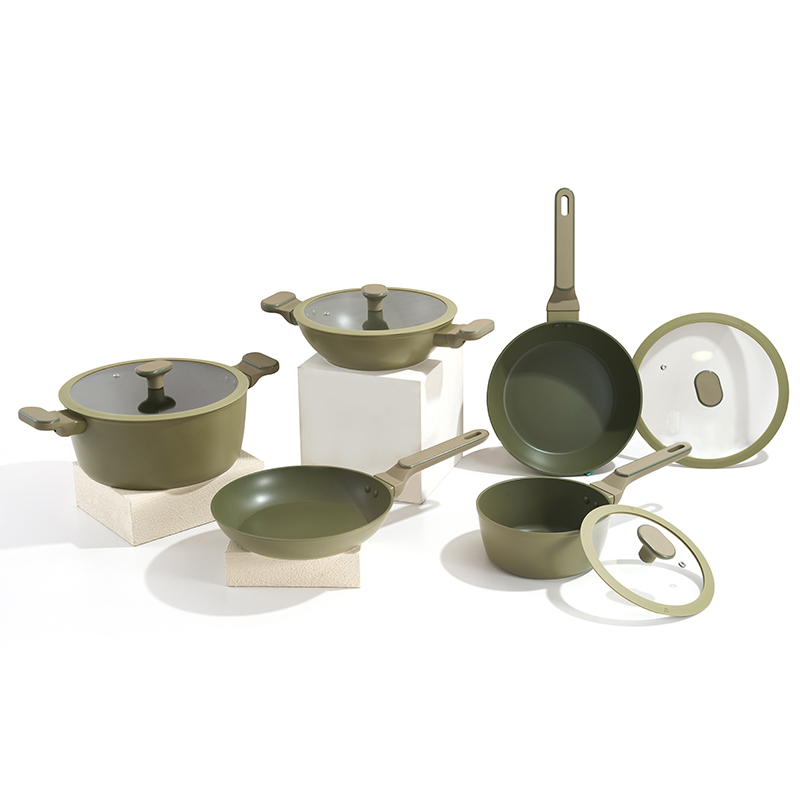
-
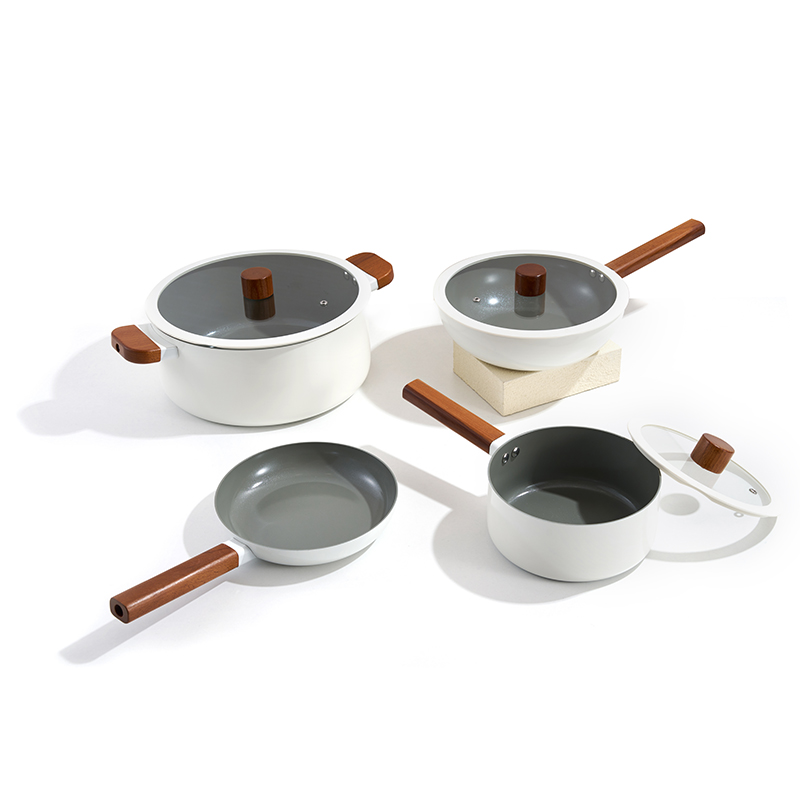
This cookware set has a ceramic non-stick inner liner, a heat-resistant wooden h...
See Details -
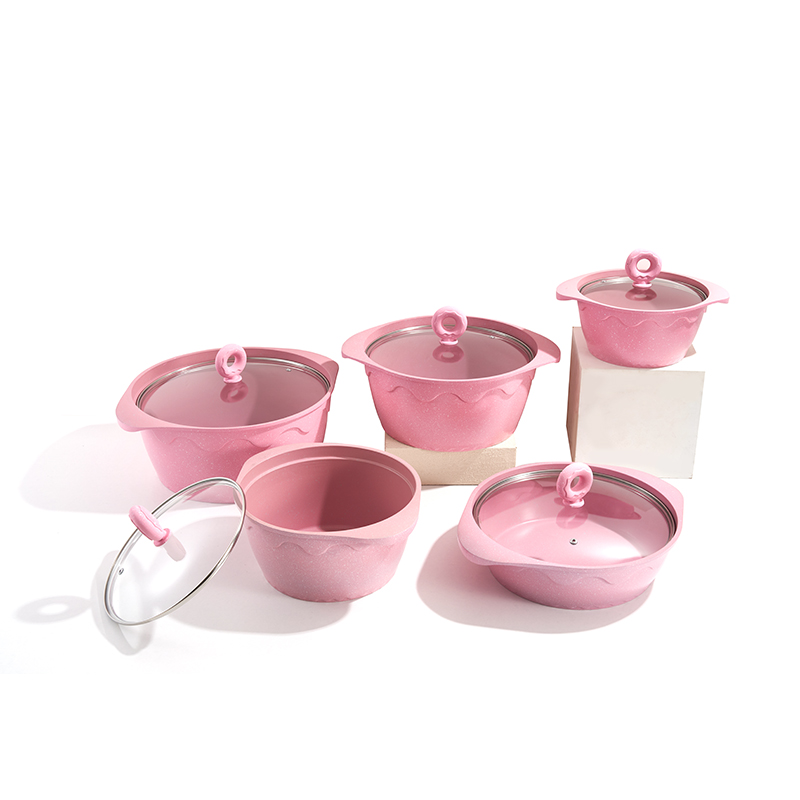
This cookware set is made of food-grade non-stick material, with a unique eye-ca...
See Details -
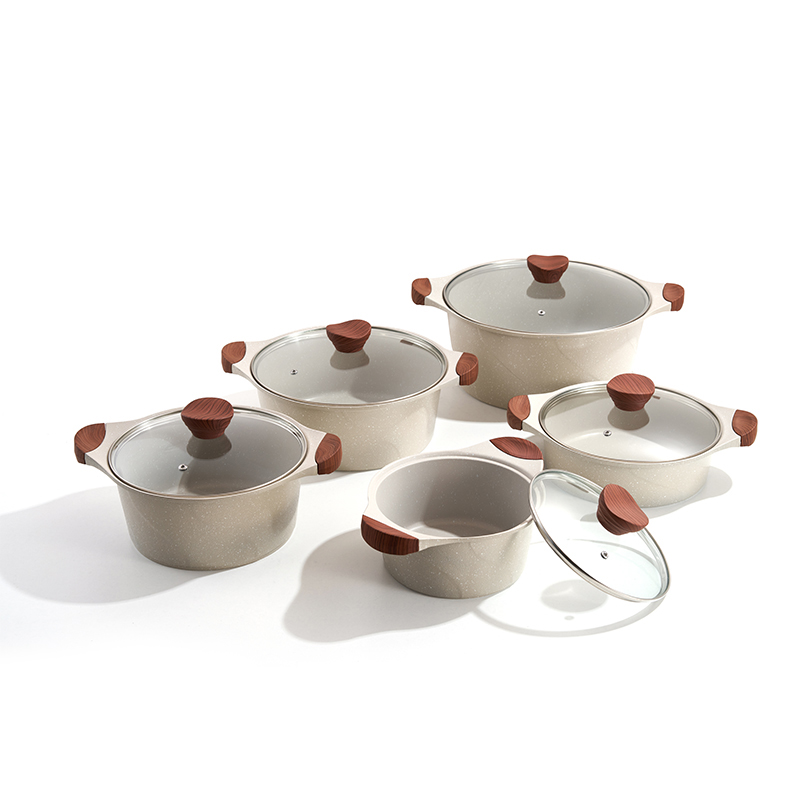
This off-white cookware set is made of wear-resistant non-stick material, with w...
See Details
Whether you're looking for bulk purchases or have any custom requirements, We are here to offer the best
solutions for you.
tiffany.zhong@echocn-trading.com
PHONE
+86-19561173975
+86-19557020621 (Hazel Wu)
ADD
Room 301, Unit 3014, No. 175 Qifeng Avenue, Wenqiao Town, Taizhou, Zhejiang, China
Fill Out the Form for More Information
Copyright © Zhejiang Echo Industry And Trade Co., Ltd.
All Rights Reserved.

China Cookware Set Manufacturer