
 en
 Español

This cookware set features a non-stick coating, even heat conduction, and multi-...
See Details
Why Multi-Size Speckled Aluminum Cookware Sets Are Changing Everyday Kitchen Performance
Date:Nov 16, 2026
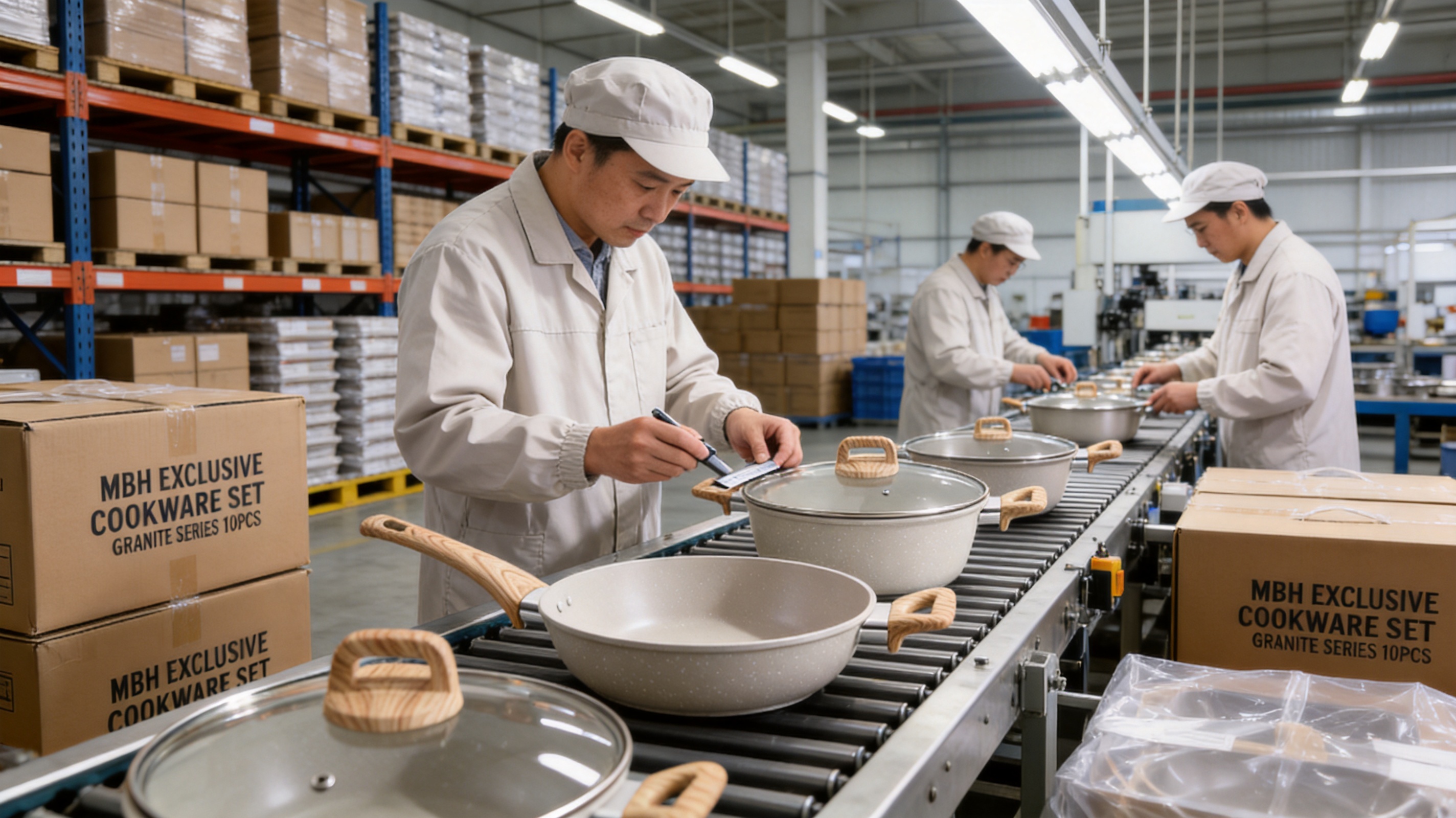
Modern kitchens increasingly require cookware that can perform across several cooking tasks without occupying excessive storage space. A single household may need a compact saucepan for breakfast, a medium casserole for vegetables, a larger pot for family meals, and a deep frying pan for browning, sautéing, or shallow frying. Purchasing each piece separately can increase cost, create mismatched designs, and make it difficult to maintain consistent cooking performance. A coordinated cookware set offers a more practical alternative by combining complementary sizes, materials, and functions in one carefully designed collection.
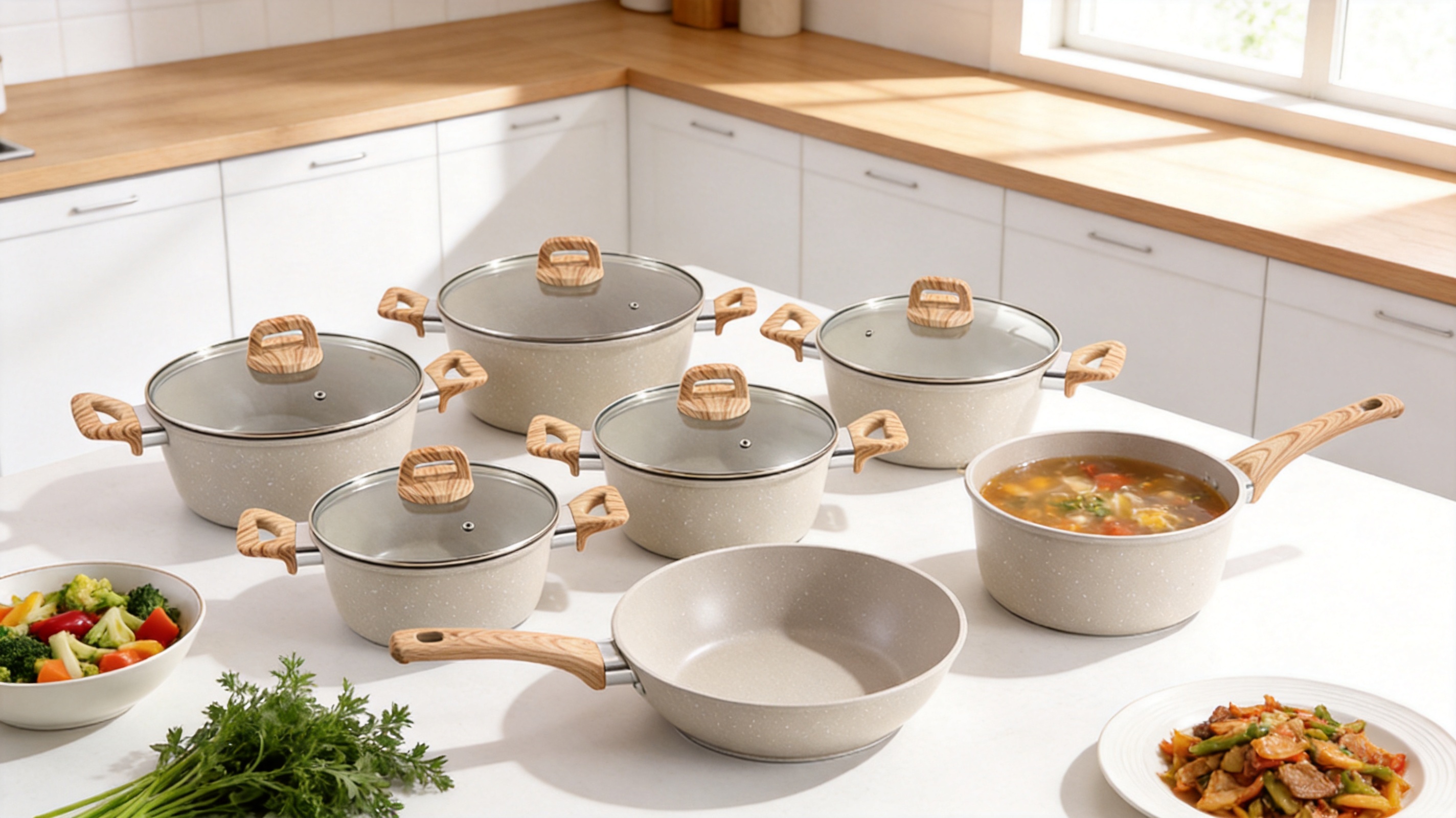
The 10-piece SpeckleWood aluminum cookware set is designed around this need for flexibility. It combines a light beige speckled body, wood-grain handles, a food-grade non-stick interior, and a multi-size configuration intended for frying and stewing. Its die-cast aluminum substrate provides a strong foundation for daily cooking, while the granite coating on both the exterior and interior gives the cookware a distinctive appearance and an easy-to-clean surface. The collection is also described as compatible with all stovetops, making it suitable for a broad range of household and commercial kitchen environments.
Beyond its visual appeal, the set represents a practical product concept for cookware distributors, retailers, hospitality buyers, and private-label kitchenware brands. It combines several marketable features in one product: modern styling, useful size variation, non-stick convenience, relatively simple care requirements, and a coordinated appearance that can be presented effectively in retail packaging or online product listings.
A Complete Solution for Multiple Cooking Tasks
The most important advantage of a cookware set is that it addresses more than one cooking requirement. The specified configuration includes casseroles in 20 cm, 24 cm, 28 cm, and 32 cm sizes, together with a 28 cm deep fry pan. This size progression supports both individual and family cooking. The smaller casserole is useful for sauces, grains, small portions, or side dishes. The medium sizes can handle everyday meals, while the larger casserole is suitable for stews, soups, braised dishes, and shared family portions.
The 28 cm deep fry pan adds a different type of functionality. Its deeper profile can provide more capacity than a conventional shallow frying pan, making it suitable for stir-frying, sautéing, browning, shallow frying, and preparing dishes with sauces. It can also reduce splashing during cooking and offer additional room for ingredients that need to be moved frequently with a wooden or nylon utensil.
For consumers, this assortment reduces the need to make separate purchasing decisions. For buyers and distributors, it creates a complete product story that is easier to communicate: one coordinated set for frying, simmering, stewing, reheating, and general meal preparation. A complete assortment also supports gift sales, housewarming promotions, seasonal kitchen campaigns, and bundled retail displays.
Competitors often offer cookware sets with many pieces but limited functional variety. A set may contain several small saucepans that serve similar purposes, or it may focus heavily on accessories rather than useful cooking vessels. The SpeckleWood configuration is more function-oriented because its principal pieces cover different capacities and cooking styles. The value is not simply in the number of pieces; it is in how the sizes can be used together in a real kitchen.

10pcs SpeckleWood Aluminium Cookware Set
Die-Cast Aluminum as a Practical Cookware Foundation
The cookware set uses die-casting aluminum as its substrate. Aluminum is widely valued in cookware manufacturing because it combines low weight with good thermal conductivity. Compared with many heavier materials, aluminum cookware is easier to lift, move, clean, and store. This is particularly important for larger cookware, where excessive weight can make everyday use inconvenient.
Good thermal conductivity helps the cookware respond efficiently to changes in heat. When a cook adjusts the burner, the pan can react more quickly than a much heavier material that takes longer to heat and cool. This responsiveness is useful when preparing delicate foods, reducing sauces, sautéing vegetables, or controlling the temperature during stewing.
Die casting offers additional structural advantages over very thin stamped cookware. In a die-casting process, molten aluminum is introduced into a prepared mold under controlled pressure. Once solidified, the body can be trimmed and finished to create a consistent shape. This method allows manufacturers to develop cookware with a substantial feel while avoiding unnecessary material thickness throughout the entire product.
A well-managed die-casting process can support consistent dimensions, stable sidewalls, and a reliable base profile. Consistency is important for several reasons. It helps cookware sit securely on a stovetop, supports more predictable heat distribution, makes lids and accessories easier to match when included, and improves the appearance of finished products across a production batch.
The material choice also supports the set’s position between lightweight everyday cookware and heavier premium cookware. Consumers who want easier handling may prefer aluminum over cast iron, while those seeking a more substantial body may find die-cast construction more reassuring than lightweight pressed metal. This balance can give the product broad appeal across different price points and sales channels.
How Die-Cast Construction Supports Daily Use
The strength of die-cast aluminum cookware depends on more than the raw material. It also depends on mold design, temperature management, filling control, cooling conditions, trimming, and finishing. These manufacturing stages influence the final body shape and the reliability of the cooking surface.
During production, the aluminum must fill the mold evenly enough to avoid undesirable voids, incomplete sections, or visible surface defects. After casting, excess material around the edges is removed, and the body is prepared for surface treatment. The rim and base require particular attention because these areas affect appearance, handling, stovetop stability, and coating performance.
For a professional cookware supplier, process control at this stage is essential. A cookware set sold under one design must maintain consistent color, dimensions, handle alignment, and surface quality from one unit to the next. The Zhejiang-based manufacturing operation behind this product is positioned to support product development, batch production, and export-oriented supply, giving buyers access to a coordinated cookware solution rather than isolated items from unrelated sources.
Granite Coating for Appearance and Convenience
The interior and exterior of the cookware are specified with granite coating. Granite-style coatings have become popular because they combine a stone-inspired appearance with the convenience expected from modern coated cookware. The light beige speckled body creates visual texture without relying on bright colors or complicated decoration. It can fit naturally into minimalist, contemporary, Scandinavian-inspired, farmhouse, or neutral kitchen environments.
The interior coating is especially important for daily cooking. A food-grade non-stick surface can reduce the amount of oil needed for many recipes and make it easier to release eggs, vegetables, fish, pancakes, and other foods. It can also simplify cleanup because food residue is less likely to bond aggressively to the cooking surface when the cookware is used correctly.
The exterior granite treatment adds more than decorative value. A textured or speckled finish can help the cookware appear less vulnerable to minor visual marks than a completely plain, glossy surface. It also gives the set a coordinated identity that can help it stand out from basic black or metallic cookware displayed alongside it.
However, coating performance is closely connected to correct use. Non-stick cookware should not be overheated empty, exposed to sharp metal tools, or cleaned with abrasive materials. The care guidance for this set recommends wooden, nylon, or non-stick cooking utensils and advises hand washing with hot, soapy water and a soft cloth or sponge. Following these instructions helps preserve both the cooking properties and the appearance of the coating.
Why Surface Preparation Matters
A durable coating system begins before the coating is applied. The aluminum surface must be properly prepared so that the coating can form a consistent bond with the substrate. Typical preparation may include cleaning, degreasing, surface treatment, drying, and inspection. Any remaining residue, casting dust, oil, or irregularity can affect coating uniformity.
After preparation, the granite-style coating is applied in controlled layers. The application method must account for the shape of the pan, the depth of the cooking cavity, the rim, and the external surfaces. The coating should be distributed evenly rather than accumulating excessively in corners or becoming too thin on raised areas.
Curing is another important stage. The coated body is heated under controlled conditions so that the coating develops its intended hardness, adhesion, and finish. Time and temperature control influence the final result. Insufficient curing may weaken performance, while excessive or uneven heating can affect color and surface consistency. A professional production system therefore requires oven control, process records, sample inspection, and visual checks after curing.
The manufacturing strengths of an experienced cookware supplier are reflected in its ability to coordinate these stages. Die casting, body finishing, coating, handle assembly, inspection, and packing must work together. When these operations are managed as one supply chain, buyers can expect better consistency than when components are sourced from disconnected facilities.
Wood-Grain Handles and a Distinctive Product Identity
The wood-grain handles are one of the most recognizable features of the set. They introduce a warmer, more natural visual element to the otherwise modern aluminum and granite construction. Many cookware products use plain black, stainless steel, or solid-color plastic handles. The wood-grain treatment helps this collection create a more distinctive shelf presence and a stronger lifestyle appeal.
Handle appearance can have a significant influence on consumer perception. Cookware is often displayed in open kitchens, and buyers may consider how it looks when placed on a stovetop or hanging from a rack. A wood-grain design can make the cookware appear less industrial and more connected with natural materials, even though the underlying product is manufactured from aluminum and coated metal.
From a marketing perspective, the handle design also supports a clear product theme. The speckled beige body and wood-grain handles work together as a coordinated visual language. This makes the product easier to photograph, package, and present in online stores. Consistent design can also help retailers create a broader kitchen collection if matching utensils, storage products, or serving items are later developed.
Functionally, handles must be aligned securely and attached in a way that supports safe handling. During production, handle mounting should be checked for stability, alignment, surface defects, and fit. Buyers should confirm the exact handle material, heat limitations, and whether the design is oven-safe before making claims in sales materials, because the provided product information establishes the handle appearance but does not specify an oven rating.
Compatibility with Different Stovetops
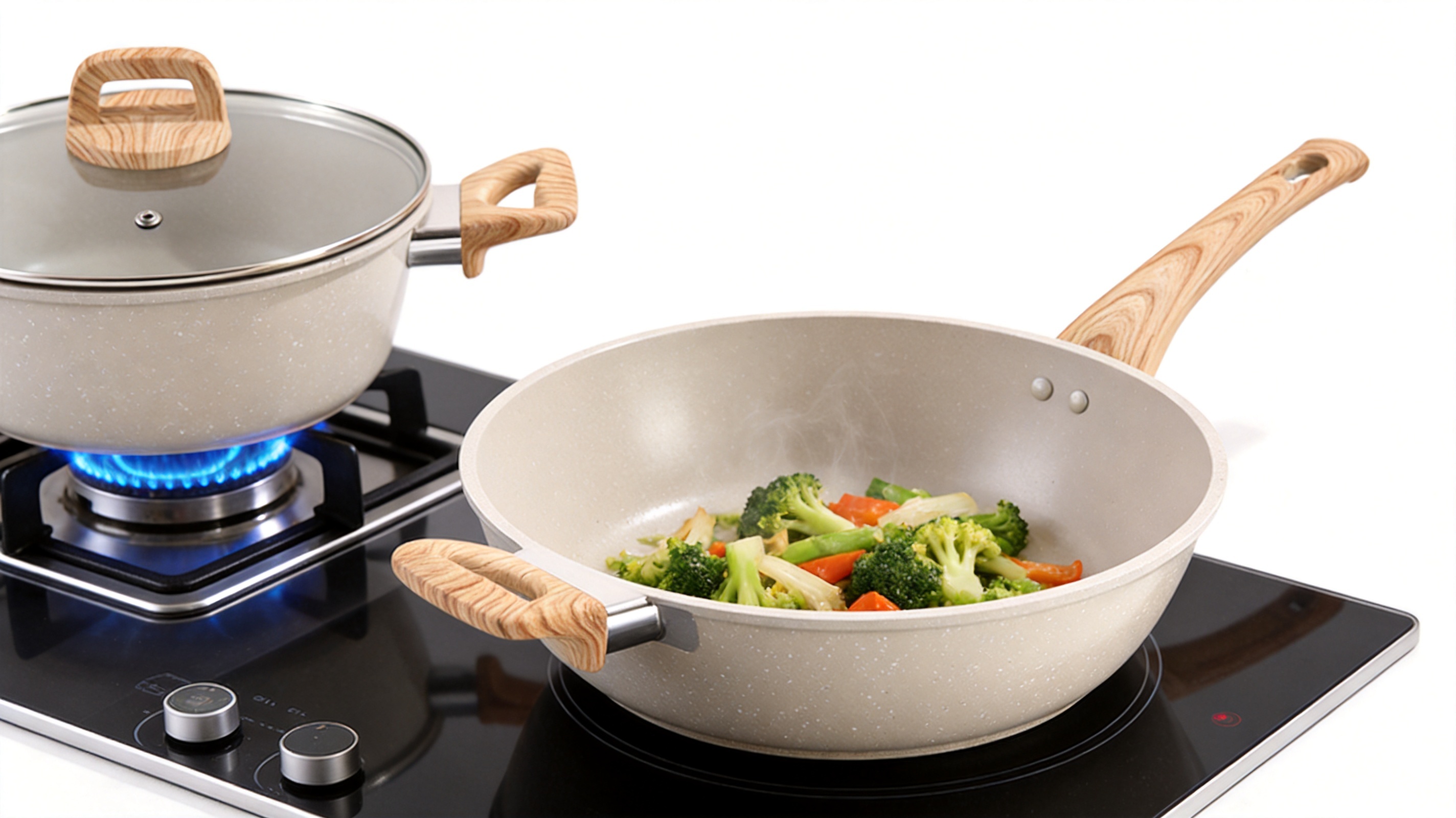
The product description identifies the cookware as compatible with all stovetops. This broad compatibility is an important commercial advantage because consumers use different cooking technologies in different regions. Gas, electric, ceramic, and induction cooking systems are all present in the global market, and buyers increasingly expect one cookware set to work across multiple platforms.
Stovetop compatibility depends on the construction of the bottom and its interaction with the heat source. A suitable base must make stable contact with the cooking surface and withstand repeated heating and cooling cycles. For induction use, the cookware must also contain an appropriate magnetic layer or structure. Because the general product information does not specify the exact base composition or induction certification, importers and distributors should request technical confirmation and testing documentation for the target market before publishing detailed induction claims.
From a sourcing standpoint, the stated all-stovetop positioning gives the product a strong starting point. It allows the cookware to be considered for a wider variety of households and retail channels than a product limited to one heating method. It also reduces the need for retailers to separate inventory by stovetop type, which can simplify product selection and merchandising.
For end users, compatibility should still be paired with proper operation. The flame or heat source should not extend beyond the base of the cookware. Excessive side heat can discolor external surfaces, damage handles, waste energy, and create unnecessary safety risks. The care instructions specifically advise users to keep the flame or heat source within the base area.
Advantages Over Conventional Cookware Alternatives
Compared with Basic Thin Aluminum Cookware
Basic thin aluminum cookware may be inexpensive and lightweight, but it can feel less substantial and may be more vulnerable to deformation. The die-cast body of this set is designed to provide a stronger, more stable foundation. The granite coating also gives it a more refined appearance and provides a non-stick cooking surface that basic uncoated aluminum products do not offer.
The difference is especially relevant in retail environments. Consumers often compare products by lifting them, examining the finish, and evaluating whether the cookware looks capable of long-term use. A die-cast body and coordinated granite treatment can communicate greater perceived value than an uncoated, extremely thin alternative.
Compared with Stainless Steel Cookware
Stainless steel cookware is valued for its resistance, appearance, and ability to tolerate many cooking tools. However, uncoated stainless steel can require more technique to prevent food from sticking, particularly when preparing eggs, fish, or delicate items. The non-stick interior of this aluminum set offers a more accessible cooking experience for users who prioritize easy food release and simple cleanup.
Aluminum is also generally lighter than stainless steel cookware with a comparable size. This can make the set easier to handle, especially for people who regularly lift large casseroles. The trade-off is that coated aluminum requires more careful utensil and cleaning habits than uncoated stainless steel. The product is therefore best positioned for buyers who value lightweight handling and non-stick convenience.
Compared with Cast Iron Cookware
Cast iron provides excellent heat retention, but its weight can be a disadvantage for everyday users. Large cast iron pieces may be difficult to move, and traditional cast iron often requires specialized seasoning and drying procedures. The die-cast aluminum construction of this set is more convenient for daily cooking, quick cleaning, and frequent movement around the kitchen.
The aluminum set may also appeal to consumers who want a lighter, more contemporary cooking system rather than a heritage-style heavy pan. Its speckled granite appearance and wood-grain handles reinforce that modern lifestyle position.
Compared with Mismatched Individual Pieces
Buying individual cookware pieces from different collections can result in inconsistent sizes, colors, handle styles, and performance. A coordinated set avoids that problem. The 20 cm, 24 cm, 28 cm, and 32 cm casserole sizes share a common design language, while the deep fry pan complements the range with a different cooking profile.
A coordinated set is also easier to merchandise. Retailers can display the pieces together, create a complete kitchen solution, and explain the product benefits in one organized presentation. For hospitality and food-service buyers, a consistent appearance can support a more unified back-of-house or open-kitchen environment.
Manufacturing Strengths of the Zhejiang Supply Chain
The supplier, Zhejiang Echo Industry And Trade Co., Ltd., is based in Taizhou, Zhejiang, China. Zhejiang is widely recognized as an important manufacturing and export region with established capabilities in household goods, metal products, kitchenware, and consumer products. This location provides access to industrial suppliers, production labor, logistics services, packaging resources, and export infrastructure.
The company presents itself as a professional kitchenware supplier offering aluminum cookware, stainless steel cookware, cast iron cookware, and kitchen utensils. Its stated business model includes wide product variety, one-stop sourcing, original design manufacturing, original equipment manufacturing, product certification assistance, flexible minimum order quantities, and sustainable and healthy product development.
These strengths are relevant to importers because cookware sourcing often involves more than selecting a single item. Buyers may need several categories, different finishes, customized packaging, barcode labels, instruction manuals, carton marks, or coordinated product launches. A supplier that can support multiple cookware materials and utensils may reduce the number of separate vendor relationships required.
The company’s stated focus on research and development is also important. Cookware buyers increasingly look for improvements in appearance, ergonomics, coating systems, packaging efficiency, and material use. An R&D-oriented supplier can potentially adapt handle designs, colors, coatings, shapes, and set configurations to meet regional preferences or private-label requirements.
Integrated Production and Quality Coordination
The product’s value depends on the integration of several manufacturing operations. The aluminum body must be cast accurately. Edges must be finished smoothly. Surfaces must be prepared for coating. The interior and exterior finishes must be applied consistently. Handles must be fitted securely. Finished units must be inspected and packed in a way that protects the coating during transportation.
When these steps are coordinated under one supply system, quality issues can be traced more efficiently. If a coating problem is discovered, the supplier can review surface preparation, application, curing, and handling procedures. If a handle is misaligned, assembly fixtures and inspection methods can be evaluated. If carton damage occurs, packaging structure and loading methods can be improved.
For export buyers, this coordination can be particularly valuable because cookware travels through multiple handling stages. Products may move from factory to consolidation warehouse, container, port, distribution center, and retail location before reaching the consumer. Reliable inner protection, carton strength, moisture control, and clear packing specifications are therefore part of the overall product quality.
Support for OEM and ODM Projects
The SpeckleWood design can serve as a finished product for standard purchasing or as a reference point for customization. Buyers may wish to adjust the body color, speckle pattern, handle treatment, logo placement, packaging artwork, or set composition. Depending on the project requirements, the supplier’s OEM and ODM capabilities may allow these changes to be incorporated into a private-label program.
Customization should be managed through approved samples and documented specifications. Color references, coating texture, handle dimensions, logo position, carton artwork, and product measurements should be confirmed before mass production. Sample approval reduces uncertainty and gives both parties a clear visual and technical reference.
Flexible minimum order quantities can also benefit small and medium-sized buyers. Smaller companies may want to test a market before committing to a very large inventory. A supplier able to discuss different order volumes, packaging options, and production schedules can help buyers manage risk while building a product line.
Quality Control from Raw Material to Finished Set
Quality control should begin with incoming materials. The aluminum substrate, coating materials, handles, fasteners, packaging components, and printed materials should be checked against approved specifications. Consistency at the beginning of production helps prevent avoidable variation in the finished cookware.
Product: 10pcs SpeckleWood Aluminium Cookware SetRecommended Articles
Product Category
Related products
-
-
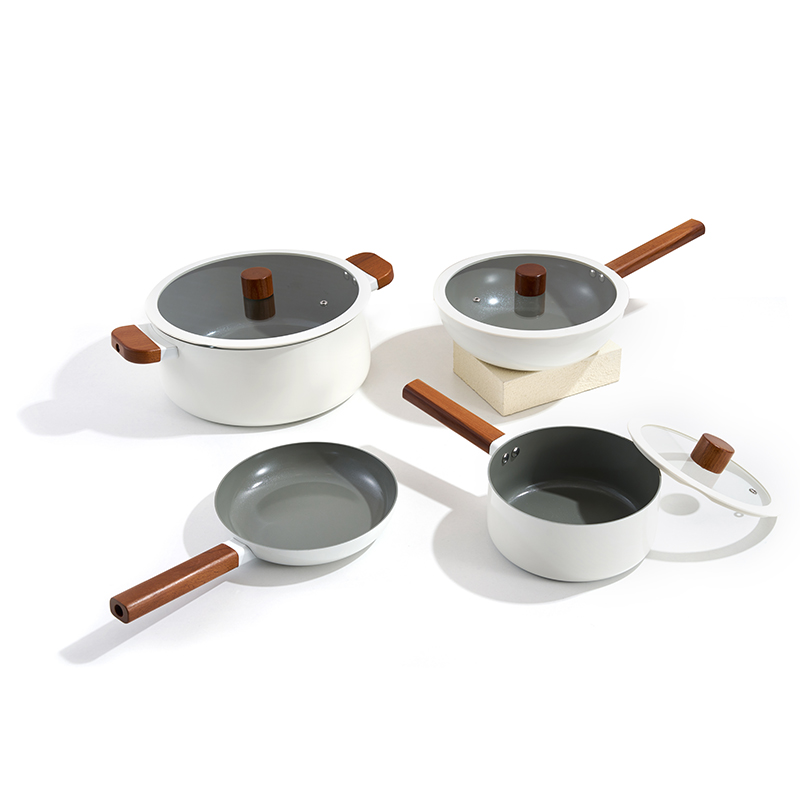
This cookware set has a ceramic non-stick inner liner, a heat-resistant wooden h...
See Details -
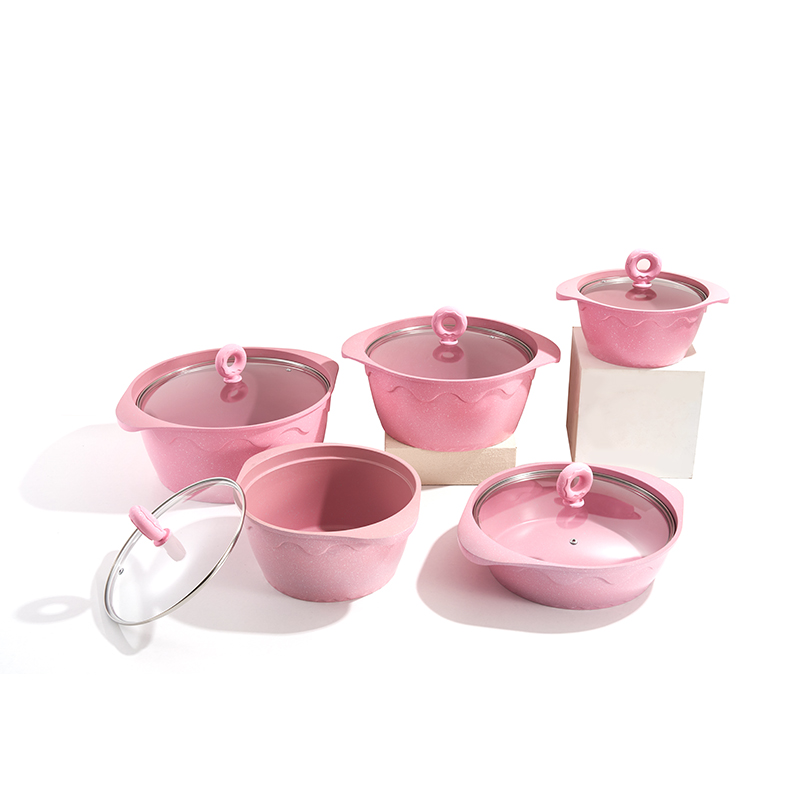
This cookware set is made of food-grade non-stick material, with a unique eye-ca...
See Details -
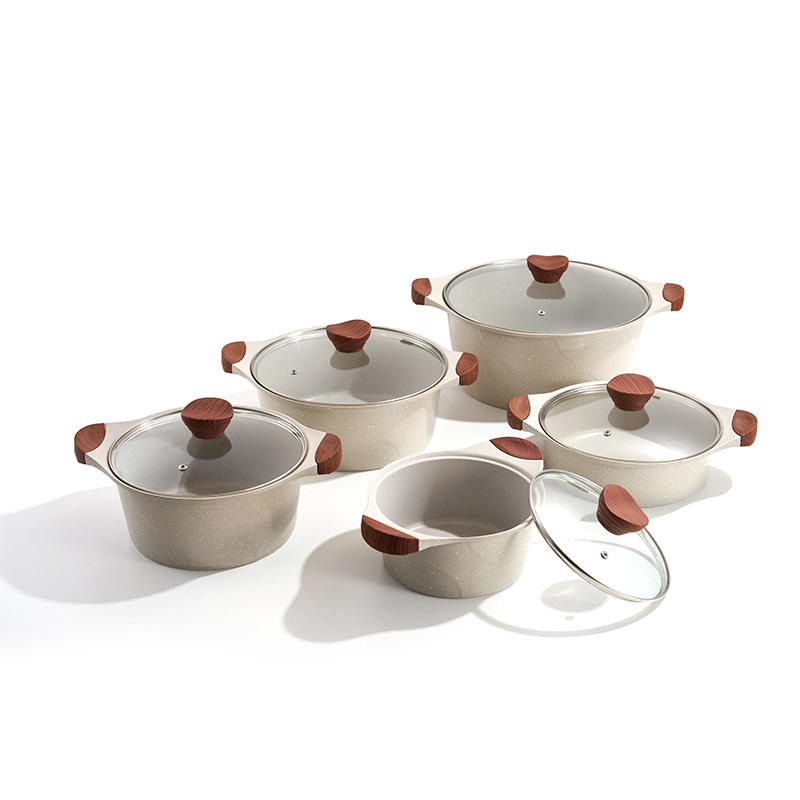
This off-white cookware set is made of wear-resistant non-stick material, with w...
See Details
Whether you're looking for bulk purchases or have any custom requirements, We are here to offer the best
solutions for you.
tiffany.zhong@echocn-trading.com
PHONE
+86-19561173975
+86-19557020621 (Hazel Wu)
ADD
Room 301, Unit 3014, No. 175 Qifeng Avenue, Wenqiao Town, Taizhou, Zhejiang, China
Fill Out the Form for More Information
Copyright © Zhejiang Echo Industry And Trade Co., Ltd.
All Rights Reserved.

China Cookware Set Manufacturer