
 en
 Español

This cookware set features a non-stick coating, even heat conduction, and multi-...
See Details
Why a 3-in-1 Divided Aluminum Grill Pan Improves Everyday Cooking
Date:Nov 18, 2026
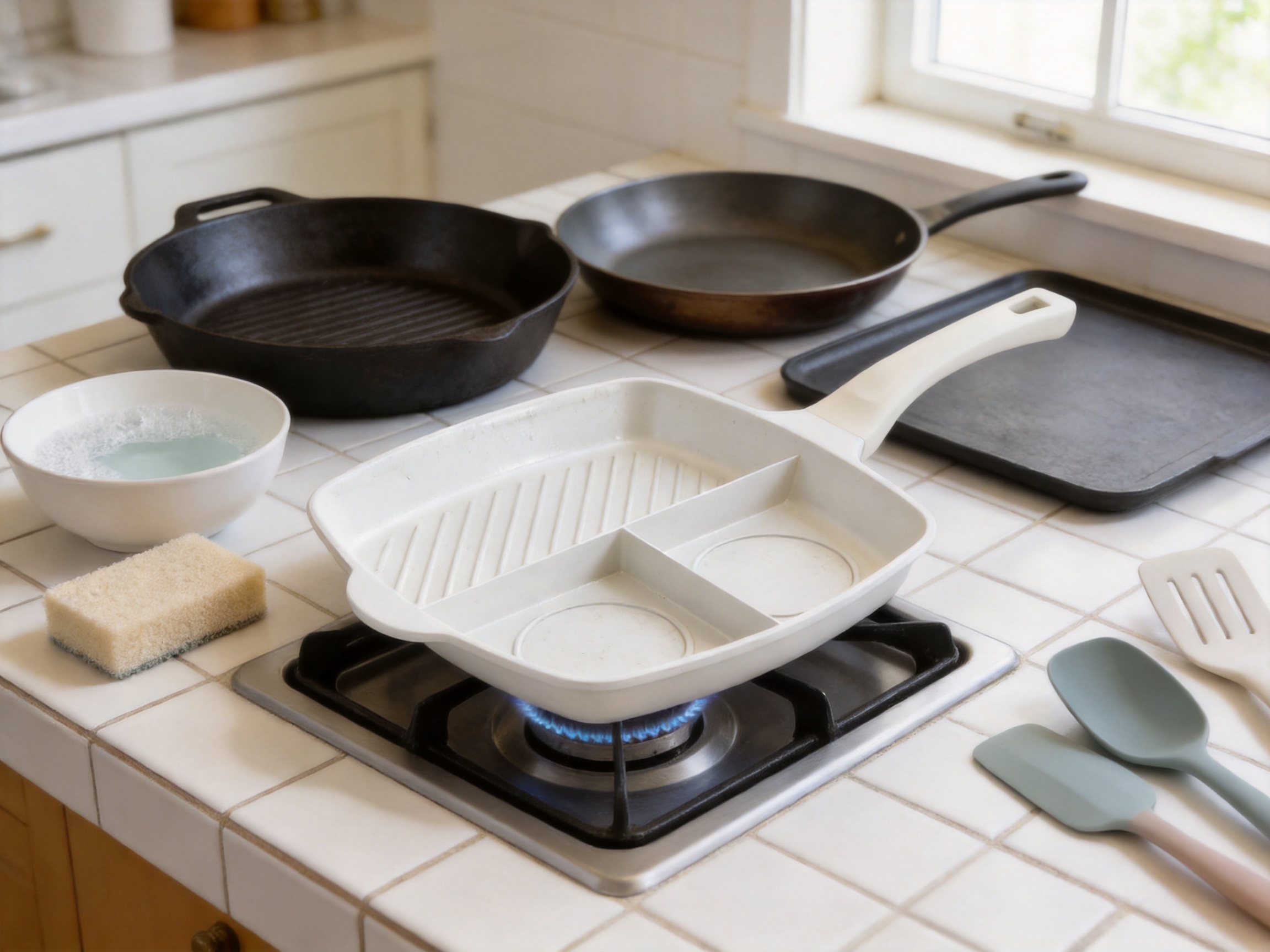
Modern kitchens increasingly demand cookware that can perform several tasks without occupying unnecessary space. A single pan that can prepare a protein, an egg, and a breakfast staple at the same time offers a practical answer to this need. The 3-in-1 Divided Aluminium Grill Pan is designed around that principle. It combines a ribbed grilling area with two round cooking sections, allowing users to prepare different foods simultaneously while keeping them separated.
Unlike a conventional flat skillet, an ordinary grill pan, or a collection of individual small pans, this divided aluminum cookware product is designed for coordinated meal preparation. Its three-compartment layout supports a complete breakfast, a quick lunch, or a compact dinner in one cooking vessel. The ribbed section is suitable for steaks, bacon, sausages, vegetables, and other foods that benefit from grill-style contact marks. The two round areas are suited to eggs, pancakes, fritters, small portions, or other foods requiring a defined shape.
The product is manufactured and supplied by Zhejiang Echo Industry And Trade Co., Ltd., a Zhejiang-based kitchenware company specializing in aluminum cookware, stainless steel cookware, iron cookware, and kitchen utensils. The company’s broader strengths include product variety, one-stop sourcing, ODM and OEM customization, flexible purchasing support, and assistance with product certification requirements. These capabilities make the pan relevant not only to household consumers but also to cookware importers, retailers, distributors, hospitality suppliers, and private-label buyers.
This article examines the design, performance, commercial value, manufacturing considerations, care requirements, and purchasing advantages of the 3-in-1 Divided Aluminium Grill Pan. It also explains how the product compares with common alternatives and why a specialized cookware supplier can offer more value than a basic trading source.

3 in 1 Divided Aluminium Grill Pan
1. Product Overview and Design Concept
The 3-in-1 Divided Aluminium Grill Pan has a 26 × 26 × 4 cm structure and a unit weight of approximately 730 g. Its square format makes efficient use of the cooking surface while maintaining a compact footprint for storage. The pan is made from aluminum, a material widely used in cookware because of its relatively light weight, efficient heat transfer, and suitability for shaped cooking surfaces.
The defining feature is its three-part cooking layout. One section has raised ribs, while the other two sections are rounded. This division is not simply decorative. It provides functional separation between foods with different shapes, cooking times, and preparation requirements. A cook can place meat on the ribbed area, crack an egg into one round area, and prepare a pancake or another small staple in the remaining section.
When different foods are cooked in a standard undivided pan, juices and oils can spread across the surface. This may affect texture, appearance, and flavor. The divided design helps reduce direct contact between foods, making it easier to preserve their individual presentation. For families, this can be useful when preparing several components of a meal at once. For food-service operators, it can help produce a more consistent plated breakfast with fewer cooking vessels.
The square body also provides a practical balance between cooking capacity and storage efficiency. Round pans often leave unused space around the outer edges when placed on a stovetop. A square pan can make more effective use of its footprint, particularly on a flat electric or induction cooking surface, depending on the specific stovetop and product configuration. Its compact dimensions can also make it easier to store in small kitchens, apartments, dormitories, caravans, and guest accommodation.
Three cooking zones in one pan
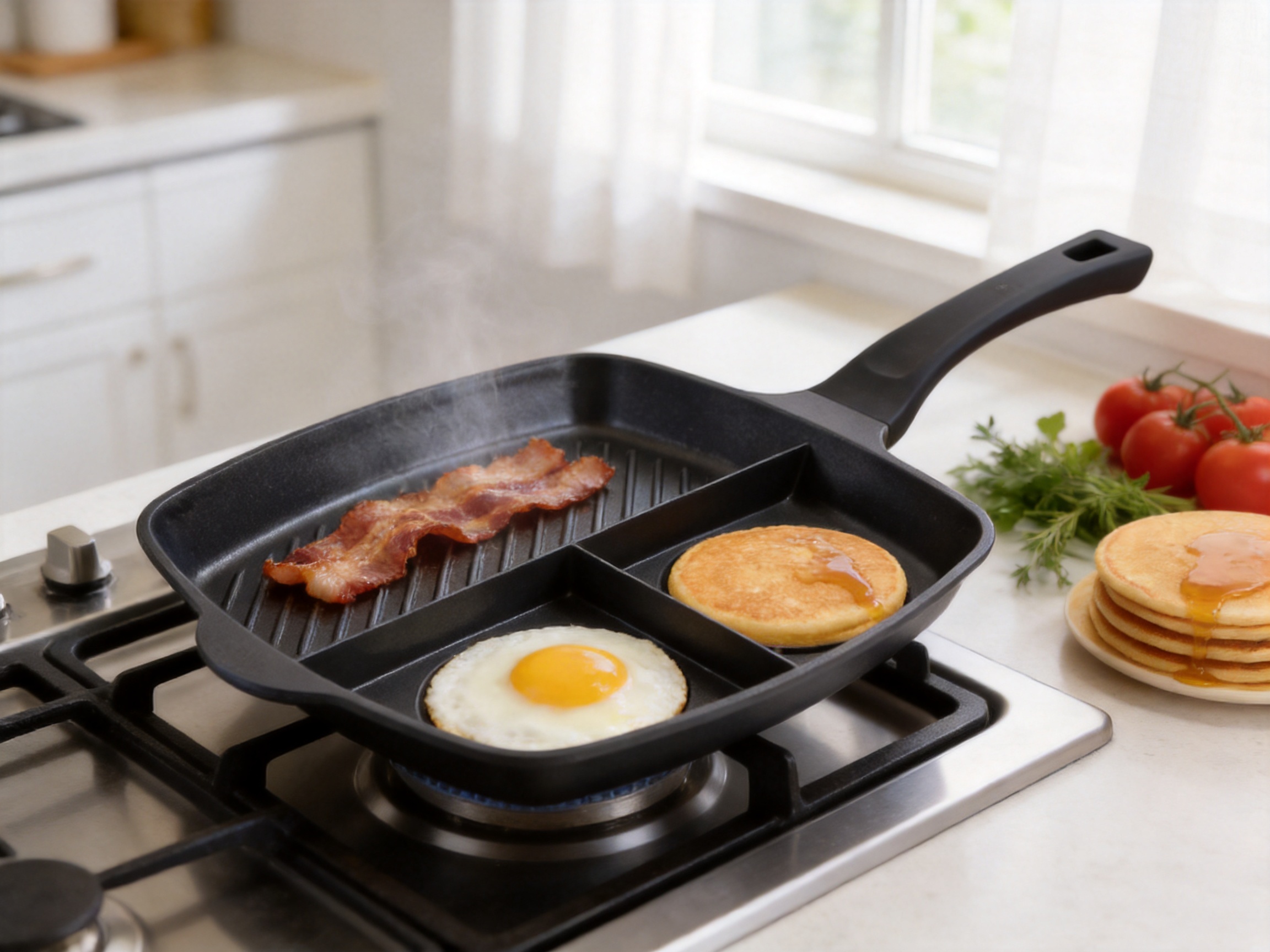
The ribbed section is intended for food that benefits from a grilling effect. Raised ribs create lines of contact between the food and the cooking surface while allowing some rendered fat to move away from the main contact area. This can help create a grilled appearance on suitable foods such as bacon, beef slices, chicken pieces, sausages, mushrooms, zucchini, and other vegetables.
The two circular sections are designed for controlled portions. Eggs can be cooked in a more regular shape, while pancakes and similar foods can be formed into consistent rounds. These areas may also be used for small hash-brown portions, omelet components, flatbreads, breakfast patties, or reheating small foods. The separated shape supports portion control and improves visual consistency.
The pan is especially appropriate for a “meat plus egg plus staple” breakfast. A user can cook a strip of bacon or a small steak in the ribbed zone, prepare an egg beside it, and make a pancake or similar item in the other zone. This arrangement reduces the need to switch between pans and helps synchronize cooking steps.
Designed for practical daily use
The product includes a long, heat-resistant handle intended to provide a comfortable grip while keeping the user’s hand away from the hot pan body. A longer handle can also provide better control when moving the pan from the stovetop to a serving surface. As with all cookware, the handle and body should be handled according to the applicable product instructions, and users should avoid touching hot surfaces directly.
The non-stick interior is intended to reduce food adhesion and simplify release. This is particularly helpful for eggs, pancakes, and other foods that may stick to an uncoated metal surface. Reduced sticking can also make the pan easier to clean after cooking and may allow users to prepare food with less oil, depending on the recipe and temperature.
The cookware is described as compatible with all stovetops. Buyers should still confirm compatibility with their intended cooking equipment, especially when purchasing for induction or specialized commercial systems. Stovetop performance depends on the heat source, pan base, burner size, temperature control, and the way the product is used.
2. Key Advantages Over Conventional Cookware
The main competitive advantage of this pan is specialization. A traditional skillet is flexible, but it does not naturally separate foods. A standard grill pan creates grill marks, but it is not usually designed for multiple shaped portions. A set of small pans can separate foods, but it requires more storage space, more handling, and more cleaning. The divided aluminum grill pan combines these functions in one coordinated product.
Improved cooking efficiency
Cooking efficiency is a major benefit for busy households. Instead of heating three vessels and managing several handles, the user can prepare multiple meal elements on one pan. This reduces the number of cooking steps and can shorten the time between preparation and serving. It may also reduce the need to move food between pans, which can help maintain temperature and presentation.
For breakfast preparation, the benefit is especially clear. A cook can begin the meat in the ribbed area, then add an egg and pancake batter to the circular sections. The meal components can be monitored together, and each can be removed when ready. This approach can be more efficient than preparing bacon in one pan, eggs in another, and pancakes on a separate griddle.
In a small food-service operation, the product may support a streamlined breakfast workflow. A café, hotel, guesthouse, or catering business can use the pan for individual portions or demonstration cooking. It may also be useful in product bundles marketed as compact breakfast cookware.
Better separation of flavors and ingredients
Food separation is valuable for both flavor and presentation. Strong flavors from bacon, sausages, or seasoned meat may not be desirable in pancakes or eggs. The divided structure helps keep different foods in separate zones. Although liquids and oils should still be managed carefully, the design provides more control than a completely flat, undivided surface.
Separation can also be useful for households with different dietary preferences. One section may be used for meat while another is used for vegetables or a meat-free ingredient. Buyers should apply appropriate food-safety practices and clean the pan thoroughly when switching between ingredients.
Reduced cookware clutter
Many kitchens have limited cabinet space. A multi-function pan can replace several specialized items for selected cooking tasks. It does not eliminate the need for every other pan, but it can reduce dependence on separate egg pans, small griddles, and compact grill pans.
The 26 × 26 cm footprint provides useful cooking capacity without the bulk of a large family-size griddle. Its square form can fit efficiently in cabinets and on shelves. The 730 g unit weight also makes it more manageable than many heavy cast iron alternatives, especially for users who frequently move cookware between storage and the stovetop.
Accessible handling compared with heavy cookware
Aluminum cookware is often selected when low weight and responsive heating are important. Compared with heavy cast iron, an aluminum pan may be easier to lift, turn, wash, and store. This is helpful for older users, smaller kitchens, compact apartments, and commercial environments where cookware is handled repeatedly.
The lighter structure can also reduce fatigue during preparation. A user preparing several meals in succession may value a pan that can be moved comfortably with one hand while the other hand manages utensils or ingredients. The long handle further supports controlled handling, provided the pan is not overloaded.
Non-stick convenience
The non-stick interior supports easy food release and more convenient cleanup. Eggs and pancakes are commonly associated with sticking when cooked on uncoated surfaces, particularly when insufficient fat is used or temperature control is inconsistent. A non-stick surface can make these foods easier to turn and remove while preserving their shape.
Non-stick cookware also benefits from gentle maintenance. Using wooden, nylon, or other non-abrasive utensils helps protect the surface and preserve its appearance. The product instructions specifically advise against metal or sharp cooking tools, which may scratch or damage the interior.
3. Aluminum as a Cookware Material
Aluminum is widely used in cookware manufacturing because it transfers heat efficiently and can be formed into varied shapes. For a divided pan, formability is important because the body must incorporate a cooking surface, raised ribs, separate circular compartments, side walls, and a handle connection.
Efficient heat transfer can help the pan respond quickly when the heat setting changes. This may assist with cooking foods that require close temperature management, such as eggs and pancakes. However, users should still preheat gradually and avoid excessive heat. Rapid or uncontrolled heating can affect food quality and may place unnecessary stress on cookware surfaces.
The moderate weight of aluminum provides another practical advantage. A pan that is too heavy may be difficult to use for daily breakfast cooking, while a pan that is too light may feel unstable. The stated 730 g unit weight reflects a balance between portability and a substantial cooking body. Actual handling also depends on the handle design, wall thickness, coating, and food load.
Surface design and food release
The interior non-stick surface is an important part of the product’s value. A high-quality cookware manufacturing process must pay attention to surface cleanliness, coating uniformity, adhesion, curing, and visual inspection. These steps influence food release, durability, and the finished appearance of the pan.
A divided pan has more complex geometry than a flat skillet. The ribs, corners, and circular areas must receive consistent treatment during surface preparation and coating. Uneven coating may affect release or create visible inconsistencies. For that reason, quality checks should consider the entire cooking area rather than only the flat sections.
Users can support coating longevity by washing the pan before first use, using soft cloths or sponges, and avoiding metal utensils. Hand washing is recommended to preserve the appearance of the cookware. Harsh scouring materials and abrasive cleaning compounds should be avoided unless specifically approved by the manufacturer.
4. Manufacturing Strengths and Supply Capabilities
Zhejiang Echo Industry And Trade Co., Ltd. is based in Zhejiang, China, a region known for manufacturing and export activity. The company supplies a broad selection of kitchenware, including aluminum cookware, stainless steel cookware, iron cookware, and kitchen utensils. This product range provides a foundation for buyers seeking more than one category from a single supplier.
The company’s stated business direction emphasizes the development of a professional, R&D-driven supply chain partner rather than a simple order-taking operation. For buyers, this can be significant because cookware sourcing often involves more than choosing an existing item. Product dimensions, color, packaging, surface treatment, handle design, labeling, documentation, and certification support may all be part of a successful project.
Product development for specialized cookware
The divided pan demonstrates the importance of functional product development. Its value comes from the interaction of several design decisions: the three-part layout, ribbed grilling section, round portion areas, non-stick interior, compact square body, and long heat-resistant handle. Each feature must work together for the pan to be practical.
A supplier with experience across multiple cookware categories can evaluate how different materials and construction methods influence performance. Aluminum may be suitable for lightweight, fast-heating cookware, while stainless steel may be preferred for corrosion resistance and a different cooking experience. Iron cookware can provide substantial heat retention. A broad product portfolio helps buyers compare these options within one sourcing relationship.
Manufacturing attention to geometry
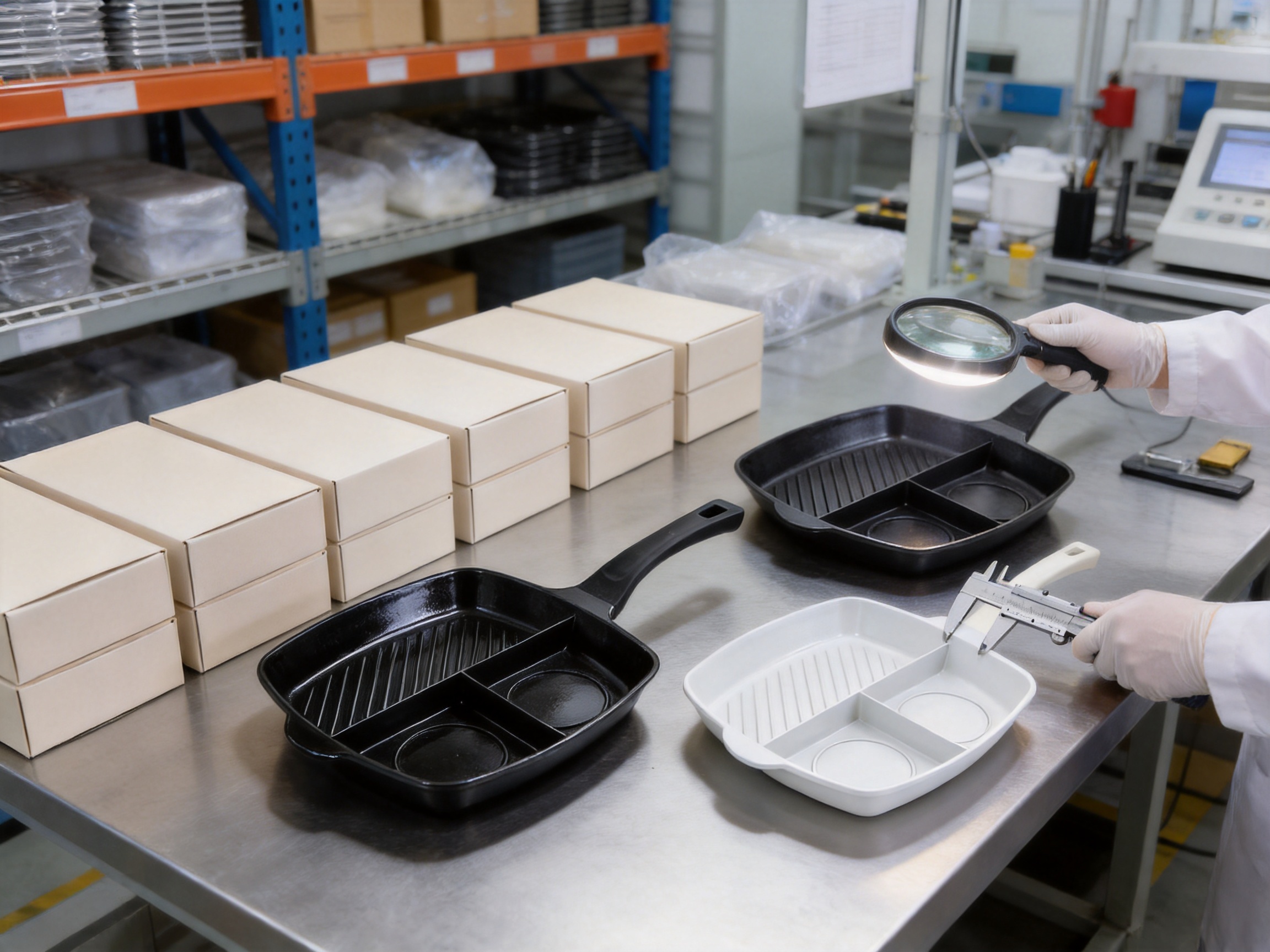
Divided cookware requires attention to dimensional accuracy. The three cooking areas must be positioned consistently so that food remains within its intended zone. The walls between sections should be shaped to support separation without making cleaning unnecessarily difficult. The pan must also sit correctly on the stovetop and maintain a stable relationship between the cooking body and handle.
Production control may include inspection of overall length and width, depth, compartment shape, rib placement, handle alignment, surface finish, and pan stability. For private-label customers, these checks are particularly important because consistency across production batches affects customer satisfaction and retail returns.
Surface preparation and coating control
A dependable non-stick product requires controlled preparation before coating. The metal surface should be appropriately cleaned and prepared so that the coating can adhere to the intended areas. The coating process should account for the pan’s ribs, corners, and divided sections. Curing and finishing must be controlled to produce a functional, visually consistent surface.
Inspection can include checking for visible coating defects, exposed areas, bubbles, rough patches, uneven color, and irregular edges. Packaging should also protect the non-stick surface from impact and abrasion during storage and transportation. These considerations are especially relevant when products are exported over long distances.
Handle assembly and user safety considerations
The handle is a critical part of a pan because it transfers force from the user to the cookware body. Alignment, attachment, grip comfort, and heat resistance all contribute to perceived quality. A handle that is not properly aligned can make the pan difficult to control, while an insecure connection can create a safety concern.
Quality checks for a product of this type may include visual inspection of the connection, alignment testing, and practical handling checks. The long handle should provide adequate clearance from the heated body when used as directed. Buyers may also request packaging or instruction customization that explains safe handling and care.
Customization and private-label support
The product information states that all colors can be customized. This provides an opportunity for importers and brand owners to coordinate the pan with an existing cookware range or retail identity. Color customization may apply to selected exterior or handle components, subject to production requirements and order quantities.
Customization can also involve packaging, product labels, instruction sheets, carton marks, barcodes, and coordinated sets. The minimum order quantity for this product is 1,200 units, which is suitable for distributors and retailers planning a meaningful launch or replenishment order. Buyers should confirm the final customization scope, color standards, packaging specifications, lead time, and approval process before production.
ODM and OEM services can help businesses sell a product under their own brand or adapt an existing design for a target market. A buyer may request changes to packaging, color, handle appearance, product naming, or sales configuration. Any requested change should be reviewed for its effect on cost, tooling, minimum order quantity, safety documentation, and production schedule.
5. Commercial Specifications for Importers and Distributors
Commercial purchasing decisions require more than product appeal. Buyers must understand the dimensions, weight, carton arrangement, cubic volume, order quantity, and logistics implications of the product.
| Specification | Product Information | Commercial Relevance |
|---|---|---|
| Product name | 3 in 1 Divided Aluminium Grill Pan | Supports multi-food cooking and compact breakfast positioning |
| SKU | BZD02 | Useful for ordering, inventory, and product documentation |
| Category | Aluminum Cookware | Suitable for cookware and kitchenware product ranges |
| Material | Aluminum | Supports lightweight handling and efficient heat transfer |
| Product size | 26 × 26 × 4 cm | Compact square format for household and retail positioning |
| Unit weight | Approximately 730 g | Useful for freight calculation and shelf planning |
| Minimum order quantity | 1,200 units | Suitable for distributors, importers, and private-label launches |
| Carton quantity | 6 units | Supports carton-level logistics planning |
| Carton size | 51 × 28.5 × 23.5 cm | Required for warehouse and shipping calculations |
| Carton volume | 0.0342 m³ | Useful for container utilization and freight budgeting |
| Color | Custom colors available | Supports private-label and coordinated product ranges |
The carton quantity of six units allows buyers to plan warehouse handling and case-pack operations. The carton size and stated cubic volume are important for calculating shipment requirements. Importers should verify whether the stated cubic volume includes the final retail packaging, protective materials, and outer-carton tolerances.
The minimum order quantity of 1,200 units provides a practical starting point for a focused product launch. At six units per carton, a full MOQ represents approximately 200 cartons. Buyers should confirm whether the MOQ applies equally to standard colors and customized colors, since customized production may require specific batch quantities.
Before placing an order, professional buyers should request a complete quotation covering unit price, packaging, tooling if applicable, inspection arrangements, payment terms, production lead time, shipping terms, and documentation. They should also confirm whether the final product will be supplied with care instructions and whether product certification assistance is available for the destination market.
6. Retail Positioning and Target Customers
The pan can be marketed to several customer groups. Its most direct audience includes households that want fast breakfast preparation, users with limited kitchen space, and consumers interested in compact multi-function cookware. The product may also appeal to people who enjoy meal presentation and portion control.
Household and family use
Families can use the pan to prepare multiple breakfast components together. Parents may appreciate the reduced cooking time on busy mornings, while children may enjoy the defined shapes of eggs and pancakes. The separated sections can also make it easier to prepare different foods for different family members.
For couples and individuals, the pan may provide an appropriately sized alternative to a large griddle. It can prepare a balanced meal without requiring a full-size cooking surface. Its compact body is suitable for kitchens where storage and counter space are limited.
Hospitality and food-service use
Guesthouses, boutique hotels, bed-and-breakfast properties, and small cafés may use the product for breakfast service or in-room cooking packages. A divided pan can help create a recognizable breakfast presentation while limiting the number of cookware items needed at each station.
Commercial users should evaluate the product against their cleaning systems, cooking volumes, heat sources, and durability expectations. The care instructions recommend hand washing to preserve appearance, so high-volume operators should consider whether this cleaning requirement fits their workflow.
Retail and e-commerce opportunities
The product has clear visual appeal for retail and online merchandising. Images can show the three cooking zones and communicate the “complete breakfast in one pan” concept quickly. Product pages can highlight the ribbed meat area, two round sections, non-stick interior, compact dimensions, and compatibility with stovetops.
Online retailers should provide clear care instructions and avoid overstating the product’s capabilities. The pan should not be marketed for microwave use, and users should be advised not to overheat it empty. Accurate communication can reduce misuse, returns, and customer complaints.
7. Recommended Cooking Applications
The pan’s design supports many everyday recipes. The most obvious application is a breakfast combination of grilled meat, egg, and pancake. However, the three sections can be adapted to different cuisines and meal styles.
Breakfast combinations
Bacon can be placed on the ribbed section while an egg cooks in one circular area and a pancake cooks in the other. Sausage, breakfast patties, mushrooms, tomatoes, or sliced vegetables can replace the bacon. The round sections may be used for fried eggs, mini omelets, pancakes, hash-brown rounds, or small flatbreads.
Users should consider the cooking time of each ingredient. Foods that require longer cooking may be started first, while quick-cooking ingredients can be added later. The divided design makes this timing easier to manage because each food remains in its assigned section.
Light lunches and snacks
The ribbed section can be used for chicken pieces, fish fillets of suitable size, sliced vegetables, or tofu. The circular areas may hold an egg, a small pancake, a vegetable fritter, or a portion of flatbread. This makes the pan useful beyond breakfast.
For snacks, users may prepare small grilled sandwiches or compact pancakes while heating a separate accompaniment. The product is best suited to foods that fit comfortably inside the available cooking areas without excessive overlap or overflow.
Portion-controlled cooking
The separate compartments encourage measured portions. This can be useful for meal planning, children’s meals, and controlled serving sizes. A cook can prepare one portion of protein and two smaller accompaniments without using multiple pans.
Portion control also supports consistent retail recipes. A food-service operator can establish standard amounts for each section and repeat the same presentation across multiple servings. The result may be more consistent than cooking several foods together on a large, open griddle.
8. Care, Maintenance, and Safe Use
Proper care is essential for maintaining the appearance and performance of non-stick cookware. The supplied instructions recommend washing the pan before first use and favor hand washing to preserve the cookware’s appearance.
Utensil selection
Users should not use metal or sharp cooking utensils on the non-stick interior. Wooden, nylon, silicone, or other utensils designed for non-stick cookware are preferable. Sharp edges can scratch the surface, while repeated contact with metal tools may reduce the coating’s food-release performance over time.
Cleaning procedure
After the pan has cooled sufficiently, wash it with hot, soapy water using a soft cloth or sponge. Food residue should be loosened gently rather than scraped aggressively. Because the pan has ribs and divided areas, users should pay attention to the edges and corners of each section without using abrasive tools.
Hand washing is recommended even if a buyer’s general cookware policy allows dishwasher use. Retailers should communicate the manufacturer’s care guidance clearly so customers understand how to preserve the product’s appearance and surface.
Heat management
The pan should not be overheated while empty. Empty cookware can reach high temperatures quickly, particularly on powerful burners. Excessive heat may affect the non-stick surface, handle, appearance, or structural performance.
The flame or heat source should not extend beyond the base of the item. Oversized flames can heat the sides and handle unnecessarily and may increase the risk of accidental contact. Users should select a burner that matches the pan’s base as closely as practical.
If the pan severely overheats, users should turn off the cooker and allow the pan to cool completely. They should not touch it while it remains dangerously hot or attempt to cool it suddenly with water. Safe cooling reduces the risk of burns and thermal shock.
Microwave restriction
The product should not be used in a microwave. It is designed for stovetop cooking, and metal cookware is not appropriate for microwave use. This restriction should appear in product literature, packaging, and online listings.
9. Comparison With Alternative Cookware
Every cookware format has strengths and limitations. The 3-in-1 Divided Aluminium Grill Pan is not intended to replace every skillet, saucepan, or griddle. Its advantage is its targeted combination of functions.
| Alternative | Typical Strength | Potential Limitation Compared With the Divided Grill Pan |
|---|---|---|
| Standard skillet | Flexible for many recipes | Does not naturally separate foods or create dedicated round portions |
| Flat griddle | Large open cooking area | Requires more space and offers less separation between ingredients |
| Traditional grill pan | Strong grilling function and ridges | Usually lacks two dedicated circular cooking areas |
| Three separate pans | Maximum separation and flexibility | Requires more storage, handling, cleaning, and stovetop space |
| Cast iron divided pan | High heat retention and robust feel | Heavier and often less convenient for frequent lifting and washing |
| Electric multi-section cooker | Integrated heating controls | Requires electrical storage space and may be less flexible on different stovetops |
The pan’s strongest position is between a conventional skillet and a larger multi-function appliance. It provides dedicated cooking zones without requiring electrical components or multiple vessels. Compared with cast iron, its aluminum construction can make it more accessible for daily use. Compared with a flat griddle, its separated sections give the product a clearer meal-preparation purpose.
10. Quality Assurance Expectations for Buyers
Cookware buyers should establish a quality checklist before confirming bulk production. The checklist should cover raw material, dimensions, surface condition, coating appearance, handle attachment, packaging, labeling, and performance samples.
Pre-production samples allow the buyer to review the actual geometry and finish before a large order is manufactured. The sample should be tested on the intended stovetop type where possible. Buyers can examine heat distribution, food release, handle comfort, pan stability, and cleaning behavior. These practical checks complement factory documentation.
During production, inspection may focus on random sampling from finished cartons. Important points include correct SKU, product quantity, color consistency, visible defects, package protection, and carton markings. For customized products, the inspection should also compare the final color and packaging with approved references.
Export buyers may require destination-specific documentation. The company states that it can assist with product certification. Buyers should identify the precise requirements of their destination country and product category, then confirm what documents, tests, declarations, or labeling information can be provided.
It is also advisable to confirm the intended use and any limitations in sales copy. A product described as compatible with all stovetops should be matched with accurate technical information for the destination market. If a buyer requires a particular induction performance, oven capability, dishwasher instruction, or packaging claim, that requirement should be confirmed in writing before production.
11. Sustainability and Product Longevity
Longer-lasting cookware can provide value by reducing the frequency of replacement. Proper care of the non-stick surface, avoidance of overheating, and use of suitable utensils may help preserve the product during normal household use. A pan that remains functional and attractive for a longer period can support more responsible consumption.
Aluminum’s relatively low weight can also reduce handling and transport burdens compared with heavier alternatives, although the overall environmental impact depends on material sourcing, manufacturing energy, coating processes, packaging, shipping, and end-of-life treatment.
For buyers interested in sustainable product development, the supplier’s stated focus on healthy and sustainable kitchenware development provides a starting point for discussion. Importers can ask about material specifications, packaging reduction, carton efficiency, coating requirements, and available product documentation. Such requests should be converted into clear, measurable specifications rather than treated as general marketing language.
12. Why Supplier Capability Matters
A good cookware product requires more than an attractive design. It must be consistently produced, correctly packed, clearly documented, and delivered according to an agreed schedule. Supplier capability affects every stage from product selection to after-sales support.
A supplier offering several cookware categories can help buyers build coordinated collections. A retailer may source the divided aluminum pan together with stainless steel cookware, iron cookware, utensils, or other kitchen accessories. This one-stop model can reduce the number of supplier relationships and make it easier to develop a complete kitchenware assortment.
ODM and OEM support can also help businesses differentiate their product range. Instead of competing solely on price with an identical catalog item, a buyer may develop custom colors, packaging, instructions, or coordinated product families. The pan’s function provides a clear basis for branding around quick breakfasts, compact kitchens, meal preparation, or multi-purpose cookware.
Flexible MOQs are another stated company strength, although the specific product information lists a minimum order quantity of 1,200 units for this SKU. Buyers should distinguish between the company’s general flexibility and the confirmed requirement for an individual item. Clear communication at the quotation stage helps prevent misunderstandings.
13. Suggested Product Messaging
Retail and distribution customers can position the pan around practical benefits rather than vague claims. Suitable messaging may emphasize three cooking zones, one-pan breakfast preparation, ribbed grilling, portion control, non-stick convenience, compact storage, lightweight aluminum construction, and stovetop compatibility.
Product descriptions should state the dimensions of 26 × 26 × 4 cm and the approximate weight of 730 g. Including these details helps customers judge whether the pan suits their kitchen and storage space. Care information should mention the use of soft cleaning tools and non-metal utensils.
Marketing materials should avoid claims that are not confirmed by the product information. For example, buyers should not automatically describe the pan as oven-safe, dishwasher-safe, induction-optimized, PFOA-free, or suitable for commercial high-heat use unless those specifications have been verified for the exact model.
Clear and accurate marketing strengthens customer trust. The product already has a compelling use case: preparing meat, egg, and a staple at the same time. Communicating this benefit honestly may be more effective than adding unsupported technical claims.
14. Frequently Asked Questions
What is the main purpose of the 3-in-1 Divided Aluminium Grill Pan?
The pan is designed to cook three food components at the same time. It has one ribbed area for foods such as steak or bacon and two round sections for eggs, pancakes, or similar foods.
What material is the pan made from?
The product is made from aluminum. Aluminum supports relatively lightweight handling and efficient heat transfer. The unit weight is approximately 730 g.
What are the product dimensions?
The stated product size is 26 × 26 × 4 cm. Buyers should use the final approved sample and packaging specifications for detailed logistics planning.
Does the pan have a non-stick interior?
Yes. The product is described as having a non-stick interior intended to reduce sticking and simplify food release and cleaning.
Which utensils should be used?
Wooden, nylon, silicone, or other non-stick-safe utensils are recommended. Metal or sharp utensils should not be used because they may scratch or damage the non-stick surface.
How should the pan be cleaned?
Wash it with hot, soapy water and a soft cloth or sponge after it has cooled sufficiently. Hand washing is recommended to help preserve the cookware’s appearance.
Can the pan be used in a microwave?
No. The care instructions state that the pan should not be used in a microwave.
What should users do if the pan overheats?
If the pan severely overheats, turn off the cooker and leave the pan to cool completely. Do not touch it while it is dangerously hot, and do not attempt to cool it suddenly with water.
Can the pan be used on different stovetops?
The product is described as compatible with all stovetops. Buyers with specialized requirements, particularly induction or commercial applications, should confirm the exact performance specifications before ordering.
Is the color customizable?
Yes. The product information states that all colors can be customized. The buyer should confirm available color standards, minimum quantities, approval procedures, and any effect on production cost or lead time.
What is the SKU?
The SKU is BZD02. Buyers can use this reference when requesting quotations, samples, purchase orders, and product documentation.
What is the minimum order quantity?
The listed minimum order quantity is 1,200 units. Buyers should confirm whether the MOQ changes for custom colors, private-label packaging, or other product modifications.
How many units are packed in one carton?
The stated carton quantity is six units. The listed carton size is 51 × 28.5 × 23.5 cm, with a stated volume of 0.0342 cubic meters.
Can the supplier provide other kitchenware?
Yes. The supplier’s product categories include aluminum cookware, stainless steel cookware, iron cookware, and kitchen utensils. This supports one-stop sourcing for broader kitchenware programs.
Can the supplier support OEM or ODM projects?
The company states that it provides ODM and OEM customization. Buyers should discuss the desired changes, including color, packaging, labeling, product specifications, and documentation, before placing an order.
Who may benefit most from this product?
Households, compact kitchens, breakfast-focused retailers, guesthouses, cafés, distributors, and private-label cookware brands may all find the product relevant. Its best use case is preparing several small meal components simultaneously.
15. Conclusion
The 3-in-1 Divided Aluminium Grill Pan provides a focused solution for efficient meal preparation. Its combination of a ribbed grilling area, two round cooking sections, non-stick interior, long heat-resistant handle, and compact aluminum body distinguishes it from a standard skillet or flat griddle.
Its greatest advantage is the ability to prepare separate foods at the same time. A complete breakfast of meat, egg, and a staple can be produced in one pan, reducing cookware clutter and simplifying the cooking process. The lightweight aluminum construction makes the pan practical for frequent handling, while the divided structure supports food separation, portion control, and attractive presentation.
For importers and retailers, the product also offers clear commercial opportunities. Custom colors, a stated MOQ of 1,200 units, six-unit cartons, and access to a broader kitchenware portfolio make it suitable for coordinated product programs. The supplier’s capabilities in ODM, OEM customization, product variety, one-stop sourcing, certification assistance, and sustainable product development can support buyers beyond a single purchase order.
Successful sourcing still requires careful confirmation of specifications, packaging, compliance requirements, stovetop compatibility, inspection standards, and care instructions. When these factors are managed properly, the divided aluminum grill pan can become a useful addition to household cookware collections, hospitality supplies, and private-label kitchenware ranges.
References
1. Product specification sheet for the 3 in 1 Divided Aluminium Grill Pan, SKU BZD02.
2. Manufacturer-provided cookware care instructions for non-stick aluminum products.
3. General principles of aluminum cookware design, heat transfer, surface treatment, and user handling.
4. General guidance on cookware packaging, carton measurement, logistics planning, and product inspection.
5. General food-safety and kitchenware-use principles concerning heat management, utensil selection, and cleaning practices.
Product: 3 in 1 Divided Aluminium Grill Pan
Recommended Articles
Product Category
Related products
-
-
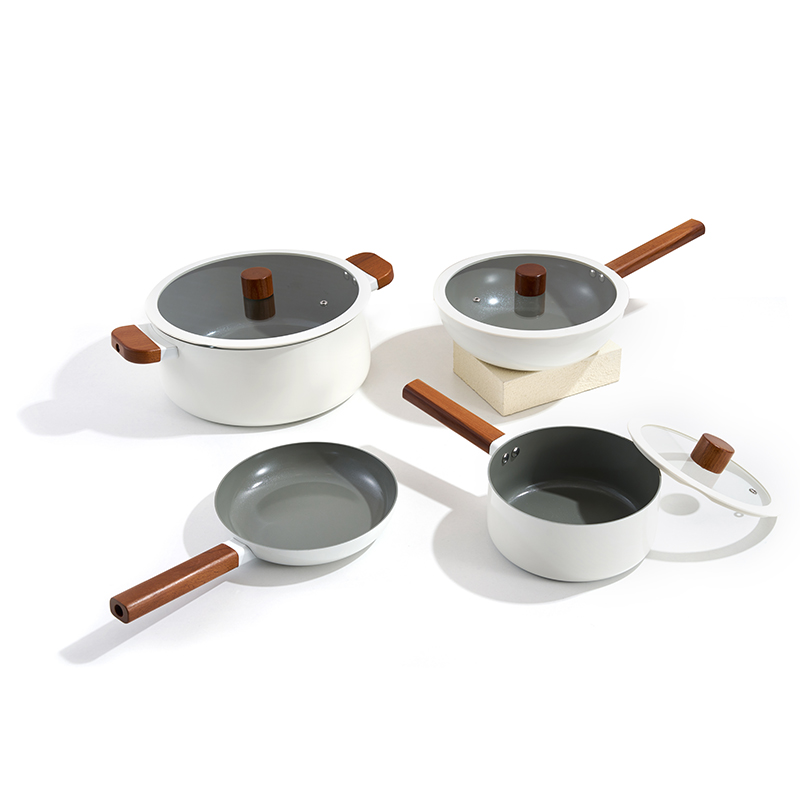
This cookware set has a ceramic non-stick inner liner, a heat-resistant wooden h...
See Details -
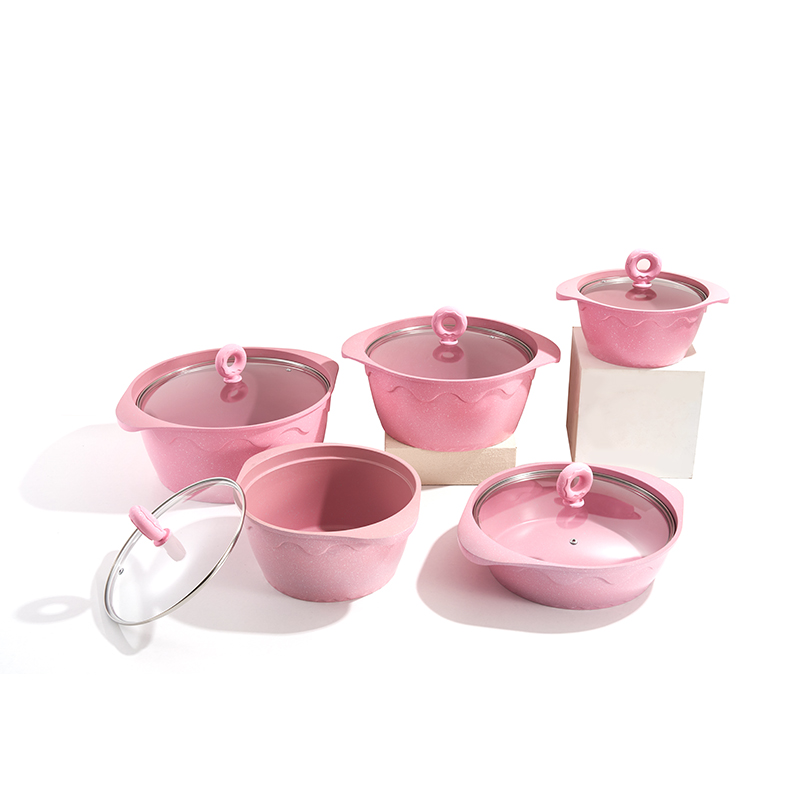
This cookware set is made of food-grade non-stick material, with a unique eye-ca...
See Details -
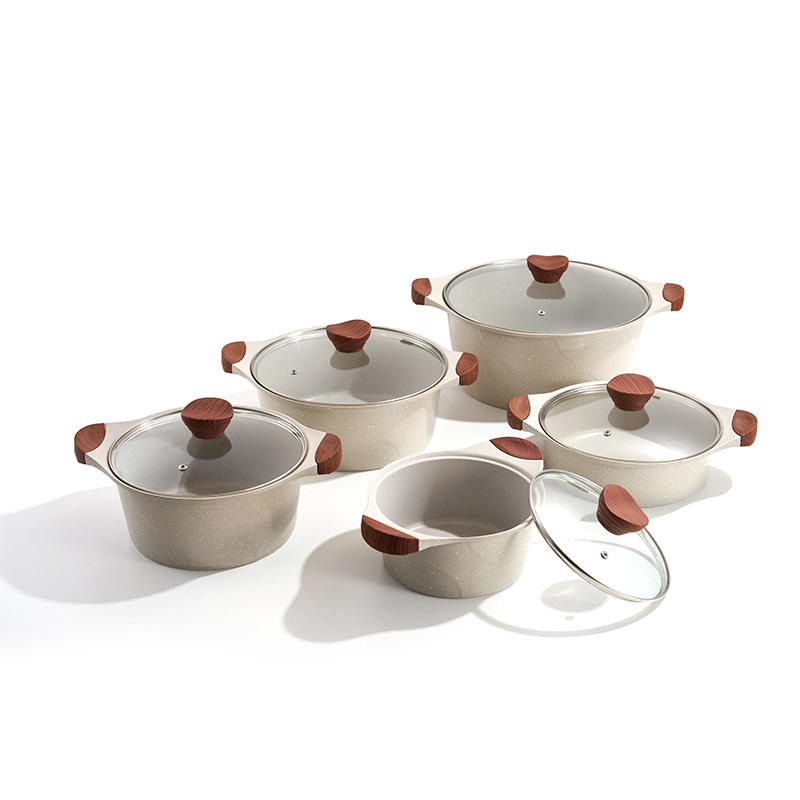
This off-white cookware set is made of wear-resistant non-stick material, with w...
See Details
Whether you're looking for bulk purchases or have any custom requirements, We are here to offer the best
solutions for you.
tiffany.zhong@echocn-trading.com
PHONE
+86-19561173975
+86-19557020621 (Hazel Wu)
ADD
Room 301, Unit 3014, No. 175 Qifeng Avenue, Wenqiao Town, Taizhou, Zhejiang, China
Fill Out the Form for More Information
Copyright © Zhejiang Echo Industry And Trade Co., Ltd.
All Rights Reserved.

China Cookware Set Manufacturer