
 en
 Español

This cookware set features a non-stick coating, even heat conduction, and multi-...
See Details
Why a 28 cm Deep Frying Pan Is Becoming the Center of the Modern Kitchen
Date:Nov 14, 2026
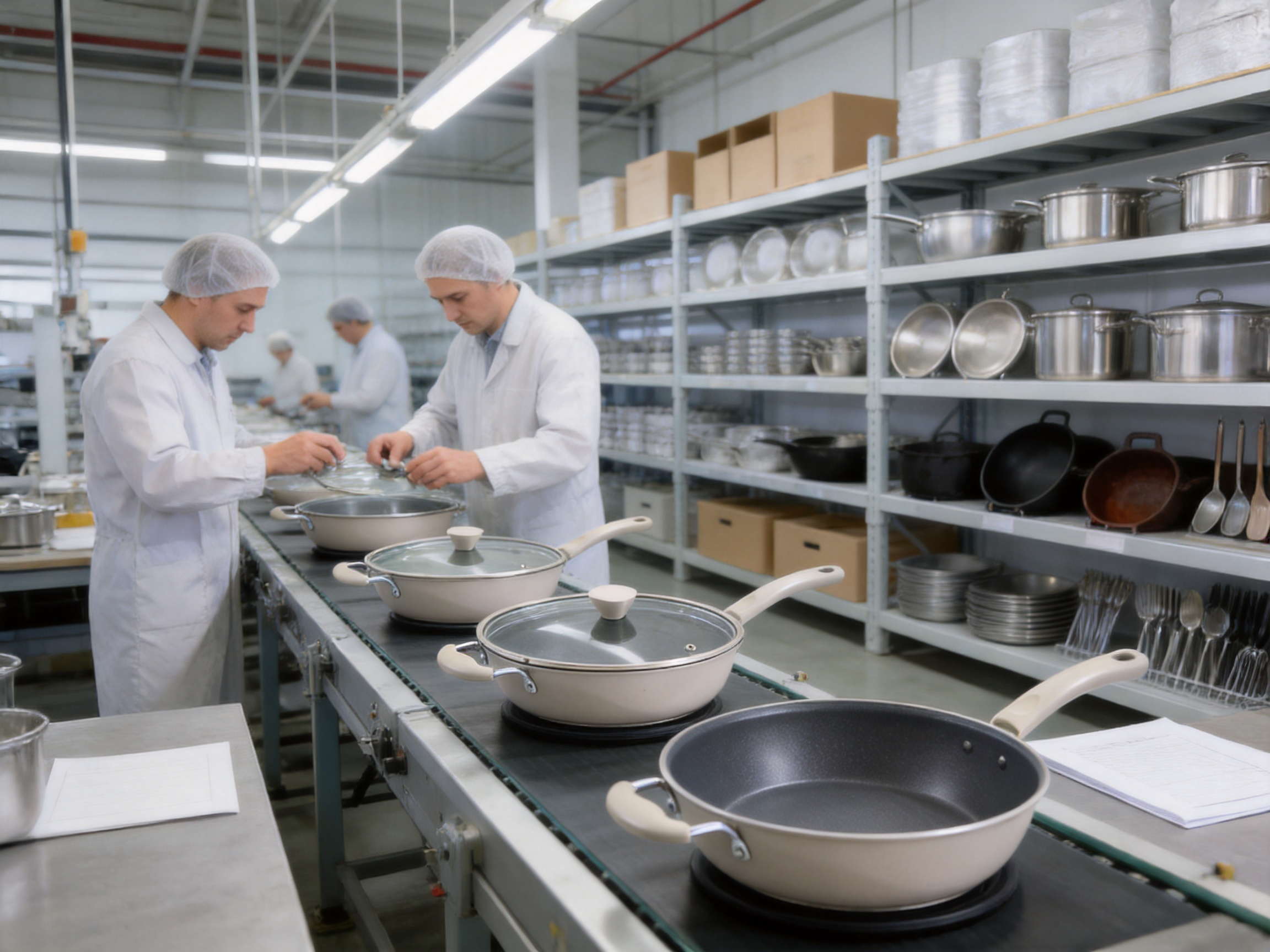
Modern kitchens increasingly demand cookware that can perform several tasks without taking up the space, time, or budget required by a complete collection of specialized pans. A practical deep frying pan can sauté vegetables, sear meat, simmer sauces, stir-fry ingredients, shallow-fry foods, prepare one-pot meals, and even serve as a compact alternative to a saucepan or Dutch oven. The 28 cm Minimalist Style Deep Frying Pan is designed around this idea of versatility. It combines a generous cooking surface, a deeper body, a non-stick coating, dual handles, a glass lid, and broad stovetop compatibility in one product.
Its purpose is not simply to provide another frying pan. It is intended to simplify everyday cooking while giving households a reliable tool for diverse recipes. The large-capacity design is especially suitable for family meals, meal preparation, and recipes that require ingredients to be stirred, turned, reduced, or simmered in the same vessel. By combining the functions of several traditional pans, it can help users create a more efficient and organized kitchen.
The pan is manufactured and supplied by Zhejiang Echo Industry And Trade Co., Ltd., a Zhejiang-based kitchenware company focused on cookware and kitchen accessories. The company provides aluminum cookware, stainless steel cookware, cast iron cookware, and kitchen utensils, while also supporting OEM and ODM projects, certification assistance, flexible minimum order quantities, and one-stop sourcing. These capabilities are important for wholesalers, importers, retailers, hospitality buyers, and private-label brands looking for practical cookware with scalable supply support.
This article examines the product’s design, cooking performance, user benefits, care requirements, commercial value, and manufacturing strengths. It also explains how the pan compares with common alternatives and why its combination of capacity, convenience, and adaptable sourcing can make it attractive to both end users and professional buyers.

Minimalist Style Deep Frying Pan
1. Product Overview and Design Philosophy
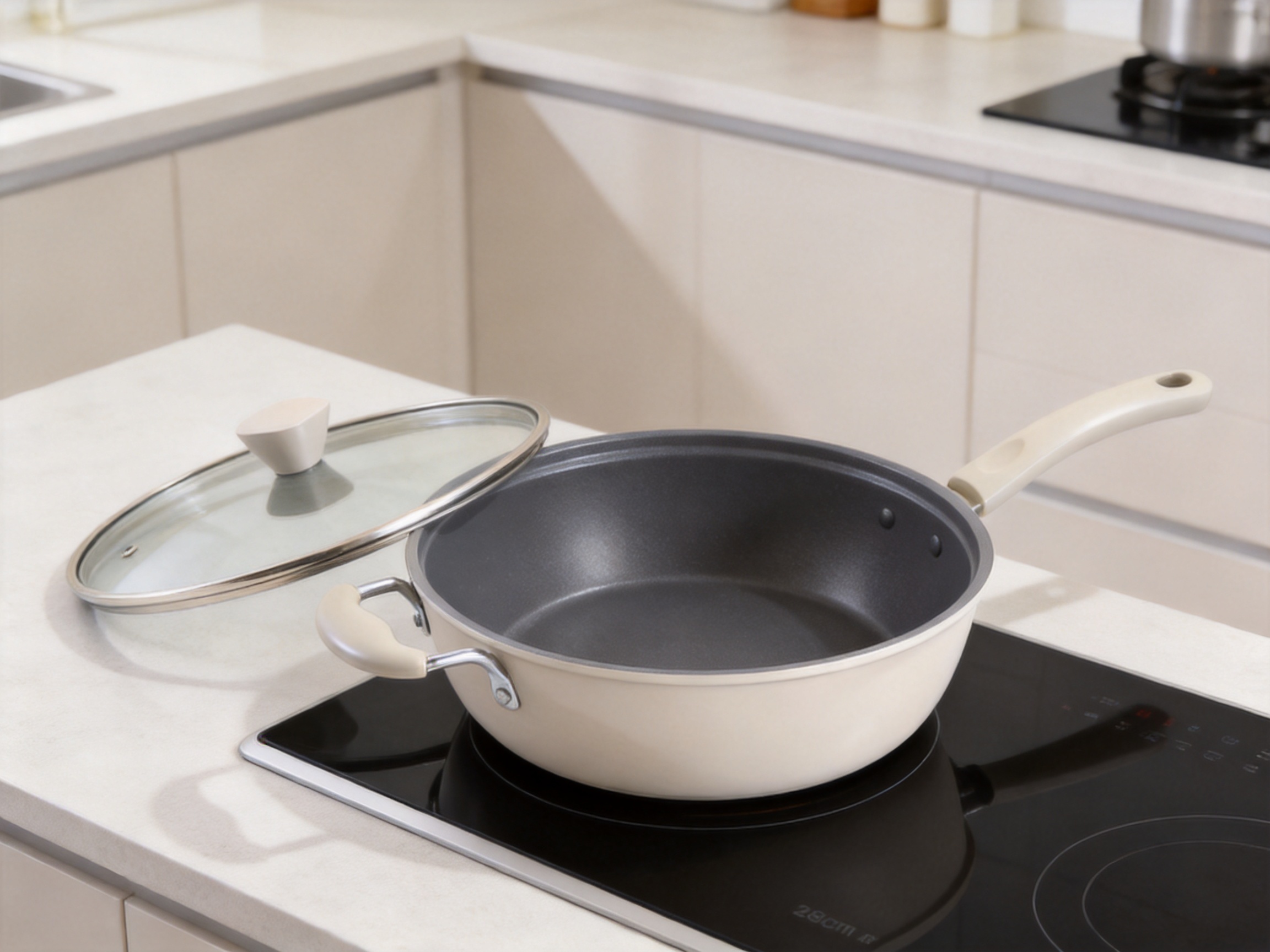
The Minimalist Style Deep Frying Pan has a 28 cm diameter and an aluminum construction. Its proportions are designed to balance cooking capacity with everyday manageability. A 28 cm pan is large enough for many family-sized meals but remains more practical for routine use than an oversized restaurant-style skillet. The deep form adds vertical capacity, allowing users to work with larger quantities of ingredients and more liquid without the frequent spills associated with shallow frying pans.
The product is offered in a Milk/Grey color combination. This restrained color direction supports a minimalist visual identity that can fit naturally into contemporary kitchens. Rather than relying on decorative details, the design emphasizes clean lines, practical proportions, and a simple appearance. This makes it suitable for households that prefer modern cookware as well as retailers building coordinated kitchenware collections.
The product specification is straightforward. The SKU is XS02, the size is 28 cm, and the primary material is aluminum. Aluminum is widely valued in cookware because it is comparatively lightweight and conducts heat efficiently. When properly designed and paired with a suitable non-stick coating, an aluminum body can provide responsive heating, practical handling, and convenient food release without the weight associated with some cast iron or thick stainless steel alternatives.
The deep-frypan format gives this model a broader range of uses than a conventional shallow skillet. Users can fry ingredients in a small amount of oil, cook sauces, steam food under the lid, prepare pasta toppings, combine stir-fried ingredients, or simmer one-pan dishes. The design is particularly useful when a recipe begins with browning or sautéing and later requires liquid. Instead of transferring food to a separate pot, the cook can continue in the same pan.
This one-pan approach reduces washing, helps maintain cooking continuity, and makes meal preparation easier for users with limited kitchen space. It can also be valuable for apartment kitchens, student accommodation, vacation homes, compact catering operations, and households that prefer to own fewer but more capable cooking tools.
2. Main Product Features
2.1 Generous 28 cm Cooking Capacity
The 28 cm cooking diameter provides a useful working area for everyday recipes. It can accommodate multiple portions of vegetables, meat, seafood, noodles, rice dishes, and mixed ingredients. A larger surface also gives ingredients more room to contact the heated base rather than accumulating in a crowded pile. This can support more even browning and make stirring or turning easier.
The depth is equally important. A shallow skillet may be adequate for eggs or a small portion of vegetables, but it becomes inconvenient when cooking foods that expand, release liquid, or need to be stirred vigorously. The deep body helps contain ingredients and reduces splashing during cooking. It also provides greater flexibility for recipes that move from frying to simmering.
2.2 Non-Stick Cooking Surface
The non-stick coating is one of the product’s most significant convenience features. It is designed to reduce food adhesion, helping ingredients release more easily from the cooking surface. This can make delicate foods, such as eggs, fish, pancakes, and tender vegetables, easier to handle. It can also reduce the amount of oil needed for many recipes, depending on the cooking method and the user’s preferences.
A non-stick surface supports easier cleaning because food residue is less likely to become firmly attached. This is especially useful after preparing sauces, sticky marinades, fried rice, or dishes containing starch. However, non-stick performance depends on proper use. The care instructions specifically recommend wooden, nylon, or non-stick-safe utensils and advise users not to use metal or sharp cooking tools.
Compared with an uncoated aluminum pan, the non-stick version generally offers a more convenient cooking experience. Uncoated aluminum can be responsive and lightweight, but it may require more oil and more careful monitoring to prevent food from sticking. Compared with a traditional cast iron pan, the non-stick surface requires less seasoning and is easier to clean after routine meals.
2.3 Deep Body for Multi-Function Cooking
The deep design is central to the product’s multi-function character. It allows the pan to function as a frying pan, sauté pan, shallow wok, sauce pan, and compact casserole-style vessel for suitable recipes. The user can brown onions, cook meat, add vegetables, pour in sauce, and finish the dish under the lid without changing cookware.
This is a major advantage over a standard shallow frying pan. A shallow pan may offer excellent access for turning food, but it has limited capacity and may not contain liquids effectively. The deep frying pan offers a more balanced compromise between surface area and volume. It gives the user enough room to fry while retaining the containment needed for simmering and one-pot cooking.
2.4 Dual Handles for Control and Comfort
The dual-handle format is designed to improve control when the pan contains a large quantity of food. A long handle alone may be sufficient for a small skillet, but a deep, full pan can become difficult to lift, move, or pour safely with only one point of contact. Two handles distribute the load and provide additional stability.
The product description highlights heat-resistant comfort. This feature is valuable during stovetop cooking because the user may need to reposition the pan, carry it from the burner to a work surface, or serve food directly from it. The exact handling temperature depends on cooking conditions, but users should always follow safe kitchen practices and use suitable protection when handles or surrounding surfaces become hot.
For commercial buyers, dual handles can also improve the perceived quality of the product. Customers often associate balanced handling with thoughtful cookware design. A pan that feels secure when lifted may be more attractive than a similar pan that is difficult to control when filled.
2.5 Glass Lid for Controlled Cooking
The included glass lid expands the number of recipes the pan can prepare. It helps retain heat and moisture during simmering, braising, steaming, and covered cooking. The transparent design allows users to observe the food without repeatedly removing the lid, which can help maintain a more stable cooking environment.
A lid is particularly useful for dishes that require a gradual reduction, gentle simmer, or final steaming stage. It can also help limit splatter during frying and reduce the need to use a separate cover. By including the lid as part of the pan system, the product offers greater value than a basic open skillet.
For families and meal-preparation users, the glass lid can make the pan more adaptable throughout the cooking process. Food can be sautéed uncovered, combined with liquid, covered for simmering, and uncovered again for reduction. This sequence is common in home cooking and is more convenient when one vessel supports all stages.
2.6 Compatibility with All Stovetops
The product is described as compatible with all stovetops. This broad compatibility is commercially important because households use different heating technologies, including gas, electric, ceramic, and induction-style cooking surfaces. A pan that can move between different kitchen environments is easier for retailers to position and more convenient for consumers who may relocate or upgrade their appliances.
For buyers, broad stovetop compatibility can simplify inventory planning. Instead of separating stock by heating technology, a retailer can offer one versatile model to a wider audience. This may be especially useful for online sellers, distributors, and private-label brands that want to reduce product complexity while serving multiple markets.
Users should still follow the product’s specific instructions and the requirements of their stovetop. The base should sit securely on the cooking surface, and the heat source should not extend beyond the base. This helps reduce unnecessary heat exposure to the sides and supports more controlled cooking.
3. Advantages Compared with Common Cookware Alternatives
3.1 Versus a Conventional Shallow Frying Pan
A conventional shallow frying pan is useful for quick frying, searing, and browning, but it may lack the capacity required for larger meals. Ingredients can spill during stirring, and sauces may spread too thinly or evaporate too quickly. The 28 cm deep frying pan addresses these limitations through its increased depth and included lid.
The deep body also creates a more flexible transition between cooking techniques. A shallow skillet may require a separate saucepan for finishing a sauce or simmering a complete meal. The deep pan can handle these stages in one vessel, helping users save time and reduce dishwashing.
There are situations where a shallow pan remains preferable, such as when maximum surface access is needed for searing a small number of ingredients. However, for households seeking a single everyday pan, the deep model offers a broader range of functions.
3.2 Versus a Traditional Wok
A wok is designed for high-heat stir-frying and often has steep, curved sides. It can be highly effective for Asian cooking styles, but its performance depends on its shape, base design, and stovetop compatibility. Some traditional woks are less stable on flat cooking surfaces, while some modern flat-bottom woks are relatively large and difficult to store.
The deep frying pan offers a familiar flat-pan format with a generous base and deep sides. This may be easier for users who prepare a mixture of Western, Asian, Mediterranean, and international recipes. It can stir-fry vegetables while also supporting frying, braising, and sauce-based dishes.
Unlike some uncoated steel woks, the non-stick surface is designed to reduce the need for seasoning and extensive oil use. It is therefore more approachable for users who want convenient everyday cooking rather than traditional high-heat wok techniques.
3.3 Versus Cast Iron Cookware
Cast iron is valued for heat retention, durability, and its ability to develop a seasoned cooking surface. However, it is considerably heavier than aluminum and may require more maintenance. Moving a full cast iron pan can be difficult for some users, and the high thermal mass can make rapid temperature adjustment less responsive.
The aluminum deep frying pan provides a lighter alternative for users who prioritize ease of handling and responsive heating. The non-stick coating also removes the need for traditional seasoning routines. This makes the product suitable for busy households and users who want practical performance without the care requirements of uncoated cast iron.
Cast iron may remain advantageous for high-temperature searing, oven-based cooking, and long-term heavy-duty applications. The deep non-stick pan is better suited to convenient stovetop cooking, moderate-temperature preparation, and recipes where simple release and easy cleaning are important.
3.4 Versus Stainless Steel Pans
Stainless steel cookware is known for its strength, polished appearance, and resistance to corrosion. It is popular in professional kitchens and can perform well at high temperatures. However, food may stick if the pan is not preheated and oiled correctly. Cleaning may also require more effort after cooking proteins or reduced sauces.
The non-stick aluminum pan provides a more forgiving cooking surface for everyday users. It can make delicate ingredients easier to release and reduce cleanup time. Its lighter weight may also be preferable for frequent lifting, stirring, and serving.
Stainless steel remains a useful choice for high-heat browning, deglazing, and long-term abrasion resistance. The deep non-stick model serves a different purpose: it emphasizes accessible cooking, lower-friction maintenance, and versatility for a wide range of home recipes.
3.5 Versus a Multi-Piece Cookware Set
A full cookware set can provide multiple sizes and specialized functions, but it also requires more storage space and a larger initial investment. Some pieces may be used only occasionally, while the most frequently used pan becomes worn sooner through daily cooking.
The 28 cm deep frying pan offers a focused alternative. It can cover many everyday cooking tasks in one vessel, making it suitable for small kitchens, starter homes, rental properties, and consumers who prefer a minimalist collection. Retailers can also offer it as an entry-level product or as an individual replacement for customers who do not need a complete set.
| Comparison Factor | 28 cm Deep Frying Pan | Shallow Frying Pan | Cast Iron Pan | Stainless Steel Pan |
|---|---|---|---|---|
| Cooking capacity | Large, with additional depth | Moderate, limited side height | Moderate to large | Varies by design |
| Food release | Supported by non-stick coating | Depends on coating or technique | Depends on seasoning | Depends strongly on technique |
| Handling weight | Generally lighter due to aluminum body | Usually light to moderate | Heavy | Moderate to heavy |
| Multi-function use | Frying, sautéing, simmering, braising, one-pan meals | Primarily frying and sautéing | Frying, searing, baking, braising | Frying, searing, simmering |
| Cleaning convenience | Designed for easier cleaning when properly used | Depends on surface | Requires maintenance and seasoning care | May require more scrubbing |
| Included lid | Glass lid included | Often sold separately | Often sold separately | Often sold separately |
| Best suited to | Versatile everyday home cooking | Quick shallow cooking | High heat and heat retention | Durable uncoated cooking |
4. Cooking Applications in the Home
4.1 One-Pan Family Meals
The pan’s most important practical benefit is its ability to support complete meals. Users can begin by heating a small amount of oil, sautéing aromatics, browning meat or plant-based proteins, adding vegetables, and finishing the dish with stock, sauce, or seasoning. The depth helps contain the ingredients, while the lid supports covered cooking.
Examples include chicken and vegetable dishes, creamy pasta sauces, tomato-based meals, curry-style recipes, seafood with vegetables, rice-based skillet dishes, and braised beans. In each case, the same pan can perform several stages of the recipe. This reduces transfers between cookware and helps preserve the flavors developed during browning.
4.2 Stir-Frying and Sautéing
The broad cooking area is suitable for sautéing onions, mushrooms, peppers, leafy greens, and mixed vegetables. The deep sides help keep ingredients inside during stirring. A non-stick coating can also reduce the risk of delicate vegetables or marinated proteins adhering to the surface.
Users should select a heat level appropriate for the coating and avoid overheating the empty pan. The care instructions specifically warn against overheating an empty pan. Moderate, controlled heat is generally more suitable for maintaining the condition of a non-stick surface and preventing unnecessary stress on the cookware.
4.3 Shallow Frying
The pan can be used for shallow frying when a recipe requires more oil than sautéing but less than deep frying. Its depth provides additional containment and helps reduce splashing. Foods such as cutlets, fritters, fish portions, dumplings, and potatoes can be prepared in suitable quantities.
Cooking oil should be used responsibly, and the pan should never be left unattended while heating. Users should also ensure that the cooking area is stable and that the handles are positioned safely away from busy walkways or adjacent burners.
4.4 Simmering and Braising
The glass lid and deep body make the pan suitable for recipes that require gentle simmering. After ingredients are browned, the cook can add liquid, reduce the heat, and cover the pan. This format works well for braised vegetables, saucy meat dishes, beans, lentils, and other recipes that need time for flavors to combine.
The ability to use one pan for browning and simmering is more than a matter of convenience. It can also support better flavor development because browned ingredients and cooking juices remain together. The user avoids losing those residues during transfer to another vessel.
4.5 Breakfast and Quick Meals
Although the pan is large and deep, it can still be useful for breakfast and quick meals. Eggs, sautéed vegetables, hash-style potatoes, pancakes, and breakfast meats can be prepared on the non-stick surface. For smaller portions, users may choose a lower heat setting and adjust the amount of oil according to the recipe.
For households that cook multiple portions at once, the 28 cm format can reduce the number of batches required. This is particularly useful during busy mornings or when preparing packed lunches and meal-preparation containers.
5. Materials and Functional Construction
Aluminum is the primary material identified for the product. Its main functional contribution is efficient heat transfer combined with relatively low weight. These characteristics help the pan heat quickly and make it easier to handle than many heavier cookware materials.
The usefulness of aluminum cookware depends on how the body, base, handles, and coating are integrated. A well-planned cookware structure should distribute heat effectively across the cooking area, provide adequate stability on the stovetop, and maintain comfortable handling during normal use. The product’s deep shape, dual handles, and lid indicate an integrated approach rather than a simple flat aluminum disc.
The non-stick coating is applied to the cooking surface to improve food release and reduce cleaning effort. Because coatings are functional surfaces rather than indestructible finishes, they require appropriate care. Avoiding metal utensils, sharp tools, empty overheating, and abrasive cleaning helps preserve performance over time.
The glass lid adds a second functional material to the system. It allows visual monitoring and supports covered cooking without requiring repeated lifting. In product development, combining the lid with the pan helps create a more complete use experience than selling the pan alone.
The Milk/Grey color option contributes to product differentiation in a crowded cookware market. Color is not only an aesthetic consideration. It can help a retailer build a coordinated collection, create shelf appeal, and position the product within minimalist, contemporary, or lifestyle-oriented kitchen categories.
6. Manufacturing and Supply Strengths
6.1 Zhejiang as a Kitchenware Manufacturing Base
Zhejiang is a globally recognized manufacturing region with extensive experience in household products, hardware, kitchenware, and export-oriented production. Its industrial environment supports access to component suppliers, packaging resources, skilled production workers, logistics services, and international trade infrastructure.
Zhejiang Echo Industry And Trade Co., Ltd. operates from Taizhou, Zhejiang, and focuses on kitchenware supply for international buyers. The company’s location provides a practical foundation for developing, producing, inspecting, packing, and exporting cookware. For overseas customers, a supplier based in an established manufacturing cluster can offer advantages in communication with supporting factories and in coordinating related product categories.
6.2 One-Stop Product Sourcing
The company’s product range includes aluminum cookware, stainless steel cookware, cast iron cookware, and kitchen utensils. This breadth enables buyers to source complementary products from one supplier rather than managing numerous independent vendors.
For example, a retailer may purchase the deep frying pan alongside saucepans, stockpots, stainless steel tools, cast iron items, or coordinated kitchen accessories. One-stop sourcing can simplify quotation management, sample coordination, packaging discussions, quality communication, and shipment planning.
It also helps buyers create themed collections. A retailer can develop a minimalist aluminum line, a durable stainless steel range, a traditional cast iron category, and a utensil assortment while maintaining a consistent supplier relationship. This approach may reduce the administrative burden associated with launching or expanding a cookware program.
6.3 OEM and ODM Support
The company identifies OEM and ODM customization as part of its service offering. OEM support can be useful when a buyer already has defined product specifications, branding requirements, packaging artwork, or labeling instructions. ODM support is more suitable for buyers seeking help with product concepts, variations, configurations, or design development.
For this deep frying pan, potential customization discussions may involve color combinations, logo placement, packaging style, instruction materials, handle details, accessory bundles, and market-specific labeling. Any modification should be reviewed through technical samples, testing, and approval procedures before mass production.
Customization is especially relevant to private-label brands. A distinctive color, retail package, or coordinated product family can help a brand avoid competing solely on price. The pan’s simple silhouette and broad functionality provide a suitable base for market-specific positioning.
6.4 Certification Assistance
The company also offers product certification assistance. International cookware markets may have different requirements concerning materials, coatings, food contact, labeling, packaging, and import documentation. Certification assistance can help buyers understand the documentation and testing process relevant to their target markets.
Buyers should define their destination countries and compliance expectations at the beginning of a project. Requirements may vary by region, retailer, and product category. Early communication helps ensure that material declarations, test reports, packaging information, and product instructions are prepared appropriately.
6.5 Flexible Minimum Order Quantities
Flexible minimum order quantities can be valuable for small and medium-sized buyers. Large minimums may create excessive inventory risk, especially for new brands, online sellers, seasonal collections, or products undergoing market testing. A more flexible approach can allow a buyer to evaluate demand before committing to very large volumes.
At the same time, order quantities influence pricing, packaging economics, production scheduling, and customization possibilities. Buyers should discuss the relationship between quantity and unit cost rather than viewing minimum order flexibility in isolation. A supplier that can explain these trade-offs clearly can help customers make more informed purchasing decisions.
6.6 Sustainable and Healthy Product Development
The company states that it is developing sustainable and healthy product solutions. In cookware, this direction may involve material selection, coating development, packaging reduction, product durability, and responsible manufacturing practices. Longer-lasting cookware can reduce replacement frequency, while efficient packaging may lower transportation volume and material consumption.
Health-related product development should be supported by appropriate testing, documentation, and transparent communication. Buyers increasingly want clear information about food-contact materials, coating performance, production controls, and product care. A supplier that treats these matters as part of product development rather than as afterthoughts can build greater confidence in international markets.
7. Quality Control Considerations for This Product
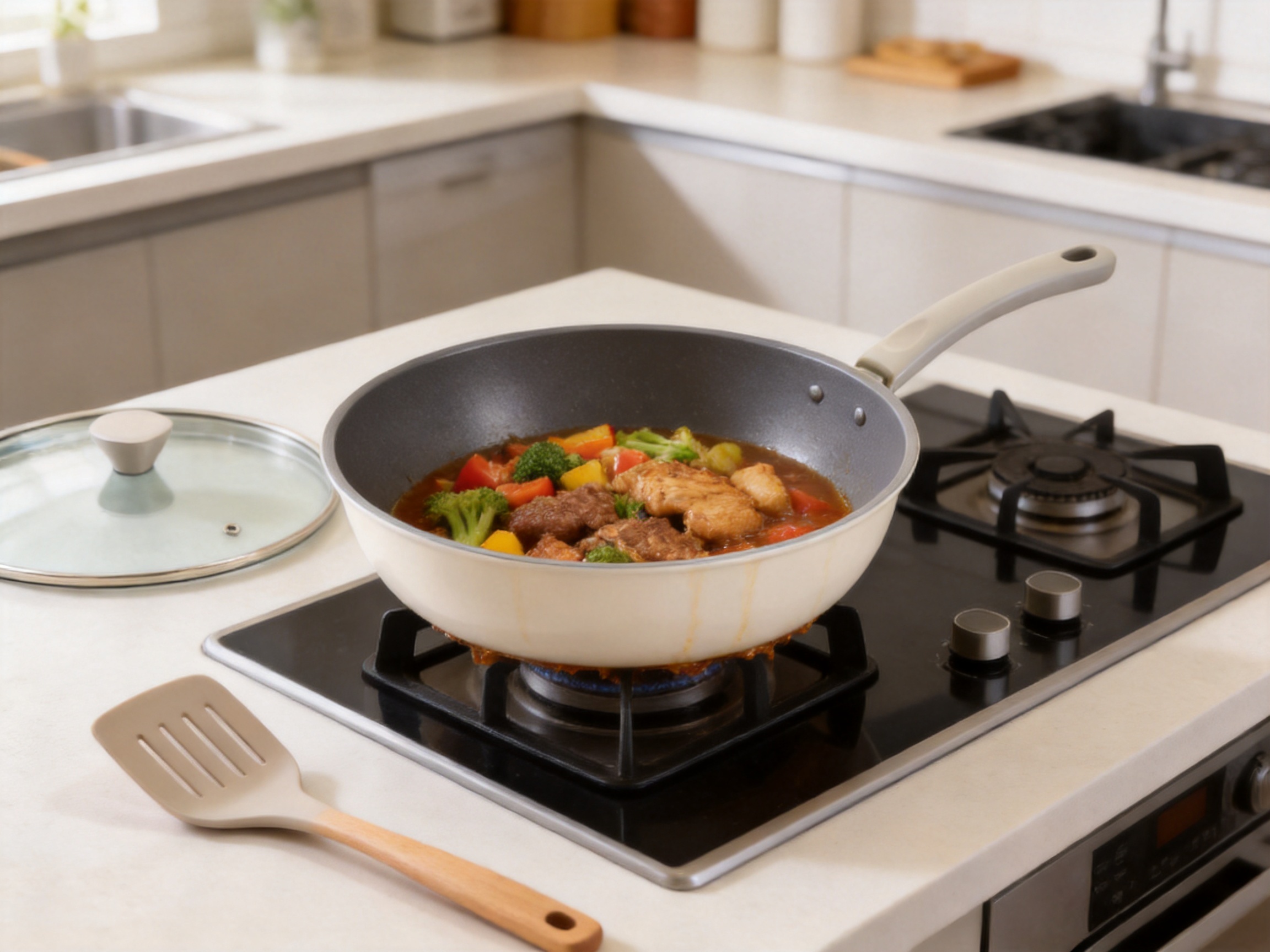
A reliable cookware manufacturing process should include checks at multiple stages. For an aluminum deep frying pan, these may include inspection of the body shape, wall depth, rim finish, base stability, handle attachment, coating appearance, lid fit, packaging integrity, and overall dimensions.
The cooking surface should be visually examined for uneven areas, scratches, pinholes, contamination, or coating irregularities. The exterior should be checked for color consistency and finish quality. The pan should sit securely on a flat surface, and the lid should fit appropriately without excessive movement.
Handle connection is another important consideration. The dual handles must be securely attached and aligned so that the pan can be lifted in a balanced manner. For retail products, handle comfort and perceived strength affect customer satisfaction even when the pan’s cooking performance is good.
Dimensional consistency matters for both consumers and commercial buyers. A 28 cm specification should be clearly defined by the supplier, since different manufacturers may measure diameter at different points. Accurate product information supports packaging design, online listings, warehouse planning, and customer expectations.
Coating care instructions should be included in product packaging or printed materials. Clear guidance helps protect the user experience and may reduce avoidable complaints caused by incorrect utensil use, empty overheating, abrasive cleaning, or improper storage.
8. Care and Maintenance Instructions
8.1 Before First Use
The pan should be washed before its first use. This removes dust or residue that may have accumulated during production, packing, or transport. A gentle wash with hot, soapy water and a soft cloth or sponge is appropriate according to the supplied care guidance.
8.2 Choosing Cooking Utensils
Metal or sharp cooking utensils should not be used on the non-stick surface. Wooden, nylon, or non-stick-safe utensils are recommended. Users should avoid cutting food directly inside the pan because knives and other sharp tools can damage the coating.
Utensil choice is one of the simplest ways to preserve non-stick performance. Even a high-quality coating can be scratched by repeated contact with sharp or abrasive objects. Retailers may improve customer satisfaction by communicating this instruction prominently rather than placing it only in small print.
8.3 Cleaning After Cooking
The pan should be cleaned with hot, soapy water and a soft cloth or sponge. Abrasive pads, harsh scouring powders, and aggressive scraping should be avoided. Allowing food residue to soften before washing can make cleaning easier without requiring excessive force.
Hand washing is recommended to preserve the appearance of the cookware. While some users may prefer machine washing for convenience, the supplied instructions prioritize hand washing. Following this recommendation can help maintain the finish, color, coating, handles, and overall appearance.
8.4 Avoiding Empty Overheating
The pan should not be overheated while empty. Empty heating can raise the surface temperature quickly and place unnecessary stress on the coating and cookware body. Users should add suitable ingredients or cooking oil before heating and should select a controlled temperature appropriate to the recipe.
If the pan severely overheats, the instructions advise users not to touch it immediately. The cooker should be turned off, and the pan should be left to cool completely. This reduces the risk of burns and prevents sudden contact with a hot surface.
8.5 Managing the Heat Source
The flame or heat source should not extend beyond the base of the item. Excessive side heat can discolor the exterior, heat the handles unnecessarily, and create less efficient cooking conditions. Correct burner selection and moderate heat help protect the pan and improve control.
8.6 Safe Storage
When storing the pan, users should avoid placing sharp cookware inside it or stacking abrasive surfaces directly against the non-stick coating. If stacking is necessary, a soft protective layer can help prevent scratches. The lid should be stored in a way that reduces impact risk and allows the cookware to dry fully after washing.
9. Commercial Value for Retailers and Importers
The product has several characteristics that support retail positioning. Its 28 cm size is easy for consumers to understand, while the deep shape communicates greater capacity. The non-stick surface, glass lid, dual handles, and all-stovetop compatibility provide clear selling points that can be shown in product listings, packaging, demonstrations, and social media content.
Its multi-function positioning can also support a stronger value proposition. Rather than selling only a frying pan, retailers can present it as a versatile everyday cooking solution. Product descriptions can focus on one-pan meals, reduced cleanup, family-sized portions, and the ability to move from sautéing to simmering without changing cookware.
The minimalist color combination may appeal to consumers who want cookware that looks coordinated with modern kitchen interiors. It can also be developed into a broader collection with matching pots, utensils, or storage accessories through OEM or ODM programs.
For e-commerce sellers, the product offers several content opportunities. Demonstration recipes can show the pan preparing a complete meal. Short videos can highlight the glass lid, deep capacity, ingredient release, and dual-handle design. Comparison content can explain the difference between a deep frying pan and a shallow skillet or wok.
For hospitality and accommodation businesses, the product may be suitable for guest apartments, serviced residences, rental properties, and small food operations where a limited cookware selection must support many cooking tasks. Buyers should evaluate the expected usage intensity and choose specifications and care instructions appropriate to their operating environment.
10. Product Positioning for Different Markets
10.1 Household Retail
In household retail, the product can be positioned as a practical upgrade from a basic frying pan. Its deep shape and included lid give customers more functionality without requiring a full set. The strongest message is convenience: one pan for multiple cooking methods and family-sized recipes.
10.2 Minimalist and Small-Space Living
For consumers in apartments, studios, and compact homes, cookware that performs several roles has particular value. The pan can help reduce the number of items stored in cabinets and simplify everyday meal preparation. Its minimalist appearance reinforces this lifestyle positioning.
10.3 Private-Label Collections
Private-label customers can use the model as part of a coordinated kitchenware range. Color, packaging, logo, instruction language, and accessory combinations can be adapted to a target market. A consistent family of cookware may create stronger shelf recognition and support repeat purchases.
10.4 Hospitality and Rental Properties
Property managers often need cookware that is easy for guests to understand and capable of preparing many kinds of meals. The pan’s versatility can reduce the number of individual pieces required in each kitchen. However, property operators should provide clear care guidance because non-stick cookware benefits from proper handling.
11. Questions and Answers
Q1: What is the diameter of the deep frying pan?
The pan has a diameter of 28 cm. This provides a generous cooking surface suitable for many family meals while retaining practical everyday handling.
Q2: What material is used for the pan?
The product information identifies aluminum as the primary material. Aluminum is valued for its relatively light weight and efficient heat response.
Q3: Does the pan have a non-stick coating?
Yes. The cooking surface uses a non-stick coating designed to reduce sticking and make food release and cleanup more convenient.
Q4: Can the pan be used for more than frying?
Yes. Its deep design supports frying, sautéing, stir-frying, simmering, braising, sauce preparation, and one-pan meals. The glass lid further supports covered cooking.
Q5: Is a lid included?
Yes. The product is supplied with a glass lid that helps retain heat and moisture while allowing the user to monitor the food.
Q6: Why does the pan have two handles?
Dual handles improve balance and control, particularly when the pan is filled with food. They also make it easier to lift or move the pan with both hands.
Q7: What utensils should be used?
Wooden, nylon, or non-stick-safe utensils should be used. Metal or sharp utensils should be avoided because they may scratch or damage the non-stick surface.
Q8: How should the pan be cleaned?
It should be cleaned with hot, soapy water and a soft cloth or sponge. Hand washing is recommended to help preserve the cookware’s appearance.
Q9: Can the pan be overheated while empty?
No. The care instructions specifically advise users not to overheat the empty pan. If severe overheating occurs, the cooker should be turned off and the pan should be allowed to cool completely before it is handled.
Q10: Is the pan compatible with all stovetops?
The product description states that it is compatible with all stovetops. Users should still position the pan correctly and ensure that the heat source does not extend beyond the base.
Q11: What color is available?
The listed color is Milk/Grey, a neutral combination intended to support a modern minimalist appearance.
Q12: What is the product SKU?
The SKU is XS02.
Q13: Can buyers request customization?
The supplier provides OEM and ODM services. Buyers can discuss customization options such as colors, branding, packaging, labels, accessories, and product configurations, subject to technical review and order requirements.
Q14: Does the supplier offer other kitchenware?
Yes. The company supplies aluminum cookware, stainless steel cookware, cast iron cookware, and kitchen utensils. This supports one-stop sourcing for buyers seeking a broader kitchenware range.
Q15: Is certification assistance available?
The company states that certification assistance is available. Buyers should identify destination-market requirements early so that relevant testing and documentation can be evaluated.
12. Overall Assessment
The Minimalist Style Deep Frying Pan is designed around a clear consumer need: one practical vessel that can support many everyday cooking tasks. Its 28 cm size delivers useful capacity, while the deep body contains ingredients and liquids more effectively than a shallow skillet. The non-stick coating improves food release and cleaning convenience, and the glass lid supports simmering, steaming, and covered recipes.
Dual handles improve control when the pan is full, while all-stovetop compatibility broadens its usefulness across different kitchens. The aluminum construction helps keep the product manageable for regular household use. Together, these features create a balanced alternative to owning several specialized pans.
Its advantages over competing formats are strongest in convenience and versatility. It is easier to maintain than many uncoated alternatives, lighter than typical cast iron, deeper than a standard frying pan, and more universally shaped than some traditional woks. It is not intended to replace every type of cookware, but it can cover a substantial portion of routine cooking requirements.
From a sourcing perspective, Zhejiang Echo Industry And Trade Co., Ltd. adds value through a broad product portfolio, one-stop kitchenware supply, OEM and ODM capabilities, certification assistance, flexible MOQs, and a stated focus on sustainable and healthy product development. These strengths can help international buyers move from individual product purchasing toward a more coordinated cookware program.
For consumers, the pan offers a practical way to simplify the kitchen. For retailers, it provides clear functional selling points and opportunities for lifestyle-oriented marketing. For private-label brands, it offers a flexible platform for color, packaging, and collection development. Its success in any market will depend on appropriate quality control, accurate product communication, responsible use, and careful adherence to the recommended care instructions.
Overall, the product represents a useful category between the ordinary frying pan and the complete cookware set. It combines capacity, non-stick convenience, covered cooking, balanced handling, and broad stovetop adaptability in a single aluminum vessel. That combination gives it strong potential as an everyday cookware essential for modern homes and as a commercially adaptable product for international kitchenware buyers.
References
1. Product specification sheet for the 28 cm Minimalist Style Deep Frying Pan, SKU XS02.
2. Supplied product care instructions for non-stick aluminum cookware.
3. Supplier company information concerning aluminum cookware, stainless steel cookware, cast iron cookware, kitchen utensils, OEM, ODM, certification assistance, flexible MOQs, and sustainable product development.
4. General cookware design principles concerning aluminum heat transfer, non-stick surface care, pan depth, lid functionality, and handle ergonomics.
5. General retail and sourcing considerations for household cookware, private-label kitchenware, and one-stop product supply.
Product: Minimalist Style Deep Frying Pan
Recommended Articles
Product Category
Related products
-
-
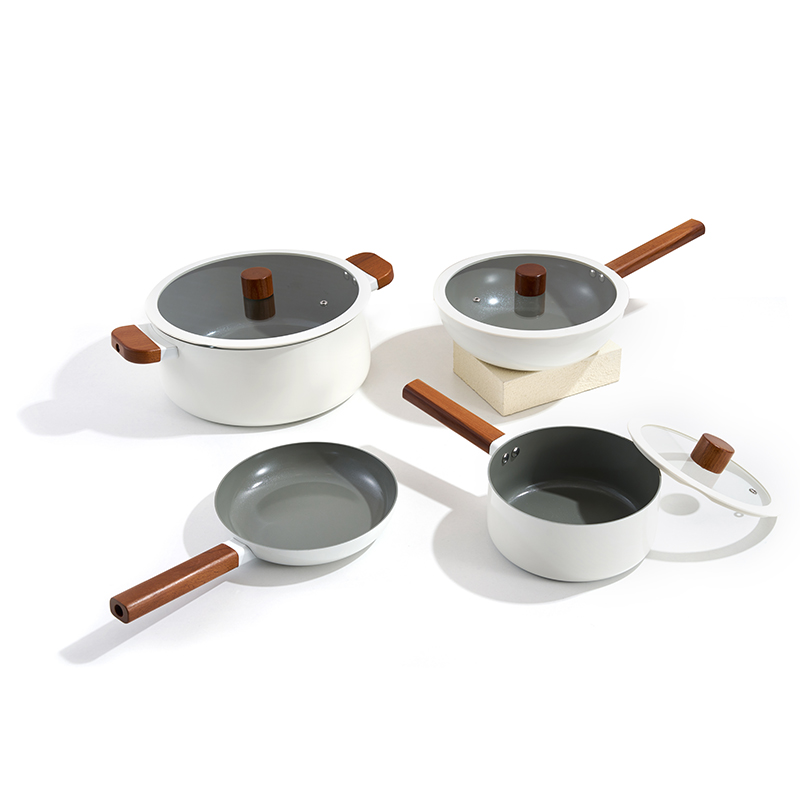
This cookware set has a ceramic non-stick inner liner, a heat-resistant wooden h...
See Details -
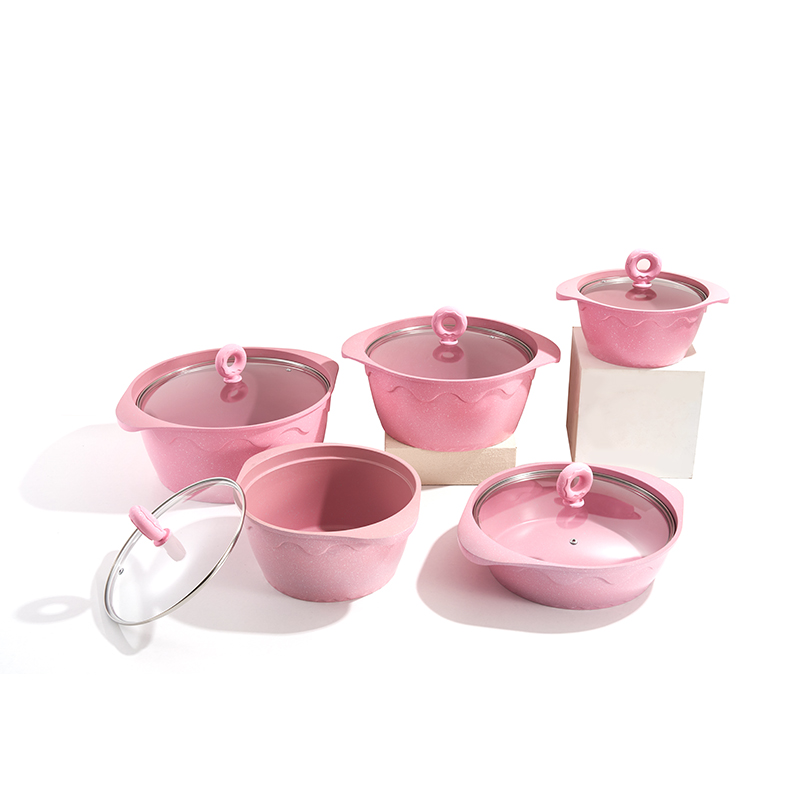
This cookware set is made of food-grade non-stick material, with a unique eye-ca...
See Details -
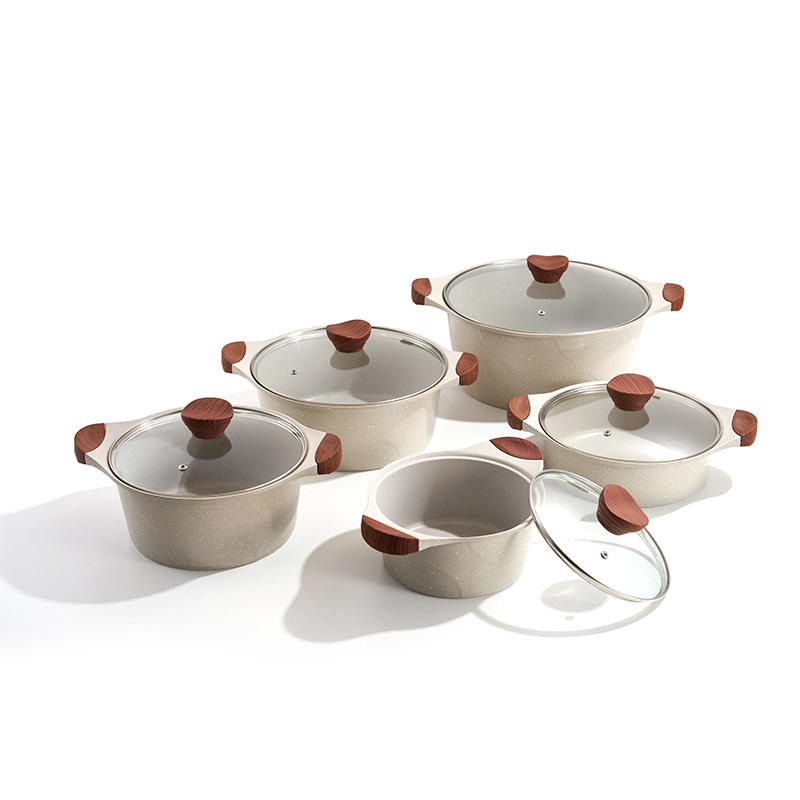
This off-white cookware set is made of wear-resistant non-stick material, with w...
See Details
Whether you're looking for bulk purchases or have any custom requirements, We are here to offer the best
solutions for you.
tiffany.zhong@echocn-trading.com
PHONE
+86-19561173975
+86-19557020621 (Hazel Wu)
ADD
Room 301, Unit 3014, No. 175 Qifeng Avenue, Wenqiao Town, Taizhou, Zhejiang, China
Fill Out the Form for More Information
Copyright © Zhejiang Echo Industry And Trade Co., Ltd.
All Rights Reserved.

China Cookware Set Manufacturer