
 en
 Español

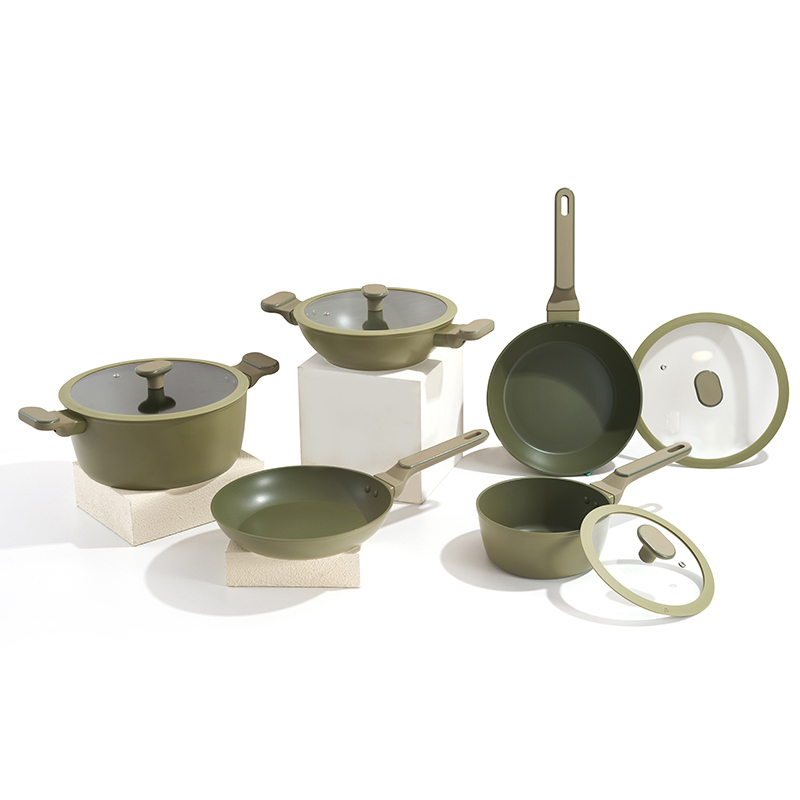
This cookware set features a non-stick coating, even heat conduction, and multi-...
See Details
5-Piece Stainless Steel Cookware Set with Glass Lid: A Practical Guide to Performance, Design, and Value
Date:Nov 10, 2026
A well-designed cookware set should do more than fill a kitchen cabinet. It should make everyday cooking more efficient, provide dependable heat control, withstand frequent use, and remain easy to maintain over time. The 5-piece stainless steel cookware set with glass lid is designed around these practical expectations. It combines durable 304 stainless steel construction, heat-resistant silicone handles, transparent glass lids, and a compact selection of vessels suitable for daily meal preparation.
For households that want a reliable cookware foundation without purchasing a large and unnecessary collection, a five-piece set offers an appealing balance. It can support boiling, simmering, reheating, steaming, preparing sauces, and cooking family-sized portions while taking up less storage space than a larger cookware assortment. It is especially suitable for apartments, smaller homes, vacation properties, first kitchens, and buyers who prefer to build their cookware collection gradually.
This article examines the set in detail, including its construction, materials, functional design, competitive advantages, care requirements, likely applications, and the manufacturing strengths behind its development. It also explains how Zhejiang Echo Industry And Trade Co., Ltd. approaches cookware supply through product variety, OEM and ODM services, quality-oriented development, and flexible sourcing support.
Understanding the Product at a Glance
The cookware set is made from 304 stainless steel, a widely used material for cookware, food-contact equipment, and kitchen tools. The product range is associated with SKU references WY01, WY02, and WY03, with size options that include 16 cm and 18 cm saucepans and 20 cm, 22 cm, and 24 cm stockpots. The exact configuration can vary according to the selected product specification, making the range suitable for different market requirements and household capacities.
The set is supplied with glass lids, allowing users to monitor cooking progress without repeatedly lifting the lid. This helps preserve heat and moisture during simmering while making it easier to check sauces, grains, vegetables, soup, and other foods. The stainless steel body is intended to provide durability and resistance to scratching, while the silicone handles are designed to offer a more secure and comfortable grip during stovetop cooking.
Its design is focused on versatility rather than excessive quantity. Instead of including many specialized pieces that may remain unused, the set concentrates on vessels that can support frequent cooking tasks. A saucepan is useful for oatmeal, sauces, boiling eggs, melting butter, heating milk, and preparing small portions. A larger pot is more suitable for pasta, soup, rice, vegetables, stew, and meal preparation for several people.
The product is also positioned as a practical option for professional-style home cooking. Stainless steel is commonly selected by commercial and domestic kitchens because it offers a hard, non-coated cooking surface with a long service life when properly maintained. Unlike disposable or low-quality cookware, a durable stainless steel set can remain useful through years of regular cooking.
Why 304 Stainless Steel Matters
Material selection is one of the most important factors in cookware performance. This set uses 304 stainless steel, a material recognized for its balance of corrosion resistance, durability, appearance, and general suitability for kitchen applications. It provides a robust cooking surface that does not depend on a fragile non-stick coating for everyday function.
Stainless steel is naturally resistant to many forms of kitchen wear. It does not easily chip, peel, or flake in the way a damaged coating may. This makes it compatible with a wide range of cooking methods and recipes. It is also relatively easy to clean when users control cooking temperature, avoid prolonged overheating, and follow suitable washing practices.
Another advantage is its resistance to rust and corrosion under normal kitchen conditions. Moisture, steam, cooking liquids, and frequent washing are unavoidable in cookware. A suitable stainless steel grade helps the product maintain structural integrity and appearance through repeated use. The 304 grade is particularly valued for its dependable performance in food-related environments.
Stainless steel also provides a neutral cooking surface for many recipes. It does not add a coating flavor to food, and it is appropriate for searing, boiling, simmering, reducing, and preparing sauces. Users who prefer a traditional cooking experience often appreciate the ability to observe browning, deglaze the pan, and build flavor directly on the cooking surface.
Compared with thin, low-cost metal cookware, a well-formed stainless steel body can provide a more substantial feel and better resistance to deformation. Cheap cookware may warp after repeated temperature changes, develop uneven bases, or show damage around the rim and handles. A stronger stainless steel body is better suited to the repeated heating and cooling cycles of everyday cooking.
Construction Advantages Over Basic Cookware
The quality of cookware depends on more than its material label. Construction details such as wall thickness, base design, rim finishing, handle attachment, lid fit, and surface treatment all contribute to the user experience. High-quality stainless steel cookware is distinguished by the way these components work together rather than by the metal grade alone.
One important advantage is structural durability. A stable body is less likely to twist or deform when moved between a hot burner and a cooler countertop. It also provides a more dependable foundation for the lid and handles. This matters because cookware is frequently lifted, stirred, drained, washed, stacked, and stored under pressure.
The rim is another important area. A carefully formed rim can improve pouring control and reduce drips along the outside wall. It can also make the cookware more comfortable to use when transferring soup, sauce, boiling water, or other liquid foods. Poorly finished rims may feel sharp, dent easily, or allow liquids to run unpredictably.
Handle attachment is equally significant. Handles must carry the weight of the vessel and its contents, sometimes under high heat. The set uses silicone handles designed to provide a non-slip grip and reduce direct contact with hot metal during stovetop use. Silicone also offers a softer hand feel than bare stainless steel, which can be helpful when the cookware is full.
The glass lids add another layer of usability. A transparent lid allows the cook to inspect the contents without releasing as much heat as would be lost by removing an opaque cover. This is useful when monitoring boiling, checking the consistency of a sauce, or determining whether vegetables and grains have reached the desired stage.
These construction details create a meaningful difference compared with entry-level cookware that may use thin walls, loosely fitted lids, poorly finished edges, or handles that become uncomfortable quickly. The goal is not simply to make a pot that looks attractive when new, but to provide a dependable tool for repeated kitchen use.
Heat Management and Cooking Performance
Stainless steel cookware is valued for its durability, but cooking performance also depends on how heat is distributed through the vessel. Premium cookware commonly uses layered construction or a reinforced base to improve heat distribution. The supplied product information emphasizes the importance of multi-layer construction, including stainless-aluminum-stainless or stainless-copper-stainless arrangements used in higher-end cookware.
Layer construction can help reduce hot spots and improve temperature consistency. A thin single-layer pan may heat rapidly in one area while remaining cooler elsewhere. This can cause food to brown unevenly, sauces to scorch at the center, or delicate ingredients to cook inconsistently. A suitable conductive layer or strengthened base helps spread heat across a wider area.
For home cooks, improved heat distribution is particularly useful when preparing foods that require controlled temperature. Cream sauces, custards, rice, grains, caramel, and reduced sauces can all suffer when heat is concentrated in a small area. More even heating gives the cook additional time to react and adjust the burner before ingredients burn.
Heat management also depends on user technique. Stainless steel cookware should be preheated gradually rather than exposed to excessive heat immediately. A moderate setting is generally more effective than using maximum heat for every recipe. When the cooking surface is heated correctly, ingredients can brown effectively while reducing the risk of sticking and scorching.
The product care guidance specifically warns users not to overheat an empty pan and not to allow flames or other heat sources to extend beyond the base. These instructions protect the cookware from unnecessary thermal stress and help prevent damage to handles, exterior surfaces, and cooking components.
When a pan becomes severely overheated, the recommended response is to turn off the cooker and allow the cookware to cool completely. Pouring cold water into a severely overheated vessel can create sudden thermal shock, which may affect the shape or finish of the product. Safe cooling is an important part of preserving cookware performance.
Silicone Handles for Safer Handling
Handles are often overlooked when cookware is compared, yet they directly affect safety and comfort. The set uses silicone handles intended to provide a heat-resistant, non-slip contact area. Compared with bare stainless steel handles, silicone can remain more comfortable during normal stovetop use and may reduce the likelihood of the hand sliding when the handle is dry or slightly damp.
A secure grip is especially important when a pot contains hot soup, boiling water, or a heavy meal. The handle should feel stable when the cookware is lifted, tilted, or transferred from one burner to another. A softer silicone surface can provide better tactile feedback than smooth polished metal.
Silicone handles also contribute to the visual identity of the cookware. They create a contrast between the polished metal body and the grip area, giving the set a contemporary appearance. More importantly, they make the cookware easier to handle for users who prefer not to grip exposed metal during stovetop preparation.
However, heat-resistant does not mean heat-proof under every condition. Silicone components should not be treated as suitable for unlimited oven temperatures, direct flame exposure, or careless overheating. The supplied care instructions emphasize stovetop safety and recommend avoiding situations in which the flame extends beyond the base. Users should follow the specific temperature guidance supplied with the product configuration.
Different handle materials have different strengths. Hollow stainless steel handles may tolerate higher oven temperatures but can become hot. Solid cast stainless handles can be strong but may retain heat. Phenolic plastic handles are lightweight but can be vulnerable to high temperatures. Silicone-wrapped handles offer a useful compromise for stovetop comfort and everyday handling.
The handle design therefore reflects a practical priority: comfortable, controlled use during ordinary meal preparation. For buyers seeking cookware primarily for stovetop cooking rather than high-temperature oven finishing, silicone handles can offer a significant everyday advantage.
Glass Lids and Better Cooking Visibility
A lid is not merely an accessory. It affects heat retention, cooking speed, moisture control, and the ability to monitor food. The glass lids included with the set allow users to observe the contents without lifting the cover. This is particularly useful for recipes that depend on maintaining a stable simmer.
When a lid is repeatedly removed, steam escapes and the internal temperature changes. This can extend cooking time and affect the final texture of rice, vegetables, pasta, soup, and braised foods. A transparent lid reduces the need for unnecessary checking, allowing the cook to maintain a more consistent environment.
Visibility is also helpful for new cooks. A user can see whether water is approaching a boil, whether a sauce is bubbling too strongly, or whether food needs additional liquid. This provides a clearer connection between heat settings and cooking results.
Glass lids also create a more refined product appearance. The combination of transparent glass and stainless steel gives the set a clean, modern look suitable for open shelving or visible kitchen storage. It communicates the product’s function while maintaining an attractive presentation.
As with all glass cookware lids, users should avoid sudden temperature shock. A hot lid should not be placed directly on a very cold or wet surface, and it should be handled carefully to prevent impact damage. Regular inspection is recommended so that chips, cracks, or loose components can be identified before continued use.
The practical result is a set that supports controlled cooking without requiring constant lid removal. For busy households, that small improvement can make preparation more efficient and reduce unnecessary heat loss.
5pcs Stainless Steel Cookware Set With Glass Lid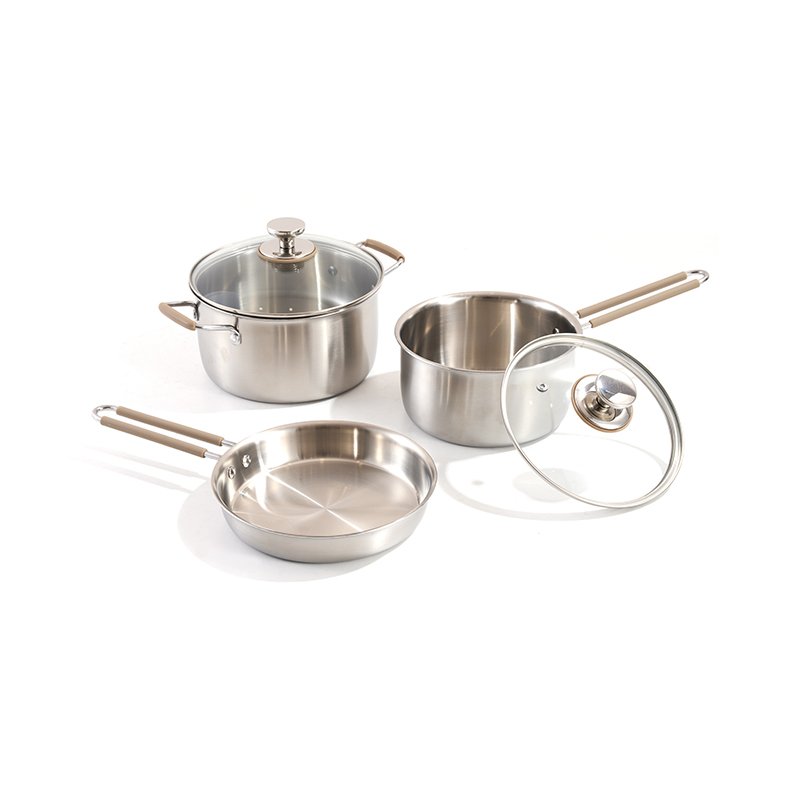
A Compact Set for Everyday Cooking
A five-piece cookware set is intentionally more focused than a large ten-piece or twelve-piece package. It is designed to cover common cooking tasks without filling the kitchen with specialized vessels that may rarely be used. This makes it attractive to buyers who value efficiency, organization, and sensible purchasing.
The smaller format is particularly suitable for apartments and compact kitchens. Storage space is often limited, and oversized cookware can become difficult to organize. A carefully selected set allows saucepans and pots to be stacked or stored together, reducing cabinet clutter and leaving room for other kitchen equipment.
Students and first-time homeowners can also benefit from this arrangement. A new kitchen does not always need every possible pot and pan immediately. A practical starter set can support boiling rice, reheating soup, preparing pasta sauce, melting butter, cooking vegetables, and making modest family meals. Additional pieces can be purchased later according to actual cooking habits.
For vacation homes, lake cabins, and rental properties, compact cookware is easier to transport and maintain. It provides a coordinated set rather than a collection of mismatched secondhand pieces. The stainless steel construction also offers a durable option for spaces that may be used regularly but not every day.
Empty nesters and smaller households may prefer the set because it matches reduced portion sizes. A small saucepan can handle breakfast grains or a single serving of sauce, while a medium or larger pot remains available for batch cooking, soup, and meal preparation.
The set is also useful for meal preparation for one or two people. A medium vessel can prepare grains, pasta, or vegetables for several meals, while a smaller saucepan can handle reheating and quick side dishes. Its usefulness comes from the frequency of the tasks it supports rather than from the number of pieces included.
Where the Set Performs Best
The saucepans are suitable for tasks that require depth and controlled liquid movement. Users can prepare sauces, gravies, oatmeal, rice, quinoa, custards, hot cereal, boiled eggs, and reheated leftovers. The smaller size is practical when a large pot would be inefficient or difficult to clean.
The larger stockpot sizes are appropriate for pasta, soup, vegetables, noodles, stew, and larger portions. A 20 cm pot may suit everyday family cooking, while 22 cm and 24 cm options provide additional capacity for batch preparation and entertaining.
Stainless steel is also suitable for deglazing. After browning meat or vegetables, a cook can add stock, wine, water, or another liquid to loosen the flavorful browned material from the cooking surface. This technique is useful for pan sauces, gravies, and one-pot meals.
The cookware can also support low-temperature simmering when the burner is adjusted carefully. Once the liquid reaches the desired temperature, reducing the heat can help prevent vigorous boiling and minimize evaporation. The glass lid allows the cook to observe the process without repeatedly interrupting it.
Although the set is versatile, it is important to recognize its intended limits. A compact five-piece set is not designed to replace every specialized cooking vessel. It may not be the best choice for preparing a large holiday meal, simmering a turkey carcass, cooking a whole lobster, or producing very large quantities of stock. Buyers who regularly cook for large gatherings may wish to add a separate high-capacity stockpot.
| Cooking Task | Most Suitable Use | Practical Benefit |
| Sauces and gravies | Small or medium saucepan | Controlled heating and easy stirring |
| Rice, grains, and oatmeal | Covered saucepan | Heat and moisture retention |
| Pasta and soup | Medium or large stockpot | Greater liquid capacity |
| Vegetables and noodles | Stockpot with glass lid | Visible simmering and convenient coverage |
| Reheating leftovers | Small saucepan | Efficient portion control |
| Batch meal preparation | 22 cm or 24 cm pot | Useful capacity for several servings |
Competitive Advantages in the Cookware Market
The cookware market contains many low-cost sets that appear similar in photographs but differ substantially in material quality, construction, handling, and long-term durability. This five-piece stainless steel set has several characteristics that can distinguish it from basic alternatives.
First, the use of 304 stainless steel provides a strong foundation. Buyers seeking a non-coated cooking surface may prefer it over thin aluminum cookware or low-quality products with uncertain material specifications. Stainless steel offers a durable appearance and can tolerate regular kitchen use when correctly maintained.
Second, the set combines stainless steel bodies with silicone handles. This balances durability with handling comfort. Some inexpensive cookware sets use entirely bare metal handles that become uncomfortable, while others rely on plastic components with limited heat tolerance. Silicone provides a more secure and comfortable grip for normal stovetop cooking.
Third, the glass lids improve visibility. Many entry-level sets use opaque metal lids that require lifting to inspect food. Transparent lids are more convenient for monitoring simmering and reduce heat loss during cooking.
Fourth, the product range supports multiple sizes. The availability of 16 cm and 18 cm saucepans and 20 cm, 22 cm, and 24 cm stockpots helps buyers select configurations for different household sizes and market preferences. This flexibility is valuable for distributors and retailers that serve varied customer groups.
Fifth, the set is compact rather than excessive. Consumers are increasingly aware that a large number of pieces does not automatically mean better value. A smaller selection of frequently used vessels can provide stronger practical value than a large assortment containing redundant or rarely used items.
Finally, the product is supported by a supplier capable of providing broader kitchenware solutions. Buyers can source stainless steel cookware alongside aluminum cookware, cast iron cookware, and kitchen utensils, reducing the complexity of working with multiple suppliers.
Manufacturing and Product Development Strengths
Zhejiang Echo Industry And Trade Co., Ltd. is based in Zhejiang, China, a region widely associated with manufacturing, export activity, and kitchenware production. The company positions itself as a professional kitchenware supplier serving buyers in different countries and cities.
Its strength is not limited to one cookware category. The company provides aluminum cookware, stainless steel cookware, cast iron cookware, and kitchen utensils. This broader product range enables importers, wholesalers, retailers, hospitality businesses, and private-label brands to develop more complete kitchenware collections through one sourcing relationship.
Product variety is valuable because cookware buyers often require coordinated ranges rather than isolated items. A retailer may need stainless steel pots, aluminum frying pans, cast iron products, and utensils that share a consistent market position. A one-stop supplier can help reduce administrative work, simplify communication, and support more efficient product planning.
The company also offers OEM and ODM customization. OEM services can support buyers that already have defined specifications, packaging requirements, logos, or product standards. ODM services can assist buyers that need help developing or adapting products for a particular market. These capabilities are especially useful when a buyer wants more than a standard catalog item.
Customization may involve product dimensions, handle colors, packaging design, branding, assortment combinations, or market-specific documentation. The exact scope depends on the order and technical requirements, but the presence of OEM and ODM support gives buyers more flexibility than a purely off-the-shelf supplier.
Product certification assistance is another important service. Different countries and sales channels may require specific documentation, testing, labeling, or compliance information. A supplier familiar with certification support can help buyers organize the technical materials needed for importation and commercial distribution.
Flexible minimum order quantities can also benefit small and medium-sized businesses. Large factories may focus only on high-volume orders, while smaller buyers need a more adaptable approach. Flexible MOQs can make it easier to test a product, launch a new collection, or evaluate demand before committing to a large inventory position.
The company describes its development direction as R&D-driven and aims to become a supply chain partner rather than simply an order-taking business. This approach is important in a competitive cookware industry, where buyers increasingly expect assistance with product improvement, market adaptation, packaging, and long-term collection planning.
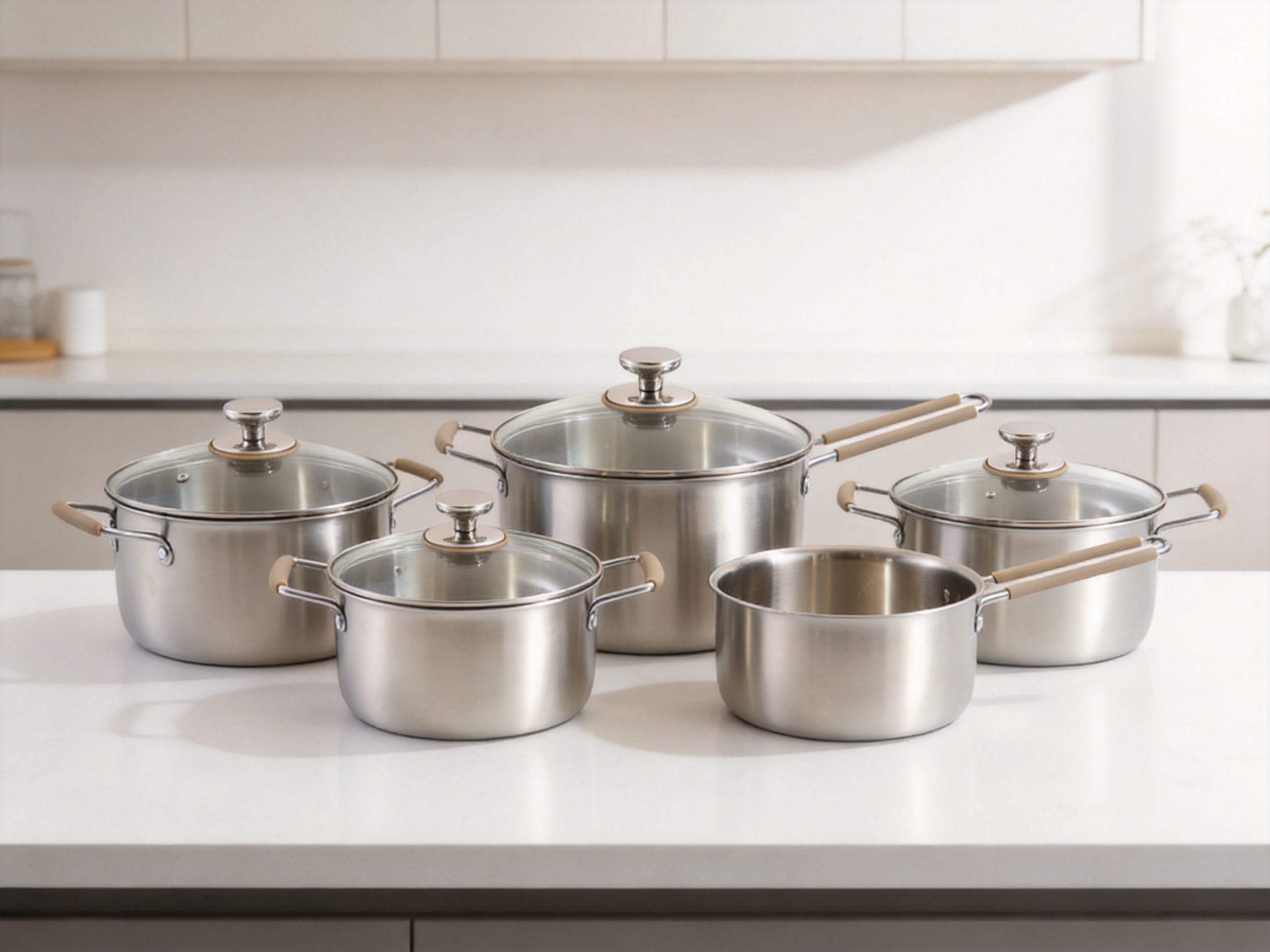
Quality-Oriented Production Considerations
Cookware quality is created through a series of production stages rather than a single operation. Material selection, forming, polishing, component fitting, handle attachment, lid production, inspection, and packaging all influence the finished product.
For stainless steel cookware, forming accuracy is important. The body must maintain a consistent shape so that the vessel sits securely on the cooking surface and the lid fits correctly. Uneven forming can create instability, poor heat contact, or gaps around the lid.
Surface finishing also influences both appearance and maintenance. A clean, consistent stainless steel surface is easier to inspect for imperfections and more attractive in retail presentation. Polishing must be balanced with practical use because a mirror-like surface can show fingerprints and water marks more readily than a brushed finish.
Handle fitting requires careful attention because the handle is a load-bearing component. It must remain secure when the vessel is filled with water or food. The connection should be checked for stability, alignment, and comfort. Silicone components should be fitted consistently so that they do not slide, twist, or expose unnecessary metal during normal use.
Lid production requires dimensional control. A glass lid that is too loose may release excessive steam or move during cooking, while one that is too tight may be difficult to remove. The rim, handle, and glass must work together to provide a secure and practical cover.
Inspection should include visual checks, dimensional checks, handle stability checks, lid fit checks, and packaging inspections. Proper packaging is especially important for glass components because damage can occur during handling and transportation even when the cookware itself is well manufactured.
A professional supply partner should also be able to communicate specifications clearly. Buyers need reliable information about material grade, available sizes, handle construction, packaging, care instructions, and any applicable certifications. Clear documentation reduces misunderstandings and helps retailers present accurate product information to customers.
Care Instructions for Long-Term Use
Proper care helps preserve the performance and appearance of stainless steel cookware. The product should be washed before first use. Hand washing is recommended because it is generally gentler on the appearance of cookware and helps preserve the finish of stainless steel and silicone components.
For routine cleaning, use hot, soapy water with a soft cloth or sponge. This is normally sufficient for food residue, light grease, and everyday cooking marks. Abrasive pads, harsh scouring materials, and aggressive cleaning methods may create scratches or dull the finish.
The product information includes a caution regarding metal or sharp cooking utensils and recommends wooden, nylon, or non-stick-safe utensils. Although stainless steel is more resistant to scratching than coated cookware, avoiding sharp tools can help maintain the surface and prevent unnecessary marks.
Do not overheat an empty pan. Empty cookware can become extremely hot very quickly, and excessive heat may discolor the surface, stress the base, or affect handle components. Preheating should be controlled, and ingredients should be added when the cookware has reached a suitable temperature.
Do not use the cookware in a microwave. Stainless steel is not microwave compatible and may cause sparks or damage to the appliance. The cookware should be used on an appropriate stovetop or cooking surface according to the product specifications.
Keep the flame or heat source within the base area. If heat extends up the sides, it can discolor the exterior and expose silicone handles or other components to unnecessary temperatures. Correct burner selection improves both safety and product longevity.
If the pan is severely overheated, turn off the cooker and allow it to cool completely. Do not attempt to move it immediately if doing so creates a burn risk, and do not apply cold water to a very hot vessel. Once cool, wash it gently and inspect it for any signs of damage.
Rainbow-colored stains may appear on stainless steel after heating. These marks are usually harmless oxide layers associated with heat, minerals in water, or cooking residues. White vinegar or a stainless steel cleaner can often help remove them. The cleaner should be used according to its instructions, followed by thorough rinsing.
Hand washing is particularly valuable when the set includes silicone handles and glass lids. A dishwasher may dull the stainless steel finish over time, affect exposed components, or cause gradual wear to handle materials. If the product is washed in a dishwasher, users should follow the supplied instructions and recognize that repeated dishwasher use may change the appearance.
Stainless Steel and Food Contact
Some consumers ask whether stainless steel cookware can release nickel or chromium into food. In very small amounts, stainless steel may release trace elements, particularly when acidic foods are cooked for extended periods. For most households, exposure levels are generally far below established safety limits when the cookware is used normally.
People with severe nickel allergies may wish to consult a qualified medical professional before using stainless steel cookware extensively, especially for long cooking times involving acidic ingredients. Individual sensitivity varies, and personal medical advice is more appropriate than a general product statement.
304 stainless steel is commonly selected for kitchen applications because it provides good corrosion resistance and durability. Higher-end cookware may use specifications such as 18/10 stainless steel, referring to approximate chromium and nickel content. The key considerations for consumers are the stated material grade, manufacturing quality, correct use, and proper care.
Stainless steel should not be confused with a non-stick surface. Food may stick if the cookware is too cool, too hot, overcrowded, or insufficiently lubricated. This is not necessarily a defect. With appropriate preheating, oil control, and temperature management, users can achieve good results while retaining the durability benefits of stainless steel.
Choosing the Right Configuration
The available size options allow the product range to serve different cooking patterns. A 16 cm saucepan is suitable for small portions, sauces, melted butter, baby food, or reheating. An 18 cm saucepan provides additional capacity for grains, soup, oatmeal, and side dishes.
A 20 cm stockpot is a practical everyday option for small families or couples. It can support pasta, vegetables, rice, soup, and general meal preparation without becoming too bulky. The 22 cm option offers more room for batch cooking, while a 24 cm stockpot is better suited to larger households and entertaining.
Retailers and distributors may choose to offer several configurations rather than one fixed combination. This allows the assortment to address different price points and household needs. It also creates opportunities for private-label collections that use consistent materials and design language across multiple capacities.
Buyers should evaluate more than diameter. Important questions include the height of the vessel, total capacity, lid compatibility, handle design, packaging dimensions, cooking surface compatibility, and local customer expectations. Clear specification sheets are essential for accurate sales descriptions and customer service.
For hospitality and food-service customers, durability and repeatability may be more important than decorative appearance. For retail consumers, visual presentation, packaging, handle comfort, and ease of cleaning may have greater influence. The product can be positioned differently depending on the target market while retaining its fundamental material and design advantages.
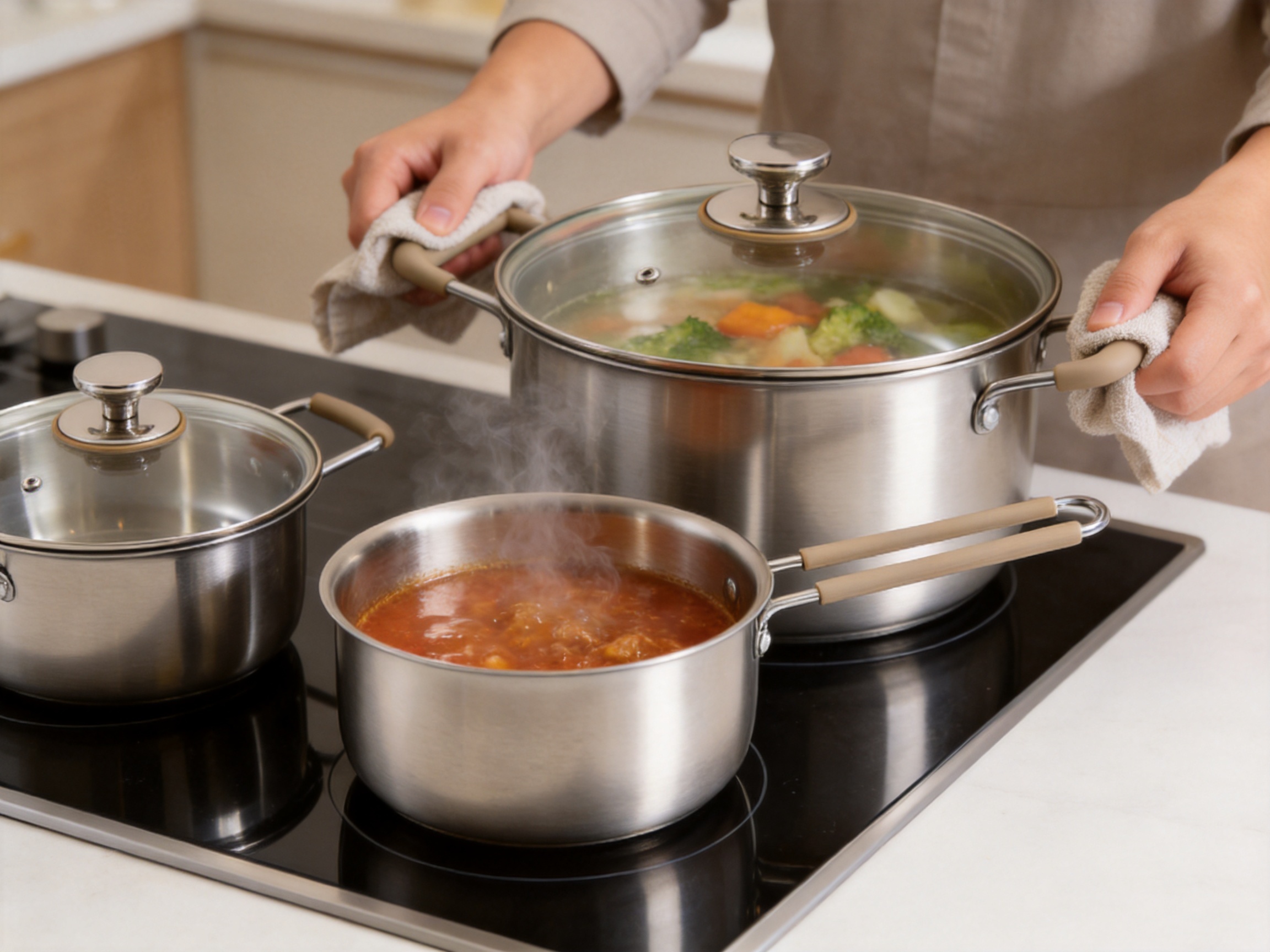
Why a Professional Supplier Matters to Buyers
Working with a professional cookware supplier can reduce risk throughout the purchasing process. Product quality is important, but so are communication, documentation, production coordination, packaging, customization, and after-sales support.
A supplier with multiple cookware categories can help buyers consolidate sourcing. Instead of communicating separately with manufacturers for aluminum, stainless steel, cast iron, and utensils, a buyer can explore a broader range through one company. This may simplify ordering and make it easier to create coordinated product collections.
OEM and ODM capabilities are useful when market requirements differ from standard products. A buyer may need a particular handle color, packaging language, size combination, logo treatment, or assortment structure. Customization can help the product stand out in a crowded marketplace and align it with a retailer’s existing brand identity.
Certification assistance is also valuable for international trade. Requirements vary according to destination country, product category, sales channel, and customer type. A supplier that understands the documentation process can help buyers identify necessary information earlier, reducing delays during product launch and shipment preparation.
Flexible MOQs can support business growth. A small business may want to test a new cookware set with a controlled order, while an established distributor may require larger volumes and recurring production. A supplier that can work with different order sizes is better positioned to support both early-stage testing and long-term expansion.
Communication about product limitations is equally important. A responsible supplier should provide accurate guidance about handle heat resistance, cleaning methods, microwave restrictions, lid care, and suitable cooking applications. Clear communication helps prevent misuse and improves customer satisfaction after purchase.
Positioning the Product for Retail and Wholesale Markets
For retail customers, the strongest selling points are durability, practical size selection, easy cooking visibility, comfortable silicone handles, and a coordinated stainless steel appearance. The set can be presented as a reliable starter collection, an upgrade from worn cookware, or a practical solution for smaller kitchens.
For wholesalers, the product offers opportunities for assortment planning. Different saucepan and stockpot sizes can be combined into multiple packages, enabling retailers to serve budget-conscious customers, couples, families, and larger households. The product may also complement frying pans, utensils, kitchen tools, and other cookware categories.
For hospitality and property-management buyers, the stainless steel construction and simple care requirements are attractive. Vacation rentals, serviced apartments, student housing, and guest accommodations often need cookware that is easy to replace, easy to explain to users, and capable of handling regular but varied use.
For private-label buyers, the product offers a base for creating a distinctive collection. Packaging, labeling, handle color, assortment selection, and marketing language can be adapted to the target market, subject to production requirements and order specifications.
The most effective product descriptions should remain accurate. Buyers should not promise unlimited oven use, dishwasher performance without qualification, or compatibility with every cooking appliance unless those features have been specifically verified. Honest descriptions build stronger trust and reduce returns.
Q&A: Common Questions About the Cookware Set
What material is the cookware made from?
The cookware is made from 304 stainless steel. This material is selected for its durability, corrosion resistance, food-contact suitability, and ability to support a wide range of cooking tasks.
What pieces are included in the set?
The product is a five-piece cookware set with glass lids. Available product information identifies saucepans in 16 cm and 18 cm sizes and stockpots in 20 cm, 22 cm, and 24 cm sizes. The exact five-piece combination should be confirmed according to the selected SKU and order specification.
Are the handles heat resistant?
The silicone handles are designed to be heat resistant, comfortable, and non-slip during normal stovetop use. They should not be exposed to uncontrolled flame, excessive heat, or temperatures beyond the product’s specified limits.
Can the cookware be used in a microwave?
No. Stainless steel cookware should not be used in a microwave. The product care instructions specifically prohibit microwave use.
Can metal utensils be used?
The care guidance recommends using wooden, nylon, or non-stick-safe utensils and avoiding metal or sharp utensils. This helps protect the surface appearance and reduces unnecessary scratching.
Is the cookware dishwasher safe?
Stainless steel cookware may technically tolerate dishwasher cleaning, but repeated dishwasher use can dull the finish and affect exposed components. Hand washing with hot, soapy water and a soft cloth or sponge is recommended to preserve appearance.
How should rainbow stains on stainless steel be removed?
Rainbow-colored heat stains are usually harmless oxide layers. A wipe with white vinegar or a suitable stainless steel cleaner may help remove them. The cookware should be rinsed and dried after cleaning.
Can the cookware be used on high heat?
The cookware can be used for normal stovetop cooking, but users should avoid overheating an empty pan and should keep the flame or heat source within the base. Moderate, controlled heat is generally better for cooking performance and product longevity.
Is this set suitable for large family gatherings?
The set is suitable for everyday cooking and moderate batch preparation. It may not replace a large stockpot for holiday meals, very large quantities of soup, whole seafood, or extended stock preparation. A separate high-capacity pot may be needed for those tasks.
What makes this set different from inexpensive cookware?
Its advantages include 304 stainless steel construction, practical size options, silicone handles, glass lids, and support from a supplier offering product development, OEM and ODM customization, certification assistance, and broader kitchenware sourcing.
Who is the set best suited for?
It is suitable for apartments, first kitchens, small households, vacation homes, rental properties, meal preparation, and consumers who want a compact but dependable cookware foundation.
Can the product be customized for private-label sales?
Zhejiang Echo Industry And Trade Co., Ltd. provides OEM and ODM services. Potential customization may include branding, packaging, colors, sizes, and assortment details, subject to technical feasibility, order quantity, and production confirmation.
Overall Value and Buying Conclusion
The 5-piece stainless steel cookware set with glass lid offers a practical combination of durability, visibility, comfort, and everyday versatility. Its 304 stainless steel construction provides a strong foundation for repeated cooking, while the silicone handles improve grip comfort and the glass lids make it easier to monitor food without releasing unnecessary heat.
The set is not intended to be everything for every kitchen. Its strength lies in providing frequently used vessels in a compact format. It is a sensible option for consumers who want to avoid clutter, buyers furnishing a first kitchen, small households, vacation properties, and businesses developing coordinated cookware collections.
Compared with basic cookware, the set benefits from thoughtful material selection and a more complete product concept. The value comes not only from the stainless steel body but also from the relationship between construction, handles, lids, sizes, care instructions, and supplier support.
For commercial buyers, Zhejiang Echo Industry And Trade Co., Ltd. adds value through its broader kitchenware portfolio, OEM and ODM capabilities, certification assistance, flexible MOQs, and ambition to operate as an R&D-oriented supply chain partner. These strengths can help importers, wholesalers, retailers, and private-label brands develop products suited to different markets.
When used correctly and cared for according to the instructions, the cookware can become a dependable part of daily meal preparation. It offers the durability of stainless steel, the convenience of glass lids, the comfort of silicone handles, and the efficiency of a carefully focused five-piece assortment.
References
1. Product specification materials for the 5-piece stainless steel cookware set with glass lid, including material, sizes, SKU information, and care instructions.
2. General technical guidance on 304 stainless steel and its common use in food-contact cookware.
3. General cookware design principles concerning layered construction, base heat distribution, rim finishing, and handle attachment.
4. General kitchen safety guidance for stovetop cookware, heat management, lid handling, and thermal shock prevention.
5. Manufacturer information concerning Zhejiang Echo Industry And Trade Co., Ltd., its cookware categories, OEM and ODM services, certification assistance, flexible MOQs, and supply chain development.
6. General consumer guidance on cleaning, maintaining, and preserving stainless steel cookware and glass cookware lids.
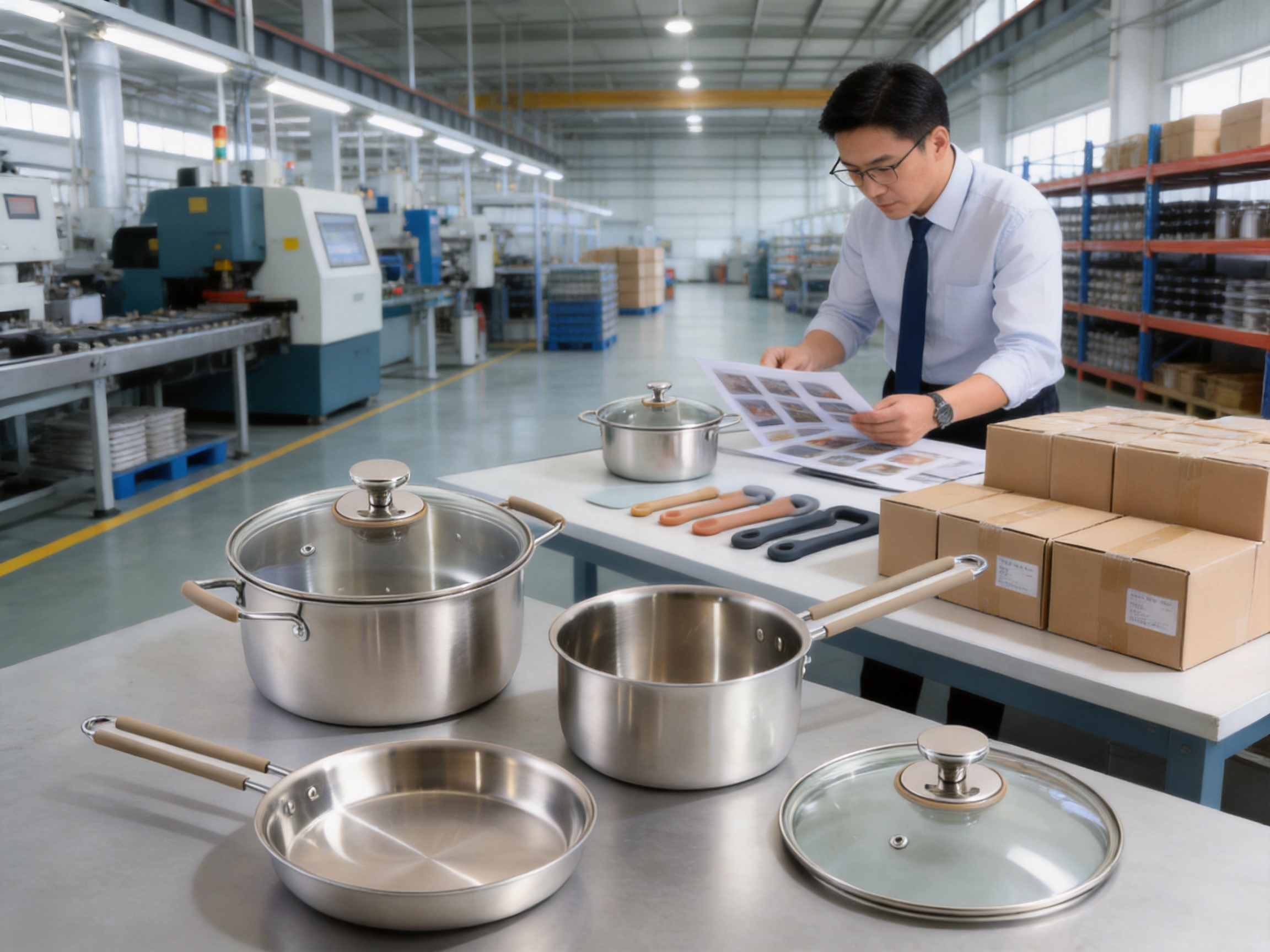
Product: 5pcs Stainless Steel Cookware Set With Glass Lid
Recommended Articles
Product Category
Related products
-
-
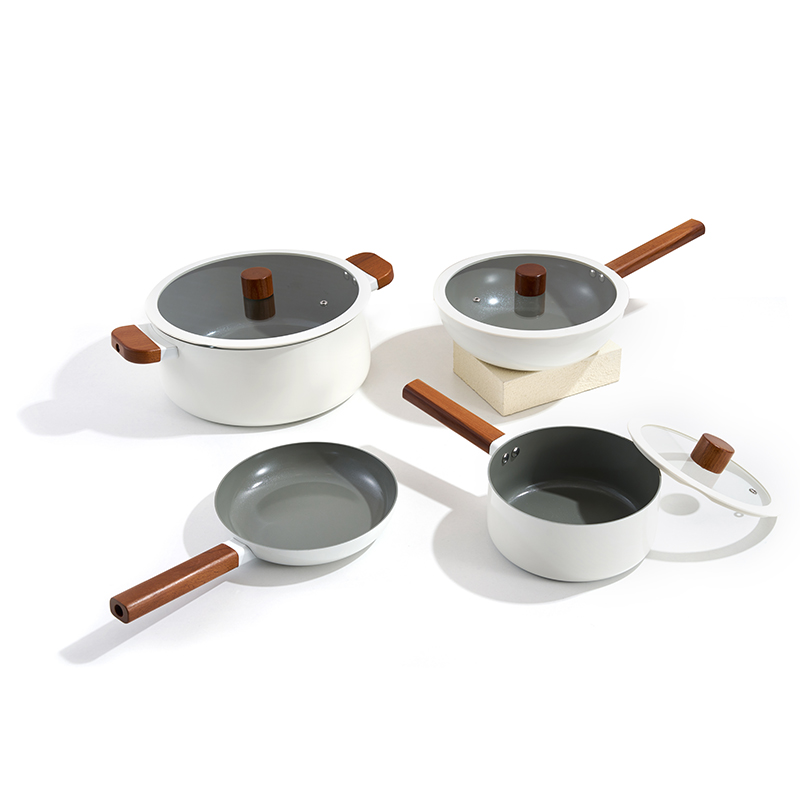
This cookware set has a ceramic non-stick inner liner, a heat-resistant wooden h...
See Details -
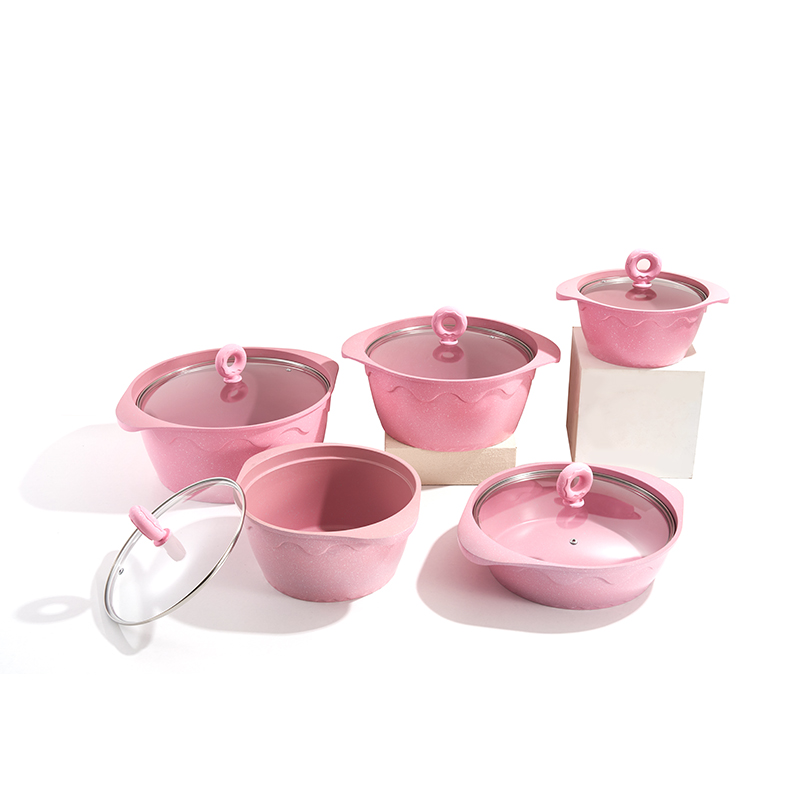
This cookware set is made of food-grade non-stick material, with a unique eye-ca...
See Details -
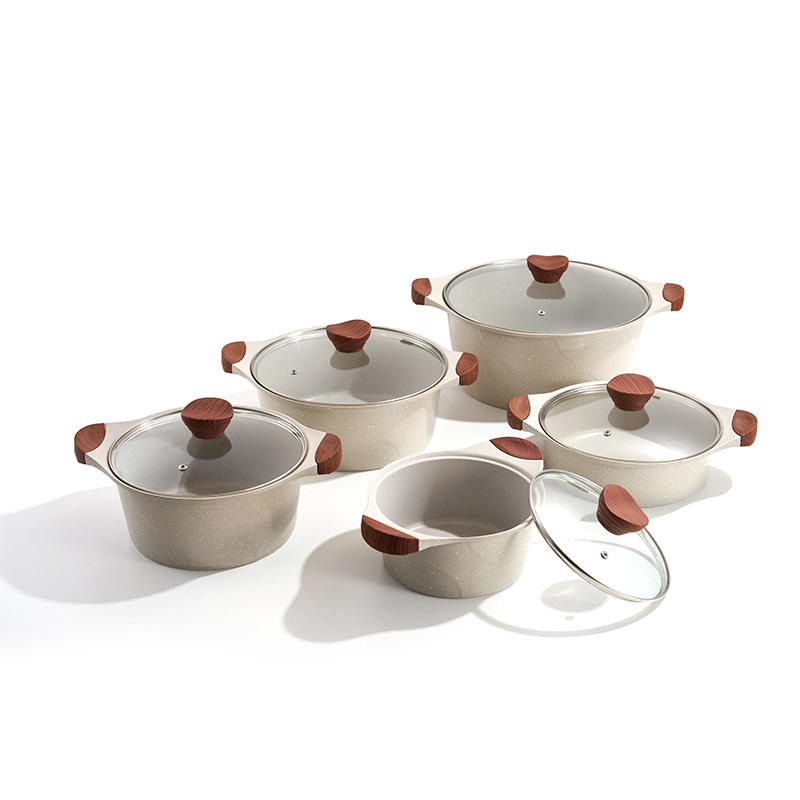
This off-white cookware set is made of wear-resistant non-stick material, with w...
See Details
Whether you're looking for bulk purchases or have any custom requirements, We are here to offer the best
solutions for you.
tiffany.zhong@echocn-trading.com
PHONE
+86-19561173975
+86-19557020621 (Hazel Wu)
ADD
Room 301, Unit 3014, No. 175 Qifeng Avenue, Wenqiao Town, Taizhou, Zhejiang, China
Fill Out the Form for More Information
Copyright © Zhejiang Echo Industry And Trade Co., Ltd.
All Rights Reserved.

China Cookware Set Manufacturer