
 en
 Español

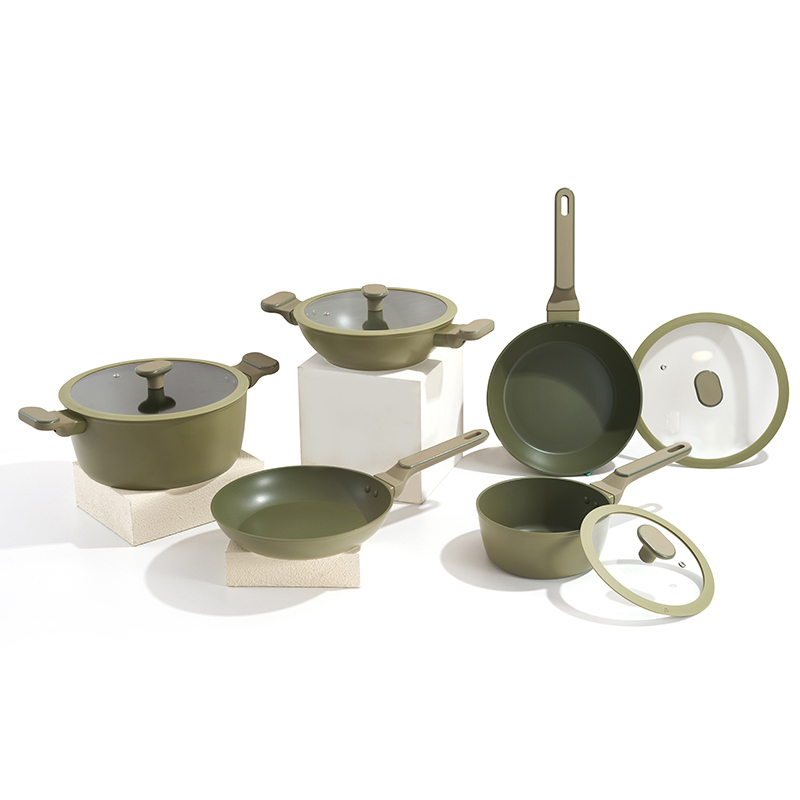
This cookware set features a non-stick coating, even heat conduction, and multi-...
See Details
Why an Enamel Iron Wok with Lid Belongs in the Modern Professional Kitchen
Date:Sep 25, 2026
Cookware buyers increasingly want one product that combines dependable cooking performance, attractive presentation, long service life, and broad compatibility. The Enamel Iron Wok with Lid answers this demand through a practical combination of cast iron construction, enamel finishing, a deep multifunctional profile, a detachable beech wood handle, and a 304 stainless steel lid knob. Designed for cooking flexibility and visual appeal, it is suitable for households, hospitality projects, cookware retailers, restaurant suppliers, and private-label programs.
Unlike lightweight pans that heat quickly but lose temperature easily, this deep iron wok is built around the thermal stability of cast iron. Unlike traditional bare cast iron, its enamel coating helps simplify cleaning and reduces concerns about corrosion and seasoning maintenance. Compared with many conventional woks, its deeper body and included lid support a wider range of cooking methods, from frying and sautéing to simmering, braising, steaming, and one-pan meal preparation.
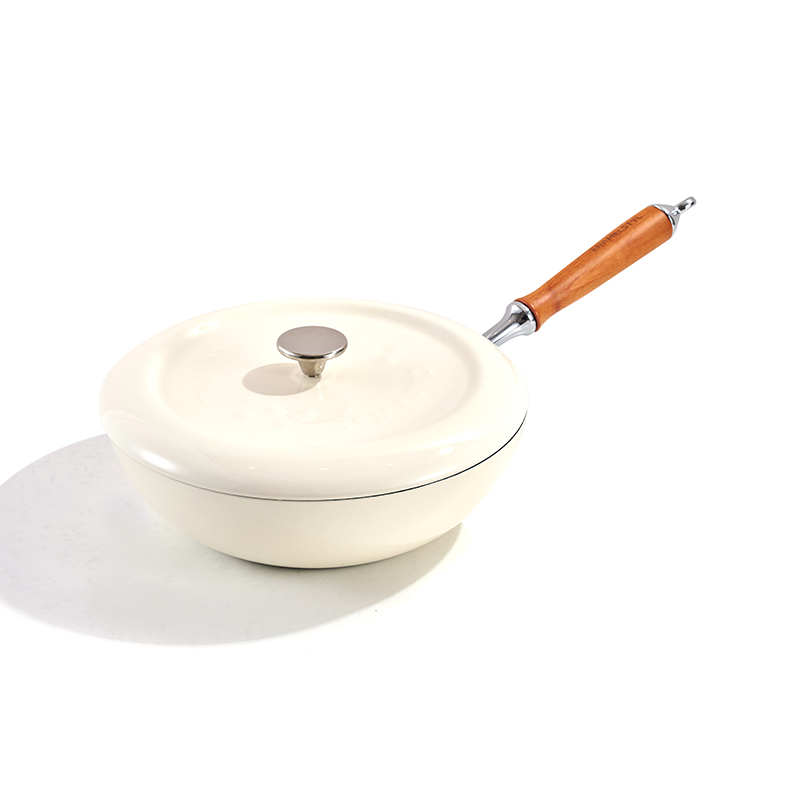
The product is supplied in a cream-white appearance that can complement modern, country-style, minimalist, and premium kitchen interiors. Its wood-grain handle adds warmth to the design, while the lid helps retain moisture, aroma, and flavor. With a capacity of approximately 4.7 liters and a diameter of 30 centimeters, it is sized for family meals and commercial menu preparation without becoming excessively large or difficult to store.
Enamel Iron Wok with Lid
Product Overview and Core Specifications
The Enamel Iron Wok with Lid is identified by SKU SC01 and belongs to the iron cookware category. Its body is made from iron with interior and exterior enamel coating. The lid uses a 304 stainless steel knob, and the detachable handle is made from beech wood. The overall product size is approximately 30 by 9.1 centimeters, with a listed capacity of 4.7 liters.
The deep-frypan-style construction gives the product more versatility than a shallow skillet. The tall sidewalls help contain ingredients, cooking liquids, sauces, and oil while reducing splashing during frying. At the same time, the rounded wok-inspired form encourages stirring and tossing. This makes the pan suitable for dishes that require both high-heat contact and sufficient space for mixing.
| Specification | Details |
|---|---|
| Product name | Enamel Iron Wok with Lid |
| SKU | SC01 |
| Category | Iron Cookware |
| Color | White or cream enamel appearance |
| Material | Iron body with interior and exterior enamel coating |
| Lid knob | 304 stainless steel |
| Handle | Detachable beech wood handle |
| Product size | Approximately 30 × 9.1 cm |
| Capacity | Approximately 4.7 liters |
| Net weight | Approximately 2.3 kg |
| Gross weight | Approximately 2.8 kg |
| Carton quantity | 4 units per carton |
| Minimum order quantity | 1,000 units |
The approximately 2.3-kilogram net weight reflects the dense construction needed for heat retention while remaining manageable for everyday cooking. The gross weight of approximately 2.8 kilograms includes the product’s packaging materials and accessories. Four units are packed per carton, with a listed carton size of approximately 34.5 by 17.5 by 54.5 centimeters and a carton volume of approximately 0.0329 cubic meters.
Cast Iron Heat Performance
The main functional advantage of this wok is its iron construction. Cast iron is valued because it absorbs and stores heat rather than responding instantly to every change in the heat source. Once fully heated, the pan can maintain a stable cooking environment, which is helpful when adding cold ingredients, searing meat, frying vegetables, or reducing sauces.
Stable heat is particularly valuable in deep-frying and stir-frying. When food is added to a pan, the cooking temperature often drops. A lightweight pan may recover quickly but can fluctuate substantially, while a dense iron pan can provide a more consistent thermal base. This helps ingredients brown more evenly and can support better texture development.
The heavy body also distributes heat across a broad cooking surface. Although users should always preheat gradually and avoid overheating an empty pan, the thermal mass of the iron body supports steady cooking once the pan has reached the desired temperature. This characteristic can be especially useful for professional kitchens that prepare repeated batches of food.
Heat retention also allows the wok to move from the stovetop to the table with less rapid cooling than thinner cookware. The cream enamel surface gives the product a serving-friendly appearance, making it suitable for presenting braised dishes, curries, rice meals, hot pot-style recipes, and family-sized preparations directly at the dining table.
Cooking Applications
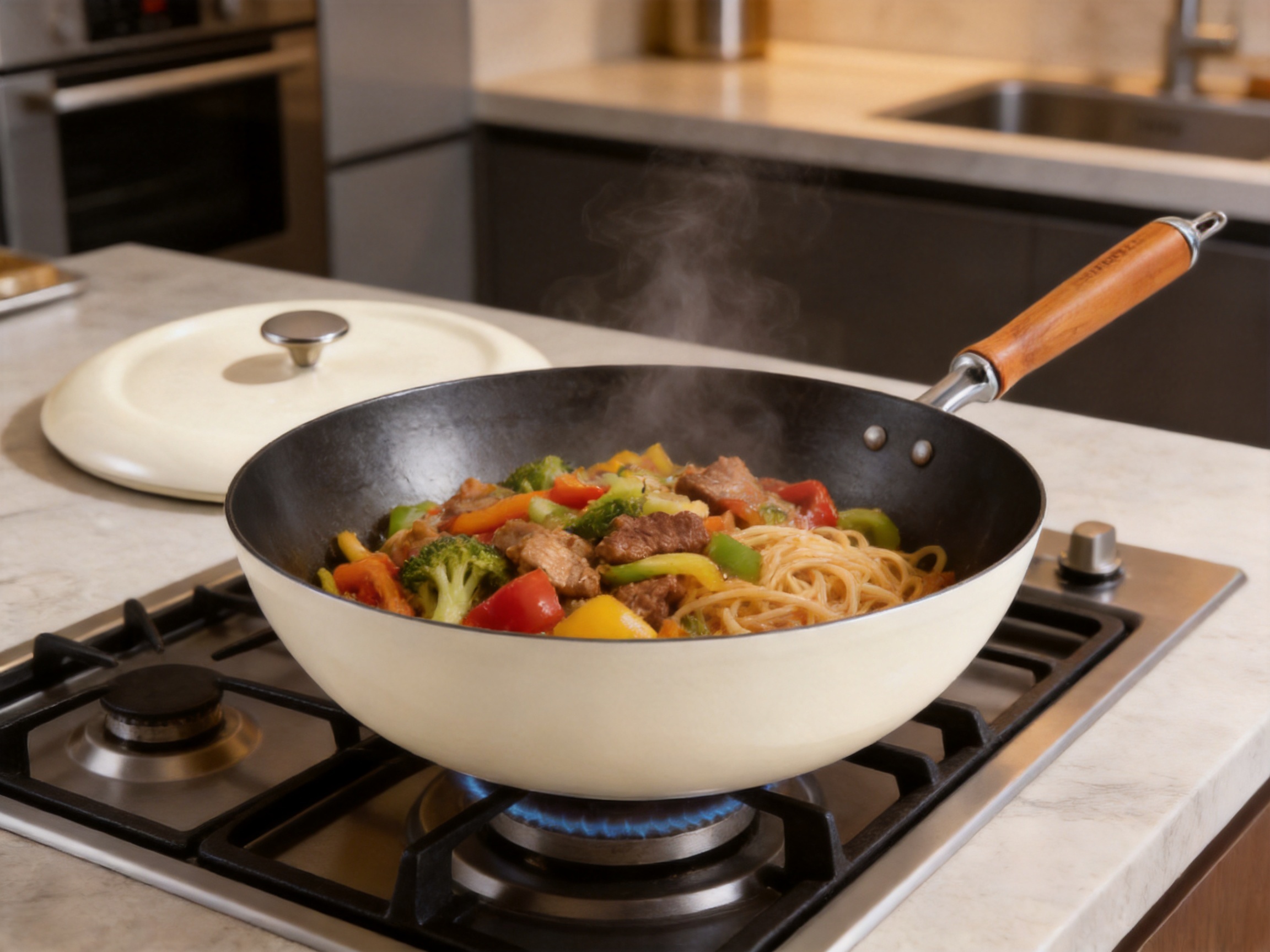
The product’s deep profile supports several common cooking techniques. It can be used for stir-frying vegetables, meat, seafood, and noodles; shallow-frying cutlets and dumplings; deep-frying smaller food portions; simmering sauces; braising meat; preparing soups and stews; and cooking one-pot meals. The included lid expands its usefulness by retaining steam and helping ingredients cook through evenly.
For stir-frying, users can preheat the pan gradually, add a suitable amount of oil, and cook ingredients in batches when necessary. The high sides create space for tossing or stirring without allowing food to spill easily. For braising, the lid slows moisture loss and helps maintain a controlled cooking environment. For simmering, the dense body helps maintain a steady temperature after the liquid has reached the desired heat.
The 4.7-liter capacity offers a useful middle ground. It is larger than many individual skillets but smaller and easier to manage than oversized stockpots. It can serve families, small food-service operations, cooking demonstrations, and menu preparation where a flexible pan is more convenient than using several specialized vessels.
Enamel Coating: Practicality, Appearance, and Maintenance
The interior and exterior enamel coating differentiates this product from uncoated cast iron cookware. Enamel creates a smooth glass-like surface that is easier to wipe and wash than rough iron. It also helps protect the underlying iron from direct exposure to moisture and food acids, which can be valuable when preparing tomato-based sauces, wine reductions, fruit-based dishes, or other acidic recipes.
Traditional bare cast iron often requires regular seasoning. Seasoning can provide a naturally protective cooking surface, but it also requires ongoing attention, careful drying, and sometimes repeated oiling. An enamel-coated interior reduces this maintenance burden for users who want cast iron heat performance without a dedicated seasoning routine.
The light cream color provides a clean and premium visual impression. It can help the cookware stand out in retail displays, showroom kitchens, lifestyle photography, and hospitality settings. Because the exterior is also enamel-coated, the product can function as both a cooking tool and a serving piece. The appearance is more decorative than that of many basic black or unfinished iron pans.
Enamel is durable when used correctly, but it should not be treated as indestructible. Metal utensils, sharp tools, sudden thermal shock, and severe overheating may damage the coating. The recommended care approach is to use wooden, nylon, or other non-abrasive utensils, wash with hot soapy water, and use a soft cloth or sponge.
Advantages Over Conventional Bare Iron Woks
A bare iron wok can offer excellent heat retention, but it may require more maintenance. Moisture left on the surface can contribute to rust, and highly acidic recipes may affect the seasoning layer. The enamel-coated version helps address these concerns while preserving the thermal benefits associated with a dense iron body.
The enamel finish also provides a more consistent appearance from unit to unit. This is important for retailers and hospitality buyers who want a coordinated product range. A standardized cream exterior can be integrated into a wider kitchen collection and can support premium packaging, merchandising, and gift-oriented sales.
Advantages Over Lightweight Nonstick Cookware
Lightweight nonstick pans are convenient, but they may lose heat quickly when cold ingredients are added. Their coatings can also be vulnerable to high temperatures, abrasive cleaning, and sharp utensils. The Enamel Iron Wok with Lid offers a heavier, more heat-stable alternative for users who prioritize searing, browning, frying, and oven-compatible cooking.
The product is not intended to replace every nonstick pan. Delicate foods such as eggs or thin crepes may still be easier in a purpose-designed nonstick skillet. However, for robust cooking, high-heat preparation, sauce-based meals, and dishes requiring strong heat retention, the enamel iron construction provides a distinct advantage.
Advantages Over Stainless Steel Woks
Stainless steel cookware is valued for its corrosion resistance, polished appearance, and relatively low weight compared with cast iron. However, stainless steel alone does not have the same heat-retention profile as a dense iron body. Food may stick if the pan is not preheated and oiled correctly, and thin stainless steel can develop hot spots depending on its construction.
This wok combines the corrosion-resistant and easy-care benefits of an enamel surface with the thermal mass of iron. The 304 stainless steel knob adds a corrosion-resistant component at a point that users handle frequently. In this sense, the product is not simply an iron pan; it is a coordinated material system in which each material serves a different function.
Lid Design and One-Pan Functionality
The included lid increases the range of recipes that can be prepared in the wok. Without a lid, a deep pan is mainly used for frying, sautéing, and open simmering. With a lid, it can retain steam, reduce evaporation, keep food warm, and help finish ingredients after browning.
A covered cooking stage is useful for dishes such as braised chicken, curry, vegetable stews, rice-based meals, and saucy noodles. The lid can also help reduce splashing during simmering. When used for frying, the lid should be handled carefully because steam and hot oil may create burn risks. Users should lift it away from the body and allow excess condensation to drain into the pan rather than onto a work surface.
The stainless steel knob is designed to provide a secure grip and a durable contact point. Stainless steel is widely used in cookware hardware because it resists ordinary kitchen moisture and supports a clean, professional appearance. Buyers should still use caution because the knob can become hot during oven or stovetop cooking.
The one-pan concept is commercially attractive because many consumers want to reduce the number of cookware items in their kitchens. A single deep pan that can fry, sauté, braise, simmer, and serve can make meal preparation more efficient. For small apartments, vacation homes, compact catering operations, and starter kitchen collections, multifunctionality can be a major purchasing factor.
Detachable Beech Wood Handle
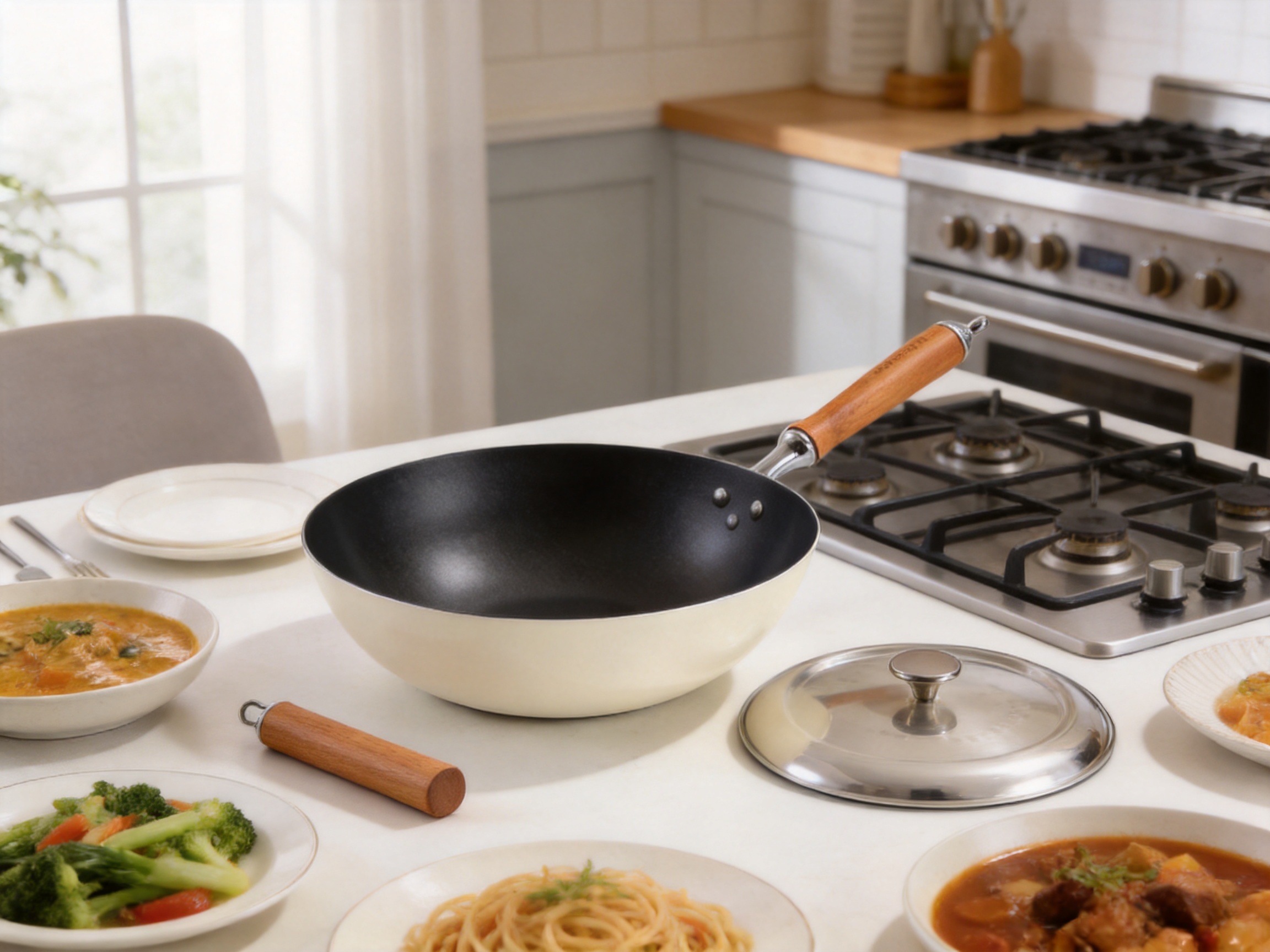
The detachable beech wood handle contributes both functional and aesthetic value. Wood has a naturally warm appearance and can make a heavy iron product feel more approachable. The wood-grain look contrasts with the smooth cream enamel and gives the cookware a lifestyle-oriented character that can appeal to consumers seeking a less industrial appearance.
Because the handle is detachable, the product may be easier to store than a wok with a permanently extended handle. A removable handle can also support more efficient packaging and may make it easier to place the pan in an oven, depending on the cooking configuration and the user’s instructions. Before oven use, the handle should be removed if the manufacturer’s operating instructions require it, and the user should confirm that all components intended for oven use are properly rated.
The handle must be kept away from direct flame, intense radiant heat, and prolonged contact with hot cookware. Wood can absorb moisture and should not be soaked for extended periods. It should be cleaned according to the care guidance supplied with the product and allowed to dry fully before storage.
From a product-development perspective, a detachable handle creates opportunities for future variations. Buyers may consider alternate handle colors, handle materials, logo placement, or coordinated accessories for private-label programs. Such customization should be confirmed with the supplier during the quotation and sample-development process.
Compatibility with Different Heat Sources
The product is described as compatible with various heat sources, including gas cookers and ovens. This broad compatibility increases its usefulness in different kitchen environments. Gas users can benefit from the iron body’s ability to retain heat, while oven users can use the wok for covered finishing, baking-style preparations, or slow cooking when the relevant components are removed or installed as instructed.
Users should always center the pan on the burner and ensure that the flame does not extend beyond the base. A flame extending up the sides can heat the enamel and handle area unnecessarily and may create a safety risk. On electric or other heating surfaces, the base should be kept clean and lifted rather than dragged to reduce the possibility of scratching the cooking surface.
Although the product is suitable for oven use according to the supplied description, the wooden handle and any other heat-sensitive components require particular attention. The handle should be detached if necessary. The lid knob may become extremely hot in an oven, so heat-resistant gloves should be used. The microwave is not suitable for this product because it contains iron and stainless steel components.
Sudden temperature changes should be avoided. Placing a hot pan directly into cold water or transferring a cold enamel pan to very high heat can create thermal stress. Gradual heating and cooling help preserve the enamel finish and extend the useful life of the cookware.
Manufacturing Strengths and Process Considerations
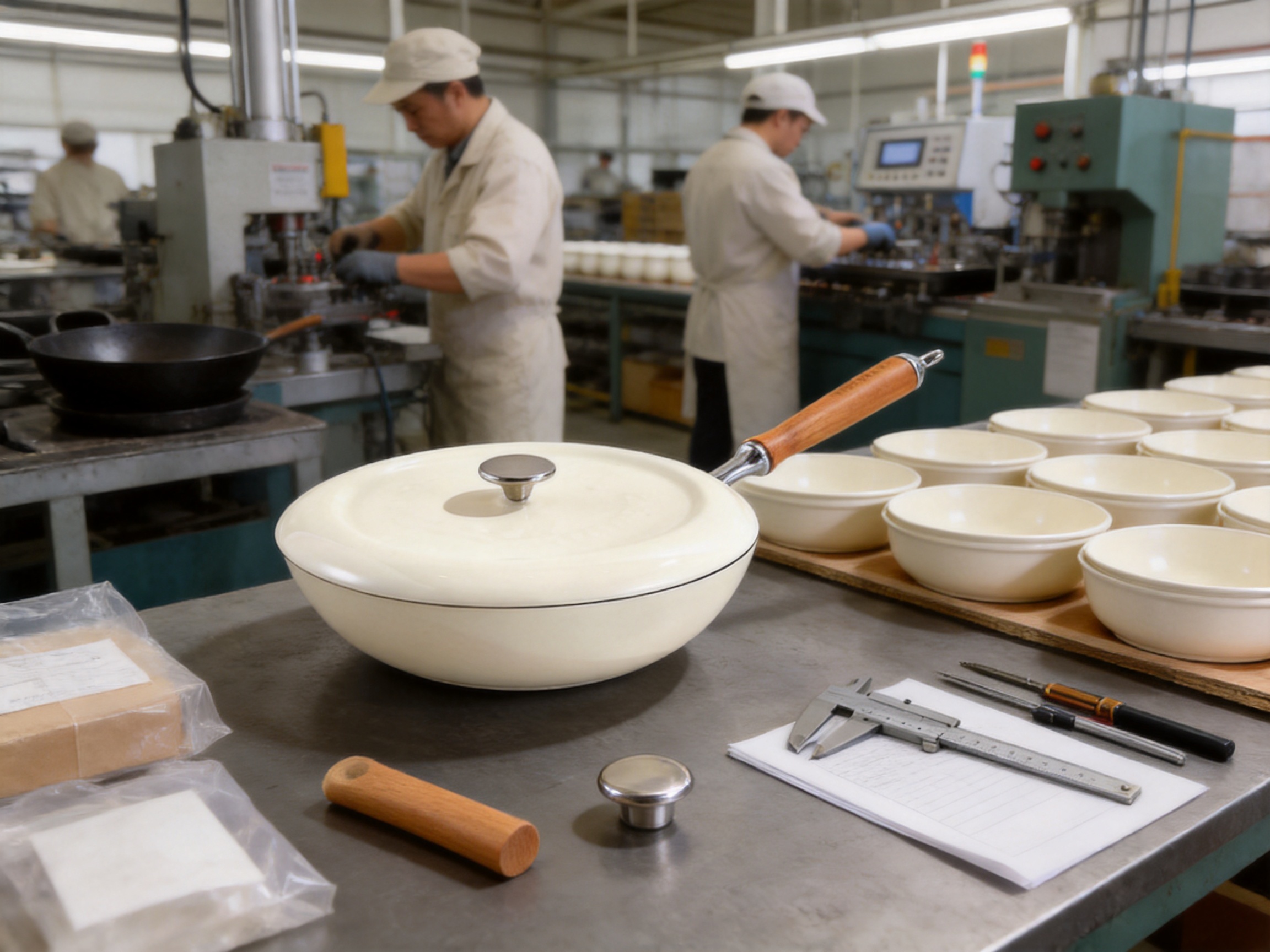
A high-quality enamel iron wok depends on more than its basic material list. The performance of the finished product is influenced by the control of casting, surface preparation, enamel application, curing, hardware assembly, inspection, and packaging. A professional cookware supplier must coordinate these stages carefully to deliver stable results across production batches.
Iron Body Formation
The process begins with forming the iron body in a mold designed to achieve the required diameter, depth, wall profile, base geometry, and handle connection area. Consistent mold design is important because dimensional variation can affect lid fit, packaging, cooking balance, and compatibility with heat sources.
After the body is formed, excess material and visible irregularities can be removed through finishing operations. The rim and base require particular attention. A smooth rim supports comfortable lid placement and helps reduce chipping risks, while a stable base allows the wok to sit securely on the cooking surface.
Quality control at this stage may include visual inspection, dimensional checks, weight checks, and examination for casting defects. The listed net weight of approximately 2.3 kilograms provides a useful production reference, although acceptable tolerances should be defined in the supplier’s technical specifications and approved sample.
Surface Preparation
Enamel performance depends heavily on the condition of the iron surface before coating. The body must be cleaned and prepared so that the coating can adhere evenly. Dust, oil, loose particles, and residues can create pinholes, uneven coverage, bubbles, or areas of poor adhesion if they are not properly controlled.
Professional production may involve mechanical cleaning, controlled surface treatment, and inspection before the enamel layer is applied. The objective is to create a consistent foundation for both the interior and exterior surfaces. Buyers evaluating a supplier should request information about surface preparation, coating thickness control, curing conditions, and inspection criteria.
Enamel Application and Curing
The cream enamel finish must be applied evenly to the interior and exterior of the pan. Consistency in color, coverage, gloss, and edge treatment is important for both performance and appearance. The enamel must then be cured under controlled conditions so that it develops the required hardness and adhesion.
A supplier with organized process control can reduce problems such as uneven color, exposed metal, excessive coating at the rim, surface bubbles, and small inclusions. Sample approval is especially important for custom colors or private-label projects because the visual result may vary according to lighting, production conditions, and the buyer’s reference standard.
Coating inspection may include visual examination under suitable lighting, checking for obvious defects, assessing the rim and handle area, and confirming that the lid sits correctly after coating. More advanced quality systems may also use process records and batch traceability to connect finished goods with production dates and inspection results.
Hardware and Handle Assembly
The 304 stainless steel knob and detachable beech wood handle require separate material and assembly controls. The knob should be securely attached to the lid and checked for looseness. The wooden handle should be inspected for surface quality, smooth finishing, correct dimensions, and reliable attachment to the cookware body.
Because the handle is detachable, the connection system should be evaluated for ease of installation, secure use, and repeatability. A handle that is too difficult to attach can reduce customer satisfaction, while a connection that is loose or inconsistent can create a safety concern. Assembly checks should therefore be performed during production and before final packing.
Final Inspection and Packaging
Final inspection should confirm the product’s appearance, dimensions, components, lid fit, handle attachment, and general cleanliness. Packaging is also important because enamel surfaces can be damaged by impact or friction during transportation. Individual protection around the pan, lid, knob, and handle can help reduce contact damage.
The listed carton configuration of four units per carton supports wholesale distribution while keeping the package quantity manageable. With a carton volume of approximately 0.0329 cubic meters, buyers can estimate warehouse requirements, shipping arrangements, and container planning. Exact shipping calculations should be confirmed against the final approved packaging design because inserts and protective materials can affect outer dimensions.
Supplier Capabilities for Global Buyers
The supplier behind this product is Zhejiang Echo Industry And Trade Co., Ltd., based in Taizhou, Zhejiang, China. Zhejiang is widely recognized as an important manufacturing and export region for household goods, cookware, hardware, and related products. A supplier operating in this environment can benefit from access to component makers, packaging resources, logistics providers, and supporting manufacturing services.
The company presents itself as a professional kitchenware supplier offering aluminum cookware, stainless steel cookware, cast iron cookware, and kitchen utensils. This product range can be valuable to importers because it supports one-stop sourcing. Instead of managing separate suppliers for every material category, buyers may consolidate product development, sampling, packaging discussions, and shipment planning through one kitchenware partner.
The company also emphasizes OEM and ODM services. OEM production is useful when a buyer has an established design, brand identity, or packaging system and needs a manufacturing partner to produce it. ODM support can be helpful when the buyer wants to select from existing product platforms while adapting details such as color, handle style, packaging, logo placement, or accessory combinations.
Flexible sourcing services can be especially important for small and medium-sized businesses. A minimum order quantity of 1,000 units is substantial enough for commercial distribution but may still be more accessible than the quantities required by very large factories. Buyers should confirm whether the MOQ applies per color, per design, per logo treatment, or per complete order.
Product Development and Customization
For this wok, potential customization areas may include exterior color, enamel finish, handle treatment, packaging artwork, instruction materials, carton markings, and private-label branding. Any modification should be evaluated for its effect on cost, lead time, minimum order quantity, testing, and production consistency.
Professional development normally begins with a reference sample or technical drawing. The buyer and supplier can then confirm critical dimensions, capacity, weight, lid fit, handle attachment, surface appearance, and packaging requirements. A pre-production sample is recommended before mass manufacturing, especially when the product is intended for retail sale under a new brand.
Certification and Compliance Assistance
The company describes its services as including product certification assistance. Certification requirements vary by destination market and may depend on materials, food contact regulations, labeling rules, packaging, and retailer policies. Buyers should identify their target markets at the beginning of the project and ask for documentation relevant to those markets.
Potential documentation may include material declarations, food-contact test reports, coating-related test results, packaging information, inspection records, and product-use instructions. The precise requirements should be determined by the importer’s compliance team, legal adviser, testing laboratory, or local authorities rather than assumed from a general product description.
Quality and Performance Advantages Over Competitors
The product’s strongest competitive position comes from its combination of features rather than from one isolated specification. Many competing products may offer cast iron heat retention, but not all include an enamel finish, a lid, a detachable wood handle, and a premium light-colored appearance. Other products may be attractive but lack the thermal stability of iron. This wok brings these qualities together in one coordinated design.
| Comparison factor | Enamel Iron Wok with Lid | Basic bare iron wok | Lightweight nonstick wok | Thin stainless steel wok |
|---|---|---|---|---|
| Heat retention | High due to dense iron body | High | Usually moderate | Usually moderate to low |
| Surface maintenance | Enamel surface simplifies cleaning | Requires seasoning and careful drying | Generally easy but coating-sensitive | Generally easy but may show stains |
| Acidic food suitability | Enamel helps isolate food from bare iron | Requires more care | Usually suitable within coating limits | Generally suitable |
| High-heat robustness | Strong, with correct use | Strong | Depends on coating limits | Depends on construction |
| Serving appearance | Decorative cream enamel finish | Usually utilitarian | Varies by model | Often polished or industrial |
| Lid included | Yes | Not always | Not always | Not always |
| Handle feature | Detachable beech wood handle | Often fixed metal or iron | Often fixed heat-resistant handle | Often fixed metal handle |
This comparison is not intended to suggest that one material is suitable for every cooking task. Instead, it shows why the product can occupy a distinctive market position. It appeals to buyers looking for cast iron performance with easier maintenance and stronger visual differentiation than a plain iron wok.
The lid is another important competitive advantage. Retailers can present the product as a complete cooking solution rather than as an open pan that requires an additional accessory. The complete set may increase perceived value and make the product more suitable for gifting, wedding registries, housewarming promotions, and premium cookware collections.
The detachable wood handle also helps the product stand apart visually. Many deep iron pans rely on plain metal handles, while the wood element introduces a furniture-like, lifestyle-oriented detail. This can be effective in retail environments where cookware is displayed as part of a broader kitchen aesthetic rather than only as a technical tool.
Care Instructions for Long-Term Use
The pan should be washed before first use. Hand washing is recommended to help preserve the appearance of the enamel and the wooden handle. After cooking, allow the product to cool before washing. Do not place a very hot pan directly into cold water, as sudden temperature changes can stress the enamel.
Use hot, soapy water with a soft cloth or sponge. Avoid metal scouring pads, abrasive powders, sharp scrapers, and harsh cleaning tools. Do not use metal or sharp cooking utensils. Wooden, nylon, silicone, or other suitable non-abrasive utensils are preferable.
Do not overheat the pan while it is empty. Empty cookware can become extremely hot in a short time, and excessive heat may damage the enamel, discolor components, or create a hazardous handling situation. Keep the flame or heat source within the base area and do not allow it to extend up the sides.
If the pan severely overheats, turn off the cooker and leave the pan in place until it has cooled completely. Do not attempt to move it immediately, add cold water, or handle the lid and knob without protection. Once cool, inspect the cookware for visible damage before using it again.
The product must not be used in a microwave because it contains iron and stainless steel. The wooden handle should be kept dry and protected from prolonged soaking. Before storage, ensure that the pan, lid, and handle are completely dry. Store the lid in a way that allows airflow when possible, particularly in humid environments.
Retail, Hospitality, and Private-Label Opportunities
For retailers, the product offers several selling points that can be communicated clearly on packaging and product pages: cast iron heat retention, enamel-assisted maintenance, included lid, multifunctional cooking profile, attractive cream color, and detachable wood handle. These features can support positioning in premium kitchenware, wedding gift, home entertaining, and lifestyle cooking categories.
For hospitality buyers, the wok can support table presentation as well as back-of-house cooking. Its deep form is suitable for shared dishes, braised recipes, and family-style service. The appearance may be particularly suitable for restaurants that emphasize open-kitchen presentation, rustic cuisine, modern farmhouse styling, or visually coordinated tableware.
For private-label buyers, the product provides a foundation for a differentiated cookware program. Packaging can explain the advantages of enamel-coated iron while presenting clear care instructions. A coordinated color family could be developed across frying pans, casseroles, saucepans, and kitchen utensils if the buyer wants to create a broader product collection.
The minimum order quantity of 1,000 units should be considered in relation to sales channels and launch plans. Buyers may divide inventory among online sales, distributor networks, retail stores, and promotional campaigns. Because the product is relatively substantial and requires protective packaging, logistics costs and warehouse handling should be included in the landed-cost calculation.
Recommended Buyer Evaluation Checklist
Before placing a bulk order, buyers should request and approve a complete product sample. The sample should be checked for overall appearance, enamel consistency, pan balance, lid fit, handle attachment, knob security, product dimensions, and actual capacity. Any cosmetic reference standard should be documented with photographs or approved samples.
Buyers should also confirm the final packaging configuration. Important points include individual protection, carton strength, inner separators, barcode placement, warning labels, care instructions, language requirements, and carton markings. Since enamel products can be vulnerable to impact damage, packaging validation is especially important.
Commercial discussions should clarify the production lead time, sample lead time, payment terms, inspection procedures, acceptable quality limits, replacement policy, spare components, and shipping terms. If the product will be sold under a private label, logo application and packaging artwork should be approved in writing before mass production.
Market-specific compliance should be addressed early. Importers should determine whether their destination requires food-contact testing, chemical restrictions, labeling statements, packaging regulations, or other documentation. A supplier can assist with documentation and testing coordination, but the importer remains responsible for confirming the requirements applicable to its market and sales channels.
Frequently Asked Questions
What is the main advantage of this enamel iron wok?
Its principal advantage is the combination of dense iron heat retention and an enamel-coated surface that is easier to maintain than traditional bare cast iron. The included lid, deep profile, and detachable wood handle further expand its functionality.
Is the product a traditional cast iron wok?
It is an iron deep wok or deep-frypan-style product with interior and exterior enamel coating. Its cooking behavior is associated with dense iron cookware, while the enamel surface provides a smoother, more decorative, and easier-care finish.
Can acidic foods be prepared in the wok?
The enamel coating is designed to provide a barrier between the food and the underlying iron, making the product more suitable for acidic recipes than bare, uncoated iron. Users should still follow the care instructions and avoid damaging the enamel with sharp or metal tools.
Can it be used in an oven?
The product is described as oven-compatible. However, the detachable beech wood handle may need to be removed before oven use, and the lid knob can become hot. Users should follow the final product instructions and use appropriate heat protection.
Can it be used in a microwave?
No. The product contains iron and stainless steel components and must not be placed in a microwave.
Is the handle permanently attached?
No. The product uses a detachable beech wood handle. The connection should be checked before use, and the handle should be kept away from direct flame and excessive heat.
What utensils should be used?
Wooden, nylon, silicone, or other suitable non-abrasive utensils are recommended. Metal and sharp utensils should be avoided because they may scratch or damage the enamel surface.
How should the wok be cleaned?
Allow the cookware to cool, then wash it by hand with hot soapy water and a soft cloth or sponge. Abrasive cleaners, metal scouring pads, and harsh scraping tools should not be used.
Does the pan require seasoning?
The enamel coating reduces the need for the traditional seasoning routine associated with bare cast iron. Regular hand washing, thorough drying, and careful temperature management are still important.
What is the product capacity?
The listed capacity is approximately 4.7 liters. Actual usable capacity may vary depending on the recipe and the amount of space required to prevent splashing or overflow.
What is the minimum order quantity?
The listed minimum order quantity is 1,000 units. Buyers should confirm whether this quantity applies to one color, one design, one packaging configuration, or a combined order.
How many units are packed in one carton?
The listed carton quantity is four units. The listed carton size is approximately 34.5 by 17.5 by 54.5 centimeters, with a volume of approximately 0.0329 cubic meters.
Can the color or packaging be customized?
The supplier offers OEM and ODM services, so customization may be possible. Buyers should confirm color availability, logo methods, packaging artwork, tooling, testing, lead time, and any additional minimum order requirements before development.
Who is the product suitable for?
It is suitable for household users, cookware retailers, hospitality businesses, kitchenware distributors, private-label brands, and buyers seeking multifunctional iron cookware with a premium appearance.
Conclusion
The Enamel Iron Wok with Lid is designed for buyers who want more than a basic frying pan. Its iron body provides substantial heat retention, while the enamel coating offers a smoother and more decorative alternative to bare cast iron. The deep 4.7-liter profile supports a broad range of recipes, and the lid turns the pan into a more complete cooking system for frying, sautéing, braising, simmering, and serving.
The cream finish, detachable beech wood handle, and stainless steel knob give the product a distinctive appearance that can compete effectively in premium cookware categories. Its combination of performance and presentation may appeal to consumers who want durable cookware that can move from the stovetop to the dining table.
For commercial buyers, the product is supported by a supplier offering multiple cookware categories, OEM and ODM services, certification assistance, flexible sourcing, and one-stop kitchenware solutions. Careful sample approval, packaging validation, market-specific compliance checks, and clear production specifications will help buyers achieve consistent results in larger orders.
When used and maintained correctly, this enamel iron wok can serve as a durable, versatile, and visually appealing centerpiece for a modern cookware collection. It offers a practical balance between traditional iron cooking performance and contemporary expectations for convenience, design, and product differentiation.
References
1. Product specification sheet for Enamel Iron Wok with Lid, SKU SC01.
2. Supplier-provided product information for iron cookware, enamel coating, handle construction, capacity, packaging, and care instructions.
3. General cookware material guidance concerning cast iron heat retention, enamel surfaces, stainless steel hardware, and wooden handle care.
4. General food-contact cookware evaluation principles for enamel-coated metal products.
5. General packaging and quality-control principles for export cookware, including dimensional inspection, surface inspection, component assembly, and protective packing.
Product: Enamel Iron Wok with Lid
Recommended Articles
Product Category
Related products
-
-
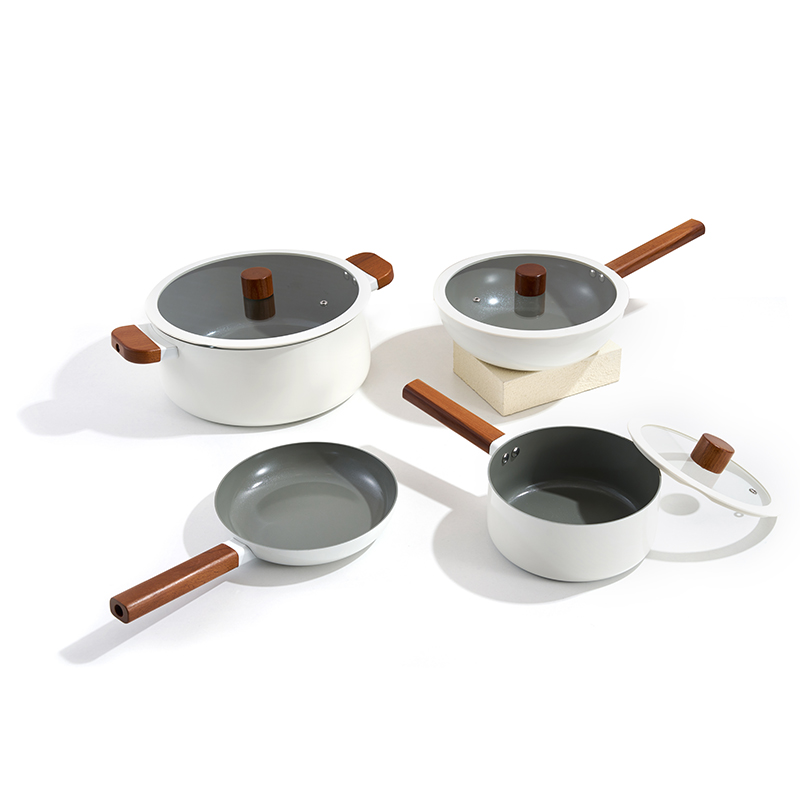
This cookware set has a ceramic non-stick inner liner, a heat-resistant wooden h...
See Details -
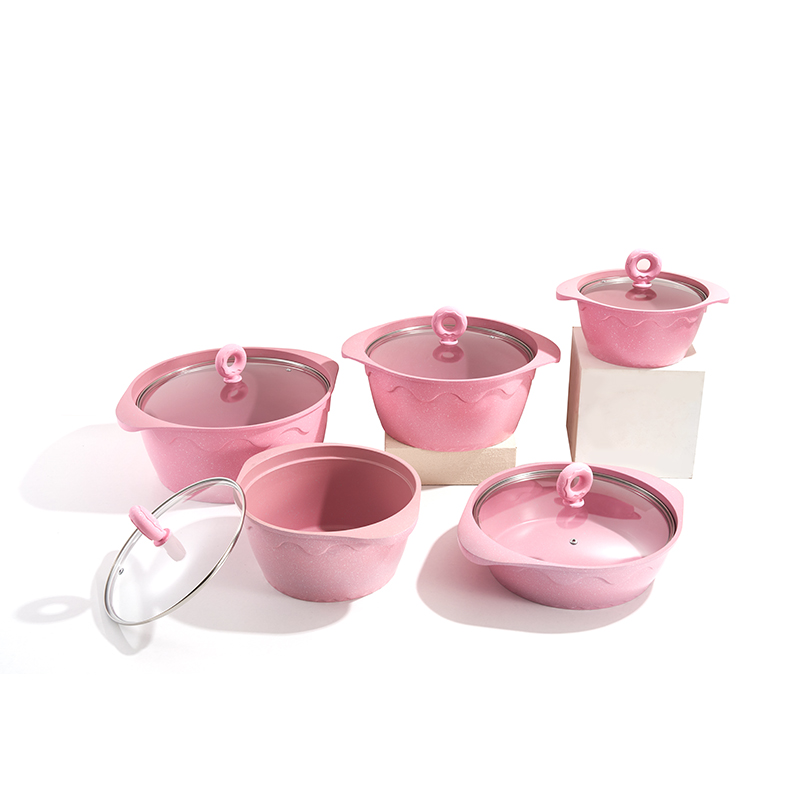
This cookware set is made of food-grade non-stick material, with a unique eye-ca...
See Details -
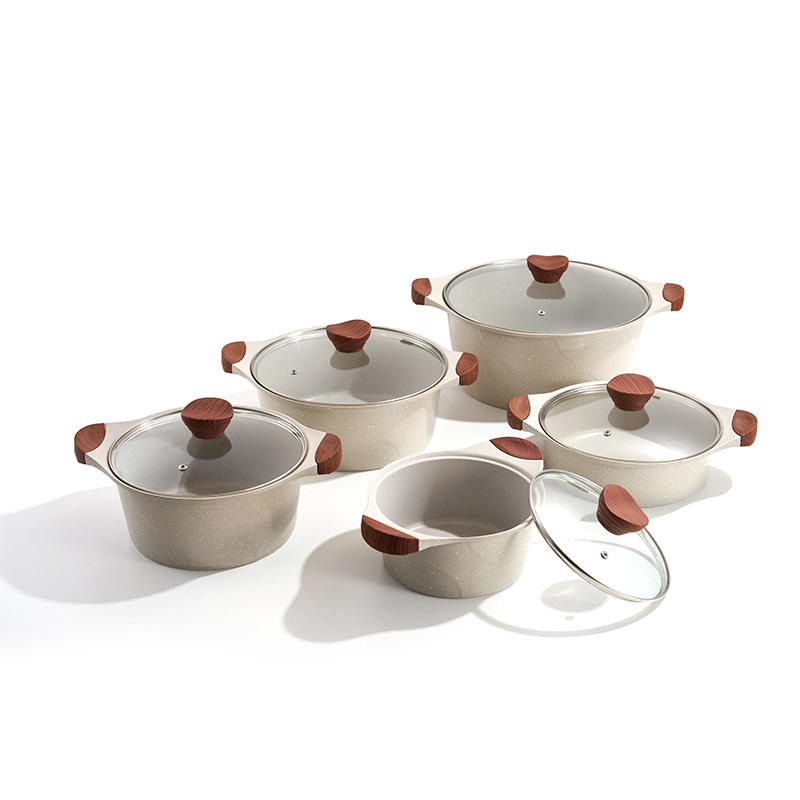
This off-white cookware set is made of wear-resistant non-stick material, with w...
See Details
Whether you're looking for bulk purchases or have any custom requirements, We are here to offer the best
solutions for you.
tiffany.zhong@echocn-trading.com
PHONE
+86-19561173975
+86-19557020621 (Hazel Wu)
ADD
Room 301, Unit 3014, No. 175 Qifeng Avenue, Wenqiao Town, Taizhou, Zhejiang, China
Fill Out the Form for More Information
Copyright © Zhejiang Echo Industry And Trade Co., Ltd.
All Rights Reserved.

China Cookware Set Manufacturer