
 en
 Español

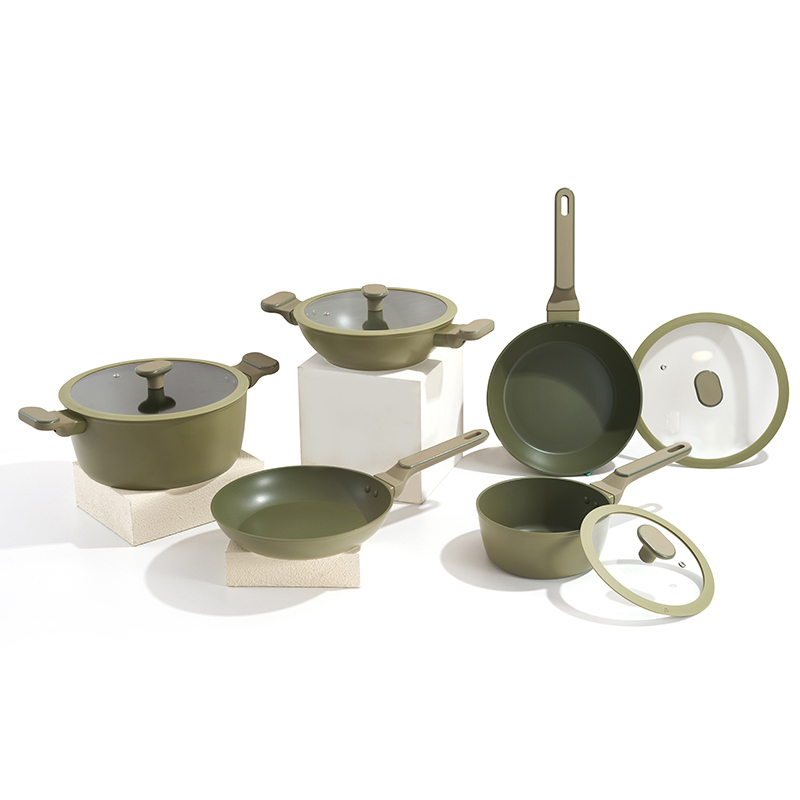
This cookware set features a non-stick coating, even heat conduction, and multi-...
See Details
Professional Stainless Steel Stockpot: A Practical Guide to Large-Capacity Cooking Performance
Date:Sep 21, 2026
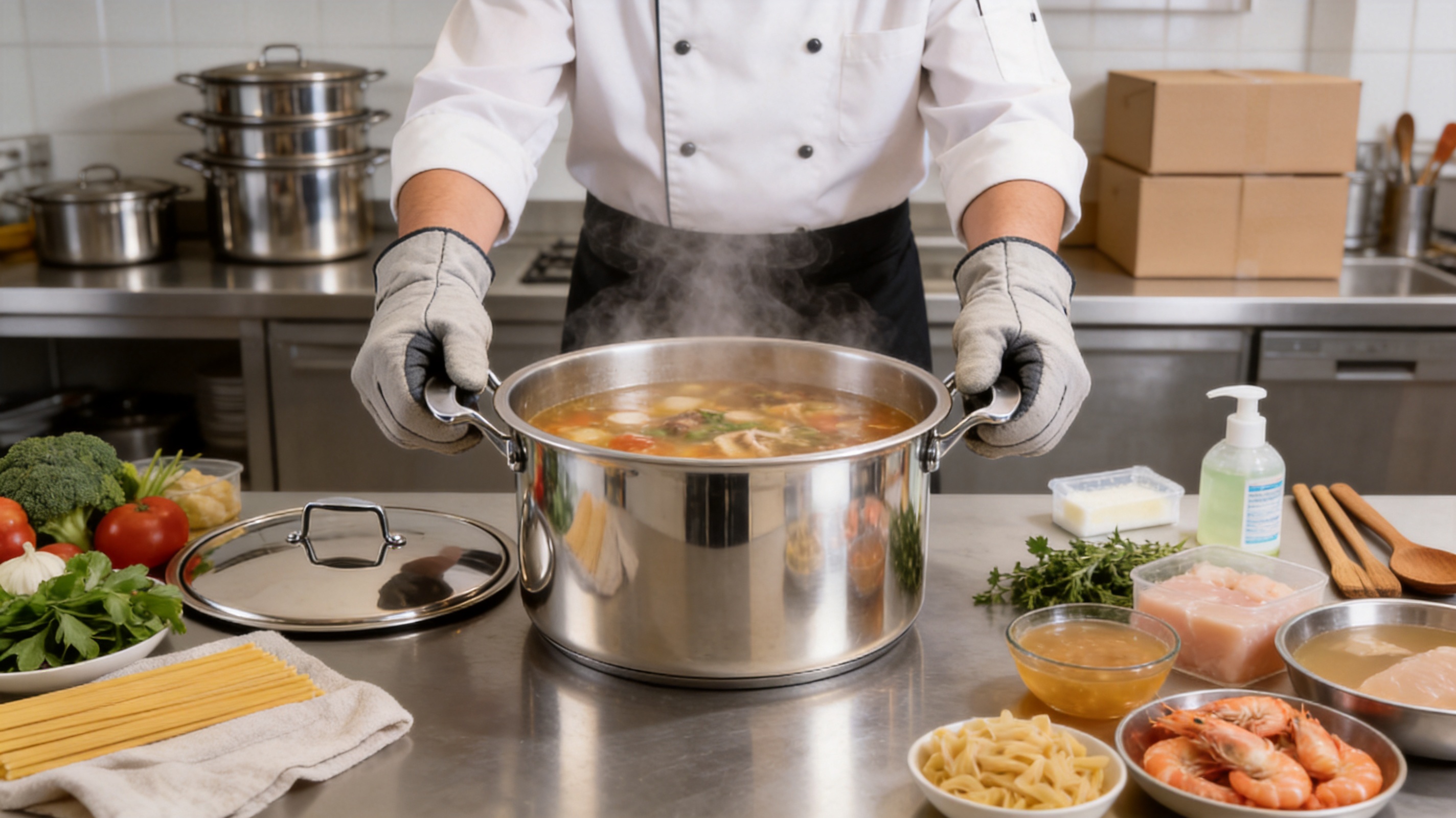
A reliable stockpot is one of the most useful pieces of cookware in a professional or household kitchen. It supports large-batch cooking, family meal preparation, catering, restaurant production, and many everyday tasks that are difficult to complete efficiently with a small saucepan. The Professional Stainless Steel Stockpot described in this article is designed around capacity, durability, cooking flexibility, and straightforward maintenance. Its one-piece forged construction, coating-free cooking surface, all-steel handles, and stainless steel lid make it a practical option for users who need dependable cookware for soups, stews, sauces, pasta, vegetables, seafood, and other batch recipes.
The product belongs to the stainless steel cookware category and is offered in several sizes, including 30 × 18.5 cm, 32 × 20 cm, 34 × 21 cm, 36 × 22 cm, and 38 × 23 cm. This range allows buyers to select a stockpot according to household size, commercial kitchen volume, storage space, and purchasing requirements. The product is also suitable for customization programs, since colors can be customized and the supplier provides OEM, ODM, flexible sourcing, and product development support.
Unlike lightweight cookware that may feel unstable when filled, this stockpot is designed for substantial cooking tasks. Its listed unit weight for the 30 × 18.5 cm model is approximately 2.6 kilograms, giving the pot a solid presence on the stovetop. A sturdy body is particularly valuable when handling hot liquids, long simmering cycles, or ingredients that must be stirred repeatedly. The all-steel handle design also supports safer lifting and carrying when the pot is used correctly and handled with appropriate protection.
Product Overview
The Professional Stainless Steel Stockpot is a large-capacity cooking vessel intended for both domestic and commercial use. It combines a deep pot body with a fitted stainless steel lid, allowing users to prepare food in substantial quantities while retaining heat and moisture. The design is especially well suited to soups, broths, stews, boiled foods, pasta, grains, vegetables, and batch cooking.
The pot is described as food-grade stainless steel and coating-free. A coating-free interior can be a major advantage for buyers who prefer a cooking surface without a separate non-stick layer. Traditional coated cookware can require more careful handling because sharp or metallic tools may scratch the coating. A stainless steel cooking surface is generally valued for its resistance to routine kitchen wear, its clean appearance, and its ability to support high-temperature cooking when used properly.
The product information also lists a three-layer material construction of 0.5 mm aluminum, 1.5 mm iron, and 0.5 mm aluminum. This construction should be confirmed with the manufacturer in relation to the product’s stainless steel specification, especially when preparing packaging, technical documentation, or regulatory files. Multilayer metal construction is commonly used to balance heat distribution, structural strength, weight, and cost. The listed material information indicates that the pot is engineered with more than a single thin sheet of metal, which can help improve rigidity and heating behavior.
| Product Attribute | Specification |
|---|---|
| Product name | Professional Stainless Steel Stockpot |
| Product category | Stainless Steel Cookware |
| Construction | One-piece forged, coating-free design |
| Listed material information | 0.5 mm aluminum + 1.5 mm iron + 0.5 mm aluminum |
| Available sizes | 30 × 18.5 cm, 32 × 20 cm, 34 × 21 cm, 36 × 22 cm, 38 × 23 cm |
| Reference unit weight | Approximately 2.6 kg for the 30 × 18.5 cm model |
| Packaging quantity | 4 pieces per carton |
| Carton weight | Approximately 14 kg |
| Carton size | 71.5 × 36 × 43 cm |
| Estimated carton volume | 0.1105 cubic meters |
| Lid | Stainless steel lid |
| Handles | All-steel handles |
| Stovetop compatibility | Compatible with all stovetops according to the product specification |
| Color options | Custom colors available |
The table provides a practical reference for importers, distributors, retailers, hospitality buyers, and kitchenware purchasing teams. Before placing a production order, buyers should confirm the final dimensions, net weight, material composition, lid fit, handle attachment method, packaging configuration, and applicable testing documentation.
Why a Large Stockpot Matters in the Modern Kitchen
Cooking in larger quantities can save time, energy, and labor. Preparing one large batch of soup is often more efficient than preparing several small batches. The same principle applies to stock, chili, curry, pasta sauce, stew, steamed or boiled vegetables, and meal-preparation recipes. A large stockpot gives ingredients enough space to circulate, which can support more even cooking and reduce the need for repeated transfers between pans.
For families, a stockpot is useful when preparing weekend meals, preserving seasonal produce, cooking for gatherings, or preparing food that will be stored for later use. For restaurants and catering businesses, the pot can support mise en place, broth production, sauce preparation, and high-volume service. Institutional kitchens, cafeterias, hotels, and food-service operations can also benefit from standardized pot sizes that make recipes easier to scale.
The available size range is an important commercial strength. Not every buyer needs the largest model, and not every retailer wants to stock only one capacity. Offering multiple diameters and heights allows a product line to serve different customer groups. The smaller 30 × 18.5 cm model may be suitable for family cooking or compact kitchens, while the larger 36 × 22 cm and 38 × 23 cm options can support higher-volume preparation.
Size selection should consider more than the amount of food a buyer wants to prepare. The cook should leave sufficient space for stirring and bubbling. A pot filled too close to the rim is more likely to spill, boil over, or become difficult to move safely. Buyers should also consider cabinet storage, sink dimensions, stovetop size, and the strength of the surface on which the pot will be placed.
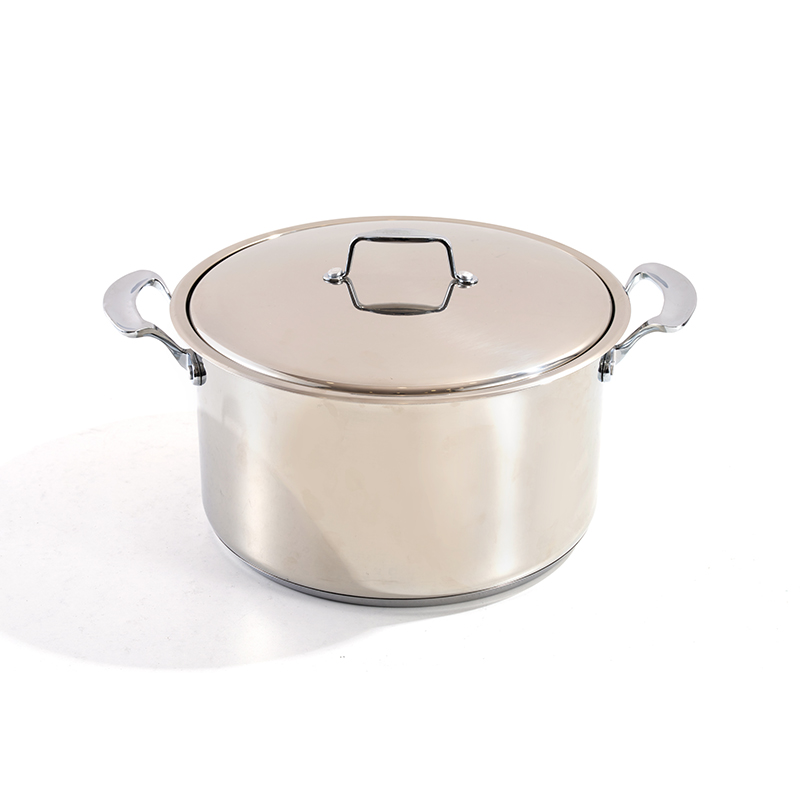
Professional Stainless Steel Stockpot
One-Piece Forged Construction
One-piece forging is one of the product’s most important manufacturing features. In a forged cookware body, metal is shaped under controlled pressure to create a strong and integrated structure. Compared with cookware assembled from numerous thin components, a one-piece design can reduce the number of seams and connection points in the main vessel. Fewer structural interruptions may contribute to a cleaner appearance and improved long-term durability when the pot is produced and finished correctly.
A one-piece forged body is particularly appropriate for a stockpot because the vessel may be exposed to repeated heating, cooling, filling, emptying, washing, and handling. These cycles create mechanical and thermal demands. A rigid body is less likely to feel flimsy when filled, and a well-formed rim can support a more stable lid fit. Forging also gives the manufacturer greater control over the shape, wall profile, base structure, and overall consistency of the product.
The manufacturing process begins with material preparation. Metal stock is selected according to the product specification and cut into suitable blanks. The blanks are then formed using controlled pressure and tooling. Depending on the production line, forming may involve several stages to achieve the correct depth, diameter, bottom profile, and rim shape. Intermediate inspection is important because dimensional accuracy at this stage affects the lid fit, handle position, packaging, and compatibility with stovetops.
After forming, the body can undergo trimming, edge treatment, surface finishing, cleaning, and inspection. The rim must be smooth and free from sharp edges. The base should remain stable on a flat surface. The interior and exterior finish should be consistent with the required appearance. Manufacturing discipline at each of these stages helps the final product perform consistently rather than merely look attractive when new.
For wholesale customers, one-piece forging also provides a useful quality story. Retailers can explain that the cookware is designed as a robust, integrated vessel rather than a lightweight disposable pot. Professional buyers can evaluate it as equipment intended for repeated use. The combination of construction method and substantial capacity gives the stockpot a stronger value proposition than products that compete only on low purchase price.
Structural Benefits of a Forged Body
A forged body can provide several practical benefits. First, it can improve rigidity. This is valuable when the pot contains several liters of hot liquid and must be moved carefully. Second, it can create a more consistent base profile, helping the pot sit steadily on the cooking surface. Third, it can support a clean, streamlined appearance with fewer visible joints. Fourth, it can make the product easier to position as a premium or professional-grade item in a retail range.
These benefits depend on correct production control. Forging alone does not guarantee performance. Tooling condition, material thickness, forming pressure, heat treatment where applicable, edge finishing, and final inspection all influence the finished result. A capable supplier must therefore combine equipment with process management, experienced operators, and quality-control procedures.
Coating-Free Cooking and Stainless Steel Advantages
The coating-free design appeals to users who want a durable cooking surface without relying on a separate non-stick layer. Stainless steel cookware is commonly chosen for its clean appearance, resistance to everyday kitchen use, and suitability for a broad range of recipes. It can be used for boiling, simmering, reducing, and batch cooking, provided that the user follows appropriate heat and cleaning practices.
A coating-free pot is also attractive to commercial kitchens because it eliminates one type of surface coating that could eventually wear through heavy use. Restaurants and institutions often prefer cookware that can withstand frequent washing and repeated handling. A metal cooking surface can be easier to inspect visually, and any food residue can be removed with suitable cleaning methods.
However, stainless steel cookware has its own usage requirements. Food may adhere if the pot is heated incorrectly, if ingredients are added to an unsuitable surface temperature, or if the pan is left dry for too long. This is not a defect unique to the product; it is a normal consideration with uncoated metal cookware. Proper preheating, sufficient cooking liquid, appropriate stirring, and timely cleaning all help users achieve better results.
The product’s coating-free structure also supports a healthier product-positioning message when communicated responsibly. The pot does not require a non-stick coating to perform its basic functions. Buyers should avoid exaggerated health claims and instead focus on the verifiable features: a metal cooking surface, a coating-free design, a food-contact application, and correct care instructions.
Multilayer Material Design and Heat Management
The supplied product information lists a 0.5 mm aluminum, 1.5 mm iron, and 0.5 mm aluminum construction. A multilayer body is intended to combine the characteristics of different metals. Aluminum is widely valued for heat transfer, while iron contributes mass and structural strength. When these materials are integrated into a cookware structure, the result can offer a balance between responsiveness, stability, and durability.
The 1.5 mm iron layer listed in the specification provides a substantial central structure. This can help the pot maintain its shape and retain heat during cooking. The aluminum layers may contribute to heat distribution across the body. The exact thermal behavior depends on the location of each layer, the base design, the cooking surface, the heat source, and the manufacturing method.
Because the product is marketed as stainless steel cookware while the material line lists aluminum and iron, commercial buyers should request a final technical specification before publication. The supplier may be describing an internal multilayer construction, a material formula for a specific version, or a specification that requires correction. Confirming the contact surface is especially important for product labels and food-contact documentation. Clear technical communication protects both the supplier and the buyer.
Once the final construction is verified, the multilayer design can become a strong selling point. It gives buyers a more meaningful explanation of performance than a simple statement that the pot is “thick.” A defined layer structure indicates that the cookware has been engineered to balance heat behavior and mechanical strength. It also gives private-label customers a foundation for product comparison and marketing content.
All-Steel Handles for Practical Handling
The stockpot is fitted with all-steel handles. This design creates a consistent visual relationship between the body, lid, and handles. It also avoids the use of decorative plastic components that may look out of place on a professional cooking vessel. Steel handles are commonly selected for their resistance to routine kitchen wear and their ability to support a substantial pot when correctly attached.
Handle design is a critical safety feature. The handles must be securely fixed, balanced, and positioned to provide sufficient clearance from the cooking surface. The user should be able to grip them without placing hands directly above rising steam. When the pot is hot, protective gloves or dry pot holders should be used, even if the handle material itself appears heat resistant.
For manufacturers and buyers, handle attachment deserves specific inspection. The connection should be checked for alignment, movement, sharp edges, surface defects, and load performance. A handle that feels loose or uneven can undermine confidence in the entire product. Proper assembly and quality control are therefore essential parts of the supplier’s manufacturing strengths.
All-steel handles can also contribute to a cohesive product range. If a buyer is developing a cookware collection, the same handle language can be applied to stockpots, saucepans, frying pans, and other vessels. This creates a coordinated shelf appearance and makes it easier for retailers to present the items as part of a unified kitchenware series.
Stainless Steel Lid and Moisture Retention
The included stainless steel lid is designed to cover the cooking vessel and help retain heat, moisture, and aroma. A lid is particularly valuable for soups, stews, braises, simmered sauces, and stock production. It can also reduce splashing and help the contents reach a stable cooking temperature more efficiently than an uncovered pot.
A well-fitting lid should sit securely on the rim without excessive wobbling. Buyers should check the lid diameter, rim profile, handle design, surface finish, and compatibility with the selected pot size. Since the product is available in multiple sizes, the lid should be matched carefully to each body. Packaging should also protect the lid from scratches and deformation during transport.
Stainless steel lids have a professional appearance and can be cleaned using the same general methods as the pot. Users should remember that the lid may become hot during cooking and that steam can escape suddenly when it is lifted. Opening the lid away from the face and hands is a simple but important safety habit.
Compatibility with Different Stovetops
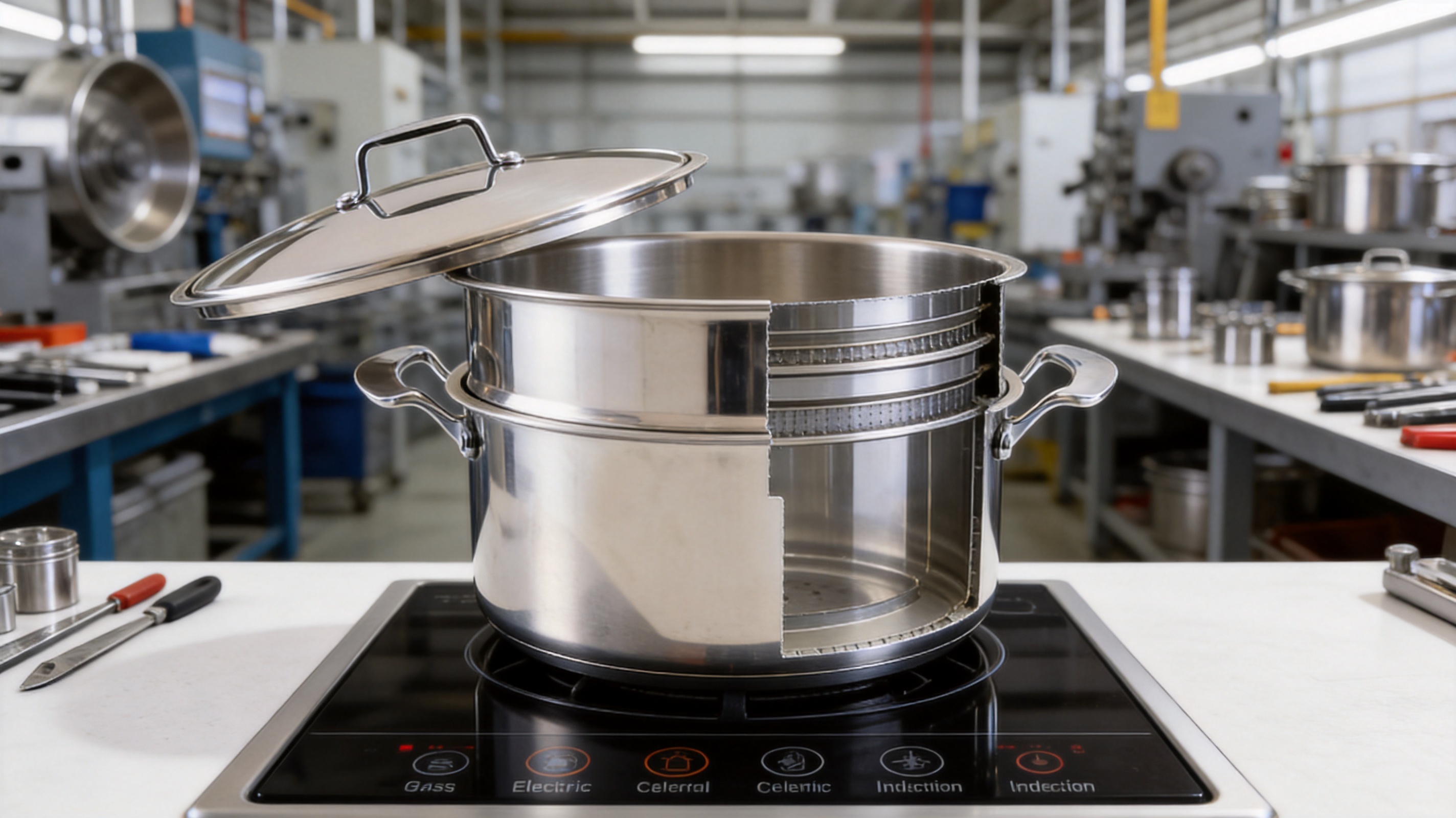
The product specification states that the stockpot is compatible with all stovetops. This broad compatibility is valuable for households, retailers, and commercial kitchens because it reduces the need to match the cookware to a single heating technology. The pot can be positioned as a versatile option for users who cook with gas, electric, ceramic, or induction equipment, subject to confirmation of the final base construction and induction performance for the exact model.
Stovetop compatibility should be communicated accurately. Gas burners provide direct flame and require the flame to remain within the base area. Electric and ceramic surfaces require a flat, stable bottom for efficient contact. Induction cooking requires a magnetic-compatible base. Since the listed material information includes iron, the product may offer an appropriate magnetic element, but the supplier should confirm this through product testing before the claim is printed on packaging.
Universal compatibility is a significant advantage over cookware designed for only one type of hob. It helps retailers serve a broader audience and reduces customer hesitation. It is also useful for rental properties, hospitality operations, and households that may change their cooking equipment in the future.
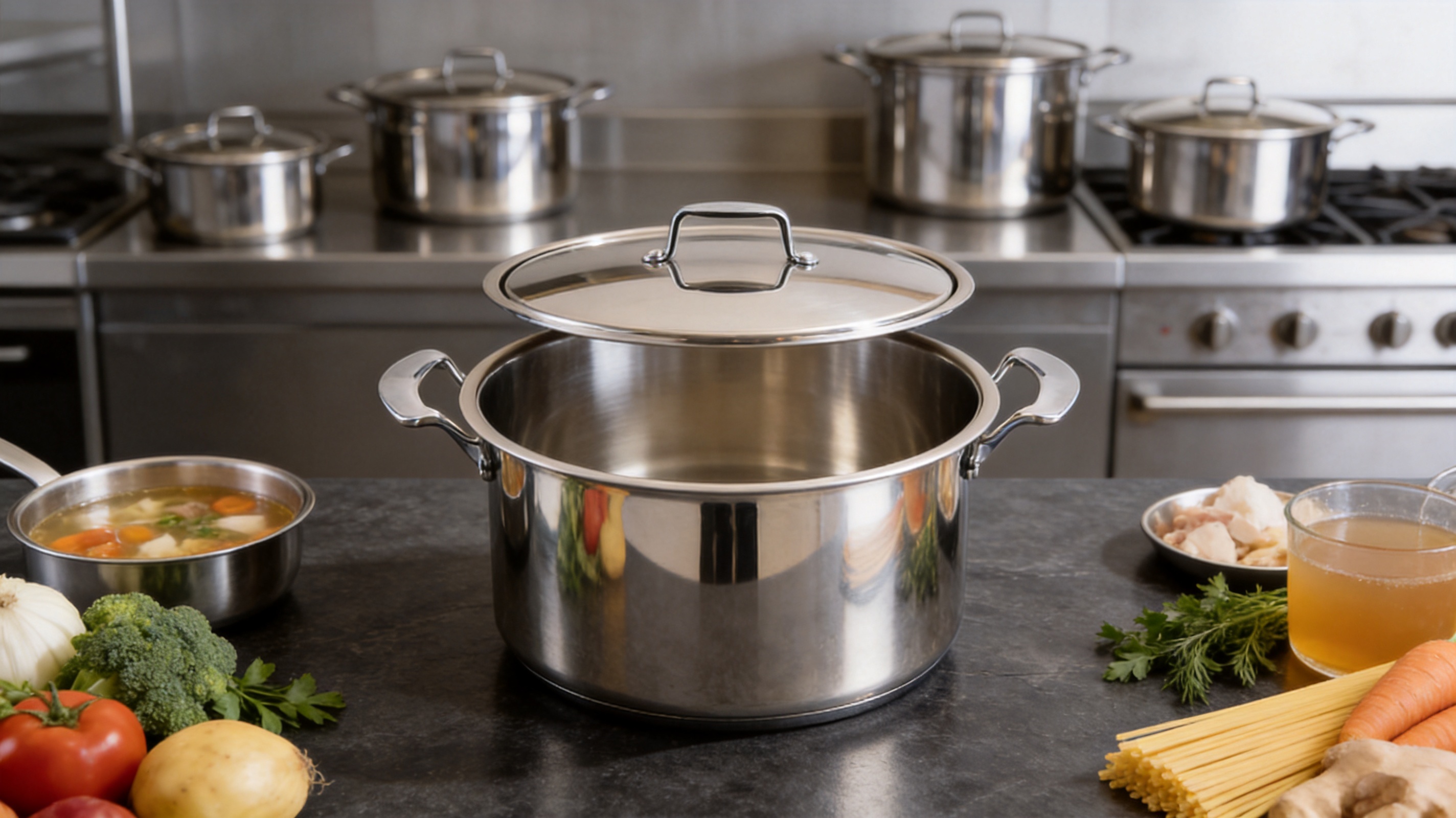
Manufacturing Strengths and Supply Capabilities
The supplier is presented as a professional kitchenware company based in Zhejiang, China, a region recognized for manufacturing and export activity. Its product range includes aluminum cookware, stainless steel cookware, cast iron cookware, and kitchen utensils. This broad category coverage gives buyers access to a wider sourcing platform rather than a single isolated product.
A supplier with several cookware categories can support more coherent purchasing programs. A distributor may source a stockpot together with frying pans, saucepans, utensils, and other accessories. A retailer can build a private-label assortment with consistent packaging and coordinated product positioning. A hospitality buyer can explore multiple cookware materials according to the requirements of different kitchen tasks.
The company’s stated development direction emphasizes research and development, supply-chain cooperation, and support for small and medium-sized kitchenware buyers. This is important because many buyers do not need a simple factory transaction. They may need assistance with product selection, packaging, color development, sample revisions, compliance preparation, and order coordination. A supplier that offers one-stop support can reduce the number of external partners required during product launch.
Process Control from Material to Finished Product
Advanced manufacturing is not limited to a single machine or production step. For cookware, it includes material control, tooling, forming, trimming, polishing, assembly, cleaning, inspection, packaging, and shipment preparation. Each stage can influence the customer’s experience.
Material control helps ensure that the metal used in production corresponds with the approved specification. Tooling control helps maintain consistent shape and dimensions. Forming control helps reduce deformation. Edge finishing helps improve handling safety. Surface finishing supports appearance and cleanability. Assembly inspection confirms that handles and lids are properly fitted. Packaging control reduces the possibility of damage during transportation.
A professional manufacturing partner should be able to discuss these stages clearly with buyers. Product samples, approved specifications, inspection standards, carton drawings, and packaging details should be recorded before mass production. This documentation becomes especially important when the cookware is sold under a private label or exported to multiple markets.
Customization and OEM/ODM Support
Color customization is specifically available for this product. Custom color options can help importers develop a distinctive retail identity, coordinate the stockpot with an existing cookware collection, or target different consumer segments. Color decisions should be evaluated alongside surface finish, production quantity, packaging design, and sample approval.
OEM and ODM support can extend beyond color. Depending on order requirements, buyers may discuss handle details, lid design, body dimensions, surface finishing, logo placement, packaging, labels, instruction sheets, and carton marks. Any proposed change should be reviewed for tooling cost, minimum order quantity, lead time, performance, and regulatory implications.
Flexible MOQs are another stated service strength. This can benefit emerging brands and regional distributors that are not ready to purchase very large quantities. A flexible order structure may allow a buyer to test market demand, introduce several sizes, or launch a smaller initial collection. Exact MOQ terms must be confirmed for each customization request because color, packaging, and tooling changes can affect production economics.
Certification and Product Documentation Assistance
The supplier also states that it can assist with product certification. Certification requirements vary according to the destination market, product claims, materials, packaging, and intended use. Buyers should identify their target market at the beginning of the project and request the appropriate documentation, testing, declarations, and labeling support.
For a cookware product, useful technical records may include material specifications, food-contact test reports where applicable, dimensional drawings, packaging information, care instructions, and inspection records. The exact requirements should be determined with qualified compliance professionals or the relevant authorities. Product certification assistance is valuable, but it should not be confused with an automatic guarantee that every market requirement has already been satisfied.
Advantages over Lightweight and Coated Competitors
The stockpot competes in a market containing very lightweight aluminum pots, thin stainless steel vessels, coated cookware, and low-cost multi-piece sets. Its advantages are based on a different value proposition: sturdy construction, coating-free cooking, a professional appearance, broad stovetop compatibility, multiple sizes, and supplier customization.
Compared with very thin cookware, the stockpot is positioned to offer a more substantial feel and stronger structural presence. Lightweight products may be easy to lift when empty, but they can feel unstable when filled with liquid. A heavier body can provide confidence during stirring and serving, although users must still observe safe lifting limits.
Compared with coated cookware, the coating-free structure eliminates concerns about scratching or flaking a separate non-stick surface. Users can still damage or discolor stainless steel through severe overheating or improper cleaning, so correct care remains important. The advantage is not that the product is maintenance-free; rather, it offers a different surface philosophy based on durable metal instead of a non-stick coating.
Compared with single-purpose cookware, the stockpot’s compatibility with multiple stovetops expands its usefulness. A consumer who moves from gas to induction may not need to replace the pot if the final model meets the relevant induction requirements. For retailers, this versatility simplifies product positioning and reduces the number of separate versions needed.
Compared with unbranded commodity items, the supplier’s OEM, ODM, customization, and product-development services can help buyers create a more differentiated product. A retailer can select size combinations, packaging styles, colors, and supporting kitchenware rather than selling an indistinguishable item. This is particularly important in competitive online and international markets.
| Comparison Point | Professional Stainless Steel Stockpot | Very Lightweight Pot | Coated Non-Stick Pot |
|---|---|---|---|
| Primary value | Durability, capacity, versatility, and professional use | Low weight and low initial cost | Easy-release cooking for selected recipes |
| Cooking surface | Coating-free metal surface | Usually uncoated or dependent on model | Separate non-stick coating |
| Scratch concerns | Reduced concern about coating scratches | Depends on construction | Requires careful utensil selection |
| Large-batch suitability | Strong, with several size options | May feel less stable when full | Depends on size and body strength |
| Professional appearance | Stainless steel body and lid | Varies | Varies by coating and exterior |
| Customization potential | Color, packaging, and OEM/ODM options | Often limited | Depends on supplier |
This comparison should be understood as a positioning guide rather than a claim that one cookware type is suitable for every task. Lightweight cookware can be convenient, and coated cookware can be useful for delicate foods. The stockpot is strongest where capacity, robustness, repeated use, and batch cooking are the primary requirements.
Recommended Applications
The stockpot is naturally suited to soup preparation. Its depth provides room for vegetables, meat, noodles, grains, herbs, and stock. Users can prepare a complete family meal or a larger quantity for service and storage. The lid helps maintain cooking temperature while reducing evaporation during simmering.
Stews are another suitable application. Slow cooking requires stable heat and sufficient space for ingredients to soften without overflowing. A sturdy body can support extended cooking cycles, while the metal interior provides a neutral, coating-free surface for browning or simmering when the recipe calls for those stages.
The product can also be used for pasta, potatoes, corn, seafood, vegetables, and grains. The larger sizes may be helpful during holiday meals, community events, catering preparation, and restaurant production. Buyers should select a suitable size and avoid overfilling the pot, especially when cooking foods that expand or foam.
For commercial buyers, the product can serve as a practical component of a broader cookware assortment. A kitchen may use smaller pans for individual orders and stockpots for shared preparation. Retailers can present the item as a core kitchen essential rather than a seasonal product, since soups, sauces, boiled foods, and batch cooking are common throughout the year.
Care and Maintenance Instructions
Proper care helps preserve the appearance and working life of the stockpot. The product instructions recommend washing it before first use. This removes dust, packaging residue, and manufacturing particles that may remain after production and transportation.
Although the cookware is coating-free, users should not use metal or sharp cooking utensils if they want to preserve the surface appearance. Wooden, nylon, or other suitable non-abrasive utensils are recommended. These utensils reduce the chance of visible marks and are especially useful when stirring ingredients against the bottom or sides of the pot.
Cleaning should be carried out with hot, soapy water and a soft cloth or sponge. Abrasive pads, harsh scouring tools, and aggressive chemicals may dull the finish or create visible scratches. If food residue becomes difficult to remove, soaking the pot in warm water before cleaning is generally preferable to scraping forcefully.
The pot should never be overheated while empty. Empty overheating can cause discoloration, distortion, or damage to the cookware and the stovetop. Users should add suitable ingredients or liquid before applying prolonged heat and should monitor the cooking process rather than leaving the pot unattended.
The flame or heat source should not extend beyond the base. Oversized flames can heat the sidewalls and handles unnecessarily, waste energy, and create a burn hazard. On gas cookers, the flame should be adjusted so that it remains beneath the bottom of the pot.
If the pot severely overheats, users should turn off the cooker and allow the cookware to cool completely. They should not touch the pot immediately or move it while it is dangerously hot. Sudden contact with cool water may also create unnecessary thermal stress, so gradual cooling is the safer approach.
The product should not be used in a microwave. Metal cookware is not suitable for microwave cooking and can create serious safety risks. The stockpot should be used only with appropriate stovetop or cooking equipment confirmed for the product.
Hand washing is recommended to preserve the appearance of the cookware. This is especially relevant for polished or decorative surfaces. After washing, the pot should be dried thoroughly to reduce water marks and maintain a clean finish. Commercial users should establish a consistent cleaning routine so that food residue does not accumulate during repeated service.
Packaging, Logistics, and Wholesale Considerations
The listed packaging configuration is four pieces per carton. The reference carton weight is approximately 14 kilograms, and the carton size is approximately 71.5 × 36 × 43 centimeters, with a stated volume of 0.1105 cubic meters. These details help importers estimate warehouse requirements, freight costs, pallet planning, and shipment quantities.
Packaging is particularly important for stockpots because the body and lid can be scratched, dented, or displaced during transportation. Each component should be protected against direct contact where necessary. The lid should be secured so that it does not move freely inside the carton. Carton marks, inner protection, printed instructions, and barcode labels can be customized according to the buyer’s distribution system.
Before shipment, buyers should confirm whether the stated carton dimensions refer to the complete assortment or a specific size. Since the pot is available in several dimensions, packaging may vary by model. Net weight, gross weight, carton quantity, and loading information should be documented for every SKU.
For international sourcing, buyers should also confirm production lead time, sample approval procedures, payment terms, inspection arrangements, shipping marks, and destination documentation. A clear purchase specification reduces misunderstandings and helps the supplier deliver the correct version of the product.
Quality-Control Checklist for Buyers
A thorough inspection should begin with the product identity. The model number is listed as YJ01, and buyers should ensure that the correct model, size, color, and configuration are shown on the purchase order. If several sizes are being ordered, each one should have a separate line and clearly defined dimensions.
Dimensional inspection should cover the pot diameter, height, rim, base, lid fit, handle position, and overall symmetry. The pot should sit steadily on a flat surface. The lid should fit the corresponding body without excessive looseness. Handles should be aligned and firmly attached.
Surface inspection should check for dents, deep scratches, stains, sharp edges, rough rims, uneven polishing, discoloration, and visible forming defects. Interior and exterior finishes should match the approved sample. If the product has a special color or finish, the acceptable tolerance should be agreed in advance.
Functional inspection should include a basic stability check, lid-fit check, handle-load evaluation, and stovetop compatibility verification where applicable. Buyers may also request production samples or third-party testing according to the destination market. The final inspection standard should be written rather than relying only on verbal expectations.
Material documentation is especially important for this item because the product description refers to stainless steel while the listed material specification identifies aluminum and iron layers. The buyer should receive a final confirmed material statement before printing labels or publishing technical claims. This is a practical step that improves transparency and supports responsible international trade.
How Retailers Can Position the Product
Retailers can position the stockpot as a practical upgrade for customers who want more capacity and stronger construction than basic cookware provides. Key selling points include the large-capacity body, one-piece forged construction, coating-free design, all-steel handles, stainless steel lid, multi-stovetop compatibility, and selection of sizes.
Product descriptions should focus on specific benefits rather than vague superlatives. Instead of simply calling the pot “premium,” a retailer can explain that it is designed for soups, stews, batch cooking, and family meals. Instead of claiming unlimited durability, the retailer can highlight the substantial body, forged construction, and care instructions intended to preserve performance.
Online listings should include accurate dimensions, weight, lid information, material details, stovetop compatibility, and cleaning guidance. Clear photographs can show the pot from different angles, including the interior, base, handles, lid, and size comparison. Customers are more likely to choose the correct product when capacity and dimensions are presented clearly.
The product can also be bundled with wooden or nylon utensils, soup ladles, kitchen tongs, or complementary cookware. Since the supplier offers kitchen utensils and several cookware categories, buyers may be able to create a coordinated assortment. Bundling should be based on actual customer needs and practical compatibility.
Environmental and Lifecycle Considerations
A durable stockpot can support a longer product lifecycle when it is used and maintained correctly. Replacing cookware less frequently may reduce material consumption and packaging waste over time. The coating-free design also avoids dependence on a separate surface layer that may eventually require replacement because of wear.
Responsible product communication should avoid claiming that durability automatically makes a product sustainable. Environmental performance depends on raw materials, production energy, packaging, shipping, use, cleaning, and end-of-life handling. Buyers interested in sustainability should discuss recycled content, packaging reduction, carton optimization, production waste management, and relevant documentation with the supplier.
The supplier’s stated focus on sustainable and healthy product development creates an opportunity for further discussion. Buyers can request specific information about material sourcing, packaging options, production improvements, and product lifecycle considerations. Concrete data is more useful than broad environmental language and can support credible retail communication.
Frequently Asked Questions
What is the main purpose of this stockpot?
The stockpot is designed for large-capacity cooking, including soups, stews, stocks, sauces, pasta, vegetables, and other batch recipes. It is suitable for family kitchens, restaurants, catering operations, hotels, and institutional food preparation.
Is the stockpot coating-free?
Yes. The product is described as coating-free. Its cooking surface is intended to provide a durable metal alternative to cookware that relies on a separate non-stick coating.
What sizes are available?
The listed sizes are 30 × 18.5 cm, 32 × 20 cm, 34 × 21 cm, 36 × 22 cm, and 38 × 23 cm. Buyers should confirm whether these dimensions refer to diameter and height and should request the final dimensional drawing before ordering.
What materials are used?
The product description identifies it as a food-grade stainless steel stockpot, while the information section lists 0.5 mm aluminum, 1.5 mm iron, and 0.5 mm aluminum. Buyers should confirm the final material construction and food-contact surface with the supplier before printing technical claims or labels.
Can the stockpot be used on induction cookers?
The product specification states compatibility with all stovetops. Because induction compatibility depends on the magnetic properties and design of the base, buyers should request confirmation or test results for the exact model before making a specific induction claim.
Does the product include a lid?
Yes. The product includes a stainless steel lid designed to help retain heat and moisture during cooking. The lid should be matched to the correct pot size.
Are the handles made from steel?
Yes. The stockpot is described as having all-steel handles. Users should still use dry protective gloves or pot holders when handling a hot pot.
Can the color be customized?
Yes. The product information states that all colors can be customized. Exact color options, minimum order quantities, sample procedures, and production lead times should be confirmed for each project.
Is this product suitable for commercial kitchens?
It is designed for large-capacity cooking and has features suitable for professional use, including a substantial body, coating-free construction, stainless steel components, and multiple sizes. Commercial buyers should evaluate capacity, handling, cleaning procedures, and local compliance requirements before purchase.
How should the stockpot be cleaned?
Use hot, soapy water with a soft cloth or sponge. Hand washing is recommended to preserve the appearance. Avoid sharp tools, abrasive cleaners, and harsh scouring materials.
Can the pot be heated while empty?
No. The care instructions specifically advise users not to overheat the empty pot. An empty pot should not be left on an active heat source.
Can it be used in a microwave?
No. The stockpot is made from metal and should not be used in a microwave.
What should be done if the pot overheats?
Turn off the cooker and allow the pot to cool completely. Do not touch or move it while it is severely overheated. Avoid sudden cooling and inspect the cookware before using it again.
What is the standard carton quantity?
The listed carton quantity is four pieces. Buyers should confirm whether the quantity applies to every size and whether mixed-size cartons are available.
Can the product be developed under a private label?
The supplier states that it provides OEM and ODM customization. Buyers can discuss colors, packaging, product details, labels, and coordinated cookware programs with the supplier.
Conclusion
The Professional Stainless Steel Stockpot is positioned as a dependable, large-capacity solution for users who need more than a lightweight everyday pan. Its one-piece forged construction, coating-free design, all-steel handles, stainless steel lid, broad size range, and stated multi-stovetop compatibility create a balanced combination of performance and versatility.
Its strongest competitive advantage is the relationship between product design and supplier capability. The stockpot is not presented as an isolated commodity item. It is supported by a manufacturing and sourcing platform that includes multiple cookware categories, OEM and ODM services, color customization, flexible MOQs, certification assistance, and one-stop kitchenware development.
For buyers, the most important next step is to confirm the final technical details, particularly the material construction, contact surface, induction suitability, dimensions, packaging, and applicable documentation. Once these points are verified, the product can serve as a strong addition to household cookware ranges, professional kitchen programs, hospitality supply, and private-label collections.
With correct use and maintenance, the stockpot is designed to support repeated cooking tasks while maintaining a practical, professional appearance. It offers the capacity required for batch cooking, the structural presence expected from substantial cookware, and the customization potential needed by modern kitchenware buyers.
References
1. Product specification sheet for Professional Stainless Steel Stockpot, model YJ01.
2. Manufacturer-provided product information covering construction, sizes, packaging, care instructions, and customization services.
3. General cookware design principles concerning forged metal bodies, multilayer construction, heat distribution, and structural stability.
4. General kitchen safety guidance for metal cookware, stovetop use, hot surfaces, steam, and safe handling.
5. General food-contact cookware considerations for material verification, labeling, testing, and market-specific documentation.
Product: Professional Stainless Steel Stockpot
Recommended Articles
Product Category
Related products
-
-
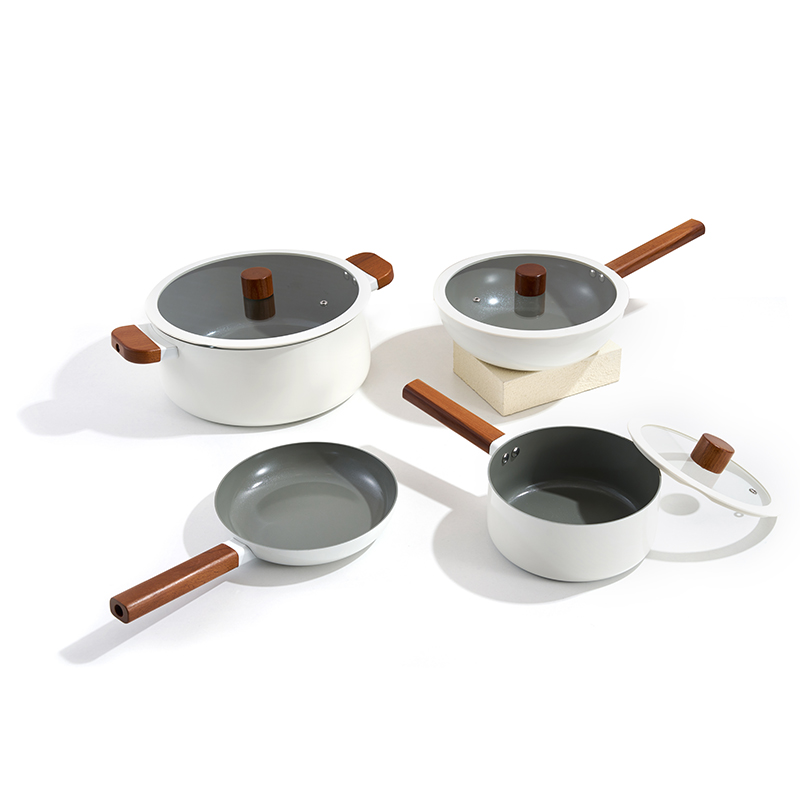
This cookware set has a ceramic non-stick inner liner, a heat-resistant wooden h...
See Details -
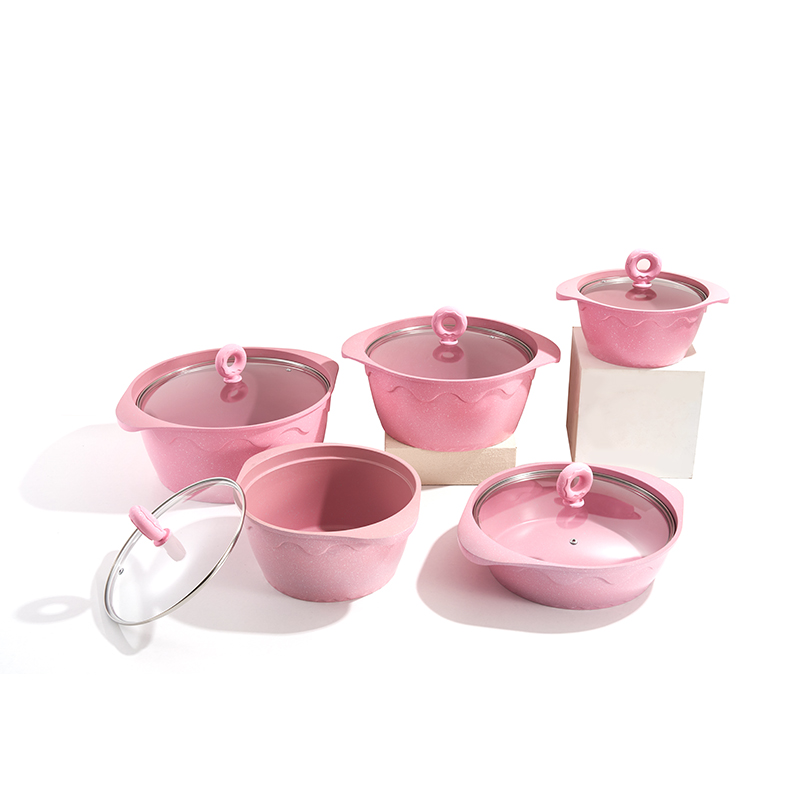
This cookware set is made of food-grade non-stick material, with a unique eye-ca...
See Details -
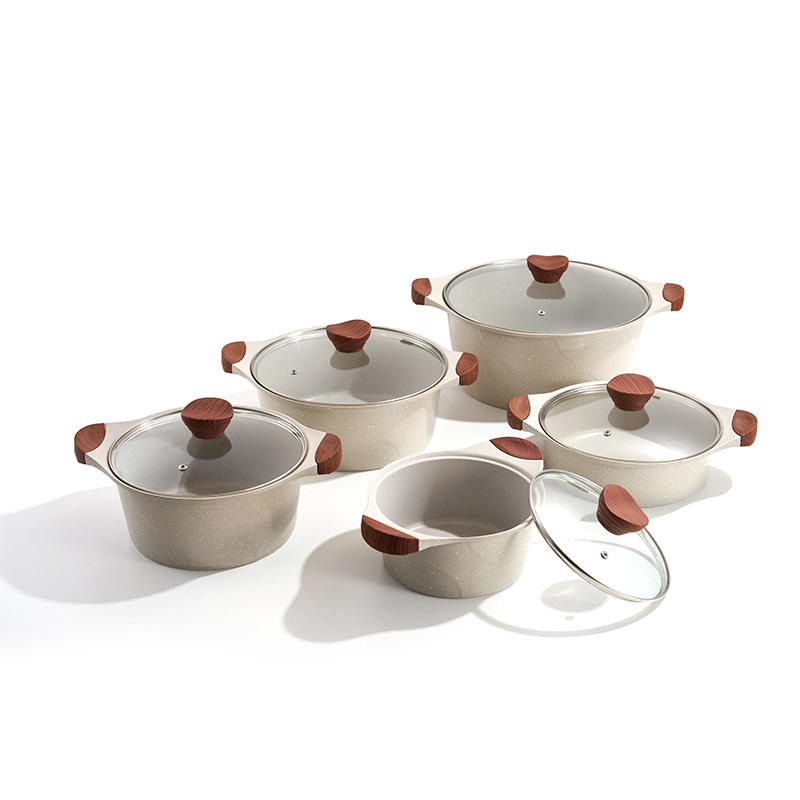
This off-white cookware set is made of wear-resistant non-stick material, with w...
See Details
Whether you're looking for bulk purchases or have any custom requirements, We are here to offer the best
solutions for you.
tiffany.zhong@echocn-trading.com
PHONE
+86-19561173975
+86-19557020621 (Hazel Wu)
ADD
Room 301, Unit 3014, No. 175 Qifeng Avenue, Wenqiao Town, Taizhou, Zhejiang, China
Fill Out the Form for More Information
Copyright © Zhejiang Echo Industry And Trade Co., Ltd.
All Rights Reserved.

China Cookware Set Manufacturer