
 en
 Español
This cookware set features a non-stick coating, even heat conduction, and multi-...
See Details
7-Piece Enameled Cast Iron Nonstick Cookware Set: Complete Guide to Performance, Design, and Manufacturing Quality
Date:Aug 08, 2026
Choosing cookware for a professional kitchen, hospitality project, retail program, or household often requires more than comparing appearance and price. The material, surface treatment, construction quality, handle design, heat behavior, maintenance requirements, packaging, and supplier capabilities all influence the long-term value of a cookware set. The 7-Piece Enameled Cast Iron Nonstick Cookware Set is designed to combine the thermal stability of cast iron with the practical convenience of an enamel-coated cooking surface.
This set is positioned for users who want cookware suitable for frying, stewing, simmering, and other everyday cooking tasks. Its cast iron body supports even heat distribution and heat retention, while the elegant enamel exterior contributes to a refined appearance and easier cleaning. Wide, sturdy handles are intended to support safer handling, and stainless steel lid knobs provide a firm and comfortable grip.
For buyers comparing cast iron, stainless steel, aluminum, and conventional nonstick cookware, this set offers a balanced solution. It is substantial enough for slow cooking and heat-stable recipes, yet its food-grade enamel surface is more convenient than exposed raw cast iron. The seven-piece format also gives households, restaurants, distributors, and cookware retailers a practical product combination rather than a single-purpose pan.
Product Overview
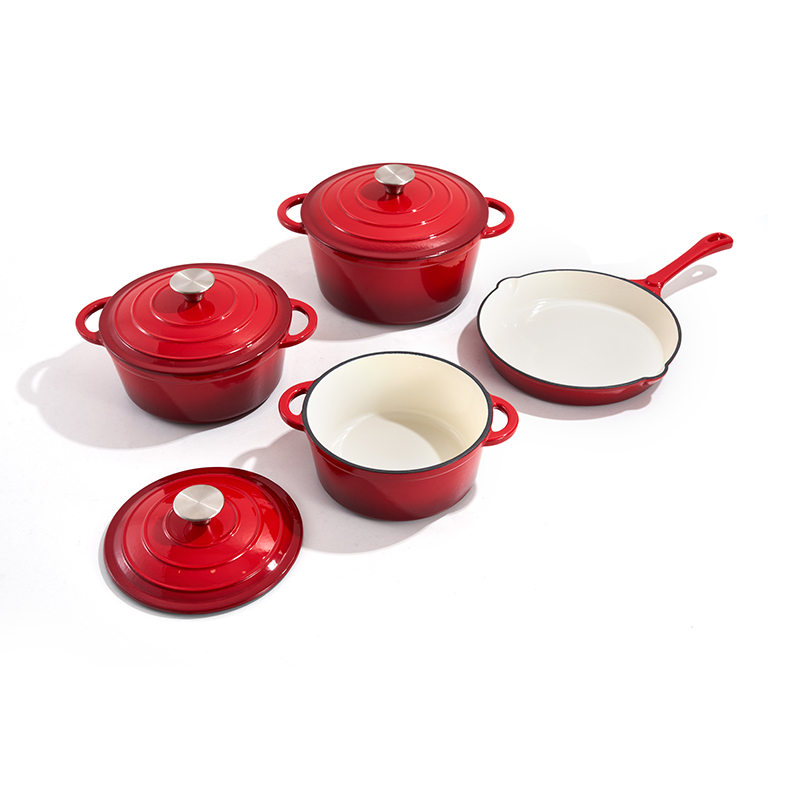
The 7-Piece Enameled Cast Iron Nonstick Cookware Set is manufactured from cast iron and finished with an enamel surface. The product is listed under the Iron Cookware category and is designed for gas-stove use. Its configuration includes stock pots in 20 cm, 22 cm, and 24 cm sizes together with a 25 cm frying pan. The set is intended to cover multiple cooking methods, including frying, stewing, simmering, reheating, and general stovetop preparation.
Cast iron is valued for its ability to absorb and retain heat. Once heated, the cookware can maintain a relatively stable cooking temperature, which is useful for dishes requiring controlled simmering or gradual heat transfer. Enamel provides a smooth food-contact surface and an attractive exterior, helping the cookware fit both traditional and modern kitchen environments.
The set is supplied under SKU JS02. The stated carton quantity is four sets per carton, with a carton size of 34 × 29.5 × 41.3 cm and a calculated carton volume of approximately 0.042 cubic meters. These specifications are relevant to importers, wholesalers, online retailers, hospitality suppliers, and other buyers planning storage and shipment.
Specification |
Details |
Buyer Relevance |
Product type |
Seven-piece enameled cast iron cookware set |
Provides multiple cooking functions in one coordinated package |
Material |
Cast iron |
Supports heat retention and stable cooking performance |
Surface |
Food-grade enamel coating |
Creates a smooth cooking surface and simplifies routine cleaning |
Included cookware |
20 cm, 22 cm, and 24 cm stock pots plus a 25 cm frying pan |
Covers small, medium, and larger everyday cooking tasks |
Handles |
Wide and sturdy |
Improves control when lifting or moving the cookware |
Lid knobs |
Stainless steel |
Offers a firm grip and coordinated appearance |
Recommended heat source |
Gas stove |
Suitable for gas-cooking environments and related product programs |
SKU |
JS02 |
Supports product identification and inventory management |
Carton quantity |
Four sets per carton |
Useful for wholesale planning and shipment calculation |
Why Cast Iron Remains a Competitive Cookware Material
Cast iron has remained popular because it delivers a combination of heat retention, strength, and versatility that is difficult to reproduce with very thin cookware. When used correctly, a cast iron body heats steadily and continues to release heat after the burner is lowered. This behavior is beneficial for frying, braising, stewing, and simmering recipes in which sudden temperature changes can affect texture and flavor.
Compared with lightweight aluminum cookware, cast iron generally feels more substantial and retains heat for longer. Aluminum is often valued for quick heating and easy handling, but lightweight bodies may lose heat more rapidly when cold ingredients are added. The cast iron construction in this set is intended to provide a more stable thermal foundation for recipes such as sauces, stews, reductions, and slow-cooked vegetables.
Compared with uncoated raw cast iron, enamel is more convenient for many users. Raw cast iron typically requires seasoning and careful drying to help reduce rust and maintain its cooking surface. Enameled cast iron does not depend on the same seasoning routine because the enamel creates a protective barrier between the cast iron body and the cooking environment. This can make the set more approachable for consumers who want the performance characteristics of cast iron without the maintenance associated with exposed iron.
Compared with stainless steel cookware, enameled cast iron can provide greater heat retention and a more forgiving cooking experience for low and moderate heat recipes. Stainless steel is highly durable and is often preferred for high-temperature searing, long service life, and commercial kitchen use. However, stainless steel may require more careful preheating and oil management to reduce sticking. The enamel surface of this set is designed to make everyday cooking and cleaning simpler.
Advantages of the Enameled Cooking Surface
The enamel surface is one of the primary differentiators of this cookware set. It creates a smooth food-contact layer over the cast iron body, giving the cookware a clean, polished appearance and reducing the need for seasoning. A food-grade surface is especially attractive to buyers who prioritize straightforward preparation and cleanup.
Enamel also helps separate food from the underlying iron body. This is useful for recipes that contain acidic ingredients, such as tomatoes, vinegar, citrus, and wine-based sauces. With raw cast iron, prolonged exposure to acidic foods can affect seasoning and may influence the flavor or appearance of a dish. An enamel surface is designed to provide a more stable barrier for normal cooking applications.
The smooth finish can also reduce the effort required after cooking. Food residue is less likely to become embedded in an uneven, seasoned surface, and routine washing can generally be performed with warm water, mild detergent, and a soft sponge. Because the cookware is not dependent on a traditional seasoning layer, users can focus on cooking rather than maintaining a particular oil film.
The enamel exterior adds visual value as well. Cast iron cookware is often associated with heavy, rustic designs, while an enamel finish can provide a more refined presentation. This allows the set to move from the stovetop to the dining table in suitable serving situations. For retailers, the appearance can support premium positioning and help the product stand apart from plain black cast iron or basic metal cookware.
Seven Pieces for Flexible Kitchen Use
A cookware set becomes more useful when its pieces cover different capacities and cooking methods. The three stock pot sizes in this set are intended to support a range of portion requirements. The 20 cm pot can be suitable for smaller servings, side dishes, sauces, grains, and compact household cooking tasks. The 22 cm pot provides additional capacity for everyday family meals, soups, and braised dishes. The 24 cm pot offers greater volume for larger portions, batch cooking, and entertaining.
The 25 cm frying pan adds a different cooking function to the set. It can be used for frying eggs, sautéing vegetables, browning meat, preparing pancakes, reheating food, or finishing dishes that begin in one of the pots. Together, the pots and pan help reduce the need to purchase separate cookware pieces from different product lines.
For consumers, a coordinated set can simplify kitchen organization. Matching pieces create a unified visual style, while multiple sizes allow the user to select cookware according to the meal rather than using one oversized or undersized vessel for every task. For distributors, a seven-piece configuration can be presented as a complete starter set, a wedding or housewarming product, a seasonal gift item, or a premium everyday cookware package.
Suitable Cooking Applications
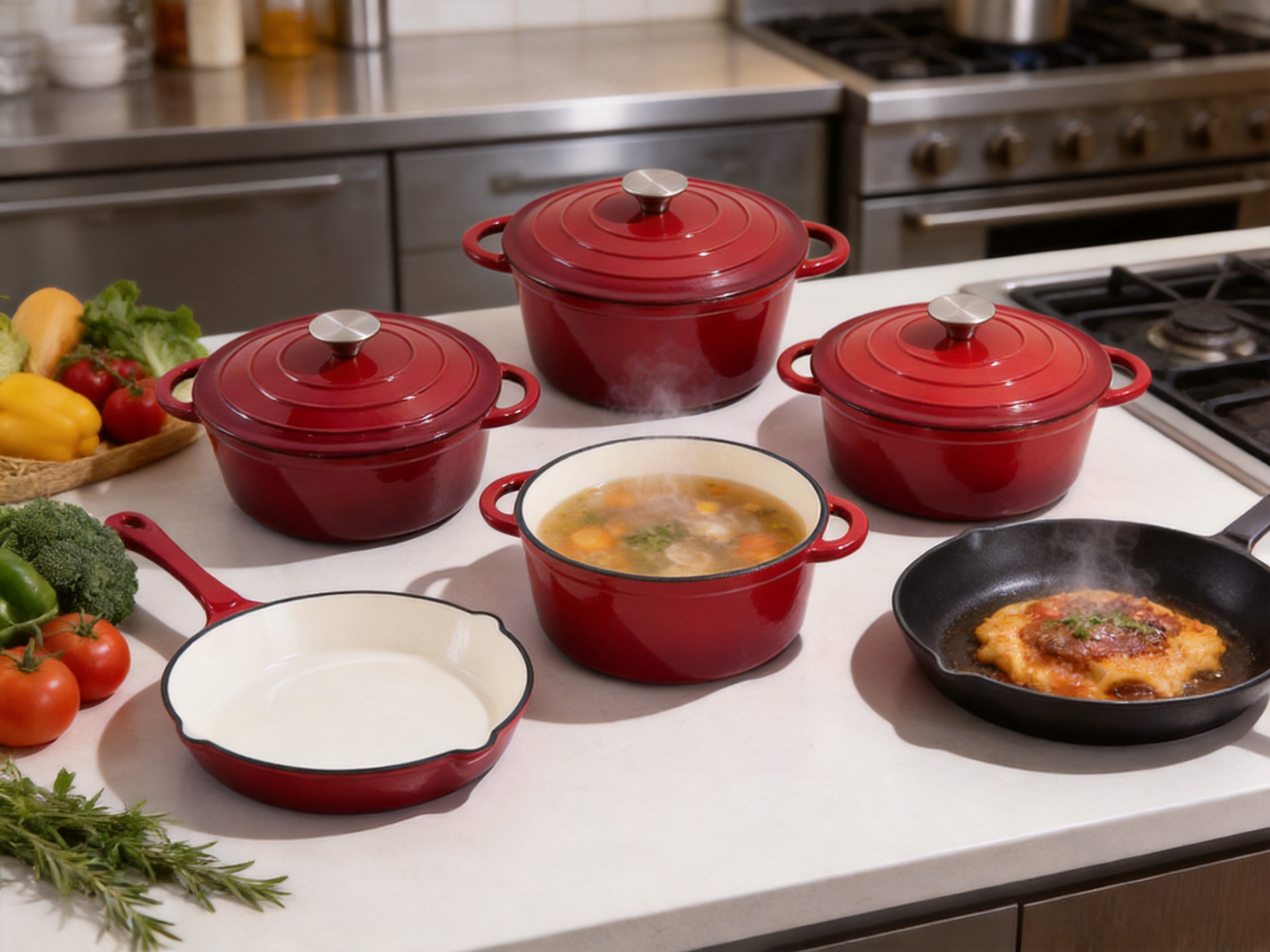
Frying is supported by the broad surface of the 25 cm pan and the heat-retaining cast iron body. Users should preheat gradually and use an appropriate amount of oil or cooking fat. Moderate heat is generally more suitable than immediately applying very high heat, particularly when preserving the condition of the enamel surface is a priority.
Stewing benefits from the cast iron construction because the body can hold heat after ingredients are added. This supports steady cooking for meat, poultry, vegetables, beans, and other ingredients that require time to soften. The enamel surface also makes the cookware suitable for recipes in which liquid, salt, or acidic ingredients remain in contact with the vessel for an extended period under normal temperature control.
Simmering is another important application. Once the contents reach the desired temperature, the burner can be reduced to maintain a gentle cooking process. The cast iron body helps minimize rapid temperature fluctuations, while the included lids can help retain moisture and heat where applicable.
Other possible uses include preparing soups, tomato-based sauces, rice dishes, braised vegetables, shallow frying, reheating leftovers, and cooking one-pot meals. Users should always follow the specific care instructions supplied with the cookware and confirm compatibility before using the set on any heat source beyond the stated gas-stove application.
7-Piece Enameled Cast Iron Nonstick Cookware Set
Handle and Lid Design for Safer Handling
Cookware performance is not determined by the body alone. Handling comfort influences how safely and confidently a user can move a hot pot or pan. This set uses wide, sturdy handles designed to provide a more secure grasp. A broad handle can distribute pressure across the hand and offer improved control when transferring cookware from the burner to a work surface.
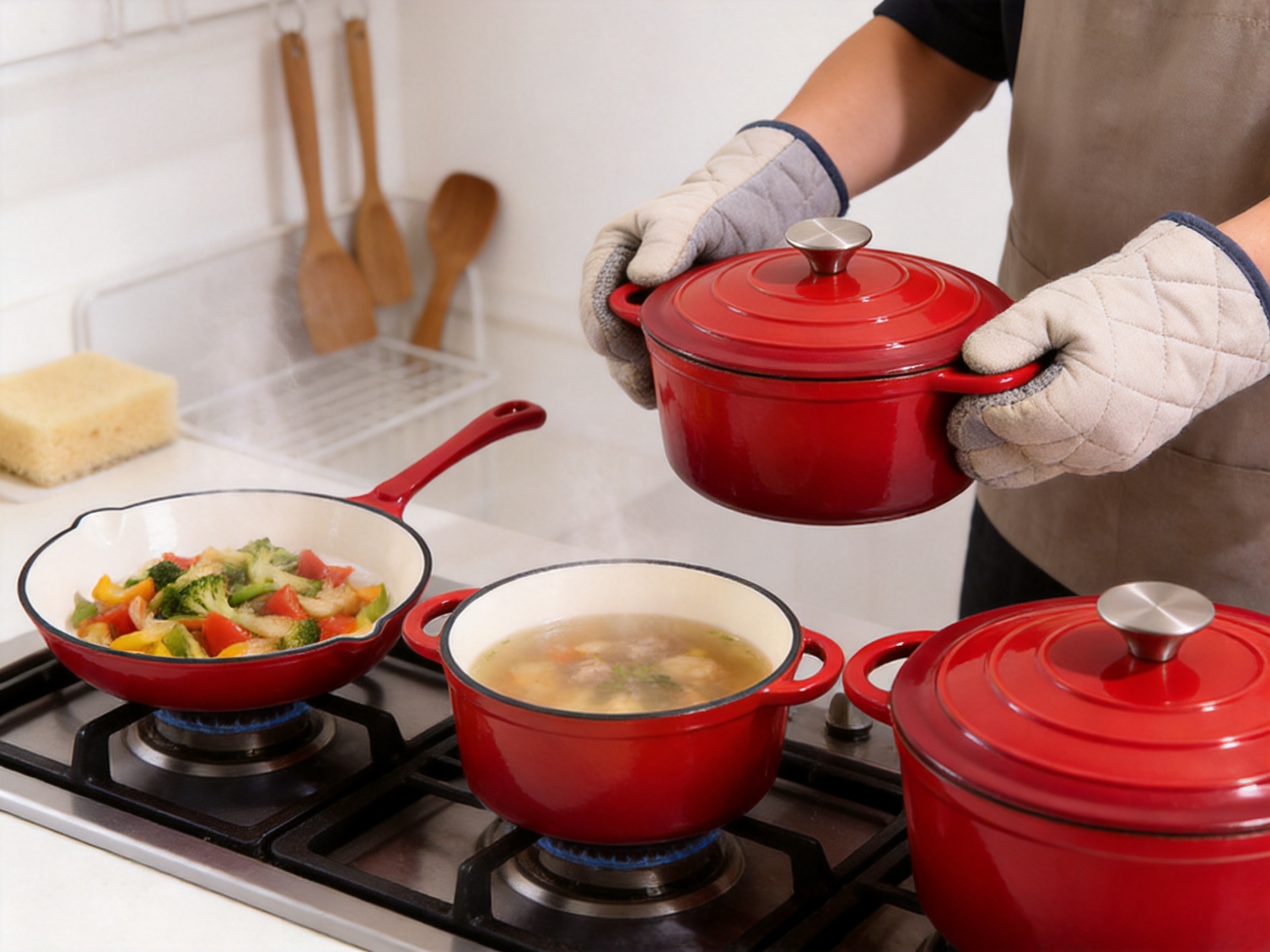
Cast iron is naturally heavier than many aluminum or thin stainless steel products. For that reason, the handle design is particularly important. Users should lift the cookware with both hands when necessary, avoid sudden movements, and use heat-resistant protection whenever the handles may become hot. The wide construction is intended to support handling, but it does not eliminate the need for normal cookware safety practices.
The stainless steel lid knobs provide a firm grip and coordinate with the durable appearance of the cast iron body. Stainless steel is commonly selected for knobs because it is strong, easy to clean, and visually compatible with a variety of kitchen styles. Users should remember that metal knobs can become hot during cooking and should be handled with appropriate protection.
For commercial and hospitality buyers, handle stability can influence product satisfaction, return rates, and user reviews. A cookware set that looks attractive but feels unstable may receive poor feedback. Accordingly, handle attachment, alignment, surface smoothness, and resistance to movement are important quality-control checkpoints during production.
Manufacturing Strengths and Quality-Focused Production
Zhejiang Echo Industry And Trade Co., Ltd. is a kitchenware supplier and manufacturer based in Zhejiang, China. The company provides aluminum cookware, stainless steel cookware, cast iron cookware, and kitchen utensils for buyers in different countries and regions. Its product range allows buyers to source multiple categories through one supply relationship rather than coordinating separate factories for every material.
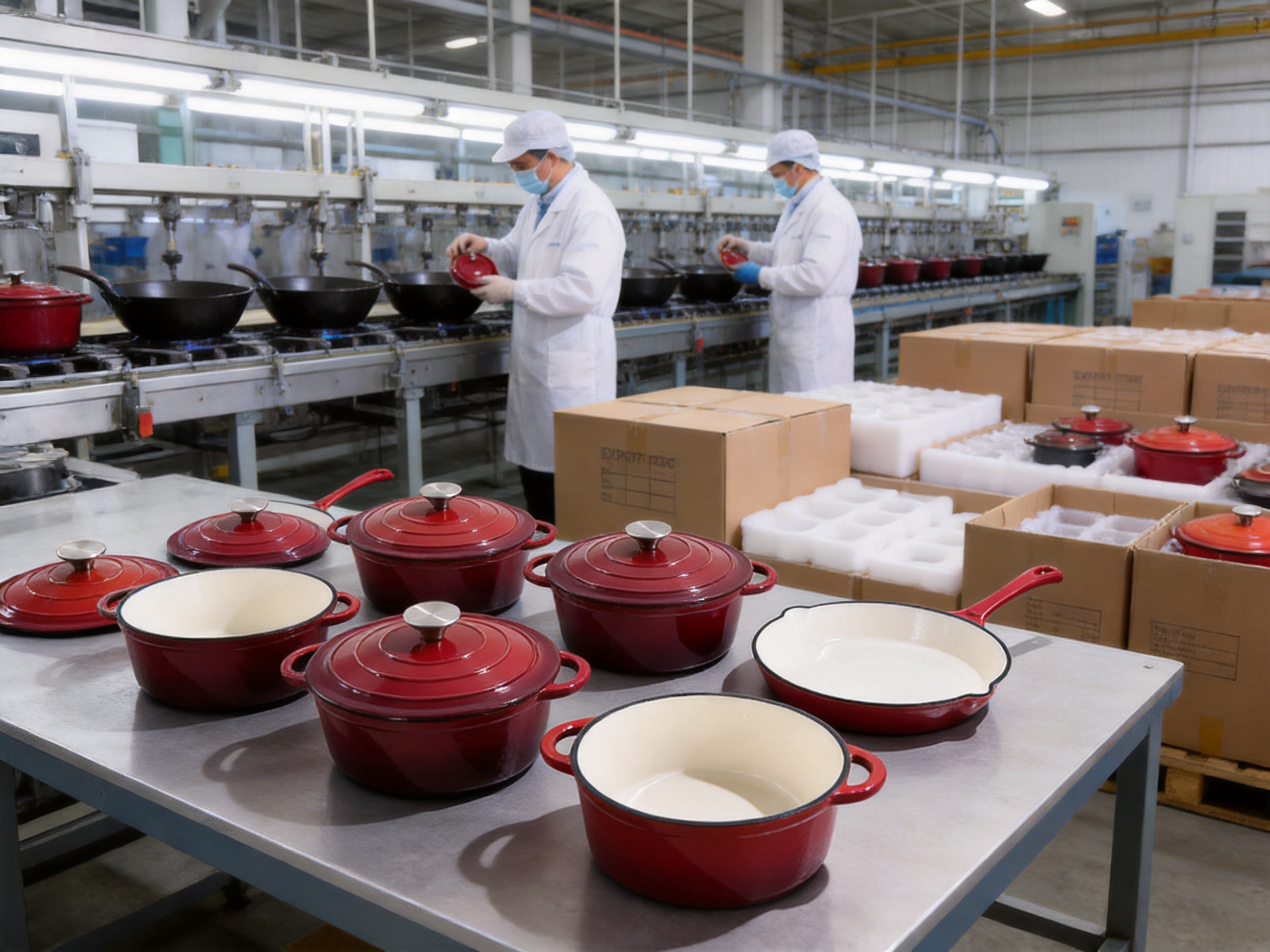
The company’s manufacturing strength begins with material-specific production knowledge. Cast iron requires different processing considerations from aluminum or stainless steel. Body formation, surface preparation, enamel application, coating consistency, handle assembly, lid fitting, inspection, and packaging must be managed according to the characteristics of the finished product.
For an enameled cast iron set, a quality-focused production process generally includes several controlled stages. The first stage is material preparation. Cast iron components must be produced with an appropriate composition and formed with attention to wall thickness, dimensional stability, and structural integrity. Consistent material preparation helps reduce variations in weight, shape, and thermal behavior from one batch to another.
The next stage is body finishing. Cast iron surfaces may require cleaning, removal of residues, edge treatment, and inspection before enamel is applied. Surface preparation is important because the quality of the bond and the visual appearance of enamel can be affected by contamination, unevenness, or insufficient preparation.
Enamel application must be handled with care. The coating should be distributed evenly over the designated surfaces, including the interior and exterior areas specified for the product. Excessive variation may affect appearance, cleaning performance, or the overall perception of quality. A controlled curing or firing stage is then used to form the finished enamel surface according to the production specification.
After coating, each item can be checked for visible defects such as pinholes, bubbles, uneven color, exposed areas, sharp edges, cracks, or inconsistent coverage. Dimensions and fit should also be inspected, especially around rims, lids, handles, and contact surfaces. These checks are essential for maintaining consistency when multiple pieces are packaged as one coordinated set.
Handle and knob installation represents another important manufacturing step. Wide handles must be positioned correctly and securely attached. Lid knobs should be firmly assembled, aligned, and checked for looseness. The finished product should be examined for movement, sharp points, rough edges, and assembly defects before packing.
Packaging is particularly important for cast iron because the product is heavy and enamel surfaces can be damaged by impact. A suitable packaging program should help prevent pieces from striking one another during handling and transportation. Internal separation, protective materials, stable placement, and carton strength all contribute to reducing the risk of chips, scratches, and deformation.
The company also offers one-stop cookware solutions, ODM and OEM customization, product certification assistance, flexible minimum order quantities, and sustainable and healthy product development. These services are valuable for importers and brands that require more than a standard catalog item. Buyers may need customized colors, logos, packaging, labels, set combinations, instruction materials, or market-specific documentation.
Supplier Advantages for International Buyers
A multi-category supplier can simplify procurement. A buyer sourcing cookware, kitchen utensils, and related accessories from one experienced partner may reduce communication complexity, consolidate inspections, and coordinate shipments more efficiently. This is especially useful for small and medium-sized businesses that need product variety without maintaining relationships with a large number of factories.
ODM and OEM capability can help retailers create differentiated product lines. Instead of selling an indistinguishable cookware set, a buyer may request a particular exterior color, packaging style, handle treatment, brand presentation, or product assortment. Customization should be discussed in detail before production, including feasibility, minimum quantities, development charges, sampling, lead times, and inspection requirements.
Flexible MOQ support can also benefit emerging brands. Large established retailers may purchase full container quantities, while smaller businesses may need a more controlled initial order to test market demand. A supplier capable of discussing different order sizes can help buyers manage inventory exposure and build a product range gradually.
Product certification assistance is another relevant service. Different markets may apply different requirements to food-contact materials, labeling, packaging, testing, and documentation. The supplier can assist buyers in identifying the documents and testing programs required for their target market. Buyers remain responsible for confirming the legal requirements that apply to their own products and sales channels.
How This Set Compares with Competing Cookware Types
Every cookware material has strengths and limitations. The best choice depends on cooking habits, maintenance expectations, handling preferences, price positioning, and the intended market. The following comparison highlights the practical position of enameled cast iron relative to aluminum, stainless steel, raw cast iron, and standard coated cookware.
Cookware Type |
Main Strengths |
Common Limitations |
Position of This Set |
Enameled cast iron |
Heat retention, sturdy construction, attractive appearance, smooth food-contact surface |
Heavier than aluminum and requires careful handling to protect enamel |
Combines cast iron thermal performance with easier maintenance than raw cast iron |
Aluminum cookware |
Light weight, fast heating, accessible price |
May lose heat quickly and can require a coating or treatment for certain foods |
Offers greater thermal mass and a more substantial premium feel |
Stainless steel cookware |
Durability, resistance to staining, suitability for many cooking environments |
Food may stick if heat and oil are not managed correctly |
Provides a more naturally smooth enamel cooking surface for convenient daily use |
Raw cast iron |
Excellent heat retention and high structural durability |
Requires seasoning and careful drying; acidic foods may affect the seasoning |
Offers a coated alternative with less seasoning maintenance |
Conventional nonstick cookware |
Easy food release and easy cleaning |
Coating life can be affected by high heat, scratches, and harsh cleaning |
Provides a heavier cast iron body and enamel appearance |
The main competitive advantage of this set is its balance. It is not intended to be the lightest cookware available, nor is it designed to replace every type of professional stainless steel pan. Instead, it addresses a broad group of users who want heat stability, an attractive finish, multiple sizes, and a practical cooking surface in one package.
For retailers, the product can occupy a middle-to-premium position between inexpensive lightweight cookware and high-priced specialty cast iron brands. Its coordinated seven-piece format creates a clear value proposition: customers receive multiple cooking vessels, consistent styling, and the performance benefits associated with cast iron without choosing each item separately.
Understanding PFOA-Free and Healthy-Coating Claims
Many cookware buyers search for terms such as PFOA-free cookware, healthy coating cookware, eco-friendly cookware, and wear-resistant coating cookware. These terms should be communicated accurately and in context. PFOA-free generally refers to manufacturing that does not use perfluorooctanoic acid in the production process. It does not mean that all coated cookware is made from the same material or that a coating is indestructible.
In the broader cookware market, PFOA-free products may use different surface technologies, including PTFE-based systems or ceramic coatings, depending on the product design. The product described here is an enameled cast iron set with a food-grade enamel surface. Buyers should distinguish between marketing language used for general coated cookware and the specific material construction of this set.
Safe use depends on the product specification, manufacturing quality, applicable food-contact requirements, and the way the cookware is handled. Users should avoid overheating empty cookware, use appropriate heat levels, and follow the care instructions provided by the supplier. The surface should not be intentionally cut, scraped, or exposed to unnecessary impact.
Regulatory and safety expectations vary between countries. In the United States and European markets, food-contact cookware is commonly evaluated through applicable migration, material, and safety frameworks. Importers should request the documentation relevant to their destination market and product configuration rather than relying only on broad advertising terms.
It is also important to avoid treating the phrase “healthy coating” as a substitute for technical information. A responsible product description should identify the cookware body, surface technology, intended use, care instructions, and any available test documentation. Clear information helps retailers build customer trust and reduces confusion between enamel, ceramic, PTFE, seasoning, and other surface treatments.
Care and Maintenance Recommendations
Correct care can help preserve the appearance and cooking performance of enameled cast iron. Before first use, users should read the supplied instructions and wash the cookware with warm water and a mild detergent. The cookware should be dried thoroughly before storage, especially around rims, handles, lids, and any areas where moisture may remain.
Gradual heating is recommended. Cast iron responds well to controlled temperature changes, and gradual heating helps users avoid unnecessary thermal stress. Starting with moderate heat is generally more appropriate than placing a cold enamel-coated vessel over an extremely high flame.
Although the enamel surface is designed for practical cooking, it should still be treated carefully. Metal utensils, sharp tools, abrasive pads, and aggressive scouring can create marks or damage the finish. Silicone, wood, nylon, or other cookware-compatible utensils are generally preferable for routine use.
Users should avoid sliding heavy cookware across glass, stone, or other delicate surfaces. Lifting rather than dragging helps protect both the cookware and the countertop or stovetop. The weight of cast iron also means that users should use stable shelves and avoid storing the set where it may fall.
For cleaning, allow the cookware to cool naturally before washing. Sudden temperature changes, such as placing a very hot pan directly into cold water, should be avoided. Warm water and mild detergent are suitable for normal residue. If food has become attached, soaking can help loosen it before gentle cleaning.
Stacking should be performed carefully. If the cookware pieces are nested, protective separators may help reduce contact between enamel surfaces. The pieces should be stored in a dry location with sufficient ventilation. Proper storage reduces the chance of chips, scuffs, and moisture-related problems.
Recommended User Practices
Practice |
Recommendation |
Reason |
Heating |
Begin with low or moderate heat and increase gradually |
Supports controlled heating and helps protect the enamel surface |
Empty cookware |
Do not leave the cookware empty over a high flame |
Reduces unnecessary overheating |
Utensils |
Use wood, silicone, nylon, or other compatible tools |
Helps reduce scratching and surface marks |
Cleaning |
Use warm water, mild detergent, and a soft sponge |
Maintains the finish and avoids abrasive damage |
Temperature changes |
Allow the cookware to cool before washing |
Helps avoid thermal shock |
Storage |
Use separators when stacking and store in a dry place |
Reduces impact, rubbing, and moisture exposure |
Handling |
Use both hands when the cookware is heavy or full |
Improves balance and reduces the risk of dropping the item |
Quality Control Priorities for Buyers
Importers and distributors should evaluate more than product photographs when assessing a cookware supplier. A practical quality-control program should cover raw materials, dimensions, enamel appearance, coating integrity, assembly, packaging, labeling, and shipment consistency.
Material checks help confirm that the product body corresponds to the agreed cast iron specification. Buyers may also compare sample weights and dimensions across different production units. Significant variation can affect customer expectations, burner stability, shipping costs, and the perceived quality of the set.
Enamel inspection should focus on coverage, color consistency, surface smoothness, edge treatment, and visible imperfections. Small visual differences may occur in enamel products, but the acceptable range should be agreed before mass production. Any exposed cast iron, sharp edge, significant crack, or serious surface defect should be treated as a quality concern.
Functional checks should include handle stability, lid fit, knob attachment, base flatness, and general balance. The pan and pots should sit securely on the intended cooking surface. Lids should be checked for appropriate fit without forcing or excessive movement.
Packaging inspection is equally important. Since cast iron products are heavy, packaging should be tested for adequate protection during loading, unloading, inland transport, and international shipment. Buyers may request carton drop testing or other agreed procedures depending on the sales channel and transportation conditions.
For branded programs, packaging and labeling should be reviewed carefully. Product names, material descriptions, usage instructions, warnings, country-of-origin information, barcodes, and carton marks should match the buyer’s requirements. Consistent documentation helps reduce customs, warehouse, and customer-service problems.
Commercial Opportunities for Retailers and Distributors
The seven-piece format creates multiple sales opportunities. It can be marketed as a complete cookware solution for new households, families upgrading their kitchens, cooking enthusiasts, gift buyers, and consumers interested in durable-looking kitchen products. The visual appeal of enamel can also support seasonal color programs or coordinated kitchen collections.
For specialty kitchen retailers, the set can be displayed alongside utensils, trivets, oven gloves, storage accessories, and recipe-focused products. The frying pan and multiple stock pots create opportunities for cross-selling because customers may want tools suited to different cooking applications.
For online sellers, product presentation should explain the difference between the cast iron body and the enamel surface. Customers often associate cast iron with heavy maintenance, while others may confuse enamel with lightweight nonstick coating. Clear photography, dimensions, care instructions, and use guidance can help set accurate expectations.
For hospitality suppliers, the product may suit boutique accommodation, serviced apartments, cooking schools, gift packages, or selected food-service environments. Commercial buyers should evaluate weight, usage frequency, washing procedures, replacement policies, and the precise heat-source requirements before selecting the set for intensive professional service.
For private-label brands, the product can serve as a foundation for a broader cookware collection. Related aluminum, stainless steel, cast iron, and kitchen utensil items can be sourced from the same supplier to create a consistent product portfolio. This approach can simplify product development and allow a brand to offer options at different price levels.
Environmental and Product-Life Considerations
Product sustainability is influenced by manufacturing, packaging, product lifespan, transportation, and end-of-life handling. Cast iron is a robust material, and a well-maintained cookware piece may remain useful for an extended period. Longer use can reduce the frequency of replacement compared with low-cost products that rapidly lose functionality.
However, product longevity depends on realistic care. Enamel should be protected from sharp impacts, extreme temperature changes, and abrasive cleaning. Retailers should provide practical instructions rather than presenting the cookware as maintenance-free or indestructible.
Packaging efficiency also matters. The stated carton quantity of four sets provides a basis for shipment planning. Buyers can review carton dimensions, palletization, container loading, protective materials, and packaging design to balance product protection with material use. Customized packaging can be developed with the supplier where the expected order volume supports the investment.
The company’s stated focus on sustainable and healthy product development indicates an interest in developing cookware products that respond to changing buyer expectations. Buyers seeking sustainability claims should request specific information about materials, packaging, production controls, testing, and documentation so that public claims remain accurate and verifiable.
Q&A: Frequently Asked Questions
What material is used for this cookware set?
The cookware body is made from cast iron. The pieces are finished with an enamel surface designed to create a smooth, food-grade cooking layer and an attractive exterior.
How many pieces are included?
The product is described as a seven-piece set. Its listed cookware configuration includes 20 cm, 22 cm, and 24 cm stock pots together with a 25 cm frying pan. Buyers should confirm the exact contents, lid allocation, and packaging configuration with the supplier before placing a production order.
What cooking methods are suitable?
The set is suitable for frying, stewing, simmering, sautéing, reheating, soups, sauces, braising, and other everyday stovetop applications. The cast iron body is especially useful for recipes that benefit from stable heat and gradual cooking.
Can the cookware be used on a gas stove?
Yes. The product is designed for use on gas stoves. Buyers who intend to use the set on induction, electric, ceramic, oven, or other heat sources should confirm compatibility with the supplier before making a purchase.
Does enameled cast iron require seasoning?
The enamel surface is designed to reduce the need for the traditional seasoning routine associated with raw cast iron. Users should still wash, dry, and store the cookware correctly, and they should follow the care instructions supplied with the product.
Is the surface suitable for acidic foods?
The enamel surface is intended to provide a barrier between food and the cast iron body, making it suitable for normal cooking with ingredients such as tomatoes, vinegar, lemon, and sauces. Long cooking times, excessive heat, and poor-quality or damaged surfaces can affect product life, so temperature control and careful maintenance remain important.
Can metal utensils be used?
Metal utensils are not recommended for routine use because sharp or abrasive tools may mark or damage the enamel surface. Wood, silicone, nylon, or other compatible utensils are preferable.
How should the cookware be cleaned?
Allow the cookware to cool before washing. Use warm water, mild detergent, and a soft sponge for normal cleaning. Stubborn residue can usually be loosened by soaking rather than aggressive scrubbing.
Are the handles heat-resistant?
The set has wide, sturdy handles designed to improve control and handling. Users should still assume that handles may become hot during cooking and should use appropriate protection. The stainless steel lid knobs may also become hot.
What is the SKU?
The listed SKU is JS02. Buyers should use this identification when discussing quotations, samples, purchase orders, packaging, and inspection records.
How is the product packed for wholesale shipment?
The listed carton quantity is four sets per carton. The carton size is 34 × 29.5 × 41.3 cm, with an approximate volume of 0.042 cubic meters. Final packaging details should be confirmed because packaging may change for customized orders or different markets.
Does the supplier support OEM and ODM projects?
Yes. Zhejiang Echo Industry And Trade Co., Ltd. states that it provides ODM and OEM customization, one-stop cookware sourcing, product certification assistance, flexible minimum order quantities, and product development support.
Can buyers request product testing or certification documents?
The supplier offers product certification assistance. Buyers should identify the destination market and request the relevant food-contact, material, performance, and packaging documents before finalizing a commercial program.
What makes this set different from lightweight aluminum cookware?
The cast iron construction gives the set greater thermal mass, heat retention, and a more substantial feel. Aluminum cookware is usually lighter and may heat more quickly, but the enameled cast iron set is intended for users who value stable cooking temperatures and durable-looking construction.
What makes it different from raw cast iron?
The enamel surface provides a smooth food-contact layer and reduces the need for traditional seasoning. It also offers an attractive finish and helps separate food from the underlying iron body during normal cooking.
Conclusion
The 7-Piece Enameled Cast Iron Nonstick Cookware Set combines a heat-retaining cast iron body, a smooth enamel surface, multiple pot sizes, a practical frying pan, wide handles, and stainless steel lid knobs. Its primary advantage is balance: it offers the thermal stability and substantial construction associated with cast iron while providing a more convenient cooking and cleaning experience than exposed raw cast iron.
The set is suitable for buyers seeking a coordinated cookware solution for frying, stewing, simmering, sauces, soups, braising, and everyday family meals. Its seven-piece format supports household use, retail presentation, hospitality programs, gift collections, and private-label development.
For commercial buyers, the product is supported by the broader capabilities of Zhejiang Echo Industry And Trade Co., Ltd., including multi-category cookware sourcing, OEM and ODM services, flexible MOQ discussions, certification assistance, and product development support. The company’s ability to supply aluminum, stainless steel, cast iron cookware, and kitchen utensils can help buyers build a more complete kitchenware portfolio through one manufacturing partner.
As with any coated or enameled product, long-term satisfaction depends on correct use, controlled heating, careful cleaning, and protection from impact. Buyers should confirm the final set configuration, heat-source compatibility, testing documents, packaging specifications, and customization details before mass production. With those points properly managed, this cookware set can provide a strong combination of performance, appearance, versatility, and commercial value.
References
1. General food-contact cookware safety principles and migration-testing practices used in major international markets.
2. General technical literature on cast iron heat retention, thermal mass, and cookware performance.
3. General care and maintenance guidance for enameled cast iron cookware.
4. General manufacturing quality-control practices for cast iron forming, enamel finishing, handle assembly, and protective packaging.
5. Product specification materials for the 7-Piece Enameled Cast Iron Nonstick Cookware Set, SKU JS02.
6. Supplier information concerning cookware categories, OEM and ODM services, certification assistance, flexible MOQs, and sustainable product development.
Product: 7-Piece Enameled Cast Iron Nonstick Cookware Set
Recommended Articles
Product Category
Related products
-
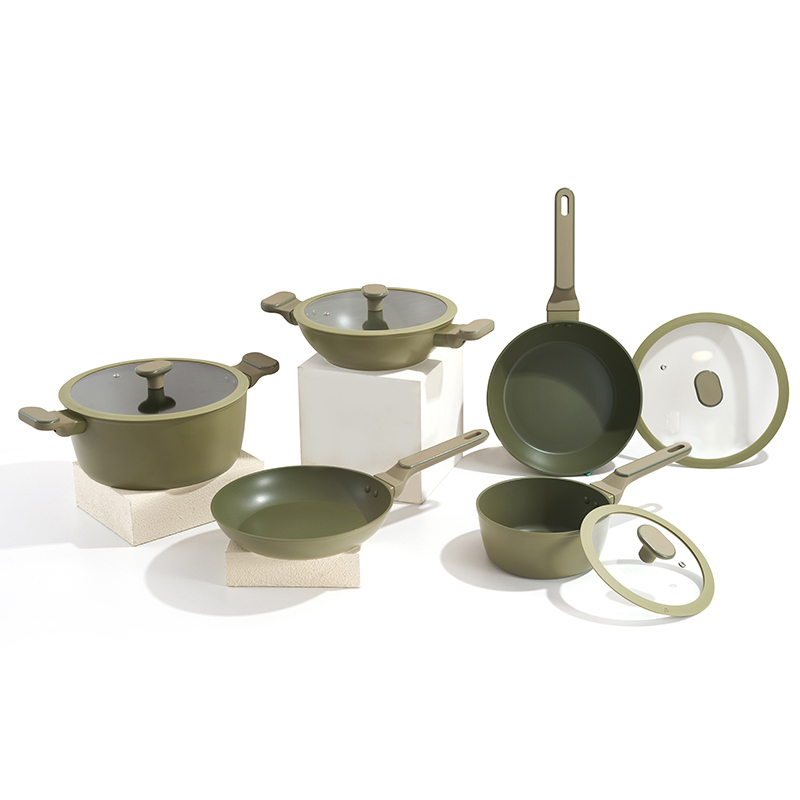
-
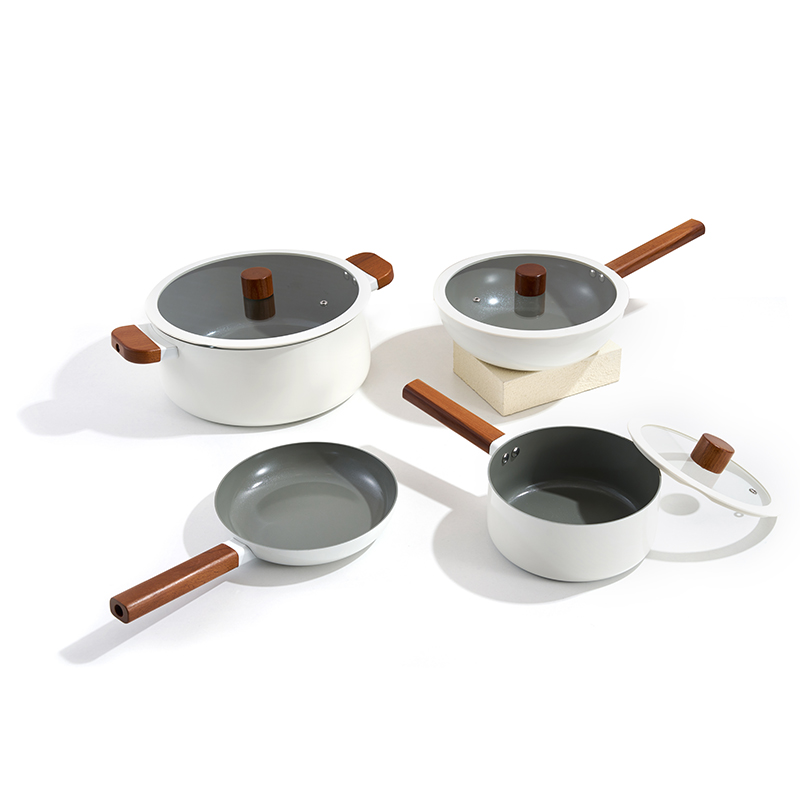
This cookware set has a ceramic non-stick inner liner, a heat-resistant wooden h...
See Details -
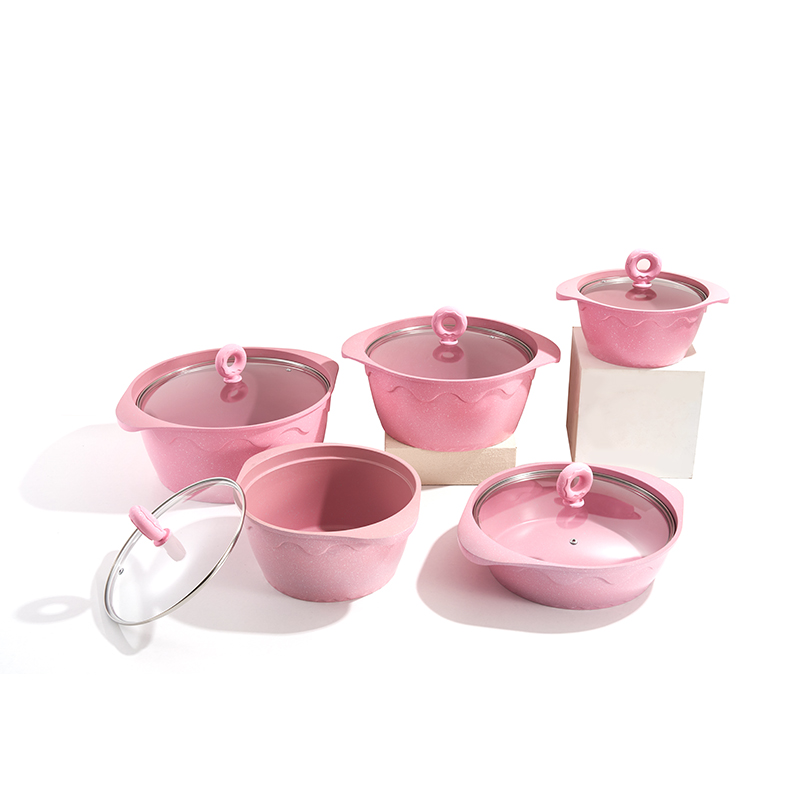
This cookware set is made of food-grade non-stick material, with a unique eye-ca...
See Details -
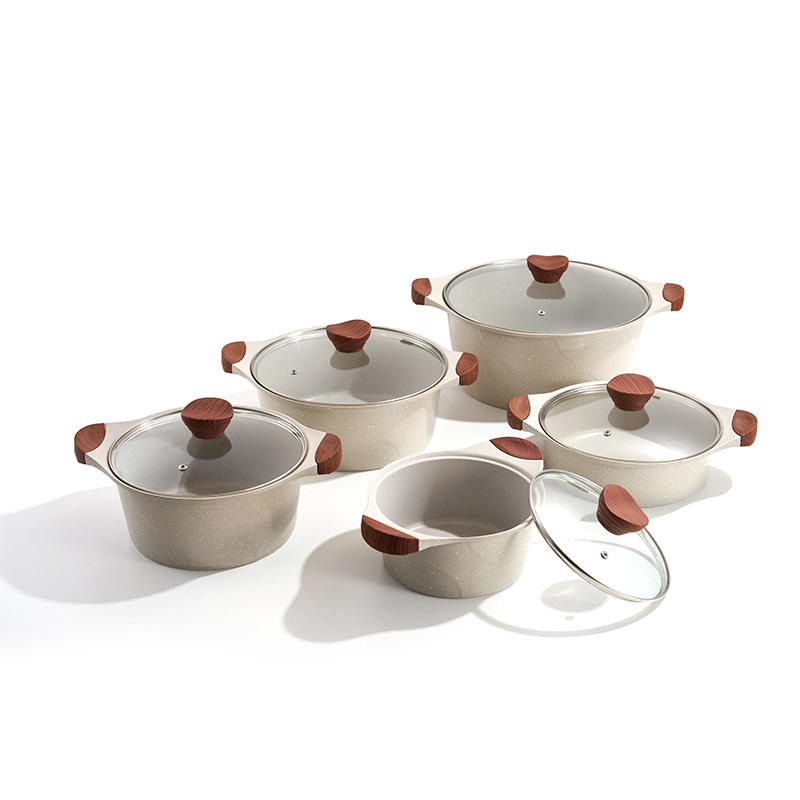
This off-white cookware set is made of wear-resistant non-stick material, with w...
See Details
Whether you're looking for bulk purchases or have any custom requirements, We are here to offer the best
solutions for you.
tiffany.zhong@echocn-trading.com
PHONE
+86-19561173975
+86-19557020621 (Hazel Wu)
ADD
Room 301, Unit 3014, No. 175 Qifeng Avenue, Wenqiao Town, Taizhou, Zhejiang, China
Fill Out the Form for More Information
Copyright © Zhejiang Echo Industry And Trade Co., Ltd.
All Rights Reserved.

China Cookware Set Manufacturer