
 en
 Español

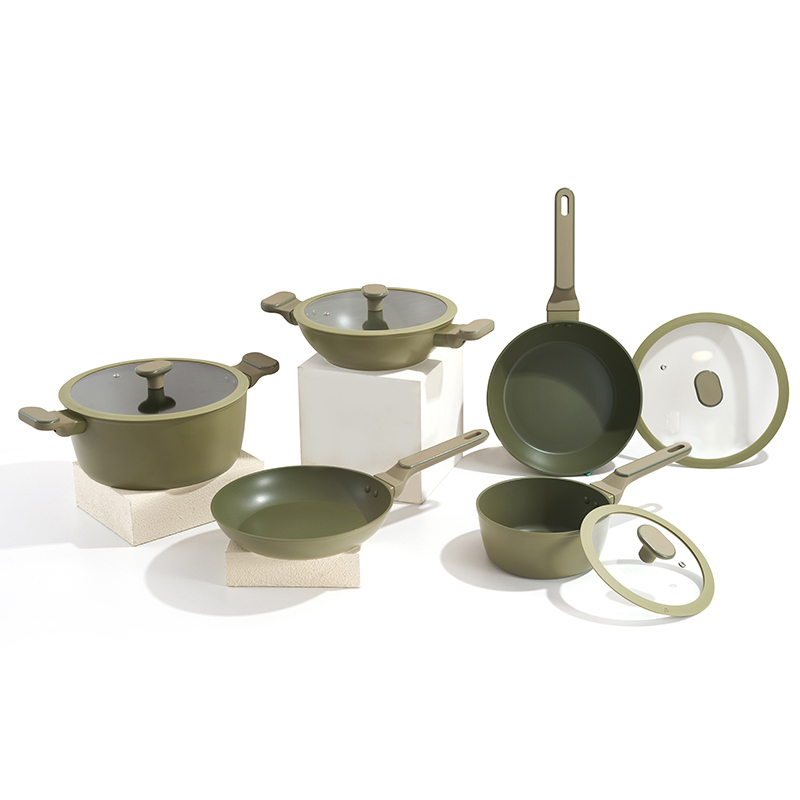
This cookware set features a non-stick coating, even heat conduction, and multi-...
See Details
10-Piece Spark Aluminum Pot Set: Practical Multi-Size Cookware for Modern Kitchens
Date:Oct 25, 2026
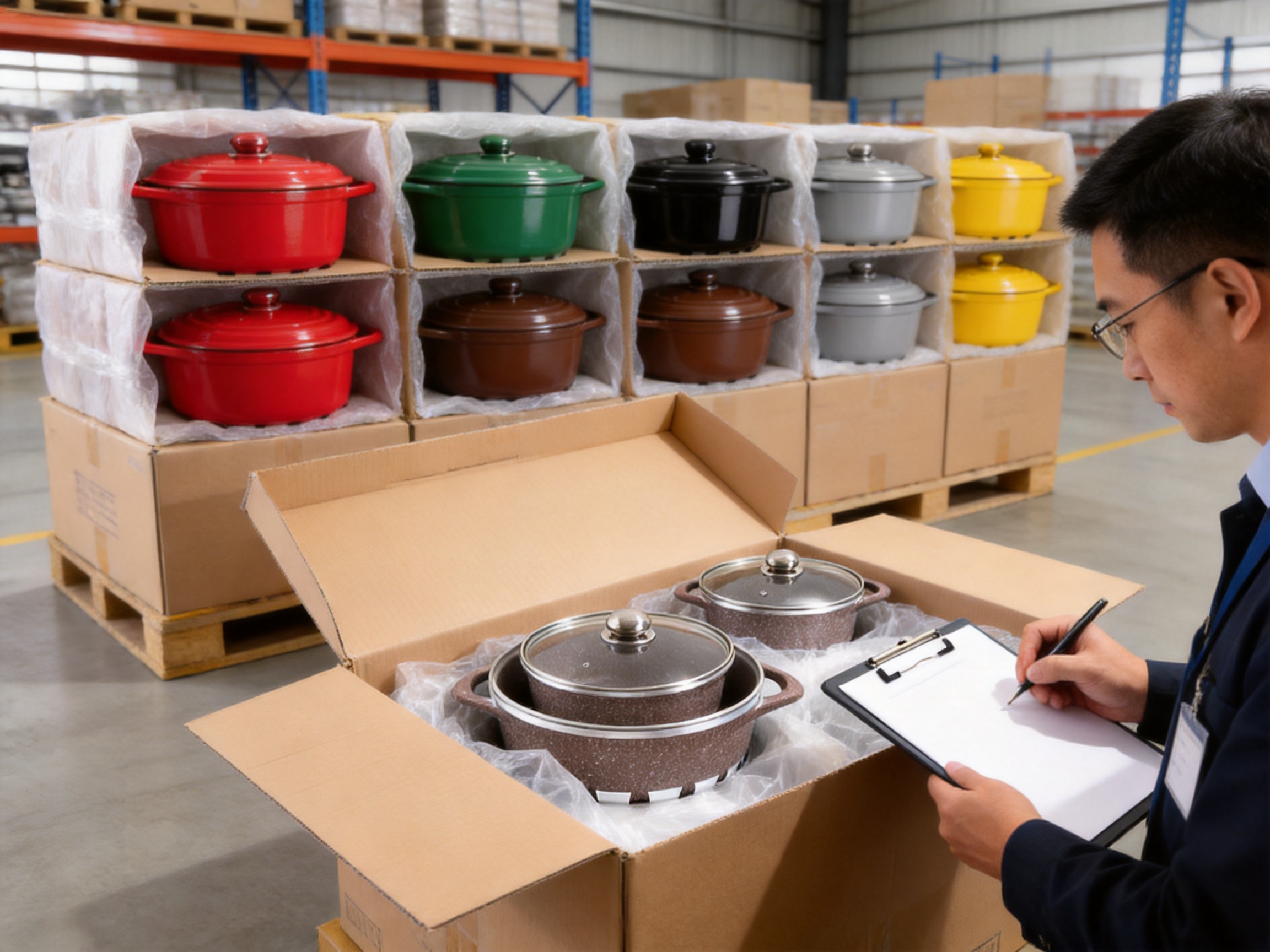
Choosing a cookware set is an important decision for households, restaurants, retailers, and professional buyers. A well-designed set should offer more than an attractive appearance. It should provide useful sizes, dependable cooking performance, comfortable handling, simple cleaning, and a service life that justifies the investment. The 10-Piece Spark Aluminum Pot Set is designed around these practical requirements, combining an aluminum body, a granite-textured exterior, an anti-slip ridged base, clear glass lids, and multiple sizes for everyday cooking.
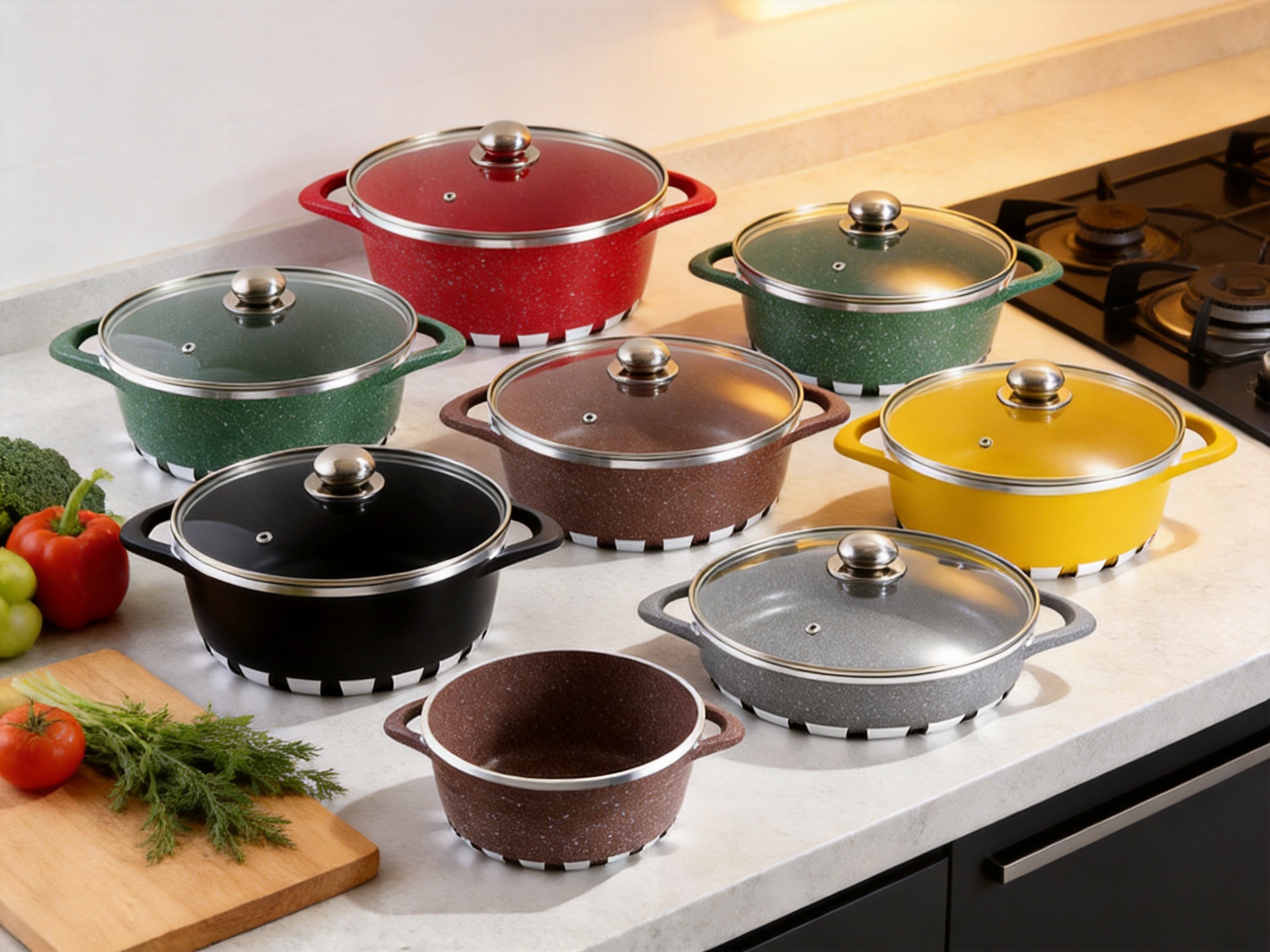
This cookware set is positioned as a versatile solution for stewing, braising, simmering, reheating, and preparing family-sized meals. Its range of pot dimensions helps users select a suitable vessel for different quantities of food, while the glass lid allows cooking progress to be observed without unnecessarily releasing heat. The available colors, including red, green, black, brown, grey, and yellow, also give distributors and retailers flexibility when serving different consumer preferences.
For importers and kitchenware buyers, the product offers additional value through a structured supply capability. Zhejiang Echo Industry And Trade Co., Ltd. operates as a cookware and kitchenware supplier from Zhejiang, China, with product coverage that includes aluminum cookware, stainless steel cookware, iron cookware, and kitchen utensils. Its stated capabilities include one-stop sourcing, ODM and OEM customization, product certification assistance, flexible minimum order quantities, and sustainable and healthy product development.
The result is a cookware set that combines consumer-friendly features with a supply model suitable for international distribution. It is not presented merely as a collection of pots. It is a coordinated product solution intended to meet the needs of households, hospitality businesses, cookware retailers, wholesalers, and brand owners seeking a practical aluminum cookware line.
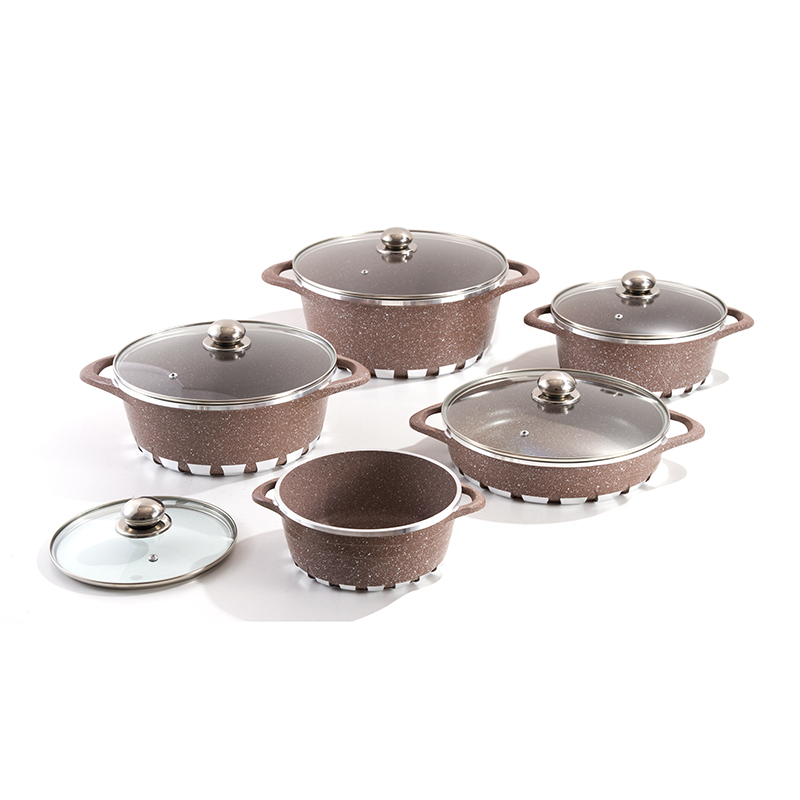
10pcs Spark Aluminium pot Set
Product Overview and Core Configuration
The 10-Piece Spark Aluminum Pot Set has the product code LY05 and belongs to the aluminum cookware category. Its principal material is aluminum, a widely used cookware material valued for its relatively low weight, efficient heat transfer, and practical suitability for everyday food preparation. The set is offered in a size range identified as 20 to 28 or 30 centimeters, depending on the applicable product configuration.
Because the commercial description uses a size range rather than listing every individual component in detail, buyers should confirm the exact ten-piece configuration before placing a purchase order. The final assortment may need to specify the number of pots, the number of lids, the diameter of each vessel, packaging quantities, and whether any accessories are included. This confirmation is especially important for wholesale catalogs, private-label packaging, and online product listings.
The main design features include a granite-textured body, an anti-slip ridged base, and clear glass lids with metal knobs. Together, these details address several common cookware expectations. The textured appearance creates a distinctive visual identity, the ridged base is intended to improve stability during use, and the transparent lid supports convenient monitoring of food while it cooks.
The product is designed for multi-size cooking. A smaller pot can be used for sauces, side dishes, grains, or small portions, while larger vessels are suitable for family meals, soups, stews, braised dishes, and other preparations requiring more capacity. This variety helps reduce the need to purchase individual pots separately and allows users to build a more coordinated kitchen setup.
| Product Attribute | Provided Information | Practical Significance |
|---|---|---|
| Product name | 10-Piece Spark Aluminum Pot Set | Offers a coordinated multi-size cookware solution |
| SKU | LY05 | Supports product identification and order management |
| Category | Aluminum Cookware | Suitable for aluminum cookware collections and retail assortments |
| Material | Aluminum | Lightweight and suitable for efficient everyday cooking |
| Body finish | Granite-textured body | Creates a distinctive appearance and contemporary product identity |
| Base design | Anti-slip ridged base | Helps improve stability on a suitable cooking surface |
| Lid | Clear glass lid with metal knob | Allows users to observe cooking progress |
| Size range | 20–28 or 30 cm | Supports preparation of different quantities and recipes |
| Color options | Red, green, black, brown, grey, and yellow | Provides merchandising and consumer-choice flexibility |
| Carton dimensions | 71 × 36.5 × 65 cm | Useful for logistics planning and warehouse allocation |
| Carton volume | 0.168 cubic meters | Supports freight, container, and storage calculations |
| Carton weight | 8 kg | Assists shipping estimates and handling planning |
Why Aluminum Remains a Practical Cookware Material
Aluminum is widely used in cookware because it offers a useful balance between weight, heat response, and manufacturing flexibility. Compared with many heavier cookware materials, aluminum is easier for consumers to lift, move, wash, and store. This is particularly valuable for users who cook frequently, for older adults, and for kitchens where cookware must be handled several times each day.
Its relatively efficient heat transfer can help cookware respond quickly when the heat level is adjusted. In practical use, this responsiveness is valuable for simmering, reducing sauces, reheating food, and controlling braised or stewed dishes. Users should still apply moderate heat and follow the product care instructions, because efficient heat transfer does not eliminate the possibility of overheating.
Aluminum also provides manufacturers with flexibility in shaping cookware bodies and developing coordinated product families. This supports the creation of multiple pot sizes with consistent proportions, matching colors, and unified finishing. For a product set, consistency is important because consumers expect the pieces to look like a complete collection rather than unrelated individual items.
The aluminum construction also contributes to transportation efficiency. A lighter cookware solution may be easier to distribute through retail channels and more convenient for customers to carry home. For wholesalers and importers, the combination of product quantity, carton weight, and carton volume can be considered when evaluating shipping costs and market positioning.
At the same time, aluminum cookware requires responsible handling. It should not be treated as indestructible, and users should avoid severe overheating, sharp utensils, and unsuitable cleaning methods. The care instructions supplied for this set are therefore an important part of the product experience. Correct use helps preserve the appearance and functional condition of the cookware over time.
Granite-Textured Body and Visual Differentiation
The granite-textured body gives the cookware a recognizable appearance that can help it stand apart from plain aluminum pots. In a crowded cookware market, visual differentiation matters. Retailers need products that can be presented clearly on shelves, in catalogs, and in digital storefronts. A textured exterior can contribute to a more contemporary and premium-looking presentation without relying on excessive decorative elements.
The texture also creates a visual connection with current consumer interest in stone-inspired kitchen products. Many shoppers associate granite-style surfaces with modern home design, durable household equipment, and coordinated kitchen interiors. Although appearance alone does not determine cooking performance, it can influence the first impression and support stronger product presentation.
The available color selection expands this merchandising potential. Red may appeal to consumers who prefer energetic kitchen accents, while black and grey can suit minimalist or professional-looking interiors. Green, brown, and yellow provide additional options for retailers serving markets with stronger preferences for warm, natural, or colorful kitchen products.
For private-label buyers, the color range may support market segmentation. A distributor could select darker colors for a premium-oriented collection, brighter shades for seasonal promotions, or different colors for separate retail channels. The final color availability, finish consistency, packaging artwork, and production minimums should be confirmed during the quotation and sampling stages.
A granite-textured appearance also offers a potential advantage over basic smooth-finish cookware in visual comparison. When several cookware sets have similar capacities and materials, surface design can become a meaningful differentiating factor. The Spark set combines that appearance with functional features, allowing the product to be marketed as both attractive and practical.
Anti-Slip Ridged Base for Everyday Stability
The anti-slip ridged base is another notable feature of the design. A cookware vessel should sit securely on an appropriate cooking surface, particularly when it contains hot liquid or a substantial quantity of food. The ridged base is intended to help improve contact stability and reduce unnecessary movement during normal cooking.
Stability is useful during tasks such as stirring, adding ingredients, lifting a lid, and transferring food. It can also make the cookware feel more controlled during simmering and braising. However, the base should always be used on a compatible and level cooking surface, and users should avoid sliding a loaded pot aggressively across a cooktop.
The ridged structure contributes to product identity as well. Rather than presenting the base as an invisible technical detail, the design integrates it into the overall concept of the cookware. This supports a product story centered on controlled handling, practical use, and thoughtful construction.
Compared with cookware that has an entirely plain underside, a ridged base may provide a more distinctive physical profile. For buyers evaluating several aluminum cookware suppliers, such construction details can help distinguish a product beyond simple dimensions and color choices.
Product compatibility should nevertheless be communicated accurately. The provided information does not state that the set is suitable for induction cooking, oven use, dishwasher use, or microwave use. Retailers should avoid adding unsupported compatibility claims. Clear, accurate product communication is better for customer satisfaction and helps reduce returns caused by incorrect expectations.
Clear Glass Lids and Controlled Cooking
Each applicable pot is described as having a clear glass lid with a metal knob. A transparent lid provides a direct view of the food inside, allowing users to check simmering, liquid levels, and cooking progress without lifting the lid repeatedly. This can help users maintain a more consistent cooking process and avoid unnecessary heat loss.
Clear lids are especially useful for stewing and braising, which often require observation over an extended cooking period. Users can monitor the appearance of sauces and the movement of liquid while keeping the vessel covered. The lid can also help contain splashes and support a tidier cooking environment when used correctly.
The metal knob provides a firm point for lifting the lid. Users should remember that the knob and lid may become hot during cooking, so appropriate caution is necessary. A cloth, oven mitt, or other suitable protective tool may be required when handling hot cookware.
For product presentation, the glass lid reinforces the impression that the set is designed for complete cooking tasks rather than simple boiling. The combination of covered vessels and multiple sizes makes the collection suitable for recipes that require simmering, slow cooking, reduction, and covered preparation.
As with any glass cookware component, users should avoid sudden thermal shock and should not place a hot lid directly onto a very cold or wet surface unless the product instructions specifically permit it. Proper handling helps preserve the lid and contributes to longer product life.
Cooking Applications Across Different Meal Types
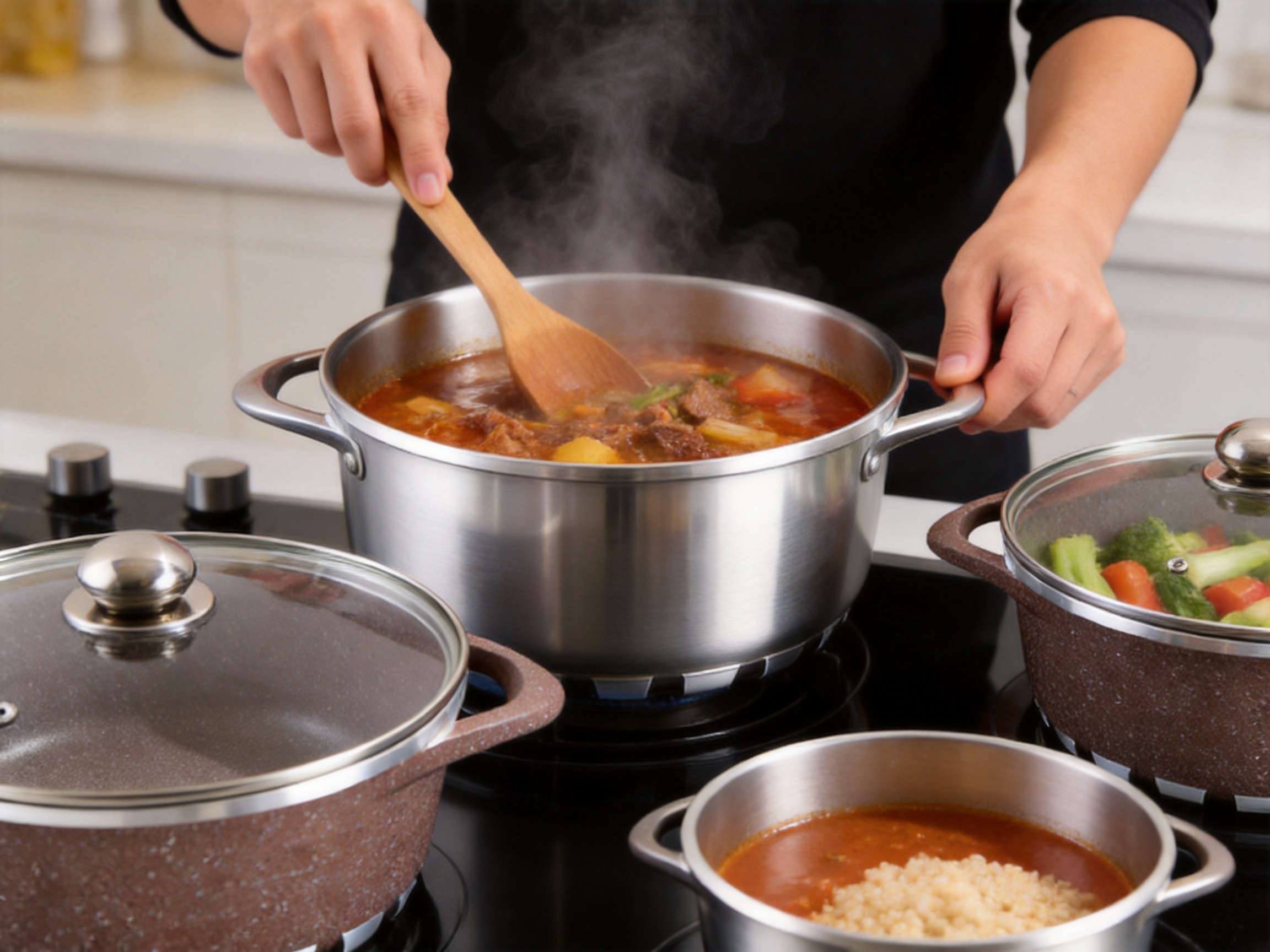
The multi-size format gives the set broad application in domestic kitchens. The smaller pieces can be useful for warming food, preparing breakfast portions, cooking sauces, making side dishes, or handling ingredients that do not require a large vessel. Medium-sized pots can support common family meals, including grains, vegetables, noodles, soups, and moderate quantities of protein.
The larger pieces are appropriate for meals that require more volume. Stews, braised meats, mixed vegetables, beans, pasta, and family-sized soups can benefit from a larger cooking surface and deeper capacity. The set therefore supports both individual meal preparation and shared household cooking.
For small food businesses, guesthouses, cafés, and catering operations, a coordinated group of sizes can help organize cooking tasks. The cookware may be used for preparation, reheating, sauce production, or service support, subject to the operating environment and the buyer’s own equipment requirements. Commercial users should evaluate expected cooking frequency, heat source compatibility, cleaning procedures, and replacement needs before placing a large order.
The product can also serve seasonal and promotional uses. During holiday periods, consumers often prepare larger meals and may value cookware that supports multiple recipes. Retailers can present the set as a practical household gift, a kitchen upgrade, or a complete starter collection for new homes.
Because the set is designed for several cooking methods, it can be positioned as a multi-function cookware solution. The supplied description specifically highlights stewing and braising, while the different sizes also make the collection suitable for simmering, boiling, reheating, and general stovetop preparation where compatible.
Advantages Compared with Basic Cookware Sets
Many entry-level cookware sets compete mainly on price and piece count. While affordability is important, a product that offers only a group of plain vessels may have limited appeal in a competitive retail environment. The Spark set adds several visible and functional differentiators: a granite-textured body, an anti-slip ridged base, clear glass lids, metal lid knobs, multiple sizes, and several color choices.
Its appearance can provide an advantage over untextured aluminum sets that look generic or unfinished. The texture helps create a stronger shelf presence and gives retailers more content for product photography. In online commerce, recognizable surface details can also help customers distinguish the item from similar-looking basic pot sets.
The lid design provides another advantage over open cookware bundles. Customers often expect pots used for stewing and braising to include covers. Clear lids make the cooking process easier to observe, while a coordinated set ensures that the pieces are visually consistent.
The range of sizes can be more useful than a collection made up of several nearly identical vessels. Different capacities allow users to choose cookware according to the amount of food being prepared, which may reduce unnecessary energy use and improve kitchen organization.
The color selection also helps the product compete in markets where design and lifestyle positioning influence purchase decisions. A buyer can select a neutral shade for broad appeal or a brighter color for a more distinctive collection. This flexibility is particularly valuable to importers and private-label brands planning several retail campaigns.
Finally, the supplier’s broader product coverage can offer an advantage to professional buyers. A company that can provide aluminum cookware, stainless steel cookware, iron cookware, and kitchen utensils may help customers consolidate sourcing activities. This can simplify communication, sampling, assortment planning, and long-term product development.
Manufacturing Approach and Product Development Strengths
The supplied company information presents Zhejiang Echo Industry And Trade Co., Ltd. as a dynamic kitchenware supplier based in Zhejiang, China. The company’s stated objective is to develop beyond an order-taking role and become an R&D-driven supply chain partner for small and medium-sized kitchenware buyers. This positioning is relevant to the development of cookware sets because successful product supply requires coordination between design, materials, production, inspection, packaging, and logistics.
For a product such as the Spark aluminum set, an effective manufacturing process begins with product specification. The supplier and buyer must establish the exact number of pieces, dimensions, wall and base requirements, lid arrangement, color targets, logo placement if applicable, packaging structure, and intended market. Clear specifications reduce the risk of inconsistencies between samples, production goods, and sales descriptions.
Aluminum cookware production generally requires controlled forming of the cookware body so that the vessel maintains the intended dimensions and shape. Consistency is important because lids must fit correctly, bases must remain stable, and pieces within one set should have a coordinated appearance. Production teams must also monitor surface quality to limit visible defects, uneven finishing, deformation, or unacceptable color variation.
The granite-textured finish requires careful coordination between surface preparation and final appearance. A professional production approach should establish an approved color and texture reference, then compare production output against that reference. This is particularly important when the same product is produced in multiple colors or in repeated orders for international customers.
The ridged base is another area where dimensional consistency matters. If the structure is not formed evenly, stability and appearance may be affected. Quality control should therefore include checks of the base profile, flatness, contact behavior, and general alignment with the cookware body.
Lid production and assembly also require attention. Glass lids should be checked for clarity, edge condition, proper fit, and secure knob attachment. The metal knob should be firmly assembled, while the finished lid should correspond to the correct pot size. A coordinated inspection process helps reduce packaging errors in which a lid is paired with an unsuitable vessel.
Manufacturing strength is not limited to machinery. It also includes communication, sample management, production scheduling, quality records, packaging coordination, and export preparation. A supplier with experience across several cookware categories may be better positioned to understand how materials, finishes, shapes, and usage expectations vary from one product family to another.
Echo’s stated ODM and OEM services support buyers that need more than an existing catalog item. Depending on the project, customization may involve color selection, product markings, packaging design, set composition, carton labeling, or adjustments to meet a specific market strategy. All technical changes should be evaluated through samples and documented approval before mass production.
Quality Control Considerations for Importers and Retailers
Wholesale buyers should establish a quality checklist before confirming production. The checklist can begin with product identity, including SKU, set composition, dimensions, colors, and packaging quantity. It should then cover the appearance and physical condition of each cookware body, lid, knob, base, and packed set.
For the aluminum body, inspection may include dimensional consistency, visible dents, surface uniformity, edge finishing, color accuracy, and the condition of the granite-textured exterior. Any coating or finishing requirements should be defined in the purchase specification rather than assumed.
For the base, buyers can confirm that the vessel sits appropriately on a level surface and that the ridged structure is formed consistently. The base should not show unacceptable deformation or damage that could affect ordinary use.
For the glass lids, inspection should focus on clarity, cracks, chips, edge condition, fit, and knob attachment. Packaging should protect the glass from impact during handling and transportation. Carton design is therefore part of the quality system, not merely a visual branding element.
Retailers should also verify that care instructions are included in the correct language and are consistent with the actual product. Clear instructions help consumers use the cookware safely and can reduce misuse-related complaints. If a buyer intends to sell the product in a market with mandatory labeling or documentation requirements, those requirements should be reviewed before production.
Echo provides product certification assistance as part of its stated service capabilities. This does not mean that every product automatically carries every possible certificate. Buyers should discuss the destination market, required testing, documentation, labeling, and certification scope directly with the supplier. A project-specific compliance plan is the most reliable approach.
OEM, ODM, and One-Stop Sourcing Potential
The cookware industry includes many buyers with different levels of product development experience. Some importers want to purchase an existing design with minimal changes. Others need a private-label version with a unique color, package, logo, or set arrangement. ODM and OEM capabilities can support both approaches when specifications are clearly defined.
For an existing product such as LY05, a buyer may begin with a standard sample and review the body finish, base structure, lid design, colors, dimensions, and packaging. After evaluation, the buyer can decide whether to proceed with the standard configuration or request adjustments. This staged process can reduce development risk and provide a clear basis for commercial discussions.
One-stop sourcing is particularly valuable when a business wants to build a wider kitchenware assortment. Alongside aluminum cookware, the supplier can provide access to stainless steel cookware, cast iron or iron cookware, and kitchen utensils. A broader assortment can help retailers create coordinated collections and allow importers to consolidate multiple product categories through one supply relationship.
Flexible minimum order quantities may also benefit small and medium-sized buyers. New brands often need to test market response before committing to very large volumes. Flexible ordering can support a phased launch, although the applicable minimum quantity, color mix, packaging requirements, and production schedule must be confirmed for each order.
A dependable supply partner should also support communication after the initial sale. Product feedback, replacement requirements, packaging improvements, and future color selections can all influence the success of a cookware line. The supplier’s stated ambition to become an R&D-driven supply chain partner reflects the importance of this continuing relationship.
Packaging, Logistics, and Commercial Planning
The supplied carton information identifies an outer carton size of 71 by 36.5 by 65 centimeters, a carton volume of 0.168 cubic meters, and a carton weight of 8 kilograms. These details provide an initial basis for freight planning, warehouse allocation, and landed-cost calculations. Buyers should confirm whether the figures refer to a complete packed carton, how many sets are included, and whether the dimensions and weight change after final packaging approval.
Carton volume is especially relevant for cookware because pots and lids require protective packing while also occupying substantial space. An efficient packaging design should protect the glass components, prevent surface damage, keep pieces properly organized, and use available carton space responsibly. Excessive empty space can increase freight costs, while insufficient protection can result in breakage or cosmetic damage.
For retail sales, packaging should communicate the most important product benefits without making unsupported claims. It can highlight the aluminum construction, granite-textured body, multi-size format, clear glass lids, and available color options. Care instructions should be presented clearly and should match the actual usage limitations of the product.
Importers should also plan for warehouse handling. Although the stated carton weight is manageable for many operations, packed cartons containing glass components should still be handled carefully. Palletization, stacking height, moisture protection, and transport conditions should be agreed during the logistics planning stage.
For international distribution, the product name, SKU, carton markings, country-of-origin information, barcode requirements, and shipping documentation should be reviewed in advance. These details can vary by destination and sales channel. Early coordination helps prevent delays after production is completed.
Safe and Effective Use
Proper care is essential for maintaining the appearance and performance of the cookware. Before first use, the pots should be washed. Hand washing is recommended to help preserve the appearance of the cookware. Hot, soapy water and a soft cloth or sponge are suitable for routine cleaning.
Users should not use metal or sharp cooking utensils with the product. Wooden, nylon, or non-stick-safe cooking utensils are recommended instead. This guidance helps reduce the possibility of scratches, surface damage, or premature deterioration caused by hard or sharp tools.
The cookware should not be overheated while empty. Empty overheating can cause unnecessary stress to the cookware and may damage the surface or affect its appearance. Users should add appropriate ingredients before heating and should select a sensible heat level for the recipe.
The flame or heat source should not extend beyond the base of the item. Heat that reaches the sides can create unnecessary thermal stress, increase the risk of contact burns, and waste energy. Correct burner sizing is therefore an important part of safe use.
If a pan severely overheats, users should turn off the cooker and allow the cookware to cool completely. They should not touch it immediately. Sudden contact with overheated cookware can cause burns, while rapid cooling methods may create unnecessary thermal shock.
The product should not be used in a microwave. This limitation should be stated clearly in retail materials and consumer instructions. Buyers should also verify any intended oven, dishwasher, or specialized cooktop use with the supplier rather than assuming compatibility.
Following these instructions is not only a safety matter. Good care also helps preserve the granite-textured appearance, maintain the condition of the lid and base, and extend the useful life of the cookware. Retailers that provide clear care information can improve customer confidence and reduce avoidable product complaints.
Positioning for Different Customer Segments
For household consumers, the set can be positioned as a practical kitchen upgrade. The combination of multiple sizes and coordinated lids provides a more complete cooking solution than purchasing one pot at a time. The available colors allow the buyer to select a style that complements the kitchen.
For first-home buyers, students, and newly established households, a multi-piece set may offer useful coverage at the beginning of a kitchen setup. The buyer can prepare everyday meals using different vessels without having to assemble a collection from unrelated products.
For retailers, the product offers several merchandising themes. It can be displayed under multi-function cookware, colorful kitchenware, aluminum cookware, family cooking, or practical home gifts. The granite-textured appearance and color range can support lifestyle photography and seasonal promotional campaigns.
For wholesalers, the product can serve as a volume-oriented core item within an aluminum cookware assortment. It can be combined with utensils, frying pans, stainless steel products, or iron cookware to create a larger category offering.
For private-label businesses, the set offers an existing product foundation that may be adapted through packaging, color selection, labeling, and assortment planning. The buyer should evaluate target-market preferences before selecting the final configuration. In some markets, neutral colors may be more commercially reliable, while in others, bright colors may create stronger shelf appeal.
For hospitality and food-service buyers, the set may be considered for selected preparation tasks, provided that the cookware meets the intended operating requirements. Commercial users should assess cooking frequency, burner compatibility, cleaning routines, storage conditions, and expected replacement cycles before adopting the product on a larger scale.
How Buyers Can Evaluate the Product Before Ordering
A professional evaluation should begin with a physical sample. The buyer should check the product’s dimensions, overall weight, balance, lid fit, base stability, surface appearance, knob attachment, and packaging condition. Photographs are useful for communication, but they do not replace direct inspection when the product will be purchased in volume.
The buyer should then compare the sample against the intended sales description. If the product is described as a ten-piece set, the exact pieces should be counted and recorded. If the size range is listed as 20 to 28 or 30 centimeters, the exact diameters should be documented for packaging and retail copy.
Color approval is also important. A digital image may not show the final shade accurately because lighting and screen settings vary. Buyers should approve a physical color sample or another mutually accepted standard, especially when launching multiple colors or producing repeat orders.
Packaging tests may be appropriate when the product includes glass lids. The buyer can evaluate whether the internal supports hold each component securely and whether the outer carton can tolerate ordinary handling. Any proposed packaging change should be tested before mass production.
Finally, the buyer should confirm lead time, minimum order quantity, payment terms, inspection arrangements, documentation, shipping marks, and after-sales procedures. These commercial details are part of the total product solution and can be as important as the cookware design itself.
Frequently Asked Questions
What material is used for the cookware set?
The cookware body is made from aluminum. Aluminum is valued for its relatively low weight and efficient heat response, making it suitable for many everyday cooking applications.
How many pieces are included?
The product is marketed as a 10-piece pot set. Buyers should confirm the exact composition, including the number of pots, lids, and any included components, before placing an order.
What sizes are available?
The listed size range is 20 to 28 or 30 centimeters. The exact diameter of each piece should be confirmed according to the selected configuration and purchase specification.
Does the set include lids?
The product description specifies clear glass lids with metal knobs. Buyers should confirm which pieces include lids and how the lids are assigned within the ten-piece configuration.
What makes the exterior different from a basic aluminum pot?
The cookware has a granite-textured body. This provides a distinctive visual appearance and can help the product stand out from plain smooth-finish aluminum cookware.
What is the purpose of the ridged base?
The anti-slip ridged base is designed to help improve stability during ordinary use on a suitable, level cooking surface. Users should still handle loaded cookware carefully and avoid aggressive sliding.
Can metal utensils be used?
No. The care instructions recommend avoiding metal or sharp cooking utensils. Wooden, nylon, or non-stick-safe utensils are preferred.
How should the cookware be cleaned?
Use hot, soapy water with a soft cloth or sponge. Hand washing is recommended to help preserve the appearance of the cookware.
Can the pan be heated while empty?
The cookware should not be overheated while empty. Users should avoid unnecessary high heat and should follow appropriate cooking practices for the recipe.
Can the product be used in a microwave?
No. The care instructions specify that the cookware should not be used in a microwave.
Can the product be used on every type of stove?
The supplied information does not identify every compatible heat source. Buyers should confirm cooktop compatibility with the supplier before making specific compatibility claims.
What colors are available?
The listed colors are red, green, black, brown, grey, and yellow. Availability, color combinations, and minimum quantities should be confirmed for each order.
Can the product be customized?
The supplier states that it provides ODM and OEM customization. Potential options should be discussed directly and may include colors, packaging, labeling, branding, or set configuration, subject to technical and commercial approval.
Is certification assistance available?
The company states that it provides product certification assistance. The required documentation and testing depend on the destination market and should be confirmed for the specific project.
What information should an importer confirm before ordering?
The importer should confirm the exact set composition, dimensions, color, packaging, carton quantity, minimum order quantity, production schedule, quality standards, documentation, and destination-market requirements.
Overall Assessment
The 10-Piece Spark Aluminum Pot Set combines several features that support both consumer appeal and commercial practicality. Its aluminum construction offers a lightweight cookware foundation, while the granite-textured body provides visual differentiation. The anti-slip ridged base contributes to stability, and the clear glass lids with metal knobs support convenient monitoring during covered cooking.
The set’s multi-size format makes it suitable for a broad range of daily meals, from small portions and sauces to family-sized stews and braised dishes. The selection of red, green, black, brown, grey, and yellow gives retailers and private-label buyers additional merchandising flexibility.
Its strongest competitive advantage is the combination of appearance, function, and supply flexibility. Rather than competing only through piece count, the product offers a coordinated design language and practical features that can be communicated clearly to consumers. For professional buyers, the supplier’s broader cookware range, ODM and OEM services, one-stop sourcing model, flexible minimum order approach, and certification assistance create additional value.
A successful purchasing decision should be based on sample approval, exact configuration confirmation, careful packaging review, and destination-market compliance planning. When these steps are completed, the product can serve as a dependable addition to household, retail, wholesale, and private-label cookware programs.
For buyers seeking a modern, colorful, and versatile aluminum cookware assortment, the Spark set provides a practical foundation. Its design is especially well suited to customers who want multiple cooking sizes, coordinated glass lids, a distinctive granite-style exterior, and straightforward care requirements in one organized collection.
References
1. Product specification for the 10-Piece Spark Aluminum Pot Set, SKU LY05, including material, color, size, carton, and care information.
2. General cookware material guidance concerning aluminum heat transfer, cookware handling, and household cooking practices.
3. General product development principles for cookware forming, surface finishing, lid assembly, packaging, and quality inspection.
4. Supplier information concerning aluminum cookware, stainless steel cookware, iron cookware, kitchen utensils, ODM and OEM services, one-stop sourcing, flexible minimum order quantities, and product certification assistance.
5. General retail and import planning practices for cookware assortment development, packaging review, logistics calculation, and destination-market product communication.
Product: 10pcs Spark Aluminium pot Set
Recommended Articles
Product Category
Related products
-
-
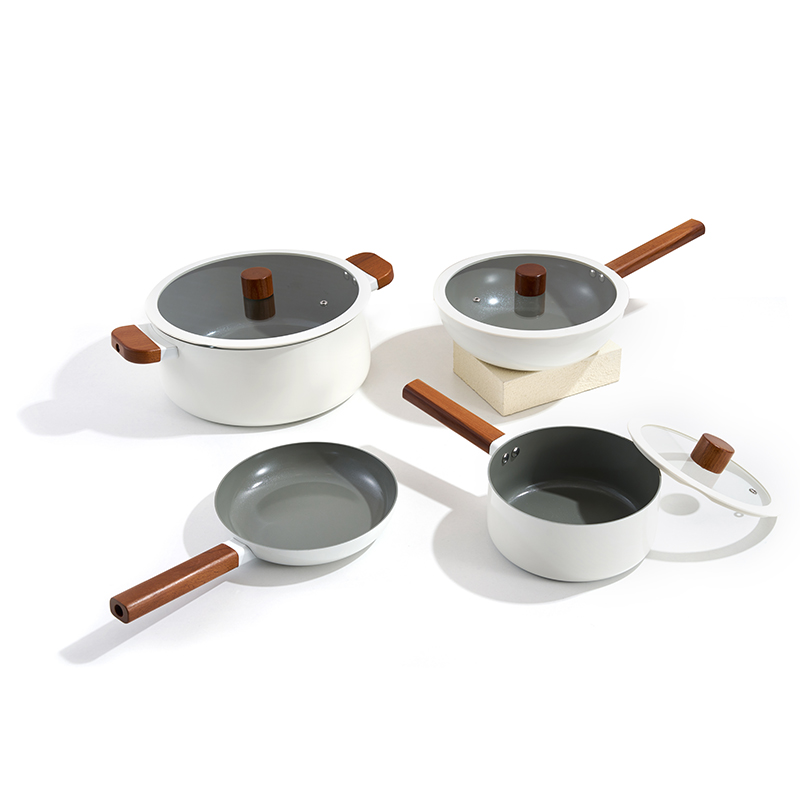
This cookware set has a ceramic non-stick inner liner, a heat-resistant wooden h...
See Details -
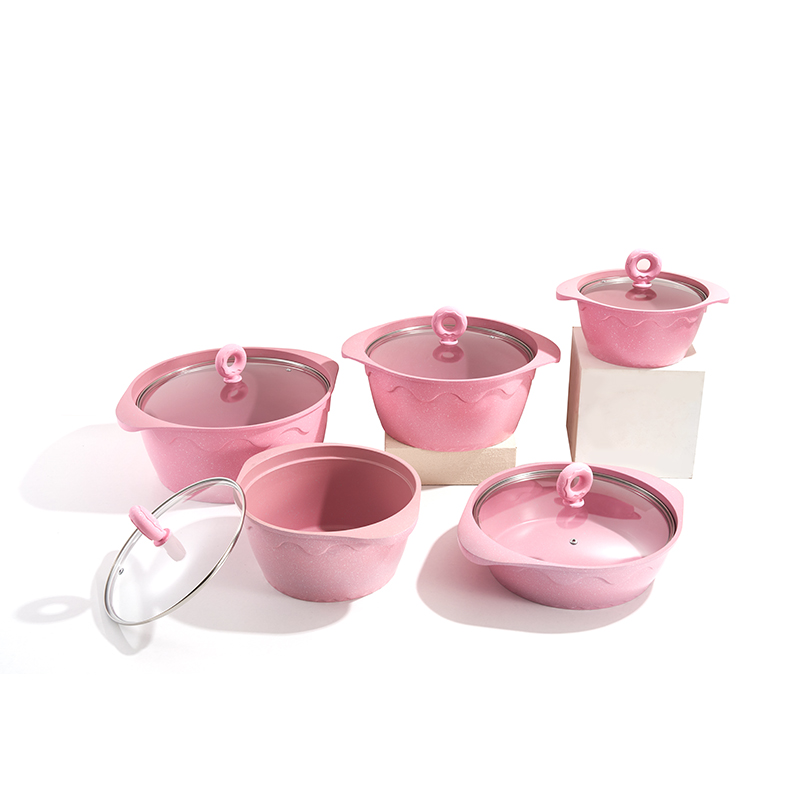
This cookware set is made of food-grade non-stick material, with a unique eye-ca...
See Details -
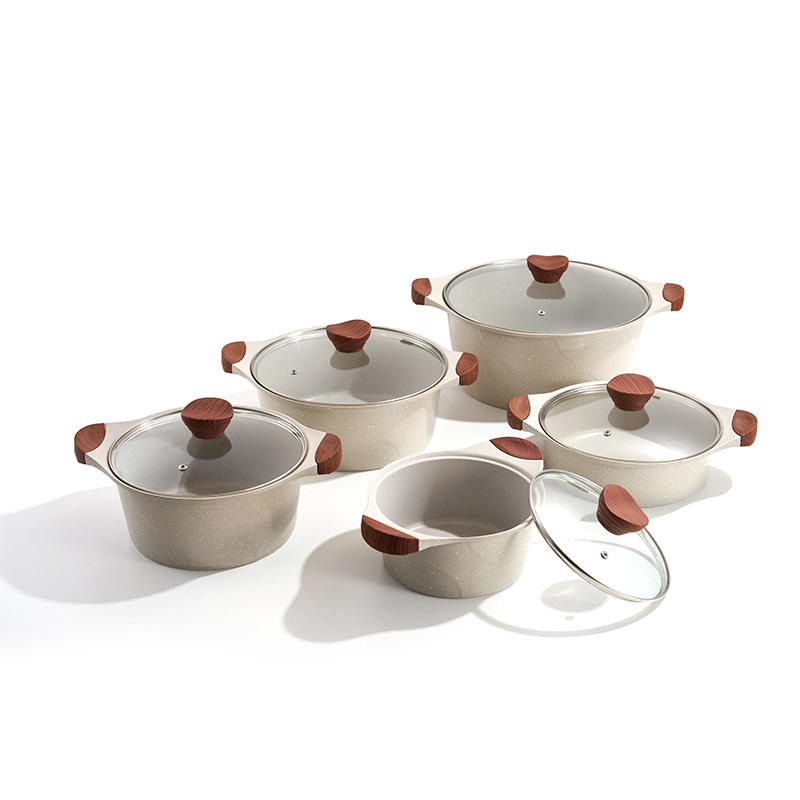
This off-white cookware set is made of wear-resistant non-stick material, with w...
See Details
Whether you're looking for bulk purchases or have any custom requirements, We are here to offer the best
solutions for you.
tiffany.zhong@echocn-trading.com
PHONE
+86-19561173975
+86-19557020621 (Hazel Wu)
ADD
Room 301, Unit 3014, No. 175 Qifeng Avenue, Wenqiao Town, Taizhou, Zhejiang, China
Fill Out the Form for More Information
Copyright © Zhejiang Echo Industry And Trade Co., Ltd.
All Rights Reserved.

China Cookware Set Manufacturer