
 en
en
 Español
This cookware set features a non-stick coating, even heat conduction, and multi-...
See Details
Stainless Steel Cookware Sets: Types, Materials, and Usage
Date:May 22, 2026
Types of Stainless Steel Cookware Sets on the Market
Stainless steel cookware sets are collections of pots, pans, and lids made from stainless steel (an alloy of iron, chromium, and nickel). They are valued for being non-reactive (safe for acidic foods like tomato sauce), durable (can last decades), and oven-safe (typically to 260°C/500°F). The following types are distinguished by the number of layers (ply) in the base and walls, the type of handle attachment, and the surface finish.
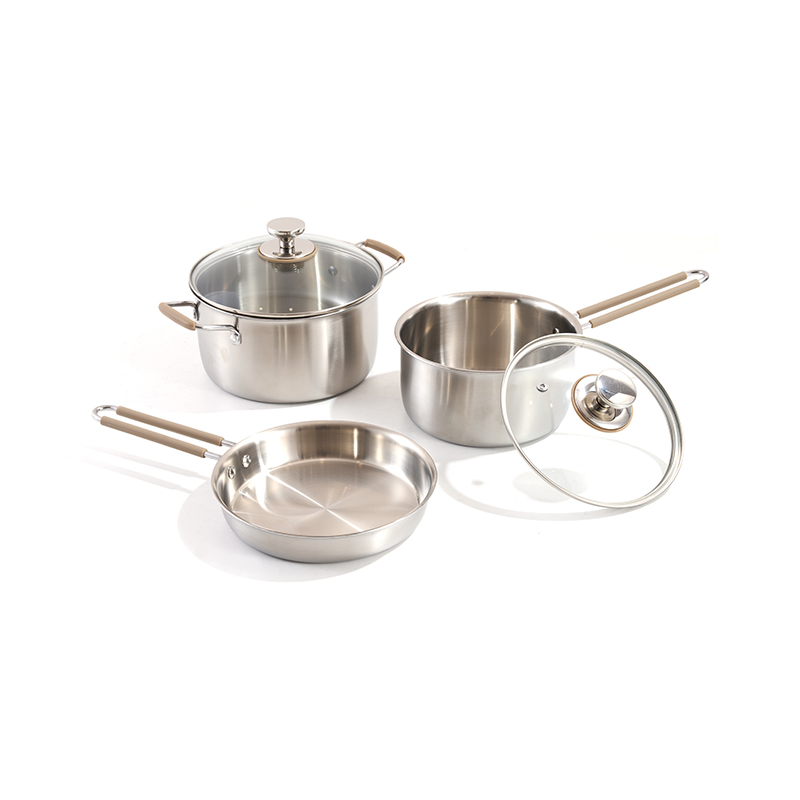
Single-ply (single-layer) stainless steel. The entire pot is made from one layer of stainless steel, usually 0.5–0.8 mm thick. These are inexpensive but have poor heat conduction. Hot spots form, causing food to burn in some areas while other areas are undercooked. The base often warps on induction stoves. Used for budget sets (under $100 for 10 pieces). Not recommended for stovetop cooking; suitable only for boiling water (pasta, potatoes) and for oven use. The thin walls feel "tinny" and dent easily.
Tri-ply (fully clad, three layers). Two layers of stainless steel (outer and inner) with a layer of aluminum (1.5–2.5 mm thick) sandwiched in between. The aluminum conducts heat quickly and evenly. The term "fully clad" means the three layers extend up the side walls (not just the base). This is the standard for mid-range to premium sets ($150–400 for 10 pieces). Even heating across the base and up the sides, so searing and sautéing work well. Heavier (a 26 cm frying pan weighs 1.2–1.8 kg). Brands like All-Clad, Tramontina, Cuisinart, and Calphalon make tri-ply sets.
5-ply or multi-ply (alternating layers). Five layers: stainless steel–aluminum–stainless steel–aluminum–stainless steel (or sometimes stainless–copper–stainless–aluminum–stainless). These claim even better heat conduction and heat retention. In practice, the improvement over tri-ply is small (10–15% more even heating) but the weight increase is significant (a 26 cm frying pan can be 1.8–2.2 kg). The cost is higher ($300–800). Useful for professional cooks who use high heat for long periods. Many home cooks do not notice a difference.
Disc-bottom (capsule bottom). A single-layer stainless steel pot has a thick disc (aluminum or copper, 3–5 mm) bonded to the outside of the base. The walls remain single-layer. These are less expensive than fully clad but heat less evenly (the walls stay cooler; food can stick to the sides). The disc may detach after 5–10 years (differential expansion). Common in lower-priced European sets. Avoid for induction stoves if the disc is not magnetic (some aluminum discs are not; check "induction ready" label).
Material Specifications for Stainless Steel Cookware
Stainless Steel Grades – 18/10, 18/8, and 18/0. The numbers refer to the percentage of chromium and nickel in the alloy. 18/10 means 18% chromium, 10% nickel. This is the standard for premium cookware. Chromium forms a passive oxide layer that prevents rust; nickel adds luster and corrosion resistance (especially against acidic foods). 18/10 steel is non-reactive even after scratching. 18/8 (8% nickel) is slightly less shiny and less corrosion-resistant but still good for cookware; it is used in mid-range sets. 18/0 (0% nickel) is magnetic (good for induction) but is less corrosion-resistant; it can develop rust spots if scratched and left wet. 18/0 is used in budget sets and for induction-compatible outer layers (the magnetic layer). For cookware intended for tomato sauces (pH 4.2–4.7), 18/10 is preferred; 18/0 may discolor over time. Most tri-ply sets use 18/10 for the cooking surface (inside) and 18/0 or 430 stainless for the outer layer (to make the pan magnetic for induction stoves).
Layer Composition and Thickness (Tri-Ply Example). A typical tri-ply pan has three layers: an outer layer of 18/0 stainless steel (0.4–0.6 mm thick) for induction compatibility and durability; a middle layer of pure aluminum (1.5–2.5 mm thick) for heat conduction; an inner layer of 18/10 stainless steel (0.4–0.6 mm thick) for the cooking surface. Total thickness is 2.3–3.7 mm. The aluminum layer must be at least 1.5 mm to provide even heating; some budget tri-ply uses 1.0 mm aluminum, which still has hot spots. The bonding between layers is done by roll-bonding (pressure welding at high temperature) or by impact bonding. In quality pans, the layers do not separate. A bonded disc-bottom pan has an aluminum disc that is 3–5 mm thick, but the disc does not extend up the sides.
Handle Attachment Methods. The handle is either riveted or welded. Riveted handles (stainless steel rivets, 3–5 per handle) are very strong; the rivets go through the pan wall. The holes for rivets can trap food (difficult to clean), but they do not leak (the rivet expands to seal the hole). Rivets are the traditional method and are found on premium pans (All-Clad, Demeyere). Welded handles (a stainless steel stub welded to the pan exterior, then the handle is screwed on or permanently attached) have no holes to trap food; the interior surface is completely smooth. Welded handles are easier to clean but may break if the weld is poor (a good weld will hold 100+ kg). For induction stoves, the weld does not affect the magnetic field. Some cheap sets use aluminum handles with plastic inserts; these are not oven-safe above 180°C.
Recommended Articles
Product Category
Related products
-
-
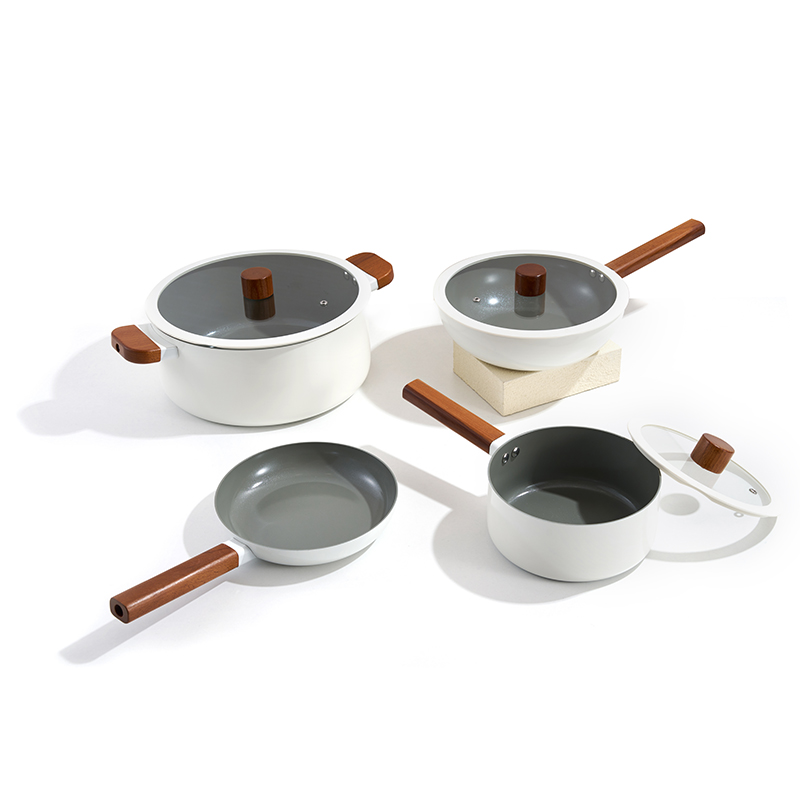
This cookware set has a ceramic non-stick inner liner, a heat-resistant wooden h...
See Details -
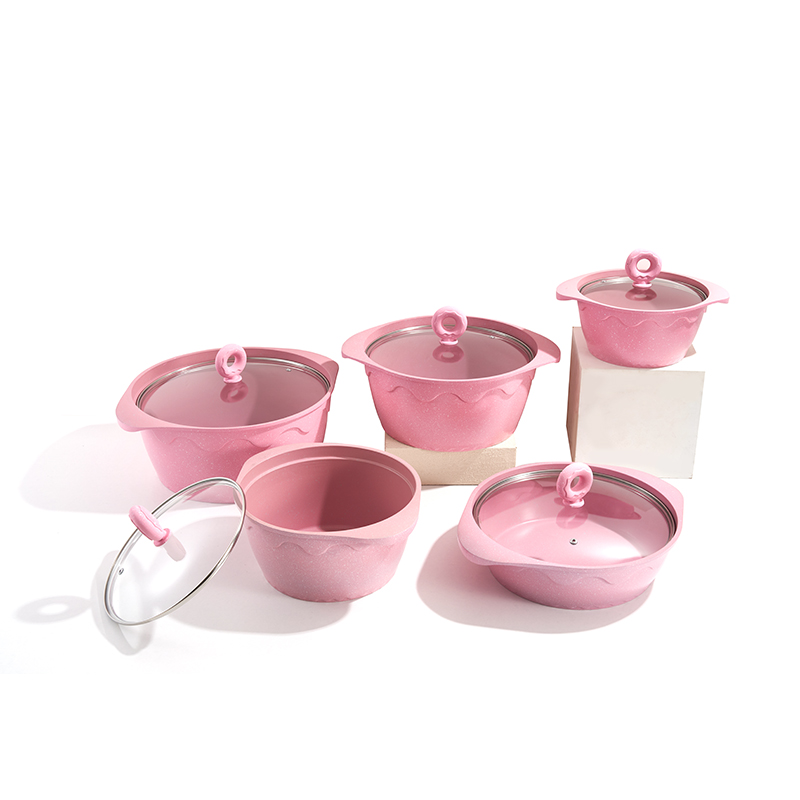
This cookware set is made of food-grade non-stick material, with a unique eye-ca...
See Details -
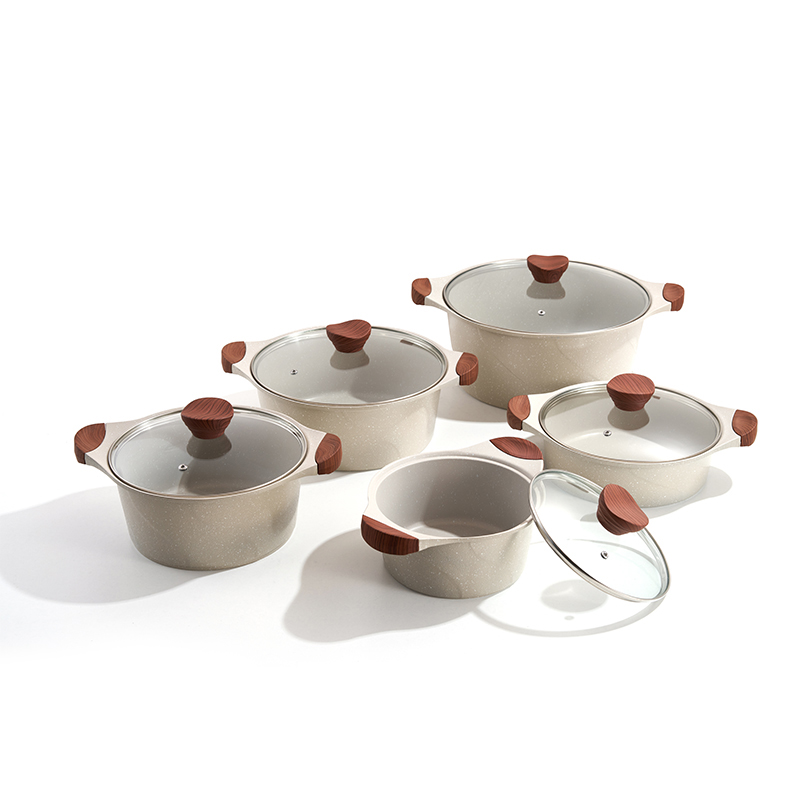
This off-white cookware set is made of wear-resistant non-stick material, with w...
See Details
Whether you're looking for bulk purchases or have any custom requirements, We are here to offer the best
solutions for you.
tiffany.zhong@echocn-trading.com
PHONE
+86-19561173975
+86-19557020621 (Hazel Wu)
ADD
Room 301, Unit 3014, No. 175 Qifeng Avenue, Wenqiao Town, Taizhou, Zhejiang, China
Fill Out the Form for More Information
Copyright © Zhejiang Echo Industry And Trade Co., Ltd.
All Rights Reserved.

China Cookware Set Manufacturer