
 en
en
 Español
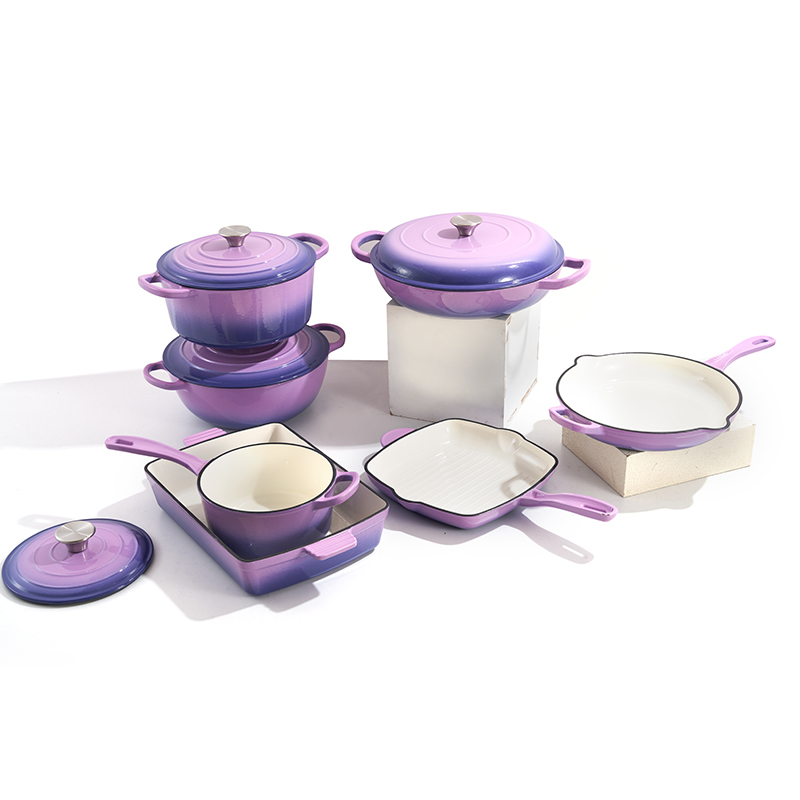
This cookware set features a non-stick coating, even heat conduction, and multi-...
See Details
Selection of Large Capacity Cookware Sets
Date:May 01, 2026
Typical Applications for Large Capacity Cookware
Large capacity cookware sets are defined by pot and pan volumes exceeding standard sizes. A standard saucepan holds 1.5-2.5 litres; a large saucepan holds 4-6 litres. A standard stockpot holds 6-8 litres; a large stockpot holds 12-20 litres. These larger sizes are used for batch cooking (preparing 10-20 servings at once), boiling pasta or corn for large groups, canning vegetables or fruits, brewing beer, and cooking whole turkeys or large ham. The primary advantage is time efficiency: cooking one large batch uses the same preparation time as a small batch, but yields 3-5 times more food. The disadvantage is weight: a 12 litre stockpot filled with water weighs approximately 13 kg (12 kg water + 1 kg pot), which may be difficult to lift for some users, especially when hot and slippery.
Heat Source Compatibility and Heating Time
Large pots require a heating element or burner that can deliver sufficient heat to the base. On an electric stovetop, a 12 litre pot requires a burner with at least 2,000 watts (standard large burner) to bring water to a boil in 15-20 minutes. A smaller 1,500 watt burner will take 30-40 minutes for the same volume. On induction cooktops, the pot base must be magnetic (cast iron or magnetic stainless steel) and the induction coil must be at least 20 cm in diameter to cover the pot base. A 12 litre pot with an 18 cm base on a 15 cm induction coil will heat unevenly (the centre boils while the edges remain cool) and may cause the cookware to warp. Gas burners are the most flexible: a 12 litre pot needs a burner with at least 12,000 BTU (about 3,500 watts) and a grate wide enough to support the pot's base without tipping. The heating time for water in a large pot follows the rule of thumb: 4 minutes per litre on a high-output gas burner, 6 minutes per litre on a standard electric coil. A 12 litre pot therefore takes 48-72 minutes to boil from cold tap water (15°C).
Weight, Ergonomics, and Handling Safety
Large pots are heavy even when empty. A 12 litre stainless steel pot with a thick base (3-ply, 2.5 mm thickness) weighs 2.5-3.5 kg. Adding 12 litres of water brings total weight to 14-15 kg. The same pot filled with chili or soup (density 1.05-1.10 g/cm³) weighs 14-16 kg. To lift such a pot safely, the handles must be securely attached (riveted, not spot-welded) and long enough (12-15 cm) to allow two hands or a palm grip. The handles should stay cool during stovetop use; metal handles without silicone sleeves become too hot to touch (above 60°C) after 15 minutes of boiling. Large pots with one long handle (saucepan style) are difficult to lift when full; a pot with two loop handles (one on each side) or a large U-shaped handle is easier to tilt and pour. The user should always lift with both hands, using a towel or oven mitt if the handles are hot. Never lift a large pot by its lid; the lid handle is not designed for the full weight and may detach.
Pouring and Serving Considerations
Pouring from a large pot requires control to avoid splashing hot liquid. A pot with a lip (a curved edge on the rim) pours more cleanly than a straight rim. The lip should be on the side opposite the primary handle, allowing the user to tilt the pot while keeping the hand away from the escaping steam. For pots without a lip, use a ladle to remove liquid rather than pouring. A 12 litre pot cannot be poured with one hand; the user must tilt with both hands while a second person holds a large bowl or pot to catch the liquid. For canning, a jar lifter and a canning rack are essential because the pot is too heavy to tilt. Some large pots have a spigot (a tap or valve) near the base, allowing liquid to drain without lifting. Spigots are more common in stockpots for brewing beer or making broth; they add $20-50 to the price but greatly improve usability for frequent large-batch cooks.
Recommended Articles
Product Category
Related products
-
-
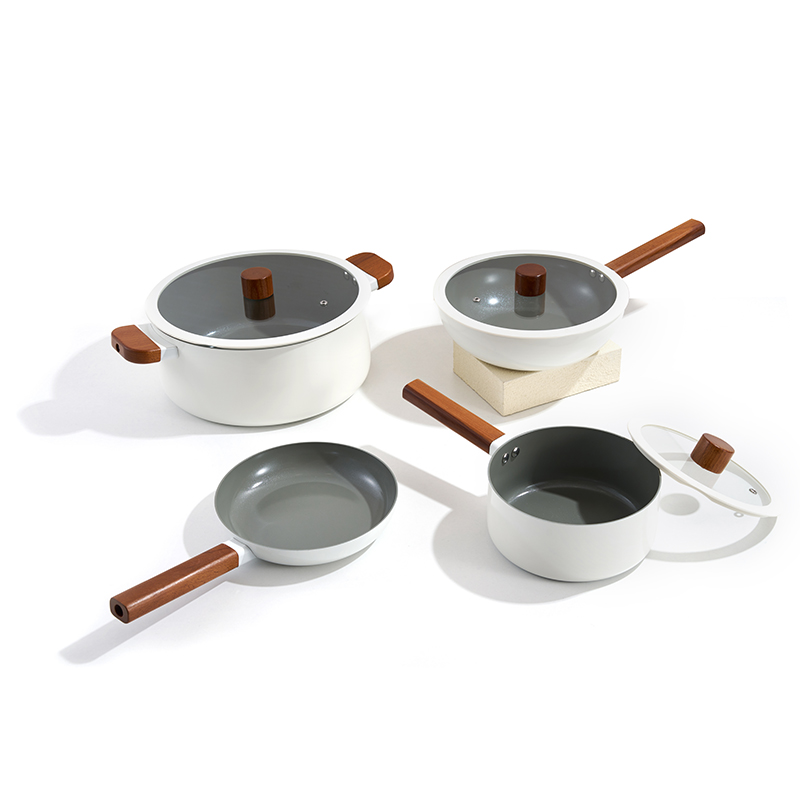
This cookware set has a ceramic non-stick inner liner, a heat-resistant wooden h...
See Details -
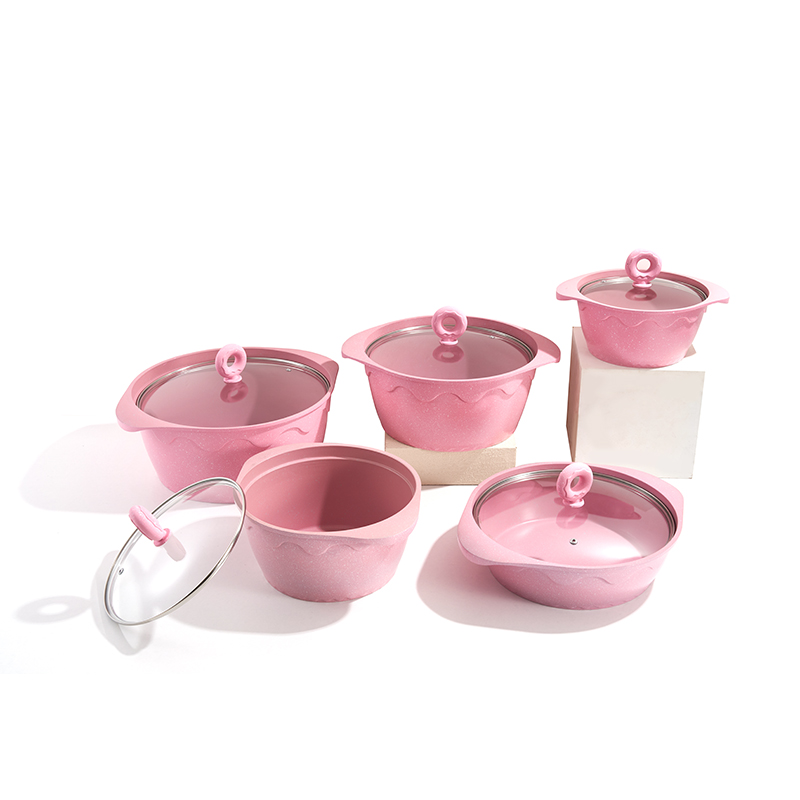
This cookware set is made of food-grade non-stick material, with a unique eye-ca...
See Details -
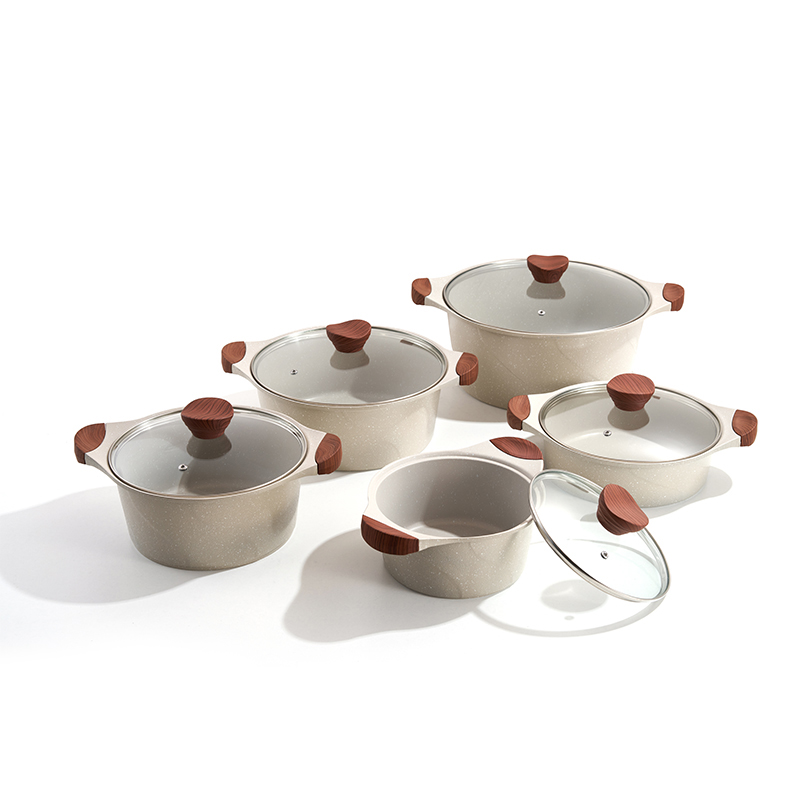
This off-white cookware set is made of wear-resistant non-stick material, with w...
See Details
Whether you're looking for bulk purchases or have any custom requirements, We are here to offer the best
solutions for you.
tiffany.zhong@echocn-trading.com
PHONE
+86-19561173975
+86-19557020621 (Hazel Wu)
ADD
Room 301, Unit 3014, No. 175 Qifeng Avenue, Wenqiao Town, Taizhou, Zhejiang, China
Fill Out the Form for More Information
Copyright © Zhejiang Echo Industry And Trade Co., Ltd.
All Rights Reserved.

China Cookware Set Manufacturer