
 en
en
 Español
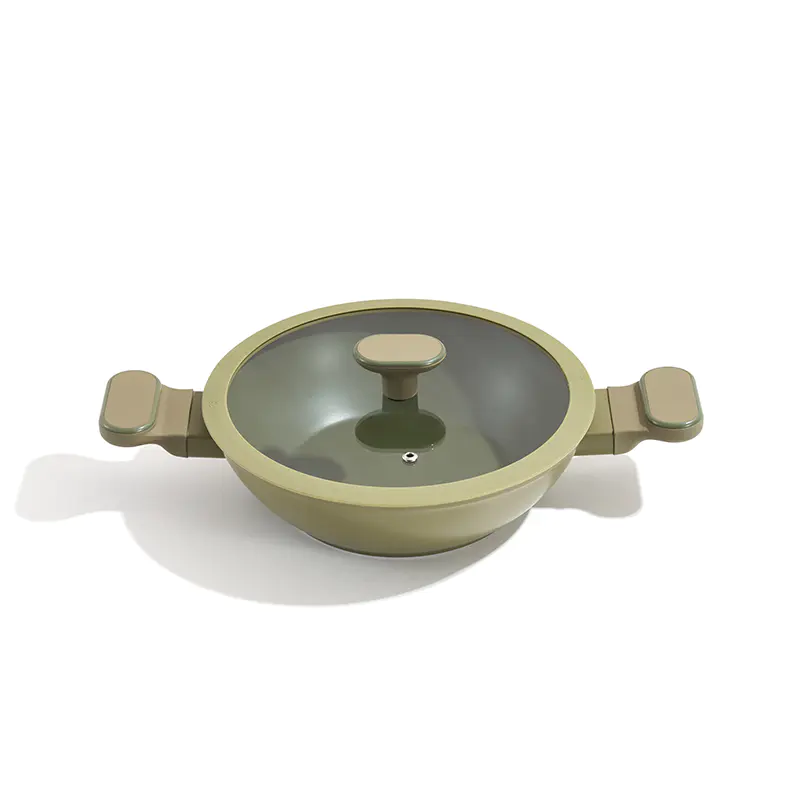
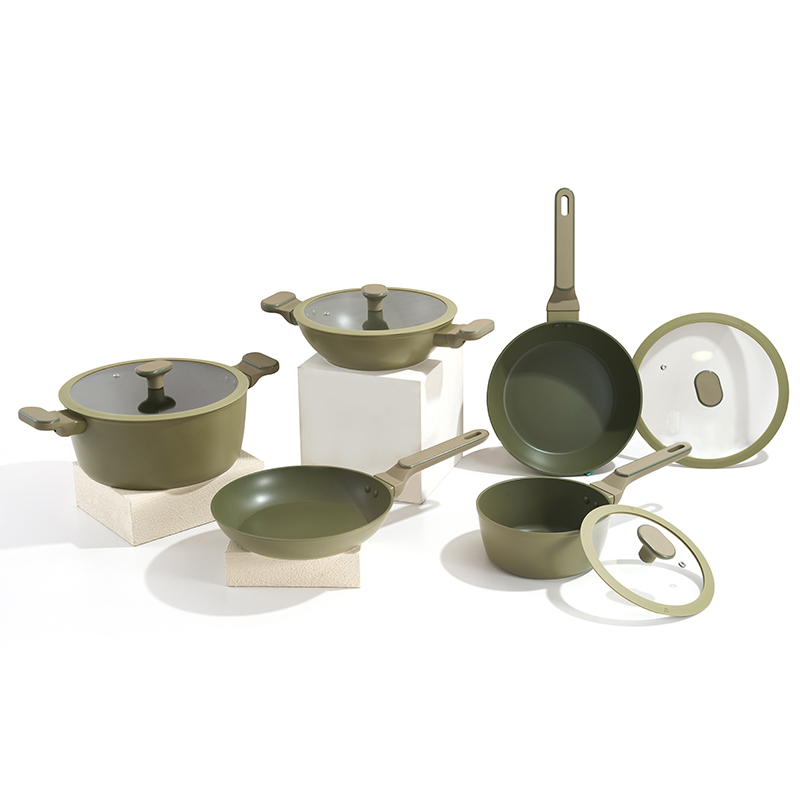
This cookware set features a non-stick coating, even heat conduction, and multi-...
See Details
How Aluminium Alloy Cookware Solves Uneven Heating
Date:May 08, 2026
One side of the pan scorches while the other barely simmers. Eggs cook unevenly no matter how carefully the heat is adjusted. Sauces catch at the center while the edges stay cool. These are not signs of poor technique — they are signs of a pan that cannot move heat consistently across its surface. Aluminium Alloy Cookware addresses this through the thermal character of the material itself: aluminium moves heat across the pan base and walls far faster than many other common metals, and alloying pushes that performance further by evening out the internal structure that heat has to travel through.
Why Uneven Heating Happens at All
Material Conductivity Is the Starting Point
Pans do not heat evenly simply because they sit on a flame. Heat enters through the base at the contact point and then has to spread outward — laterally — across the pan surface. How quickly that spread happens, and how evenly, comes down to the conductivity of the material itself.
Materials that conduct poorly hold heat where it enters rather than distributing it outward. On a gas burner, the area directly above the flame gets significantly hotter than the area a few centimeters away. On an electric element, the contact ring heats faster than the pan beyond it. The material does not correct for this — it just passes the imbalance straight through to the food.
Hot Spots Are More Than an Annoyance
The effects of a hot spot in everyday cooking are immediate and hard to ignore:
- Proteins stick and burn in one area while the rest of the pan is barely warm enough
- Sauces scorch at the center before they have reduced evenly across the surface
- Delicate foods — eggs, crepes, thin fish — cook at different rates across the pan
- Browning happens unevenly, which affects both appearance and flavor
The situation gets worse when the burner and pan are different sizes, which is essentially always the case in a home kitchen. A smaller flame beneath a wide pan concentrates the heat input at the center, leaving the outer areas significantly cooler.
What Alloying Actually Changes
Pure Aluminium Has a Known Weakness
Aluminium on its own conducts heat well. The problem is that pure aluminium is soft, dents and warps under repeated use, and can interact with acidic foods in certain cooking conditions. Alloying — blending aluminium with controlled amounts of other elements — modifies these weak points while keeping the thermal conductivity that makes aluminium worth using in cookware.
The result is a harder, more stable material that holds its shape through heat cycling and heavy use, and does not lose the heat-spreading properties that matter for cooking.
The Grain Structure Matters for Heat Movement
When aluminium is alloyed, the internal grain structure becomes more uniform. Heat moving through a material with a consistent grain structure encounters fewer variations — fewer spots where conductivity drops or concentrates locally. The heat path becomes smoother, so to speak.
In practical terms, the alloy spreads heat across the pan base more evenly than a less consistent material would. The temperature gap between the center and the edges narrows, which is exactly where the hot spot problem originates.
How Heat Actually Travels Through the Pan
Lateral Spread Is the Mechanism That Matters
Heat enters a pan at the point of contact with the burner. From there, it moves outward through the pan body — that outward movement is lateral conduction. The speed and evenness of this lateral spread is what determines whether the cooking surface heats uniformly or develops hot zones.
Aluminium alloy spreads heat laterally far faster than stainless steel, for example. Even a gas burner that delivers heat unevenly — which is inherent to how a gas flame works — produces a more even surface temperature in a well-conducting pan, because the material redistributes the input before it reaches the food.
Does a Thicker Pan Actually Help?
Yes, and the reason is straightforward. A thicker base gives heat more material to travel through before it reaches the cooking surface. More distance means more time for lateral spread to even things out. A thin pan, regardless of material, gives heat almost no distance to redistribute before it hits the food.
A thick-based aluminium alloy pan benefits from both factors: the material spreads heat quickly, and the thickness gives it enough space to do so before the temperature reaches the food.
What This Looks Like on the Cooking Surface
When lateral conduction works well, the temperature across the cooking surface becomes noticeably more uniform. Rather than a significantly hotter center with cooler edges, the whole surface holds a closer temperature range. That shift has visible effects:
- Foods brown evenly rather than in patches
- Sauces and custards can be left without constant stirring to compensate for hot zones
- Fried foods cook at the same rate across the whole pan surface
How Aluminium Alloy Compares to Other Pan Materials
| Material | Thermal Conductivity | Even Heat Distribution | Weight | Common Use |
|---|---|---|---|---|
| Aluminium alloy | High | Good to very good | Light | General cooking, frying, sauteing |
| Stainless steel (thin) | Lower | Poor without cladding | Moderate | Boiling, light tasks |
| Stainless steel (clad) | High at base | Good | Moderate | General and professional cooking |
| Cast iron | Low | Slow but steady when hot | Heavy | High-heat searing, oven use |
| Copper | Very high | Very even | Heavy | Precision sauces and temperature work |
| Carbon steel | Moderate | Moderate | Moderate | High-heat cooking, woks |
Aluminium alloy sits in a practical middle ground — it heats quickly, distributes heat well, and is light enough to handle easily. Cast iron and copper do different things well, but they serve narrower use cases and come with trade-offs in weight and cost that aluminium alloy avoids.
Design Details That Change How the Material Performs
A Flat, Even Base Is Non-Negotiable
The base design determines how the material's conductivity translates into actual cooking performance. A flat, consistent base lets heat enter uniformly and spread uniformly. A warped or uneven base creates gaps and contact inconsistencies that disrupt heat input before the material even has a chance to spread it.
For induction use, the base also needs a compatible magnetic layer. Many aluminium alloy pans for induction incorporate a bonded stainless steel plate at the base — this handles the induction coupling while the aluminium alloy above it manages the lateral heat spread.
The Walls Matter Too
Heat distribution is not only a base story. Foods cooked in liquid, or in shallow pools of sauce, are in contact with the pan walls — and uneven wall temperatures create the same problems as an uneven base. An aluminium alloy pan with consistent wall thickness extends the heat distribution benefit upward from the base, which matters for braising, simmering, and poaching.
Coating Systems Work With the Material, Not Against It
Aluminium alloy accepts a wide range of non-stick and ceramic coatings. The coating changes the cooking surface character but does not change how heat moves through the pan body beneath it. The thermal behavior of the alloy stays active under the coating, so the heat distribution advantage carries through to the finished product.
For product developers and sourcing teams, this means a pan can be specified with a particular surface coating without compromising the heat performance of the base material.
Where Uneven Heating Shows Up — and What Changes
Frying and Sauteing
This is where hot spots show up the soonest. Food placed in a pan with hot zones browns inconsistently, sticks in the hotter areas, and needs constant repositioning. A pan that distributes heat evenly lets food sit and cook — less intervention, more consistent results.
Sauces and Reductions
Sauces scorch at the center before they have reduced evenly. The hotter zone causes the liquid to evaporate and concentrate faster there, and the solids burn before the sauce reaches the right consistency. A more even cooking surface allows the reduction to progress at the same rate across the whole pan, which is essential for caramel, dairy sauces, and any preparation where burning even a small area ruins the whole batch.
Pancakes, Crepes, and Flatbreads
These need the whole pan surface at roughly the same temperature, because the batter hits all of it at once. Uneven heat means pale sections and dark or burnt sections on the same piece. A well-conducting pan produces consistent color and texture across the surface, which is the point of the technique.
What to Check When Sourcing This Category of Cookware
For buyers building a product range around cooking performance, heat distribution is a specification matter, not just a marketing claim. Pans that actually perform consistently in use generate fewer returns and stronger customer loyalty. The variables that drive performance are controllable at the manufacturing level:
- Base thickness and uniformity: Thicker and more even bases distribute heat more consistently — thin or warped bases undercut the material's advantages regardless of alloy grade
- Alloy grade: Higher-grade alloys hold their shape through repeated heating and cooling, which keeps the base flat and maintains consistent burner contact over the product's life
- Coating adhesion and temperature range: The surface coating needs to bond consistently and hold up through the temperatures the pan will reach in real use
- Induction compatibility: If the target consumer uses induction, the base construction needs to account for it without disrupting the heat spread above
- Wall thickness consistency: Uniform walls extend the distribution benefit beyond the base into the cooking area where food contacts the sides
Sourcing Aluminium Alloy Cookware from a Manufacturer with Production Depth
Heat distribution in the finished pan is a manufacturing outcome — alloy consistency, base thickness, coating application, and dimensional flatness all need to be controlled through production. A supplier who understands and manages these variables delivers a product that holds its performance across production runs, not just in samples. Zhejiang Echo Industry And Trade Co., Ltd. manufactures Aluminium Alloy Cookware for wholesale and retail distribution clients across domestic and international markets. Their production covers a range of pan types, coating systems, and base constructions suited to different use contexts and cooktop requirements. If you are building a product line, a retail program, or a hospitality supply specification, reaching out with your requirements — pan type, size range, surface coating, and target market — gives their team what they need to suggest a configuration that fits.
Recommended Articles
Product Category
Related products
-
-
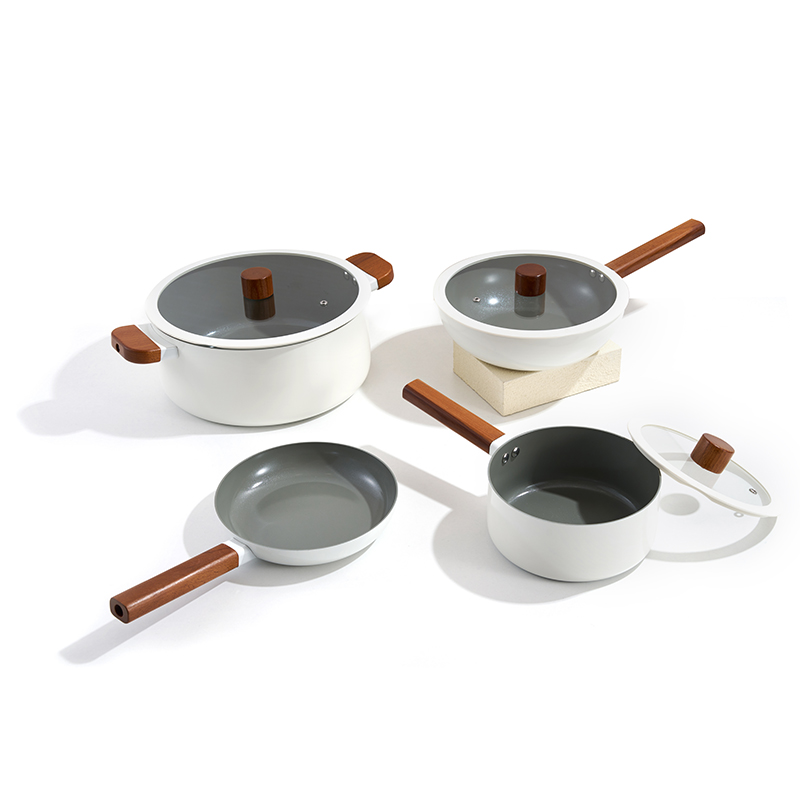
This cookware set has a ceramic non-stick inner liner, a heat-resistant wooden h...
See Details -
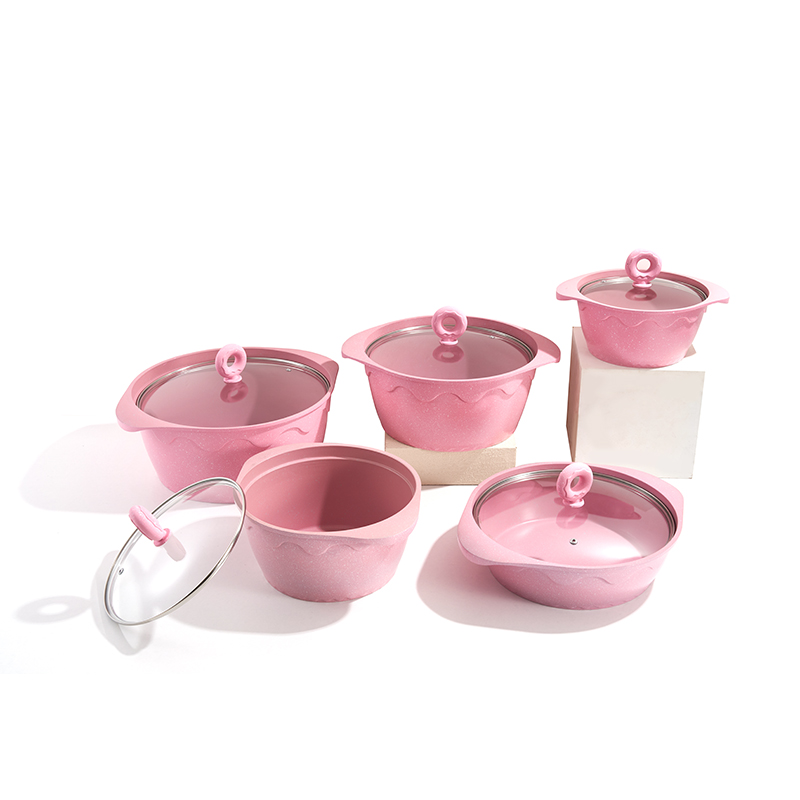
This cookware set is made of food-grade non-stick material, with a unique eye-ca...
See Details -
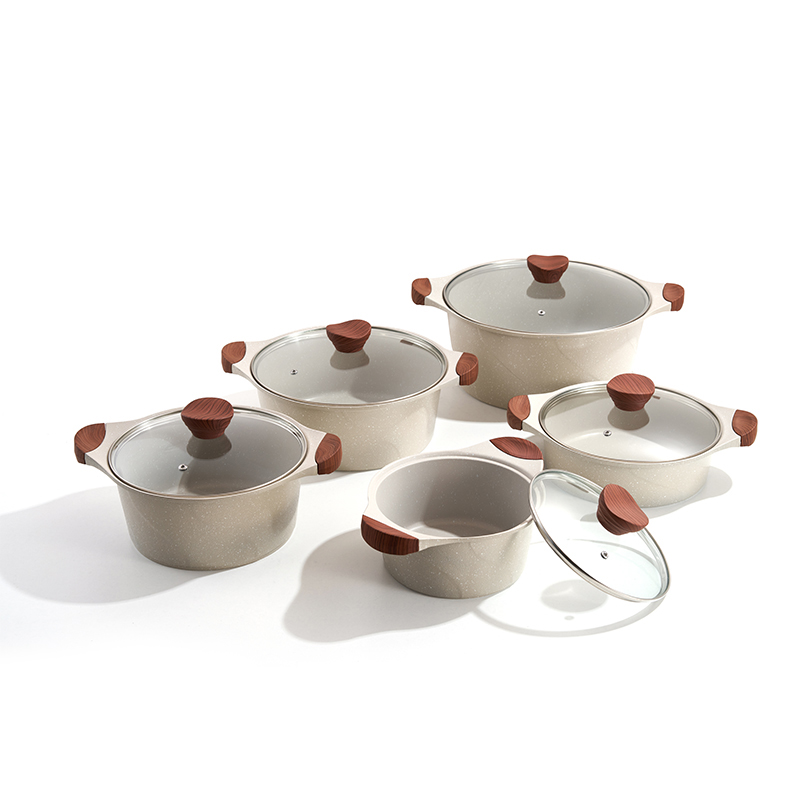
This off-white cookware set is made of wear-resistant non-stick material, with w...
See Details
Whether you're looking for bulk purchases or have any custom requirements, We are here to offer the best
solutions for you.
tiffany.zhong@echocn-trading.com
PHONE
+86-19561173975
+86-19557020621 (Hazel Wu)
ADD
Room 301, Unit 3014, No. 175 Qifeng Avenue, Wenqiao Town, Taizhou, Zhejiang, China
Fill Out the Form for More Information
Copyright © Zhejiang Echo Industry And Trade Co., Ltd.
All Rights Reserved.

China Cookware Set Manufacturer