
 en
 Español

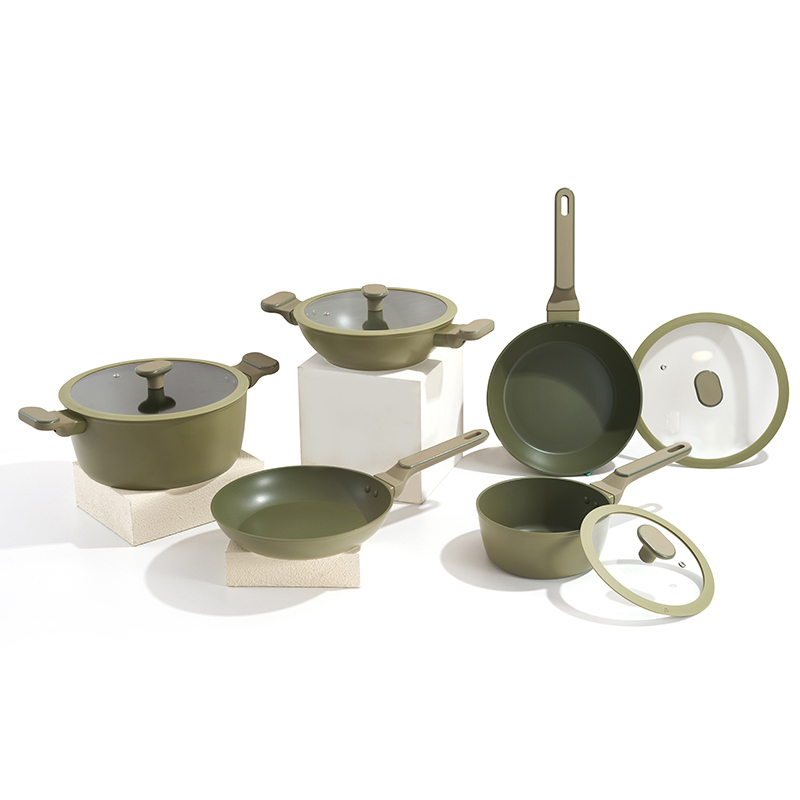
This cookware set features a non-stick coating, even heat conduction, and multi-...
See Details
Uncoated Cast Iron Pan: Durable Heat Retention for Everyday Gas Stovetop Cooking
Date:Oct 07, 2026
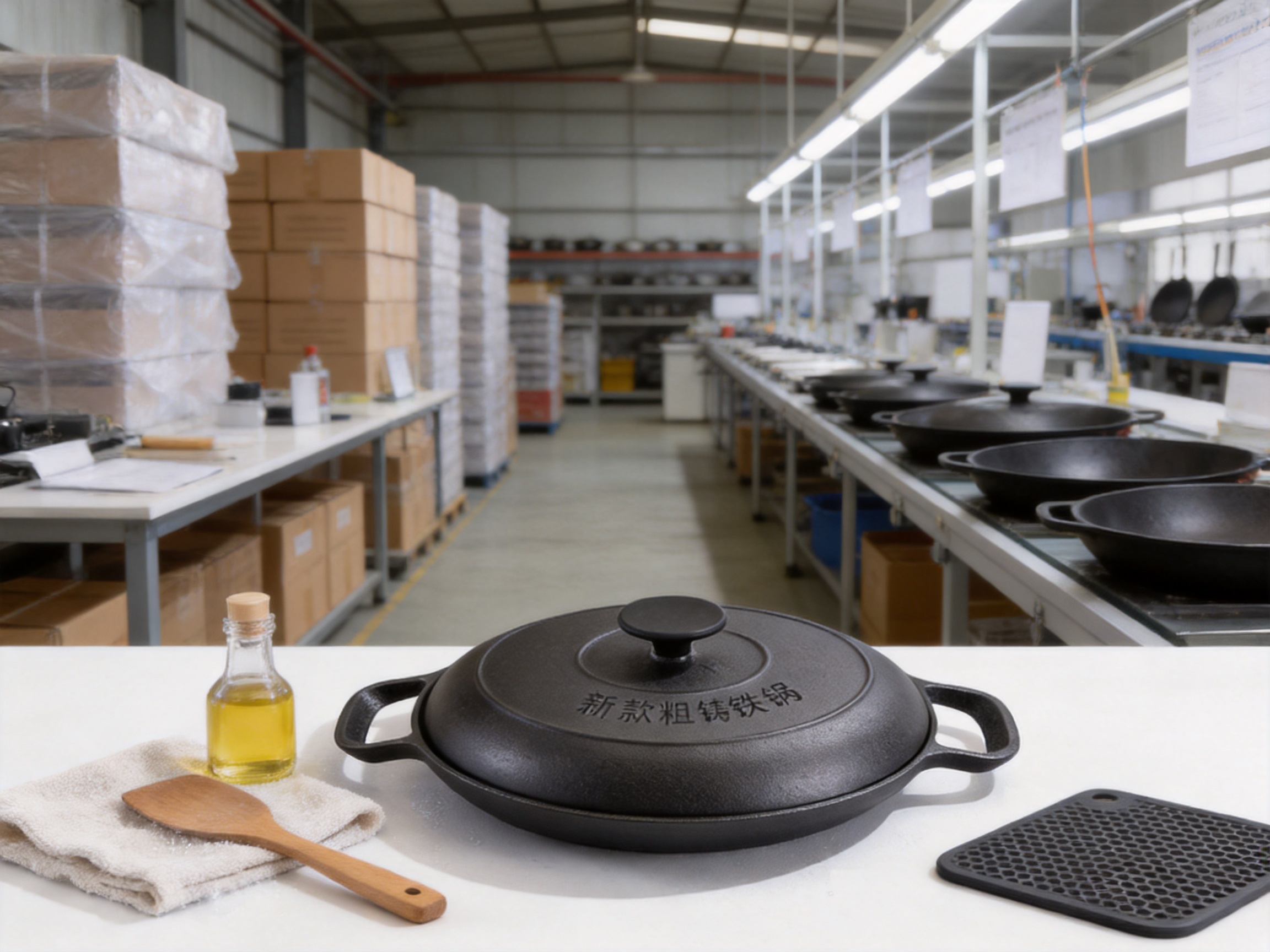
Choosing the right pan involves more than comparing appearance and price. A practical cookware item must deliver reliable cooking performance, withstand repeated use, remain easy to maintain, and fit the working habits of the kitchen. The Uncoated Cast Iron Pan is designed around these essential requirements. Made from cast iron and formed as a sturdy one-piece cooking vessel, it provides strong heat retention for frying and searing while offering the long-term durability associated with traditional iron cookware.
Unlike cookware that depends on a synthetic non-stick coating, this pan has a pure, uncoated cast iron surface. With regular use and appropriate care, the cooking surface can develop natural seasoning. This seasoning can improve release performance over time while adding a traditional character that many home cooks and professional kitchens appreciate. The pan is particularly suitable for gas stovetop cooking, where direct flame and controlled heat make it possible to take advantage of cast iron’s thermal properties.
The product has a total length of approximately 32 centimeters including the handle and is supplied with a lid according to the listed product information. Its compact carton dimensions, manageable shipping weight, and practical black finish make it suitable for cookware retailers, kitchenware distributors, hospitality suppliers, and private-label buyers seeking a dependable iron cookware option.
1. Product Overview
The Uncoated Cast Iron Pan belongs to the Iron Cookware category. Its main structure is made from cast iron, a material valued for its density, strength, and ability to store heat. The pan is identified by SKU XY02 and has a black exterior and interior finish. It is described as single-bottomed and intended for gas stovetop cooking.
The cooking surface is uncoated. This means there is no artificial non-stick film between the food and the iron surface. Instead, the pan is designed to develop natural seasoning through repeated cooking and proper maintenance. Seasoning is the gradual formation of a protective layer created when cooking oils bond with the heated iron surface. It is not a permanent coating applied in the same way as a synthetic finish; it is a condition that improves through correct use.
The pan’s total length, including the handle, is approximately 32 centimeters. The listed depth is 1 centimeter, making the item suitable for cooking applications that benefit from a relatively shallow format, such as frying, searing, browning, and preparing foods that need direct contact with a hot surface. A lid is included in the product specification, offering additional flexibility for covered cooking and heat management.
The one-piece construction is one of the product’s central structural advantages. Instead of joining multiple main components through welds, rivets, or separate bonded sections, a cast iron pan formed as one integrated body has a simple and robust structure. Fewer connection points can reduce the number of areas that may loosen or fail during long-term use. This is particularly useful in cookware that is repeatedly exposed to heat, movement, washing, and changes in temperature.
| Product Attribute | Specification |
|---|---|
| Product name | Uncoated Cast Iron Pan |
| Product category | Iron Cookware |
| SKU | XY02 |
| Material | Cast iron |
| Surface | Uncoated cast iron |
| Color | Black |
| Total length with handle | Approximately 32 cm |
| Listed depth | Approximately 1 cm |
| Base design | Single bottom |
| Lid | Included according to product information |
| Recommended heat source | Gas stovetop |
| Carton quantity | 1 unit |
| Carton size | 28 × 28 × 9 cm |
| Carton volume | Approximately 0.0071 m³ |
| Carton weight | Approximately 2.73 kg |
2. Why Uncoated Cast Iron Remains Valuable
Cast iron cookware has remained popular because it provides a distinctive balance of heat storage, structural strength, and service life. Thin cookware can heat quickly, but it may also lose heat quickly when cold food is added. Cast iron behaves differently. Once heated, it stores substantial thermal energy and releases that energy gradually. This makes it useful for cooking methods that depend on stable surface heat.
Frying and searing are two examples. When meat, vegetables, or other ingredients are placed on a heated pan, the temperature of the cooking surface may drop. A dense cast iron body helps reduce this temperature fluctuation. The result can be a more consistent browning process, provided that the pan is preheated appropriately and the ingredients are not overcrowded.
The uncoated surface also gives buyers a straightforward material story. There is no synthetic non-stick layer to explain, replace, or protect from accidental scratching. The pan’s performance is connected to the cast iron material and the seasoning developed by the user. For customers who prefer traditional cookware, low-complexity construction, and long product life, this can be a strong selling point.
Another advantage is durability. Cast iron is a hard, dense material that can withstand the normal demands of stovetop cooking when handled responsibly. The product information describes the pan as scratch-resistant and suitable for long-term use. While no cookware is indestructible, a properly maintained cast iron pan can remain useful for many years, making it a compelling alternative to short-life cookware products that may require frequent replacement.
The pan’s simplicity also supports a broad range of positioning strategies. Retailers can present it as a traditional frying pan, a searing pan, a starter item for cast iron cooking, or part of a larger cookware collection. Distributors can place it in household kitchen, outdoor cooking, restaurant supply, or specialty cookware channels, provided that the intended cooking environment and care instructions are clearly communicated.
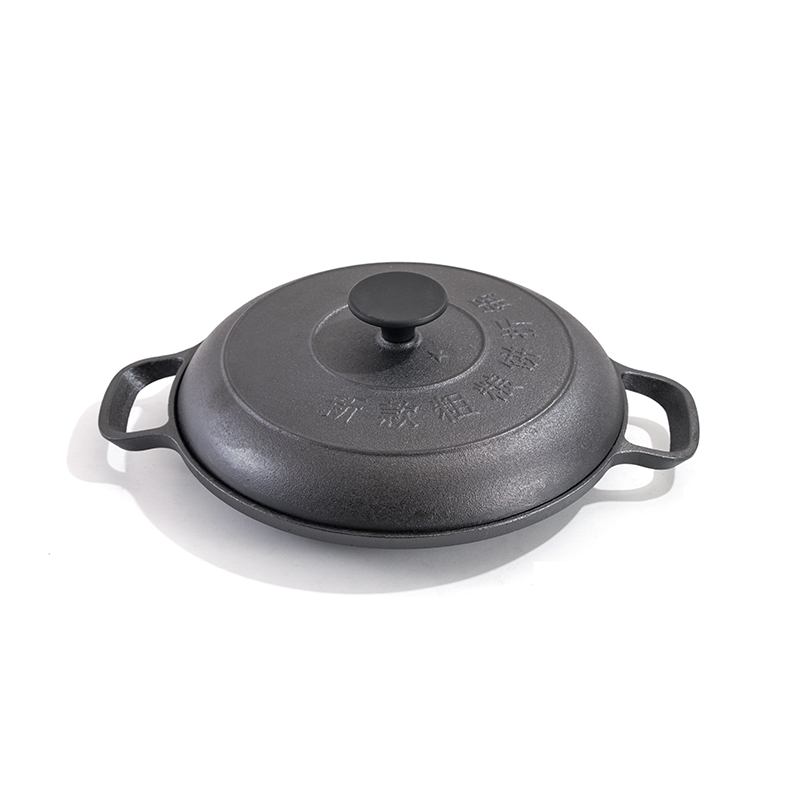
Uncoated Cast Iron Pan
3. Cooking Performance on a Gas Stovetop
The Uncoated Cast Iron Pan is designed for gas stovetop cooking. Gas burners provide direct flame and allow users to adjust heat rapidly. When combined with cast iron’s strong heat retention, this creates a useful cooking platform for recipes that require high initial heat followed by controlled cooking.
For searing, the user can place the pan over a suitable burner and preheat it gradually. Once the pan reaches the desired temperature, food can be added with an appropriate amount of cooking oil. Cast iron is especially effective when the cooking goal is to create browning on the surface of meat, mushrooms, potatoes, onions, and other ingredients. The pan’s thermal mass helps maintain heat when food is introduced.
For frying, the relatively shallow profile supports direct access to the ingredients. It can be useful for fried eggs, small portions of meat, vegetables, flat foods, and other preparations that do not require a deep vessel. The user should always select a heat level appropriate to the recipe and should avoid leaving the pan empty over high heat.
The included lid adds another cooking option. A lid can help retain moisture, hold warmth, and support covered cooking after ingredients have been browned. It may also be useful when allowing food to rest briefly on the stovetop. Because the supplied product information does not specify the lid material or its maximum temperature, buyers should confirm those details before promoting the lid for specialized applications.
Good cast iron performance depends on proper preheating rather than immediate high heat. Starting with moderate heat gives the iron time to warm more evenly. Sudden and extreme temperature changes should be avoided because they can create unnecessary thermal stress. Users should also ensure that the burner flame remains under the base rather than extending beyond it. This protects the handle, surrounding surfaces, and the pan itself from avoidable heat exposure.
The pan should be placed on a burner that matches its base size as closely as possible. A burner that is too large may heat the outer area unnecessarily, while a burner that is too small may create a concentrated hot spot. Even heating is supported by selecting the correct burner and allowing sufficient preheating time.
3.1 Frying and Browning
Frying requires a stable cooking surface and enough heat to cook ingredients without excessive temperature loss. Cast iron’s stored heat can support this process. The pan is well suited to foods that benefit from a browned exterior, including sliced vegetables, meat portions, potatoes, and other ingredients prepared with a small amount of oil.
Before adding food, the user should make sure the pan is clean, dry, and appropriately seasoned. A small quantity of oil can be spread across the cooking surface. Ingredients should be placed with enough room for hot air and heat to circulate. Overcrowding can cause food to release moisture faster than it evaporates, which may reduce browning performance.
Because this pan is uncoated, users should not expect the same immediate release behavior as a newly purchased synthetic non-stick pan. Natural seasoning develops over time. The first cooking experiences may require careful oil selection, suitable preheating, and patient handling. As the surface becomes better seasoned, many foods can release more easily.
3.2 Searing and High-Heat Applications
Searing depends on contact between a heated cooking surface and the exterior of an ingredient. Cast iron is frequently selected for this purpose because it remains hot when room-temperature or refrigerated food is introduced. The pan can support the development of a browned crust when users manage moisture, oil, and cooking temperature properly.
High heat should nevertheless be used responsibly. The care instructions specifically warn against overheating the empty pan. A pan that is heated without food or oil can become excessively hot, creating a safety risk and potentially damaging the seasoning. If severe overheating occurs, the user should turn off the cooker and allow the pan to cool completely without touching it.
The flame should not extend beyond the base. This instruction is important for gas cooking because excess flame can heat the handle and exterior sides unnecessarily. It can also increase the risk of burns, damage to nearby surfaces, or accidental ignition of combustible materials.
4. Advantages Compared with Competing Cookware
The Uncoated Cast Iron Pan competes with aluminum pans, stainless steel pans, coated non-stick pans, and other iron cookware. Each category has its own benefits, but this product offers a combination of qualities that can make it attractive in specific use cases.
4.1 Compared with Lightweight Aluminum Pans
Aluminum cookware is generally valued for low weight and rapid heat response. Those properties can be useful for quick cooking and easy handling. However, lightweight aluminum may not retain heat as effectively as cast iron. When a large quantity of cool food is added, an aluminum surface may lose temperature more quickly.
The cast iron construction of this product offers greater thermal mass and a more substantial feel. For searing and browning, that stored heat can be a practical advantage. Buyers who prioritize durability and stable cooking temperature may prefer cast iron even though it is heavier than aluminum.
The one-piece structure also gives the pan a solid, traditional character. It is less focused on ultralight portability and more focused on long service life and dependable stovetop performance. This distinction allows retailers to serve different customer needs rather than competing only on weight.
4.2 Compared with Stainless Steel Pans
Stainless steel cookware is known for its corrosion resistance, clean appearance, and compatibility with many cooking techniques. It can also provide excellent browning when used correctly. However, stainless steel generally requires careful heat management and sufficient cooking fat to reduce sticking, particularly when preparing delicate ingredients.
The Uncoated Cast Iron Pan offers a different user experience. Its seasoning can create a more naturally conditioned surface over time, and its heat retention makes it suitable for heavy-duty browning. The black finish also gives it a traditional visual identity that differs from polished stainless steel.
Stainless steel may be preferred where light maintenance and a bright appearance are priorities. Cast iron may be preferred where heat storage, ruggedness, and traditional seasoning are more important. The choice depends on the intended user, but the product provides a clear alternative within the cookware market.
4.3 Compared with Synthetic Non-Stick Cookware
Synthetic non-stick pans are often selected because food can release easily with limited oil. They are convenient for delicate foods and low-fat cooking. However, their coatings require careful use. Sharp or metal utensils may scratch the surface, and excessive heat can shorten the life of the coating.
The Uncoated Cast Iron Pan does not depend on a synthetic non-stick layer. Its surface is scratch-resistant in the sense that there is no delicate film to peel or flake away. The product care instructions still recommend wooden, nylon, or non-stick cooking utensils, which is a sensible way to preserve the appearance and seasoning of the pan.
Cast iron requires more active maintenance than many coated pans. It must be cleaned and dried correctly, and the seasoning should be preserved. In exchange, users receive a pan whose useful life is not defined by the expected lifespan of a surface coating. This durability story can be especially attractive to customers who prefer repairable, maintainable, and long-lasting kitchen products.
4.4 Compared with Multi-Part Iron Pans
Some cookware products use separate handles, attached brackets, welded sections, or multiple structural components. These designs can offer ergonomic advantages, but every connection introduces another area that may experience stress, looseness, or residue accumulation.
This product’s one-piece cast iron construction provides a straightforward alternative. Its integrated body is sturdy, visually simple, and designed for repeated use. The absence of complex assembly points may also simplify inspection and quality control during manufacturing.
| Comparison Factor | Uncoated Cast Iron Pan | Aluminum Pan | Stainless Steel Pan | Synthetic Non-Stick Pan |
|---|---|---|---|---|
| Heat retention | Strong | Moderate to low | Moderate | Usually moderate |
| Surface type | Uncoated cast iron with natural seasoning | Usually uncoated or coated | Uncoated metal | Synthetic non-stick coating |
| Durability profile | Designed for long-term use | Depends on thickness and finish | Generally durable | Coating requires protection |
| Weight | Relatively substantial | Light | Moderate | Usually light to moderate |
| Best-known strengths | Searing, frying, heat storage, robustness | Fast response and easy handling | Corrosion resistance and clean appearance | Easy food release |
| Maintenance priority | Drying and seasoning care | Surface-specific care | Cleaning and stain control | Protection of coating |
5. Manufacturing Strengths and Quality-Oriented Construction
A cast iron pan’s performance begins with its material and forming process. The product is built around cast iron, a material that can be shaped into a strong integrated body. The manufacturing objective is not simply to produce a black pan. It is to create a structurally sound cooking vessel with consistent dimensions, a usable handle, a stable base, and a surface that can support seasoning.
The one-piece construction is an important manufacturing strength. An integrated casting can reduce dependence on secondary joining operations for the main pan body. This helps create a simple product architecture and supports repeatable production. It also makes the pan visually coherent, with the body and handle forming part of the same robust structure.
During a professional production process, attention must be given to material preparation, mold condition, casting integrity, cooling, finishing, surface treatment, dimensional inspection, and packing. Although the provided product information does not specify individual machines, furnace temperatures, mold materials, or inspection tolerances, these are the types of manufacturing stages that influence the consistency of cast iron cookware.
Material preparation is essential because the quality of the iron affects the final product. The casting material must be suitable for cookware production and must form a stable body without unacceptable voids, cracks, or structural weaknesses. Controlled production planning helps ensure that each batch is made according to the required product specification.
Mold preparation influences the shape and repeatability of the pan. The mold must reproduce the intended cooking surface, base, side profile, and handle geometry. A well-managed molding stage supports consistency from one production unit to another. This is particularly important for wholesale customers who require products that look and perform uniformly across an order.
After casting and cooling, the pan requires finishing. Excess material may need to be removed, edges may need to be refined, and the cooking surface may need to be checked for rough defects that could interfere with use. The aim is to retain the natural character of cast iron while delivering a practical cooking surface and safe handling points.
Inspection should include visual checks, dimensional verification, base stability, handle integrity, and overall surface condition. Packaging inspection is also important because cast iron is heavy and can damage cartons if not properly supported. The listed carton size of 28 × 28 × 9 centimeters and carton weight of approximately 2.73 kilograms provide a basis for logistics planning and packing evaluation.
The company behind this product operates as a kitchenware supplier and manufacturer based in Zhejiang, China. Its stated product range includes aluminum cookware, stainless steel cookware, cast iron cookware, and kitchen utensils. This broad category coverage supports a more integrated sourcing approach for buyers that want to combine different cookware materials in one order.
Its stated services include one-stop sourcing, ODM and OEM customization, product certification assistance, flexible minimum order quantities, and sustainable and healthy product development. These capabilities are relevant to importers and retailers that need more than a standard stock item. They may require customized packaging, product assortment planning, private-label development, or documentation support for a specific market.
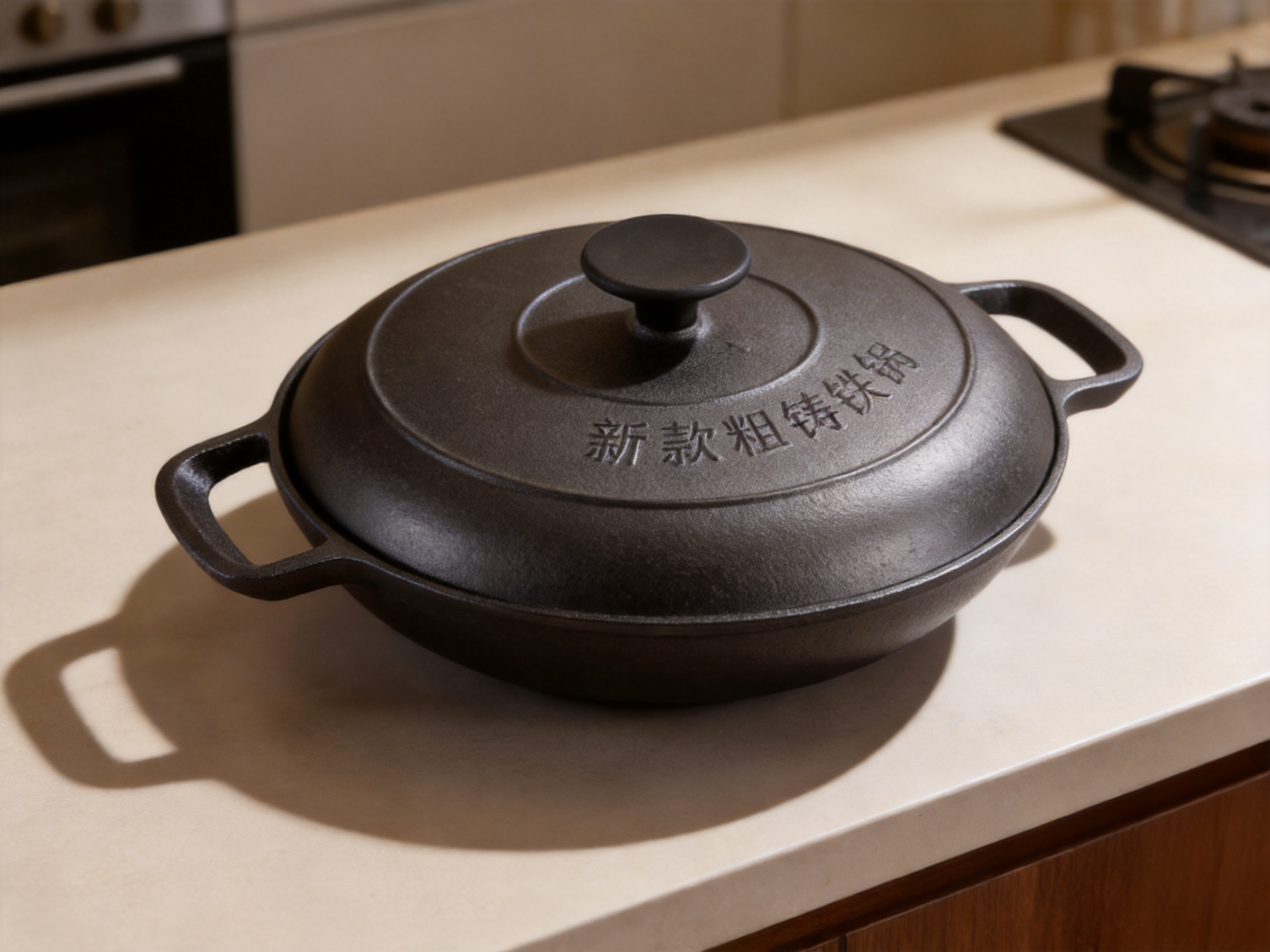
6. Supplier Capabilities for Wholesale and Private-Label Buyers
For many cookware buyers, product quality is only one part of the purchasing decision. A supplier must also provide dependable communication, realistic production planning, appropriate packing, and support for market-specific requirements. A company with experience across several cookware categories can help buyers build a coordinated collection rather than sourcing each item from a separate factory.
The supplier’s portfolio includes aluminum cookware, stainless steel cookware, cast iron cookware, and kitchen utensils. This can be valuable for distributors that want to create a complete kitchenware program. The Uncoated Cast Iron Pan can serve as a durable specialty item within a broader range containing lightweight aluminum products, polished stainless steel items, and everyday utensils.
ODM and OEM support can help buyers adapt the product to different commercial strategies. Potential areas for discussion may include packaging design, carton labeling, color presentation, logo application where technically appropriate, instruction sheets, bundled accessories, and assortment planning. Any customization should be confirmed with the supplier in advance, including its effect on tooling, minimum order quantity, production time, and cost.
Flexible minimum order quantities can support smaller and medium-sized buyers that are testing a market. A retailer may want to introduce cast iron cookware without committing immediately to a very large volume. A regional distributor may need a mixed shipment containing several cookware categories. Flexible order planning can reduce inventory risk when managed alongside clear forecasts and production schedules.
Certification assistance is another important supplier strength. Importers may need documents relating to materials, food-contact suitability, packaging, labeling, or market entry. The exact requirements depend on the destination country and the sales channel. Buyers should identify their compliance requirements early and request relevant documentation before mass production.
Sustainable and healthy product development is increasingly important in cookware purchasing. An uncoated cast iron pan offers a simple material profile that may appeal to customers seeking durable products with long service lives. Durability itself can support more responsible consumption by reducing the need for frequent replacement. Nevertheless, sustainability claims should be based on verifiable production and packaging information rather than broad assumptions.
The supplier’s stated mission is to become an R&D-driven supply chain partner for small and medium-sized kitchenware buyers. For a product such as this pan, that ambition can translate into a more collaborative approach to product improvement, packaging development, assortment planning, and technical communication. Buyers should use the development process to confirm all important specifications, including pan depth, lid details, packaging configuration, and recommended use conditions.
7. Care and Maintenance Instructions
Correct maintenance is essential for uncoated cast iron. The product care instructions recommend washing the pan before first use. This removes residues from handling and preparation before the pan enters the kitchen. Hand washing is recommended to preserve the appearance of the cookware.
To clean the pan, use hot, soapy water with a soft cloth or sponge. A soft cleaning tool is preferable because it removes food residues without creating unnecessary abrasion. After washing, the pan should be dried thoroughly. Leaving moisture on cast iron for long periods may encourage rust, so drying is a central part of responsible ownership.
The care instructions advise users not to use metal or sharp cooking utensils. Wooden, nylon, or non-stick cooking utensils are recommended instead. Although the pan is uncoated and does not have a fragile synthetic film, suitable utensils can help preserve the surface appearance and natural seasoning. They can also reduce the possibility of gouging or rough handling during cooking.
Do not overheat the empty pan. Cast iron stores heat efficiently, and an empty vessel can become much hotter than expected if left over a burner. If the pan severely overheats, the user should turn off the cooker and allow it to cool completely. The pan should not be touched while it is dangerously hot.
The pan should not be used in a microwave. Cast iron is not appropriate for microwave cooking and may damage the appliance or create a serious safety hazard. The intended use is stovetop cooking, specifically gas stovetop cooking according to the product information.
The flame or heat source should not extend beyond the base of the item. This helps concentrate heat where it is needed and reduces unnecessary exposure to the handle and surrounding surfaces. Users should select a suitable burner and avoid placing the pan where the handle may be struck or exposed to another heat source.
7.1 Developing Natural Seasoning
Natural seasoning is developed through the repeated application of suitable cooking oil and controlled heating. The process is gradual. A new pan may not have the same release performance as one that has been used and maintained for a long time. Users should begin with suitable foods and moderate cooking conditions while the surface becomes conditioned.
After cleaning and drying, a very thin layer of cooking oil may be applied if appropriate for the user’s maintenance routine. Excess oil can become sticky, so the goal is a light, even film rather than a thick coating. The pan should then be stored in a dry location with adequate ventilation.
Acidic foods and long simmering periods may affect seasoning more than short frying or searing sessions. Users who frequently prepare acidic recipes should pay closer attention to the condition of the surface and recondition it when necessary. Because the product is relatively shallow, it is particularly well suited to direct frying and browning applications that support the development of seasoning.
7.2 Storage and Handling
Cast iron is heavy compared with many aluminum or coated pans. Users should lift it with both hands when necessary and place it carefully on the stovetop or work surface. Sliding a heavy pan across a delicate cooktop may cause scratches or damage, so lifting is preferable.
The pan should be stored completely dry. If a lid is placed on the pan for storage, users should ensure that trapped moisture does not remain inside. A small amount of ventilation or a dry cloth between the pan and lid may help prevent moisture accumulation, depending on the storage environment.
8. Product Presentation and Retail Positioning
The Uncoated Cast Iron Pan has several clear retail messages. Its strongest points are the uncoated cooking surface, cast iron durability, heat retention, one-piece construction, gas stovetop compatibility, and capacity to develop natural seasoning. These attributes can be communicated through packaging, product descriptions, comparison charts, and cooking demonstrations.
Retailers should present the pan honestly as a traditional cast iron product that requires care. Describing it simply as “non-stick” could create unrealistic expectations, particularly for first-time cast iron users. A more accurate message is that the uncoated surface can develop improved natural release performance through seasoning and correct use.
The product may appeal to several customer groups. Traditional cooking enthusiasts may appreciate its classic material and robust structure. Home cooks who frequently sear meat or fry vegetables may value its heat retention. Buyers seeking long-lasting kitchen tools may prefer it over cookware whose surface life depends on a coating. Outdoor cooking customers may also be interested, although the product information specifically identifies gas stovetop cooking, so any alternative use should be confirmed before promotion.
The black color gives the pan a familiar cast iron appearance. It can coordinate easily with other cookware and kitchen accessories. The included lid provides an additional merchandising point, although retailers should confirm the lid’s material, fit, and care requirements before making detailed claims.
Packaging should protect the pan from impact and prevent movement during shipping. Since the listed carton weight is approximately 2.73 kilograms for one unit, strong outer packaging and appropriate internal support are important. Product inserts should explain first-use washing, hand washing, utensil recommendations, burner selection, overheating precautions, microwave prohibition, and storage requirements.
A clear instruction sheet can reduce returns and improve customer satisfaction. Many complaints about cast iron cookware arise from unfamiliarity with seasoning or improper cleaning rather than from the product’s basic construction. Education helps customers understand why the pan behaves differently from a synthetic non-stick pan and how its performance can improve with continued use.
9. Quality Control Considerations for Buyers
Wholesale buyers should establish a product inspection checklist before placing a large order. The checklist may include overall shape, pan depth, total length, handle condition, base stability, surface finish, lid fit, color consistency, carton dimensions, labeling, and packing protection.
The cooking surface should be reviewed for unacceptable cracks, deep cavities, sharp projections, or residues that could interfere with normal use. Cast iron naturally has a distinctive texture, so buyers should distinguish between acceptable material character and defects that compromise safety or performance.
The handle should be checked for structural integrity and comfortable handling. Because the pan is heavy, the handle must support controlled lifting and positioning. Buyers may also wish to inspect the connection between the handle and body even though the product is described as one-piece construction.
The base should sit securely on a flat surface. A stable base supports safe stovetop cooking and helps prevent rocking. Buyers should confirm how base flatness is controlled during production and whether the product is intended for any cooking surface beyond gas stovetops.
The lid should be checked for correct fit and secure handling. Since the available specification only identifies the presence of a lid, further technical details should be obtained from the supplier. These may include lid material, knob material, heat limits, replacement availability, and packaging protection.
Carton inspection should confirm that the actual packing configuration matches the agreed specification. The listed carton size is 28 × 28 × 9 centimeters, and the listed carton volume is approximately 0.0071 cubic meters. Buyers should verify whether these dimensions refer to one retail carton, one shipping carton, or another packaging level before calculating freight requirements.
| Inspection Area | Recommended Buyer Check | Reason |
|---|---|---|
| Body casting | Check for cracks, weak areas, and unacceptable casting defects | Supports structural safety and durability |
| Cooking surface | Review texture, cleanliness, and absence of sharp projections | Supports practical cooking and user safety |
| Handle | Check strength, alignment, and ease of lifting | Important because cast iron is relatively heavy |
| Base | Confirm stability on a flat surface | Reduces rocking during stovetop use |
| Lid | Verify fit, condition, and included components | Ensures the delivered set matches the specification |
| Finish | Check black color consistency and appearance | Supports retail presentation |
| Packaging | Confirm protection, labels, and carton dimensions | Reduces transport damage and logistics errors |
| Documentation | Review care instructions and market compliance documents | Supports correct use and import requirements |
10. Customization and Product Development Opportunities
The standard Uncoated Cast Iron Pan provides a practical foundation for customization. Buyers interested in private-label programs can discuss the commercial presentation of the product with the supplier. Possible areas include outer carton artwork, instruction cards, barcode labels, language versions, branded inserts, and coordinated packaging for a cookware collection.
Product development may also involve creating a family of related iron cookware items. A buyer could combine this pan with larger pans, griddles, saucepans, or compatible utensils. A coordinated range can make it easier to build shelf presentation and encourage customers to purchase more than one item.
Customization should never obscure essential usage information. Any private-label packaging should clearly state that the surface is uncoated cast iron, that the item is intended for gas stovetop cooking according to the supplied specification, and that proper care is required. Warnings regarding microwave use, empty-pan overheating, utensil selection, burner flame, and safe cooling should remain visible and understandable.
For overseas markets, buyers may need translated instructions. Translation should preserve the practical meaning of the original care guidance. Terms such as “seasoning,” “empty-pan overheating,” and “hand washing” should be explained in language that ordinary customers can understand.
ODM development can also help buyers refine the product for a particular channel. A specialty cookware store may prefer educational packaging and a premium presentation. A mass-market retailer may prioritize efficient carton packing and concise instructions. A hospitality supplier may require larger-volume packing and consistent replenishment. The same basic pan can therefore be positioned differently according to customer requirements.
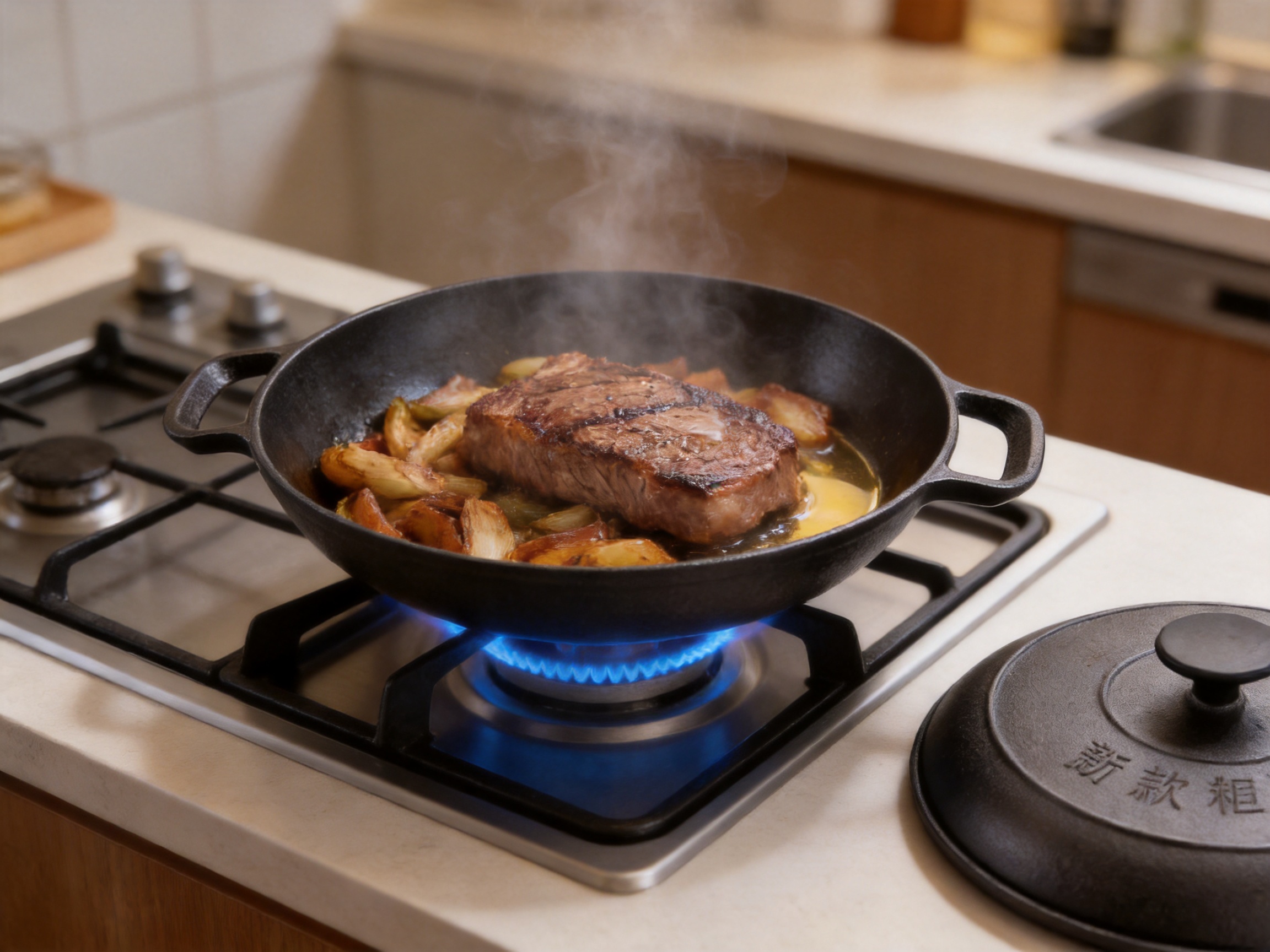
11. Safe and Effective Use in the Kitchen
Safe use begins with selecting the correct cooking location. Place the pan on a stable gas burner that is suitable for its base. Keep handles away from walkways and make sure nearby cloths, paper, packaging, and other combustible items are not exposed to the flame or hot sides of the pan.
Preheat gradually and avoid leaving the empty pan unattended. Add oil or ingredients when appropriate for the recipe. If oil begins to smoke heavily or the pan becomes excessively hot, reduce the heat and allow the situation to stabilize. Never touch a severely overheated pan directly.
Cast iron remains hot for a long time after the burner has been turned off. Users should treat the pan as hot until it has cooled completely. A heat-resistant pad or suitable resting surface should be used to protect counters and tables. The pan should not be immersed in cold water immediately after extreme heating because sudden temperature changes can create unnecessary stress.
Use wooden, nylon, or non-stick cooking utensils as recommended. Keep hands away from the hot cooking surface and use appropriate protection when handling the handle or lid. If the lid has been used during cooking, steam may escape when it is lifted. Opening it carefully and away from the face can reduce the risk of steam burns.
12. Environmental and Long-Term Value
The long service life of cast iron cookware can be an important part of its value proposition. A pan designed for repeated use may reduce the frequency with which consumers replace cookware. Its uncoated structure also avoids dependence on a synthetic surface layer that may eventually lose performance.
Long-term value depends on user care. Rust prevention, appropriate cleaning, seasoning maintenance, and careful storage all contribute to product longevity. Retailers can strengthen the product’s environmental message by including practical maintenance guidance rather than presenting durability as an automatic result of material alone.
Packaging efficiency is also relevant to wholesale planning. The listed carton size and single-unit carton quantity provide a starting point for calculating storage and shipping requirements. Buyers should confirm the final packaging design, materials, and pallet arrangement before making freight or sustainability claims.
The supplier’s stated interest in sustainable and healthy product development creates an opportunity for further discussion about packaging reduction, recyclable materials, efficient carton design, and responsible sourcing. Such subjects should be evaluated through documented specifications and measurable production information.
13. Why This Pan Is a Strong Commercial Choice
The Uncoated Cast Iron Pan combines several features that are easy to understand and easy to communicate. It is made from cast iron, uses an uncoated cooking surface, offers strong heat retention, has one-piece construction, and is designed for gas stovetop use. These features give it a defined position rather than leaving it as a generic frying pan.
Its strongest competitive advantage is the combination of ruggedness and natural seasoning potential. Customers who want an easy-disposable pan may choose a different product. Customers who want a pan that can become part of their kitchen for years may find this cast iron model more appealing.
The pan also benefits from a traditional cooking identity. Searing, frying, and browning are familiar applications that demonstrate the material’s strengths. A retailer can support sales with recipes, care guides, cooking demonstrations, and comparisons that explain how cast iron differs from aluminum, stainless steel, and synthetic non-stick cookware.
From a sourcing perspective, the supplier’s broader kitchenware portfolio, OEM and ODM capabilities, certification assistance, and flexible MOQ approach can simplify product development for small and medium-sized buyers. The product can be purchased as a standalone item or incorporated into a larger cookware and utensil program.
Its limitations should be communicated clearly. Cast iron is heavier than many alternatives. It requires hand washing, careful drying, and attention to seasoning. The listed use is gas stovetop cooking, and buyers should not assume compatibility with other heat sources without confirmation. The pan should not be used in a microwave, should not be overheated while empty, and should be kept away from flames that extend beyond the base.
Clear communication of both strengths and limitations builds trust. When customers understand how to use and maintain the product, they are more likely to experience the benefits of its construction and remain satisfied over the long term.
14. Frequently Asked Questions
Q1: What material is the pan made from?
The pan is made from cast iron. Its cooking surface is uncoated and is designed to develop natural seasoning through repeated use and proper care.
Q2: Does the pan have a synthetic non-stick coating?
No. The product is an uncoated cast iron pan. Its cooking performance can improve as natural seasoning develops, but it should not be described as having a factory-applied synthetic non-stick coating.
Q3: What cooking methods is the pan best suited for?
It is well suited to frying, searing, browning, and other direct-contact cooking methods that benefit from cast iron’s strong heat retention. The shallow listed depth also supports recipes that do not require a deep vessel.
Q4: Is the pan intended for gas stovetop cooking?
Yes. The product information identifies gas stovetop cooking as the intended application. Buyers should confirm compatibility with other cooktops before making additional claims.
Q5: Does the product include a lid?
The listed size specification includes “32 cm + lid,” indicating that a lid is included according to the supplied product information. Buyers should confirm the lid’s material, fit, and heat limitations with the supplier.
Q6: How should the pan be cleaned?
Use hot, soapy water with a soft cloth or sponge. Hand washing is recommended to preserve the appearance and condition of the cookware. Dry the pan thoroughly after washing.
Q7: Can metal utensils be used?
The care instructions recommend avoiding metal or sharp cooking utensils. Wooden, nylon, or non-stick cooking utensils are preferred for preserving the surface and seasoning.
Q8: Can the pan be placed in a microwave?
No. The product should not be used in a microwave.
Q9: What should a user do if the pan overheats?
If the pan severely overheats, turn off the cooker and leave the pan to cool completely. Do not touch it while it is dangerously hot, and do not place cold water into a severely overheated pan.
Q10: How can natural seasoning be developed?
Natural seasoning develops gradually through suitable cooking, light oiling, controlled heating, and correct cleaning and drying. Users should avoid excessive oil buildup and should maintain the pan consistently.
Q11: Is the pan scratch-resistant?
The product information describes the pan as scratch-resistant. Because it is uncoated cast iron, it does not have a synthetic film that can peel in the same way as coated cookware. However, careful utensils and proper handling are still recommended.
Q12: What is the total length of the pan?
The total length with the handle is approximately 32 centimeters. The product information also lists a depth of approximately 1 centimeter.
Q13: What is the carton weight?
The listed carton weight is approximately 2.73 kilograms. Buyers should verify whether this weight includes the final retail packaging and all included components.
Q14: Can the pan be customized?
The supplier states that it provides ODM and OEM customization. Buyers can discuss packaging, labeling, private-label presentation, assortment development, and other requirements directly with the supplier.
Q15: Is this product suitable for wholesale purchasing?
Yes. Its defined specifications, single-unit carton information, and supplier support for flexible MOQs and one-stop sourcing make it suitable for wholesale evaluation. Buyers should request samples and confirm production, packaging, and compliance details before placing a mass order.
15. Conclusion
The Uncoated Cast Iron Pan is a durable and practical cookware solution for users who value strong heat retention, traditional cooking performance, and long-term service. Its cast iron body supports frying and searing, while its uncoated surface can develop natural seasoning through continued use. The one-piece construction provides a sturdy product structure, and the black finish gives it a familiar, versatile appearance.
Compared with lightweight aluminum, stainless steel, and synthetic non-stick cookware, this pan offers a different balance of advantages. It is heavier, but it retains heat effectively. It requires more maintenance, but it does not rely on a fragile synthetic coating. It has a traditional surface, but that surface can become increasingly useful when properly seasoned.
For commercial buyers, the product is supported by a supplier with a broad kitchenware portfolio and stated capabilities in OEM, ODM, certification assistance, flexible MOQs, one-stop sourcing, and sustainable product development. These capabilities can help retailers, distributors, and private-label brands build a coordinated cookware program around a reliable cast iron foundation.
Successful use depends on realistic expectations and clear care instructions. The pan should be washed by hand, cleaned with hot soapy water and a soft cloth or sponge, dried carefully, protected from excessive heat, and used with suitable utensils. It should remain on its intended gas stovetop application, away from flames that extend beyond the base, and it must never be placed in a microwave.
When properly presented and maintained, the Uncoated Cast Iron Pan can become more than a basic frying vessel. It can serve as a durable everyday tool, a distinctive addition to a cookware collection, and a long-term product offering for buyers seeking dependable iron cookware with clear traditional value.
References
1. Product specification for the Uncoated Cast Iron Pan, SKU XY02, including material, dimensions, packaging, and care instructions.
2. General principles of cast iron cookware use, heat retention, natural seasoning, cleaning, and storage.
3. General cookware material comparisons covering cast iron, aluminum, stainless steel, and synthetic non-stick surfaces.
4. Supplier information concerning cookware categories, OEM and ODM services, certification assistance, flexible minimum order quantities, and one-stop kitchenware sourcing.
5. General food-contact cookware quality-control practices, including casting inspection, dimensional review, handle integrity, base stability, packaging protection, and product documentation.
Product: Uncoated Cast Iron Pan
Recommended Articles
Product Category
Related products
-
-
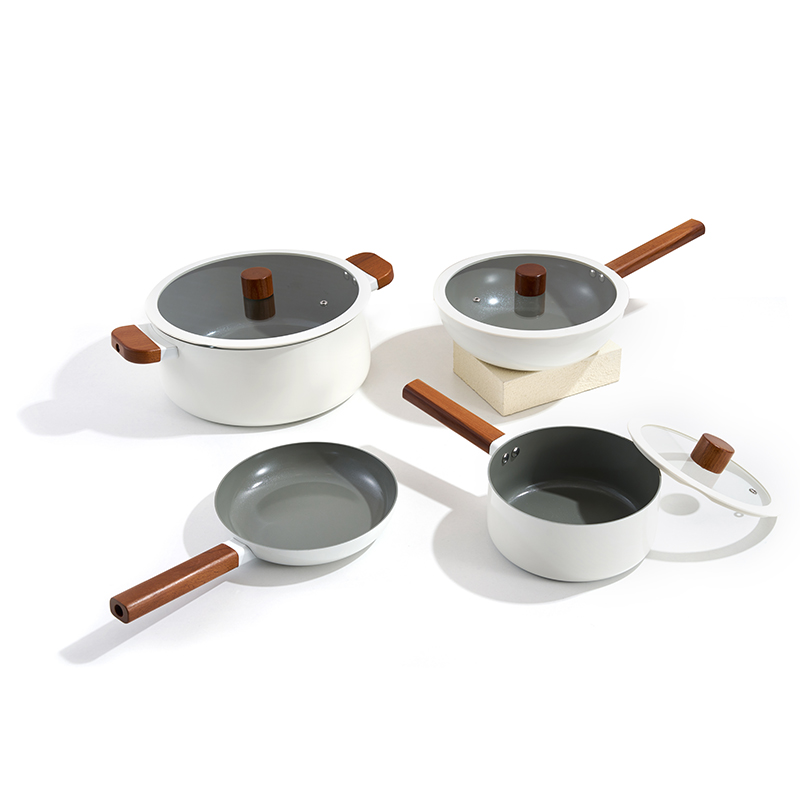
This cookware set has a ceramic non-stick inner liner, a heat-resistant wooden h...
See Details -
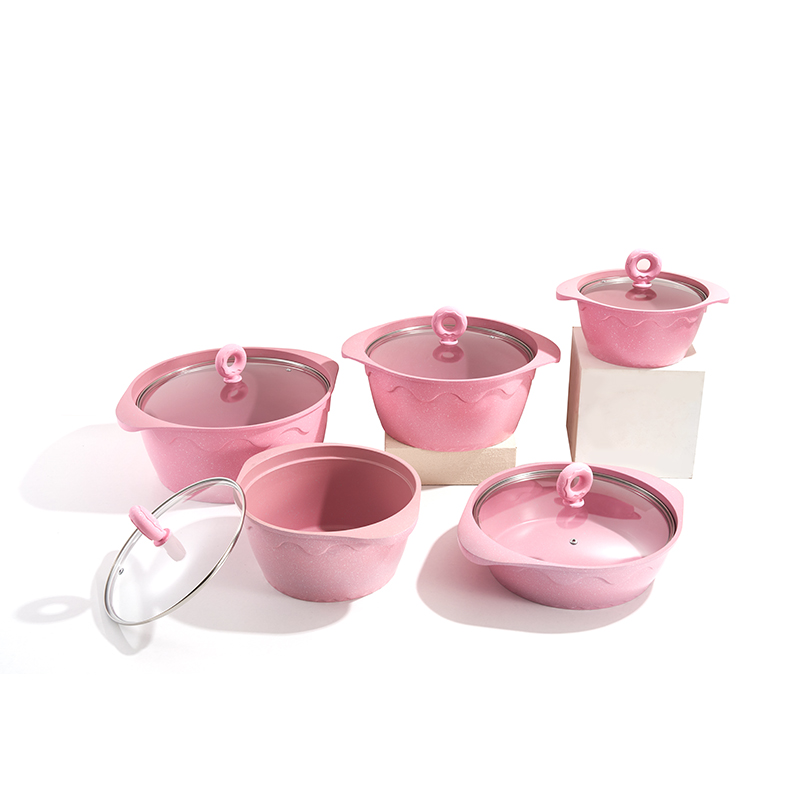
This cookware set is made of food-grade non-stick material, with a unique eye-ca...
See Details -
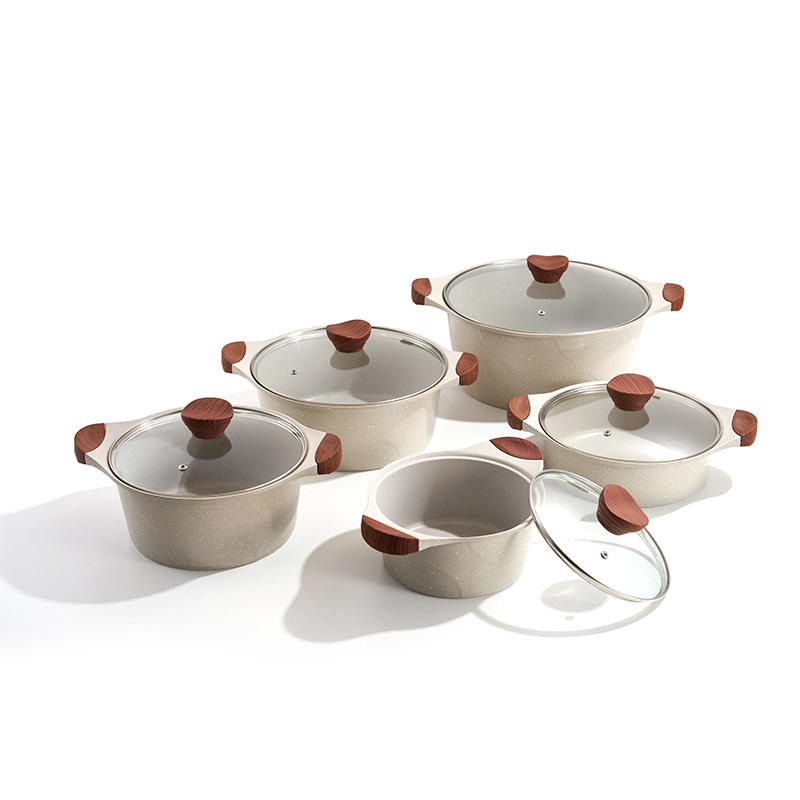
This off-white cookware set is made of wear-resistant non-stick material, with w...
See Details
Whether you're looking for bulk purchases or have any custom requirements, We are here to offer the best
solutions for you.
tiffany.zhong@echocn-trading.com
PHONE
+86-19561173975
+86-19557020621 (Hazel Wu)
ADD
Room 301, Unit 3014, No. 175 Qifeng Avenue, Wenqiao Town, Taizhou, Zhejiang, China
Fill Out the Form for More Information
Copyright © Zhejiang Echo Industry And Trade Co., Ltd.
All Rights Reserved.

China Cookware Set Manufacturer