
 en
 Español

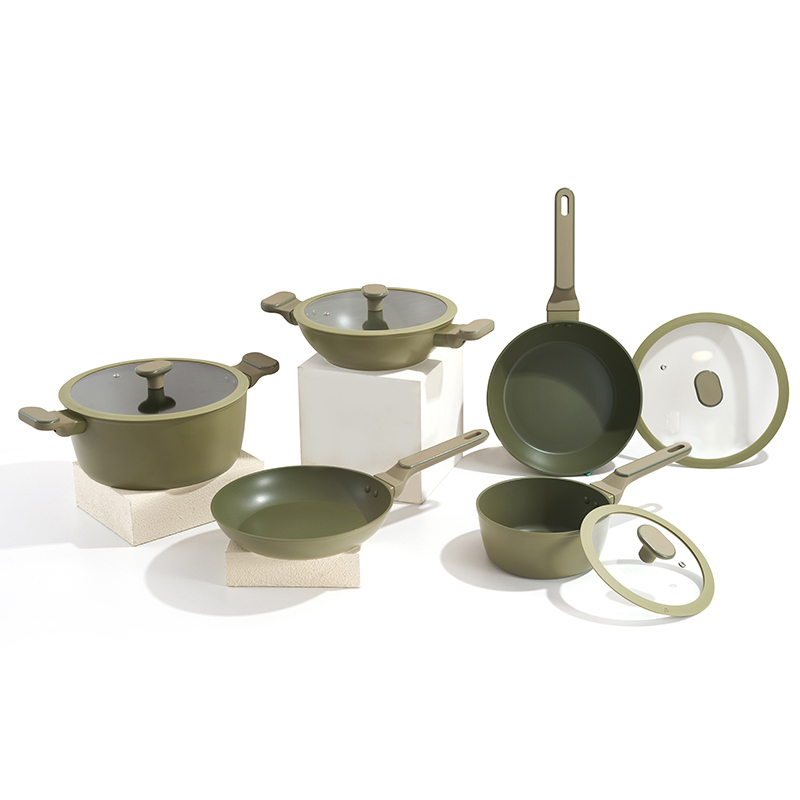
This cookware set features a non-stick coating, even heat conduction, and multi-...
See Details
Stainless Steel Cookware with Lid: A Durable, Healthy, and Versatile Choice for Modern Kitchens
Date:Nov 04, 2026
Stainless steel cookware remains one of the most trusted choices for professional kitchens, household cooking, catering operations, and hospitality applications. Its strength, clean appearance, resistance to corrosion, and compatibility with many cooking methods make it a practical alternative to cookware that depends on fragile coatings or limited stovetop compatibility. The Stainless Steel Cookware with Lid described in this article is designed around these long-term performance advantages, combining a forged construction, a multi-layer stainless steel and aluminum body, an integrated measurement scale, a durable all-steel handle, and a matching stainless steel lid.
Rather than functioning as a basic single-purpose pan, this product is intended to support a wide range of everyday cooking tasks. Its 20 cm and 24 cm sizes can be used for preparing sauces, soups, vegetables, grains, pasta, braised dishes, and many other recipes. The included lid helps retain heat and moisture, while the deep body and single-handle format provide a practical balance between capacity, control, and storage convenience.
The product is manufactured and supplied by Zhejiang Echo Industry And Trade Co., Ltd., a Zhejiang-based kitchenware company specializing in aluminum cookware, stainless steel cookware, iron cookware, and kitchen utensils. The company provides product variety, one-stop sourcing, ODM and OEM customization, product certification assistance, flexible minimum order quantities, and the development of healthier and more sustainable kitchen products. These capabilities make the cookware suitable not only for individual consumers but also for importers, retailers, hospitality buyers, distributors, and private-label kitchenware programs.
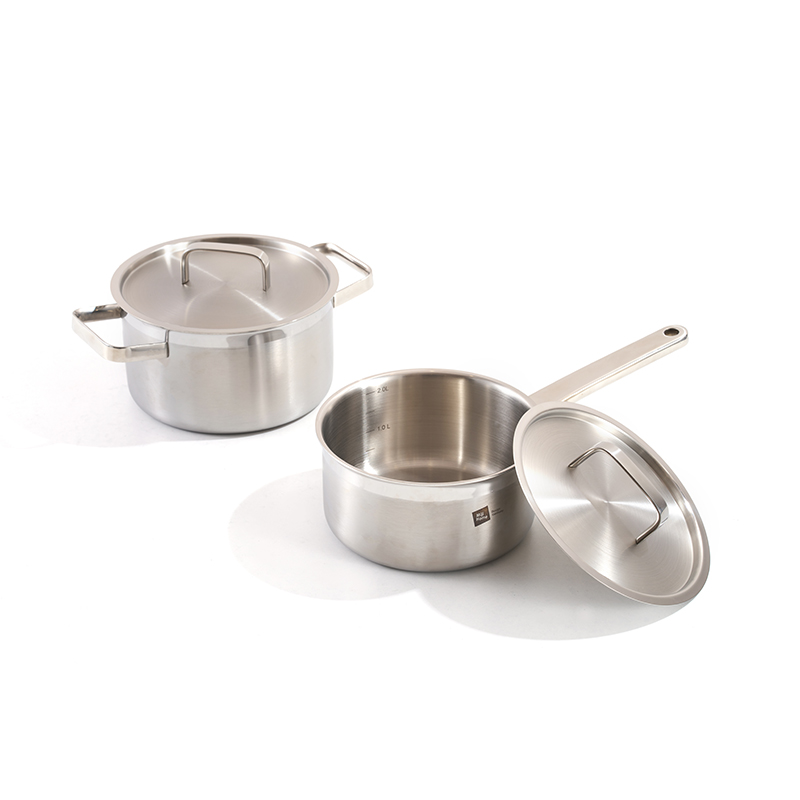
Stainless Steel Cookware with Lid
Product Overview
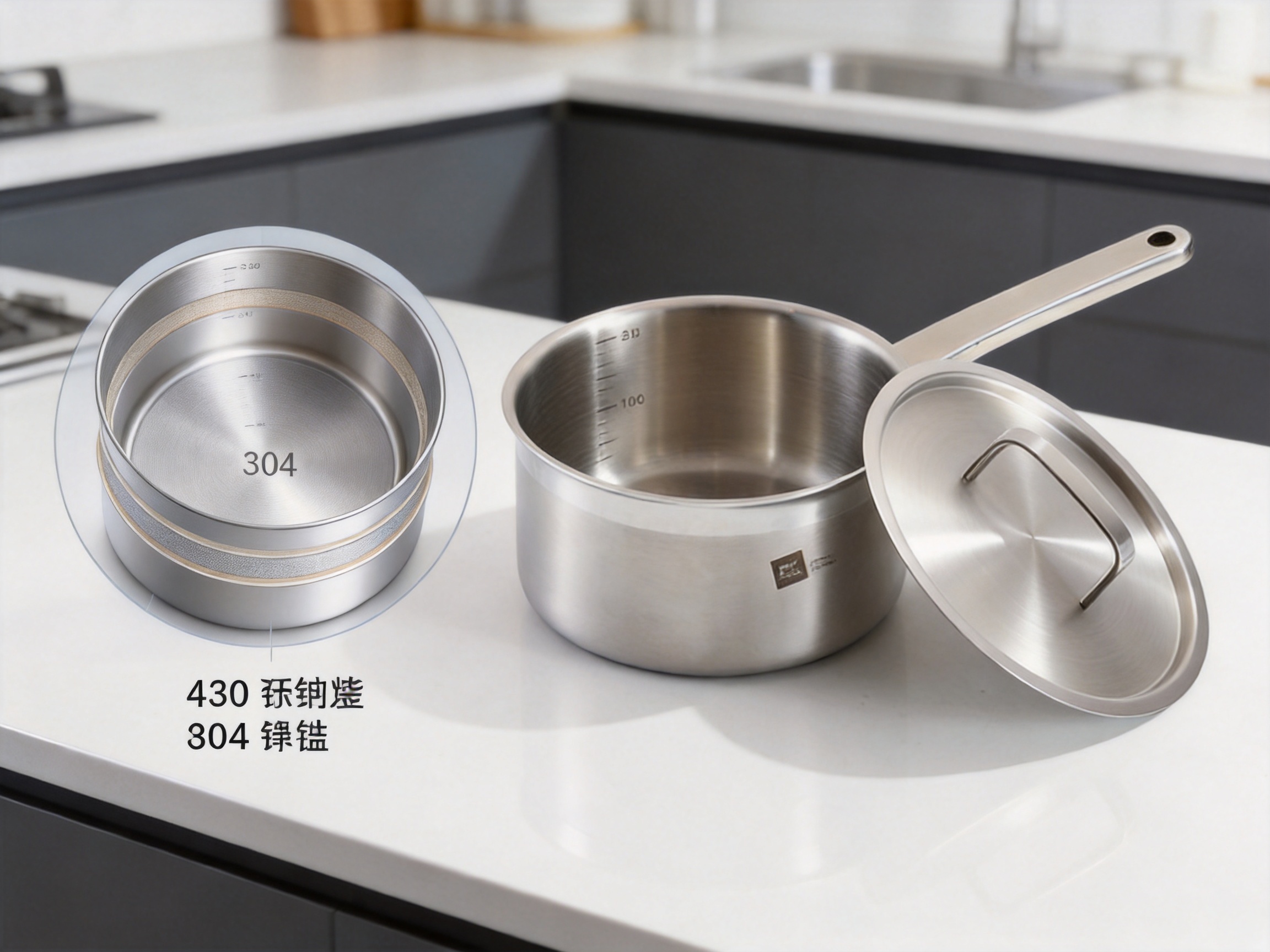
This stainless steel cookware item is a lidded pan or pot designed for reliable daily use. It features one-piece forged food-grade stainless steel construction, a coating-free cooking surface, an all-steel handle, built-in measurement marks, and a stainless steel lid. The body uses a layered material structure: 430 stainless steel on the outside, an aluminum middle layer, and 304 stainless steel on the inner cooking surface.
The combination of materials is important because each layer contributes a different performance characteristic. The external 430 stainless steel layer provides a durable exterior and a clean, polished appearance. The aluminum middle layer supports heat distribution across the cooking base. The inner 304 stainless steel layer creates the food-contact surface and offers the hygienic, non-coated cooking environment expected from quality stainless steel cookware.
The product is available in two stated sizes. The 20 cm model has a listed piece weight of 1.576 kg, while the 24 cm model has a listed piece weight of 2.102 kg. The product SKU information identifies the available variants as AM01 and AM03.
| Product Feature | Specification or Benefit |
|---|---|
| Product type | Stainless steel cookware with lid |
| Construction | One-piece forged food-grade stainless steel body |
| Material structure | Outside 430 stainless steel, middle aluminum, inner 304 stainless steel |
| Cooking surface | Coating-free stainless steel |
| Handle | All-steel single handle |
| Lid | Stainless steel lid |
| Measurement feature | Built-in measurement marks |
| Available sizes | 20 cm and 24 cm |
| 20 cm piece weight | 1.576 kg |
| 24 cm piece weight | 2.102 kg |
| Stovetop compatibility | Compatible with all stovetops according to the product specification |
| Care recommendation | Hand washing with hot, soapy water and a soft cloth or sponge |
One-Piece Forged Construction
One of the most important distinctions of this cookware is its one-piece forged construction. Forging shapes and strengthens metal through controlled forming rather than relying solely on thin stamped sheets or multiple loosely connected components. For cookware, this approach can contribute to a more substantial feel, a stable body, and improved resistance to deformation during normal use.
A forged body is particularly valuable in a pan that is expected to move between different cooking environments. Daily cookware may be exposed to repeated heating and cooling, contact with food ingredients, washing, storage, and handling. A well-formed body helps the cookware maintain its structure through these repeated cycles. The result is a product designed for long-term service rather than short-term replacement.
Compared with lightweight cookware made from a single thin layer, a forged stainless steel body can offer a more solid and dependable cooking platform. It is less likely to feel flimsy when filled with liquid or ingredients, and its substantial construction can provide greater confidence when stirring or transferring food. This makes it appropriate for both home users and professional cooks who value stability.
The forging process also supports the product’s premium positioning. Buyers increasingly look beyond surface appearance and ask how cookware is made, how long it can last, and whether it will continue to perform after repeated use. A one-piece forged structure offers a clear response to these expectations by emphasizing structural integrity and manufacturing quality.
Strength Compared with Basic Stamped Cookware
Basic stamped cookware is commonly produced from a flat sheet that is pressed into shape. This can be an efficient manufacturing method, especially for entry-level products, but the resulting body may be thinner and more vulnerable to bending if it is handled roughly or overheated. Stamped cookware can also feel less substantial during cooking.
The forged construction of this product is intended to provide a stronger alternative. Its body is shaped as a robust cooking vessel, supporting the needs of users who prepare food frequently. The construction is also suitable for buyers seeking cookware that can represent a higher-quality offering in retail or hospitality channels.
Although correct use and care remain essential for any kitchen product, the forged body provides a strong foundation for durability. It supports the handle, the cooking surface, and the lid interface as parts of a coordinated design rather than treating the pan as a disposable item.
Three-Layer Material Architecture
The material structure is another major advantage of this stainless steel cookware. The product uses 430 stainless steel on the exterior, an aluminum middle layer, and 304 stainless steel on the interior. This arrangement is designed to combine durability, heat management, and a clean food-contact surface in one cookware body.
430 Stainless Steel Exterior
The outer 430 stainless steel layer provides the visible exterior of the cookware. Stainless steel is valued for its clean appearance, resistance to everyday kitchen conditions, and ability to maintain a professional look when correctly cleaned. The exterior is suitable for cookware that must look presentable in domestic kitchens, restaurants, showrooms, and retail packaging.
The exterior layer also protects the body during routine use. It is exposed to stovetop contact, handling, storage, and cleaning, so a durable stainless steel surface is a practical choice. It does not depend on an exterior decorative coating to provide its basic appearance, which can help reduce concerns about peeling or flaking decorative layers.
Aluminum Middle Layer
Aluminum is used as the middle layer because it transfers heat efficiently. Stainless steel is strong and durable, but aluminum generally distributes heat more readily. Positioning aluminum between the external and internal stainless steel layers helps create a balanced cookware body in which the heating energy can spread across the base more effectively than in a basic single-metal construction.
More even heat distribution can make cooking easier to control. It may reduce the likelihood of isolated hot areas when the cookware is used correctly, helping ingredients cook more consistently. This is especially useful for sauces, milk-based preparations, grains, vegetables, and recipes that require steady heat rather than aggressive localized heating.
The aluminum core is enclosed within the stainless steel structure, so it is not the exposed cooking surface. This allows the product to benefit from aluminum’s heat-management properties while retaining stainless steel where durability and food contact are most important.
304 Stainless Steel Interior
The inner 304 stainless steel layer forms the cooking surface. This material is widely associated with quality food-contact applications because of its corrosion resistance, clean appearance, and suitability for use in kitchen equipment. A 304 stainless steel interior provides a non-coated surface for preparing food and simplifies the product story for buyers who prefer to avoid conventional non-stick coatings.
The absence of a chemical cooking coating is a central product advantage. Coatings can offer convenient release performance, but some users are concerned about scratches, surface wear, or the need to replace cookware once a coating becomes damaged. A coating-free stainless steel surface avoids that specific type of wear issue and supports long-term use when the product is maintained properly.
Stainless steel does require suitable cooking technique. Food may adhere if the cookware is cold, overheated, or used with insufficient moisture or fat. However, when the pan is preheated moderately and ingredients are added at an appropriate temperature, users can achieve dependable results while benefiting from a robust, non-coated cooking surface.
Health-Conscious, Coating-Free Cooking
Many modern consumers are paying closer attention to cookware materials. They want products that are durable, easy to understand, and suitable for repeated food preparation. This cookware responds to that demand with a food-grade stainless steel construction and a chemical coating-free interior.
A coating-free surface can be especially attractive to families, professional chefs, meal-preparation businesses, and buyers who prefer cookware with fewer consumable surface components. Instead of relying on a coating to define the cooking experience, the product uses the properties of stainless steel and the performance of its layered body.
The stainless steel surface is also visually neutral and suitable for a wide range of kitchen styles. Its clean metallic appearance works well in contemporary homes, commercial kitchens, culinary schools, and hospitality settings. For retailers, the coating-free feature offers a clear selling point that can be communicated easily on packaging, product pages, and sales materials.
Users should still follow normal food-safety and cookware-care practices. The pan should be washed before first use, cleaned after cooking, and stored dry. Food should not be left unnecessarily in the cookware for extended periods, and the product should be used according to the care instructions supplied by the manufacturer.
Built-In Measurement Marks for Better Accuracy
The built-in measurement marks are a useful feature that separates this cookware from many ordinary pans. Internal measurement references allow users to estimate liquid quantities directly in the vessel instead of transferring ingredients to a separate measuring container.
This feature can improve convenience when preparing soup, stock, sauces, porridge, rice, pasta, beverages, and other liquid-based recipes. It is also valuable for portion control. Home cooks can follow recipes more consistently, while professional kitchens can reduce unnecessary measuring steps during busy service periods.
Measurement marks can help reduce the number of utensils used in the kitchen. Fewer measuring cups and containers may mean faster preparation and less washing. In a commercial setting, even small workflow improvements can become meaningful when repeated throughout the day.
The marks are also useful for new cooks who are still developing confidence. Rather than estimating liquid levels by eye, they can use the reference points inside the cookware as a practical guide. Experienced cooks may appreciate the same feature when scaling recipes or preparing standardized portions.
Practical Uses for the Measurement Feature
When preparing soup, a user can add water or stock until the desired level is reached, then include vegetables, meat, or noodles. For sauces, the marks can support more consistent dilution and portioning. When preparing grains, the measurement guide can help establish a repeatable liquid ratio before cooking.
The marks are not intended to replace precise laboratory measuring equipment, and users should account for the volume of solid ingredients and the possibility of evaporation. Nevertheless, they provide a convenient visual reference for everyday cooking and repeatable household recipes.
All-Steel Handle Design
The all-steel handle complements the stainless steel body. A steel handle offers a sturdy connection and a unified appearance. It does not rely on a plastic or wooden insert that may loosen, discolor, or require separate care over time.
For users who value durability, an all-steel handle can be a significant advantage. It is suitable for frequent handling, transferring the cookware from the stovetop, and supporting the pan when it contains ingredients. The handle’s single-piece visual design also gives the product a professional appearance that suits both home and commercial kitchens.
Because steel conducts heat, users should handle the cookware carefully during and after cooking. A suitable oven mitt or heat-resistant holder may be necessary depending on the cooking method and the length of exposure to heat. The product information describes the handle as sturdy and durable, but safe handling practices remain essential.
The single-handle configuration is convenient for smaller and medium-sized cookware. It allows the pan to be moved easily with one hand while leaving the other hand available for stirring, adding ingredients, or holding a utensil. It also supports efficient storage because the pan can be arranged alongside other cookware without the added width of two side handles.
Stainless Steel Lid for Moisture and Heat Retention
The matching stainless steel lid is designed to work as part of the cookware rather than as an optional accessory. A lid can help retain heat, reduce unnecessary evaporation, and preserve moisture during cooking. This is especially useful for simmering sauces, cooking grains, preparing soup, and keeping food warm for short periods.
Covering a pan can also make cooking more efficient. Retaining heat may help food reach the desired temperature more quickly, while limiting evaporation can help maintain the intended consistency of a recipe. Users can remove the lid when reduction or browning is needed and replace it when moisture retention becomes the priority.
The stainless steel material matches the cookware body and provides a consistent appearance. It is also more durable than fragile transparent materials in situations where the lid may be moved frequently, stored with other kitchen equipment, or used in a professional environment.
Users should lift the lid carefully because escaping steam can cause burns. The lid should be placed on a heat-resistant surface when removed, and condensation should be handled cautiously. Proper lid use improves cooking control while protecting the user from unnecessary heat exposure.
Compatibility with All Stovetops
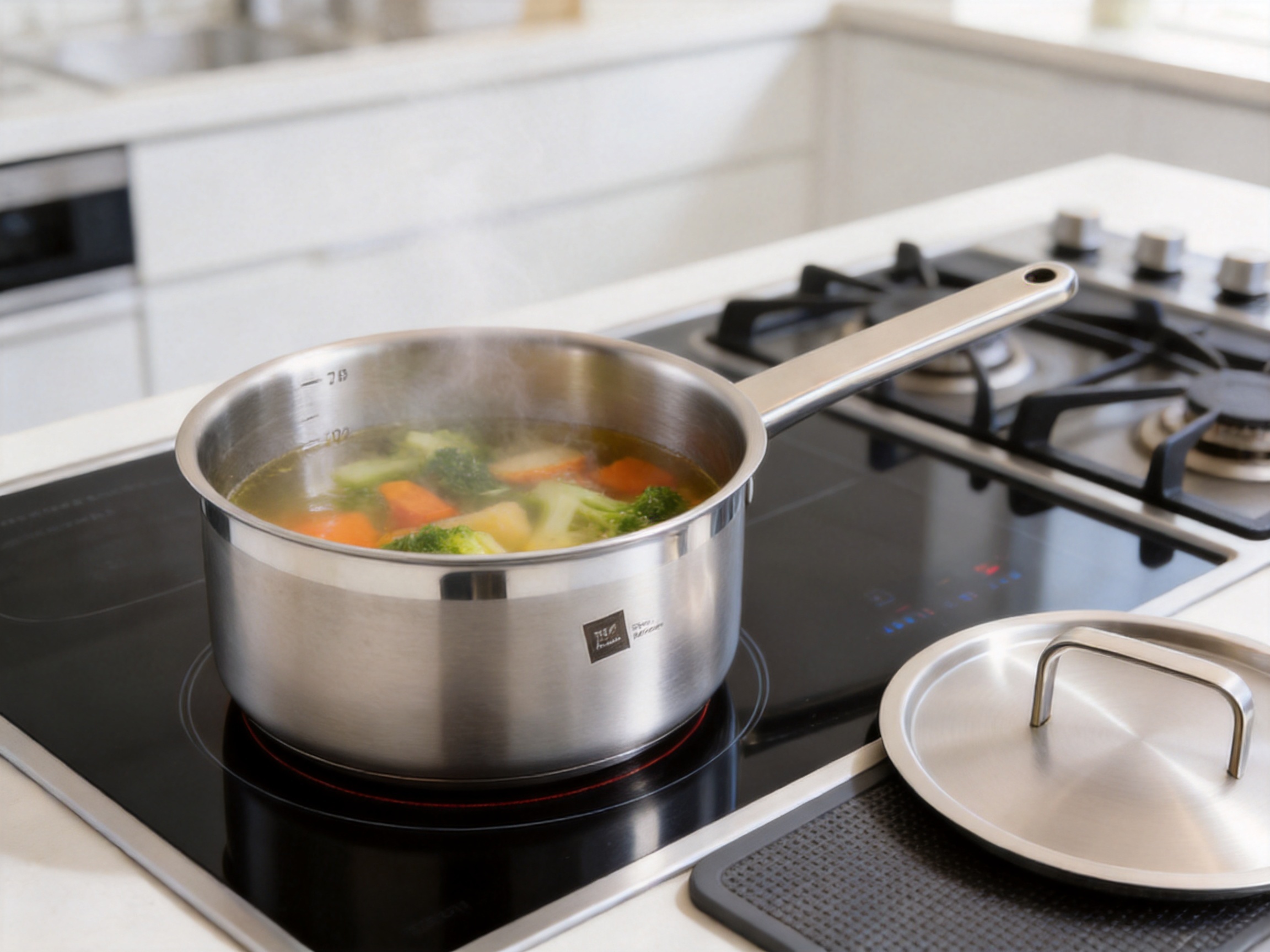
According to the product information, the cookware is compatible with all stovetops. This broad compatibility is a major purchasing advantage because it allows the same product to serve users with different kitchen equipment. It can be positioned as a flexible cookware solution for households, rental properties, catering businesses, restaurants, and hospitality projects.
Stovetop compatibility is also important for retailers and distributors. A product that serves gas, electric, ceramic, and induction-style cooking environments can reduce the need to divide inventory into multiple technical categories. Buyers can present one versatile product to a wider customer base.
Users should select a burner that is appropriate for the base size and avoid allowing flames or other heat sources to extend beyond the cookware base. Excessive side heat can discolor the exterior, increase handle temperature, and waste energy. Choosing a suitable burner setting supports better results and helps preserve the cookware’s appearance.
Gas Stovetops
On a gas stovetop, the flame should remain beneath the base rather than climbing around the sides. A controlled flame can heat the cookware efficiently while minimizing unnecessary discoloration and heat exposure to the handle. Users should adjust the flame according to the recipe and avoid high heat when the pan is empty.
Electric and Ceramic Stovetops
On electric or ceramic surfaces, the cookware should be placed carefully on the heating zone to ensure stable contact. Dragging cookware across a glass surface may cause scratches, so lifting rather than sliding is recommended. Gradual temperature adjustment can help users manage cooking more precisely.
Induction Cooking
The product information states compatibility with all stovetops, including induction-type systems. Users should follow the instructions for their particular cooktop and confirm that the cookware is placed centrally on the heating zone. Induction cooking can heat cookware rapidly, so moderate settings and close attention are recommended, especially during preheating.
Cooking Performance in Everyday Recipes
The product’s construction makes it suitable for a broad selection of cooking methods. The layered body supports controlled heating, while the lidded design helps manage moisture. The coating-free interior is suitable for searing, simmering, boiling, reheating, and reduction when the correct technique is used.
Soups and Broths
The measurement marks are useful when preparing soup or broth because they help users add a planned quantity of liquid. The lid can then be used to retain heat during simmering. The stainless steel interior is easy to inspect, allowing users to monitor the color, texture, and level of the preparation as it cooks.
Sauces and Gravies
Sauces benefit from steady heat and controlled evaporation. The aluminum middle layer supports heat distribution, while the lid can be used during the initial heating stage. Removing the lid later allows moisture to reduce and flavors to concentrate. A stainless steel cooking surface is also useful when whisking or stirring sauces with a suitable non-metal utensil.
Vegetables and Grains
Vegetables, rice, grains, and similar foods can be prepared with the help of the integrated measurement marks. The lid supports steaming and moisture retention, while the pan’s sturdy structure provides stability during stirring. Users should select heat settings carefully to avoid scorching food at the base.
Reheating and Small-Batch Cooking
The 20 cm model may be convenient for individuals, couples, small households, or small-batch recipes. The 24 cm model offers additional capacity for families and larger preparations. Both sizes can support reheating leftovers, warming sauces, preparing side dishes, and cooking portions that do not require a very large stockpot.
Comparison with Common Competitor Categories
Cookware buyers often compare stainless steel products with coated aluminum pans, single-layer stainless steel pans, cast iron cookware, and low-cost stamped cookware. Each category has a place in the kitchen, but the layered forged design offers a balanced combination of durability, versatility, and convenience.
| Cookware Category | Typical Advantage | Potential Limitation | Position of This Product |
|---|---|---|---|
| Coated aluminum cookware | Convenient release and light weight | Coating may scratch or wear over time | Offers a coating-free stainless steel surface and a more substantial body |
| Single-layer stainless steel | Durable and coating-free | May distribute heat less evenly | Adds an aluminum middle layer for improved heat management |
| Cast iron cookware | Excellent heat retention | Heavy and requires specialized seasoning care | Provides a lighter, more adaptable stainless steel alternative |
| Basic stamped cookware | Low purchase price | May be thinner or less resistant to deformation | Uses one-piece forged construction for a more robust feel |
| Glass-lid cookware | Allows food to be viewed while covered | Can be more vulnerable to impact or thermal shock | Uses a durable stainless steel lid for a unified construction |
Compared with coated cookware, this product is more appealing to users who prioritize a non-coated food-contact surface. Compared with single-layer stainless steel, its aluminum middle layer addresses the need for more effective heat distribution. Compared with cast iron, it offers easier everyday handling and does not require the same seasoning routine.
These advantages do not mean that the product replaces every other cookware category. Different cooking styles require different tools. Instead, the product occupies a practical middle position: durable but manageable, versatile but not overly specialized, and suitable for users who want dependable stainless steel performance without the bulk of traditional cast iron.
Manufacturing Strengths and Production Approach
The company behind this product is based in Zhejiang, China, a region known for manufacturing and export-oriented industrial activity. Zhejiang’s kitchenware supply chain provides access to production resources, component suppliers, packaging services, logistics providers, and international business support.
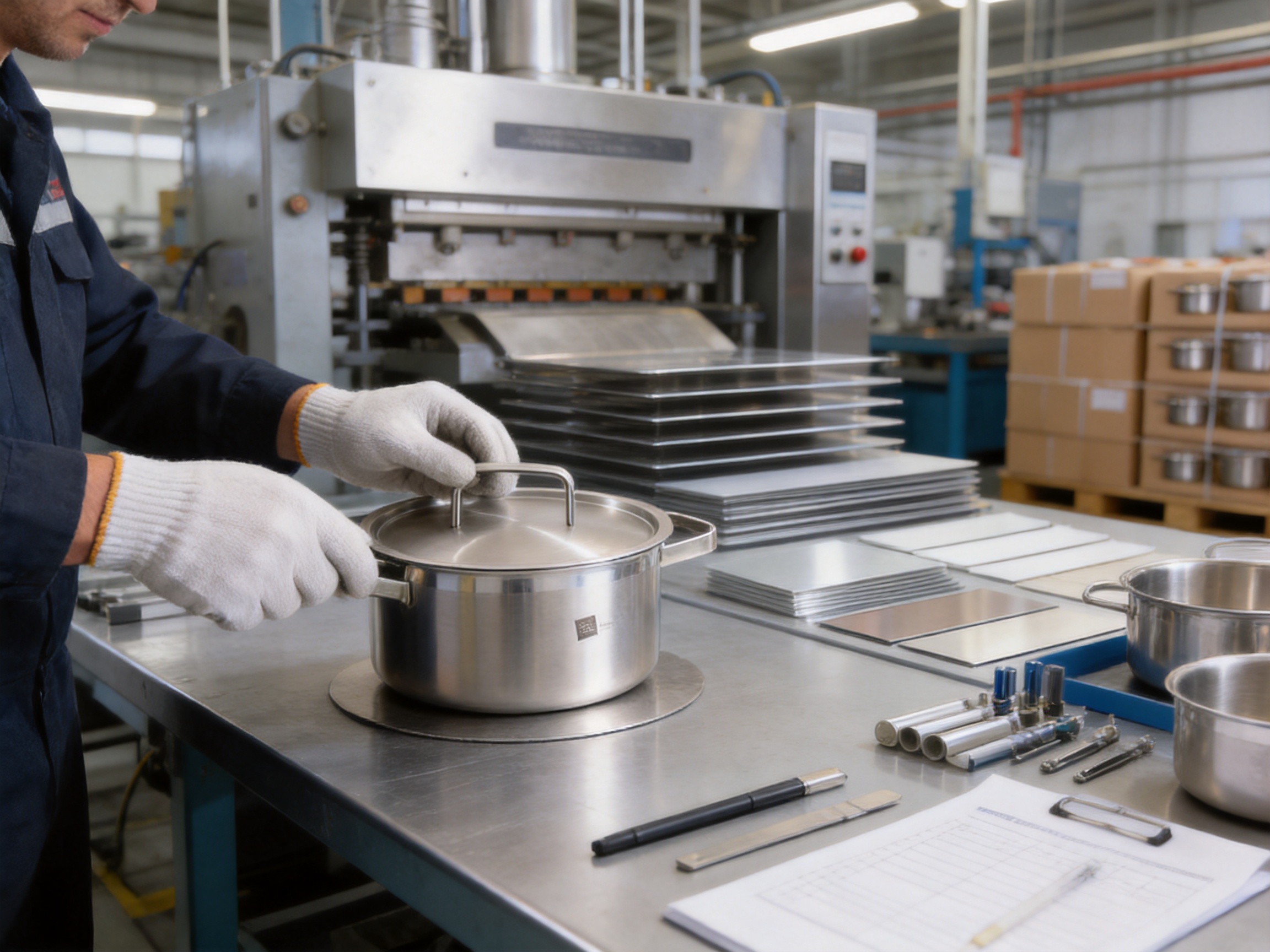
The product’s manufacturing strengths are reflected in its material architecture and construction choices. One-piece forging requires controlled forming and consistent attention to dimensions. A layered stainless steel and aluminum structure requires accurate bonding or assembly between the material layers so that the cookware can deliver stable performance during heating and cooling. Finishing operations must also support a clean appearance and comfortable handling.
Advanced manufacturing should not be understood only as the use of automated machinery. It also includes material selection, process control, dimensional consistency, surface finishing, production planning, and inspection. For cookware, every stage affects the final user experience. A well-designed material structure will not perform as intended if the base is uneven, the handle is poorly connected, or the lid does not align properly.
Material Selection and Process Consistency
The specification of 430 stainless steel, aluminum, and 304 stainless steel demonstrates a deliberate approach to material selection. Each material serves a defined role. This is more technically considered than producing the entire item from one inexpensive material without regard to heat transfer, food contact, or external durability.
Consistent material sourcing is important for repeat production. Importers and private-label buyers need confidence that future batches will match approved samples in appearance, dimensions, weight, and performance. A company that manages multiple cookware categories can apply established production experience across stainless steel, aluminum, iron, and utensil products.
Forging and Body Formation
The forging stage is central to the product’s identity. It shapes the cookware body into a stable form and supports the substantial feel associated with higher-quality cookware. Accurate forming helps maintain the intended dimensions and creates a dependable base for subsequent finishing, handle integration, and lid matching.
Process control at this stage may include checking body shape, wall consistency, base flatness, and overall symmetry. These checks are essential because cookware must sit securely on a stovetop and should not wobble during use. They also support compatibility with lids, packaging, and retail specifications.
Surface Finishing
Surface finishing contributes to both appearance and usability. A well-finished stainless steel surface is easier to inspect, present, and clean. Finishing must be carried out with attention to the cooking interior, exterior, handle connection, rim, and lid. The goal is a product that appears coherent and professional rather than assembled from unrelated parts.
For buyers, surface consistency is particularly important when ordering private-label or wholesale products. Uniform appearance across a shipment supports stronger shelf presentation and reduces the possibility of customer complaints caused by visible batch variation.
Assembly and Inspection
Handle attachment, lid fit, base condition, surface cleanliness, and product labeling are important assembly and inspection points. The handle must be secure, the lid must match the cookware correctly, and the body should stand steadily on a flat surface. Weight checks can also help verify that the product remains within the agreed specification.
Product inspection is not limited to identifying visible defects. It can also include checking dimensions, material documentation, packaging integrity, and the performance of key components. For export products, careful inspection helps protect both the supplier and the buyer during international distribution.
Benefits for Wholesale and Private-Label Buyers
This cookware is suitable for companies that want to expand a kitchenware range with a durable stainless steel product. It can serve as an individual item, a component within a cookware collection, or part of a broader multi-function cookware program.
The product has several straightforward sales messages: forged construction, food-grade stainless steel, a coating-free interior, a three-layer material structure, built-in measurement marks, all-stainless construction, included lid, and compatibility with all stovetops. These features can be communicated to consumers without relying on complicated technical language.
Retailers may position the product for health-conscious households, cooking enthusiasts, new homeowners, professional chefs, and customers replacing worn coated cookware. Distributors can offer the two sizes separately or combine them within a coordinated product range. Hospitality buyers can use the cookware for preparation, service support, and staff kitchens.
The supplier also provides ODM and OEM customization. This can be valuable for buyers who require customized packaging, product identification, color or finish coordination, instruction materials, or collection development. Specific customization options should be confirmed directly with the supplier before placing an order, including minimum quantities, tooling requirements, packaging specifications, inspection standards, and delivery schedules.
Flexible minimum order quantities can help small and medium-sized buyers test a product before committing to a large inventory investment. A buyer may begin with a market trial, evaluate customer response, and then expand the range based on sales data. This approach can reduce risk while allowing the buyer to establish a differentiated cookware offering.
Quality, Safety, and Responsible Use
Good cookware performance depends on both manufacturing quality and correct use. Even a strong stainless steel product can be damaged by severe overheating, misuse, or unsuitable cleaning tools. Following the care instructions helps preserve the appearance and service life of the cookware.
Users should wash the product before first use. Hand washing is recommended to preserve the appearance. Hot, soapy water and a soft cloth or sponge are suitable for routine cleaning. Metal or sharp cooking utensils should not be used because they may mark the surface or create unnecessary scratches.
Wooden, nylon, or other suitable non-metal utensils are recommended. These tools are gentler on the stainless steel surface and can help maintain its appearance. Abrasive scouring materials should be avoided unless specifically approved for the product.
The cookware should never be overheated while empty. An empty pan can become extremely hot very quickly, which may lead to discoloration, warping, or damage to the cooking surface and handle connection. If the pan severely overheats, users should turn off the cooker and allow the cookware to cool completely before touching or moving it.
The flame or heat source should not extend beyond the base. Oversized heat can affect the exterior and create an unnecessary safety hazard. The product should not be used in a microwave because its metal construction is not suitable for microwave operation.
Recommended Cleaning Routine
After cooking, allow the cookware to cool to a safe temperature. Sudden temperature changes may affect metal surfaces, so placing a very hot pan under cold water should be avoided. Once the pan has cooled sufficiently, wash it with hot, soapy water and a soft cloth or sponge.
For food residue, soaking the cookware in warm water can help loosen the material before cleaning. A gentle cleaning method is preferable to aggressive scraping. Drying the pan after washing can reduce water spots and help preserve its clean appearance.
Preventing Sticking
Stainless steel cooking requires attention to temperature and timing. Preheating should be moderate rather than excessive. Adding a suitable amount of cooking oil or liquid can help reduce sticking, depending on the recipe. Ingredients should not be moved too early if they are naturally forming a seared surface.
Users should avoid treating the pan like a coated non-stick product. The stainless steel interior is durable, but it is not designed to make every ingredient release without technique. Learning the correct heat level and cooking sequence will improve results and reduce cleaning effort.
Design and Storage Advantages
The cookware’s clean stainless steel appearance allows it to move easily between cooking and serving environments. In some kitchens, the pan can be placed directly on the table after cooking, provided a suitable heat-resistant trivet is used. Its professional appearance is suitable for open kitchens and modern home interiors.
The single-handle form can simplify storage. The pan can be arranged with other cookware, placed on a shelf, or stored in a cabinet without the wider footprint associated with two side handles. The lid should be stored carefully to prevent scratches and should not be used as a heavy storage surface.
For retail packaging, the stainless steel body and lid create a visually clear presentation. Buyers can see the product’s material identity immediately, while the measurement marks and layered construction provide additional points of differentiation. For private-label programs, these functional details can support a premium product story without requiring excessive decoration.
Why This Product Fits Modern Kitchenware Trends
Several consumer trends support demand for this cookware. First, customers are increasingly interested in durable products that can remain useful for many years. Second, many buyers are seeking alternatives to disposable or easily worn cooking surfaces. Third, kitchens are becoming more multifunctional, requiring cookware that can adapt to different stovetops and recipes.
The product responds to these trends through its forged stainless steel body, coating-free interior, layered construction, lid, measurement marks, and broad stovetop compatibility. It is not limited to one cooking technique or one type of kitchen. Its design supports everyday practicality while maintaining a more substantial quality impression than low-cost cookware.
Sustainability is also connected to product life. A pan that remains functional for a longer period may reduce the need for frequent replacement. The company’s stated focus on sustainable and healthy product development further supports this direction. Responsible product development includes selecting appropriate materials, improving durability, reducing avoidable waste, and helping users maintain cookware correctly.
Frequently Asked Questions
What materials are used in the cookware?
The product uses 430 stainless steel on the outside, an aluminum middle layer, and 304 stainless steel on the inside. This structure is intended to combine external durability, heat distribution, and a food-contact stainless steel cooking surface.
Does the cookware have a non-stick coating?
No. The product is described as chemical coating-free. Its inner cooking surface is 304 stainless steel, so users can cook without relying on a conventional non-stick coating.
Is the product suitable for induction cooking?
The product specification states that it is compatible with all stovetops. Buyers should still follow the operating instructions for their particular cooktop and use an appropriate heat setting.
What sizes are available?
The listed sizes are 20 cm and 24 cm. The 20 cm version has a stated piece weight of 1.576 kg, and the 24 cm version has a stated piece weight of 2.102 kg.
Does the product include a lid?
Yes. The product is supplied with a stainless steel lid designed to help retain heat and moisture during cooking.
What are the measurement marks used for?
The built-in measurement marks help users estimate liquid quantities and control portions directly inside the cookware. They are useful for soups, sauces, grains, beverages, and other recipes requiring repeatable liquid levels.
Can metal utensils be used?
Metal or sharp cooking utensils are not recommended. Wooden, nylon, or other suitable non-metal utensils should be used to help preserve the stainless steel surface.
How should the cookware be cleaned?
Use hot, soapy water with a soft cloth or sponge. Hand washing is recommended to preserve the appearance. The cookware should be allowed to cool before washing, and harsh or sharp cleaning tools should be avoided.
Can the cookware be placed in a microwave?
No. The product should not be used in a microwave because it is made from metal.
What should be done if the pan overheats?
Turn off the cooker and leave the pan to cool completely. Do not touch or move severely overheated cookware until it has reached a safe temperature.
What is the product SKU?
The listed SKU information is AM01/AM03, corresponding to the available product variants.
Is the product suitable for commercial kitchens?
Its forged construction, stainless steel body, lid, and versatile stovetop compatibility make it suitable for consideration by professional kitchens, catering operations, hospitality buyers, and food-service distributors. Commercial buyers should confirm their required specifications and operating conditions before ordering.
Can the product be customized for private-label programs?
The supplier provides ODM and OEM customization services. Buyers should discuss available customization options, minimum order quantities, packaging, labeling, sampling, quality requirements, and delivery arrangements directly with the supplier.
Supplier Capabilities and Product Development Support
Zhejiang Echo Industry And Trade Co., Ltd. operates as a professional kitchenware supplier offering a broad product range. Its categories include aluminum cookware, stainless steel cookware, iron cookware, and kitchen utensils. This range allows buyers to source complementary products from one supply partner rather than coordinating every category through separate factories.
One-stop sourcing can simplify product development and purchasing. A buyer creating a kitchenware collection may require pans, pots, utensils, accessories, and different material options. A supplier with experience across these categories can help coordinate product selection and maintain a more consistent commercial direction.
The company’s stated objective is to develop into an R&D-driven supply chain partner for small and medium-sized kitchenware buyers. This orientation is important because buyers increasingly need more than basic order fulfillment. They may need assistance with product selection, feature development, packaging, certification support, sampling, and market positioning.
Product certification assistance is also listed among the company’s services. Certification requirements vary by destination market and product type, so buyers should identify their target-market obligations at the beginning of a project. Early communication can help ensure that material records, testing plans, labeling, and documentation are considered before mass production.
Conclusion
The Stainless Steel Cookware with Lid is a versatile product built around durability, practical cooking control, and long-term value. Its one-piece forged body provides a solid foundation, while the 430 stainless steel exterior, aluminum middle layer, and 304 stainless steel interior create a balanced three-layer construction. The coating-free cooking surface appeals to health-conscious users, and the integrated measurement marks add a useful level of precision to daily recipes.
The all-steel handle and stainless steel lid reinforce the product’s durable, professional character. Compatibility with all stovetops expands its usefulness across different kitchens, while the 20 cm and 24 cm options give buyers flexibility for different household and commercial needs. Compared with basic stamped cookware, single-layer stainless steel, coated pans, and heavier cast iron alternatives, this product offers a balanced combination of strength, heat management, cleanability, and adaptability.
Its manufacturing story is equally important. The product reflects deliberate material selection, forged body formation, layered construction, surface finishing, assembly, and inspection. The supplier’s broader strengths in cookware variety, ODM and OEM services, certification assistance, flexible minimum order quantities, and one-stop sourcing make it suitable for retailers, importers, distributors, hospitality buyers, and private-label kitchenware programs.
With correct heat control, suitable utensils, gentle cleaning, and proper storage, this stainless steel cookware can become a dependable part of a modern kitchen. It is a practical choice for buyers seeking a durable, coating-free, multi-purpose product supported by an experienced kitchenware supply chain.
References
1. Product specification sheet for Stainless Steel Cookware with Lid, including material structure, sizes, weights, SKU information, and care instructions.
2. General technical references on stainless steel grades used in food-contact cookware and kitchen equipment.
3. General manufacturing references on forged metal cookware, layered cookware construction, and aluminum heat-distribution cores.
4. General kitchen safety guidance concerning stovetop use, cookware overheating, steam exposure, utensil selection, and hand washing.
5. Supplier information concerning cookware categories, ODM and OEM services, product certification assistance, flexible minimum order quantities, and sustainable product development.
Product: Stainless Steel Cookware with Lid
Recommended Articles
Product Category
Related products
-
-
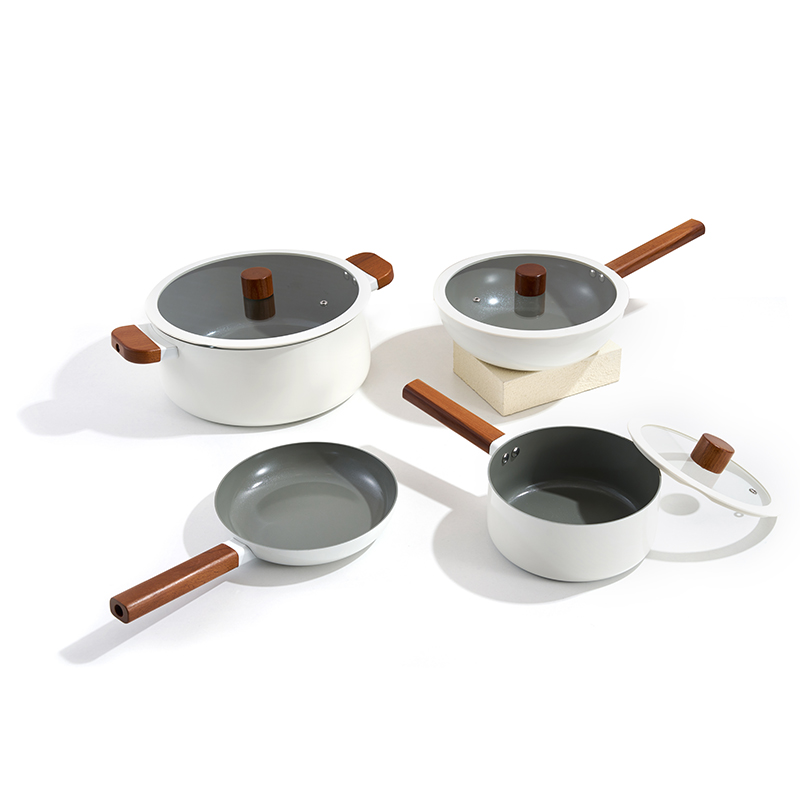
This cookware set has a ceramic non-stick inner liner, a heat-resistant wooden h...
See Details -
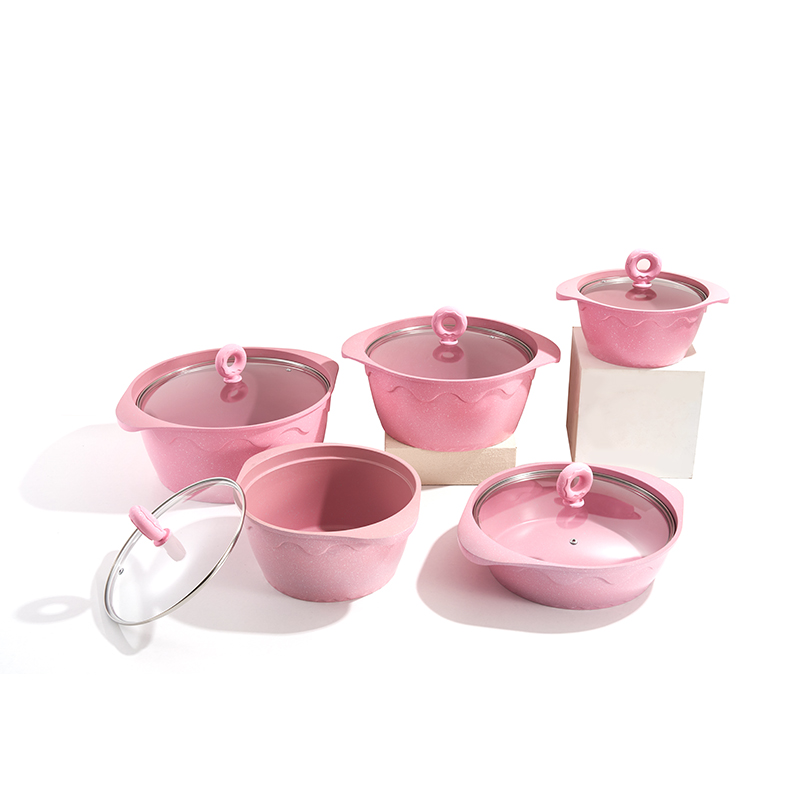
This cookware set is made of food-grade non-stick material, with a unique eye-ca...
See Details -
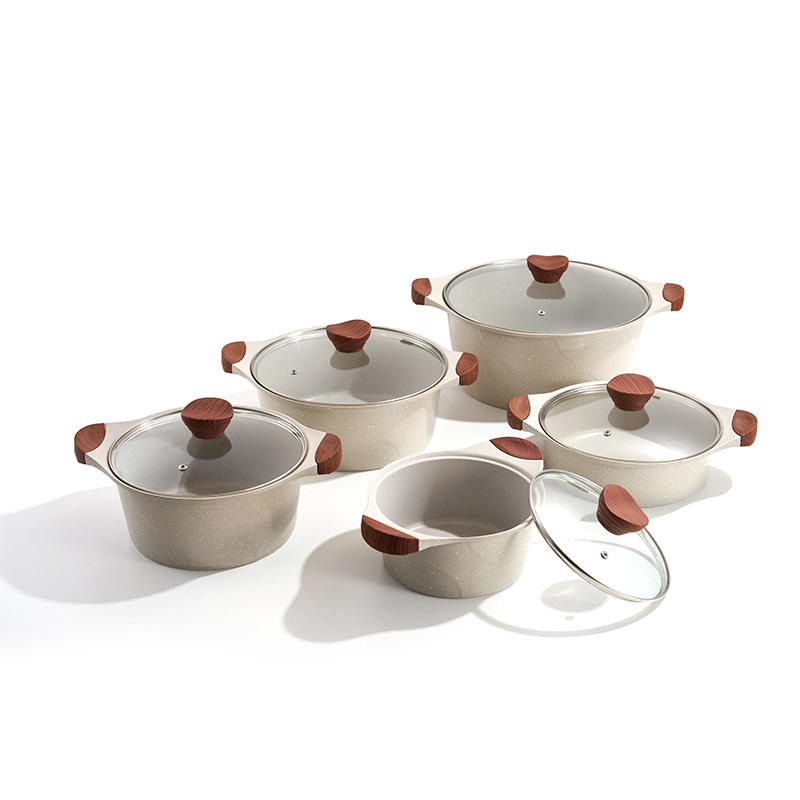
This off-white cookware set is made of wear-resistant non-stick material, with w...
See Details
Whether you're looking for bulk purchases or have any custom requirements, We are here to offer the best
solutions for you.
tiffany.zhong@echocn-trading.com
PHONE
+86-19561173975
+86-19557020621 (Hazel Wu)
ADD
Room 301, Unit 3014, No. 175 Qifeng Avenue, Wenqiao Town, Taizhou, Zhejiang, China
Fill Out the Form for More Information
Copyright © Zhejiang Echo Industry And Trade Co., Ltd.
All Rights Reserved.

China Cookware Set Manufacturer