
 en
 Español

This cookware set features a non-stick coating, even heat conduction, and multi-...
See Details
How to Choose a Versatile Aluminum Cookware Set for Modern Kitchens
Date:Aug 24, 2026
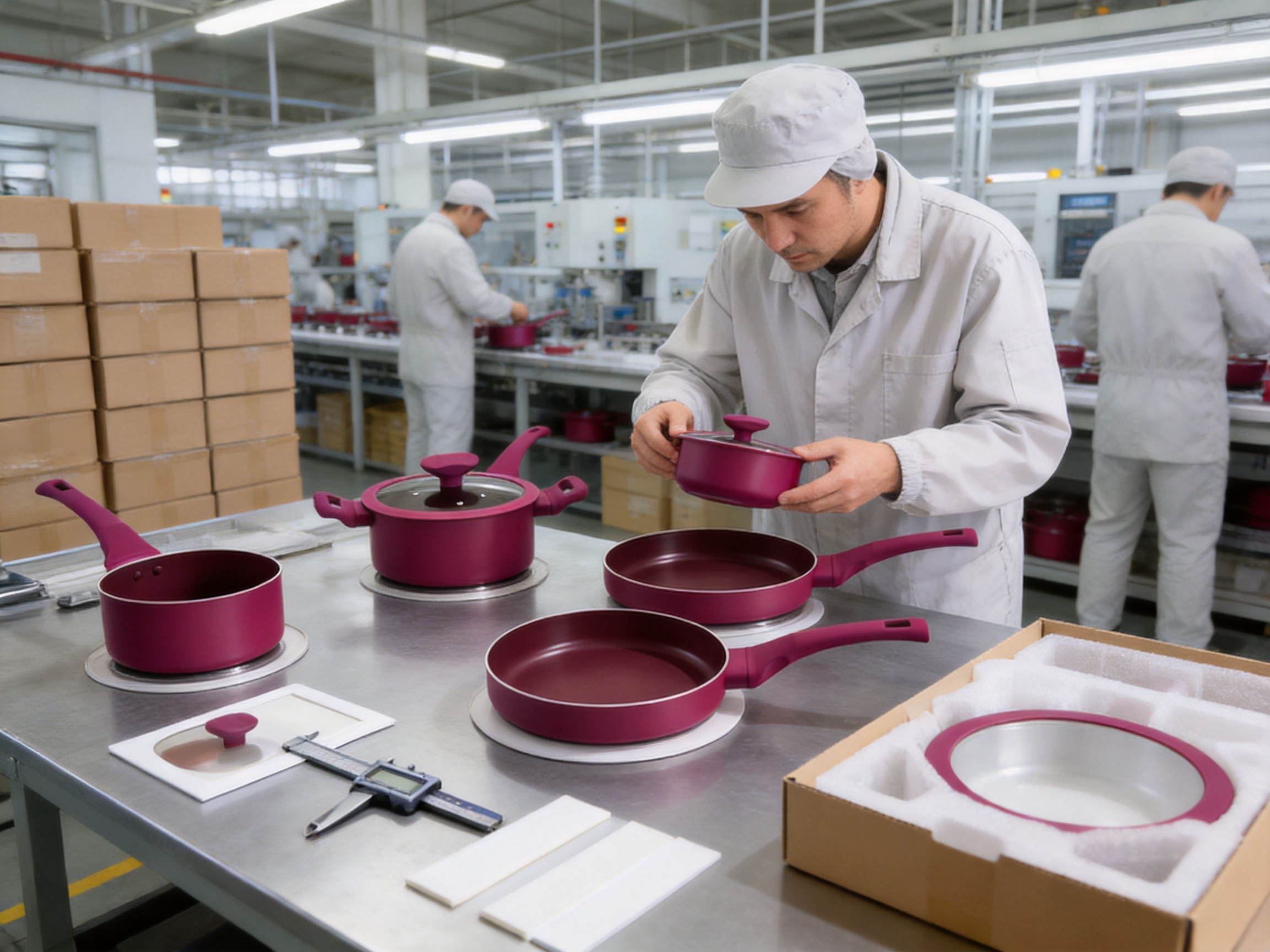
Cookware is one of the most important investments in any kitchen. The right pots and pans influence cooking speed, food quality, cleaning time, storage convenience, and even the overall appearance of the cooking area. For households, retailers, hospitality businesses, and professional sourcing companies, a cookware set must offer more than an attractive finish. It should combine practical sizes, reliable heat performance, user-friendly handling, easy maintenance, and compatibility with different stovetops.
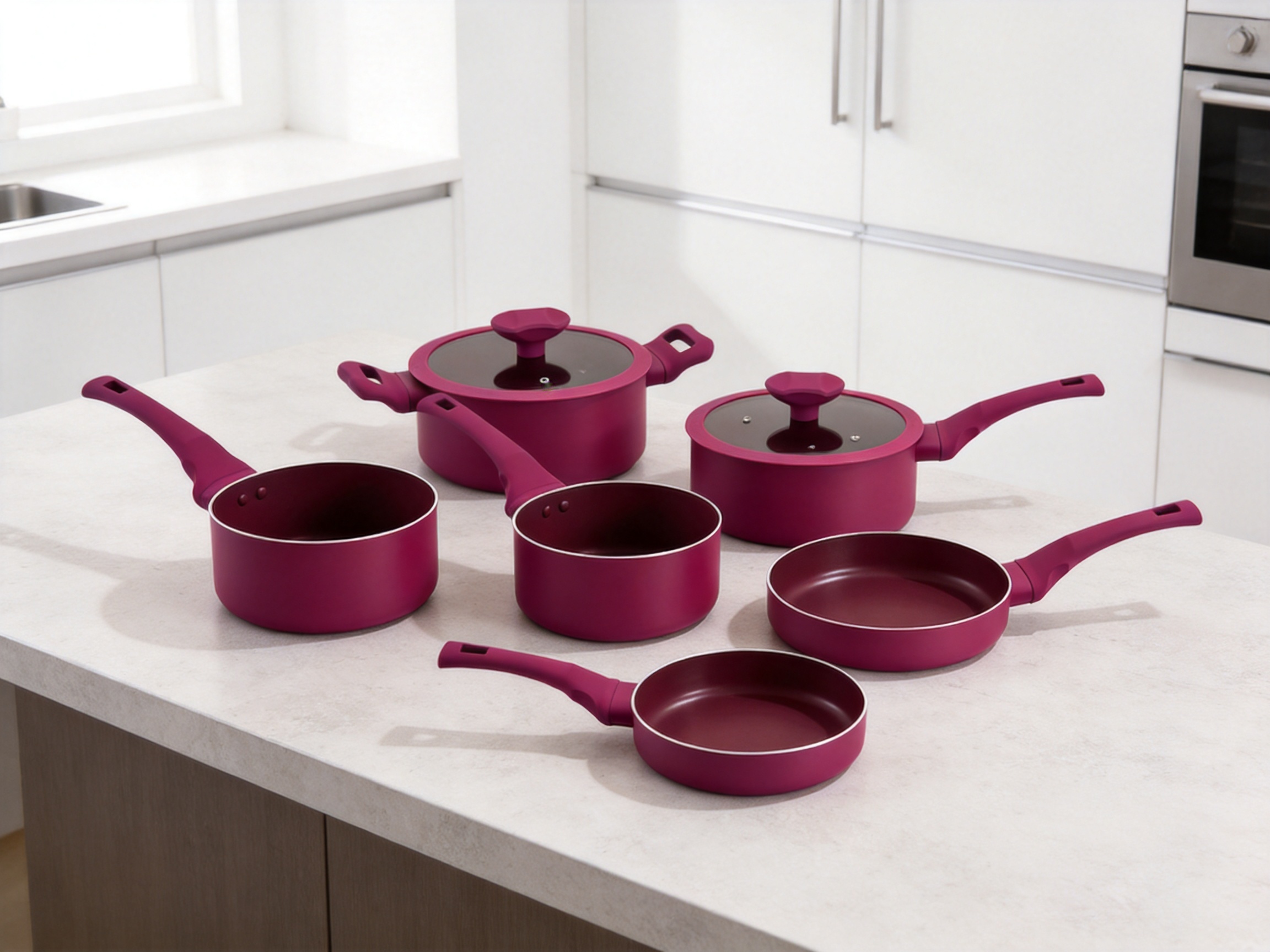
The 6pcs PlumSleek Aluminium Cookware Set is designed around these everyday requirements. It features a plum red matte body, white trim, coordinated sleek handles, multiple cookware sizes, and a non-stick cooking surface intended to make frying and stewing easier. Its modern minimalist appearance gives it strong visual appeal, while its multi-purpose design supports a wide range of daily cooking tasks.
Unlike a single-purpose frying pan or an isolated cooking pot, a coordinated set can provide a more complete solution for kitchens that prepare several dishes at the same time. A suitable set can help users fry vegetables, stew meat, simmer sauces, prepare side dishes, and manage different portions without repeatedly washing and reusing one pan. This makes a multi-piece cookware set especially valuable for families, apartment kitchens, new homeowners, rental properties, student accommodation, restaurants, and retail product lines.
This article examines the product’s construction, performance, design, maintenance requirements, sourcing value, and manufacturing strengths. It also explains why aluminum cookware remains popular, how a non-stick surface supports efficient cooking, and what buyers should evaluate when comparing this type of set with competing cookware products.
Product Overview
The cookware set is supplied under SKU GLM03 and belongs to the aluminum cookware category. The listed product title identifies it as a six-piece set, while the supplied size information includes 18 cm, 20 cm, 22 cm, and 18 cm dimensions. These different size references indicate a multi-size configuration intended to provide cooking flexibility. Buyers should confirm the precise piece breakdown, lid arrangement, and accessory configuration with the supplier before placing a commercial order.
The primary visual feature is the plum red matte body. A matte finish creates a softer, less reflective appearance than highly polished cookware, helping the set fit naturally into contemporary kitchens. The white trim adds contrast and gives the cookware a distinctive visual identity without relying on excessive decoration. Matching sleek handles complete the coordinated appearance and are intended to support comfortable handling during routine cooking.
The product description emphasizes several central benefits: multiple sizes for frying and stewing, a non-stick surface, easy cleaning, a modern minimalist style, and compatibility with all stovetops. Together, these features position the set as a practical general-purpose cookware solution rather than a specialist product designed for only one type of recipe.
For consumers, the value of the set lies in the combination of appearance and functionality. For importers and kitchenware retailers, its value also comes from the opportunity to offer an attractive coordinated product with broad household appeal. A product that can be marketed for frying, stewing, everyday meal preparation, and modern kitchen organization has a wider potential customer base than cookware designed around only one cooking method.

6pcs PlumSleek Aluminium Cookware Set
Why Aluminum Is a Practical Cookware Material
Aluminum has remained a widely used cookware material because it provides a useful balance between weight, heat responsiveness, and manufacturing flexibility. Compared with many heavier cookware materials, aluminum is easier to lift and move. This is important for users who prepare food every day, especially when a pan contains water, oil, vegetables, or a complete meal.
Lightweight cookware is also useful in commercial distribution. Lower product weight can make handling easier throughout warehousing, retail display, and kitchen use. For consumers, a lighter pan can be more comfortable when pouring sauces, transferring cooked food, or washing the product after use.
Aluminum also responds quickly to changes in heat. When a cook adjusts the burner, aluminum cookware can react relatively quickly, allowing more direct control over cooking temperature. This is useful for frying, where excessive heat can burn food, and for stewing, where maintaining a controlled simmer is important.
The material is also well suited to large-scale cookware production. Aluminum can be shaped into a variety of pan and pot forms, allowing manufacturers to create multiple sizes and profiles within one product family. This supports coordinated set design and makes it easier to offer cookware that matches in color, trim, and handle style.
Another benefit is the material’s compatibility with modern surface treatments. A suitable coating can help create a smoother cooking surface, reduce food adhesion, and simplify cleaning. The combination of an aluminum body and a non-stick interior therefore provides a practical solution for everyday cooking, provided that users follow the care instructions and avoid damaging the surface.
Design Features That Support Everyday Use
Coordinated Multi-Size Configuration
A major advantage of a cookware set is the ability to choose a vessel that matches the quantity and type of food being prepared. Smaller sizes can be used for sauces, side dishes, reheating, or cooking for one or two people. Medium sizes are useful for vegetables, eggs, noodles, and standard family meals. Larger sizes are more appropriate for stewing, preparing soup-like dishes, or cooking larger portions.
The supplied dimensions of 18 cm, 20 cm, and 22 cm create a useful size range for compact and medium-sized kitchens. The repeated 18 cm reference in the product information should be verified before final publication of a retail specification, because the exact six-piece composition is important to both buyers and end users. Clear product documentation helps avoid confusion and supports accurate packaging, catalog, and online listing information.
Compared with purchasing individual pots and pans from different collections, a matching set offers a more organized appearance. Consistent colors, handles, and design details make the kitchen look more coordinated. The set can also simplify product selection for consumers who want a ready-made cooking solution without comparing many unrelated items.
Plum Red Matte Exterior
The plum red matte exterior gives the cookware a strong shelf presence. In a competitive cookware market, color can influence initial consumer attention, particularly when products are displayed in open retail shelving or presented through online product photography. The matte finish communicates a contemporary style and can appeal to buyers who prefer cookware that looks decorative as well as functional.
The white trim creates a clear visual boundary around the cookware. This contrast helps define the shape of each piece and makes the collection easier to recognize as a coordinated range. For retailers, a recognizable color combination can support product presentation and collection-based merchandising.
At the same time, the design remains relatively simple. It does not depend on complicated patterns or ornamental details that could limit its compatibility with different kitchen interiors. The minimalist appearance can therefore suit modern apartments, family kitchens, vacation properties, and hospitality environments.
Sleek Matching Handles
Handles have a direct effect on the user experience. A well-matched handle design contributes to the product’s visual balance, while a streamlined shape can help cookware occupy less visual and physical space. The matching handles on this set are intended to create a unified appearance across the different pieces.
Users should always handle cookware carefully, particularly when the product contains hot oil, boiling water, or heavy food. The supplier’s care instructions focus on protecting the cookware and maintaining its appearance, including avoiding sharp utensils and washing by hand. Retailers should communicate these instructions clearly so that customers understand how to preserve the product during regular use.
Non-Stick Cooking Performance
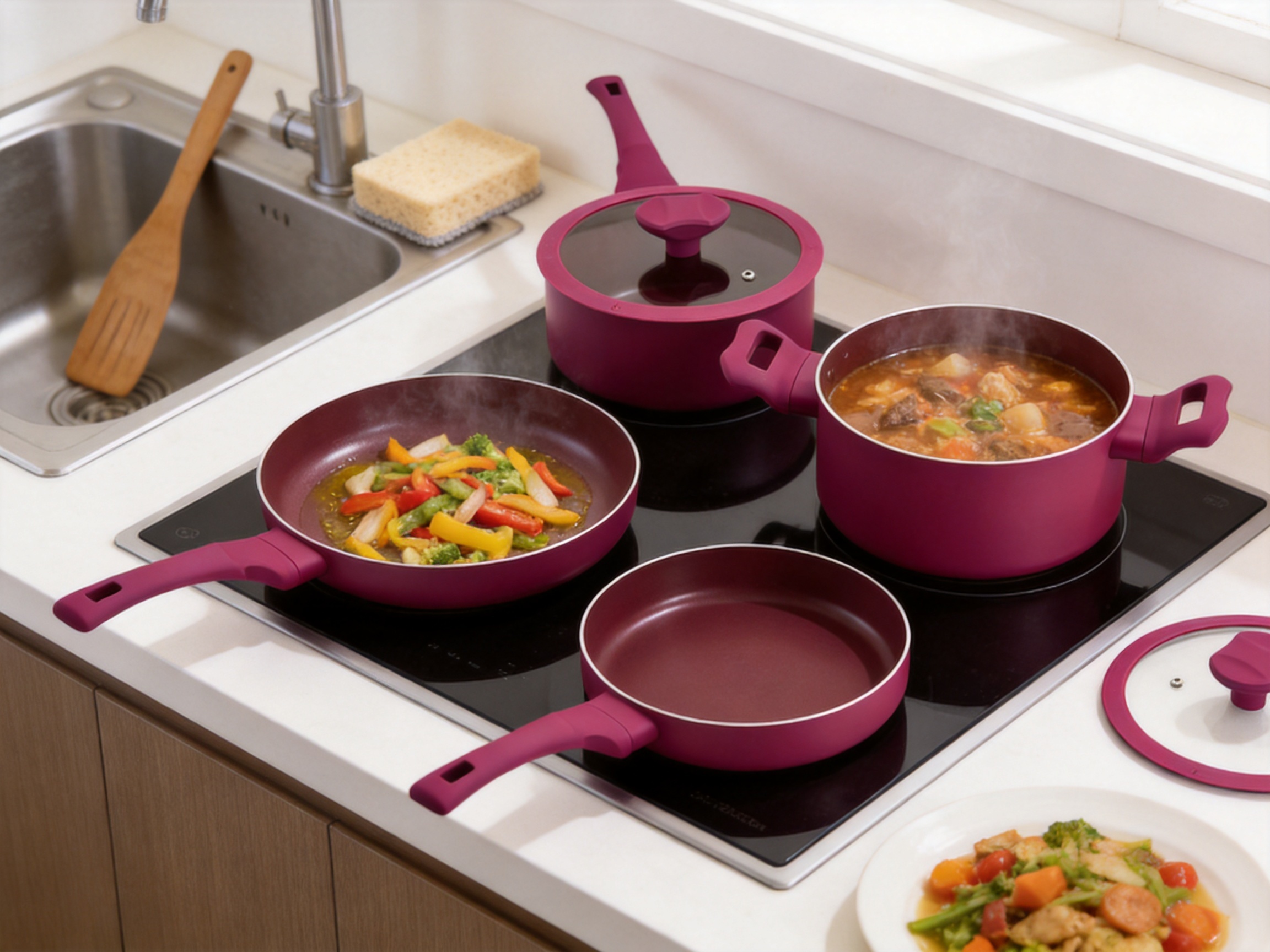
The non-stick surface is one of the most important functional features of the set. A smoother cooking surface can reduce the amount of food that adheres during frying and simmering. This may help users cook with less oil, release food more easily, and clean the pan more efficiently after the meal.
Non-stick cookware is particularly convenient for eggs, pancakes, delicate vegetables, fish, lightly fried foods, and sauces that might otherwise cling to the cooking surface. It can also help beginners gain more confidence because food is less likely to stick immediately when the correct heat level and cooking method are used.
However, non-stick performance depends on responsible use. The provided care instructions specifically advise users not to use metal or sharp cooking utensils. Wooden, nylon, or non-stick-safe utensils are recommended instead. This guidance is important because metal edges can scratch or weaken the cooking surface over time.
Temperature control is equally important. Users should not overheat the cookware while it is empty. Empty cookware can become very hot quickly, and excessive heat may reduce the service life of the coating or affect the external finish. If the pan severely overheats, the instructions advise turning off the cooker and allowing the pan to cool completely without touching it immediately.
These maintenance requirements are not unique to this set. They are standard good practices for many non-stick cookware products. A buyer comparing competing sets should therefore examine not only the advertised coating but also the clarity of the care instructions, the quality of the product documentation, and the supplier’s willingness to support proper customer education.
Compatibility with All Stovetops
The product description states that the cookware is compatible with all stovetops. This broad compatibility is a significant selling point because modern homes use several different cooking technologies. Gas, electric, ceramic, and induction-style cooking environments may all be present across different markets and customer groups.
Compatibility with all stovetops can reduce purchasing uncertainty. Consumers do not need to identify a narrow stove category before considering the product, and retailers can market the set to a wider audience. For property managers and furnishing companies, broad compatibility can also simplify the selection of cookware for different apartments or accommodation units.
Although the product is described as suitable for all stovetops, commercial buyers should confirm the technical details of the base construction and induction performance before ordering. Product listings should accurately state any operating limitations, recommended burner sizes, and instructions for avoiding heat extending beyond the base. The supplied care instructions specifically advise users not to allow the flame or heat source to extend beyond the bottom of the item.
This instruction protects both the cookware and the surrounding handle or countertop area. Using a burner that is too large can cause unnecessary heat exposure around the sides of the pan. Matching the burner to the base is therefore a simple but important step in achieving stable cooking and preserving the appearance of the cookware.
Advantages Compared with Competing Cookware Sets
Balanced Function and Appearance
Some cookware products focus primarily on performance, while others emphasize decorative appearance. The 6pcs PlumSleek Aluminium Cookware Set is designed to combine both. Its aluminum construction supports practical cooking, while the plum red matte finish, white trim, and coordinated handles provide a visually distinctive collection.
This balance can be especially attractive in the mid-range household cookware market. Customers often want products that perform reliably but also look suitable for open shelving, modern kitchens, and lifestyle-oriented product photography. A set that meets both expectations can stand out more effectively than plain cookware with limited visual identity.
Practical Size Range
A single pan may be cheaper at the point of purchase, but it cannot cover as many cooking situations. A coordinated multi-size set can offer better overall utility by allowing users to select an appropriately sized vessel for different portions. This may help prevent overcrowding in a pan, which can affect cooking results, and it may also reduce the need to purchase additional cookware later.
Compared with oversized professional cookware, the listed compact-to-medium dimensions may be more suitable for ordinary household kitchens. Smaller cookware is easier to store, easier to lift, and often more appropriate for daily family portions. The set can therefore appeal to customers who want versatility without filling their cabinets with very large items.
Easy-Care Surface
Cleaning is one of the strongest factors influencing cookware satisfaction. The non-stick surface is intended to reduce food residue and make cleanup easier. The recommended cleaning method is hot, soapy water with a soft cloth or sponge. Hand washing is recommended to preserve the appearance of the cookware.
This cleaning routine is straightforward and does not require specialized products. For busy households, the ability to clean cookware without intensive scrubbing can improve convenience. For hospitality and rental applications, easy-care cookware may also help maintain a more consistent appearance between uses, provided that users follow the correct cleaning method.
Broad Market Applicability
The product’s combination of color, size variety, non-stick convenience, and stovetop compatibility gives it broad market potential. It may be suitable for general kitchenware retail, online marketplaces, housewarming collections, apartment furnishing packages, promotional bundles, and export-oriented cookware catalogs.
Suppliers and distributors can position the product in several ways. It may be presented as a starter cookware set for a new home, a practical replacement set for an established household, or a colorful upgrade for consumers who want to refresh their kitchen. The same product can also be introduced to buyers seeking coordinated cookware for seasonal promotions or private-label collections.
Manufacturing and Supply Chain Strengths
The manufacturer is based in Zhejiang, China, a region with a strong reputation for manufacturing and export activity. Zhejiang’s industrial environment provides access to experienced production networks, component suppliers, logistics services, packaging resources, and international trade infrastructure. These conditions can support efficient development and distribution of cookware products.
The company describes itself as a professional kitchenware supplier offering aluminum cookware, stainless steel cookware, cast iron cookware, and kitchen utensils. This broader product range is valuable for buyers who prefer one-stop sourcing. Instead of coordinating separate suppliers for every product category, a buyer may be able to develop a more complete kitchenware assortment through one experienced partner.
Product Development and Design Coordination
A coordinated cookware set requires more than producing separate pots in the same color. The body shape, trim, handles, surface finish, packaging, and product information must work together. The PlumSleek design demonstrates the value of product coordination by combining a consistent matte exterior, contrasting trim, and matching handles across multiple sizes.
For buyers developing a new collection, the supplier’s ODM and OEM services can provide opportunities to adjust design details, packaging presentation, colors, branding elements, and product combinations. The exact scope of customization should be discussed during the quotation and sample stages. Clear technical drawings, approved color references, and written specifications can reduce misunderstandings during production.
Flexible Minimum Order Support
Flexible minimum order quantities can be important for small and medium-sized kitchenware buyers. Large minimums may create excessive inventory risk, particularly when a product has a distinctive color or when the buyer is testing a new market. A supplier that can discuss flexible MOQ options may help customers begin with a controlled order and expand after evaluating sales performance.
MOQ flexibility can also assist businesses that operate several sales channels. A distributor may want one quantity for retail stores, another for online sales, and a smaller quantity for promotional testing. Discussing order structure early can help align production planning, packaging requirements, and shipping arrangements.
ODM and OEM Capabilities
ODM services may be useful for customers who want to select an existing product platform and adapt it for a particular market. OEM services are more suitable for buyers who already have a defined brand identity, design specification, or packaging system. The supplier’s stated ability to provide both options gives buyers greater flexibility when planning a cookware program.
Customization may involve color selection, logo placement, packaging artwork, handle details, product combinations, or market-specific labeling. Each change should be confirmed through samples and written approval. This process is especially important for non-stick cookware because the appearance of the exterior, trim, and interior surface must remain consistent with the approved product standard.
Certification Assistance
The company also states that it can assist with product certification. Certification requirements differ according to destination market, product materials, packaging, labeling, and intended use. Buyers should identify the applicable requirements before production begins and confirm which documents, tests, and declarations are available.
Certification assistance can reduce administrative complexity for importers who do not maintain a large in-house compliance department. It can also help ensure that product documentation is prepared in a more organized manner. Nevertheless, the buyer remains responsible for confirming the legal and commercial requirements of the destination country and should obtain independent professional advice when necessary.
Sustainable and Healthy Product Development
The company presents sustainable and healthy product development as part of its long-term direction. In cookware sourcing, this may include attention to material selection, coating development, packaging efficiency, production waste, product durability, and responsible use instructions.
Durability itself is an important sustainability factor. A cookware item that remains functional and attractive for a longer period may reduce the frequency of replacement. Encouraging users to avoid metal utensils, prevent overheating, and wash the cookware correctly can support longer service life. Buyers seeking sustainability claims should request specific material information, testing documentation, packaging data, and production policies rather than relying only on general statements.
Manufacturing Process Considerations
Although the supplied product information does not specify every production stage, a professional aluminum cookware program normally requires careful control from material preparation through final inspection. Consistency is particularly important when a set contains multiple pieces that must match in shape, color, surface appearance, and handle design.
Material Preparation and Body Formation
The manufacturing process begins with aluminum material selected according to the intended cookware structure. The material must be prepared in a way that supports consistent thickness, shape, and heat response. Body formation then creates the basic pan or pot profile, including the base, side walls, rim, and internal cooking area.
Dimensional control is important at this stage. If the body diameter varies, lids may not fit correctly and pieces may look inconsistent when displayed together. A stable base is also important for stovetop contact. For a multi-size collection, production controls should be applied consistently across each size rather than only to the largest or most visible piece.
Surface Preparation
Before applying a non-stick surface or exterior finish, the aluminum body must be properly prepared. Cleaning and surface treatment help remove contaminants and create a suitable foundation for later coating steps. Consistent preparation supports adhesion and helps reduce visible defects.
The interior and exterior may require different treatment depending on the design. The interior must support cooking performance and food release, while the exterior must deliver the intended plum red matte appearance and maintain a consistent visual quality. The white trim must also be applied or formed with attention to position and cleanliness so that the contrast remains sharp.
Coating Application
Coating application requires control of coverage, thickness, curing conditions, and visual uniformity. A professional production line should monitor whether the interior surface is evenly coated and whether the exterior color is consistent from one batch to another. Variations may be especially noticeable in a matte finish, where uneven texture or color can affect the perceived quality of the product.
Coating performance should be evaluated through suitable quality checks. These may include visual inspection, adhesion assessment, abrasion resistance testing, heat-related evaluation, and other tests appropriate to the coating system and destination-market requirements. The exact testing program should be confirmed with the manufacturer and buyer during product development.
Handle Assembly
Handle assembly is another important stage because handles affect both comfort and safety. The handles must be securely attached, aligned with the cookware body, and consistent across the set. A handle that is visually misaligned can reduce the perceived quality of an otherwise attractive product.
Quality control should examine the fastening method, attachment strength, surface finish, and spacing between the handle and heated body. Buyers should also confirm whether the handles are designed to remain cool during normal use, as the supplied information does not make a specific claim about heat insulation. Users should always handle hot cookware cautiously.
Inspection and Packing
Final inspection should review the body shape, coating, trim, handles, dimensions, packaging, and product markings. Matching sets require special attention because one defective piece can affect the customer’s perception of the entire collection.
Packaging should protect the cookware from scratches, impact, and surface damage during transport. Since the product has a matte exterior and contrasting trim, protective separation between pieces may be necessary. The supplier should confirm the packaging structure, carton configuration, labeling, and export marks before mass production.
Quality Control Priorities for Buyers
Buyers evaluating this cookware set should request a complete sample and inspect it under normal conditions. The sample should be checked for surface uniformity, color consistency, handle alignment, edge smoothness, base stability, and general finish quality. If the product is intended for retail sale, the sample should also be reviewed from a merchandising perspective, including how it appears in photographs and on a display shelf.
Dimension verification is important because the product information lists several sizes but does not provide a complete piece-by-piece breakdown. The final specification should state the exact number of pots, pans, lids, or other components. It should also identify each diameter and, where relevant, approximate capacity. Clear information benefits both importers and consumers.
The non-stick surface should be evaluated according to the supplier’s stated quality standards. Buyers may request test reports or production quality records where appropriate. They should also confirm the recommended utensil types, cleaning method, maximum use conditions, and whether there are limitations for oven or dishwasher use. The supplied information specifically advises hand washing and states that the cookware should not be used in a microwave.
Stovetop compatibility should be confirmed in writing. If the product is intended for induction use, buyers should verify the base design and performance on representative induction cookers. If all-stovetop compatibility is a key marketing claim, it should be supported by suitable product testing and documentation.
Care Instructions for Long-Term Use
Before First Use
The cookware should be washed before its first use. This removes dust, packaging residue, and handling particles that may remain after manufacturing or transportation. A gentle wash with hot, soapy water and a soft cloth or sponge is appropriate according to the supplied instructions.
Use Suitable Utensils
Metal and sharp cooking utensils should not be used with the cookware. Wooden, nylon, or utensils specifically designed for non-stick surfaces are recommended. These options help reduce the chance of scratching the interior coating.
Users should also avoid cutting food directly inside the pan with a knife or other sharp tool. Even a small scratch may become more noticeable over time and can affect the appearance of the cooking surface.
Control the Heat
The pan should not be overheated while empty. Users should place food, liquid, or cooking oil in the cookware according to the recipe and heat requirements. The flame or heat source should not extend beyond the base. This helps protect the side walls, exterior finish, and handles from unnecessary heat exposure.
If severe overheating occurs, the cooker should be turned off and the pan should be left to cool completely. The instructions advise users not to touch the cookware immediately after severe overheating. This is an important safety precaution because the surface may remain dangerously hot even after the heat source has been switched off.
Clean Gently
After cooking, users should allow the cookware to cool to a safe temperature before washing. Hot, soapy water and a soft cloth or sponge can remove normal food residue. Abrasive pads, harsh scraping tools, and aggressive cleaning methods should be avoided because they may damage the coating or alter the matte exterior appearance.
Hand washing is recommended to preserve the appearance of the cookware. Although some users may prefer machine washing for convenience, buyers should not advertise dishwasher suitability unless the supplier has specifically confirmed and tested it.
Avoid Microwave Use
The cookware should not be used in a microwave. Aluminum cookware is intended for stovetop cooking and should be kept out of microwave ovens. This instruction should appear in consumer care information, packaging materials, and online product listings where appropriate.
Applications for Different Customer Groups
Household Kitchens
For households, the set provides a practical collection for everyday meals. Its range of sizes can support different portions and cooking methods, while the non-stick surface can simplify preparation and cleanup. The attractive plum red finish may also appeal to consumers who want their cookware to contribute to the appearance of the kitchen rather than remain hidden in a cabinet.
New Home and Housewarming Purchases
A coordinated cookware set is a natural choice for new homeowners, newly married couples, students moving into their first apartment, and families replacing older cookware. A set reduces the need to purchase each item separately and provides a more consistent appearance from the beginning.
Rental Properties and Furnished Accommodation
Property managers may consider multi-piece cookware sets for furnished apartments, holiday rentals, serviced residences, and other accommodation environments. The broad stovetop compatibility can reduce equipment-related complications across different properties. However, property owners should provide basic care information because careless use of non-stick cookware can shorten its service life.
Retail and Online Sales
For retailers, the strong color combination and modern styling can support shelf presentation and online merchandising. Product photography can show the set as a complete collection, while individual images can highlight the cookware’s sizes, handles, interior surface, and finish. Retail listings should state the exact contents of the six-piece configuration and include the essential care instructions.
Hospitality and Food-Service Support
The set may be suitable for selected hospitality or food-service applications where compact, attractive, and easy-care cookware is required. Buyers in this sector should carefully evaluate expected usage frequency, heat intensity, cleaning routines, and replacement policies. High-volume commercial cooking may require specialized professional cookware, so the product should be matched to the intended environment rather than promoted for every application without qualification.
Commercial Sourcing and Customization Opportunities
For importers, one of the product’s main strengths is its potential to serve as a foundation for a broader cookware program. A buyer may source aluminum cookware together with stainless steel cookware, cast iron cookware, and kitchen utensils from the same supplier. This one-stop approach can simplify communication, product planning, packaging coordination, and shipment management.
A buyer may also use the product as a reference design when developing a private-label collection. The plum red and white color combination can be retained, modified, or replaced according to the target market. Packaging may be adapted for a premium retail presentation, a value-oriented supermarket program, or a business-to-business hospitality package.
ODM development can be efficient when the buyer wants a proven product concept with selected modifications. OEM development may be more appropriate when the buyer has detailed brand standards or an existing packaging system. In either case, the project should include a documented product specification, approved sample, color standard, packaging artwork, inspection requirements, and delivery schedule.
Flexible MOQs can be particularly helpful for market testing. A distributor may begin with a limited quantity, monitor customer response, and then place a larger repeat order after evaluating sales. This approach can reduce the risk associated with introducing a distinctive color or new cookware collection.
| Evaluation Area | Product Strength | Buyer Consideration |
|---|---|---|
| Material | Aluminum body with responsive heating and manageable weight | Confirm body construction, thickness, and base specifications |
| Cooking Surface | Non-stick surface designed for easier food release and cleaning | Request coating information and relevant test documentation |
| Appearance | Plum red matte body with white trim and matching handles | Approve color consistency and finish quality through samples |
| Size Variety | Multiple listed diameters for frying and stewing | Confirm the exact six-piece configuration and capacities |
| Stovetop Use | Product description states compatibility with all stovetops | Verify induction performance and technical limitations |
| Maintenance | Hot soapy water and soft sponge cleaning method | Communicate hand-washing and utensil requirements to customers |
| Customization | ODM and OEM support stated by the supplier | Define color, logo, packaging, MOQ, and approval procedures |
| Supply Support | One-stop sourcing across several cookware categories | Coordinate product certification, packaging, and shipment plans |
How the Product Can Stand Out in the Market
Competition in cookware is strong because consumers can choose from aluminum, stainless steel, cast iron, ceramic-coated, and other product types. A successful product therefore needs a clear position. This set can be positioned around accessible versatility, coordinated design, easy care, and broad stovetop compatibility.
Its color is an immediate differentiator. Many cookware products use black, silver, or gray finishes, while a plum red matte exterior can create a more memorable shelf presence. The white trim provides additional recognition and can help the collection appear distinctive in product images.
The product can also be marketed as a complete everyday solution rather than a luxury specialist item. Its emphasis on frying and stewing makes the usage message easy to understand. Consumers do not need extensive technical knowledge to see how the set could support common recipes and daily meal preparation.
Another competitive advantage is the combination of a lightweight aluminum body and a non-stick cooking surface. This can appeal to users who want cookware that is easier to handle than heavier alternatives and easier to clean than uncoated surfaces. The advantage is strongest when supported by clear care instructions and realistic performance claims.
For business buyers, the supplier’s broader service capabilities may be as important as the product itself. ODM, OEM customization, certification assistance, flexible MOQs, and one-stop category sourcing can reduce the complexity of building a cookware assortment. This creates value beyond the individual set and may support longer-term cooperation.
Recommended Product Positioning
The set is well suited to a modern, practical, and style-conscious market segment. Recommended positioning may include “everyday multi-size cookware,” “easy-care aluminum cookware,” “colorful cookware for contemporary kitchens,” or “versatile starter cookware.” These themes reflect the supplied product features without making unsupported performance promises.
Marketing materials should highlight the complete design system: plum red matte bodies, white trim, sleek matching handles, and several practical sizes. Images should show the set together and, where possible, demonstrate the scale relationship between the different pieces.
Retail copy should explain that the cookware is intended for stovetop use, is compatible with all stovetops according to the product specification, and should not be used in a microwave. The care section should clearly mention wooden, nylon, or non-stick-safe utensils, gentle hand washing, and avoidance of empty overheating.
Commercial buyers should avoid presenting the product as indestructible or maintenance-free. Non-stick cookware performs best when users follow the recommended operating and cleaning practices. Accurate communication builds consumer trust and can reduce avoidable complaints.
Q&A
What is the main material of the cookware set?
The set is identified as aluminum cookware. Aluminum is valued for its relatively light weight, quick heat response, and suitability for forming cookware in multiple sizes and shapes.
How many pieces are included?
The product title identifies the item as a six-piece cookware set. The available size information lists 18 cm, 20 cm, 22 cm, and 18 cm, but it does not provide a complete piece-by-piece description. Buyers should confirm the exact contents, including whether the set includes lids or other components, before ordering.
What color is the cookware?
The cookware has a plum red matte body with white trim. The handles are designed to match the overall sleek appearance of the set.
Is the cookware non-stick?
Yes. The product description states that the cookware has a non-stick surface intended to support easier cooking and cleaning.
Which utensils should be used?
Wooden, nylon, or utensils designed for non-stick cookware are recommended. Metal and sharp utensils should not be used because they may scratch the cooking surface.
How should the cookware be cleaned?
Use hot, soapy water with a soft cloth or sponge. Hand washing is recommended to help preserve the appearance of the cookware.
Can the cookware be used in a microwave?
No. The supplied care instructions specifically state that the cookware should not be used in a microwave.
Can the cookware be used on an induction stove?
The product description states that it is compatible with all stovetops. Buyers who require induction use should confirm the base construction and induction performance with the supplier before placing an order.
What should users do if the pan overheats?
If the pan severely overheats, users should turn off the cooker and allow the cookware to cool completely. They should not touch it immediately because it may remain dangerously hot.
Should the cookware be heated while empty?
No. The care instructions state that users should not overheat empty cookware. Food, liquid, or cooking oil should be added according to the cooking method before extended heating.
Why should the flame remain within the base area?
A flame or heat source that extends beyond the base can expose the side walls, exterior finish, or handles to unnecessary heat. Keeping the heat source within the base area supports safer and more controlled use.
Can the set be customized?
The supplier states that it offers ODM and OEM customization. Potential options may include colors, packaging, logo presentation, product combinations, and other agreed design details. Each customization should be confirmed through specifications and approved samples.
Can buyers source other kitchenware products from the same supplier?
Yes. The company states that it supplies aluminum cookware, stainless steel cookware, cast iron cookware, and kitchen utensils. This may support one-stop sourcing for buyers developing a broader kitchenware range.
Does the supplier support certification?
The company states that it provides product certification assistance. Buyers should identify the requirements of the destination market and confirm the available documentation, testing, and compliance support for the specific order.
Who may benefit most from this cookware set?
The set may suit households, new homeowners, apartment residents, furnished accommodation providers, retailers, online sellers, and importers seeking a colorful multi-size cookware collection. Commercial users should match the product to the expected cooking intensity and maintenance environment.
Conclusion
The 6pcs PlumSleek Aluminium Cookware Set combines the practical qualities of aluminum with a non-stick cooking surface, multiple listed sizes, a modern plum red matte finish, white trim, and matching sleek handles. Its design is intended to support frying, stewing, and other common cooking tasks while making the kitchen look more coordinated.
Its advantages over many competing cookware options come from the combination of versatility and visual identity. The set is not limited to one cooking method, and its coordinated sizes can reduce the need to purchase unrelated cookware pieces. The non-stick surface is designed to make cooking and cleaning easier, while all-stovetop compatibility broadens its potential market appeal.
From a sourcing perspective, the product is supported by a Zhejiang-based kitchenware supplier offering aluminum cookware, stainless steel cookware, cast iron cookware, and kitchen utensils. Stated services include one-stop sourcing, ODM and OEM customization, flexible MOQs, certification assistance, and sustainable and healthy product development. These capabilities can help small and medium-sized buyers create a more complete product program with less supplier coordination.
For the strongest commercial result, buyers should confirm the exact six-piece configuration, verify the listed dimensions, review the non-stick and stovetop specifications, approve samples, and establish clear quality-control and packaging requirements. Consumers should follow the supplied care instructions by using suitable utensils, avoiding empty overheating, keeping the heat source within the base, cleaning gently, and washing by hand.
With accurate specifications, responsible usage guidance, and consistent manufacturing control, this cookware set can serve as a practical and attractive option for modern kitchens and international kitchenware markets.
References
1. Product specification and care instructions supplied for the 6pcs PlumSleek Aluminium Cookware Set, SKU GLM03.
2. Company information supplied for the Zhejiang-based kitchenware manufacturer and exporter.
3. General principles of aluminum cookware design, heat response, surface finishing, and household kitchen use.
4. General non-stick cookware care practices concerning utensil selection, heat control, cleaning, and storage.
5. General cookware sourcing considerations covering ODM, OEM development, quality inspection, certification support, packaging, and minimum order planning.
Product: 6pcs PlumSleek Aluminium Cookware Set
Recommended Articles
Product Category
Related products
-
-
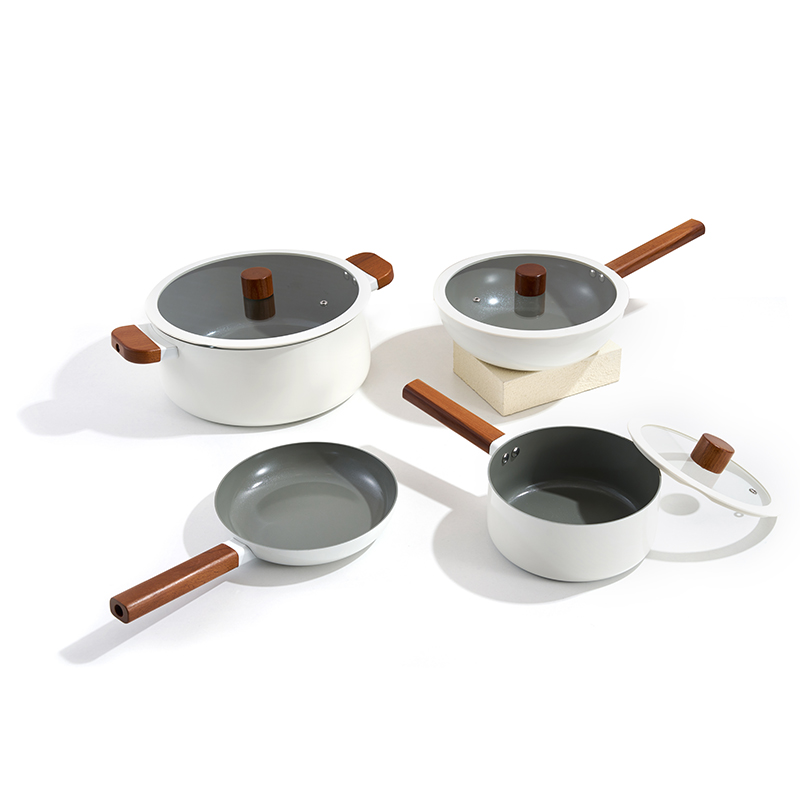
This cookware set has a ceramic non-stick inner liner, a heat-resistant wooden h...
See Details -
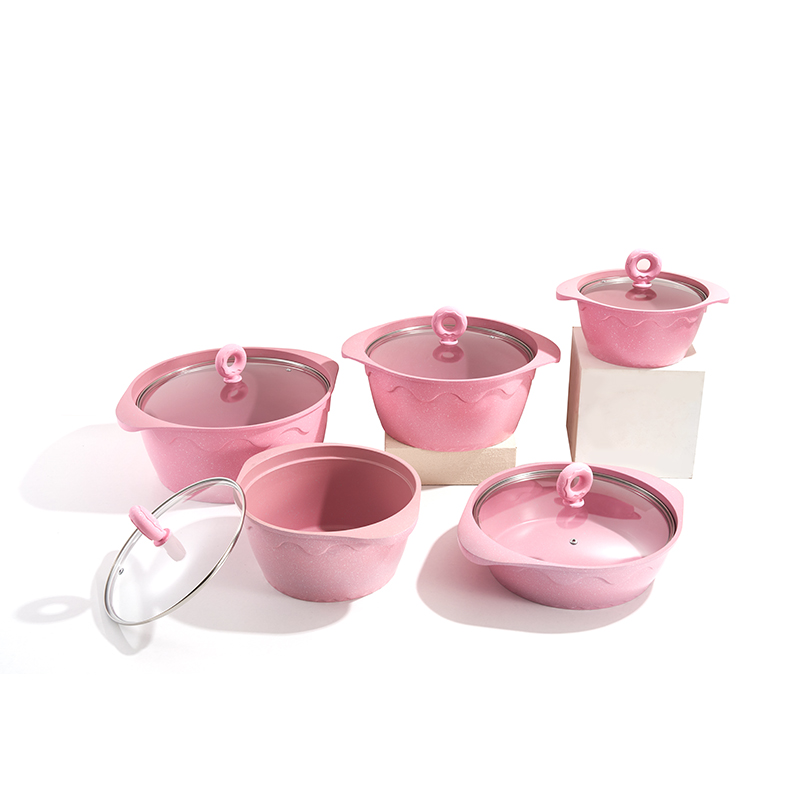
This cookware set is made of food-grade non-stick material, with a unique eye-ca...
See Details -
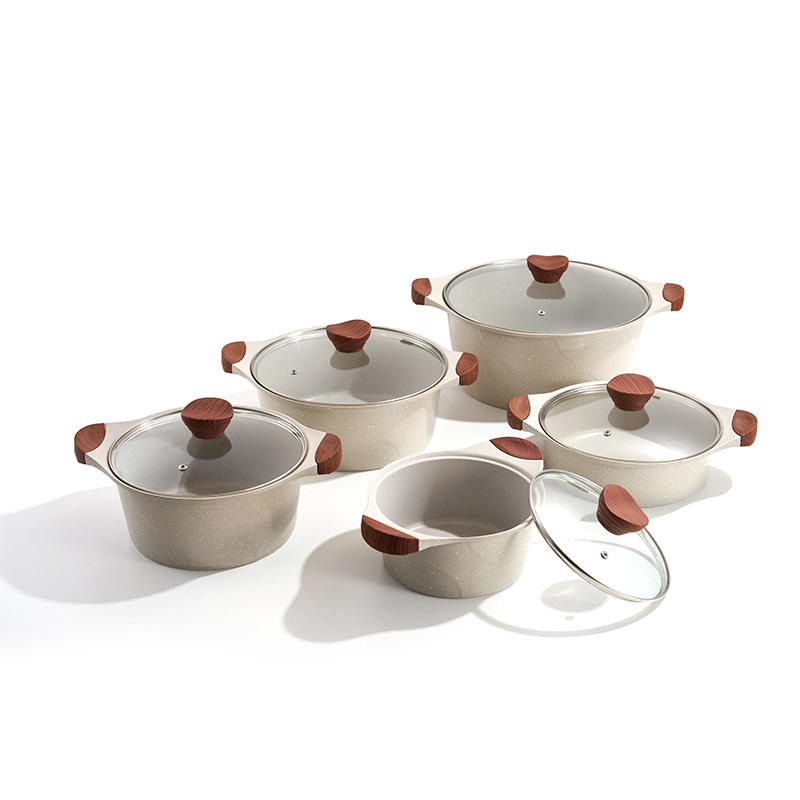
This off-white cookware set is made of wear-resistant non-stick material, with w...
See Details
Whether you're looking for bulk purchases or have any custom requirements, We are here to offer the best
solutions for you.
tiffany.zhong@echocn-trading.com
PHONE
+86-19561173975
+86-19557020621 (Hazel Wu)
ADD
Room 301, Unit 3014, No. 175 Qifeng Avenue, Wenqiao Town, Taizhou, Zhejiang, China
Fill Out the Form for More Information
Copyright © Zhejiang Echo Industry And Trade Co., Ltd.
All Rights Reserved.

China Cookware Set Manufacturer