
 en
 Español

This cookware set features a non-stick coating, even heat conduction, and multi-...
See Details
15-Piece LineStack Aluminum Cookware Set: A Complete Guide to Versatile Everyday Cooking
Date:Aug 22, 2026
Choosing the right cookware set is an important decision for households, professional buyers, retailers, hospitality businesses, and kitchenware distributors. A well-designed set should provide practical cooking capacity, dependable heat performance, convenient maintenance, safe handling, and enough versatility to support everyday meal preparation. It should also offer efficient storage, consistent appearance, and reliable quality across every component.
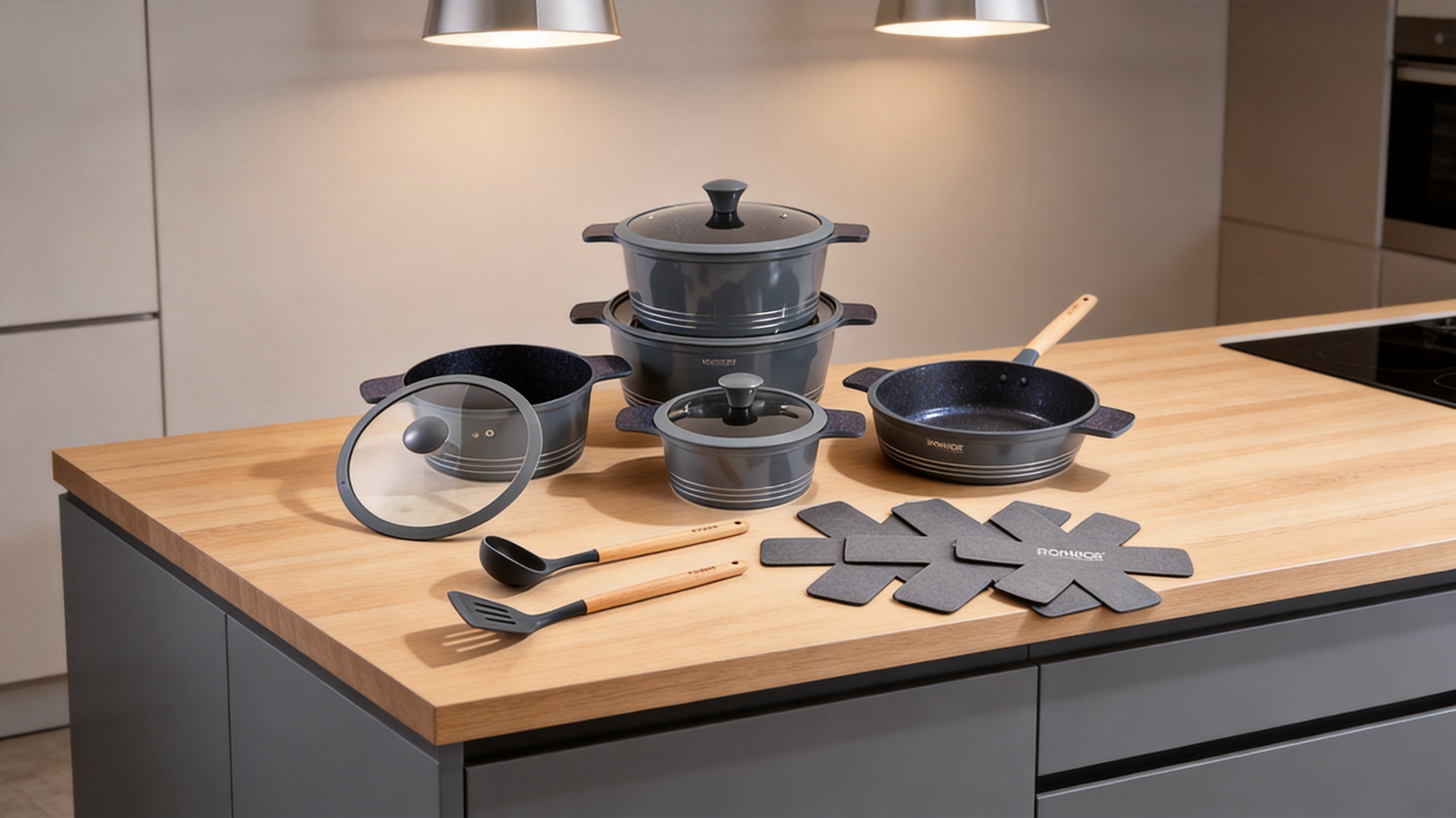
The 15-piece LineStack Aluminium Cookware Set is designed around these requirements. It combines lightweight aluminum construction, a food-grade non-stick interior, matching handles, multiple cooking capacities, wooden-handled silicone utensils, and heat-resistant trivets in one coordinated package. Rather than focusing on a single pan or one cooking function, the set provides a broad solution for boiling, simmering, braising, frying, reheating, and serving.
Manufactured and supplied by Zhejiang Echo Industry And Trade Co., Ltd., the cookware set reflects the company’s wider focus on aluminum cookware, stainless steel cookware, cast iron cookware, kitchen utensils, OEM and ODM services, product certification assistance, flexible minimum order quantities, and one-stop sourcing. These capabilities make the product suitable not only for individual kitchens but also for importers, wholesalers, retailers, hospitality buyers, and brands seeking a practical cookware collection for their own markets.
Understanding the 15-Piece LineStack Aluminum Cookware Set
The LineStack set is built as a coordinated cookware system rather than a random collection of individual items. Its principal cookware pieces include casseroles in several sizes and a shallow casserole. The available capacities are intended to cover different household and commercial cooking needs, from smaller meals and side dishes to larger portions, batch cooking, and family-style service.
The listed cookware dimensions and capacities are as follows:
| Cookware Item | Diameter | Capacity | Typical Use |
|---|---|---|---|
| Casserole | 20 cm | 2.6 liters | Small meals, sauces, vegetables, and reheating |
| Casserole | 24 cm | 4.6 liters | Family meals, soups, stews, and pasta |
| Casserole | 28 cm | 7.1 liters | Large portions, batch cooking, and entertaining |
| Casserole | 32 cm | 9.7 liters | High-volume cooking and large households |
| Shallow casserole | 28 cm | 4.1 liters | Braising, shallow frying, roasting-style stovetop cooking, and serving |
The cookware components are complemented by wooden-handled silicone utensils and trivets. Together, these accessories contribute to a more complete kitchen solution. Buyers do not need to source basic cooking tools separately, while end users receive utensils that are compatible with the non-stick cooking surface when used correctly.
The product is listed under SKU DN05 and is supplied in two cartons. The carton size is 77 by 47 by 41.5 centimeters, with a total carton weight of approximately 23.8 kilograms. These logistics details are useful for importers and distributors planning warehouse space, shipping arrangements, container loading, and retail inventory management.
Why Aluminum Is an Effective Cookware Material
Aluminum is widely used in cookware because it offers a favorable balance between weight, heat responsiveness, ease of handling, and production efficiency. Compared with many heavier cookware materials, aluminum pans are easier to lift, move, wash, and store. This is particularly valuable for users who cook frequently or prepare large quantities of food.
Aluminum also responds relatively quickly to changes in heat. When a cook adjusts the burner, an aluminum pan can react promptly, making it easier to control simmering, sautéing, boiling, and reduction. This responsiveness supports efficient day-to-day cooking and can help users avoid unnecessary overheating when they monitor the cooking process carefully.
Another benefit is the material’s suitability for forming into a range of shapes and capacities. The set’s 20-centimeter, 24-centimeter, 28-centimeter, and 32-centimeter casseroles demonstrate how aluminum cookware can be produced in multiple practical sizes while maintaining a consistent product family appearance. This uniformity is valuable for both consumers and retailers because the pieces work together visually and functionally.
Compared with traditional cast iron, aluminum cookware is generally much easier to handle and does not require the same level of seasoning maintenance. Compared with some heavy multi-layer stainless steel products, aluminum can provide a lighter user experience and faster apparent heat response. These differences make it attractive to buyers who want practical performance without excessive weight.
The use of aluminum does not mean that care can be ignored. Like all cookware materials, it performs best when used according to the manufacturer’s recommendations. Avoiding severe overheating, using suitable utensils, and washing with a soft cloth or sponge help preserve the cookware’s appearance and non-stick performance over time.
Food-Grade Non-Stick Interior for Easier Cooking
The set features a food-grade non-stick interior. This surface is intended to reduce food adhesion during cooking, allowing users to prepare common dishes with less sticking and easier release. It is especially useful for foods such as eggs, pancakes, fish, vegetables, rice-based dishes, and lightly coated meats.
A non-stick cooking surface can also simplify cleaning. When food is less likely to bond tightly to the pan, users may need less scrubbing after cooking. The care instructions recommend hot, soapy water and a soft cloth or sponge. This method is gentler than aggressive scouring and helps preserve the appearance of the interior.
The non-stick surface also works effectively with the included silicone utensils. Silicone is softer than metal and is less likely to scratch the cooking area when used properly. Wooden utensils are similarly suitable for routine cooking. The supplied wooden-handled silicone utensils combine a comfortable, natural-looking handle with a soft working end designed for compatibility with coated cookware.
Buyers should understand that non-stick cookware is not indestructible. Metal or sharp cooking tools can damage the surface, while empty overheating can cause unnecessary stress to the coating and cookware body. For this reason, the manufacturer specifically advises users not to use metal or sharp utensils and not to overheat an empty pan.
When cared for correctly, a food-grade non-stick interior can offer a convenient alternative to uncoated surfaces. It supports lower-effort cooking and cleaning while retaining the everyday versatility expected from a multi-size cookware set.
Matching Handles and Practical Handling
The set is described as having bodies with matching handles. Coordinated handles help create a unified appearance across the product range, which is important for both retail presentation and household organization. A matching design also makes the set look intentional rather than assembled from unrelated pieces.
Handle design has a direct effect on user comfort. When a pan is filled with soup, stew, pasta, or vegetables, the total weight can increase significantly. A practical handle should support stable lifting and controlled movement from the stovetop to the counter or serving area. Users should always lift larger or fuller cookware carefully and use both hands when appropriate.
The matching handle concept is also beneficial for kitchen aesthetics. Consumers increasingly look for cookware that can remain visible on open shelving, hanging racks, or kitchen islands. A coordinated set can contribute to a more organized and professional appearance, which adds value beyond basic cooking performance.
At the same time, handles can become hot depending on the cooking method, burner arrangement, and duration of use. Users should follow safe kitchen practices and avoid touching cookware components that may have been exposed to heat. Trivets included in the set provide a useful place to rest hot cookware on a suitable countertop or dining surface.
Five Cookware Capacities for Different Cooking Situations
20-Centimeter, 2.6-Liter Casserole
The smallest casserole in the set is suited to compact cooking tasks. Its 2.6-liter capacity can be useful for preparing sauces, grains, vegetables, small portions of soup, reheating food, or cooking meals for one or two people. It may also help users avoid using an oversized pan for a small quantity of food.
Smaller cookware is often valuable in homes where energy efficiency and portion control matter. A suitable pan size can help distribute heat effectively across the food and reduce unnecessary space around the cooking area. For retailers, the 20-centimeter casserole provides an accessible entry point for shoppers who may not need large cooking vessels every day.
24-Centimeter, 4.6-Liter Casserole
The 24-centimeter casserole offers a larger working capacity for general household meals. At 4.6 liters, it can accommodate soups, pasta, stews, curries, vegetables, and other dishes prepared for several people. This size is likely to be one of the most frequently used pieces in a typical home because it bridges the gap between small daily cooking and larger batch preparation.
For families, shared apartments, and small food-service operations, a medium-capacity casserole can become an everyday workhorse. It is large enough for substantial portions without being as demanding to handle or store as the largest cookware piece in the set.
28-Centimeter, 7.1-Liter Casserole
The 28-centimeter casserole expands the set into larger-volume cooking. Its 7.1-liter capacity is suitable for family gatherings, meal preparation, larger soups, braised dishes, and foods intended to be served over several meals. It can also be useful to caterers and small hospitality businesses that require flexible batch-cooking capacity.
This size provides a practical advantage over cookware sets that include only small and medium pans. Users do not need to transfer a large recipe into multiple smaller vessels simply because one suitable pan is unavailable. The larger casserole helps simplify preparation and can reduce the number of cooking stages required.
32-Centimeter, 9.7-Liter Casserole
The largest casserole has a 9.7-liter capacity and is designed for high-volume cooking. It can support large households, meal-preparation routines, celebrations, catering applications, and other situations where a considerable quantity of food must be cooked at one time.
Large cookware can be particularly valuable for buyers serving multiple people. Restaurants, cafeterias, canteens, event organizers, and institutional kitchens may appreciate the additional capacity, provided the cookware is used on a suitable stovetop and handled safely. For domestic users, the 32-centimeter casserole can be reserved for special occasions, seasonal cooking, preserves, soups, or large family recipes.
28-Centimeter, 4.1-Liter Shallow Casserole
The shallow casserole adds a different cooking profile to the collection. Its lower form is suitable for braising, shallow frying, reducing sauces, cooking layered dishes, and preparing foods that benefit from a broader surface area. The 4.1-liter capacity offers useful volume without the taller profile of a deep casserole.
A shallow casserole can also move conveniently from cooking to serving when used with an appropriate trivet. Its wider presentation area may be helpful for family-style meals, vegetables, pan dishes, and recipes that are finished with a sauce. Including this form makes the set more versatile than a collection made entirely of deep pots.

15pcs LineStack Aluminium Cookware Set
Compatibility with All Stovetops
The product description states that the cookware is compatible with all stovetops. This broad compatibility is an important selling point for distributors and consumers because it allows the set to serve households with different kitchen configurations. It can support users who cook on gas, electric, ceramic, or induction-style stovetops, subject to correct use and the specific operating requirements of the cooking appliance.
Universal stovetop compatibility reduces the uncertainty that can arise when purchasing cookware online or across international markets. Consumers do not need to replace the set simply because they move from one type of stovetop to another. For retailers, a broadly compatible product can appeal to a wider customer base and reduce the need to maintain separate product listings for different cooking technologies.
Correct positioning remains important. The base of each cookware item should sit appropriately on the heating zone, and the flame or heat source should not extend beyond the base. This instruction helps protect the cookware exterior, handle area, and surrounding surfaces from excessive heat exposure.
Users should also avoid leaving an empty pan over an active burner. Even cookware designed for everyday performance can be affected by severe overheating. If a pan becomes severely overheated, the recommended action is to turn off the cooker and allow the cookware to cool completely without touching it immediately.
Included Silicone Utensils and Trivets
The inclusion of wooden-handled silicone utensils increases the practical value of the package. A cookware set without compatible tools may require the buyer to purchase additional accessories, and unsuitable utensils can damage non-stick surfaces. By including silicone-ended utensils, the product provides a safer starting point for users who want to protect their cookware from scratches.
Silicone utensils are useful for stirring, turning, folding, scraping, and serving many everyday dishes. Their soft working edges can help users reach the sides and corners of cookware while reducing the risk of direct contact between hard tools and the non-stick interior. The wooden handles add a traditional visual element and can provide a comfortable grip for routine kitchen work.
The trivets provide another useful accessory. Hot cookware should not be placed directly on every countertop, dining table, or other surface. A trivet creates a designated resting area and helps support safer movement from the stovetop to the table. It also reinforces the set’s positioning as a complete cooking and serving solution rather than simply a group of pans.
From a merchandising perspective, accessories can make a cookware set more attractive as a gift or household upgrade. Buyers often prefer packages that offer immediate usability. A set containing cookware, utensils, and trivets can be presented as a coordinated kitchen starter package, a housewarming product, or a practical family gift.
Advantages Over Conventional Cookware Sets
Many conventional cookware sets concentrate on a limited number of similar pans. Some include only one or two saucepans and a frying pan, while others provide several items but lack a large-capacity vessel. The LineStack collection distinguishes itself through its combination of multiple casserole capacities and a shallow casserole.
This range provides greater cooking flexibility. A user can choose a smaller pan for a modest recipe, a medium pan for everyday family cooking, a larger casserole for batch preparation, and a shallow casserole for dishes that require a broad cooking surface. This reduces the need to improvise with unsuitable cookware.
The set also offers an advantage over heavy cookware collections in terms of handling. Aluminum construction can make large pieces more manageable than comparable cast iron products. This matters when cooking large quantities, washing the cookware, moving it between burners, or storing it in a cabinet.
Compared with uncoated cookware, the food-grade non-stick interior supports easier release and cleaning. This can be especially valuable for busy households, older users, new cooks, and commercial environments where time spent on washing and maintenance affects daily efficiency.
Compared with sets that require separate accessory purchases, the included silicone utensils and trivets add convenience. The buyer receives tools designed to work with the cookware and a practical way to rest hot items. This bundled approach may offer stronger perceived value at retail.
The collection also provides a consistent design language. A coordinated appearance can be more appealing than a mixture of unmatched cookware collected over time. For commercial buyers, consistent visual presentation can support private-label branding, retail displays, hospitality kitchens, and promotional campaigns.
Design and Manufacturing Strengths
Zhejiang Echo Industry And Trade Co., Ltd. is based in Zhejiang, China, a province recognized for manufacturing and export activity. The company focuses on kitchenware supply and offers a product portfolio that includes aluminum cookware, stainless steel cookware, cast iron cookware, and kitchen utensils.
This category breadth is important because cookware buyers often need more than one product type. A distributor may require aluminum non-stick collections for everyday retail, stainless steel items for durability-focused customers, cast iron products for specialty cooking, and utensils to complete the assortment. A supplier capable of supporting several categories can simplify purchasing and communication.
The company describes itself as an R&D-driven supply chain partner for small and medium-sized kitchenware buyers. This positioning suggests a focus beyond simple order taking. Product development, design adjustments, packaging coordination, certification assistance, and supply-chain communication can all be important when buyers are building a collection for a specific market.
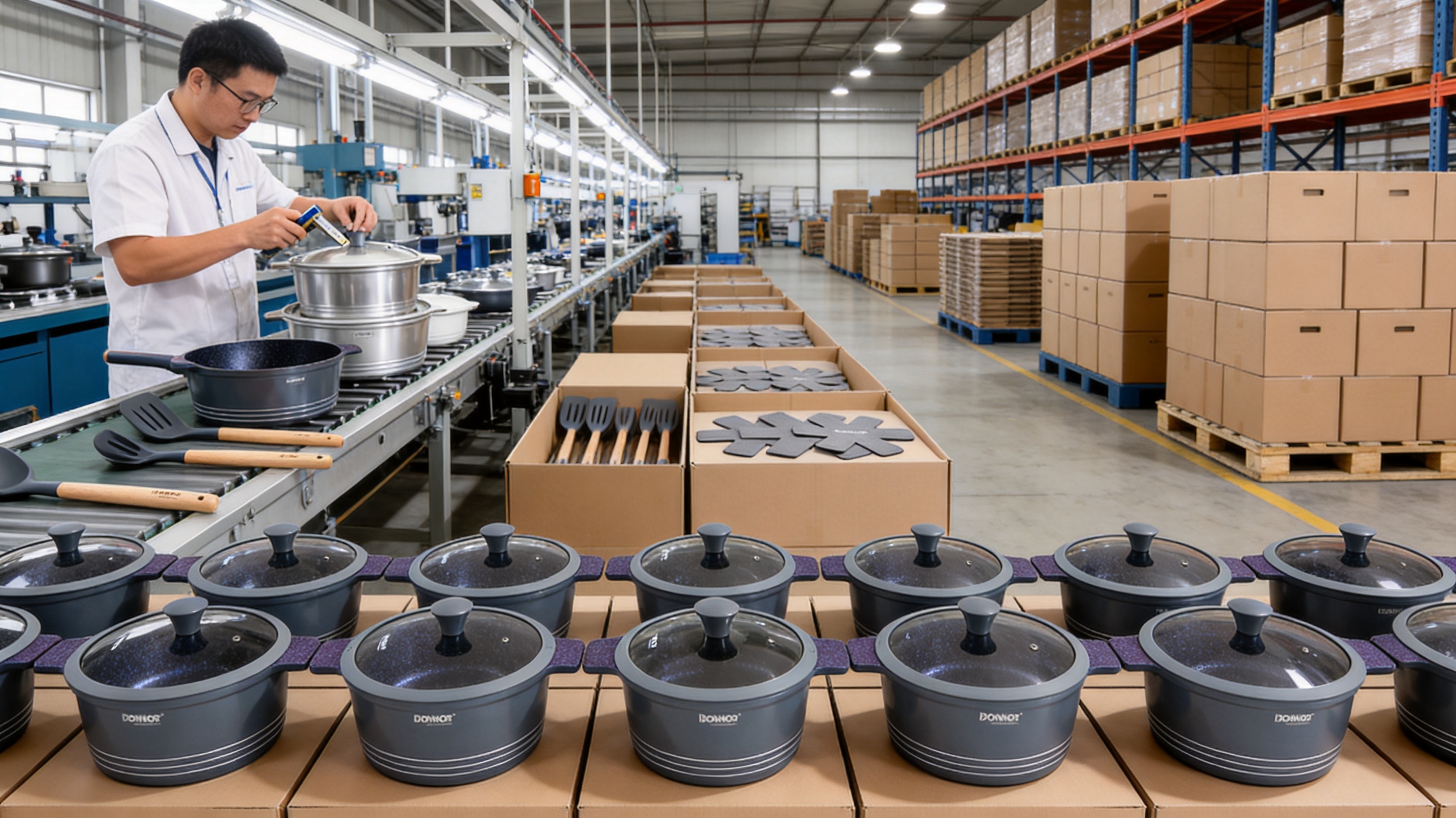
For the LineStack cookware set, manufacturing strength can be understood through the integration of several product requirements: formed aluminum bodies, matching handles, food-grade non-stick interiors, consistent sizing, compatible accessories, and coordinated packaging. Delivering these elements as one finished collection requires attention to material selection, forming, surface treatment, assembly, inspection, and packing.
Material Preparation and Body Forming
Aluminum cookware production begins with suitable aluminum material and controlled forming processes. The body must be shaped to achieve the intended dimensions, depth, capacity, and overall appearance. Consistency is important because the five cookware pieces need to function as a coordinated family and fit appropriately within the planned packaging system.
Reliable forming also supports stable bases and even proportions. The cookware must sit correctly on a stovetop and provide a practical interior volume. For a product set with capacities ranging from 2.6 liters to 9.7 liters, production control is especially important because larger pieces may require different handling, forming pressure, and inspection standards from smaller ones.
Surface Treatment and Non-Stick Application
The non-stick interior is a central feature of the set. Applying a food-grade non-stick surface requires appropriate preparation of the aluminum body, controlled coating procedures, and careful curing or finishing according to the selected production system. Uniformity matters because inconsistent coating can affect appearance, release performance, and customer satisfaction.
Quality checks may include visual inspection for uneven areas, scratches, pinholes, contamination, or other surface irregularities. The exact inspection protocol depends on the manufacturing line and customer requirements, but the overall objective is to ensure that finished cookware meets the agreed specification before packing.
Handle Assembly and Accessory Coordination
Matching handles must be attached securely and positioned consistently. Handle alignment affects both appearance and practical use. It also influences how the cookware fits into cartons, displays, and storage areas. The inclusion of wooden-handled silicone utensils requires coordination between cookware production and accessory sourcing or manufacturing.
Accessories should be selected and checked for compatibility with the cookware’s non-stick surface. Trivets also need to be packed in a way that prevents damage to the cookware during transport. Coordinating all parts into one set requires attention to component counts, packaging layout, carton strength, and final product inspection.
Inspection and Packing
Inspection is essential for export-oriented kitchenware. Finished products may be checked for dimensions, surface quality, handle attachment, accessory quantity, visual consistency, and packaging condition. Carton packing must protect the cookware from impact, friction, and movement during handling and transportation.
The listed packing configuration of two cartons, a carton size of 77 by 47 by 41.5 centimeters, and a carton weight of 23.8 kilograms provides buyers with a starting point for logistics planning. Importers can use this information to estimate warehouse requirements, shipping costs, pallet arrangements, and distribution procedures.
One-Stop Sourcing for Kitchenware Buyers
One of the company’s stated strengths is one-stop cookware sourcing. This approach can reduce the administrative burden associated with managing several suppliers for different product categories. A buyer seeking aluminum cookware, stainless steel cookware, cast iron cookware, and kitchen utensils may be able to coordinate a broader assortment through one supply relationship.
One-stop sourcing can improve consistency in communication, documentation, product development, and shipment coordination. It may also help buyers create complementary collections instead of selecting unrelated items from separate factories. For example, a retailer can combine the LineStack aluminum set with stainless steel kitchen tools, cast iron specialty pieces, or additional utensils while maintaining a unified sourcing strategy.
For small and medium-sized businesses, supplier consolidation can be especially helpful. Smaller teams may not have the resources to manage numerous factories, inspection schedules, and shipping documents. A supplier that offers multiple categories and flexible support can make product expansion more manageable.
ODM and OEM Customization Potential
The company offers ODM and OEM customization services. These services can be valuable for importers, online retailers, supermarket groups, hospitality suppliers, and brands that want cookware tailored to their market identity.
OEM projects may involve the use of a buyer’s branding, packaging design, product labels, instruction materials, or carton artwork. ODM projects may extend further into product modifications, color selection, handle styling, accessory combinations, capacity adjustments, and other design details, depending on feasibility and order requirements.
The LineStack concept can serve as a useful foundation for customization. A buyer may wish to retain the multi-size structure while adjusting the exterior color, packaging language, accessory selection, or retail presentation. Another buyer may seek a smaller assortment for compact kitchens or a larger package designed for family and hospitality use.
Customization should be discussed early because changes can affect tooling, minimum order quantities, production schedules, testing, packaging, and shipping. Clear technical specifications and approved samples help reduce misunderstandings. Buyers should also confirm the intended market, applicable food-contact requirements, labeling rules, and any required testing or certification documentation before mass production.
Product Certification Assistance and Market Preparation
Cookware is a food-contact product, so market preparation can involve documentation and testing requirements. The company states that it provides product certification assistance. This service can support buyers as they review the requirements of their target countries and sales channels.
Certification needs vary by market, product construction, coating system, packaging, and intended use. Buyers should identify their target countries at the beginning of the project and request appropriate documentation from the supplier. It is also important to distinguish between general product information and formal certification issued by an authorized testing or certification body.
For the LineStack set, relevant information may include material details, coating specifications, care instructions, product dimensions, packaging data, and accessory composition. Proper documentation helps distributors create accurate product listings and customer instructions while supporting import and compliance processes.
Care and Maintenance Recommendations
Correct care is essential to preserving the cookware’s appearance and non-stick performance. The manufacturer recommends washing the cookware before first use. Hand washing is recommended because it helps preserve the appearance of the cookware and gives the user greater control over cleaning conditions.
Use Suitable Cooking Utensils
Do not use metal or sharp cooking utensils with the non-stick interior. Wooden, nylon, or non-stick cooking utensils are recommended. The included wooden-handled silicone utensils are particularly suitable for routine use because the silicone working ends are designed to be gentler on the cooking surface than hard metal tools.
Clean with Hot, Soapy Water
After cooking, allow the cookware to cool sufficiently before washing. Use hot, soapy water with a soft cloth or sponge. Avoid abrasive pads, harsh scouring materials, and aggressive scraping. If food residue remains, soaking the cookware briefly can help soften the residue before gentle cleaning.
Avoid Empty Overheating
Do not overheat an empty pan. Empty cookware can become hot very quickly, and excessive heat may affect the non-stick surface, exterior finish, or handle area. Place food or liquid in the cookware before heating whenever appropriate, and monitor the burner during cooking.
Control the Heat Source
The flame or heat source should not extend beyond the base of the cookware. Excess heat around the sides can discolor the exterior or expose handles and nearby surfaces to unnecessary heat. Selecting a burner that matches the base diameter is a simple way to support safer and more efficient cooking.
Respond Safely to Severe Overheating
If a pan severely overheats, turn off the cooker and leave the cookware to cool completely. Do not touch the pan immediately or attempt to move it while it is dangerously hot. Once it has cooled, inspect it and clean it according to the care instructions. If there is visible damage, the item should not be returned to service until its condition has been evaluated.
Do Not Use in a Microwave
The cookware should not be used in a microwave. Microwave cooking is different from stovetop cooking, and cookware designed for stovetop heat may not be suitable for microwave operation. Food should be transferred to a microwave-safe container when microwave reheating is required.
Storage and Organization Benefits
A multi-size cookware collection can help users organize their kitchens more effectively. Instead of purchasing unrelated items with different shapes and handle designs, users can keep a coordinated set for regular cooking. The LineStack name suggests an emphasis on organized storage, while the product’s multiple sizes create opportunities for efficient arrangement.
When storing non-stick cookware, users should avoid placing hard objects directly against the interior surfaces. If pieces are nested, a soft protective layer can help reduce contact between cookware surfaces. Handles, utensils, and trivets should be arranged so that they do not scrape or press against the coated interiors.
For retailers and distributors, organized packaging can also improve warehouse handling. The two-carton configuration and defined carton dimensions make it easier to calculate inventory space. A consistent product family can be displayed as a complete collection or divided into individual selling points, depending on the buyer’s commercial strategy.
Applications in Homes, Retail, and Hospitality
Household Cooking
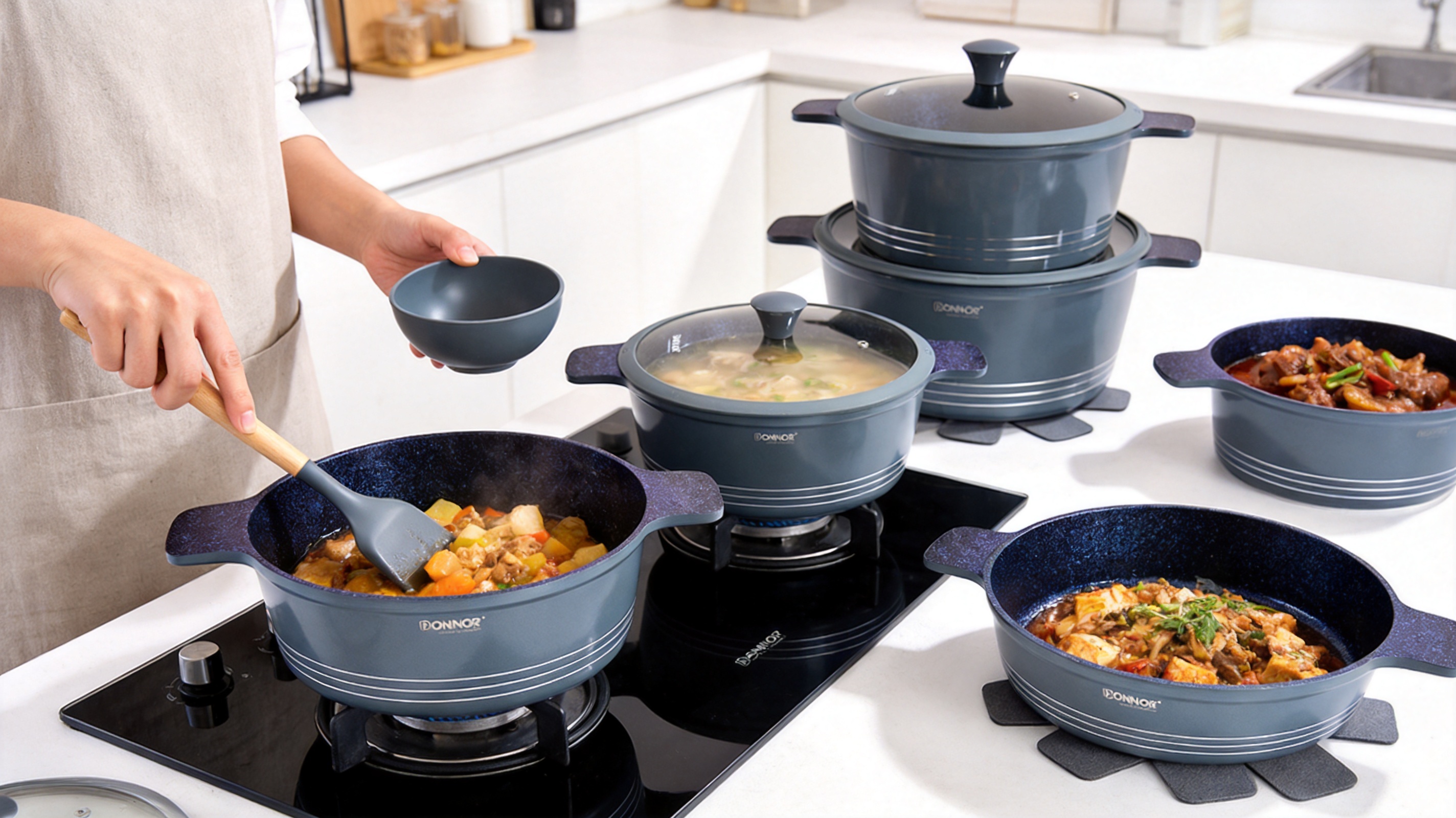
The set is suitable for households that prepare a wide variety of meals. The smaller casserole can handle everyday portions and side dishes, while the medium and large pieces support soups, stews, pasta, and batch cooking. The shallow casserole adds flexibility for braising and broad-surface cooking.
Families may benefit from having several sizes available at the same time. One pan can be used for a main dish while another prepares vegetables, sauce, or a side. This reduces scheduling conflicts in the kitchen and makes multi-course meal preparation more convenient.
Meal Preparation
Meal-preparation users often need cookware with enough capacity to produce several servings at once. The 7.1-liter and 9.7-liter casseroles can support larger recipes, while the 4.6-liter casserole may be suitable for medium-sized batches. The non-stick interior and easy-cleaning instructions can reduce the time required after cooking.
Retail and E-Commerce
For retailers, the product offers several marketable features: a 15-piece format, multiple cookware sizes, aluminum construction, a food-grade non-stick interior, included utensils, included trivets, and all-stovetop compatibility. These features can be presented in product pages, packaging, showroom displays, and promotional campaigns.
The set may appeal to customers purchasing a first complete cookware collection, replacing mismatched old cookware, moving into a new home, or looking for a practical gift. The coordinated appearance and accessory bundle can also strengthen its perceived value compared with a basic cookware set containing only a few pans.
Hospitality and Small Food-Service Operations
Small restaurants, guesthouses, cooking schools, catering teams, and staff kitchens may value the range of capacities. The larger casseroles can support batch preparation, while the shallow casserole can be used for finishing and serving. However, commercial users should evaluate their burner type, cooking volume, cleaning procedures, and local safety requirements before placing a large order.
Because the set includes non-stick cookware, commercial users should establish clear utensil and cleaning rules. Staff should avoid metal tools, empty overheating, and abrasive cleaning methods. A simple care policy can help extend product service life and maintain consistent kitchen performance.
How the Set Supports Better Product Differentiation
Cookware is a competitive category, and buyers often compare products based on more than price. A successful product needs clear points of difference that are easy to explain and meaningful to the end user. The LineStack set provides several such points.
First, it provides a broad capacity range. Many sets are built around a few standard pieces, whereas this collection reaches from a compact 2.6-liter casserole to a high-capacity 9.7-liter casserole. That range makes the set appropriate for both small and large cooking tasks.
Second, it combines deep casseroles with a shallow casserole. This gives the user different cooking shapes rather than simply different diameters. The shallow form can improve flexibility for braising, pan-style dishes, and serving.
Third, it includes compatible accessories. Silicone utensils and trivets make the package more complete and help solve practical problems that often arise after cookware purchase.
Fourth, it uses a food-grade non-stick interior. This feature is relevant to modern consumers who prioritize easy release, simpler cleanup, and convenient everyday cooking.
Fifth, it is designed for all stovetops. Broad compatibility expands the addressable market and makes the collection easier for retailers to position across different regions.
Finally, the product is supported by a supplier offering multiple kitchenware categories, customization services, certification assistance, and flexible sourcing solutions. This commercial support can be as important as the physical product for buyers developing a long-term kitchenware program.
Quality Considerations for Importers and Distributors
Importers should review the product specification carefully before placing an order. The SKU, component count, cookware dimensions, capacities, accessory list, carton quantity, carton size, and carton weight should be confirmed in the purchase documentation. If the 15-piece count includes specific numbers of utensils and trivets, those quantities should be listed clearly on the final packing specification.
Buyers should also request samples before mass production when launching the product in a new market. Sample review can cover handle comfort, lid or accessory configuration if applicable, coating appearance, base stability, packaging quality, labeling, and overall presentation. Any requested changes should be documented and approved before production begins.
Packaging is particularly important for cookware because products can experience impact and friction during transport. Internal separators, protective materials, carton strength, and stacking instructions should be evaluated. Retail packaging should also provide accurate information about stovetop compatibility, care instructions, dimensions, capacities, and included accessories.
Where private labeling is required, buyers should approve artwork, language translations, warning statements, barcode placement, and instruction content. Clear care guidance can reduce misuse and improve customer satisfaction after purchase.
Why Supplier Capability Matters
A cookware product can have attractive features, but reliable supply depends on the manufacturer’s ability to coordinate design, production, inspection, documentation, and export logistics. Zhejiang Echo Industry And Trade Co., Ltd. presents itself as a professional kitchenware supplier with experience in multiple cookware categories and international export markets.
The company’s stated goal is to become an R&D-driven supply chain partner for small and medium-sized buyers. This approach is relevant in a market where customers increasingly request product differentiation, customized packaging, unique combinations, sustainable development, and healthy cooking solutions.
Flexible MOQs can be useful for businesses testing a new product or entering a new sales channel. A smaller initial order may allow a buyer to evaluate market response before expanding. At the same time, larger distributors can discuss repeat production, assortment planning, and shipment scheduling as demand develops.
Sustainable and healthy product development is also becoming more important. Buyers may wish to discuss material efficiency, packaging reduction, product longevity, responsible accessory selection, and market-specific food-contact expectations. The best approach is to define measurable requirements and confirm them through samples, documentation, and agreed inspection procedures.
Recommended Buyer Evaluation Checklist
Before purchasing the 15-piece LineStack Aluminum Cookware Set, a buyer should evaluate several practical points:
- Confirm the exact contents of all 15 pieces.
- Verify the cookware sizes and capacities.
- Confirm all-stovetop compatibility for the intended sales market.
- Review the food-grade non-stick interior specifications.
- Check the materials and dimensions of the included utensils and trivets.
- Request product samples for quality and usability review.
- Confirm packaging configuration, carton dimensions, and carton weight.
- Discuss OEM or ODM requirements before production.
- Identify certification and food-contact documentation needed for the target market.
- Approve artwork, labels, care instructions, and packaging language.
- Establish inspection standards for coating, handles, accessories, and cartons.
- Discuss production lead times, minimum order quantities, and shipping arrangements.
This checklist helps buyers compare the product with competing cookware sets using objective criteria rather than relying only on photographs or headline features.
Frequently Asked Questions
What is included in the 15-piece LineStack cookware set?
The set includes multiple aluminum casserole pieces, one shallow casserole, wooden-handled silicone utensils, and trivets. The product information identifies five principal cookware pieces: 20-centimeter, 24-centimeter, 28-centimeter, and 32-centimeter casseroles, plus a 28-centimeter shallow casserole. Buyers should confirm the precise accessory quantity and complete 15-piece breakdown with the supplier before ordering.
What are the cookware capacities?
The listed capacities are 2.6 liters for the 20-centimeter casserole, 4.6 liters for the 24-centimeter casserole, 7.1 liters for the 28-centimeter casserole, 9.7 liters for the 32-centimeter casserole, and 4.1 liters for the 28-centimeter shallow casserole.
Is the cookware suitable for all stovetops?
The product description states that it is compatible with all stovetops. Users should still select a suitable heating zone, keep the flame or heat source within the cookware base, and follow the operating instructions of their particular stove.
Can metal utensils be used?
No. Metal or sharp cooking utensils should not be used because they may scratch or damage the non-stick interior. Wooden, nylon, or non-stick utensils are recommended. The included silicone utensils are suitable for use with the coated cooking surface.
How should the cookware be cleaned?
Use hot, soapy water with a soft cloth or sponge. Hand washing is recommended to preserve the appearance of the cookware. Abrasive pads, harsh scrubbing, and sharp scraping tools should be avoided.
Can the cookware be placed in a microwave?
No. The cookware should not be used in a microwave. Transfer food to a microwave-safe container when microwave reheating is necessary.
What should users do if a pan overheats?
If a pan severely overheats, turn off the cooker and leave the pan to cool completely. Do not touch or move it immediately while it is dangerously hot. After cooling, inspect the item and follow the appropriate care procedure.
Is hand washing necessary?
Hand washing is recommended to help preserve the cookware’s appearance and non-stick surface. It also allows users to clean the interior with a soft cloth or sponge rather than exposing it to potentially harsh cleaning conditions.
What makes aluminum suitable for this set?
Aluminum is lightweight, responsive to heat changes, practical for multi-size cookware production, and generally easier to handle than heavier materials such as cast iron. These qualities make it suitable for everyday household and food-service cooking.
What is the largest cookware piece?
The largest listed piece is the 32-centimeter casserole, with a capacity of 9.7 liters. It is suitable for large portions, batch cooking, celebrations, and other high-volume cooking needs.
What is the purpose of the shallow casserole?
The shallow casserole provides a broader, lower cooking surface. It can be used for braising, shallow frying, sauce reduction, pan dishes, and serving food at the table when placed on a suitable trivet.
Can the set be customized?
The supplier offers OEM and ODM customization. Potential customization may include branding, packaging, colors, accessories, and selected product details, subject to technical feasibility, minimum order quantities, tooling, testing, and production requirements.
Does the supplier offer other kitchenware products?
Yes. The company states that it supplies aluminum cookware, stainless steel cookware, cast iron cookware, and kitchen utensils. This supports one-stop sourcing for buyers seeking a wider kitchenware assortment.
What are the shipping details?
The product information lists two cartons, with a carton size of 77 by 47 by 41.5 centimeters and a carton weight of 23.8 kilograms. Buyers should confirm whether these figures refer to the complete shipment configuration required for their order.
Who may benefit from this cookware set?
The set may suit households, retailers, e-commerce sellers, wholesalers, importers, hospitality businesses, catering operations, cooking schools, and private-label kitchenware brands. Its broad size range and accessory package make it adaptable to several sales and usage environments.
Conclusion
The 15-piece LineStack Aluminum Cookware Set is designed to provide a balanced combination of versatility, convenience, lightweight handling, and coordinated kitchen functionality. Its five principal cookware pieces cover capacities from 2.6 liters to 9.7 liters, while the shallow casserole adds a different cooking shape for braising, shallow cooking, and serving.
The food-grade non-stick interior supports easier food release and cleaning, while the included wooden-handled silicone utensils are intended to help protect the cooking surface. Trivets contribute to safer serving and countertop use. Compatibility with all stovetops further broadens the product’s appeal for international consumers and retailers.
From a sourcing perspective, the product benefits from the capabilities of Zhejiang Echo Industry And Trade Co., Ltd., including a broad kitchenware portfolio, one-stop sourcing, OEM and ODM customization, certification assistance, flexible MOQs, and an R&D-oriented supply-chain strategy. The company’s location in Zhejiang supports its connection to an established manufacturing and export environment.
For buyers, the strongest value of this collection lies in the way its components work together. It is not simply a set of differently sized pans. It is a complete cookware concept that combines practical capacity planning, surface convenience, compatible accessories, coordinated design, and supplier support. With appropriate care, clear specifications, and suitable market preparation, it can serve as a competitive option for modern household, retail, and commercial kitchenware programs.
References
1. Product specification supplied for the 15-piece LineStack Aluminum Cookware Set, SKU DN05.
2. Manufacturer-provided care instructions for non-stick aluminum cookware.
3. Manufacturer-provided information regarding cookware dimensions, capacities, carton configuration, and shipping weight.
4. General principles of aluminum cookware design, heat responsiveness, forming, surface treatment, and kitchen ergonomics.
5. General food-contact cookware handling and non-stick cookware maintenance practices.
6. General export product-development considerations for OEM, ODM, packaging, inspection, and certification assistance.
Product: 15pcs LineStack Aluminium Cookware Set
Recommended Articles
Product Category
Related products
-
-
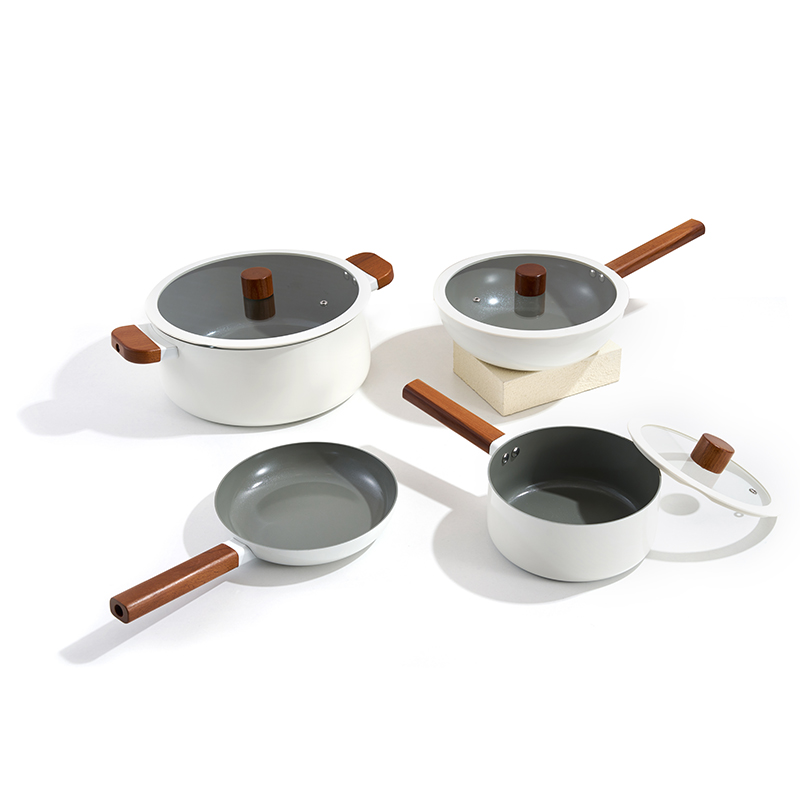
This cookware set has a ceramic non-stick inner liner, a heat-resistant wooden h...
See Details -
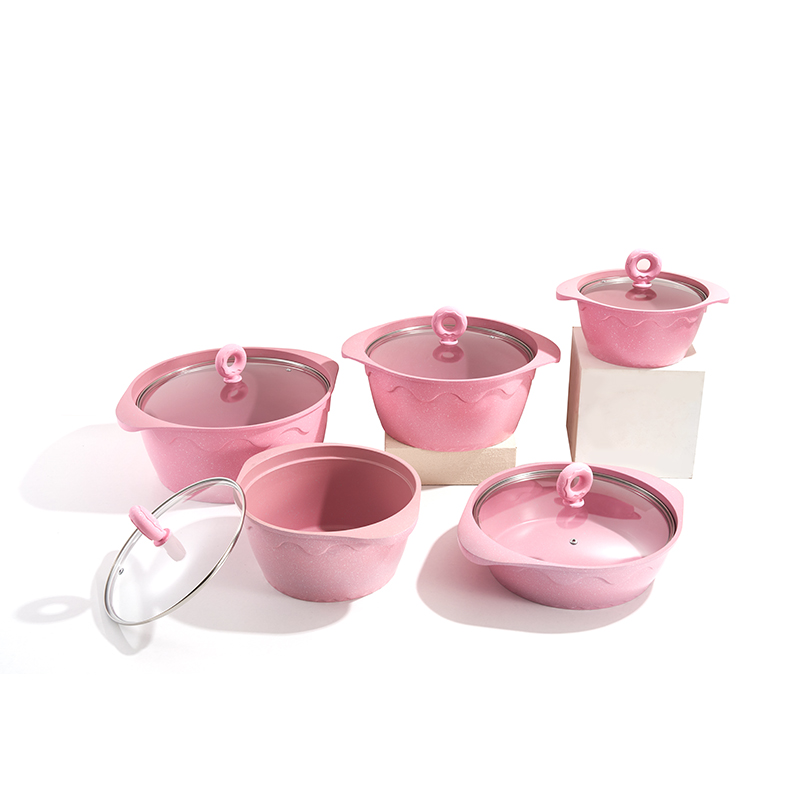
This cookware set is made of food-grade non-stick material, with a unique eye-ca...
See Details -
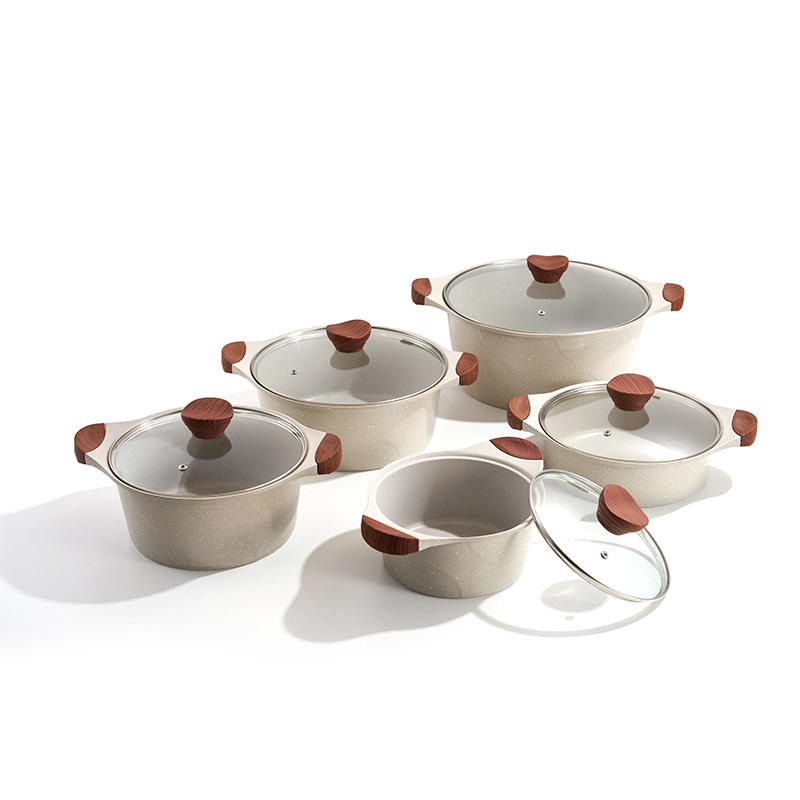
This off-white cookware set is made of wear-resistant non-stick material, with w...
See Details
Whether you're looking for bulk purchases or have any custom requirements, We are here to offer the best
solutions for you.
tiffany.zhong@echocn-trading.com
PHONE
+86-19561173975
+86-19557020621 (Hazel Wu)
ADD
Room 301, Unit 3014, No. 175 Qifeng Avenue, Wenqiao Town, Taizhou, Zhejiang, China
Fill Out the Form for More Information
Copyright © Zhejiang Echo Industry And Trade Co., Ltd.
All Rights Reserved.

China Cookware Set Manufacturer