
 en
 Español
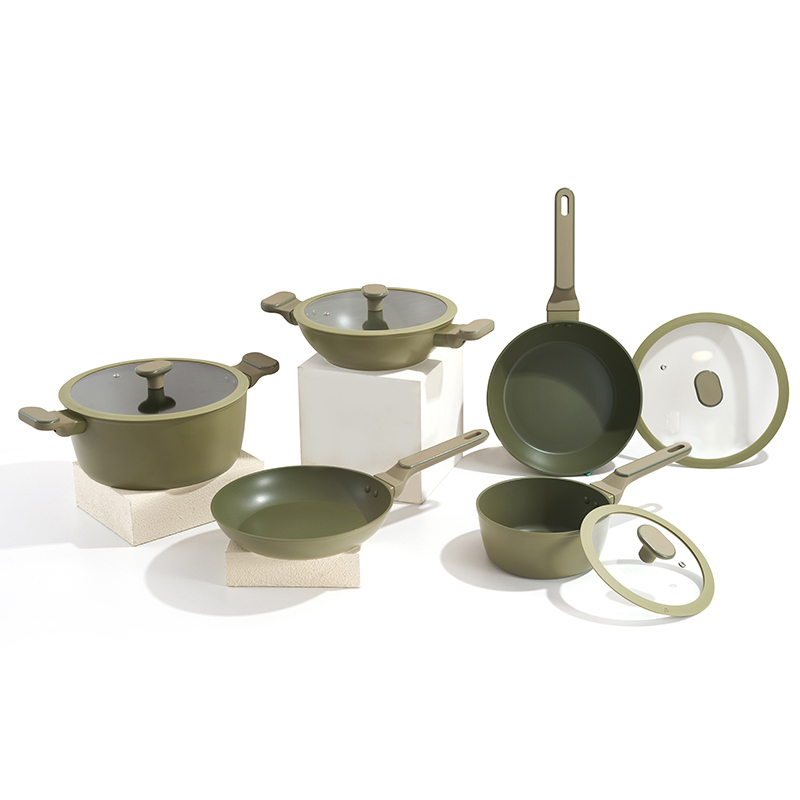
This cookware set features a non-stick coating, even heat conduction, and multi-...
See Details
How to Choose a Durable Non-Stick Stainless Steel Frying Pan for Modern Kitchens
Date:Aug 09, 2026
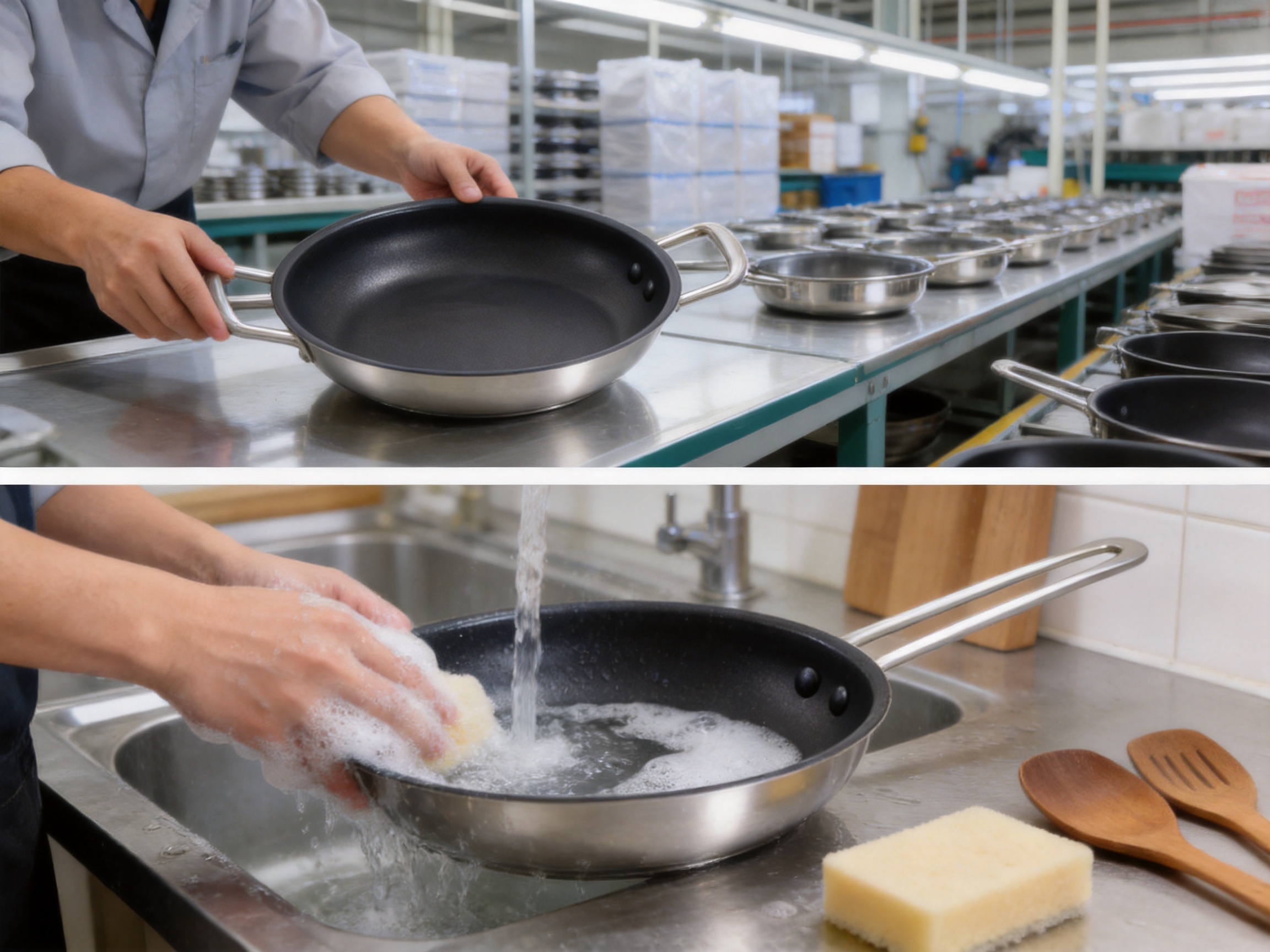
A frying pan is one of the most frequently used pieces of cookware in both professional and domestic kitchens. It may be used for searing meat, frying eggs, sautéing vegetables, preparing sauces, reheating leftovers, or finishing a complete meal. Because it performs so many tasks, the choice of material, coating, handle design, cleaning method, and manufacturing quality has a direct effect on cooking results and long-term value.
The non-stick stainless steel frying pan described in this article combines a food-grade 304 stainless steel exterior with a non-stick interior. This combination is designed to bring together the durability associated with stainless steel and the convenience associated with non-stick cooking surfaces. It is available in 20 cm, 24 cm, 26 cm, and 28 cm sizes, allowing buyers to select a format appropriate for individual meals, family cooking, restaurant preparation, or cookware sets.
Unlike a basic aluminum non-stick pan, this design places stainless steel at the exterior, providing a solid and professional appearance while supporting broad stovetop compatibility. Unlike a traditional uncoated stainless steel pan, its non-stick interior can reduce food adhesion and simplify cleaning. Compared with many single-handle frying pans, its dual stainless steel handles offer additional flexibility when lifting, transferring, or positioning the pan.
For importers, wholesalers, kitchenware retailers, hospitality buyers, and private-label brands, the product also represents a practical sourcing opportunity. It is supplied by a Zhejiang-based kitchenware manufacturer offering product variety, OEM and ODM support, flexible minimum order quantities, certification assistance, and one-stop cookware sourcing. These capabilities are particularly relevant for buyers seeking more than a single standard item.
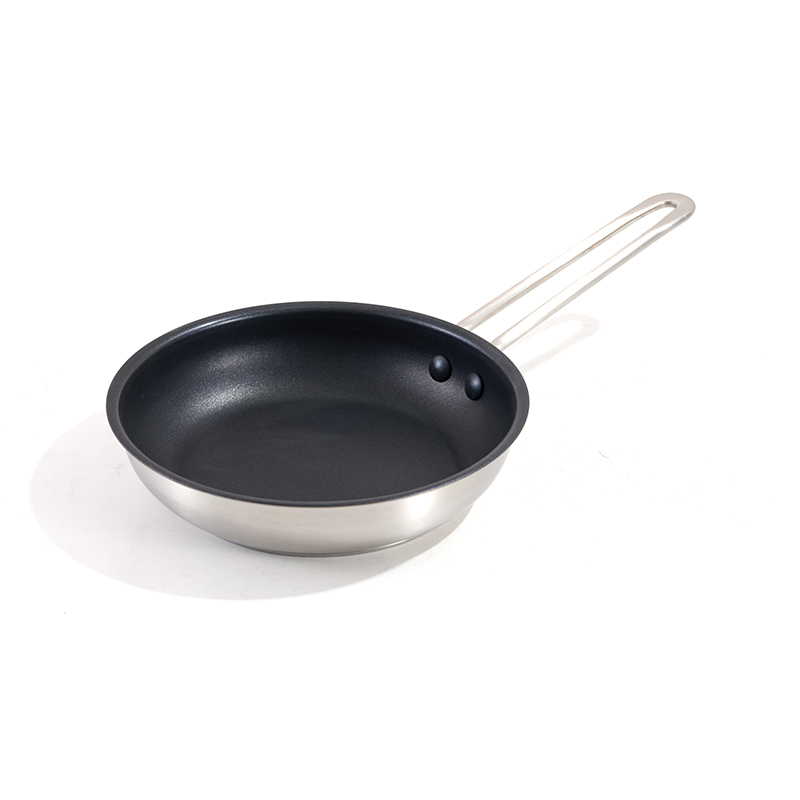
Non-Stick Stainless Steel Frying Pan
Product Overview
The non-stick stainless steel frying pan is identified by SKU AM02. Its principal material is 304 stainless steel, with a non-stick interior intended to support low-stick cooking and convenient maintenance. The exterior color is listed as silver, reflecting the natural appearance of polished or finished stainless steel. Available diameters include 20 cm, 24 cm, 26 cm, and 28 cm.
The pan uses dual stainless steel handles. This configuration can provide more balanced handling than a conventional long-handle design, particularly when the pan contains food or is moved from the cooking surface to a serving area. The handles are described as sturdy and heat-resistant, supporting flexible operation during everyday cooking.
The pan is compatible with all stovetops. This is an important feature for cookware buyers because kitchens may use gas, electric, ceramic, or induction cooking equipment. Broad compatibility can simplify product selection for retailers and reduce the need to maintain separate cookware lines for different markets.
The product is intended for professional chefs as well as home cooks. Its stainless steel exterior gives it a commercial-style appearance, while the non-stick interior addresses the convenience requirements of consumers who want easier food release and cleaning. The combination is suitable for cooking tasks that require moderate heat, controlled fat use, and simple maintenance.
Why the Material Combination Matters
304 Stainless Steel Exterior
304 stainless steel is widely used in cookware, food-service equipment, kitchen appliances, and food-contact applications because it offers a useful balance of corrosion resistance, strength, appearance, and cleanability. In a frying pan, the exterior material must withstand repeated contact with heat, cooking surfaces, moisture, oils, and cleaning routines.
A stainless steel exterior also gives a pan a more substantial and professional visual identity than many low-cost alternatives. It can complement modern kitchen appliances and coordinate with other stainless steel cookware. For retailers, the material name is familiar to consumers and can support clear product positioning in catalogs, online stores, showrooms, and restaurant-supply channels.
Stainless steel is also valued because it does not rely on a painted exterior to create its primary appearance. Properly maintained stainless steel can retain a clean, durable look over extended use. This may help reduce the visual deterioration that can occur when decorative surfaces are scratched, chipped, or exposed to excessive heat.
Non-Stick Interior
The interior coating is designed to reduce food adhesion. This is especially useful when preparing eggs, pancakes, fish, vegetables, delicate meat, or foods containing sauces and reduced liquids. A non-stick cooking surface can also allow users to cook with less oil, depending on the recipe and the desired result.
Food release is not only a convenience feature. It can improve consistency because food is less likely to tear or remain attached to the cooking surface. For busy restaurants, catering operations, and households, easier release may also make the cooking process faster and more predictable.
The non-stick interior should be treated as a performance surface rather than an indestructible layer. The supplied care guidance recommends using wooden, nylon, or non-stick-safe utensils instead of metal or sharp tools. Following this instruction is essential for protecting the coating and maintaining its intended performance.
Combining Two Different Benefits
The main product advantage comes from combining the two materials rather than relying on only one. Stainless steel supports exterior durability, broad compatibility, and a professional appearance. The non-stick interior supports easy food release and simpler cleaning. This makes the pan suitable for buyers who want more convenience than traditional stainless steel provides without giving up the visual and structural benefits of stainless steel construction.
Many cookware comparisons focus on one material as if it must serve every purpose. In practice, different parts of a pan have different requirements. The cooking surface needs controlled release and easy maintenance, while the exterior needs durability, heat exposure resistance, and compatibility with the cooking appliance. The AM02 design addresses these different requirements through a combined-material construction.
Advantages Compared with Common Competitor Designs
Compared with Basic Aluminum Non-Stick Pans
Aluminum is commonly used in entry-level non-stick cookware because it is lightweight and generally economical. However, some buyers prefer the stronger visual identity and robust feel of stainless steel. The stainless steel exterior of this frying pan can appeal to consumers who consider appearance, perceived durability, and kitchen coordination important purchasing factors.
For wholesalers and private-label brands, stainless steel can also support a more premium market position. A product with a 304 stainless steel exterior may be displayed as a higher-value alternative to a basic painted or lightweight aluminum pan. This can help retailers create product tiers, offering an accessible non-stick option and a more professional stainless steel option within the same category.
Another advantage is the pan’s broad stovetop compatibility. Aluminum cookware may require a separate magnetic base or other design adaptation for induction use. The product described here is specified as compatible with all stovetops, enabling a simpler sales message for international markets and mixed-appliance households.
Compared with Traditional Uncoated Stainless Steel Pans
Uncoated stainless steel pans are valued for high-temperature cooking, browning, and durability, but they often require more technique. Food can stick when the pan is not preheated correctly, when insufficient fat is used, or when the food is moved before a crust develops. Cleaning may also require more effort.
The non-stick interior of this frying pan offers a more accessible cooking experience. New cooks can prepare delicate food with less concern about severe sticking, while experienced cooks can use the pan for quick and convenient tasks. The result is a broader user base than that of a fully uncoated stainless steel pan.
At the same time, the stainless steel exterior preserves a traditional cookware appearance. This gives the product a balance between familiar stainless steel styling and modern non-stick convenience.
Compared with Single-Handle Frying Pans
A single long handle is practical for many frying tasks, but it can make a full pan more difficult to lift or control. A dual-handle format gives users another point of contact. This can be useful when moving the pan from a stovetop, transferring it to a counter, or presenting food directly from the cookware.
Dual handles can also make the pan easier to position in a compact kitchen or professional cooking line. The design may be especially attractive to buyers who use cookware for family-style serving, buffet preparation, or shared kitchen operations.
Handle design is not merely an aesthetic feature. It affects balance, storage, maneuverability, and user confidence. Sturdy, heat-resistant stainless steel handles support the product’s practical positioning and reinforce its professional appearance.
Compared with Narrow-Use Specialty Pans
Some pans are designed for a single task, such as crepe cooking, omelets, grilling, or sauce preparation. A general-purpose frying pan can offer better value for kitchens that need one versatile item to handle multiple recipes. The AM02 format can be used for frying, sautéing, searing, reheating, and shallow cooking.
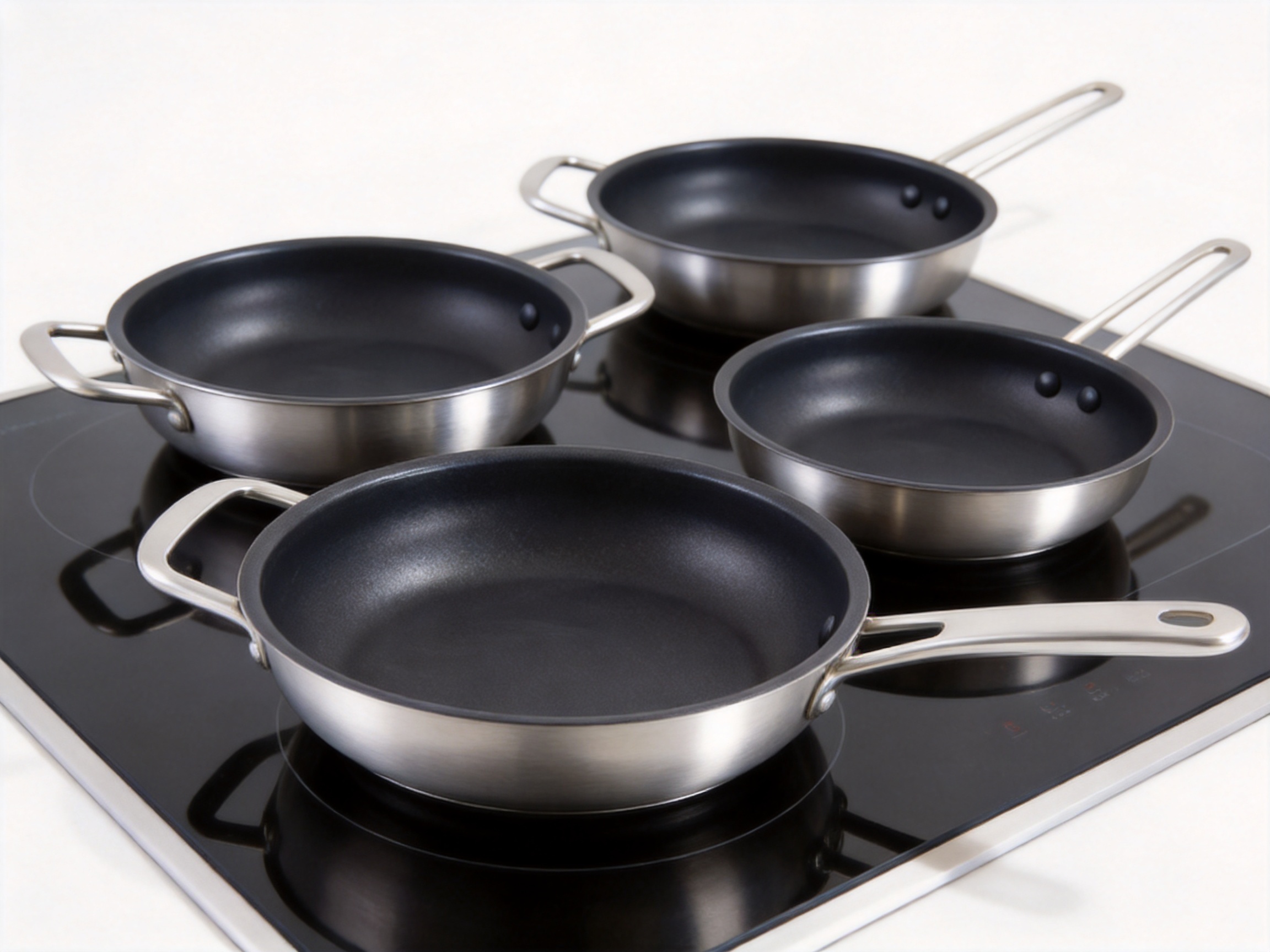
The availability of four sizes strengthens this versatility. A 20 cm pan can suit individual servings or small portions. A 24 cm pan may be appropriate for couples or compact kitchens. A 26 cm pan provides a balanced everyday format, while a 28 cm pan offers additional capacity for family meals and larger portions.
| Feature | Product Benefit | Buyer Value |
|---|---|---|
| 304 stainless steel exterior | Durable, professional appearance and corrosion-resistant construction | Supports premium positioning and long-term use |
| Non-stick interior | Improved food release and easier cleaning | Appeals to home cooks, hospitality users, and busy kitchens |
| Dual stainless steel handles | Balanced handling and flexible operation | Useful for moving, serving, and controlling the pan |
| All-stovetop compatibility | Suitable for different household and commercial cooking systems | Simplifies international distribution and retail messaging |
| Four size options | 20 cm, 24 cm, 26 cm, and 28 cm formats | Supports different recipes, consumers, and sales channels |
| SKU AM02 | Clear product identification | Supports inventory management and quotation procedures |
Cooking Performance and Everyday Applications
Breakfast Preparation
The pan is suitable for eggs, omelets, pancakes, bacon, sautéed mushrooms, and breakfast vegetables. The non-stick interior can be especially helpful for eggs and other foods that may adhere to an uncoated surface. The 20 cm or 24 cm size may be appropriate for individual or small portions, while larger sizes can support multiple servings.
For best results, users should preheat the pan gradually rather than exposing it to excessive heat. A moderate setting is generally appropriate for non-stick cooking. The pan should never be heated empty for an extended period because overheating can affect the cooking surface and may create unnecessary stress on the cookware.
Vegetable and Stir-Fry Cooking
Vegetables can be sautéed with a small amount of oil, butter, or another cooking fat. The pan’s size options make it possible to choose between compact portion control and larger batch preparation. The stainless steel exterior can also coordinate with other cookware used for boiling, steaming, or preparation.
Users should avoid dragging sharp or metal utensils across the interior. Wooden, nylon, or non-stick-safe utensils are recommended. These utensils can turn and lift food while reducing the possibility of scratches.
Fish and Delicate Foods
Fish fillets, tofu, soft vegetables, and other delicate foods often benefit from a surface that supports gentle release. The non-stick interior can help users turn these foods with less tearing, particularly when the pan is used at a controlled temperature and the food is allowed to cook sufficiently before turning.
Although the coating supports easier release, it does not eliminate the need for correct cooking technique. Excessive heat, insufficient preheating control, overcrowding, and unsuitable utensils can reduce performance. Clear care instructions are therefore an important part of the product experience.
Meat and Poultry
The pan can be used for shallow frying and everyday browning of meat and poultry. Users who require very high-temperature searing may prefer an uncoated cast iron or stainless steel pan for certain recipes. However, for routine cooking where convenient release and easy cleaning are priorities, a non-stick stainless steel frying pan offers a useful compromise.
The 26 cm and 28 cm sizes can provide additional room for larger portions. Avoiding overcrowding helps food brown more evenly and reduces the amount of moisture released into the pan.
Sauces and Finishing Work
A frying pan is often used after another cooking step to combine ingredients, reduce a sauce, or finish a meal. The non-stick interior can simplify the cleanup associated with sticky ingredients. The dual handles can also make the pan easier to move from the stovetop to the preparation area.
When using acidic ingredients, moisture, or salt, proper cleaning after cooking is recommended. Hand washing with hot, soapy water and a soft cloth or sponge helps preserve the appearance of the cookware.
Manufacturing Strengths and Production Capabilities
Material Selection as a Manufacturing Foundation
Reliable cookware begins with controlled material selection. The use of 304 stainless steel establishes a defined material direction for the exterior. For professional buyers, clear material identification is important because it supports product documentation, quality communication, packaging development, and market positioning.
A capable manufacturer must manage material consistency from incoming raw materials through forming, surface finishing, assembly, inspection, and packaging. Each stage affects the finished product. A high-quality stainless steel exterior is not created by material choice alone; it also depends on accurate forming, suitable joining methods, careful finishing, and consistent quality control.
Forming and Dimensional Consistency
Cookware manufacturing requires controlled forming to achieve the correct diameter, depth, balance, and shape. A pan that is not dimensionally consistent may sit unevenly, fit poorly on cooking surfaces, or create difficulties during packaging and stacking. Consistency is particularly important when a buyer is ordering multiple sizes under one product series.
For the AM02 product, the four available diameters can be managed as a coordinated size range. This allows buyers to create a complete product listing while maintaining a consistent visual identity. It also supports mixed-size orders for retailers and distributors that want to serve different customer segments.
Manufacturing control should include checks for surface condition, handle alignment, pan balance, dimensions, and overall appearance. These checks help reduce variation between production batches and support more dependable customer experiences.
Non-Stick Surface Application
The application of a non-stick interior requires attention to surface preparation, coating uniformity, curing, and inspection. The performance of a non-stick pan depends not only on the coating formulation but also on how consistently it is applied and processed.
A professional manufacturing process should aim for an even interior surface without visible defects, irregular coverage, bubbling, or contamination. The final coating should be evaluated for appearance and adherence according to the manufacturer’s internal quality procedures and applicable customer requirements.
Because the pan is designed for repeated use, the manufacturing process must be aligned with the care instructions. Buyers should understand that non-stick cookware performs best when used with suitable utensils, moderate heat, and appropriate cleaning methods. A well-made pan and responsible use work together to protect the product’s service life.
Handle Assembly and Ergonomic Considerations
Dual stainless steel handles require accurate positioning and secure attachment. Misaligned handles can affect balance and make the pan uncomfortable or unsafe to move. Handle assembly should therefore be treated as a functional manufacturing stage rather than a decorative finishing step.
Sturdy, heat-resistant handles support flexible use, but users should still follow safe handling practices. The handles may become hot depending on the cooking appliance, cooking duration, and position relative to the heat source. Buyers can reinforce safe use through packaging instructions, product manuals, and retail content.
Surface Finishing and Presentation
The exterior finish contributes strongly to the product’s shelf appeal. A clean silver stainless steel appearance can communicate hygiene, modernity, and professional quality. Consistent finishing is particularly important for OEM and private-label customers because visual differences between batches may affect consumer perception.
Surface inspection should identify visible dents, deep scratches, uneven polishing, discoloration, and other defects. Packaging must also protect the exterior and handles during storage and transportation. A carefully manufactured pan can lose commercial value if it arrives with avoidable shipping damage.
Inspection and Order Management
For international buyers, production reliability includes more than the physical product. It also includes communication, sample confirmation, production scheduling, packaging coordination, documentation, and shipment preparation. A supplier that can manage these stages as part of one process may reduce the complexity of sourcing.
Order management is especially important when buyers request multiple sizes, customized packaging, branded labels, or product combinations. Clear SKU identification, such as AM02 for this frying pan, helps organize quotations, samples, purchase orders, cartons, and warehouse records.
Strengths of a One-Stop Kitchenware Supplier
The manufacturer behind this product operates from Zhejiang, China, a region known for manufacturing and export activity. Its product scope includes aluminum cookware, stainless steel cookware, cast iron cookware, and kitchen utensils. This category breadth gives buyers the opportunity to develop coordinated cookware collections rather than sourcing every item from a different supplier.
One-stop sourcing can reduce communication steps. A buyer developing a kitchenware range may need frying pans, saucepans, stockpots, cast iron products, cooking tools, and accessories. A supplier with several product categories can help the buyer compare styles, materials, sizes, packaging concepts, and order requirements within a more unified sourcing process.
OEM and ODM Support
OEM service is valuable for brands that already have product specifications, packaging guidelines, or design requirements. ODM service can be useful for buyers who want assistance developing a product concept, adapting an existing item, or building a coordinated cookware series.
For this frying pan, customization possibilities may be discussed according to the buyer’s needs and manufacturing capabilities. These may include packaging design, labeling, carton configuration, handle details, size combinations, color presentation, and product documentation. Specific customization should always be confirmed during quotation and sample approval.
Flexible Minimum Order Quantities
Flexible minimum order quantities can be important for small and medium-sized kitchenware buyers. New brands may not want to commit immediately to very large volumes, while established distributors may need substantial quantities for broader retail distribution. A flexible approach can support staged market testing, seasonal launches, and gradual product expansion.
Buyers should request clear information about minimum quantities for standard products, customized products, packaging, and mixed-size orders. They should also confirm whether different sizes can be combined within one purchase order.
Certification Assistance
Different countries and sales channels may require different documents, testing procedures, or compliance information. Certification assistance can help buyers understand the documentation required for their target markets. The exact requirements depend on the destination, product construction, coating system, packaging, and applicable regulations.
It is important for buyers to distinguish between assistance with certification and a claim that a product already holds a particular certificate. Appropriate documentation should be reviewed and verified for the exact product model, production batch, and destination market.
Sustainable and Healthy Product Development
Modern cookware buyers increasingly consider material responsibility, product longevity, packaging efficiency, and healthy cooking practices. A product designed for repeated use can support a more durable alternative to disposable cooking equipment. Long service life depends on both manufacturing quality and correct consumer care.
The manufacturer’s stated focus on sustainable and healthy product development creates a basis for discussion around material selection, coating requirements, packaging optimization, and product durability. Buyers seeking sustainability claims should request specific evidence and measurable details before using such claims in marketing materials.
Care and Maintenance Instructions
Before First Use
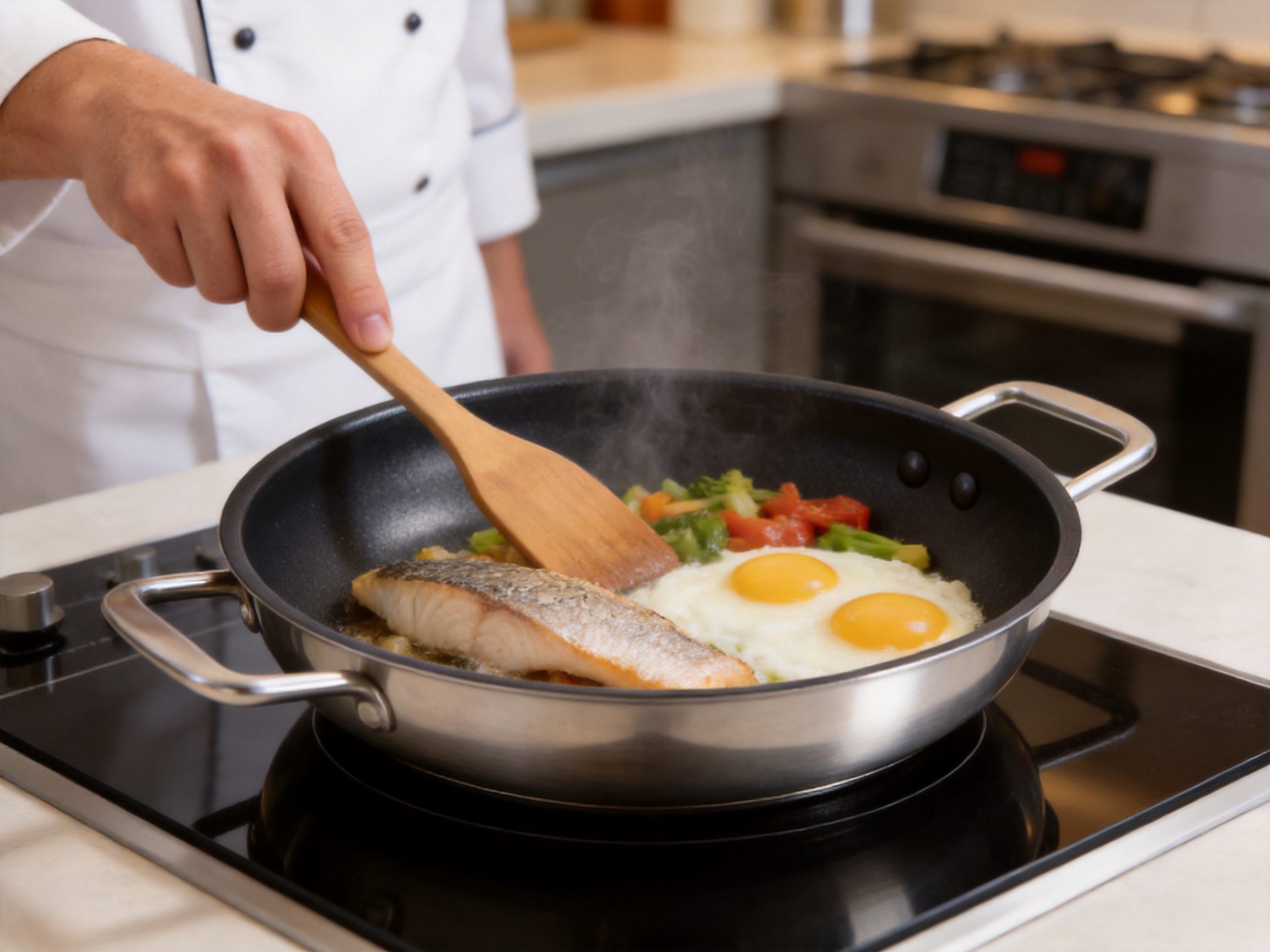
The pan should be washed before its first use. This removes dust or residue that may have accumulated during manufacturing, packaging, storage, or transportation. A gentle wash with hot, soapy water and a soft cloth or sponge is appropriate.
After washing, rinse the pan thoroughly and dry it completely. Avoid using abrasive powders, steel wool, harsh scouring pads, or sharp cleaning tools on the non-stick interior.
Use Suitable Utensils
Metal and sharp cooking utensils should not be used with the pan. Wooden, nylon, silicone, or other utensils specifically identified as suitable for non-stick cookware are preferable. Careful utensil selection is one of the simplest ways to reduce the risk of scratching.
Utensils should also be used gently. Excessive force, cutting directly inside the pan, or scraping hardened food with a sharp edge can damage the cooking surface. If food has dried in the pan, soaking it with warm water can help loosen the residue before cleaning.
Avoid Empty Overheating
The pan should not be overheated while empty. Empty cookware can reach a high temperature quickly, especially on powerful gas, induction, or electric cooking zones. Excessive heat may affect the non-stick surface and can create unnecessary stress for the cookware.
Users should place the required cooking fat or ingredients in the pan according to the recipe and begin with a controlled heat setting. Gradual heating is generally more suitable for maintaining a non-stick cooking surface.
Control the Heat Source
The flame or heat source should not extend beyond the base of the pan. Heat that rises around the sides can expose the handles and exterior surfaces to unnecessary temperatures. It may also waste energy and make handling less comfortable.
Correct burner sizing is therefore important. The cooking zone should match the base of the pan as closely as practical. On gas stoves, the flame should remain beneath the base rather than spreading around the sides.
Responding to Severe Overheating
If the pan severely overheats, users should turn off the cooker and allow the pan to cool completely. They should not touch the cookware immediately or attempt to move it while it is extremely hot. Rapid cooling with cold water may cause thermal stress and is not recommended.
Once the pan has cooled, it should be inspected. If there are visible changes to the coating, unusual discoloration, or other damage, the user should follow the manufacturer’s guidance before returning it to service.
Hand Washing
Hand washing is recommended to preserve the appearance of the cookware. Use hot, soapy water with a soft cloth or sponge. Gentle cleaning helps protect both the non-stick interior and the stainless steel exterior.
After washing, dry the pan to reduce water spots and maintain its appearance. If several pans are stacked, placing a soft protective layer between them can help prevent unnecessary surface contact during storage.
Choosing the Appropriate Size
| Diameter | Typical Use | Suitable Buyer Profile |
|---|---|---|
| 20 cm | Single servings, eggs, small portions, compact cooking | Students, individuals, small kitchens, hotel rooms where permitted |
| 24 cm | Small family meals, breakfast dishes, moderate portions | Couples, apartments, everyday home kitchens |
| 26 cm | General-purpose frying, sautéing, and family cooking | Households, retail starter sets, hospitality applications |
| 28 cm | Larger portions, multiple servings, batch cooking | Families, restaurants, catering operations, cookware sets |
The 20 cm format is compact and can be useful where storage space is limited. It may also be suitable for targeted retail products such as breakfast pans or individual cooking pans. The 24 cm size provides additional cooking area without becoming overly large for a typical household.
The 26 cm pan is a balanced everyday option. It can serve as the central size in a cookware collection because it offers enough room for common recipes while remaining manageable for most users. The 28 cm pan is better suited to larger portions and buyers who regularly cook for several people.
Retailers may choose to stock all four sizes to create a complete range. Alternatively, they may begin with the 24 cm and 26 cm sizes as core products, then add the 20 cm and 28 cm formats according to customer demand.
Positioning the Product for Different Markets
Home Kitchen Retail
For household consumers, the strongest selling points are easy food release, convenient cleaning, all-stovetop compatibility, and a durable stainless steel appearance. Product descriptions should explain the benefits without suggesting that the coating is maintenance-free or immune to damage.
Packaging can emphasize the four available sizes and show common uses such as eggs, vegetables, fish, and shallow-fried meals. Clear care instructions should be included because correct use has a direct effect on customer satisfaction and product longevity.
Professional and Hospitality Channels
Professional users often value consistency, easy cleaning, maneuverability, and replacement availability. The pan can be positioned for breakfast stations, light sautéing, guesthouse kitchens, culinary training environments, and selected restaurant applications.
Professional kitchens may use different pan materials for different tasks. This product is particularly suitable where controlled cooking, convenient release, and efficient cleanup are more important than extremely high-temperature searing.
Private-Label Brands
Private-label buyers can use the pan as part of a broader cookware collection. The silver stainless steel appearance can create visual consistency across frying pans, saucepans, stockpots, and utensils. OEM packaging and labeling can help a brand present the product as part of its own kitchenware identity.
Before placing a customized order, buyers should define the target market, packaging language, size mix, carton requirements, care information, and quality expectations. Sample approval is especially important for confirming appearance, handle construction, interior finish, dimensions, and packaging protection.
Wholesale and Distribution
Wholesalers can benefit from the product’s broad appeal. It combines familiar stainless steel styling with a convenient non-stick cooking surface, making it easier to introduce to different customer groups. The four size choices also support tiered purchasing and assortment planning.
Distributors should maintain accurate product data, including SKU, material, color, size range, compatible stovetops, care instructions, and packaging information. Consistent product information reduces misunderstandings between the supplier, warehouse, retailer, and final consumer.
Quality Evaluation Checklist for Buyers
When evaluating samples or production shipments, buyers should inspect the stainless steel exterior for dents, deep scratches, uneven finishing, and discoloration. The pan should sit securely and should not show obvious distortion when placed on a flat surface.
The non-stick interior should be checked for consistent coverage, visible defects, scratches, bubbles, peeling, or irregular texture. The buyer should confirm that the interior matches the approved sample and that the surface is clean and free from foreign material.
The dual handles should be aligned, firmly attached, and free from sharp edges. Buyers should verify that the pan feels balanced when lifted and that the handles do not wobble under normal handling.
Dimensions should be checked against the ordered size. The product should also be reviewed for correct SKU identification, packaging, labeling, care instructions, and carton markings. For export orders, the buyer should confirm that shipping packaging provides sufficient protection during handling and transportation.
Documentation should be reviewed according to the destination market. Where certification or testing is required, buyers should request documentation relevant to the exact product and intended sales region.
Why Supplier Experience Matters
Cookware sourcing involves several interconnected decisions. A buyer must evaluate material, construction, coating, size, handle design, packaging, production capacity, documentation, and delivery. A supplier with experience across aluminum cookware, stainless steel cookware, cast iron cookware, and kitchen utensils may be better positioned to support a coordinated procurement plan.
A supplier’s value is not limited to producing one pan. It can also include helping buyers compare options, develop product ranges, organize samples, refine packaging, and prepare products for different markets. This broader role is especially useful for small and medium-sized companies that may not have large product-development or quality teams.
The manufacturer’s stated ambition is to become an R&D-driven supply chain partner rather than simply an order-taking business. For buyers, this suggests an opportunity to discuss product improvement, new combinations, market-specific requirements, and longer-term sourcing cooperation.
Any such cooperation should be supported by clear specifications, written approvals, inspection procedures, and agreed commercial terms. Strong supplier relationships are built through transparent communication and consistent execution.
Q&A
What material is used for the frying pan?
The product information identifies 304 stainless steel as the primary material. The pan has a stainless steel exterior and a non-stick interior cooking surface.
Is the pan compatible with induction cookers?
The product is described as compatible with all stovetops. Buyers should still confirm the exact base construction and technical requirements for their target market when preparing product documentation or packaging.
Which sizes are available?
The available sizes are 20 cm, 24 cm, 26 cm, and 28 cm. These sizes support individual cooking, compact household use, everyday family meals, and larger portions.
Can metal utensils be used?
No. Metal or sharp cooking utensils should not be used because they may scratch or damage the non-stick interior. Wooden, nylon, silicone, or other non-stick-safe utensils are recommended.
How should the pan be cleaned?
Use hot, soapy water with a soft cloth or sponge. Hand washing is recommended to preserve the appearance and protect the cooking surface. Abrasive cleaners and sharp scrubbing tools should be avoided.
Can the pan be heated while empty?
The pan should not be overheated while empty. Users should avoid excessive heat and should select a controlled setting suitable for the recipe and cooking surface.
What should a user do if the pan overheats?
If the pan severely overheats, turn off the cooker and leave the pan to cool completely. Do not touch or move it while it is extremely hot. After cooling, inspect the pan before further use.
Can the pan be used in a microwave?
No. The care instructions specify that the pan should not be used in a microwave.
What is the purpose of the dual handles?
The dual stainless steel handles provide additional balance and flexibility when lifting, transferring, positioning, or serving with the pan. Handle temperature can vary during cooking, so users should follow safe handling practices.
Is the pan suitable for professional kitchens?
It is described as suitable for professional chefs and home cooking. Professional users should select the appropriate size and cooking method for their operation, especially when very high-temperature searing or heavy-duty commercial use is required.
What makes this product different from a basic non-stick aluminum pan?
The product combines a food-grade 304 stainless steel exterior with a non-stick interior. This offers a more professional stainless steel appearance and broad stovetop positioning while retaining the convenience of easier food release and cleaning.
Can the product be customized?
The supplier offers OEM and ODM customization services. Specific options, such as packaging, labeling, product details, and order quantities, should be discussed and confirmed during the quotation and sample-approval process.
Can buyers source other kitchenware products from the same supplier?
Yes. The supplier’s product scope includes aluminum cookware, stainless steel cookware, cast iron cookware, and kitchen utensils. This supports one-stop sourcing for coordinated kitchenware collections.
Conclusion
The non-stick stainless steel frying pan is designed for buyers who want a practical balance of durability, convenience, versatility, and professional appearance. Its 304 stainless steel exterior provides a strong material identity, while the non-stick interior supports easier food release and cleaning. Dual stainless steel handles improve handling flexibility, and all-stovetop compatibility broadens its appeal across household and commercial markets.
Compared with basic aluminum non-stick pans, it offers a more premium stainless steel presentation. Compared with traditional uncoated stainless steel pans, it provides a more accessible cooking surface. Compared with single-handle designs, its dual handles can improve balance and transfer convenience. The four available sizes allow buyers to create a focused product listing or a complete frying-pan range.
Product performance depends on both manufacturing quality and correct care. Controlled material selection, accurate forming, consistent coating application, secure handle assembly, surface inspection, and protective packaging all contribute to a reliable finished product. Users should protect the non-stick interior by avoiding metal utensils, empty overheating, sharp tools, abrasive cleaning, and excessive heat.
For wholesalers, retailers, professional kitchen suppliers, and private-label brands, the product is supported by a broader Zhejiang-based kitchenware supply capability. The supplier offers multiple cookware categories, one-stop sourcing, OEM and ODM services, flexible MOQ options, certification assistance, and a stated focus on sustainable and healthy product development.
With clear specifications, appropriate quality checks, and suitable market positioning, this frying pan can serve as a dependable component of a modern cookware collection. It is not intended to replace every specialized pan, but it provides a strong everyday solution for cooking tasks where stainless steel durability and non-stick convenience are both valuable.
References
1. Product specification sheet for non-stick stainless steel frying pan, SKU AM02.
2. Manufacturer-provided care and maintenance instructions for non-stick cookware.
3. General food-contact cookware material guidance concerning 304 stainless steel.
4. General cookware handling principles for non-stick surfaces, including utensil selection and temperature control.
5. General kitchenware quality-control practices covering dimensional inspection, surface finishing, handle assembly, coating appearance, and export packaging.
6. General product-development considerations for OEM, ODM, private-label, and one-stop kitchenware sourcing.
Product: Non-Stick Stainless Steel Frying Pan
Recommended Articles
Product Category
Related products
-
-
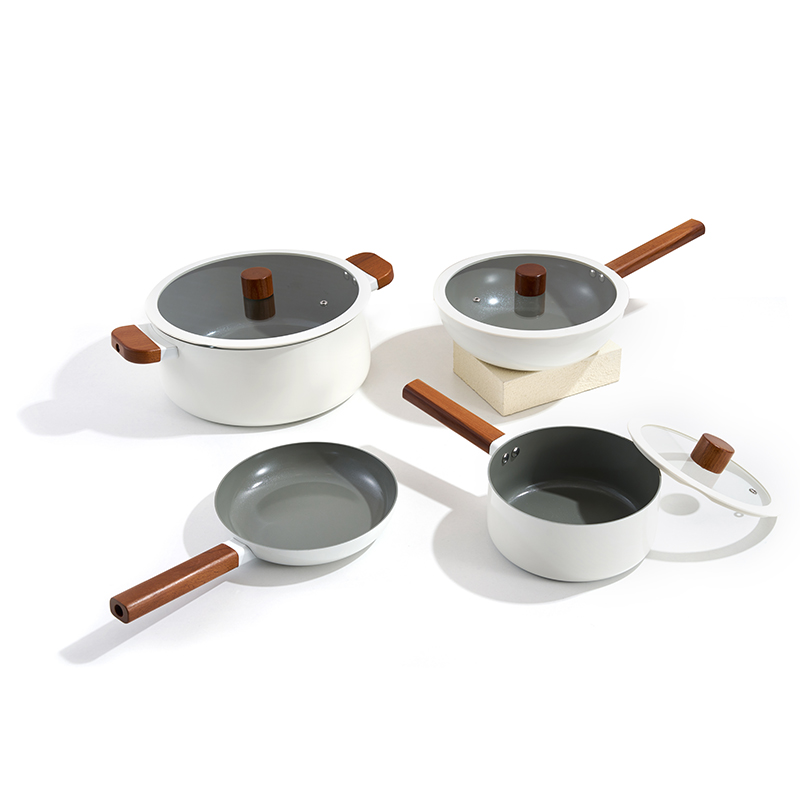
This cookware set has a ceramic non-stick inner liner, a heat-resistant wooden h...
See Details -
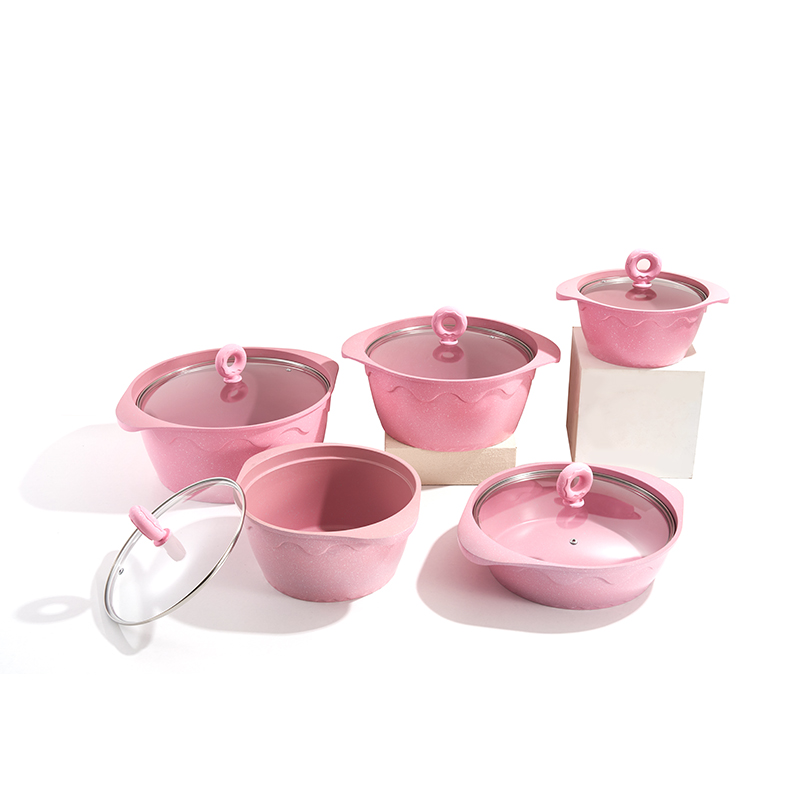
This cookware set is made of food-grade non-stick material, with a unique eye-ca...
See Details -
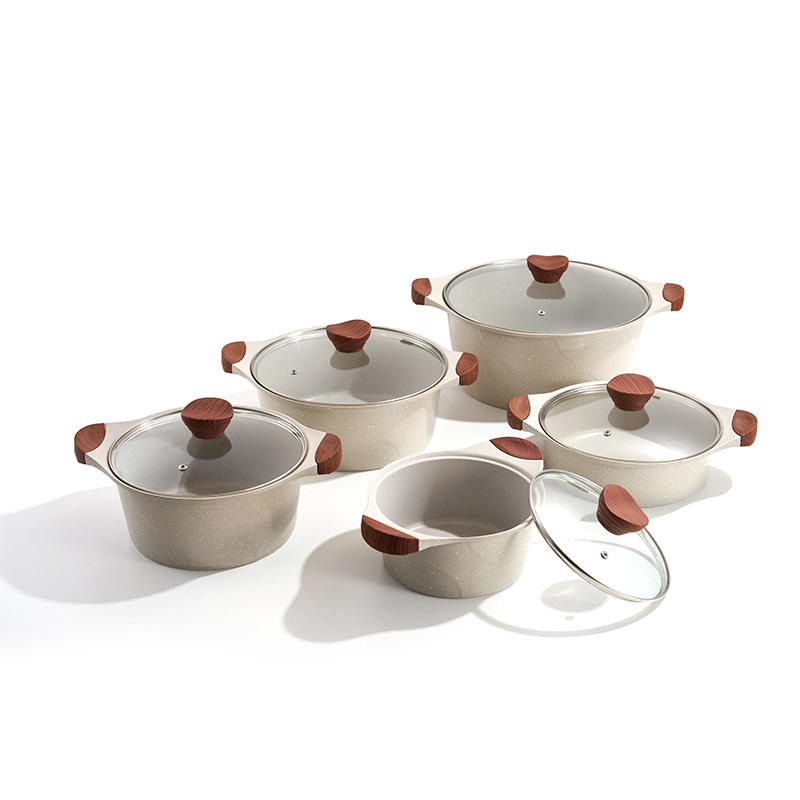
This off-white cookware set is made of wear-resistant non-stick material, with w...
See Details
Whether you're looking for bulk purchases or have any custom requirements, We are here to offer the best
solutions for you.
tiffany.zhong@echocn-trading.com
PHONE
+86-19561173975
+86-19557020621 (Hazel Wu)
ADD
Room 301, Unit 3014, No. 175 Qifeng Avenue, Wenqiao Town, Taizhou, Zhejiang, China
Fill Out the Form for More Information
Copyright © Zhejiang Echo Industry And Trade Co., Ltd.
All Rights Reserved.

China Cookware Set Manufacturer