
 en
 Español

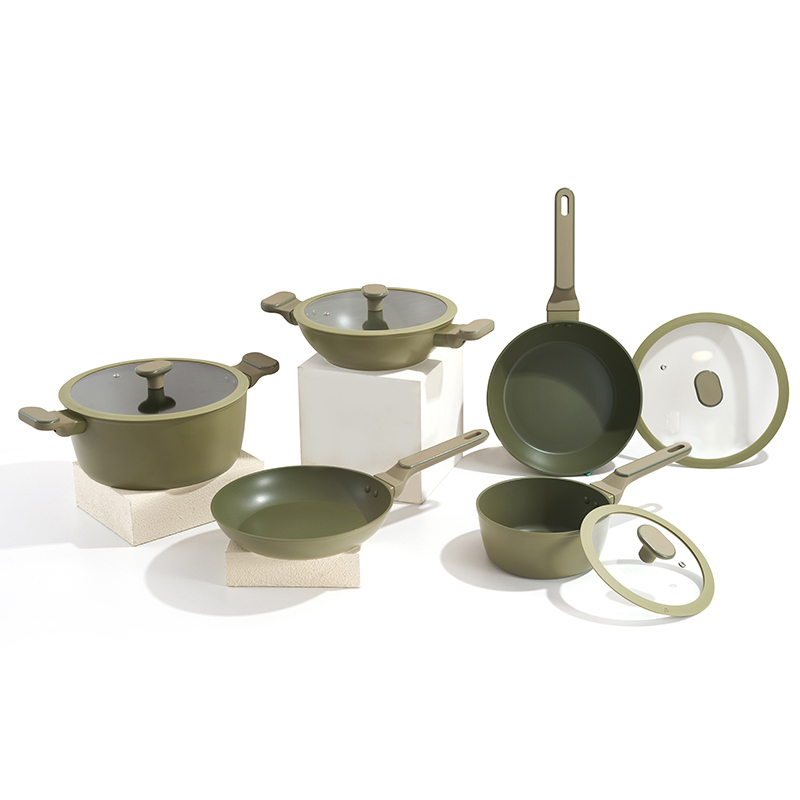
This cookware set features a non-stick coating, even heat conduction, and multi-...
See Details
Cast Iron Shallow Pot with Glass Lid: Reliable Heat, Practical Design, and Flexible Kitchenware Supply
Date:Sep 13, 2026
A well-designed shallow pot can become one of the most useful pieces in a modern kitchen. It can sauté vegetables, brown meat, simmer sauces, prepare one-pan meals, and serve food directly at the table. The cast iron shallow pot with glass lid described in this article combines the thermal performance of cast iron with the convenience of a transparent tempered glass cover. Its broad cooking surface, low profile, side handles, and durable black finish make it suitable for home kitchens, food-service environments, cookware retailers, and private-label kitchenware programs.
The product belongs to the iron cookware category and is supplied by Zhejiang Echo Industry And Trade Co., Ltd., a Zhejiang-based kitchenware manufacturer and exporter. The company provides aluminum cookware, stainless steel cookware, cast iron cookware, and kitchen utensils, allowing buyers to source multiple product categories through one supply partner. In addition to standard products, its business model includes one-stop sourcing, ODM and OEM customization, product certification assistance, flexible minimum order quantities, and the development of sustainable and healthy kitchenware solutions.
This article examines the product’s design, cooking performance, care requirements, manufacturing considerations, commercial advantages, and purchasing value. It also explains how a specialized cookware supplier can support importers, wholesalers, retailers, restaurant suppliers, and brand owners seeking dependable cast iron products.
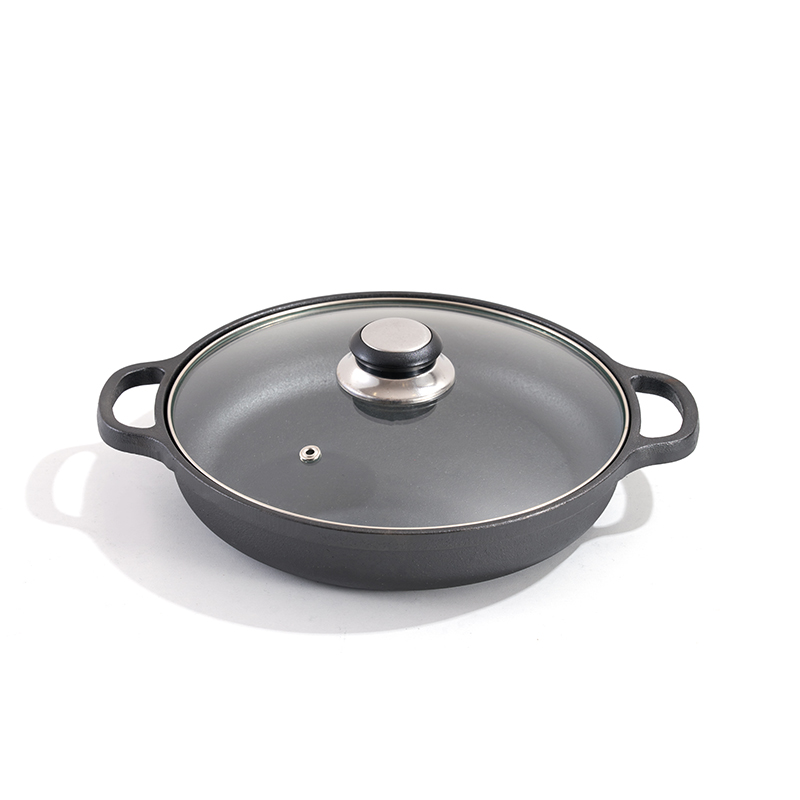
Cast Iron shallow pot with Glass Lid
1. Product Overview
The cast iron shallow pot with glass lid is a low-profile cooking vessel designed for tasks that benefit from a wide base and relatively shallow depth. Unlike a tall stockpot, its form makes it easier to spread food across the cooking surface. This is especially useful for sautéing, browning, shallow simmering, reducing sauces, and preparing meals that require frequent stirring or visual monitoring.
The pot is made from cast iron and supplied in black. Cast iron is recognized for its mass, durability, and ability to retain heat. Once the cookware has reached the desired temperature, it can maintain heat effectively, helping food continue cooking with less fluctuation when ingredients are added. This characteristic is valuable when preparing dishes that require steady heat rather than rapid temperature changes.
The product is supplied with a tempered glass lid. Transparent glass allows users to observe the cooking process without repeatedly lifting the lid. This can help retain heat and moisture during simmering while still giving the cook a clear view of the contents. The lid also supports more convenient cooking because users can check the progress of food, monitor liquid levels, and observe bubbling without interrupting the cooking environment.
Comfortable side handles are included for handling and repositioning the pot. Because cast iron is naturally heavy compared with many aluminum or thin stainless steel products, secure handles are particularly important. They allow the user to maintain a more stable grip when moving the cookware from the stovetop or rotating it during cooking.
The stated application is gas stovetop cooking. Buyers should treat this specification as the confirmed use case unless the supplier provides additional testing or compatibility information for other heat sources. The product should not be used in a microwave, and users should ensure that the flame does not extend beyond the base.
2. Core Specifications
The product information lists SKU XY01, black color, cast iron material, a carton quantity of one unit, a carton size of 28 by 9.5 by 28.5 centimeters, a carton volume of 0.0076 cubic meters, and a carton weight of 2.92 kilograms. Several size options are provided, including lengths of 28, 30, 33, and 35 centimeters. The listed heights range from 2 to 3 centimeters, depending on the size.
The specification sheet also identifies the versions as without lid and single bottomed, while the product title and product description identify the item as a shallow pot with a glass lid. This difference should be clarified before placing a commercial order. It may indicate that the dimensional data describes the cast iron body separately from the lid, or that the document combines information for multiple configurations. A professional buyer should request a final specification sheet confirming the complete assembled product, lid inclusion, body dimensions, total height, net weight, gross weight, and packaging configuration.
| Specification | Stated Information | Buyer Verification Point |
|---|---|---|
| Product type | Cast iron shallow pot with glass lid | Confirm the lid is included in the ordered configuration |
| SKU | XY01 | Use the SKU in quotations, samples, and purchase orders |
| Category | Iron cookware | Confirm product classification for customs and retail listings |
| Color | Black | Confirm surface finish and color consistency |
| Material | Cast iron | Request material and coating details when required |
| Size options | 28, 30, 33, and 35 centimeters listed | Confirm body diameter or length and usable cooking area |
| Height | Approximately 2 to 3 centimeters listed | Confirm whether the measurement refers to the body without the lid |
| Stovetop use | Suitable for gas stovetop cooking | Confirm compatibility with other heat sources before marketing |
| Carton quantity | One unit per carton | Confirm inner packaging and master carton arrangement |
| Carton size | 28 by 9.5 by 28.5 centimeters | Confirm whether this applies to one specific size |
| Carton weight | 2.92 kilograms | Confirm net and gross weight separately |
Clear specification control is essential for importers and distributors. Cast iron cookware can have meaningful differences in wall thickness, base diameter, lid fit, handle design, and weight. A supplier that provides a structured confirmation process helps reduce misunderstandings between product development, purchasing, logistics, and retail teams.
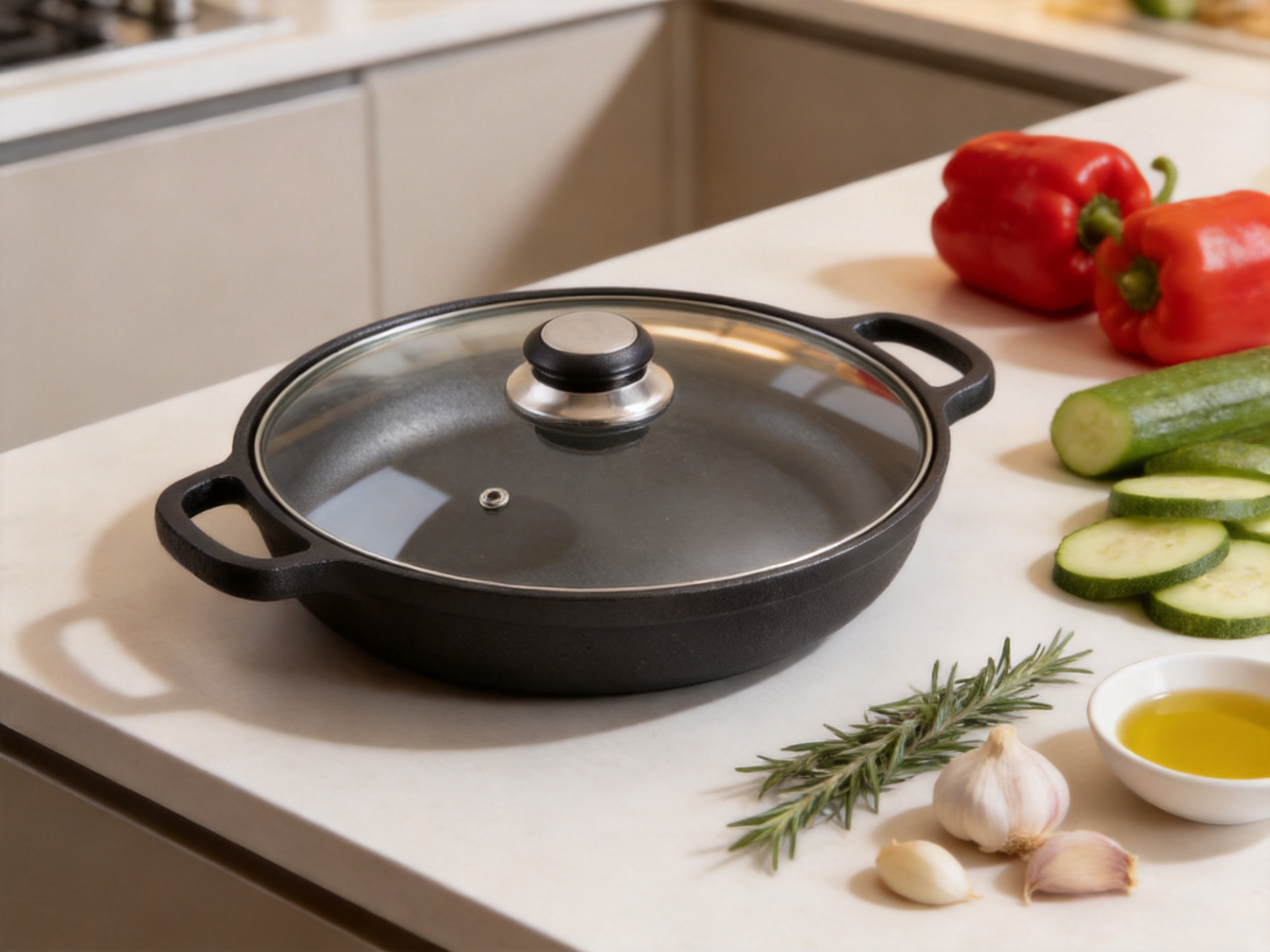
3. Why a Shallow Cast Iron Pot Is Valuable
3.1 Broad Cooking Surface
The shallow format gives users a broad cooking area in relation to the height of the vessel. This makes it easier to arrange ingredients in a single layer. Browning meat, sautéing onions, searing mushrooms, reducing gravy, or cooking vegetables can be more convenient when food is not stacked too deeply.
A broad base can also improve access during stirring. The user can reach the center and edges with a wooden, nylon, or non-stick utensil without working around the tall sides of a conventional pot. For one-pan meals, the format offers a practical balance between frying-pan access and pot-like capacity.
3.2 Heat Retention
Cast iron is valued for its ability to absorb and retain heat. This can help stabilize cooking temperatures during sautéing and simmering. When cold ingredients are introduced, a heavy cast iron body may lose heat more slowly than a lightweight pan. This does not eliminate the need for correct preheating or temperature control, but it can create a steady cooking environment.
Heat retention is also useful for serving. Food may remain warm for longer after the cookware is removed from the burner. However, the pot and handles can remain hot for an extended period, so users must handle the cookware carefully and use appropriate protection.
3.3 Moisture and Heat Control Through the Glass Lid
The transparent lid improves visibility while the food cooks. A covered cooking environment can help retain moisture during simmering and reduce splashing during some preparation tasks. Because the lid is transparent, the user can observe the dish without lifting it as frequently.
The tempered glass construction is intended to provide improved resistance to ordinary cooking conditions compared with untreated glass. Nevertheless, glass cookware lids should be handled carefully. Sudden thermal shock, impact, dropping, or misuse can damage the lid. Buyers should request final instructions concerning temperature limits, knob construction, replacement availability, and whether the lid is designed for oven use. The supplied product information confirms gas stovetop cooking but does not confirm oven use.
3.4 Stable Side Handles
The side handles support safer repositioning and serving. A shallow pot is often moved while it contains hot food, so handle geometry and attachment quality matter. The handles should be checked for secure connection, comfortable clearance from the heat source, and sufficient space for an oven mitt or protective cloth.
For commercial buyers, handles are also an important part of product inspection. A quality-control checklist should include handle alignment, attachment strength, surface smoothness, and resistance to loosening during normal handling. These checks help protect the end user and reduce claims related to damaged or unstable components.
4. Advantages Compared with Competing Cookware
4.1 Compared with Lightweight Aluminum Cookware
Aluminum cookware is often selected for its low weight and quick response to temperature changes. It can be efficient for fast cooking, but lightweight construction may cool more quickly when cold ingredients are added. The cast iron shallow pot offers a different performance profile: greater mass, stronger heat retention, and a more substantial cooking feel.
For dishes that require a steady simmer or consistent browning, the cast iron format can be appealing. It may also provide a longer service life when correctly maintained. The trade-off is weight. Retailers should present the product as a durable, heat-retaining cookware option rather than as a lightweight everyday pan.
4.2 Compared with Thin Stainless Steel Cookware
Stainless steel is known for its corrosion resistance, clean appearance, and broad compatibility with many kitchen environments. However, thin stainless steel cookware may develop hot spots unless it includes a multilayer or encapsulated base. The cast iron body naturally offers high thermal mass and can provide more stable heat once fully warmed.
The glass lid gives the cast iron product a convenience advantage over some open cookware. Users can cover food while still viewing it. At the same time, stainless steel may require less specialized handling and may be easier to lift. The choice depends on whether the customer prioritizes heat retention and durability or lighter weight and quick response.
4.3 Compared with Traditional Frying Pans
A frying pan generally has a broad base and low sides, making it suitable for searing and sautéing. The shallow pot offers similar access to the cooking surface while adding a lid and a more contained structure. This makes it better suited to dishes that transition from browning to simmering.
The product can therefore fill a gap between a frying pan and a conventional casserole or saucepan. It supports several stages of cooking in one vessel, reducing the need to transfer food between pans. This multi-function positioning is attractive for consumers with limited storage space and for retailers seeking products with multiple use cases.
4.4 Compared with Deep Cast Iron Pots
Deep cast iron pots are useful for stews, soups, braises, and large-volume cooking. However, they may be less convenient for tasks requiring direct access to a wide surface. The shallow model is easier to use for browning, shallow frying, sautéing, and serving family-style dishes.
The two formats should not be viewed as direct replacements. Instead, the shallow pot extends a cast iron cookware range. It offers a specialized shape for customers who want cast iron performance without the depth of a Dutch oven or stockpot.
| Product Type | Main Strength | Potential Limitation | Positioning of the Shallow Cast Iron Pot |
|---|---|---|---|
| Lightweight aluminum pan | Low weight and rapid heat response | Lower heat retention in lightweight formats | Emphasize durability and stable heat rather than lightness |
| Thin stainless steel pan | Corrosion resistance and easy visual maintenance | May require a special base to reduce hot spots | Emphasize cast iron thermal mass and cooking stability |
| Non-stick frying pan | Easy release and convenient cleaning | Coating requires careful utensil use and temperature control | Emphasize robust cast iron construction and long-term use |
| Traditional frying pan | Open access for sautéing and frying | May lack a matching lid or simmering function | Offer a covered, multi-stage cooking solution |
| Deep cast iron pot | High capacity for soups and stews | Less convenient for broad-surface cooking | Offer a lower-profile option for browning and shallow cooking |
5. Manufacturing and Quality Considerations
Cast iron cookware requires careful control from raw material preparation through casting, finishing, assembly, inspection, and packaging. The performance of the finished product depends not only on the material but also on dimensional consistency, surface treatment, handle security, lid fit, and protection during transport.
5.1 Casting of the Iron Body
The body begins with a cast iron forming process that creates the shallow profile, base, side walls, and handle connection areas. A consistent casting process is important because variations in wall thickness or base flatness can affect cooking performance and stability on the stovetop.
For a professional cookware program, manufacturing controls should include inspection of casting integrity, visible surface defects, dimensional accuracy, base flatness, and handle alignment. Buyers may also request sample approval before mass production. A retained reference sample can be used to compare later production batches.
5.2 Surface Finishing
After casting, the cookware body requires finishing to remove unwanted roughness, sharp edges, or casting residues. The rim, handles, and contact areas should be smooth enough for safe handling. The surface treatment should also be consistent in appearance across the product range.
The product is specified in black. Depending on the final manufacturing configuration, the black appearance may be produced through a seasoning system, coating, or another approved surface treatment. Buyers should confirm the exact finish, food-contact suitability, care instructions, and performance requirements before preparing retail packaging or regulatory documentation.
5.3 Lid Production and Fit
The tempered glass lid is a separate component requiring its own inspection process. Relevant checks may include glass clarity, edge condition, dimensional accuracy, handle installation, fit on the pot rim, and resistance to ordinary handling. A properly fitting lid should sit securely without excessive movement while still being easy for the user to remove.
Because the product data contains both a glass-lid description and dimensions described as without lid, the lid should be included in the final production approval process. A sample review should examine the assembled product rather than the cast iron body alone.
5.4 Assembly and Inspection
Assembly quality is particularly important where handles, lid knobs, and other components are attached. The supplier’s inspection process should verify that parts are correctly positioned and firmly secured. Functional checks can include placing the lid on the body, testing handle stability, checking the base on a flat surface, and reviewing the product for visible defects.
Inspection documentation can be adapted to the buyer’s market. Depending on the purchasing program, buyers may request pre-production samples, production samples, inspection reports, carton drop testing, barcode verification, packaging photographs, or third-party inspections. The supplier’s product certification assistance can help buyers identify the documentation needed for their destination market.
5.5 Packaging for Export
Cast iron is heavy and can place significant stress on cartons during transportation. A suitable packaging plan should protect both the body and the glass lid from impact, abrasion, moisture, and movement. Internal dividers, molded protection, paperboard supports, or other approved protective materials may be considered according to the final packaging design.
The listed carton size and carton weight provide a starting point for logistics planning. However, buyers should confirm the final packed dimensions after the lid, protective inserts, printed materials, and any retail box are included. Accurate measurements are important for container loading, freight quotations, warehouse planning, and landed-cost calculations.
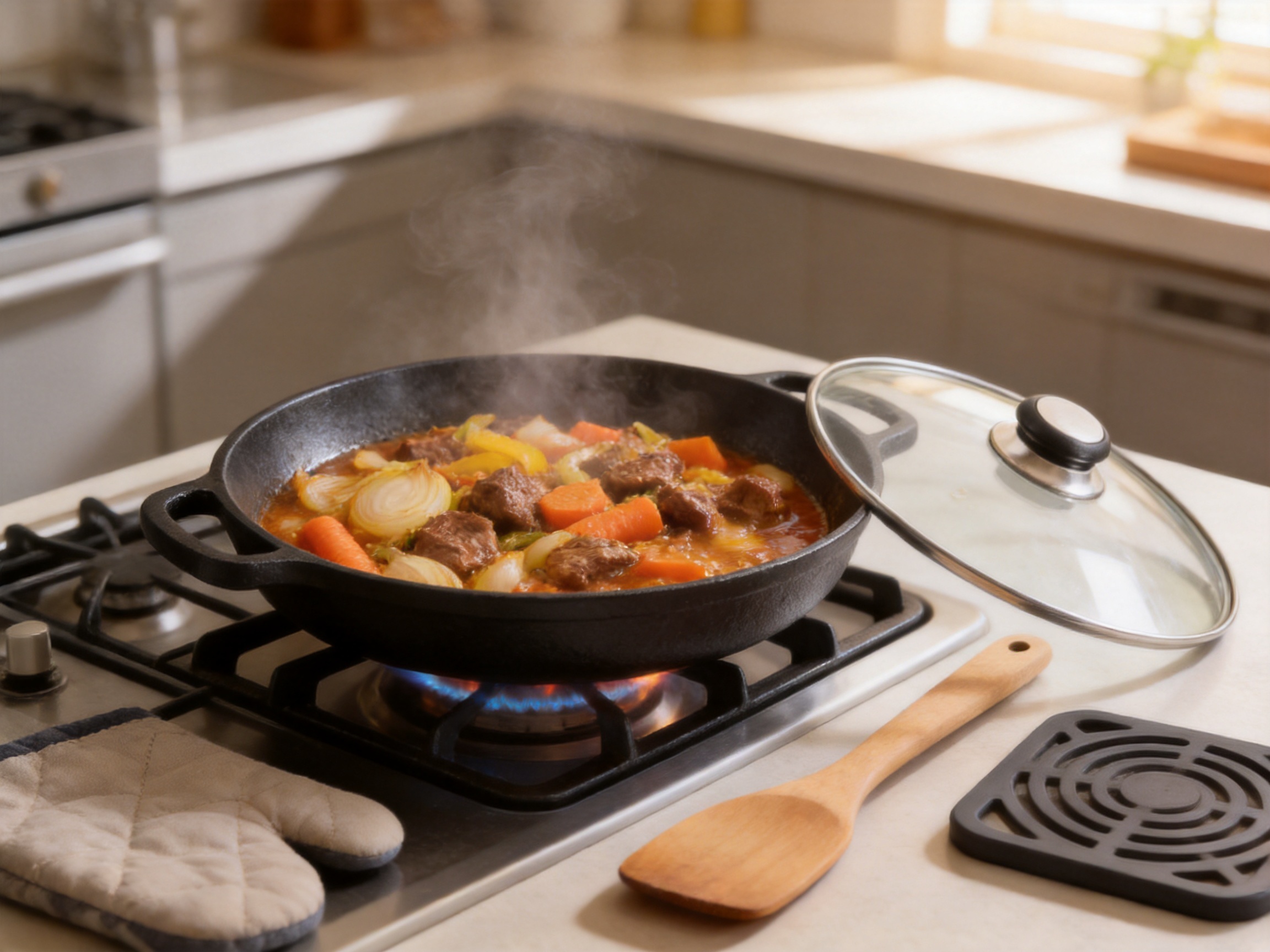
6. Supplier Strengths and Manufacturing Partnership Value
Zhejiang Echo Industry And Trade Co., Ltd. is positioned as a kitchenware supplier based in Zhejiang, China. Zhejiang is widely associated with manufacturing and export activity, and the company’s product scope covers several important cookware categories. This breadth can be valuable to buyers who want to build a coordinated product range instead of managing separate suppliers for aluminum, stainless steel, cast iron, and kitchen utensils.
The company describes itself as a professional supplier focused on international markets. Its stated objective is to become an R&D-driven supply chain partner for small and medium-sized kitchenware buyers rather than simply an order-taking business. For customers, this positioning suggests a potential emphasis on product development, communication, sourcing support, and longer-term cooperation.
6.1 One-Stop Product Sourcing
A cookware buyer may need several products for one seasonal collection or retail program. These products might include cast iron pots, aluminum frying pans, stainless steel saucepans, utensils, lids, and accessories. A supplier with multiple categories can simplify communication, product comparison, sample coordination, and shipping organization.
One-stop sourcing can also make it easier to maintain a consistent commercial strategy. For example, a retailer may create a coordinated cookware collection with different materials and price points. The shallow cast iron pot can serve as a premium or durability-focused item, while aluminum and stainless steel products can address other consumer preferences.
6.2 ODM and OEM Customization
ODM and OEM services can support businesses that need more than a standard catalog product. Possible project requirements may include customized packaging, logos, color development, handle changes, product dimensions, gift-box presentation, instruction manuals, barcode labels, or coordinated sets. Each request must be reviewed for technical feasibility, minimum order quantity, tooling requirements, cost, and lead time.
For the cast iron shallow pot, customization discussions may include the approved body size, surface finish, lid style, handle shape, packaging format, and retail positioning. Buyers should provide written artwork, target-market requirements, and a detailed approval schedule. A signed sample or approved digital specification can help reduce the risk of inconsistent production.
6.3 Flexible MOQ Support
Flexible minimum order quantities can be especially useful for small and medium-sized buyers, online retailers, new cookware brands, and distributors testing a new category. A lower initial commitment may allow the buyer to evaluate customer response before expanding the product range.
MOQ flexibility should be discussed together with production economics. Smaller quantities may affect unit pricing, packaging costs, customization availability, and lead time. The best approach is to request a complete quotation showing sample costs, standard order pricing, custom order pricing, packaging charges, tooling charges if applicable, and shipping terms.
6.4 Product Certification Assistance
Cookware products may be subject to food-contact, labeling, packaging, chemical, and general product-safety requirements depending on the destination market. Certification assistance can help buyers understand which documents and tests may be necessary. The exact requirements vary by country, product construction, coating, lid material, and sales channel.
Certification assistance does not automatically mean that every product has every certificate. Buyers should request current documentation for the exact model and configuration being purchased. Documents should be reviewed for product identity, test scope, date, issuing laboratory, applicable standards, and whether the report covers the materials used in the final production version.
7. Product Development Process for Importers and Brand Owners
7.1 Define the Target Customer
Before ordering, the buyer should define whether the product is intended for home cooks, outdoor cooking enthusiasts, restaurant kitchens, gift markets, cookware specialists, or general household retail. The target user affects the preferred size, packaging, price, care instructions, and sales message.
The shallow pot can be positioned as a versatile family cookware item, a durable cast iron serving vessel, a one-pan cooking solution, or a practical addition to a broader cookware collection. Each position requires different product photography and sales copy.
7.2 Confirm the Technical Specification
The buyer should confirm the exact dimensions, usable cooking surface, body weight, lid weight, total packed weight, handle dimensions, base flatness, and gas-stovetop compatibility. The difference between body-only dimensions and assembled dimensions should be clearly documented.
It is also important to confirm whether the product has a pre-seasoned or coated surface, whether additional seasoning is recommended, whether the lid has a steam vent, and whether replacement lids are available. These details influence customer expectations and after-sales support.
7.3 Approve a Production Sample
A sample should be evaluated for appearance, balance, lid fit, handle comfort, surface texture, base stability, and packaging protection. The buyer should cook a representative recipe to evaluate heating behavior and practical handling. A sample review is not a substitute for formal testing, but it can identify design or communication problems before an order is produced.
7.4 Prepare Retail Information
Retail packaging should explain the product’s strengths without overstating its capabilities. Suitable claims may include cast iron construction, heat retention, transparent lid visibility, broad cooking surface, and suitability for gas stovetop cooking. Claims about induction, oven use, dishwasher safety, non-stick performance, or open-fire use should be made only when confirmed by the supplier and applicable testing.
The care instructions should be clear and easy to follow. Customers should know that the cookware is heavy, that the handles may become hot, that metal or sharp utensils should not be used, and that the product must cool before washing.
8. Cooking Applications
8.1 Sautéing
The wide shallow base is suitable for sautéing onions, garlic, mushrooms, peppers, leafy vegetables, and other ingredients. The user can spread ingredients across the surface and stir them with a suitable utensil. Cast iron’s heat retention can support browning after the cookware has been properly preheated.
8.2 Simmering Sauces
After ingredients have been sautéed, the same vessel can be used to simmer tomato sauces, gravies, curries, and other preparations. The glass lid helps users monitor the simmer while reducing the need to lift the cover. The low sides may also encourage evaporation when the dish needs to thicken or reduce.
8.3 Shallow Braising
Shallow braising combines initial browning with covered cooking in a modest amount of liquid. The product’s broad cooking area is useful for arranging pieces of meat or vegetables, while the lid helps maintain a moist environment. Users should ensure that the food quantity and liquid level are suitable for the shallow profile.
8.4 One-Pan Meals
The product can support one-pan meals that begin with frying or browning and finish with simmering. This reduces the number of cooking vessels required and can make preparation and serving more efficient. It is particularly suitable for dishes such as vegetable mixtures, rice-based preparations, skillet-style meals, and shallow stews, subject to the user’s recipe and heat control.
8.5 Table Presentation
The black cast iron appearance can provide a traditional and substantial presentation at the table. Food may be served directly from the pot when appropriate, although users should protect tables and countertops from heat. The product should be placed on a heat-resistant trivet or other suitable surface after removal from the burner.
9. Care and Safety Instructions
Proper care is essential for extending the service life of cast iron cookware and preserving its appearance. The supplied instructions recommend washing before first use and favor hand washing. Users should clean the pot with hot, soapy water and a soft cloth or sponge.
Metal or sharp cooking utensils should not be used. Wooden, nylon, or non-stick cooking utensils are recommended instead. This guidance helps reduce scratching, surface damage, and unnecessary wear. It also provides retailers with a clear care message for product packaging and online listings.
The pot should not be overheated when empty. Empty overheating can damage the surface, create excessive temperatures, and increase the risk of injury. Users should not allow the flame or heat source to extend beyond the base. Excess flame can heat the side walls and handles unnecessarily and may cause damage or create a burn hazard.
If the pan severely overheats, users should turn off the cooker and leave the pan in place until it has cooled completely. They should not touch or move a severely overheated pan immediately. Cast iron retains heat for a long time, and contact with the body, handles, or lid may cause burns.
The product should not be used in a microwave. The available information confirms gas stovetop suitability, so users should not assume compatibility with induction, electric, ceramic, oven, grill, or open-fire cooking unless the supplier provides specific confirmation.
The glass lid should be handled carefully and inspected regularly. Users should avoid dropping it, striking it against hard surfaces, or exposing it to sudden temperature changes. If the lid develops cracks, chips, or other damage, it should no longer be used.
10. Merchandising and Market Positioning
The product can be presented as a multi-function cookware item rather than a single-purpose pot. Its strongest retail message is the combination of cast iron heat retention, shallow cooking access, and visible cooking through the glass lid. This combination distinguishes it from a basic open frying pan and from a deep covered pot.
Online product pages should show the product from several angles, including the broad cooking surface, side handles, lid, base, and packed presentation. The listing should clearly identify the material, color, size options, cooking compatibility, care requirements, and included components.
Retailers can target consumers who enjoy slow cooking, one-pan meals, traditional cookware, practical kitchen organization, and durable household products. The product may also appeal to gift buyers when supplied in attractive packaging. For food-service distributors, the shallow profile may be relevant to restaurants that prepare and serve skillet-style dishes, although commercial users should verify local handling and safety requirements.
Price positioning should reflect the product’s material, weight, lid, packaging, and expected service life. It should not be compared only with lightweight pans on a unit-price basis. Instead, buyers can emphasize the cookware’s multi-function use and robust construction.
11. Logistics and Commercial Planning
Cast iron cookware has a relatively high shipping weight compared with many aluminum products. The stated carton weight of 2.92 kilograms and carton volume of 0.0076 cubic meters can assist with preliminary logistics planning, but these figures should be confirmed for each size and final packaging configuration.
Importers should calculate product cost together with packaging, inland transportation, export handling, international freight, customs charges, duties, warehousing, and marketplace fees where applicable. A larger size may have a higher unit price and may also affect container utilization. Buyers should compare the commercial value of each listed size before selecting the final range.
Packaging should prevent the heavy cast iron body from moving inside the carton and should isolate the glass lid from direct impact. If the product is sold through parcel delivery or e-commerce channels, additional drop and vibration protection may be required. Packaging tests should be considered before a large online launch.
Carton labeling should identify the SKU, size, quantity, gross weight, net weight, country of origin, handling marks, and buyer-required barcodes. Retail packaging should be checked for accurate claims and translated instructions where necessary.
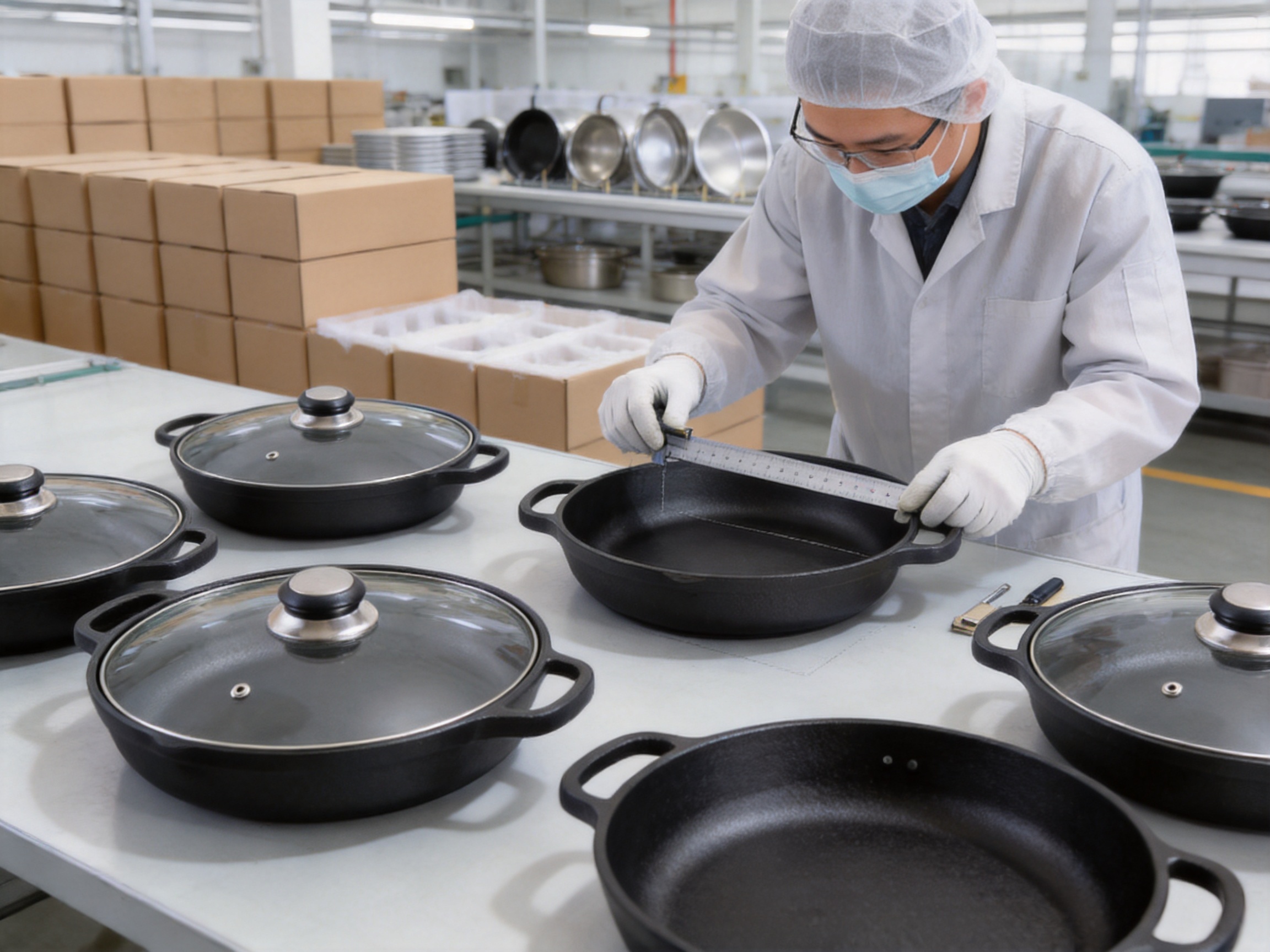
12. Recommended Quality-Control Checklist
A structured inspection plan improves consistency and helps buyers evaluate the product objectively. The following points are suitable for discussion with the supplier and may be adapted to the buyer’s market requirements.
| Inspection Area | Suggested Check |
|---|---|
| Material | Verify the body material and review applicable material documentation |
| Dimensions | Measure the body, base, rim, handles, and assembled height |
| Base | Check flatness, stability, and contact with a level surface |
| Surface | Review color, finish consistency, rough spots, sharp edges, and visible defects |
| Handles | Check alignment, attachment, surface safety, and handling comfort |
| Glass lid | Check clarity, chips, cracks, edge condition, knob attachment, and fit |
| Function | Confirm that the lid sits correctly and that the pot remains stable on a gas burner |
| Packaging | Check protective inserts, carton strength, labeling, and resistance to movement |
| Documentation | Confirm care instructions, product identity, and requested compliance documents |
Inspection standards should be agreed before production rather than after shipment. A written standard can define acceptable color variation, permitted surface marks, dimensional tolerances, packaging conditions, and sampling levels. This is particularly important for private-label programs where the buyer’s reputation depends on consistent customer experience.
13. Sustainability and Long-Term Use
Durability is an important part of cookware sustainability. A product that remains useful for many years may reduce the need for frequent replacement. Cast iron’s substantial construction supports a long-use positioning when the product is treated according to its care instructions.
The company states that it is interested in sustainable and healthy product development. Buyers seeking to develop this aspect should discuss material sourcing, surface treatment, packaging reduction, recyclable packaging components, production waste management, and shipping efficiency. Sustainability claims should be supported by appropriate evidence and should be written precisely.
Long-term use also depends on customer education. Clear instructions can prevent damage caused by empty overheating, improper utensils, sudden cooling, or incorrect cleaning. A well-written instruction card can reduce product returns and help consumers achieve better results with the cookware.
14. Questions and Answers
Q1: What is the main purpose of this cast iron shallow pot?
The pot is designed for sautéing, browning, simmering, shallow braising, and one-pan meals. Its broad, low-profile cooking surface gives users easier access to food than a deep pot.
Q2: Does the product include a glass lid?
The product title and description identify it as a shallow pot with a tempered glass lid. However, the specification section includes measurements described as without lid. Buyers should confirm the exact configuration, lid inclusion, and assembled dimensions before ordering.
Q3: What material is used?
The stated body material is cast iron. The product is listed in black. Buyers should request confirmation of the exact surface finish or coating used in the final production version.
Q4: Is it suitable for gas stovetops?
Yes. The supplied product information states that it is suitable for gas stovetop cooking. Compatibility with induction, electric, ceramic, oven, grill, or open-fire cooking should be confirmed separately.
Q5: Can the product be used in a microwave?
No. The care instructions specifically state that the product should not be used in a microwave.
Q6: Can metal utensils be used?
Metal or sharp utensils should not be used. Wooden, nylon, or non-stick cooking utensils are recommended to help protect the cooking surface.
Q7: How should the pot be cleaned?
Wash it with hot, soapy water and a soft cloth or sponge. Hand washing is recommended to preserve the appearance of the cookware. The product should be washed before first use.
Q8: What should users do if the pot overheats?
Users should turn off the cooker and leave the pot to cool completely if it severely overheats. They should not touch or move it while it is extremely hot.
Q9: Why is the glass lid useful?
The transparent lid allows users to monitor food without lifting the cover repeatedly. This can help retain heat and moisture during covered cooking while making the cooking process easier to observe.
Q10: What size options are listed?
The information lists lengths of 28, 30, 33, and 35 centimeters. The listed heights are approximately 2 to 3 centimeters. Buyers should confirm the precise diameter, length, usable area, and assembled height for each size.
Q11: Is the product heavy?
Cast iron is naturally heavier than many aluminum and thin stainless steel cookware products. The listed carton weight is 2.92 kilograms for one carton, but the final net weight should be confirmed for the selected size and packaging configuration.
Q12: Can the supplier provide custom products?
The company states that it provides ODM and OEM customization. Buyers can discuss packaging, logos, dimensions, finishes, handles, product combinations, and other requirements subject to technical feasibility, order quantity, cost, and lead time.
Q13: Can buyers source other products from the same supplier?
Yes. The company’s stated product range includes aluminum cookware, stainless steel cookware, cast iron cookware, and kitchen utensils. This may support coordinated product sourcing and mixed-category cookware programs.
Q14: Does the supplier support certification requirements?
The company states that it provides product certification assistance. Buyers should request current documents for the exact product and destination market and confirm whether additional third-party testing is required.
Q15: Who may benefit from this product?
The product may suit cookware retailers, household-goods distributors, restaurant-supply businesses, online sellers, gift retailers, private-label brands, and consumers seeking durable cast iron cookware with a visible lid.
15. Purchasing Recommendations
Buyers should begin by requesting a complete quotation for SKU XY01, including the selected size, lid configuration, surface finish, packaging, minimum order quantity, lead time, payment terms, and shipping terms. The quotation should identify whether the price includes the glass lid and whether each size has a different carton specification.
A sample should be requested before mass production. The buyer should test the sample on a gas stovetop, inspect the base and handles, examine the lid fit, and assess the cleaning instructions. If the product will be sold under a private label, packaging artwork and care information should be approved before production begins.
Buyers should also establish a communication process for technical questions. A single specification sheet should be shared by purchasing, quality control, packaging design, logistics, and sales teams. This reduces the risk of one department describing the product as including a lid while another department uses body-only dimensions.
For larger programs, buyers may consider a phased launch. The first order can focus on one or two sizes, followed by additional sizes after customer feedback. The supplier’s flexible MOQ approach may be useful for this type of market testing, subject to commercial agreement.
16. Final Assessment
The cast iron shallow pot with glass lid is a practical multi-function cookware product built around three main advantages: cast iron heat retention, a broad shallow cooking surface, and transparent covered cooking. It offers a useful alternative to lightweight aluminum pans, thin stainless steel cookware, open frying pans, and deep cast iron pots.
Its strongest applications include sautéing, browning, simmering, shallow braising, one-pan meals, and table presentation. The side handles support handling, while the glass lid helps users monitor food without repeatedly interrupting the cooking process. The product’s black finish and durable cast iron construction also support premium, traditional, and long-use market positioning.
As a supplier, Zhejiang Echo Industry And Trade Co., Ltd. offers a broader partnership model that includes multiple cookware categories, one-stop sourcing, ODM and OEM development, certification assistance, flexible MOQs, and international supply support. These capabilities can be valuable for buyers building a cookware collection rather than purchasing a single isolated item.
The most important purchasing consideration is specification confirmation. Because the product description refers to a glass lid while some listed measurements refer to a version without a lid, the buyer should confirm the final configuration before approving a quotation or creating retail content. Once dimensions, finish, lid, packaging, compatibility, and documentation are confirmed, the product can serve as a strong addition to a durable and versatile cookware range.
References
1. Product specification and care information supplied for Cast Iron Shallow Pot with Glass Lid, SKU XY01.
2. Supplier-provided company information concerning cookware categories, ODM and OEM services, certification assistance, flexible minimum order quantities, and product development support.
3. General cookware design principles concerning cast iron heat retention, shallow cooking surfaces, glass-lid handling, and stovetop safety.
4. General export packaging considerations for heavy cookware and glass components.
Product: Cast Iron shallow pot with Glass Lid
Recommended Articles
Product Category
Related products
-
-
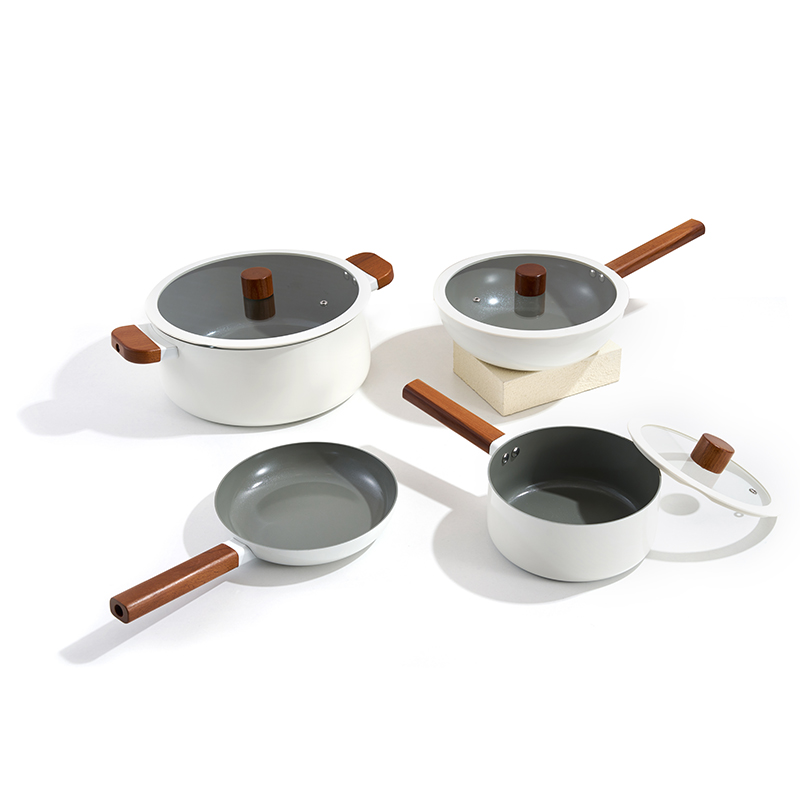
This cookware set has a ceramic non-stick inner liner, a heat-resistant wooden h...
See Details -
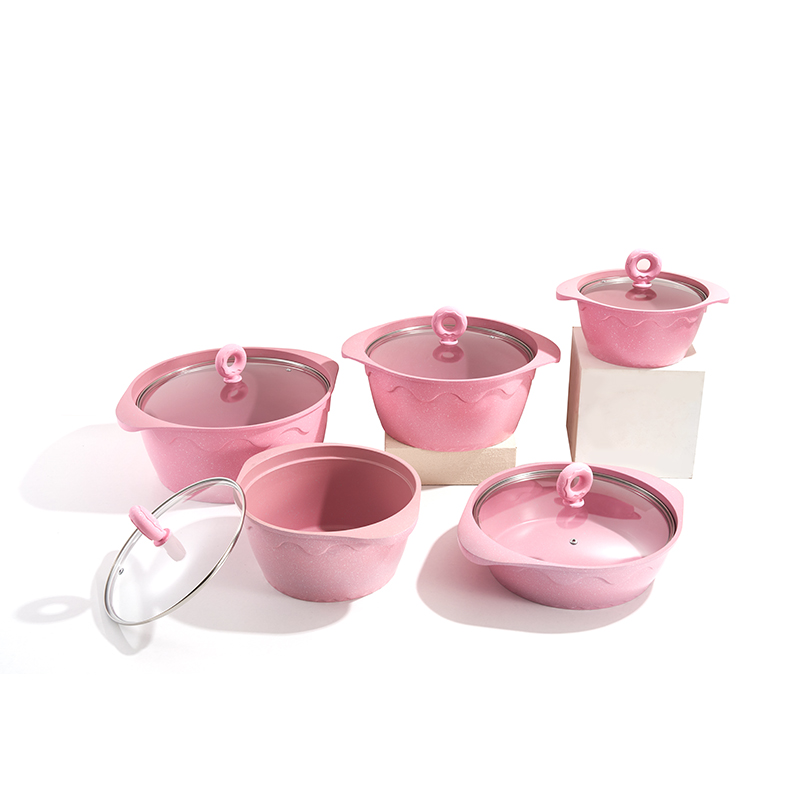
This cookware set is made of food-grade non-stick material, with a unique eye-ca...
See Details -
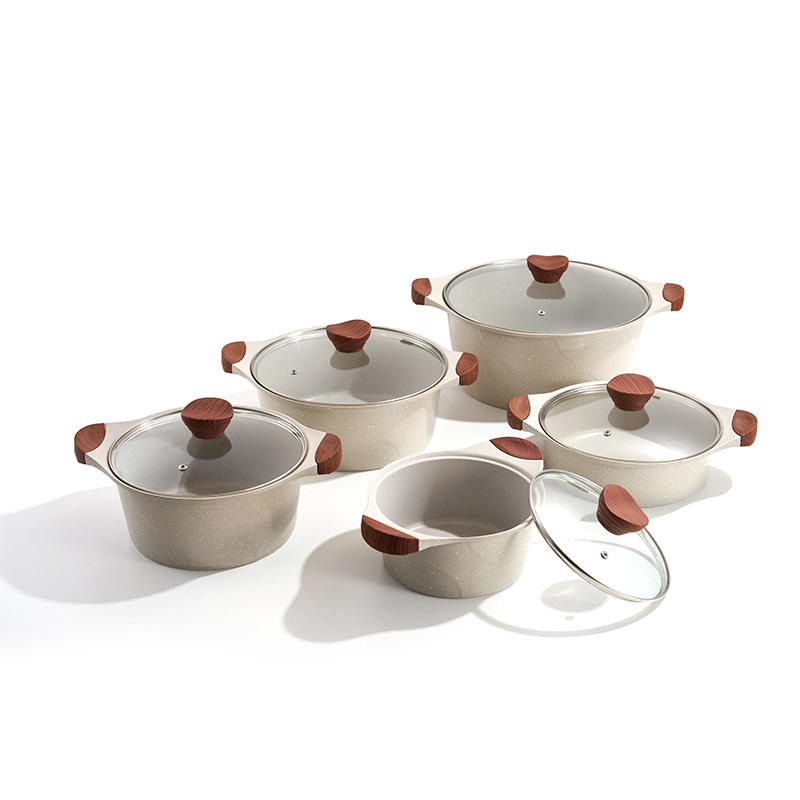
This off-white cookware set is made of wear-resistant non-stick material, with w...
See Details
Whether you're looking for bulk purchases or have any custom requirements, We are here to offer the best
solutions for you.
tiffany.zhong@echocn-trading.com
PHONE
+86-19561173975
+86-19557020621 (Hazel Wu)
ADD
Room 301, Unit 3014, No. 175 Qifeng Avenue, Wenqiao Town, Taizhou, Zhejiang, China
Fill Out the Form for More Information
Copyright © Zhejiang Echo Industry And Trade Co., Ltd.
All Rights Reserved.

China Cookware Set Manufacturer