
 en
 Español

This cookware set features a non-stick coating, even heat conduction, and multi-...
See Details
A Practical Guide to Modern Multi-Function Aluminum Cookware Sets
Date:Sep 29, 2026
OCEAN WAVE Aluminium pot and Pan Set
Choosing a cookware set is not simply a matter of selecting attractive pots and pans. A reliable set must balance cooking performance, convenience, safety, durability, storage efficiency, appearance, and value. For households, restaurants, hospitality businesses, retailers, and professional buyers, the best cookware solution is one that can support multiple cooking methods without creating unnecessary complexity in the kitchen.
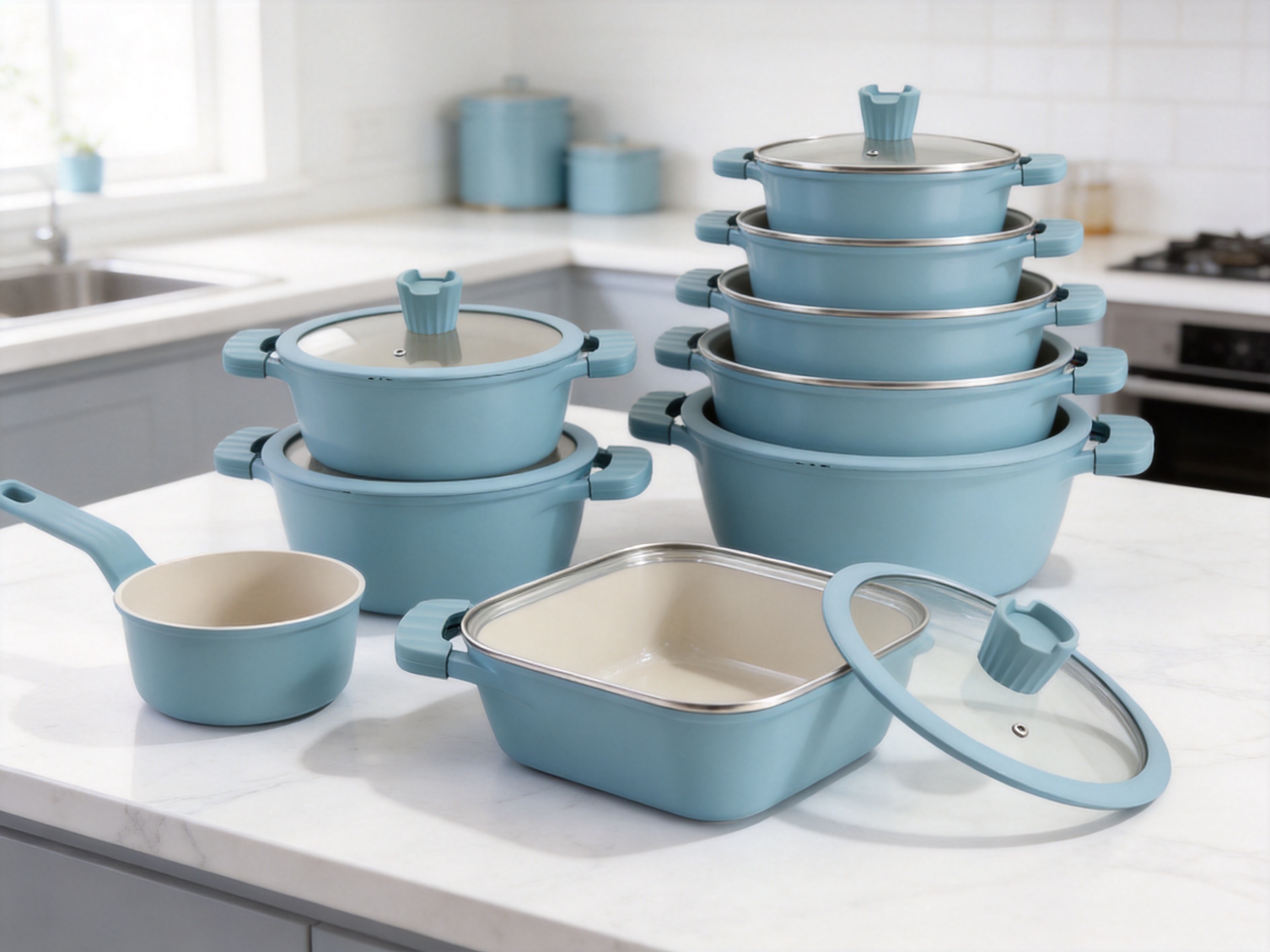
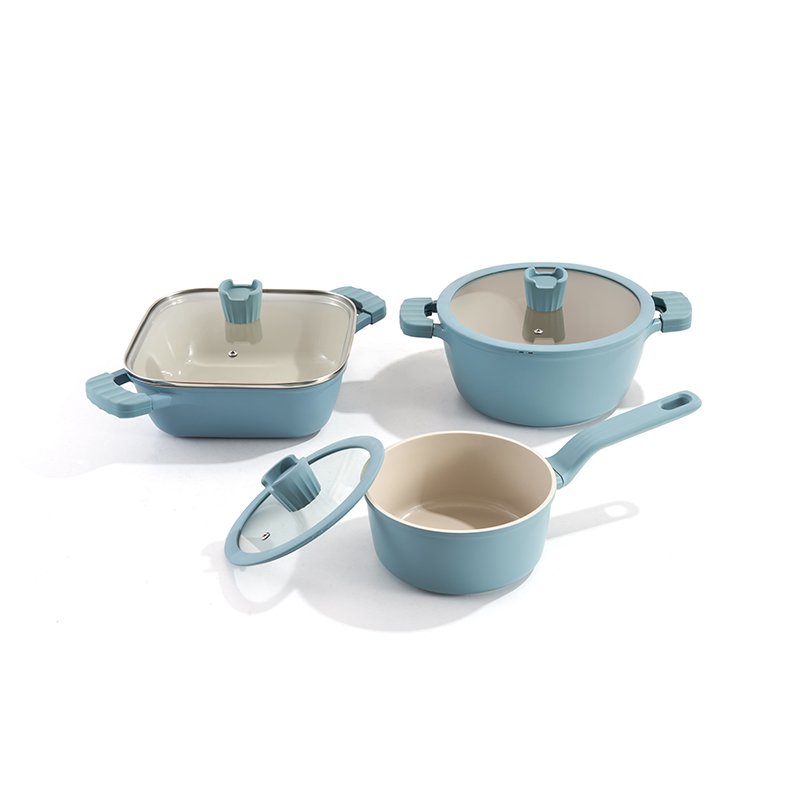
The OCEAN WAVE Aluminium Pot and Pan Set is designed around this principle. It combines a fresh light blue exterior, square and round cookware designs, heat-resistant handles, clear glass lids, and an off-white non-stick interior. Its range includes a saucepan, square casseroles, and round casseroles in several capacities. This gives buyers a coordinated cookware collection that can support frying, stewing, simmering, reheating, and everyday meal preparation.
Beyond its appearance, the set represents a practical approach to modern cookware manufacturing. Aluminum construction provides a useful balance between light weight and efficient heat distribution, while the non-stick interior is intended to reduce food adhesion and simplify cleaning. Compatibility with all stovetops further increases its market appeal, especially for buyers who need cookware suitable for different kitchen environments.
This article examines the product’s structure, applications, competitive advantages, care requirements, specifications, and the manufacturing and supply capabilities of Zhejiang Echo Industry And Trade Co., Ltd. It also explains why a multi-function aluminum cookware collection can be an effective choice for distributors, retailers, food-service buyers, and consumers seeking a flexible cookware solution.
Understanding the Concept Behind the Cookware Set
A cookware set is most useful when each item has a clear role and when the pieces work together as a coordinated system. Many low-value cookware collections include several pieces that are similar in size or function. This can lead to unused products, inefficient storage, and limited cooking flexibility. The OCEAN WAVE collection takes a broader approach by combining different shapes and capacities.
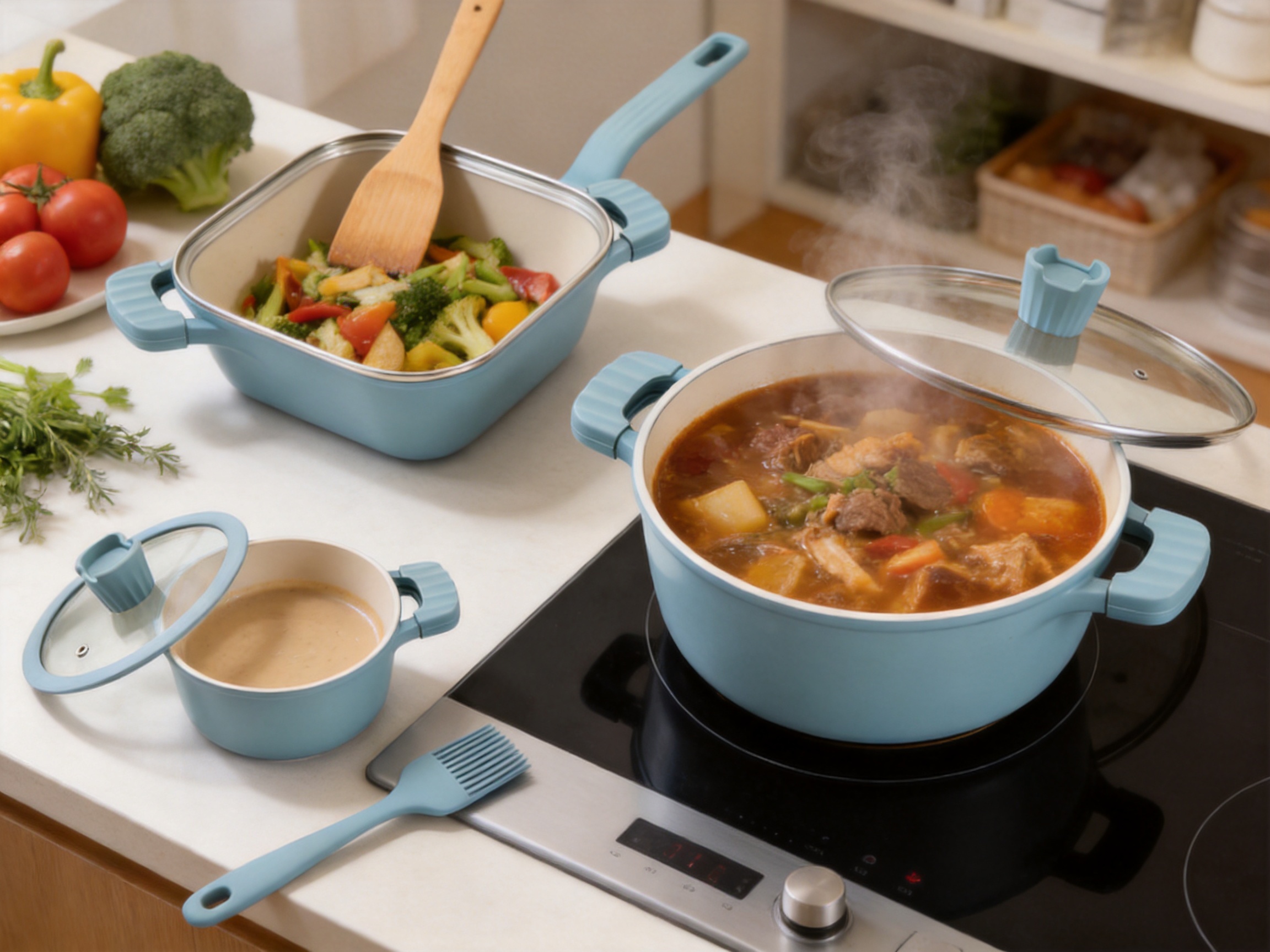
The round saucepan is suitable for smaller-volume preparation, including sauces, soup portions, grains, baby food, warming, and light boiling. The square casserole format creates a broader cooking surface that can be useful for sautéing, shallow frying, braising, and family-style dishes. The round casseroles offer a graduated capacity range, allowing users to select the right vessel for a small meal, a family dinner, or larger-volume cooking.
This combination makes the set appropriate for kitchens in which several dishes may be prepared at the same time. A smaller saucepan can handle a sauce or side dish, while a larger casserole can be used for a stew, curry, pasta preparation, soup, or braised meat. The square designs also provide a visually distinctive alternative to conventional round cookware, which can help retailers position the product as both functional and decorative.
The collection is also suitable for buyers who want coordinated kitchen products rather than individual mismatched pieces. The light blue exterior and off-white cooking surface create a recognizable visual identity. For retailers, this can make the collection easier to present in a showroom, catalog, online product listing, or promotional display.
Product Overview and Main Configuration
The product carries SKU DL08 and is categorized as aluminum cookware. Its listed configuration includes a saucepan, square casseroles, and round casseroles in multiple dimensions and capacities. The range is intended to give buyers flexibility when choosing a complete assortment or selecting individual sizes for different sales channels.
| Item | Approximate Dimensions | Capacity | Typical Applications |
|---|---|---|---|
| Round saucepan | 18 × 8.5 cm | 1.7 L | Sauces, reheating, grains, small portions, simmering |
| Square casserole | 24 × 24 × 8.5 cm | 3.5 L | Frying, sautéing, braising, family meals |
| Square casserole | 28 × 28 × 8.9 cm | 5.3 L | Large meals, stews, one-pot dishes |
| Round casserole | 16 × 7.5 cm | 1.1 L | Small portions, sauces, side dishes |
| Round casserole | 20 × 9 cm | 2.2 L | Everyday cooking for smaller households |
| Round casserole | 24 × 11.5 cm | 4.0 L | Family meals, soup, pasta, stewing |
| Round casserole | 26 × 12 cm | 5.0 L | Medium-to-large batch cooking |
| Round casserole | 28 × 12.5 cm | 6.0 L | Large family meals and batch preparation |
| Round casserole | 32 × 13.5 cm | 8.5 L | High-volume cooking and food service |
The listed sizes allow importers and distributors to develop different assortment strategies. A retailer serving compact-apartment customers may focus on the smaller saucepan and casseroles. A family-oriented retailer may emphasize the 4.0-liter, 5.0-liter, and 6.0-liter sizes. Food-service or hospitality buyers may be interested in the larger 8.5-liter casserole for batch cooking.
Because the products share a coordinated design, multiple sizes can be marketed together as a complete collection. This may encourage multi-item purchases and give retailers opportunities to offer size combinations, promotional bundles, or kitchen starter packages.
Aluminum Construction and Heat Distribution
Aluminum is widely used in cookware because it combines low weight with effective thermal conductivity. Compared with heavier cookware materials, aluminum can be easier to lift, move, clean, and store. This is particularly useful for users who cook frequently, prepare large meals, or need to handle cookware with one hand.
Efficient heat distribution is one of the principal advantages of aluminum cookware. When heat spreads effectively across the cooking surface, food can be heated more evenly and the user can obtain more predictable cooking results. This can be beneficial when frying ingredients, reducing sauces, simmering stews, or preparing dishes that require controlled temperature changes.
The practical value of aluminum construction becomes more evident in larger vessels. An 8.5-liter cookware item made from a lighter material can be easier to handle than a comparable heavy vessel. For commercial kitchens, where cookware may be moved repeatedly during preparation and cleaning, weight reduction can support greater operational convenience.
At the same time, aluminum cookware should be used responsibly. Users should avoid overheating an empty pan and should ensure that the flame or heat source does not extend beyond the base. These practices help preserve the cookware and reduce unnecessary thermal stress on the exterior, handles, and non-stick surface.
Non-Stick Interior for Everyday Cooking
The off-white non-stick interior is designed to reduce food adhesion during cooking. A non-stick surface can be especially useful for eggs, pancakes, delicate fish, vegetables, sauces, and other foods that may otherwise stick to an uncoated cooking surface. Less sticking can also make stirring and serving more convenient.
Another important benefit is easier cleaning. When food does not strongly adhere to the pan, users generally need less scrubbing. The supplied care guidance recommends hot, soapy water and a soft cloth or sponge. This cleaning method is appropriate for preserving the appearance and condition of a non-stick interior.
The light interior color also offers a practical visual benefit. Food color, sauce consistency, and browning are often easier to observe against a pale background than against a very dark surface. This can help users monitor cooking progress, particularly when reducing sauces or checking the color of sautéed ingredients.
However, the non-stick coating requires appropriate handling. Metal or sharp utensils should not be used because they may scratch or damage the cooking surface. Wooden, nylon, or other non-stick-safe utensils are recommended. This is not merely a cosmetic concern. Protecting the surface helps maintain release performance and extends the useful life of the cookware.
Users should also avoid heating the pan while it is empty for an extended period. Empty overheating can expose the cooking surface and body to excessive temperatures. If severe overheating occurs, the user should turn off the cooker, avoid touching the cookware while it is hot, and allow it to cool completely before handling or cleaning it.
Square and Round Designs for Different Cooking Styles
The combination of square and round forms is one of the most distinctive characteristics of the collection. Round cookware remains a familiar choice for boiling, simmering, and general stovetop use. Its shape is compatible with conventional burners and supports natural circulation of liquids during cooking.
Square casseroles provide a larger usable surface in a compact footprint. The broad shape can be useful for browning ingredients, arranging food pieces, cooking rectangular cuts of meat, or preparing dishes that benefit from a wide base. It can also make a visually appealing serving presentation for certain meals.
The square design may be particularly valuable in kitchens where users want to move directly from stovetop preparation to table presentation. Although the cookware is primarily designed for stovetop use, its coordinated appearance can support a more attractive serving experience. Users should always confirm the product’s specific handling and heat requirements before placing it in any secondary cooking appliance.
For retailers, the contrast between square and round designs creates a stronger merchandising story. A product collection with only conventional round pots may be difficult to distinguish from competing cookware. The combination of forms, light blue exterior, and pale interior gives this range a recognizable appearance that can support product photography and point-of-sale presentation.
Clear Glass Lids and Heat-Resistant Handles
The cookware is supplied with clear glass lids. A transparent lid allows users to observe cooking progress without repeatedly removing the cover. This can help retain heat and moisture during simmering and stewing while reducing unnecessary interruptions.
Clear lids are useful for dishes that need to be monitored closely, such as sauces, soups, rice-based preparations, braised dishes, and vegetables. Users can check the appearance of the food and observe boiling activity without lifting the lid. This supports more controlled cooking and can help reduce splashing.
The matching heat-resistant handles are designed to make the cookware easier to hold and move during normal use. Handle comfort and stability are especially important for larger casseroles, which may contain several liters of hot food. Even when handles are described as heat-resistant, users should still apply appropriate caution and avoid assuming that every handle remains cool under every cooking condition.
Good handling practice includes using dry, stable hands; supporting heavy cookware appropriately; and using suitable protective equipment when necessary. The cookware should not be touched immediately after severe overheating, and it should be allowed to cool before cleaning or storage.
Compatibility with All Stovetops
Compatibility with all stovetops is a major commercial advantage. A product that can be used across different cooking systems is easier for retailers to recommend and more convenient for consumers whose kitchen equipment may change over time.
The stated compatibility includes common stovetop environments such as gas, electric, ceramic, and induction cooking systems. This broad compatibility can reduce purchase uncertainty. Customers do not need to select a separate cookware line simply because they use a different stovetop type.
For property developers, hospitality buyers, rental accommodation providers, and retailers, broad stovetop compatibility can simplify procurement. A single cookware range may be suitable for multiple properties or customer segments. This can reduce assortment complexity and make inventory management more efficient.
Users should still operate the cookware according to the instructions for their specific stovetop. The heat source should remain within the base area, and excessive heat should be avoided. On gas stoves in particular, flames should not extend around the sides of the cookware, as this can heat the exterior unnecessarily and potentially affect handles or surrounding surfaces.
Advantages Compared with Conventional Competitor Products
The OCEAN WAVE collection offers several advantages when compared with basic cookware sets that provide only standard round shapes, limited sizes, or a single visual style.
More Versatile Size Selection
Many entry-level cookware sets include a small saucepan, a medium pot, and one frying pan. While this arrangement may serve basic needs, it does not always provide suitable capacity for different cooking volumes. The DL08 range offers multiple saucepan and casserole capacities, including compact 1.1-liter and 1.7-liter options and larger vessels up to 8.5 liters.
This range allows buyers to select products according to household size, menu type, or commercial requirement. It also gives distributors the ability to create several product packages without changing to a different supplier.
Distinctive Visual Identity
Standard cookware is often sold in black, silver, or dark gray. These colors are familiar but highly competitive. The fresh light blue exterior and off-white interior create a more distinctive presentation. This can help the product stand out in online listings, retail displays, and lifestyle photography.
A strong visual identity does not replace functional quality, but it can influence customer attention and perceived value. The coordinated color scheme also makes the collection suitable for gift-oriented sales and modern kitchen décor themes.
Combination of Square and Round Forms
The mixed design format provides functional and aesthetic differentiation. Buyers can use round cookware for traditional liquid-based cooking and square casseroles for broader surface cooking. Competitor sets that offer only one shape may not provide the same range of preparation options or visual interest.
Lightweight Handling
Aluminum construction is generally easier to handle than heavier cookware materials. This can be particularly helpful for older users, busy households, culinary students, food-service staff, and anyone who regularly moves cookware between the stove, sink, and storage area.
Non-Stick Convenience
The non-stick interior supports easier food release and cleaning when properly maintained. Compared with uncoated aluminum or basic untreated metal cookware, this can reduce the effort required for everyday cooking. It may also allow users to prepare some foods with less added cooking fat, depending on the recipe and cooking method.
Broad Stovetop Usability
All-stovetop compatibility expands the potential customer base. Retailers can promote the same cookware range to households using different cooking systems, while commercial buyers can use the products across facilities with varied equipment.
Suitable Applications in Household Kitchens
The cookware set is suitable for everyday household cooking. The smaller pieces can be used for breakfast preparations, sauces, reheating, porridge, grains, and side dishes. Medium casseroles can support lunch and dinner cooking, including soups, pasta, stir-fried ingredients, braised vegetables, and one-pot meals.
The larger casseroles are suitable for family gatherings, meal preparation, holiday cooking, and batch production. A 6.0-liter or 8.5-liter vessel can be helpful when preparing food for several people or when cooking extra portions for later meals.
The collection is also suitable for kitchens that value storage flexibility. Users can choose only the capacities they need rather than purchasing a rigid set in which every item is the same shape or intended for the same quantity of food.
Because the cookware has a coordinated appearance, it can also support a more organized kitchen aesthetic. Buyers who prefer matching kitchen products may find the collection more attractive than assembling unrelated pots and pans from different product lines.
Potential Commercial and Food-Service Uses
The product range can serve commercial buyers beyond the household market. Small restaurants, cafés, catering operations, cooking schools, guesthouses, and serviced apartments may benefit from a selection of lightweight, non-stick aluminum cookware.
The smaller vessels can support sauce preparation, side dishes, breakfast service, and individual portions. Medium and large casseroles can support soup, stew, curry, pasta, braised food, and other menu items prepared in quantity.
For hospitality properties, the visual consistency of the range can contribute to a unified kitchen supply program. For cooking schools or culinary demonstration spaces, the different sizes can help instructors show how cooking quantities and vessel dimensions affect preparation.
Commercial users should assess their own operating conditions before placing a large order. Factors such as cooking frequency, cleaning procedures, heat intensity, storage space, food volume, and staff handling practices can influence the most suitable assortment. The non-stick surface should be protected with appropriate utensils and cleaning tools, especially in environments where cookware is used continuously.
Manufacturing Approach and Process Strengths
Zhejiang Echo Industry And Trade Co., Ltd. presents itself as a professional kitchenware supplier based in Zhejiang, China. Zhejiang is widely recognized as an important manufacturing and export region, with established industrial networks, product development resources, packaging capabilities, and international logistics connections.
The company’s stated product scope includes aluminum cookware, stainless steel cookware, cast iron cookware, and kitchen utensils. This broader category coverage is important for buyers seeking one-stop sourcing. Instead of coordinating separate suppliers for every cookware material, an importer may be able to develop a more complete product program through one manufacturing partner.
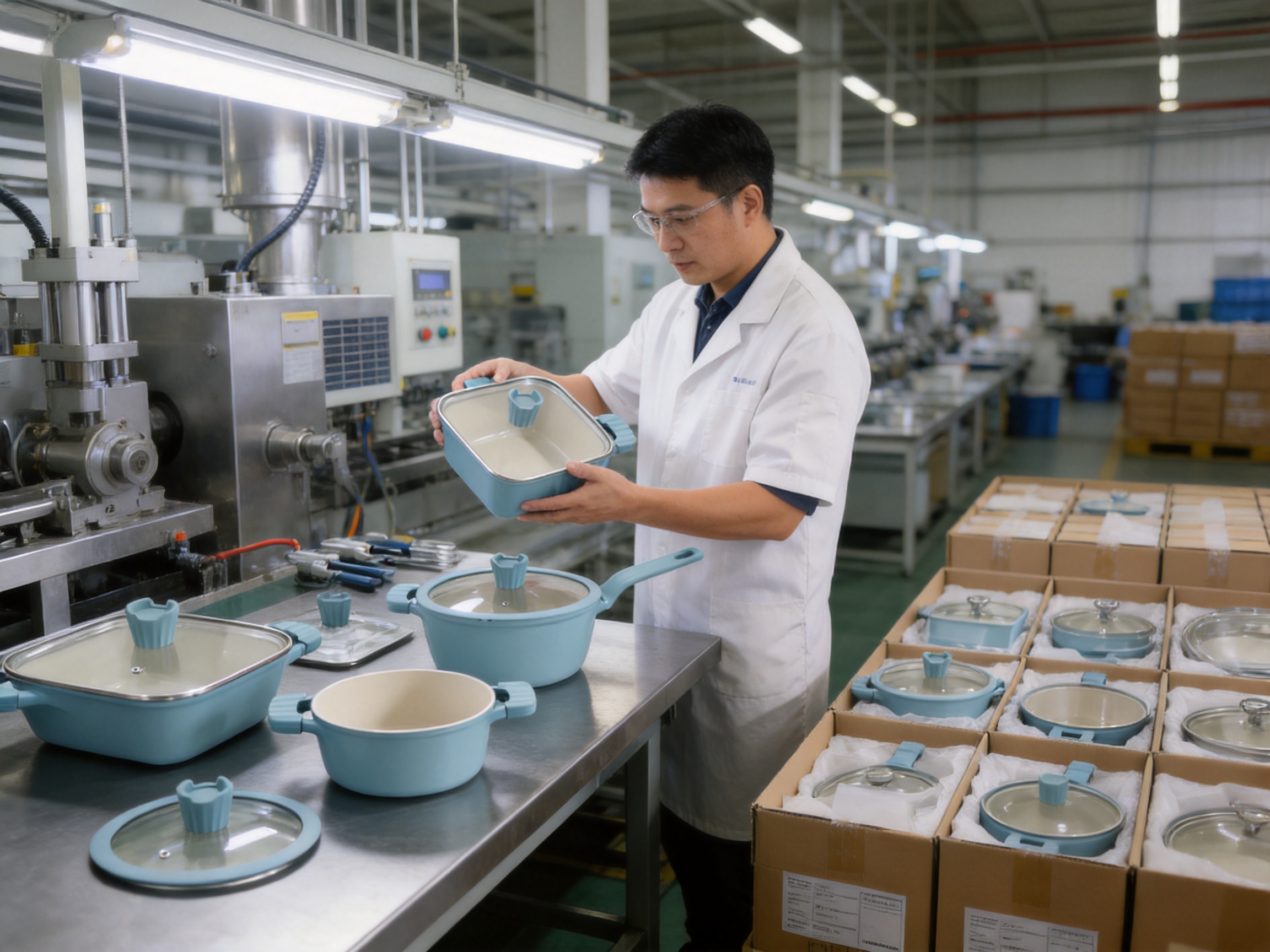
A modern cookware manufacturing process involves several linked stages. These may include material preparation, forming, trimming, surface treatment, coating, component assembly, inspection, packaging, and shipment preparation. Each stage affects the final product’s appearance, usability, and consistency.
Material Preparation and Forming
Aluminum cookware production begins with suitable aluminum material prepared for forming. The material must be shaped into a stable body with consistent dimensions. Accurate forming is important because the body influences heat distribution, lid fit, handle alignment, product balance, and packaging efficiency.
For a product range containing both round and square cookware, forming control is particularly important. Round and square bodies require different tooling and production considerations. The corners of a square casserole must be formed consistently, while the base and side walls must retain a stable geometry that supports the lid and handles.
Edge and Surface Finishing
After forming, cookware edges and surfaces require appropriate finishing. Smooth edges improve handling safety and contribute to a more refined appearance. Surface preparation is also important before applying a non-stick coating, because the coating system depends on a properly prepared substrate.
Consistent finishing helps reduce visible defects and supports a more uniform appearance across different sizes. This matters when products are sold as a coordinated collection, since differences in surface texture or color can affect the perceived quality of the entire range.
Non-Stick Coating Application
The non-stick interior must be applied with attention to surface preparation, coating uniformity, curing conditions, and handling after production. A consistent coating supports food release and cleaning performance, while uneven application can affect appearance and user experience.
For a light-colored interior, coating consistency is particularly important because variations may be more visible. Quality-focused production should therefore include inspection of the cooking surface for visible irregularities, uneven coverage, scratches, or other defects before final packaging.
Handle and Lid Assembly
Handles and glass lids are essential functional components rather than decorative additions. Handles must be positioned securely and consistently so that the cookware remains balanced during normal movement. Lid components must fit the corresponding cookware body and support practical cooking use.
Because the product includes several body shapes and sizes, assembly control is necessary to ensure that the correct lid and handle components are matched with each item. A well-organized assembly process helps reduce assortment errors, mismatched components, and packing problems.
Inspection and Order Fulfillment
Quality control may include dimensional checks, visual inspection, coating inspection, handle stability checks, lid matching, packaging verification, and sampling according to the buyer’s requirements. For export orders, carton configuration and shipping protection are also important.
The supplied logistics information lists a carton quantity of eight units, a carton size of approximately 44 × 37.5 × 41 cm, a carton volume of approximately 0.0677 cubic meters, a unit weight of approximately 0.447 kg, and a carton weight of approximately 9.5 kg. These details can help importers estimate warehouse requirements, freight planning, and landed cost calculations. Final shipping figures should be confirmed for the exact assortment and packaging configuration before order placement.
Supplier Strengths for International Buyers
The company describes its mission as becoming an R&D-driven supply chain partner for small and medium-sized kitchenware buyers rather than simply accepting orders. This positioning is relevant to importers who need product adaptation, design coordination, packaging development, or assortment planning.
One stated strength is product variety. The company offers several cookware materials and kitchen accessory categories, which may allow buyers to build a more complete catalog. A diversified product portfolio can reduce the need to manage many separate supplier relationships.
Another stated strength is one-stop sourcing. Buyers may be able to combine aluminum cookware, stainless steel cookware, cast iron products, and utensils within a coordinated purchasing program. This can support brand development, seasonal collections, and broader retail offerings.
The company also identifies ODM and OEM customization as part of its service scope. For suitable projects, customization may involve color selection, packaging, product combinations, branding elements, or design adjustments. Specific possibilities, tooling requirements, minimum order quantities, and lead times should be confirmed directly for each project.
Product certification assistance is another stated service. International buyers may need documents or testing related to food contact, materials, packaging, labeling, and market-specific requirements. Certification needs vary by destination market, so buyers should communicate their target countries and required standards at the beginning of the purchasing process.
Flexible minimum order quantities may be valuable for small and medium-sized businesses. A flexible order structure can allow buyers to test a product, evaluate customer response, and expand gradually. The exact MOQ remains a commercial matter that should be confirmed with the supplier.
Care and Maintenance Recommendations
Proper care is essential for maintaining the appearance and function of aluminum cookware with a non-stick interior. The cookware should be washed before first use to remove any residue from manufacturing, handling, or packaging.
Hand washing is recommended to preserve the appearance of the cookware. Hot, soapy water and a soft cloth or sponge should be used. Abrasive pads, harsh cleaners, metal scouring tools, and sharp objects may damage the coating or exterior finish.
Metal and sharp cooking utensils should not be used. Wooden, nylon, silicone, or other utensils designed for non-stick cookware are more appropriate. Users should avoid cutting food directly inside the cookware because knives can scratch the interior surface.
The cookware should not be heated while empty. Before turning on the heat, users should add food, liquid, or an appropriate cooking medium. Heat should be kept within a suitable range for the recipe, and the cookware should not be exposed to unnecessary high temperatures.
The flame or heat source should not extend beyond the base. Excessive side heat may affect the exterior, handles, surrounding surfaces, or coating system. On gas cookers, the flame should be adjusted so that it contacts the base rather than rising around the sides.
If the pan or casserole severely overheats, users should turn off the cooker and leave the cookware in place until it has cooled completely. It should not be touched or moved while dangerously hot. Once cool, it can be inspected and cleaned according to the normal care instructions.
The cookware should not be used in a microwave. Aluminum cookware is not suitable for microwave operation, and placing metal cookware in a microwave can create safety risks. The product should be used only in appropriate stovetop environments.
How Retailers Can Position the Product
Retailers can present the collection as a multi-function cookware solution rather than as a basic set of individual pots. The main selling message can focus on the combination of aluminum lightness, non-stick convenience, coordinated design, different capacities, clear lids, and all-stovetop compatibility.
Product pages should clearly show the dimensions and capacities of each item. Customers often choose cookware according to household size, cooking style, and available storage space. Clear size information reduces uncertainty and helps buyers select the right vessel.
Retailers can also organize the products by use case. Smaller items may be marketed for compact kitchens, students, couples, sauces, and side dishes. Medium casseroles may be promoted for everyday family cooking. Larger casseroles may be positioned for batch cooking, entertaining, meal preparation, and food-service use.
The square casseroles deserve individual attention because they offer a strong point of differentiation. Product photography can highlight the broad cooking area, distinctive shape, light blue exterior, clear lid, and coordinated interior. Round and square items can also be displayed together to communicate the versatility of the collection.
For gift and seasonal promotions, the product’s color and coordinated design may support kitchen starter bundles. Retailers could combine different sizes, add suitable non-stick utensils, or create themed cooking packages, provided that any additional products are sourced and labeled appropriately.
How Importers Can Evaluate the Product
Importers should begin by defining the target market and the expected use environment. A product intended for household retail may require different packaging, labeling, and assortment choices from cookware intended for hospitality or commercial food preparation.
Buyers should review the exact dimensions, capacities, unit weight, carton quantity, carton dimensions, and shipping weight. These details affect shelf planning, warehouse capacity, freight calculations, and retail packaging decisions.
Sample evaluation should include checking the cookware body, surface finish, interior coating, lid fit, handle attachment, balance, color consistency, and packaging protection. Buyers may also wish to test heating behavior and cleaning response under normal intended use.
For large orders, buyers should agree on inspection criteria before production. These criteria may cover acceptable cosmetic variation, dimensional tolerances, coating appearance, handle stability, lid compatibility, packaging standards, carton markings, and documentation.
Importers should also confirm market-specific regulatory requirements. Food-contact regulations, labeling rules, testing requirements, packaging laws, and chemical restrictions differ by country and region. Certification assistance may be available, but the buyer remains responsible for confirming the requirements applicable to the destination market.
Recommended Assortment Strategies
A complete assortment does not always need to include every listed size. Buyers can select a focused range according to their customers and sales channels.
| Target Market | Recommended Focus | Reason |
|---|---|---|
| Small households and apartments | 1.1 L, 1.7 L, 2.2 L, and 3.5 L items | Compact capacities for everyday meals and limited storage |
| Family retail | 2.2 L, 3.5 L, 4.0 L, 5.0 L, and 6.0 L items | Balanced selection for routine family cooking |
| Gift and lifestyle stores | Coordinated square and round combinations | Strong visual presentation and distinctive design |
| Meal-preparation customers | 4.0 L, 5.0 L, 6.0 L, and 8.5 L items | Higher capacity for batch cooking |
| Food-service buyers | 5.0 L, 6.0 L, and 8.5 L items | Useful capacity for sauces, soups, stews, and large-volume dishes |
These are planning suggestions rather than fixed purchasing requirements. The ideal selection depends on local consumer preferences, retail space, price positioning, and expected sales volume.
Why Product Development Matters
Cookware buyers increasingly expect more than a basic metal vessel. They want products that fit modern kitchens, support multiple cooking styles, and offer a balance between appearance and practical performance. Product development therefore involves more than changing a color or adding a handle.
The OCEAN WAVE concept demonstrates several product development decisions working together: a recognizable exterior color, an off-white non-stick cooking surface, two body shapes, multiple capacities, clear lids, matching handles, and all-stovetop compatibility. Together, these elements create a collection that can be presented as a complete kitchen solution.
The company’s stated aim to develop an R&D-driven supply chain relationship is relevant because buyers often need support beyond manufacturing. They may need help selecting a range, adapting packaging, creating a private-label collection, choosing materials, or developing products for a specific market segment.
Long-term supplier relationships can also improve consistency. Once a product specification, color standard, packaging structure, and inspection process are established, repeat orders can be managed more efficiently. This is especially important for retailers that need stable product appearance across several seasons.
Q&A: Frequently Asked Questions
What type of cookware is this product?
It is an aluminum cookware collection consisting of a saucepan, square casseroles, and round casseroles in several sizes and capacities. The products feature an off-white non-stick interior, clear glass lids, and matching heat-resistant handles.
What cooking methods are suitable for the collection?
The cookware is designed for everyday stovetop cooking, including frying, sautéing, simmering, stewing, reheating, sauce preparation, and batch cooking. The exact capacity should be selected according to the recipe and the number of servings.
Can the cookware be used on induction stovetops?
The product information states that the collection is compatible with all stovetops. Buyers should still confirm the exact construction and induction requirements for the specific item and market before final purchase.
Why is aluminum used for the cookware body?
Aluminum provides a useful combination of low weight and efficient heat distribution. It can be easier to handle than heavier cookware materials while supporting even heating for many everyday cooking applications.
What utensils should be used?
Wooden, nylon, silicone, or other non-stick-safe utensils should be used. Metal and sharp utensils should be avoided because they may scratch or damage the non-stick interior.
How should the cookware be cleaned?
Hand washing is recommended. Use hot, soapy water with a soft cloth or sponge. Abrasive cleaning tools and harsh methods should be avoided to help preserve the cookware’s appearance and non-stick surface.
Can the cookware be placed in a microwave?
No. The product should not be used in a microwave. It is intended for suitable stovetop cooking environments.
What should be done if the cookware overheats?
Turn off the cooker and do not touch or move the cookware while it is dangerously hot. Leave it to cool completely before handling, cleaning, or inspecting it.
What is the largest listed capacity?
The largest listed round casserole has a capacity of approximately 8.5 liters and measures approximately 32 × 13.5 cm. It may be suitable for batch preparation and higher-volume cooking.
What is the product SKU?
The listed SKU is DL08.
How many units are listed per carton?
The listed carton quantity is eight units. Final carton configuration should be confirmed according to the selected assortment, packaging method, and order requirements.
Can the products be customized?
The company states that it provides ODM and OEM customization services. Potential options, minimum quantities, colors, packaging, branding, tooling, and lead times should be discussed and confirmed for each project.
Does the company supply other kitchenware?
Yes. The company states that it supplies aluminum cookware, stainless steel cookware, cast iron cookware, and kitchen utensils. This product variety may support one-stop sourcing programs.
Who may benefit from this product collection?
Potential buyers include household consumers, retailers, distributors, importers, hospitality businesses, catering companies, cooking schools, and food-service operators. Each buyer should select sizes and quantities according to its intended application.
Conclusion
The OCEAN WAVE Aluminium Pot and Pan Set is designed as a flexible, visually distinctive, and practical cookware collection. Its aluminum construction supports lightweight handling and efficient heat distribution, while the non-stick interior is intended to simplify cooking and cleaning. Clear glass lids, heat-resistant handles, multiple capacities, and all-stovetop compatibility add further convenience.
The combination of square and round cookware gives the collection a meaningful advantage over basic sets with only conventional shapes. The broad size range supports compact kitchens, family cooking, meal preparation, hospitality use, and larger-volume food production. The light blue exterior and off-white interior also create a coordinated appearance suitable for modern retail presentation.
For international buyers, Zhejiang Echo Industry And Trade Co., Ltd. offers a broader kitchenware sourcing platform that includes multiple cookware materials, utensils, OEM and ODM services, certification assistance, flexible MOQ options, and one-stop supply support. Its Zhejiang manufacturing base and stated focus on R&D-driven supply relationships may be valuable to buyers seeking more than a standard catalog transaction.
As with any non-stick cookware, performance and service life depend heavily on correct usage. Users should avoid metal utensils, empty overheating, excessive side flames, abrasive cleaning, and microwave use. With suitable care and responsible heat management, the collection can serve as a versatile solution for everyday cooking and commercial kitchen applications.
References
1. Product specification sheet for the DL08 OCEAN WAVE Aluminium Pot and Pan Set, including dimensions, capacities, carton data, and product features.
2. Manufacturer-provided care instructions for aluminum cookware with a non-stick interior.
3. General principles of aluminum cookware design, thermal conductivity, forming, surface finishing, and non-stick coating application.
4. General guidance on cookware handling, stovetop safety, utensil compatibility, cleaning, and heat management.
5. Manufacturer company information concerning product categories, OEM and ODM services, supply-chain support, product development, and export capabilities.
6. General international buyer considerations for cookware assortment planning, packaging review, quality inspection, and market-specific product compliance.
Product: OCEAN WAVE Aluminium pot and Pan Set
Recommended Articles
Product Category
Related products
-
-
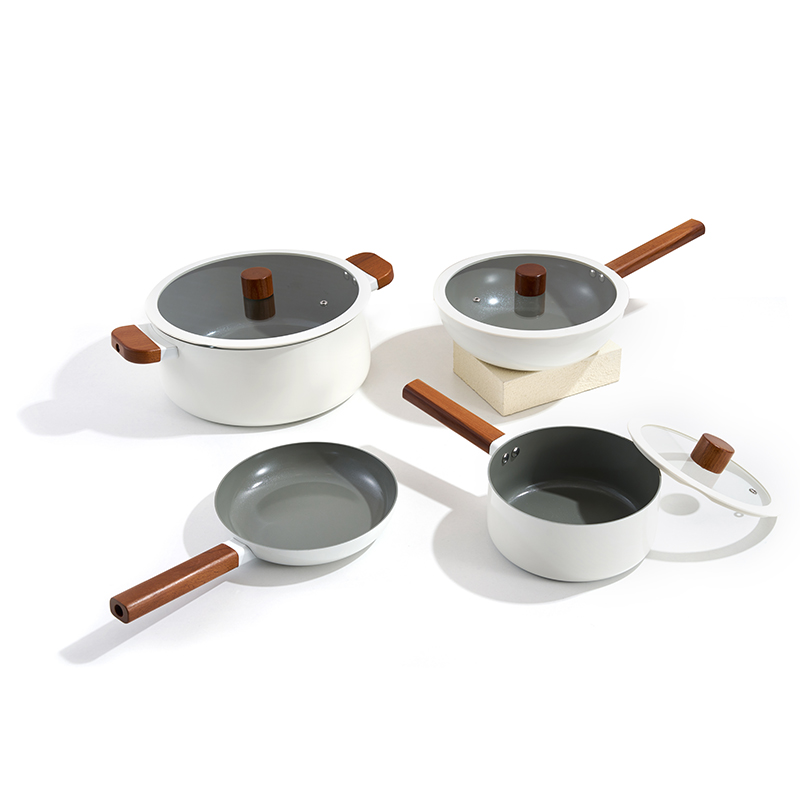
This cookware set has a ceramic non-stick inner liner, a heat-resistant wooden h...
See Details -
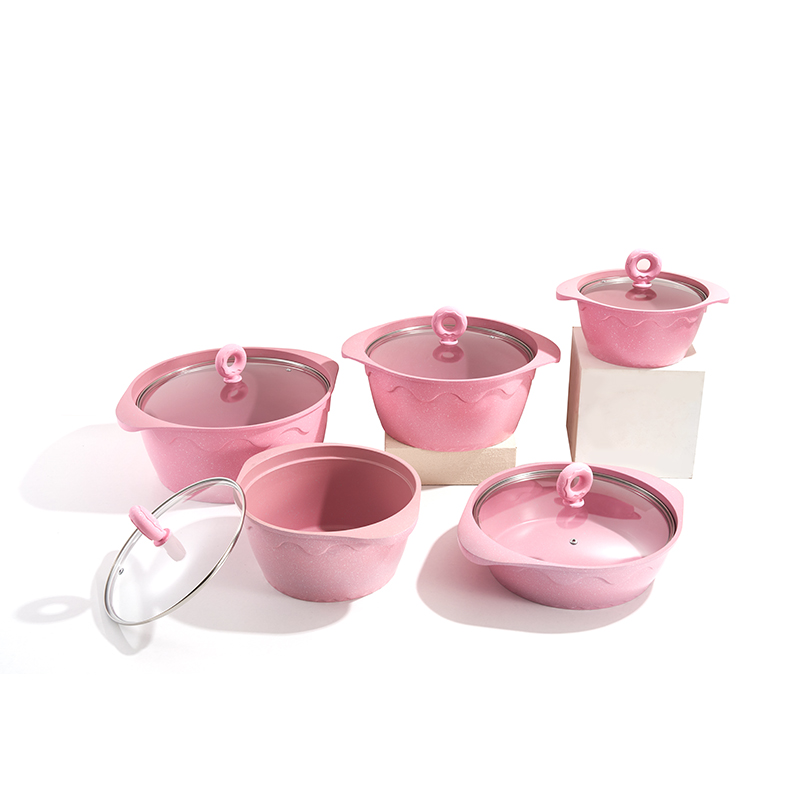
This cookware set is made of food-grade non-stick material, with a unique eye-ca...
See Details -
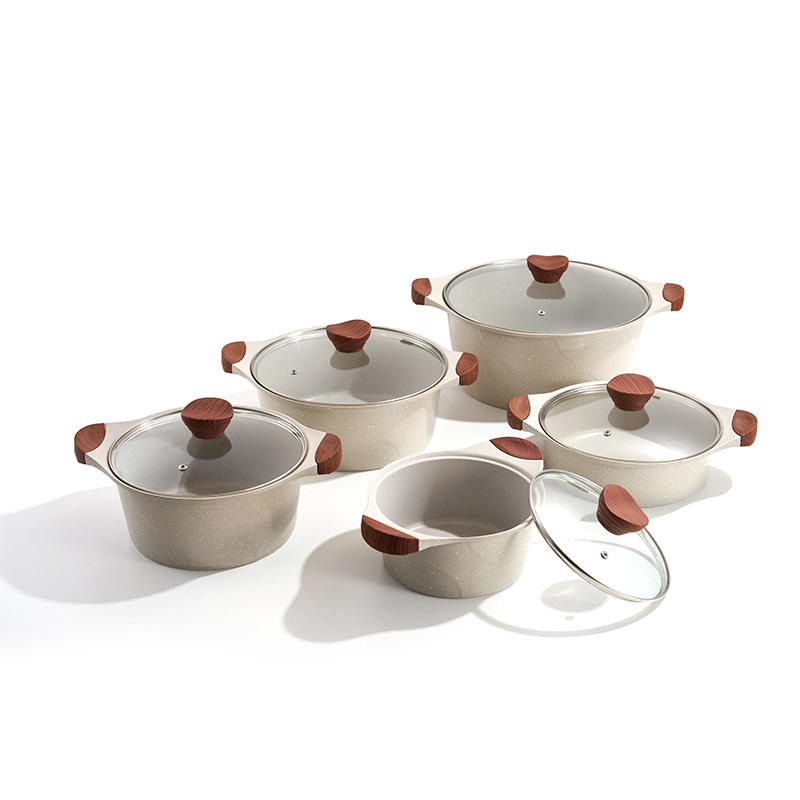
This off-white cookware set is made of wear-resistant non-stick material, with w...
See Details
Whether you're looking for bulk purchases or have any custom requirements, We are here to offer the best
solutions for you.
tiffany.zhong@echocn-trading.com
PHONE
+86-19561173975
+86-19557020621 (Hazel Wu)
ADD
Room 301, Unit 3014, No. 175 Qifeng Avenue, Wenqiao Town, Taizhou, Zhejiang, China
Fill Out the Form for More Information
Copyright © Zhejiang Echo Industry And Trade Co., Ltd.
All Rights Reserved.

China Cookware Set Manufacturer