
 en
 Español

This cookware set features a non-stick coating, even heat conduction, and multi-...
See Details
4-Cup Aluminum Egg Frying Pan: A Smarter Solution for Efficient Breakfast Preparation
Date:Sep 05, 2026
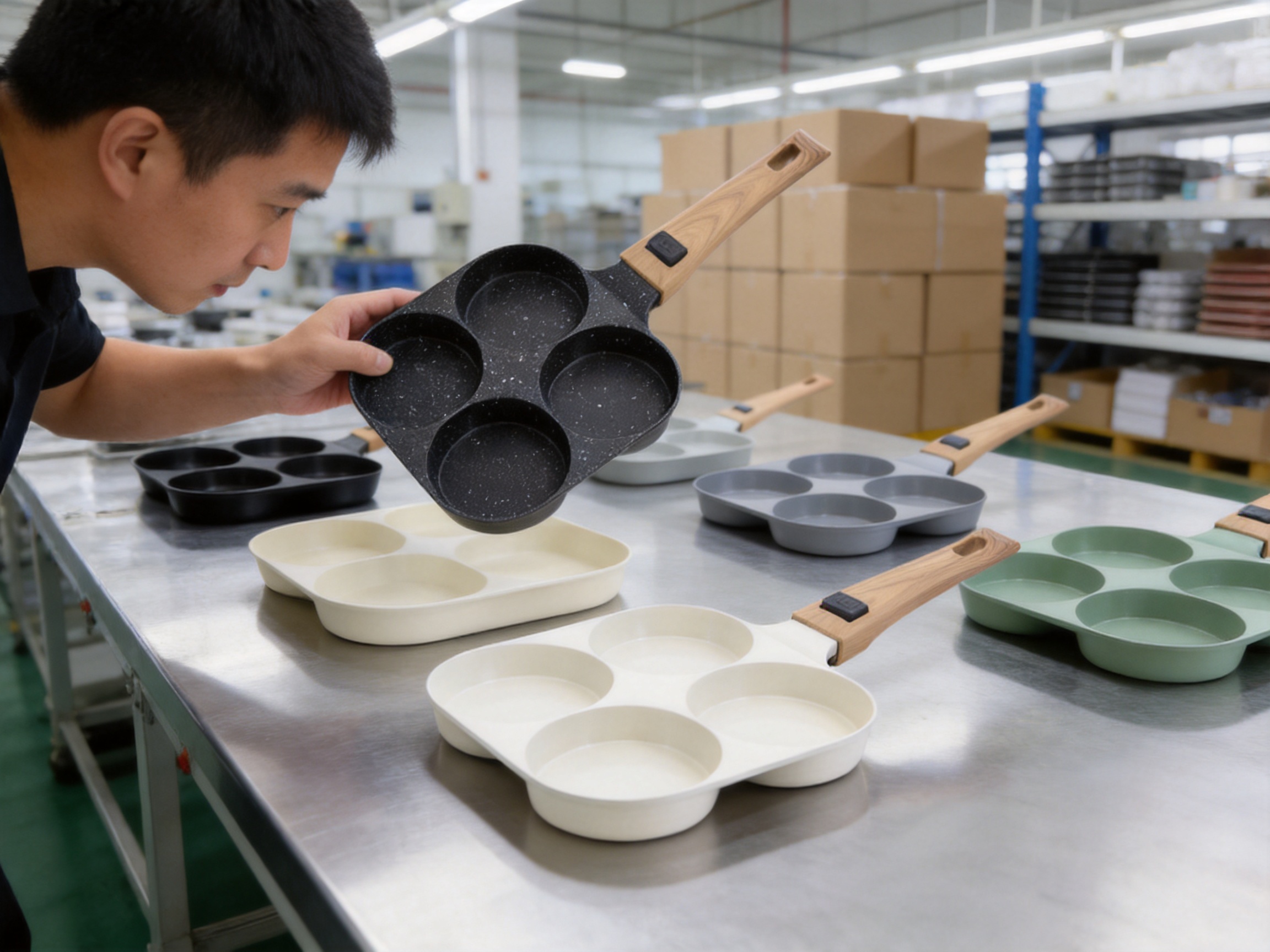
Modern kitchens increasingly demand cookware that combines practical performance, attractive design, easy storage, and dependable manufacturing quality. The 4-Cup Aluminum Egg Frying Pan is designed around these expectations. With its divided cooking surface, non-stick granite interior, comfortable wood-grain handle, and space-saving detachable design, it provides a focused solution for preparing several breakfast portions at the same time.
Unlike a conventional round frying pan, which requires separate rings, molds, or repeated batches, this four-cup pan creates four individual cooking sections in one compact body. Eggs, pancakes, crepes, omelets, breakfast sandwiches, and other small portions can be prepared simultaneously. This design is especially valuable for families, cafés, hotels, meal-preparation businesses, and retailers searching for differentiated cookware with broad consumer appeal.
The pan is made from aluminum, a material widely valued in cookware production for its low weight and efficient heat conductivity. Its 18 × 18 × 3.5 cm format offers a practical balance between cooking capacity and countertop efficiency. At approximately 400 grams per unit, it is light enough for daily handling while remaining substantial enough for regular household use when operated and maintained correctly.
For buyers, importers, wholesalers, and private-label kitchenware businesses, the product also offers opportunities beyond its consumer-facing features. Customizable colors, OEM and ODM support, product certification assistance, flexible sourcing solutions, and export-oriented production capabilities make it suitable for different sales channels and regional markets.

4-Cup Aluminum Egg Frying Pan
What Makes the 4-Cup Cooking Design Different?
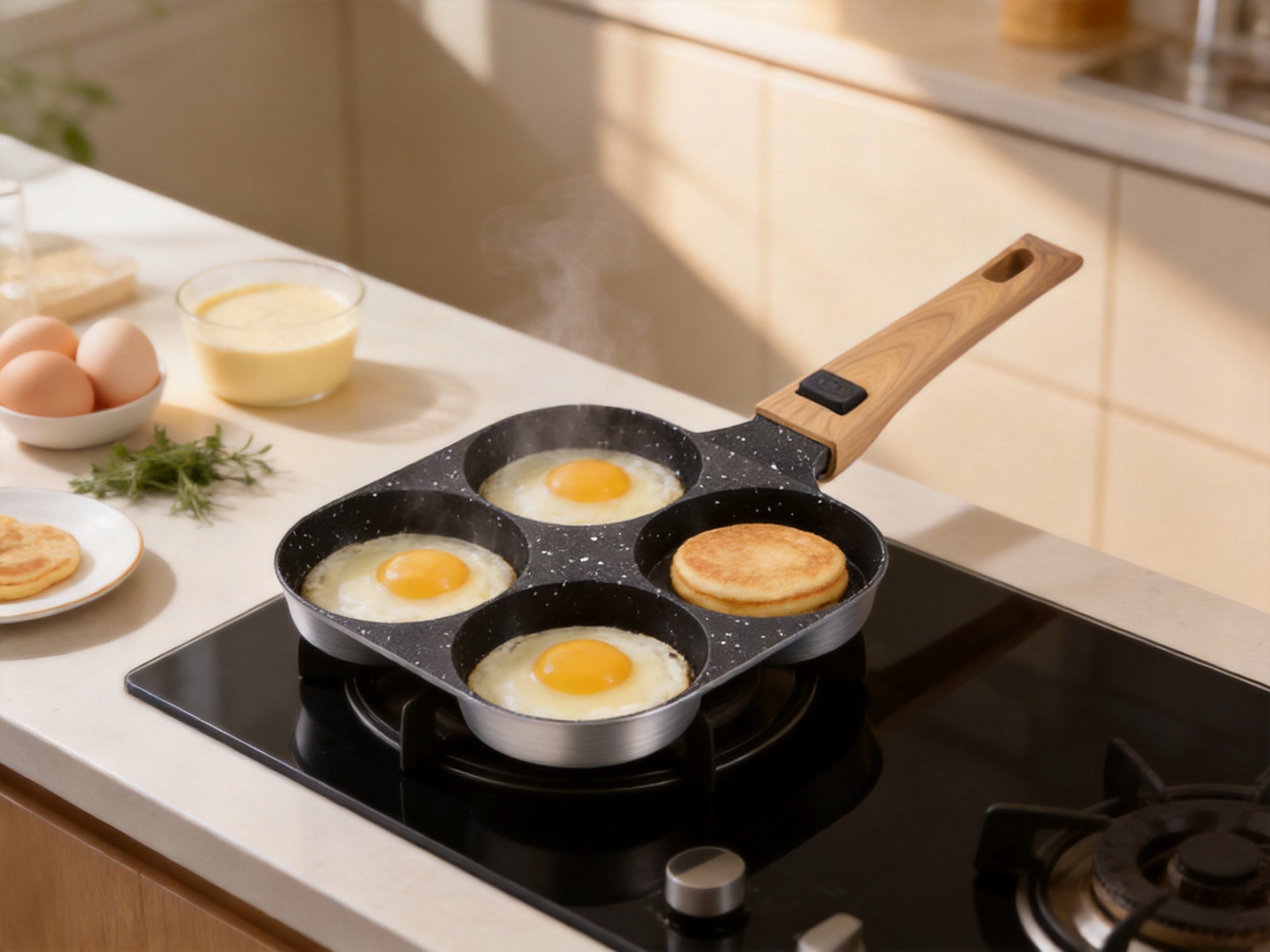
The defining feature of this product is its four-cup divided design. The cooking surface is separated into four sections, allowing users to prepare four portions at once without the food spreading across the pan. This provides a more orderly cooking process and helps create consistent portion sizes.
For breakfast preparation, the advantages are immediate. A household can cook four eggs at the same time, or prepare a combination of eggs and small pancakes in one pan. A food-service operator can use the divided surface to organize multiple portions during peak service. A retailer can present the item as a practical family breakfast tool rather than as another general-purpose frying pan.
The divided format can also assist with portion control. Each cup offers a visual boundary, helping users estimate the amount of batter, egg mixture, or other ingredients used per serving. This can be useful for families with different preferences, for meal planning, and for businesses that want greater consistency between portions.
Traditional frying pans are versatile, but their open surface does not naturally separate ingredients. Users may need silicone rings, metal molds, or individual pans to achieve a similar result. Those accessories occupy storage space and can move during cooking. The integrated four-cup structure eliminates the need for additional portioning tools in many everyday applications.
The product is not intended to replace every type of cookware. It is a specialized pan designed for small, separated portions. That specialization is precisely what gives it a competitive advantage in a crowded cookware market. It addresses a clear use case: preparing several compact servings efficiently, neatly, and with less repetition.
Applications in Household Kitchens
Families can use the pan to prepare breakfast for several people without cooking one serving after another. Eggs can be served simultaneously, helping reduce waiting time and keeping the household’s meal schedule more organized. Parents may also find the individual sections useful when preparing different flavors or portion sizes for children and adults.
The pan can be used for fried eggs, small pancakes, crepes, mini omelets, breakfast patties, and other foods that benefit from a defined shape. With suitable recipes and careful temperature control, the individual sections can also support creative snack preparation and portioned desserts.
Applications in Commercial Food Service
Small restaurants, breakfast cafés, guesthouses, hotels, and catering businesses often need equipment that improves consistency without requiring a large commercial footprint. A compact four-section pan can help staff prepare multiple small portions with a repeatable workflow.
Its relatively light weight makes it easier to handle during busy service periods. The detachable handle can also be beneficial in kitchens where cookware must be stacked or stored quickly after use. Businesses should still confirm that the product specifications, heat source compatibility, and intended usage meet their local operational and safety requirements.
Aluminum Construction for Lightweight Heat Response
Aluminum is one of the most widely used materials in cookware because it combines low density with efficient heat transfer. Compared with many heavier cookware materials, aluminum pans are easier to lift, move, clean, and store. These qualities are especially important for a divided pan, since users may need to position the product carefully on the cooking surface and remove it frequently during meal preparation.
The aluminum body supports relatively quick heat response. When the heat level is adjusted, the pan can respond more readily than heavier cookware that requires a longer time to warm or cool. This characteristic can help users manage delicate breakfast foods such as eggs and pancakes, although correct temperature control remains essential.
A lightweight body also improves usability for a wide range of consumers. Older users, hospitality staff, and home cooks who prefer easy-to-handle utensils may appreciate a 400-gram product that does not create unnecessary strain. For wholesalers, the low unit weight may also contribute to more efficient handling during packing, warehousing, and distribution.
Aluminum cookware must nevertheless be used according to the manufacturer’s care recommendations. It should not be overheated while empty, and the flame or heat source should not extend beyond the base. These practices help protect the cooking surface and reduce the risk of unnecessary thermal stress.
Heat Distribution and Cooking Control
A well-designed aluminum pan is intended to distribute heat across the cooking base efficiently. Even heating is particularly relevant for a divided pan because each section should receive adequate heat for reliable cooking. Users should place the pan centrally on the burner and select a heat setting appropriate for the food being prepared.
The four sections may not cook identically if the pan is placed off-center, if the burner is significantly smaller or larger than the base, or if the heat source is set too high. For the best results, the cookware should be used on a suitable burner and monitored during the first few uses.
The product information identifies the pan as compatible with all stovetops. Buyers supplying different markets should still confirm the exact compatibility requirements of their target regions, particularly for induction systems, which may require a suitable magnetic base or an induction-compatible construction. Product testing and certification should be reviewed before making specific retail claims for individual stove types.
Granite Non-Stick Interior for Easier Cooking
The granite non-stick interior is another important product advantage. A non-stick surface helps reduce the tendency of eggs, pancake batter, and crepe mixtures to adhere to the cooking area. This makes turning and removing food easier while also supporting a simpler cleanup process.
For breakfast foods, surface performance is especially important. Eggs can become difficult to release when cooked on an unsuitable surface, and batter can tear when flipped. The non-stick interior is designed to help users achieve a cleaner release with less reliance on excessive oil or fat.
A non-stick surface can also improve presentation. Food prepared in the individual sections is more likely to retain its intended shape when it can be lifted cleanly. This is valuable for household meals, product demonstrations, social media content, and commercial breakfast service.
Non-stick cookware requires appropriate handling. The care instructions recommend using wooden, nylon, or non-stick cooking utensils and avoiding metal or sharp tools. Scraping, cutting, or piercing the surface with metal utensils can cause damage and reduce the useful life of the coating.
Advantages Over Conventional Uncoated Pans
Compared with an uncoated metal pan, the granite non-stick interior can offer more convenient food release and easier cleaning. Users may need less oil, and residues are less likely to form a stubborn layer when the pan is used at an appropriate temperature.
Compared with a standard flat non-stick frying pan, the four-cup configuration provides better separation and portion definition. This distinction gives retailers a clearer product story. Instead of competing only on surface coating, the pan combines coating technology with a functional cooking format.
Compared with separate egg rings or molds, the integrated cups reduce the number of loose accessories required. This may improve convenience and reduce the chance of accessories shifting during cooking. It also creates a cleaner product presentation for consumers who prefer simple, multifunctional kitchen tools.
Detachable Handle for Storage Efficiency
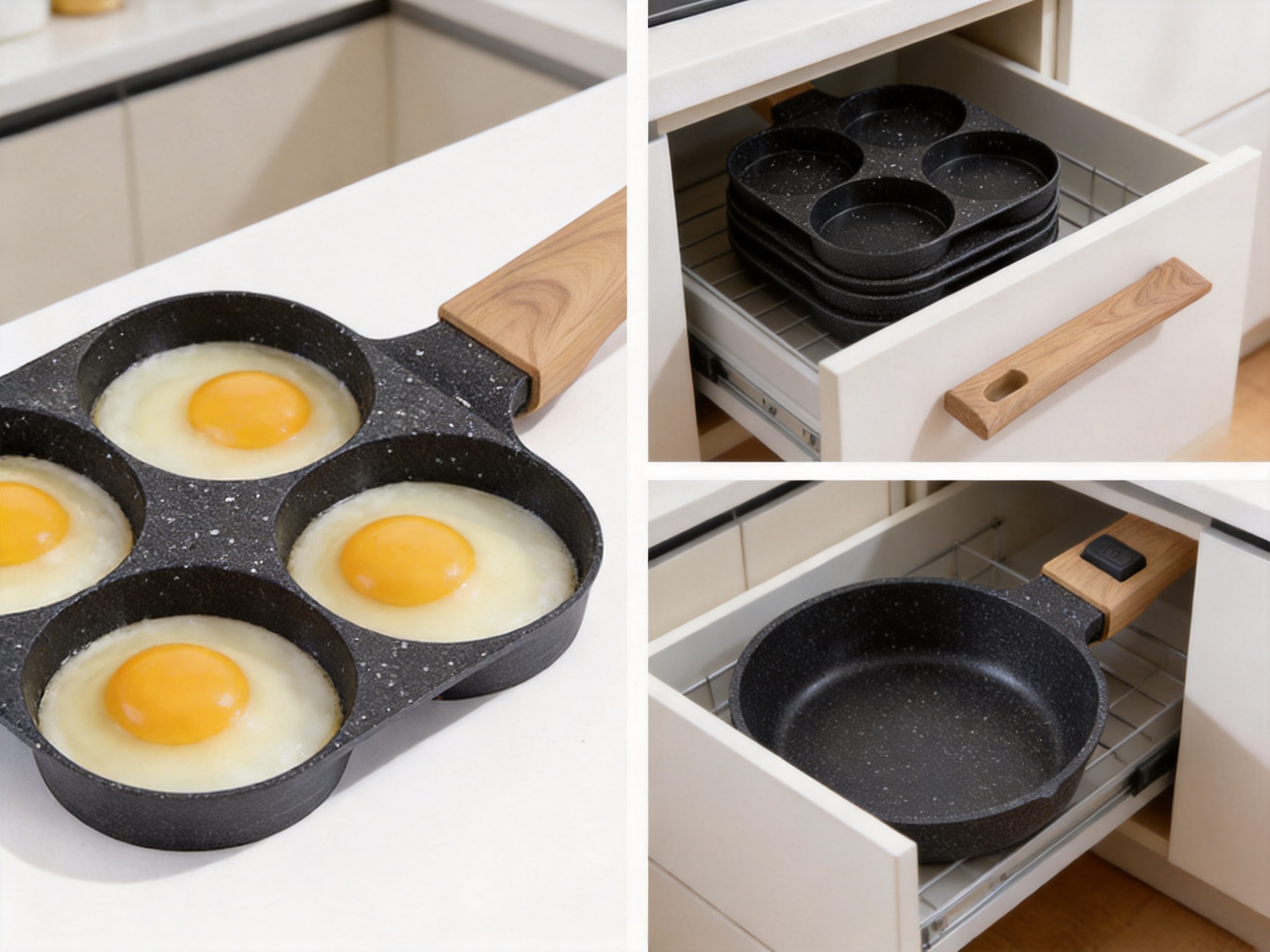
The detachable handle is a practical feature that distinguishes this pan from many conventional frying pans. Handles often determine how cookware fits into a cabinet, drawer, shipping carton, or retail package. By allowing the handle to be removed, the product can occupy less storage space when not in use.
This feature is useful in compact homes, apartments, dormitories, recreational vehicles, and commercial kitchens where storage capacity is limited. It can also help wholesalers and retailers manage packaging more efficiently, subject to final packaging design and product testing.
The removable handle may simplify stacking with other cookware. It can also make the pan easier to place into a cabinet without the handle projecting beyond the shelf. For online retailers, a more compact package may support more efficient inventory management, although actual shipping benefits depend on carton configuration, protective packaging, and distribution requirements.
Users should make sure the handle is securely attached before cooking and should follow the supplier’s instructions for installation, removal, and cleaning. A detachable design provides convenience only when the connection mechanism is used correctly and inspected regularly.
Wood-Grain Appearance and Handling Comfort
The wood-grain handle adds a warm visual element to the pan. Cookware with a natural or wood-inspired appearance can stand out from products that use only plain black or metallic components. This can help retailers create a more attractive shelf presentation and offer consumers a product that combines function with visual appeal.
The handle is also described as heat-resistant and designed for comfortable handling. Even with a heat-resistant handle, users should avoid touching parts that may become hot and should use appropriate caution around the cooking surface. Heat resistance does not mean that the handle is immune to all temperature conditions or prolonged exposure to direct flame.
For product developers, the handle represents an opportunity to build a distinctive private-label identity. Color, finish, packaging, and accessory coordination can be adjusted to suit a retailer’s brand direction, subject to minimum order quantities, technical feasibility, and approval samples.
Design Advantages Compared with Competing Cookware
The cookware market includes many frying pans, egg pans, griddle pans, and breakfast accessories. The 4-Cup Aluminum Egg Frying Pan competes by combining several useful features in one product rather than relying on a single selling point.
| Feature | 4-Cup Aluminum Egg Frying Pan | Conventional Flat Frying Pan | Separate Egg Rings or Molds |
|---|---|---|---|
| Portion separation | Four integrated cooking sections | Food can spread across the open surface | Separate accessories create individual portions |
| Breakfast capacity | Designed for four small servings at once | Depends on pan size and food arrangement | Depends on the number of rings used |
| Storage | Detachable handle supports compact storage | Fixed handle may require more cabinet space | Pan and accessories must be stored separately |
| Surface | Granite non-stick interior | Varies by model | Varies by accessory and pan |
| Handling | Approximately 400 g and designed for easy use | Weight varies considerably | Additional accessories must be positioned and removed |
| Customization potential | Colors can be customized for private-label programs | Depends on the supplier | Often requires separate sourcing |
The comparison does not mean that the four-cup pan is superior for every recipe. A large flat pan remains more suitable for stir-frying, sautéing, or cooking large ingredients. The advantage of this product lies in its specialized breakfast function, compact design, integrated portioning, and storage-oriented construction.
For distributors, this positioning is important. A clearly defined use case makes it easier to create targeted product listings, promotional campaigns, gift bundles, and seasonal breakfast collections. It may also help the item complement rather than directly replace a retailer’s existing range of general-purpose pans.
Manufacturing Strengths and Supply Capabilities
The product is supplied by Zhejiang Echo Industry And Trade Co., Ltd., a kitchenware company based in Zhejiang, China. Zhejiang is widely recognized as an important manufacturing and export region, with established capabilities in metal processing, cookware production, household goods, packaging, and international trade.
The company’s stated product scope covers aluminum cookware, stainless steel cookware, cast iron cookware, and kitchen utensils. This broader category coverage can be valuable for buyers seeking a consolidated supply partner rather than managing multiple small vendors for each material or product family.
A supplier capable of supporting several cookware categories may help buyers coordinate product development, packaging standards, inspection procedures, and shipment planning across a wider assortment. It can also make it easier to build coordinated collections, such as an aluminum breakfast pan paired with stainless steel utensils or complementary cookware sets.
Product Development and R&D Orientation
The company presents itself as an R&D-driven supply chain partner for small and medium-sized kitchenware buyers. This orientation is relevant for products such as the four-cup pan, where success depends not only on the basic aluminum body but also on the combination of cup geometry, coating performance, handle attachment, appearance, packaging, and user safety instructions.
Product development for divided cookware requires attention to several details. The sections need to provide usable cooking space without making the pan unnecessarily bulky. The boundaries should support food separation while allowing convenient utensil access. The handle connection must balance removability with stability. The exterior and interior finishes should support consistent appearance across production batches.
For OEM and ODM customers, these considerations create multiple customization opportunities. Buyers may request different colors, handle treatments, packaging designs, logos, labels, instruction materials, or coordinated product sets. Each change should be confirmed through technical drawings, samples, testing, and production approval before mass manufacturing.
Manufacturing Process Considerations
Although exact factory machinery and process parameters should be confirmed directly with the supplier, aluminum cookware production commonly involves a sequence of controlled stages. These may include aluminum material preparation, forming or stamping, trimming, surface treatment, coating application, curing, handle assembly, inspection, cleaning, and packaging.
Material preparation is important because the aluminum body must meet the required dimensional and structural specifications. Forming creates the pan profile and divided cooking sections. Trimming and edge finishing help produce a consistent outline and reduce sharp or uneven edges. Dimensional checks are particularly important for a compact pan because small variations can affect burner placement, handle fit, stacking, and packaging.
The non-stick coating process requires controlled surface preparation and application. The base should be properly cleaned and prepared before coating, while curing conditions should be managed according to the coating system’s technical requirements. Visual inspection can identify irregularities such as uneven coverage, scratches, bubbles, or contamination.
Handle assembly is another key quality point. The detachable connection should be checked for correct engagement, stability, and smooth operation. A production inspection program may include repeated attachment and removal checks, load testing, visual checks, and examination of the handle’s surface finish.
Final inspection may cover dimensions, weight, appearance, coating condition, handle function, packaging, labeling, and carton quantity. Buyers may also arrange pre-production samples, during-production inspections, pre-shipment inspections, or third-party testing according to their market requirements.
Customization for International Buyers
The product information states that all colors can be customized. Color customization can help importers create a collection that aligns with a retailer’s brand identity or a particular market trend. Popular options may include neutral tones, warm kitchen colors, modern dark finishes, or coordinated colors across several cookware categories.
Color selection should be handled through physical samples or approved color standards rather than relying only on digital images. Lighting, screen settings, coating texture, and production conditions can affect perceived color. Buyers should define acceptable variation ranges and confirm whether the requested color is available for the selected coating and finish.
OEM services may include private labeling, customized packaging, logo placement, instruction leaflets, barcode labels, and product photography support. ODM services may involve adjustments to the existing design, such as changes to handle appearance, packaging structure, color combinations, or coordinated accessories.
Customization should also consider local regulations. Different markets may have requirements concerning food-contact materials, coating composition, labeling language, warnings, packaging information, and product testing. The supplier offers product certification assistance, but the buyer remains responsible for confirming the legal requirements applicable to its destination market and sales channel.
Packaging and Carton Planning
The listed carton quantity is 12 units, with a carton size of approximately 40 × 33 × 27.5 cm and a stated carton volume of 0.0363 cubic meters. These details provide a starting point for logistics planning, warehouse estimation, and freight calculations.
| Specification | Listed Information |
|---|---|
| Product name | 4-Cup Aluminum Egg Frying Pan |
| SKU | BZD03 |
| Material | Aluminum |
| Product size | 18 × 18 × 3.5 cm |
| Unit weight | Approximately 400 g |
| Minimum order quantity | 1,200 units |
| Carton quantity | 12 units |
| Carton size | 40 × 33 × 27.5 cm |
| Stated carton volume | 0.0363 m³ |
| Color | Customizable |
The listed MOQ of 1,200 units is suitable for distributors, regional wholesalers, online retailers, hospitality suppliers, and private-label businesses planning a meaningful market launch. At 12 units per carton, the listed minimum order corresponds to approximately 100 cartons, subject to final order arrangements and packaging configuration.
Buyers should verify whether the MOQ applies to one color, one packaging design, or a combined assortment. They should also confirm the final packed dimensions, because retail boxes, protective inserts, manuals, and customized packaging can change the shipping volume.
Protective packaging is important for cookware with a non-stick interior and detachable components. The pan should be secured to prevent movement, coating abrasion, handle impact, and surface damage during transport. Packaging should also protect the product from moisture, dust, and compression during warehousing and international shipment.
Quality Assurance Priorities
For this type of cookware, quality assurance should evaluate both appearance and function. A visually attractive pan may still create customer complaints if the handle is difficult to attach, the cooking sections are uneven, or the coating does not meet expectations. A structured inspection plan helps reduce these risks.
Important checks may include product dimensions, unit weight, cup shape, surface uniformity, edge finishing, handle fit, handle release mechanism, coating adhesion, coating appearance, packaging integrity, and carton labeling. Buyers should determine which tests are required according to their product claims and destination-market regulations.
Non-stick performance should be assessed using an agreed test method. The test may use representative foods or standardized procedures, but the conditions must be documented. Temperature, cooking time, oil quantity, utensil type, cleaning method, and number of cycles can all influence the result.
Durability expectations should also be communicated clearly. Non-stick cookware is not indestructible. Its service life depends on heat control, utensils, cleaning methods, storage, and frequency of use. Clear care instructions can help consumers understand how to preserve the surface and can reduce avoidable misuse.
Benefits of Certification Assistance
International buyers may require documentation for food-contact safety, coating materials, packaging, labeling, or other regulatory matters. The company states that it can assist with product certification. This support may help buyers organize the documentation process more efficiently.
Certification needs vary by destination, product specification, and sales channel. Buyers should provide the supplier with a complete list of requirements at the beginning of the project. Testing should be conducted on the final production-representative materials and finishes whenever possible, because changes in coating, color, handle material, or packaging may affect documentation.
Certification assistance is most effective when combined with clear product specifications, approved samples, production records, and inspection reports. Buyers should retain copies of relevant documents for internal quality management and customer service.
Care and Use Instructions for Long-Term Performance
Proper care is essential for preserving the appearance and performance of the pan. Before first use, the cookware should be washed according to the supplier’s instructions. Hand washing is recommended because it can help preserve the appearance of the cookware and reduce unnecessary exposure to harsh cleaning conditions.
Users should clean the pan with hot, soapy water and a soft cloth or sponge. Abrasive pads, aggressive scouring tools, and sharp objects should be avoided. Food residues should be loosened with warm water rather than scraped forcefully from the surface.
Wooden, nylon, or non-stick cooking utensils should be used. Metal utensils and sharp tools can scratch or damage the granite non-stick interior. Users should also avoid cutting food directly inside the cooking sections.
The pan should never be overheated while empty. Excessive heat can damage the cooking surface, affect the exterior finish, and create unnecessary safety risks. The flame or heat source should not extend beyond the base of the pan. Choosing an appropriately sized burner helps concentrate heat under the cookware rather than around the sides.
If the pan becomes severely overheated, users should turn off the cooker and allow the pan to cool completely. They should not touch the cookware while it is extremely hot or attempt to cool it rapidly with cold water. Sudden temperature changes may create thermal stress and may also result in hot water or steam splashing.
The pan should not be used in a microwave. It should also be stored in a way that prevents other cookware or sharp objects from scratching the non-stick surface. If stacking is necessary, a soft protective layer may help reduce contact damage.
Consumer Education as a Selling Advantage
Retailers can strengthen the product’s value by presenting clear usage and care information. A short instruction card can explain how to attach the handle, select appropriate heat, use non-metal utensils, clean the pan, and store it safely.
Consumer education also helps protect the supplier’s reputation. When customers understand that non-stick cookware requires controlled heat and gentle utensils, they are more likely to achieve good results. Clear instructions can reduce complaints caused by misuse and encourage repeat purchases of related kitchenware.
Merchandising and Market Positioning
The pan can be positioned as a family breakfast tool, a compact kitchen solution, a portion-control accessory, or a practical gift item. Each positioning emphasizes a different benefit while using the same core product.
For family-oriented retailers, the key message may be simultaneous breakfast preparation. For small-space living collections, the focus may be the detachable handle and compact storage. For online marketplaces, product demonstrations can show four eggs or four small pancakes being cooked at the same time. For hospitality suppliers, the emphasis may be portion consistency and efficient preparation.
The visual presentation should clearly show the divided surface, handle connection, compact size, and non-stick interior. Buyers may use customized colors and packaging to place the product within a broader cookware collection. Coordinating it with spatulas, utensils, storage accessories, or breakfast-themed gift packaging can increase perceived value.
The product may also be suitable for seasonal promotions. Breakfast-related campaigns, back-to-school collections, housewarming gifts, holiday kitchen promotions, and family cooking themes can all provide relevant sales opportunities. The pan’s distinctive shape makes it easier to demonstrate in product photography and short-form video than a generic frying pan.
Potential Customer Groups
Potential customers include household consumers, young professionals, families, students, home cooks, breakfast cafés, boutique hotels, guesthouses, kitchenware retailers, department stores, online marketplace sellers, promotional-product distributors, and private-label brands.
Different customer groups may require different packaging and communication. A supermarket may prefer simple retail packaging and strong shelf visibility. An online seller may need detailed product images, usage instructions, and dimensional information. A hospitality buyer may focus more on durability, replenishment, carton packing, and delivery schedules.
For distributors, the product can fill a specialized category between general frying pans and novelty breakfast accessories. Its practical purpose supports repeatable marketing, while its visual design can create an attractive point of difference.
Why a One-Stop Kitchenware Supplier Matters
Managing a cookware assortment through a single experienced supplier can simplify communication and reduce sourcing complexity. Instead of coordinating separate factories for aluminum pans, stainless steel cookware, cast iron products, and utensils, buyers may be able to develop a broader range through one supply relationship.
A one-stop approach can support consistent packaging language, unified inspection standards, coordinated colors, consolidated shipping, and more efficient product development. It may also help a growing retailer test new categories without establishing multiple supplier relationships from the beginning.
The company’s stated services include product variety, one-stop sourcing, ODM and OEM customization, certification assistance, flexible MOQs, and sustainable and healthy product development. These capabilities are relevant to buyers who want more than a standard catalog item and need support in adapting cookware to specific markets.
Flexible sourcing is particularly useful for small and medium-sized buyers. Such businesses may not have the purchasing volume of a major global chain, but they still need reliable customization, clear communication, and scalable production. A supplier that understands these requirements can help buyers move from sample development to regular replenishment more smoothly.
Commercial Evaluation Before Ordering
Before placing an order, buyers should request a complete product specification, including final dimensions, body thickness, coating details, handle materials, packaging structure, carton measurements, net and gross weights, and applicable compliance documents.
Samples should be evaluated for cooking performance, handle stability, coating appearance, cleaning behavior, storage convenience, and overall presentation. If the product will be sold under a private label, the exact approved sample should be retained as a reference for mass production.
Buyers should also confirm the production lead time, payment terms, inspection arrangements, shipping port, export documentation, and after-sales communication process. For customized colors or packaging, the schedule should include time for artwork approval, sample confirmation, material preparation, and final inspection.
The listed MOQ is 1,200 units, but the commercial terms may vary depending on customization. A standard product with existing packaging may have a different schedule from a fully customized product requiring new artwork, special colors, or coordinated accessories.
Questions Buyers Should Ask the Supplier
Buyers should ask whether the stated all-stovetop compatibility has been tested for the specific stove types sold in their target market. They should confirm whether the detachable handle is included with every unit, how it is packed, and whether replacement handles are available.
They should also ask about the non-stick coating specification, the recommended maximum operating conditions, available certification reports, inspection procedures, and warranty or claim-handling policies. These questions help align product expectations before production begins.
Q&A: Frequently Asked Questions
What is the main purpose of this pan?
The main purpose is to cook four small breakfast portions at the same time in separate sections. It is particularly suitable for eggs, pancakes, crepes, and similar foods that benefit from portion separation and defined shapes.
What material is the pan made from?
The listed material is aluminum. Aluminum helps keep the pan relatively lightweight while supporting efficient heat response. The unit weight is approximately 400 grams.
Does the pan have a non-stick surface?
Yes. The interior is described as a granite non-stick surface. Users should use wooden, nylon, or non-stick utensils and avoid metal or sharp tools to help preserve the coating.
Can the handle be removed?
Yes. The handle is detachable, which can help reduce storage space and simplify stacking. Users should ensure that the handle is securely attached before cooking and should follow the supplier’s operating instructions.
Is the handle comfortable to use?
The handle is designed with a wood-grain appearance and heat-resistant comfort. Users should still use caution because cookware and handle components may become hot under certain conditions.
What are the product dimensions?
The listed product size is 18 × 18 × 3.5 cm. Buyers should confirm whether these dimensions refer to the body, the overall product, or another measurement standard before final packaging and retail listing.
How many units are packed in one carton?
The listed carton quantity is 12 units. The stated carton size is 40 × 33 × 27.5 cm, with a stated volume of 0.0363 cubic meters. Final shipping information should be verified after packaging is confirmed.
What is the minimum order quantity?
The listed minimum order quantity is 1,200 units. Buyers should confirm whether this quantity applies to one color and packaging design or whether a mixed assortment can be arranged.
Can the color be customized?
Yes. The product information states that all colors can be customized. Buyers should approve physical color samples and confirm the minimum quantity, production schedule, and acceptable color variation.
Can the pan be used on all stovetops?
The product information states compatibility with all stovetops. However, buyers should confirm the precise compatibility requirements of their target markets, especially for induction cookers, and should request relevant test or certification documentation where needed.
Can the pan be placed in a microwave?
No. The care instructions state that the pan should not be used in a microwave.
How should the pan be cleaned?
It should be cleaned with hot, soapy water and a soft cloth or sponge. Hand washing is recommended to help preserve the appearance and condition of the cookware.
Can metal spatulas be used?
No. Metal and sharp utensils should be avoided because they can scratch or damage the non-stick surface. Wooden, nylon, or non-stick utensils are recommended.
What should users do if the pan overheats?
If the pan severely overheats, users should turn off the cooker and allow the pan to cool completely. They should not touch the pan while it is extremely hot or cool it suddenly with cold water.
Who may benefit from this product?
Families, compact-home residents, breakfast cafés, small hotels, kitchenware retailers, online sellers, wholesalers, and private-label brands may all find the product useful. Its strongest appeal is to customers who want separated portions and convenient storage in one compact pan.
Conclusion
The 4-Cup Aluminum Egg Frying Pan offers a focused answer to a common kitchen challenge: preparing several small breakfast portions efficiently without using multiple pans or loose cooking molds. Its integrated four-cup design, granite non-stick interior, lightweight aluminum body, detachable handle, and wood-grain styling create a combination that is practical for consumers and commercially attractive for buyers.
Its advantages over conventional cookware are based on specialization. A standard frying pan may offer a larger open surface, but it does not naturally separate four portions. Separate egg rings may create individual shapes, but they require additional storage and handling. This product integrates the portioning function directly into the pan while adding a compact detachable handle.
For international buyers, the product is supported by a broader supply platform offering aluminum cookware, stainless steel cookware, cast iron cookware, kitchen utensils, OEM and ODM services, color customization, certification assistance, and one-stop sourcing. The listed MOQ, carton configuration, and customizable presentation make it suitable for wholesale, retail, hospitality, and private-label programs.
Successful commercialization will depend on more than the product concept. Buyers should confirm material and coating documentation, stovetop compatibility, final packaging, quality inspection procedures, and market-specific compliance requirements. Consumers should follow the care instructions, avoid metal utensils, control heat carefully, and hand wash the pan when possible.
With suitable positioning and responsible product communication, this cookware can occupy a distinctive place in the breakfast and compact-kitchen categories. Its combination of portion control, easy handling, storage efficiency, and customized supply potential gives it a strong foundation for retailers and kitchenware businesses seeking a practical alternative to ordinary frying pans.
References
1. Product specification sheet for the 4-Cup Aluminum Egg Frying Pan, SKU BZD03.
2. Supplier-provided cookware care and handling instructions.
3. General technical guidance on aluminum cookware construction, heat transfer, and cookware maintenance.
4. General guidance on non-stick cookware use, utensil selection, cleaning, and heat control.
5. General supply-chain and quality-assurance principles for OEM and ODM kitchenware production.
6. General food-contact product compliance and inspection considerations for international cookware markets.
Product: 4-Cup Aluminum Egg Frying Pan
Recommended Articles
Product Category
Related products
-
-
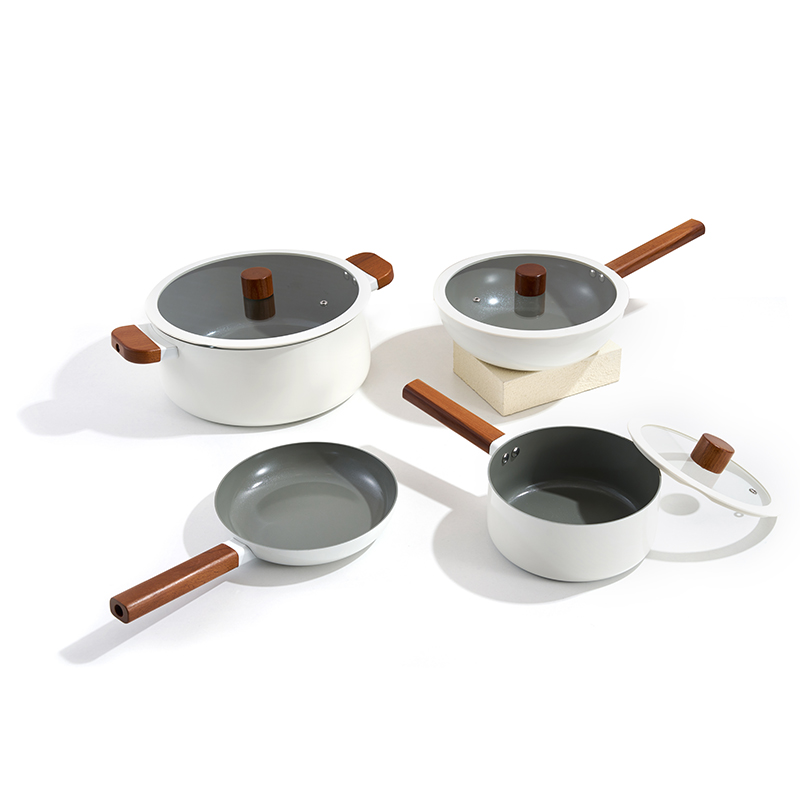
This cookware set has a ceramic non-stick inner liner, a heat-resistant wooden h...
See Details -
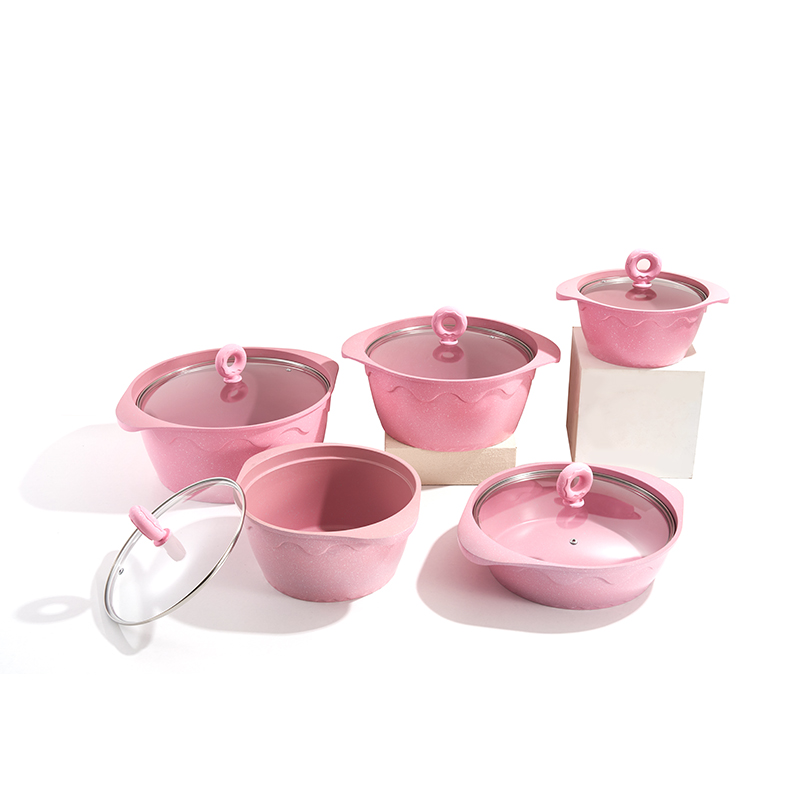
This cookware set is made of food-grade non-stick material, with a unique eye-ca...
See Details -
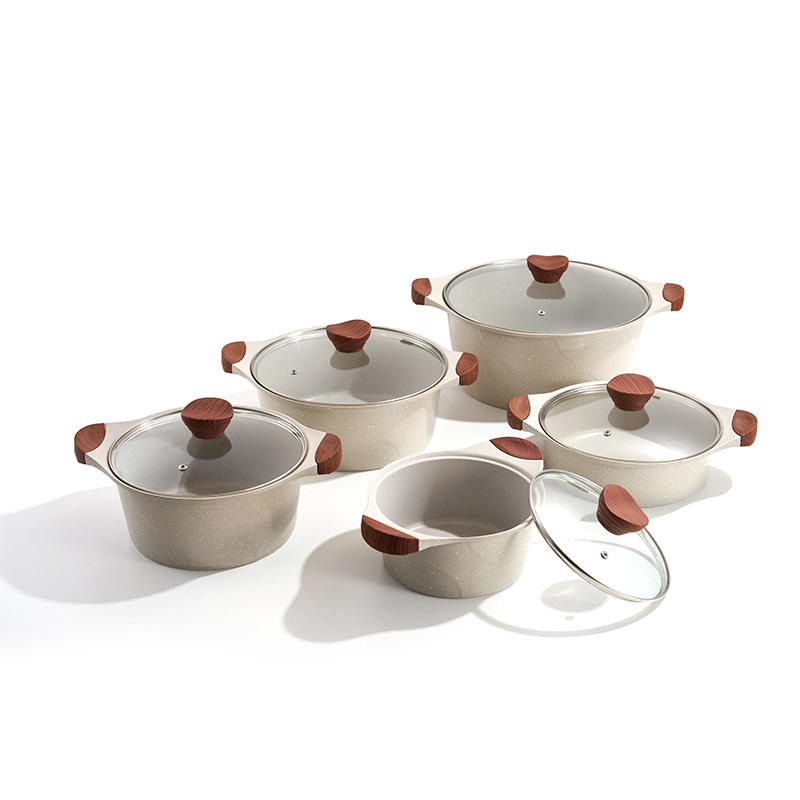
This off-white cookware set is made of wear-resistant non-stick material, with w...
See Details
Whether you're looking for bulk purchases or have any custom requirements, We are here to offer the best
solutions for you.
tiffany.zhong@echocn-trading.com
PHONE
+86-19561173975
+86-19557020621 (Hazel Wu)
ADD
Room 301, Unit 3014, No. 175 Qifeng Avenue, Wenqiao Town, Taizhou, Zhejiang, China
Fill Out the Form for More Information
Copyright © Zhejiang Echo Industry And Trade Co., Ltd.
All Rights Reserved.

China Cookware Set Manufacturer