
 en
 Español

This cookware set features a non-stick coating, even heat conduction, and multi-...
See Details
10-Piece Aluminum Cookware Set: A Practical Guide to Performance, Design, and Sourcing Value
Date:Nov 22, 2026
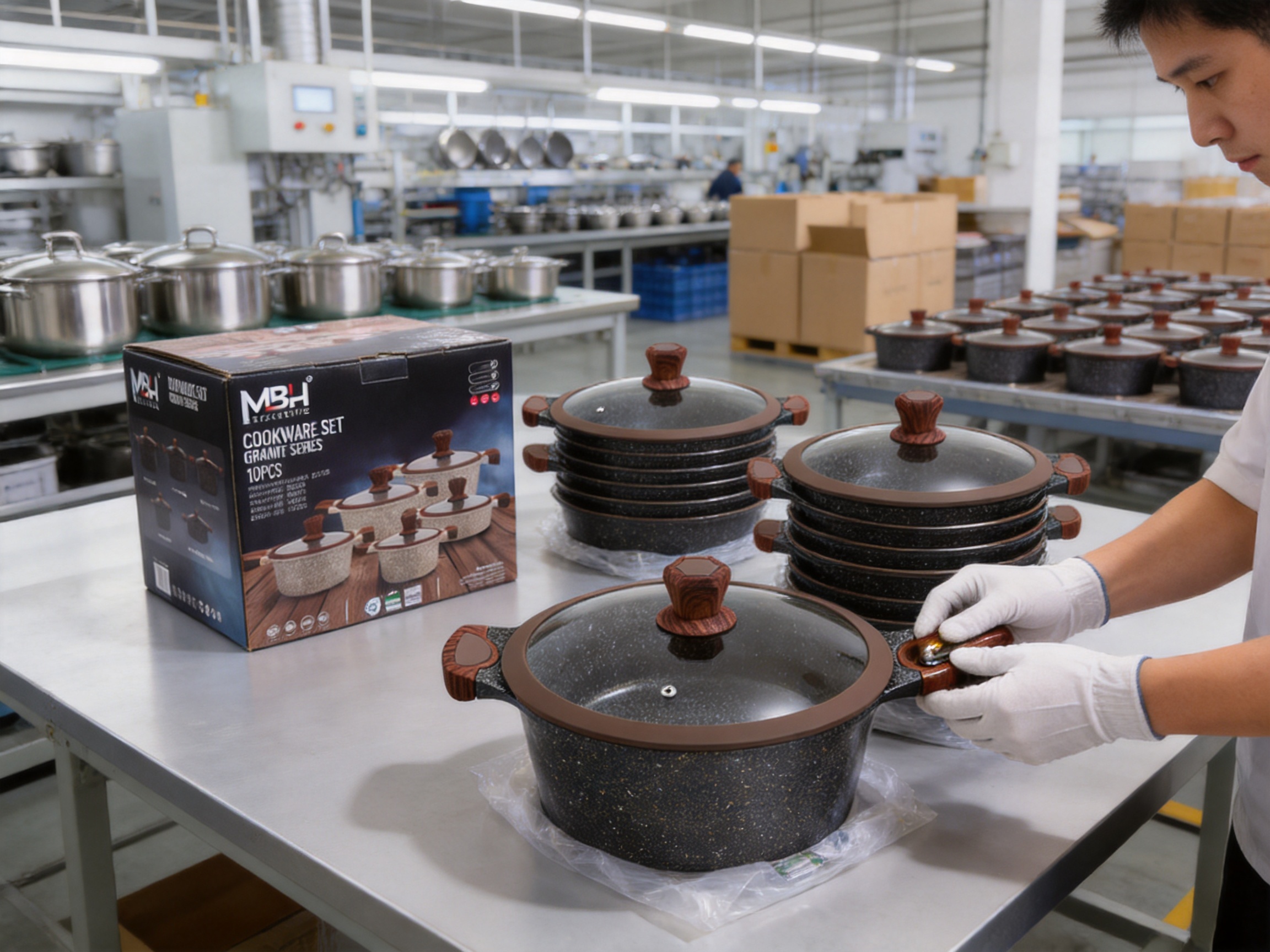
Choosing a cookware set is an important decision for home cooks, professional kitchens, retailers, and hospitality buyers. A well-designed set must do more than look attractive on a shelf. It should support multiple cooking methods, distribute heat effectively, resist everyday wear, remain easy to clean, and offer a comfortable experience throughout repeated use. The 10-piece LeoDiamond Aluminum Pot Set is designed around these practical expectations, combining an aluminum body, granite non-stick coating, wood grain handles, and a versatile form suitable for simmering, frying, and boiling.
This type of cookware set is especially relevant for consumers and purchasing teams seeking a coordinated kitchen solution rather than separate pots and pans selected one by one. A complete set can create visual consistency in the kitchen while simplifying product selection, storage planning, and retail merchandising. For importers and distributors, a multi-piece aluminum cookware set can also provide a flexible product for different market segments, including household kitchens, newly equipped apartments, gift channels, and general kitchenware retail.
The product is supplied by Zhejiang Echo Industry And Trade Co., Ltd., a Zhejiang-based kitchenware supplier focused on cookware and kitchen accessories. Its product range includes aluminum cookware, stainless steel cookware, iron cookware, and kitchen utensils. In addition to product variety, the company presents itself as a supply-chain partner offering one-stop sourcing, ODM and OEM customization, product certification assistance, flexible minimum order quantities, and sustainable and healthy product development.
This article examines the practical features of the 10-piece aluminum cookware set, its potential advantages over conventional or less coordinated alternatives, the manufacturing considerations behind its construction, and the reasons it may be suitable for both individual users and cookware buyers. It also explains care requirements, purchasing questions, quality considerations, and possible applications in international markets.
Product Overview
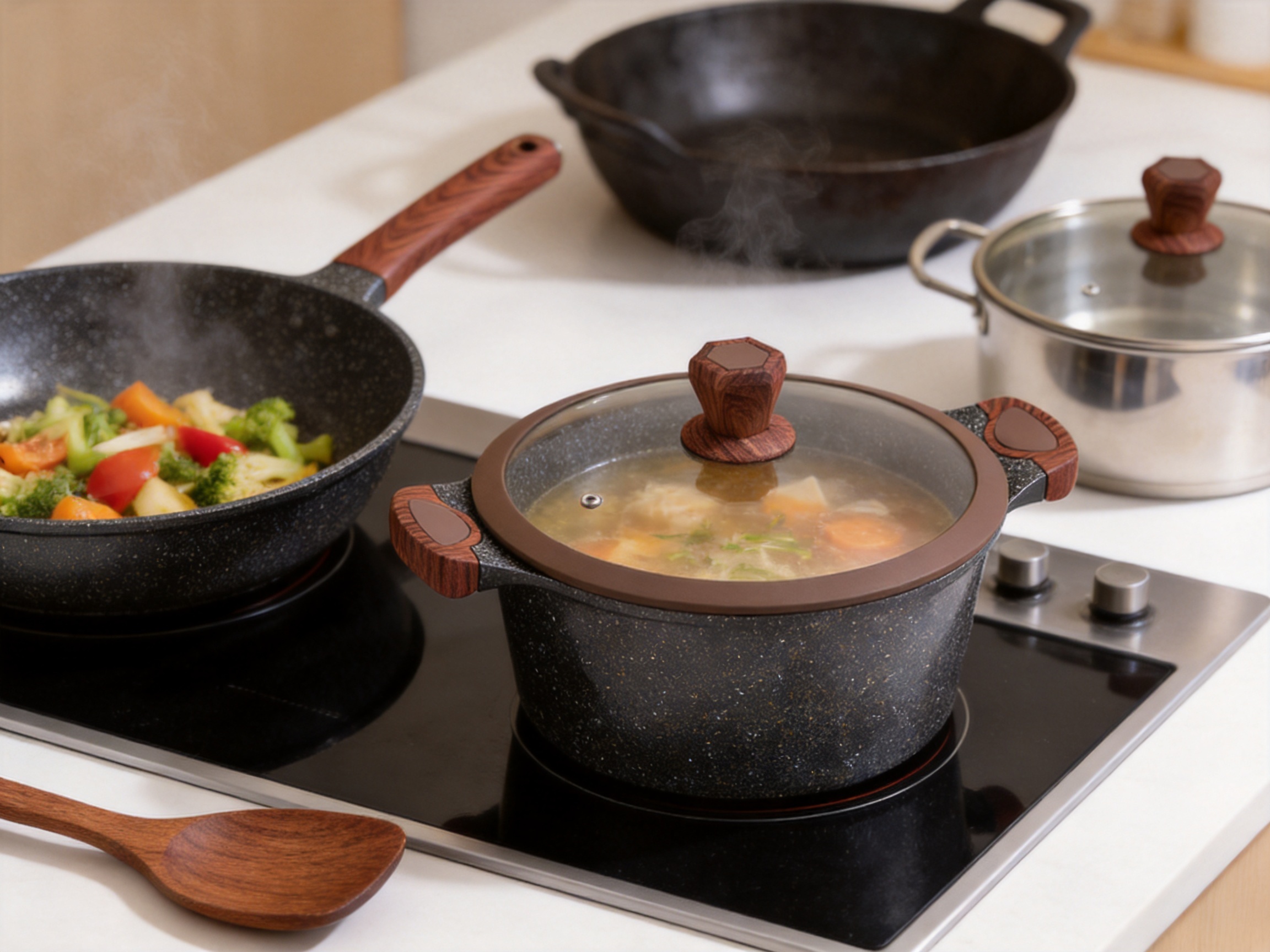
The 10-piece LeoDiamond Aluminum Pot Set has a classic round body that supports familiar cooking routines. Round cookware is widely preferred because it works naturally with circular heating zones, encourages even stirring, and provides a balanced shape for pouring, serving, and storage. The design is not limited to one cooking task. Its intended applications include simmering, frying, and boiling, making it suitable for everyday meals ranging from sauces and soups to vegetables, noodles, grains, and pan-fried ingredients.
The cookware uses an aluminum construction. Aluminum is valued in cookware manufacturing because it is relatively lightweight compared with many heavier metal alternatives and transfers heat efficiently. A responsive aluminum body can help cookware warm quickly and can make temperature changes easier to manage during cooking. This is useful in busy kitchens where users frequently move between low, medium, and high heat.
A granite non-stick coating forms a major part of the product’s user appeal. A non-stick interior can reduce the amount of oil needed for many recipes, help food release more easily, and simplify cleanup after cooking. The granite-inspired surface also contributes to a contemporary visual appearance. When combined with the classic round profile and wood grain handles, the result is a cookware design that balances traditional familiarity with modern retail appeal.
The handles are described as sturdy wood grain handles. Their visual character gives the cookware a warmer and more domestic appearance than plain metal handles. Handles are among the most important points of contact between cookware and user, so their shape, attachment, balance, and surface condition are all important considerations. A well-positioned handle can improve control when lifting, stirring, or transferring cookware from the cooking area to a work surface.
The set is positioned as a classic kitchen essential. This positioning reflects its broad application rather than a narrow specialty. Instead of being designed only for one cooking technique, it aims to cover several common household tasks. The value of a set therefore comes from the combination of coordinated pieces, compatible styling, multipurpose use, and simplified purchasing.

10pcs LeoDiamond Aluminum pot Set
Why Aluminum Remains a Competitive Cookware Material
Cookware buyers often compare aluminum with stainless steel, cast iron, carbon steel, ceramic-coated cookware, and other material categories. Each material has strengths and limitations. Aluminum is competitive because it offers a practical balance between heat responsiveness, manageable weight, production flexibility, and cost efficiency.
One of aluminum’s principal advantages is its ability to conduct heat efficiently. In practical terms, this means the cooking surface can respond relatively quickly when heat is applied or adjusted. For everyday cooking, responsiveness helps users bring liquids to a simmer, warm ingredients, and control frying temperatures without waiting for an especially heavy body to change temperature.
Aluminum cookware can also be easier to handle than heavier iron-based alternatives. A lighter body is useful when the cookware is full of food or liquid. It may be more comfortable for users who cook frequently, prepare large meals, or need to move cookware between a stovetop and a serving area. This characteristic can be particularly relevant in households where ease of handling is as important as long-term durability.
Compared with uncoated aluminum, a coated aluminum product provides an improved cooking surface for users who want easier food release and simpler cleaning. The granite non-stick coating of this set is intended to support these expectations. The coating does not eliminate the need for careful use, but it can make routine cooking more convenient when the recommended utensils and cleaning methods are followed.
Compared with traditional cast iron, aluminum cookware typically offers a less demanding handling experience. Cast iron is known for heat retention and durability, but it is also substantially heavier and may require seasoning or specialized care depending on the finish. The aluminum set provides a more accessible option for consumers who want multipurpose cookware without the weight associated with many cast iron products.
Compared with basic stainless steel cookware, a non-stick aluminum set may offer easier food release for delicate or low-fat cooking. Stainless steel is valued for its strength, appearance, and resistance to many forms of wear, but it can require more attention to temperature control and cooking technique to prevent sticking. A coated aluminum surface can be more forgiving for ordinary household users, particularly when preparing eggs, pancakes, vegetables, fish, or foods containing sauces.
From a sourcing perspective, aluminum cookware can also be attractive because the material supports a broad range of shapes and finishes. Manufacturers can develop coordinated sets with different body dimensions, handle styles, surface treatments, and exterior colors. This flexibility supports private-label programs, retailer-specific collections, and product ranges aimed at different price points.
Advantages of a Coordinated 10-Piece Set
A multi-piece set provides a level of convenience that individual cookware purchases may not offer. Buyers do not need to compare every pan separately or attempt to match handles, coating appearance, and overall dimensions. A coordinated set creates a unified kitchen collection and can help users begin cooking immediately after purchase.
The 10-piece format is also commercially versatile. It is large enough to appear comprehensive while remaining suitable for everyday household use. Retailers can present it as a practical starter set, a home upgrade, a wedding or housewarming gift, or a general-purpose cookware solution. Distributors may also combine it with kitchen utensils or related accessories to create promotional bundles.
Another advantage is task coverage. Simmering, frying, and boiling are among the most common cooking methods in domestic kitchens. A cookware set designed for these uses can support preparation of soups, sauces, rice, pasta, vegetables, meat, seafood, breakfast dishes, and one-pan meals. The set does not need to be limited to a particular cuisine or cooking style.
Coordinated cookware may also improve visual organization. Matching pieces can be stacked or arranged more neatly than unrelated products with different colors, handle shapes, and finishes. For retail buyers, the consistent appearance can strengthen shelf presentation and product photography. For consumers, it can create a more orderly kitchen environment.
In comparison with purchasing separate items, a set may provide better perceived value because the buyer receives several compatible cooking tools through one transaction. The exact value depends on the included pieces, specifications, packaging, warranty, and market price, so purchasers should always review the detailed packing list before placing an order. Nevertheless, the set format itself is a strong advantage for buyers seeking convenience and visual consistency.
Granite Non-Stick Coating and Everyday Usability
The granite non-stick coating is one of the product’s most visible functional features. A non-stick surface is designed to minimize the tendency of food to adhere during cooking. This can help users work with less oil and can reduce the time required to remove residues after a meal.
For breakfast cooking, a non-stick surface can support eggs, crepes, pancakes, and other foods that may be difficult to release from an uncoated surface. For everyday frying, it can help users turn ingredients more easily and reduce the buildup of browned residue. When simmering sauces or cooking vegetables, the smooth surface may also make stirring and cleaning more convenient.
The granite appearance adds a textured visual impression while maintaining the practical purpose of a coated cooking surface. Appearance matters in the cookware market because consumers often evaluate products through a combination of performance expectations and design appeal. A surface that looks modern, clean, and durable can improve shelf impact and support premium positioning compared with plain, undecorated alternatives.
However, non-stick performance depends on correct use. The product care guidance specifically advises users not to use metal or sharp cooking utensils. Wooden, nylon, or non-stick utensils are recommended instead. This instruction is important because metal edges and sharp tools can scratch or damage the coating, especially when used with force or repeatedly against the cooking surface.
Users should also avoid overheating an empty pan. Excessive heat without food or liquid can place unnecessary stress on the coating and cookware body. The care instructions further advise users not to allow the flame or heat source to extend beyond the base. Keeping the heat centered under the base helps reduce unnecessary exposure of the sidewalls and handles.
These recommendations are not limitations unique to one product. They are standard good practices for preserving many coated cookware surfaces. In return for using compatible utensils, moderate heat, and appropriate cleaning methods, users can help maintain the cookware’s appearance and usability over a longer period.
Handle Design and User Comfort
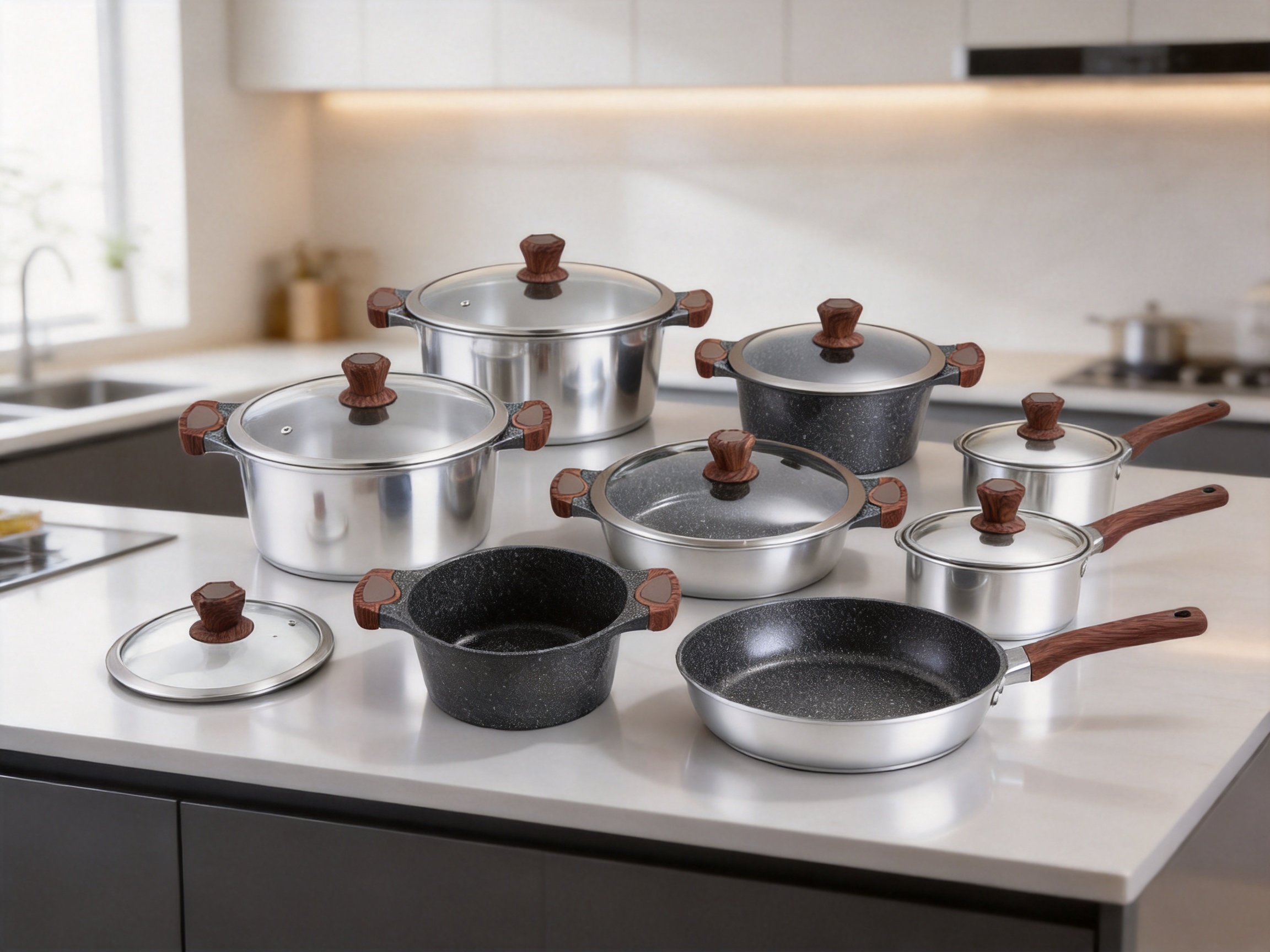
The sturdy wood grain handles contribute both functional and aesthetic value. Handle design affects how confidently a user can lift, turn, stir, and reposition cookware. A handle that feels secure and proportionate to the body can make a noticeable difference when the vessel contains hot food or liquid.
The wood grain appearance gives the product a natural visual character. This can help distinguish it from cookware with entirely metallic or uniformly dark styling. For consumers who want their kitchen tools to look warm and coordinated, wood grain handles may provide a more inviting alternative.
Handle attachment is also important in cookware manufacturing. Buyers evaluating a product for commercial distribution should inspect the connection between each handle and the cookware body, confirm that the handle remains stable during ordinary use, and review the supplier’s quality-control procedures. A strong visual design should be supported by reliable assembly and consistent inspection.
The handle material and construction should also be considered in relation to heat exposure. Users should follow the supplier’s instructions and avoid placing the cookware in conditions beyond its intended use. Since the provided care instructions focus on stovetop use, overheating prevention, and hand washing, users should not assume that the cookware is suitable for every appliance or cleaning system unless the supplier has confirmed it.
For product listings and packaging, clear handle-care information is valuable. Retailers can reduce misuse by explaining that users should avoid direct flame exposure beyond the base, should not overheat empty cookware, and should allow severely overheated cookware to cool after the cooker is turned off. Clear instructions support customer satisfaction and help protect the product’s intended service life.
Manufacturing Considerations Behind the Product
Although the supplied product information does not publish a complete technical process map, the construction of a coated aluminum cookware set requires coordination across several manufacturing stages. These stages generally include material preparation, forming of the cookware body, surface preparation, coating application, handle assembly, inspection, cleaning, packaging, and shipment preparation.
The aluminum body must first be produced to the required shape and dimensions. A classic round body requires consistency in diameter, depth, wall profile, base shape, and rim condition. Dimensional consistency matters because cookware pieces in the same set should have a coordinated appearance and should fit their intended packaging configuration.
After forming, the surface must be prepared for coating. Surface preparation can influence coating adhesion, appearance, and long-term performance. The body may require cleaning and treatment to remove residues or contaminants before the non-stick system is applied. The precise preparation method depends on the manufacturing specification and coating system selected for the product.
Coating application requires controlled attention to coverage, thickness, curing, and visual consistency. The granite non-stick finish must be applied evenly across the intended cooking surface. Inconsistent application can affect both appearance and user experience. A professional cookware supplier should therefore maintain production standards covering coating condition, surface defects, color consistency, and adhesion performance.
Handle assembly is another important stage. The wood grain handles must be positioned correctly, secured firmly, and aligned consistently across the set. Assembly quality should be checked to ensure that handles do not wobble, sit at inconsistent angles, or create an unstable balance when the cookware is lifted.
Inspection should take place at multiple points rather than only at the end of production. Incoming material checks, in-process inspections, coating checks, assembly checks, and final product reviews can help identify issues earlier. A structured inspection system can reduce the risk that cosmetic or functional problems reach the customer.
Packaging also forms part of the manufacturing and supply process. Cookware must be protected against scratches, impacts, coating damage, and handle deformation during storage and transportation. A coordinated 10-piece set requires careful internal arrangement so that pieces do not rub against one another unnecessarily. Appropriate packaging design can preserve presentation quality from the factory to the retail shelf.
Zhejiang Echo Industry And Trade Co., Ltd. describes its business as a professional kitchenware supplier with an emphasis on product variety and supply-chain cooperation. Its ability to provide aluminum cookware alongside stainless steel cookware, iron cookware, and kitchen utensils can help buyers coordinate broader product programs. This category breadth may reduce the need to source every kitchenware item from separate suppliers.
Supplier Strengths and Customization Potential
For wholesale customers, product quality is only one part of supplier value. Communication, product range, order flexibility, customization support, documentation, and delivery coordination also influence the success of a cookware program. The supplier presents several capabilities that may be relevant to importers, distributors, retailers, and brand owners.
One stated strength is one-stop sourcing. A buyer seeking aluminum cookware, stainless steel cookware, iron cookware, and kitchen utensils may be able to consolidate product development and purchasing discussions through one supplier relationship. Consolidation can simplify communication and make it easier to build complementary collections with consistent packaging or merchandising goals.
Another stated capability is ODM and OEM customization. ODM support may be useful for buyers looking to select from an existing product platform while adapting colors, packaging, handle details, or other commercial elements. OEM cooperation may support customers that have their own specifications, brand identity, packaging requirements, or market positioning.
Customization should be discussed in precise terms before production. Buyers may need to confirm available coating colors, handle finishes, logo application, carton design, label language, barcode requirements, packing configuration, sample approval procedures, and production lead times. They should also establish which changes affect tooling, minimum order quantities, cost, and delivery schedules.
The company also identifies product certification assistance as part of its service offering. Certification requirements vary by destination market and by product composition. Buyers should communicate the target country, applicable food-contact requirements, labeling rules, packaging regulations, and testing expectations at the beginning of the project. Documentation should be reviewed carefully before commercial shipment.
Flexible minimum order quantities can be valuable for small and medium-sized buyers. Smaller brands may want to test a product before committing to a large program, while established distributors may require larger production runs. A flexible approach can support market testing, seasonal purchasing, and gradual expansion of a cookware line.
The company’s stated focus on sustainable and healthy product development also reflects current market expectations. Buyers increasingly evaluate cookware not only by appearance and price but also by materials, coating information, packaging efficiency, product lifespan, and responsible sourcing practices. Any sustainability claim should be supported by specific documentation, so purchasers should request relevant details when these factors are important to their market.
Comparison with Common Alternatives
| Comparison factor | Aluminum non-stick set | Uncoated stainless steel set | Cast iron cookware | Separate mixed cookware items |
|---|---|---|---|---|
| Heat responsiveness | Generally quick and responsive | Varies by construction and base design | Usually slower to heat and cool | Depends on the material of each item |
| Handling weight | Typically manageable for daily use | Moderate, depending on thickness | Often heavy | Inconsistent across pieces |
| Food release | Supported by the non-stick coating | Requires technique and temperature control | Depends on seasoning and preparation | Varies by product |
| Cleaning convenience | Designed for easier cleaning with proper care | May require more scrubbing for stuck food | Requires material-specific maintenance | Different care methods may be needed |
| Visual coordination | Matching set appearance | Often coordinated if purchased as a set | May have a traditional appearance | Often inconsistent |
| Best suited to | Everyday multipurpose cooking | High-heat and technique-based cooking | Heat retention and robust cooking | Highly individualized kitchen setups |
The table illustrates why a coated aluminum set can occupy a practical position between specialized cookware categories. It may not replace every type of cookware for every user, but it can provide a balanced everyday solution. Consumers who prioritize manageable weight, easy food release, and broad use may find it more convenient than heavier or more maintenance-intensive alternatives.
Compared with buying individual items from different manufacturers, a coordinated set also reduces variation. Mixed purchases can result in different handle designs, cooking behaviors, cleaning requirements, and storage dimensions. A set creates a more unified experience and can make product education easier for retailers.
Care and Maintenance Instructions
Proper care is essential for preserving the non-stick coating and overall appearance of the cookware. The product should be washed before first use. This initial cleaning removes any dust or residues that may have accumulated during manufacturing, packaging, or transportation.
Hand washing is recommended to preserve the appearance of the cookware. Users should clean the items with hot, soapy water and a soft cloth or sponge. Abrasive pads, harsh scrapers, and aggressive cleaning tools may damage the coating or exterior finish, so gentle cleaning is the preferred approach.
Metal or sharp cooking utensils should not be used. Wooden, nylon, or non-stick utensils are more suitable because they are less likely to scratch the cooking surface during normal preparation. Users should avoid cutting food directly inside the cookware with knives or other sharp tools.
Empty cookware should not be overheated. Before turning on the heat, users should add the necessary ingredients, liquid, or oil appropriate to the recipe. If a pan severely overheats, the instructions advise users not to touch it. Instead, they should turn off the cooker and allow the cookware to cool completely before handling or cleaning it.
The flame or heat source should not extend beyond the base of the cookware. Excess heat around the sides can affect handles, exterior surfaces, and coating performance. Keeping the heat source properly centered is a simple habit that supports safer and more controlled cooking.
The cookware should not be used in a microwave. This is an important instruction for consumers who may otherwise assume that a kitchen product is suitable for all heating appliances. Retailers should present this information clearly on product pages, packaging, or instruction inserts.
Good maintenance begins with correct cooking behavior. Moderate heat, suitable utensils, careful washing, and proper storage can help preserve the set’s visual appearance and cooking performance. Users should avoid stacking pieces in a way that allows hard surfaces or handles to scrape against the non-stick interiors. If stacking is necessary, soft separators may help reduce contact damage.
Quality Evaluation for Buyers
Wholesale and retail buyers should evaluate a cookware set through both samples and documentation. A sample review should examine the consistency of the body shape, the smoothness of the rim, the stability of each handle, the appearance of the coating, and the overall balance of the cookware.
The interior coating should be visually consistent and free from obvious bubbles, peeling, exposed areas, or irregular patches. The exterior finish should also be checked for scratches, stains, dents, and color variation. Because cookware is both a functional product and a visible kitchen item, cosmetic quality has a direct influence on consumer perception.
Handle security should be tested through appropriate normal-use checks. The handle should feel firm and properly aligned. The cookware should not tilt unexpectedly when placed on a flat surface or lifted in an empty condition. Buyers should also confirm whether the handle design has any specific heat limitations or care requirements.
Packaging should be reviewed for protection and presentation. The internal arrangement should prevent pieces from striking one another during transport. The carton should contain clear product information, care instructions, quantity details, and any required market labeling. If the product is intended for export, packaging should be adapted to the language and regulatory expectations of the destination market.
Buyers should ask for product specifications before finalizing an order. Relevant information may include body material, coating system, dimensions, net weight, gross weight, included pieces, packaging details, applicable testing, and recommended use conditions. The exact contents of a 10-piece set should be confirmed in writing because piece counts may include lids, accessories, or other components depending on the approved configuration.
Sample approval is particularly important for private-label programs. The approved sample should serve as a reference for color, handle appearance, logo position, packaging, and overall workmanship. Any deviations should be discussed before mass production begins.
Applications in Different Markets
The 10-piece aluminum cookware set can serve a broad range of consumer and commercial channels. In household retail, it may appeal to customers replacing old cookware or setting up a new kitchen. Its combination of multipurpose use, coordinated appearance, and non-stick convenience makes it suitable for general merchandise stores, kitchenware specialists, department stores, and online marketplaces.
It can also be positioned for apartment furnishing and property-management programs. New residences often require practical kitchen essentials that cover common cooking tasks without requiring residents to purchase many separate items. A coordinated set can simplify procurement and standardize the kitchen equipment provided across multiple units.
Gift retail is another possible application. Cookware sets are commonly associated with weddings, housewarming occasions, family events, and seasonal promotions. The wood grain handles and granite-style finish may help the product appear more distinctive than a basic, undecorated cookware collection.
For international distributors, the supplier’s broader product range may support collection building. The aluminum set can be sold alongside stainless steel cookware, iron cookware, and kitchen utensils. This allows buyers to create different tiers or categories, such as lightweight non-stick products for everyday cooking, stainless steel items for durability-focused customers, and iron cookware for traditional or high-heat applications.
Hospitality and food-service buyers should evaluate the product according to their operating conditions. The set may be appropriate for selected light-duty or domestic-style applications, but commercial kitchens should confirm capacity, heat-source compatibility, cleaning procedures, expected usage frequency, and coating requirements before large-scale adoption. Product suitability should always be matched to the actual operating environment.
Merchandising and Product Communication
Effective product communication should focus on practical benefits rather than vague claims. Retail descriptions can highlight the aluminum body, granite non-stick coating, classic round design, wood grain handles, multipurpose cooking applications, and recommended care instructions.
Images should show the cookware from several angles, including the exterior finish, interior coating, handle design, stacked arrangement, and package presentation. Consistent photography helps customers understand the product before purchase. For online channels, clear images are especially important because consumers cannot physically hold the handles or inspect the coating.
Product copy should avoid implying that non-stick cookware is maintenance-free. A more accurate message is that the coating is designed to support easier food release and cleaning when used with compatible utensils and gentle washing methods. This wording sets realistic expectations and encourages correct care.
Retailers should also explain that the cookware should not be used in a microwave, should not be overheated while empty, and should not be exposed to flames extending beyond the base. Including these instructions near the product description can reduce misuse and improve customer confidence.
For B2B buyers, merchandising materials may include carton artwork, specification sheets, instruction leaflets, barcode labels, and private-label packaging. The supplier’s OEM and ODM capabilities can support adaptation of these materials for different markets, provided that all claims and labeling are reviewed before production.
Why Supplier Expertise Matters
A cookware product is the result of more than a single material or visual concept. It depends on coordinated decisions involving metal forming, coating application, handle assembly, inspection, packaging, documentation, and logistics. A supplier with experience across several kitchenware categories may be better positioned to help buyers create a coherent product range.
Zhejiang Echo Industry And Trade Co., Ltd. describes itself as a professional supplier based in Zhejiang, China, a region recognized for manufacturing and export activity. Its stated goal is to develop from an order-taking business into an R&D-driven supply-chain partner for small and medium-sized kitchenware buyers. This orientation is relevant to customers that need product development support rather than only a standard catalog item.
The company’s stated services include product variety, one-stop sourcing, ODM and OEM customization, product certification assistance, flexible minimum order quantities, and sustainable and healthy product development. Together, these services address several stages of the purchasing cycle, from initial product selection to customization, compliance preparation, and order execution.
Buyers should still conduct their own due diligence. Supplier strengths should be verified through samples, factory communication, quality documents, production references, and agreed inspection procedures. A strong sourcing relationship is built through clear specifications, transparent approval processes, and consistent communication on quality and delivery.
Frequently Asked Questions
What is the main material of the cookware set?
The cookware set uses an aluminum body. Aluminum is valued for its manageable weight and efficient heat response. The cooking surface includes a granite non-stick coating designed to support easier food release and cleaning.
What types of cooking can the set support?
The set is intended for common cooking tasks such as simmering, frying, and boiling. Its multipurpose design makes it suitable for a broad range of everyday recipes, although users should always select the appropriate piece and heat level for each task.
Are metal utensils suitable for this cookware?
No. The care instructions advise users not to use metal or sharp cooking utensils. Wooden, nylon, or non-stick utensils are recommended to help protect the coated cooking surface.
How should the cookware be cleaned?
Use hot, soapy water with a soft cloth or sponge. Hand washing is recommended to help preserve the appearance of the cookware. Abrasive cleaning tools should be avoided.
Can the cookware be used in a microwave?
No. The care instructions specifically state that the cookware should not be used in a microwave.
What should users do if a pan overheats?
If the cookware severely overheats, users should turn off the cooker and leave the pan to cool completely. They should not touch the overheated cookware while it is still hot.
Can the cookware be used over a large flame?
The flame or heat source should not extend beyond the base of the cookware. Keeping the heat source centered helps reduce unnecessary exposure to the sides and handles.
Is the set suitable for private-label projects?
The supplier states that it offers ODM and OEM customization. Buyers should discuss available options such as packaging, branding, colors, handle details, product specifications, and minimum order quantities before ordering.
What should a buyer confirm about the 10-piece configuration?
The buyer should request a complete packing list that identifies every included item. The final configuration should also be confirmed in the approved sample, quotation, packaging artwork, and purchase documentation.
Why choose an aluminum set instead of cast iron?
An aluminum set may be more manageable for daily handling because it is generally lighter and responds more quickly to heat changes. Cast iron may offer strong heat retention but is often heavier and may require different maintenance practices.
Why choose a non-stick set instead of uncoated stainless steel?
A non-stick set may provide easier food release and simpler cleaning for many everyday recipes. Uncoated stainless steel is valued for other characteristics, but it may require more attention to temperature and cooking technique to prevent sticking.
Can the supplier provide other kitchenware categories?
The company identifies aluminum cookware, stainless steel cookware, iron cookware, and kitchen utensils among its product categories. This range may help buyers source complementary products through one supplier.
Final Assessment
The 10-piece LeoDiamond Aluminum Pot Set is designed as a practical, coordinated solution for everyday cooking. Its principal advantages are the responsive aluminum body, granite non-stick coating, classic round shape, sturdy wood grain handles, and broad suitability for simmering, frying, and boiling. These features place it in a competitive position for consumers who want convenient, manageable cookware with a modern yet familiar appearance.
Compared with heavier cast iron products, the set may offer easier handling. Compared with uncoated cookware, the non-stick interior is intended to provide easier food release and cleaning. Compared with individually selected pieces, the coordinated 10-piece format offers convenience, consistent styling, and broader task coverage.
Its performance and service life depend on correct care. Users should wash the cookware before first use, use wooden, nylon, or non-stick utensils, avoid empty overheating, keep flames within the base area, avoid microwave use, and clean with hot soapy water and a soft cloth or sponge. These practices help protect the coating and preserve the appearance of the set.
For wholesale and private-label buyers, the supplier’s broader strengths are also relevant. Its stated capabilities include one-stop sourcing, ODM and OEM support, certification assistance, flexible minimum order quantities, and product development across multiple cookware categories. These services can help small and medium-sized kitchenware buyers build more complete product programs.
As with any cookware purchase, final evaluation should include sample approval, specification confirmation, packaging review, quality inspection, and destination-market compliance checks. When these steps are completed carefully, the 10-piece aluminum cookware set can serve as a versatile product for household retail, gifting, apartment supply, online commerce, and international kitchenware distribution.
References
1. Product information supplied for the 10-piece LeoDiamond Aluminum Pot Set, including construction, coating, handle design, intended cooking applications, images, and care instructions.
2. Supplier information supplied for Zhejiang Echo Industry And Trade Co., Ltd., including cookware categories, sourcing services, customization capabilities, certification assistance, and product development objectives.
3. General cookware material principles concerning aluminum heat response, coated cooking surfaces, stainless steel use, and cast iron handling.
4. General consumer guidance for the care, cleaning, storage, and safe use of non-stick cookware.
5. General purchasing principles for cookware quality inspection, private-label development, packaging review, and export product documentation.
Product: 10pcs LeoDiamond Aluminum pot Set
Recommended Articles
Product Category
Related products
-
-
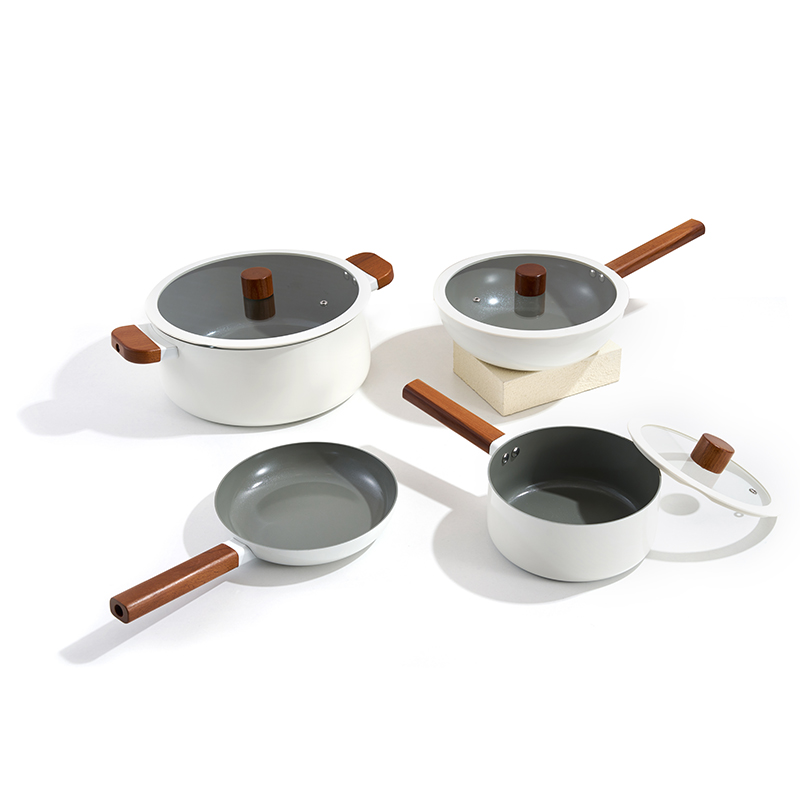
This cookware set has a ceramic non-stick inner liner, a heat-resistant wooden h...
See Details -
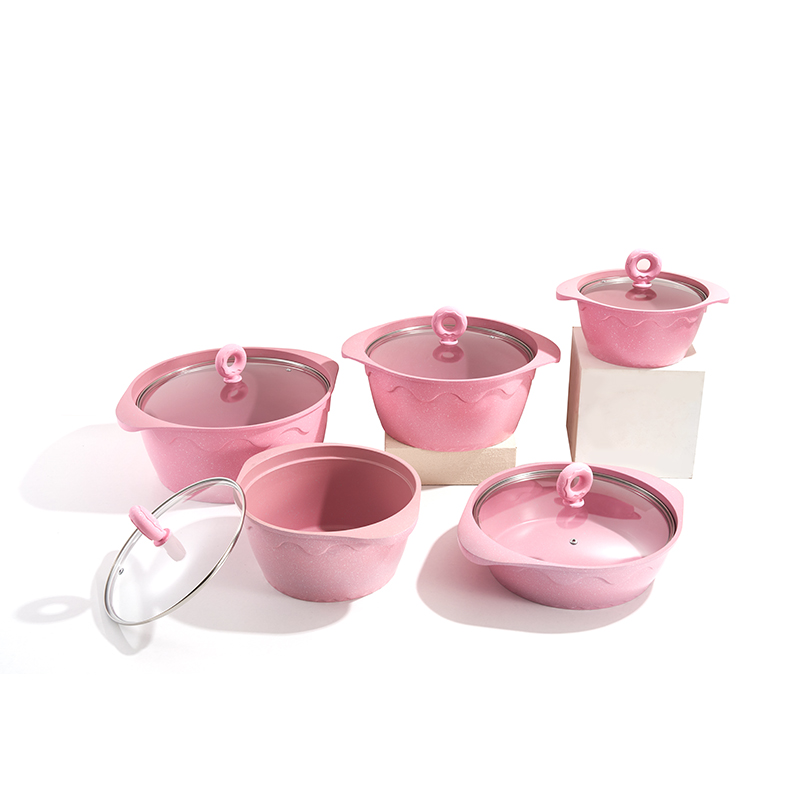
This cookware set is made of food-grade non-stick material, with a unique eye-ca...
See Details -
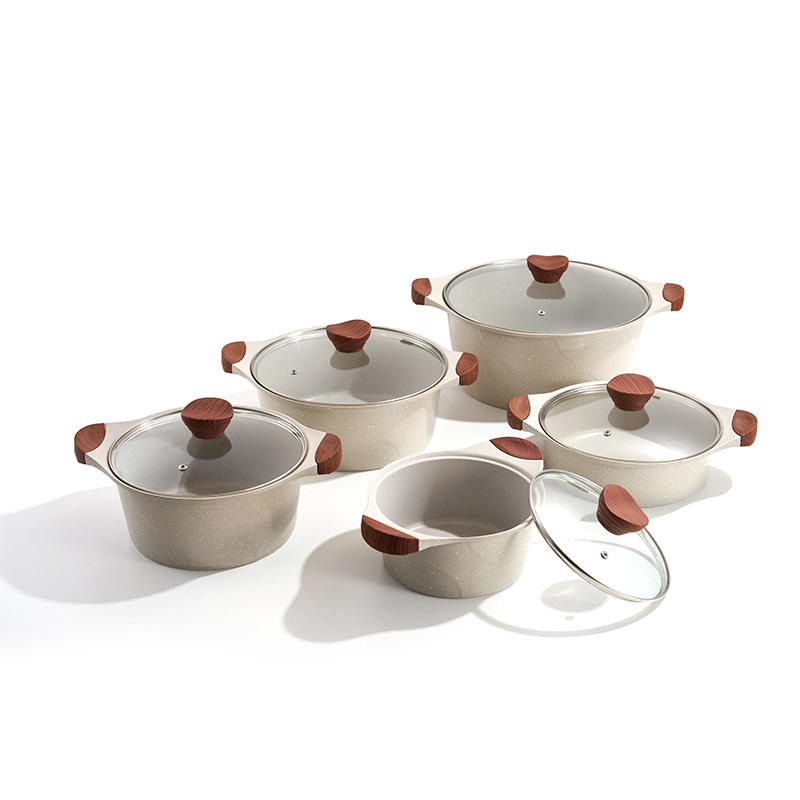
This off-white cookware set is made of wear-resistant non-stick material, with w...
See Details
Whether you're looking for bulk purchases or have any custom requirements, We are here to offer the best
solutions for you.
tiffany.zhong@echocn-trading.com
PHONE
+86-19561173975
+86-19557020621 (Hazel Wu)
ADD
Room 301, Unit 3014, No. 175 Qifeng Avenue, Wenqiao Town, Taizhou, Zhejiang, China
Fill Out the Form for More Information
Copyright © Zhejiang Echo Industry And Trade Co., Ltd.
All Rights Reserved.

China Cookware Set Manufacturer