
 en
 Español
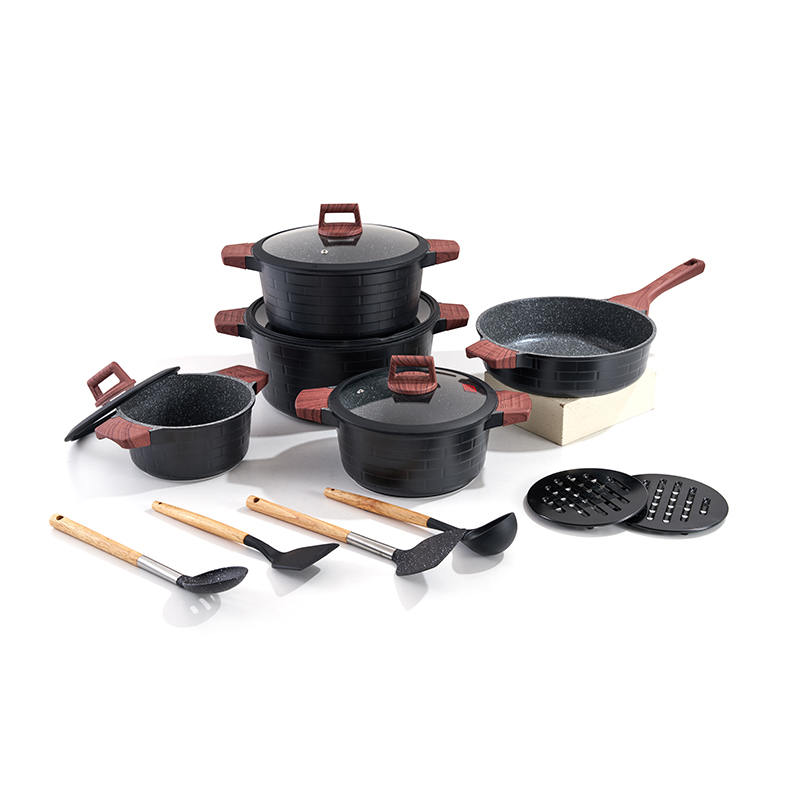
This cookware set features a non-stick coating, even heat conduction, and multi-...
See Details
Coordinating Kitchenware Procurement: Can One Supplier Cover Multiple Categories
Date:Nov 27, 2026
Managing several kitchenware categories often means dealing with different manufacturers, quotations, product specifications, inspection procedures, and shipment schedules. For importers, wholesalers, and private-label brands, this can increase communication workloads and make purchasing coordination more complicated. Working with a supplier that covers multiple related categories may simplify these processes, but product variety alone does not guarantee reliable cooperation.
At Echo Kitchenware, we understand that buyers need more than a broad product catalog. A coordinated kitchen utensils and cookware sourcing program requires clear product specifications, consistent quality management, organized packaging, and dependable order communication. Understanding the benefits and limitations of supplier consolidation helps buyers develop a more practical procurement strategy.
1. Why Are Buyers Considering Multi-Category Procurement?
Purchasing several kitchenware categories through one supplier can reduce the number of commercial contacts involved in an order. This approach is particularly relevant to distributors developing complete kitchen product collections.
Potential benefits include:
- Simplified communication: Buyers can coordinate product requirements, quotations, samples, and order updates through fewer contacts.
- Consistent branding: Coordinated colors, logos, labels, and retail packaging help create a recognizable product collection.
- Shipment coordination: Related products may be scheduled and packed together, depending on production arrangements.
- Purchasing visibility: Consolidated quotations and order records make it easier to review product costs and purchasing progress.
- Product range development: Buyers can discuss complementary items and expand an existing collection through an established supplier relationship.
However, these benefits depend on the supplier's actual capabilities. Buyers should confirm whether each category is manufactured internally, handled through approved production partners, or sourced from external factories.
2. Which Kitchenware Categories Can Be Coordinated?
Related kitchenware products can often be organized into functional groups. This makes assortment planning easier and helps purchasing teams identify suitable product combinations.
| Category | Typical Products | Key Procurement Considerations |
| Cookware | Frying pans, saucepans, stockpots | Material, thickness, coating, heat compatibility |
| Cooking Utensils | Spatulas, ladles, serving spoons | Food-contact materials, heat resistance, handle strength |
| Food Preparation | Whisks, peelers, graters | Functional performance, assembly, durability |
| Kitchen Accessories | Colanders, mixing bowls, storage tools | Dimensions, material compatibility, packaging |
For example, a retailer developing a stainless steel kitchen collection may combine saucepans and stockpots with matching utensils and food preparation accessories. Such combinations can provide a more complete assortment without requiring buyers to develop every item independently.
3. A Broad Product Range Must Be Supported by Category-Specific Quality Control
Different kitchenware products involve different manufacturing processes and quality risks. Applying identical inspection criteria across every category may overlook important product-specific requirements.
At Echo Kitchenware, we recommend defining inspection points according to the actual product type:
- Cookware: Inspect dimensions, material specifications, surface finish, handle attachment, and base stability.
- Silicone utensils: Review material documentation, dimensional accuracy, surface condition, and resistance to intended operating temperatures.
- Stainless steel tools: Check material grade, edge finishing, welding quality, and structural strength.
- Plastic accessories: Verify material identification, molding quality, deformation resistance, and applicable food-contact requirements.
Buyers should also request relevant inspection records and product-specific testing documents. A supplier's general quality management certificate does not automatically demonstrate that every product complies with the regulations of the destination market.
4. Evaluate Manufacturing Capability Before Consolidating Orders
One supplier may coordinate several categories without manufacturing every item at the same facility. This arrangement is not necessarily unsuitable, but purchasing teams need transparency regarding production responsibility.
Several questions can help evaluate a potential partner:
- Which product categories are manufactured directly?
- Are external production partners involved?
- Who approves samples and monitors production quality?
- Can the supplier maintain consistent specifications across repeat orders?
- How are production delays or quality problems communicated?
Buyers should compare actual manufacturing experience, available production resources, and quality responsibilities rather than relying entirely on the number of products displayed in an online catalog.
5. Packaging and Shipment Planning Need Early Coordination
Multi-category orders introduce additional packaging considerations. Stainless steel cookware, silicone utensils, plastic accessories, and other kitchen products may require different protective materials and carton arrangements.
Planning these details before production can help avoid unnecessary changes during order preparation.
- Retail packaging: Coordinate logo placement, product descriptions, barcode labels, and visual design.
- Protective materials: Use suitable separators, sleeves, and cushioning according to product weight and surface characteristics.
- Carton specifications: Confirm dimensions, packing quantities, gross weight, and shipping marks for each SKU.
- Order scheduling: Coordinate production completion and inspection arrangements across different product categories.
For private-label projects, buyers can also establish common packaging guidelines while retaining category-specific product information and handling instructions.
6. Is One Supplier Always Better Than Multiple Specialists?
Supplier consolidation is not suitable for every purchasing program. A specialized manufacturer may provide deeper technical knowledge, more focused production resources, or better customization support for a particular category.
A practical decision can be based on the following comparison:
| Procurement Model | Potential Benefits | Considerations |
| One multi-category supplier | Fewer contacts, coordinated branding, simplified order communication | Requires verified capability across all categories |
| Multiple specialized suppliers | Focused manufacturing expertise and category-specific resources | More communication and shipment coordination |
| Hybrid sourcing model | Combines category specialists with centralized purchasing coordination | Requires clear responsibility and quality documentation |
The appropriate model depends on product complexity, order volume, customization requirements, and the buyer's internal purchasing resources. Maintaining alternative sources for commercially important products can also reduce dependence on a single supplier.
Build a Coordinated Kitchenware Sourcing Program with Echo Kitchenware
Multi-category procurement can make kitchenware purchasing more organized, but successful cooperation depends on manufacturing transparency, product-specific quality control, and effective order management. A broad assortment only creates commercial value when every product meets its defined requirements.
At Echo Kitchenware, we welcome discussions with importers, wholesalers, distributors, and private-label brands looking to develop coordinated cookware and kitchen accessory collections. Our team can discuss product specifications, material options, customization requirements, and packaging arrangements according to your sourcing plans.
Recommended Articles
Product Category
Related products
-
-
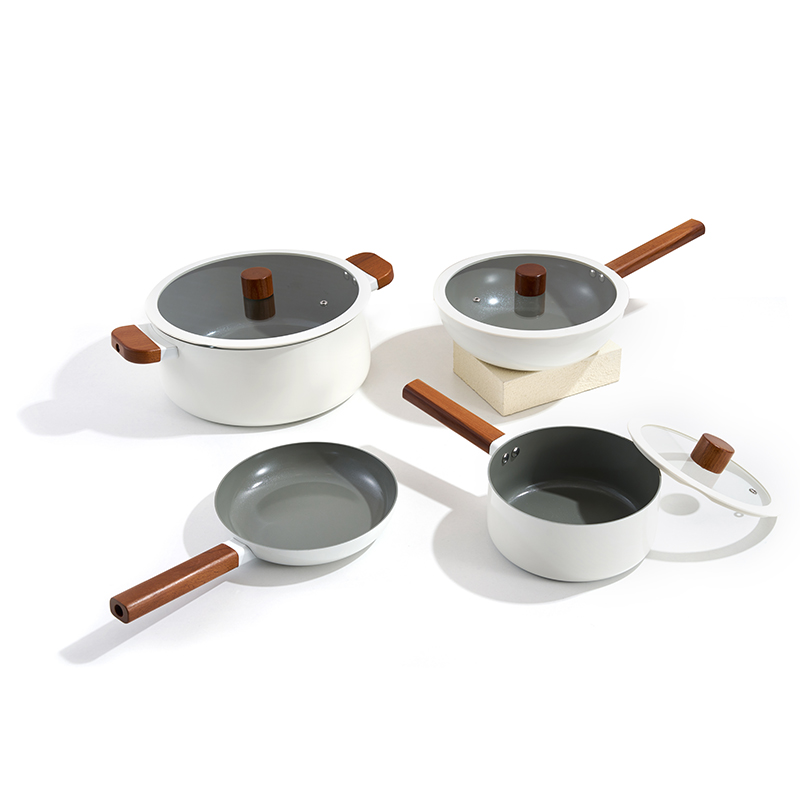
This cookware set has a ceramic non-stick inner liner, a heat-resistant wooden h...
See Details -
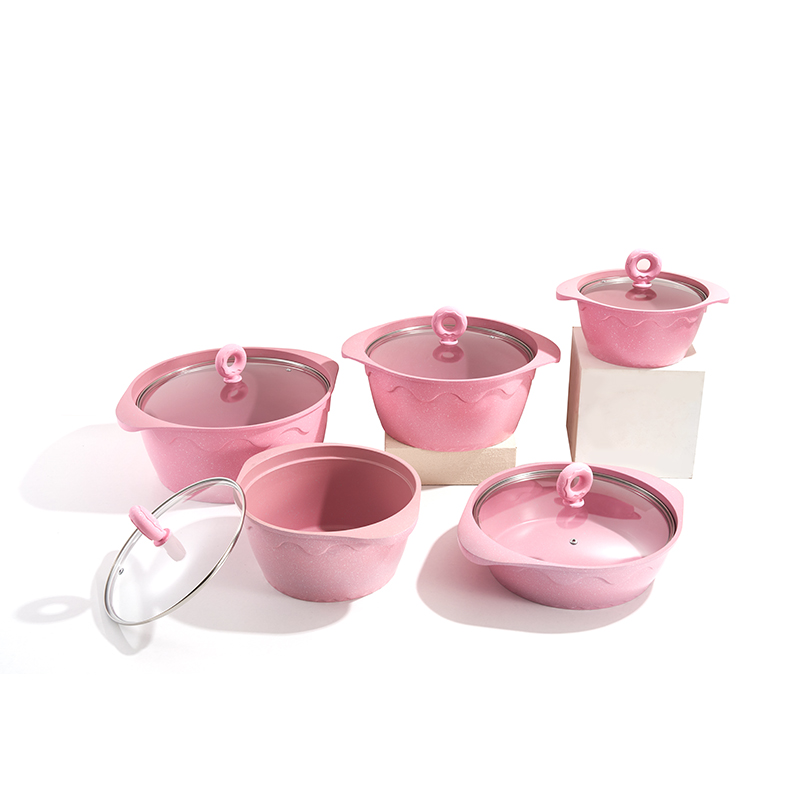
This cookware set is made of food-grade non-stick material, with a unique eye-ca...
See Details -
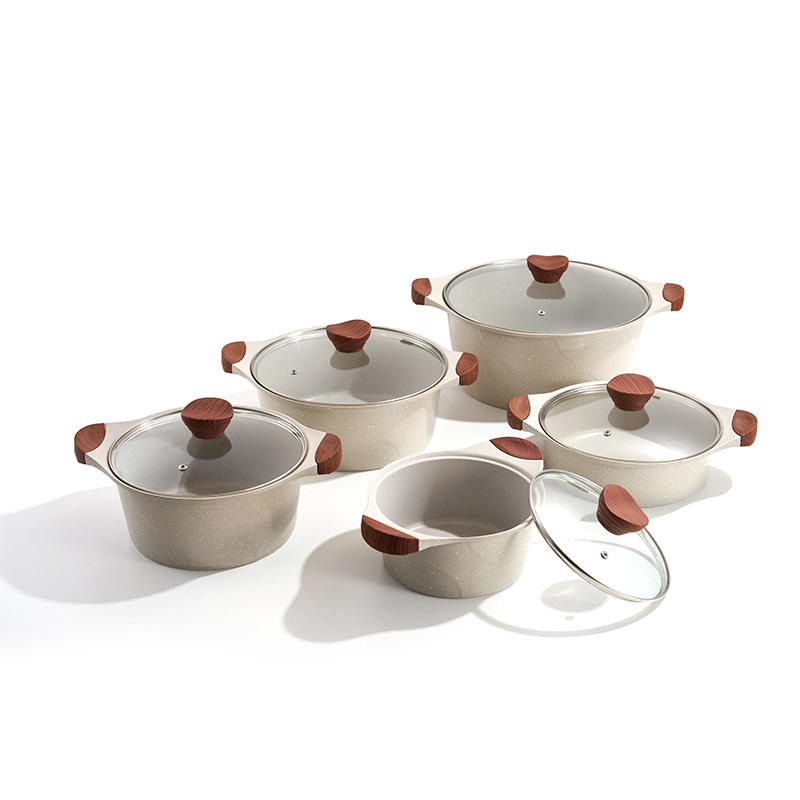
This off-white cookware set is made of wear-resistant non-stick material, with w...
See Details
Whether you're looking for bulk purchases or have any custom requirements, We are here to offer the best
solutions for you.
tiffany.zhong@echocn-trading.com
PHONE
+86-19561173975
+86-19557020621 (Hazel Wu)
ADD
Room 301, Unit 3014, No. 175 Qifeng Avenue, Wenqiao Town, Taizhou, Zhejiang, China
Fill Out the Form for More Information
Copyright © Zhejiang Echo Industry And Trade Co., Ltd.
All Rights Reserved.

China Cookware Set Manufacturer