
 en
 Español

This cookware set features a non-stick coating, even heat conduction, and multi-...
See Details
5-Piece Stainless Steel Cookware Set: Durable Performance for Modern Kitchens
Date:Sep 01, 2026
Introduction
A well-designed cookware set should do more than fill a kitchen cabinet. It should provide dependable heating, comfortable handling, practical capacity, easy maintenance, and long service life across everyday cooking tasks. The 5-Piece Stainless Steel Cookware Set With Glass Lid is developed around these requirements, combining durable 304 stainless steel construction with heat-resistant silicone handles and transparent glass lids.
This cookware set is suitable for households, rental properties, apartments, vacation homes, catering preparation areas, and hospitality buyers seeking a coordinated collection of essential cooking vessels. Its stainless steel construction offers a robust alternative to fragile or easily scratched non-stick cookware, while the handles are designed to provide a more secure and comfortable grip during stovetop cooking.
The set is also supported by the manufacturing and supply-chain capabilities of ECHO KITCHENWARE, a professional cookware supplier based in Zhejiang, China. The company provides stainless steel cookware, aluminum cookware, cast iron cookware, and kitchen utensils, together with OEM and ODM support, product certification assistance, flexible minimum order quantities, and one-stop sourcing services.
For buyers comparing cookware suppliers, the value of this product lies not only in its appearance. Its advantages are connected with material selection, practical product design, manufacturing consistency, customization support, and the ability to serve different market requirements. The result is a cookware solution that can be positioned for both household use and professional-oriented kitchen programs.
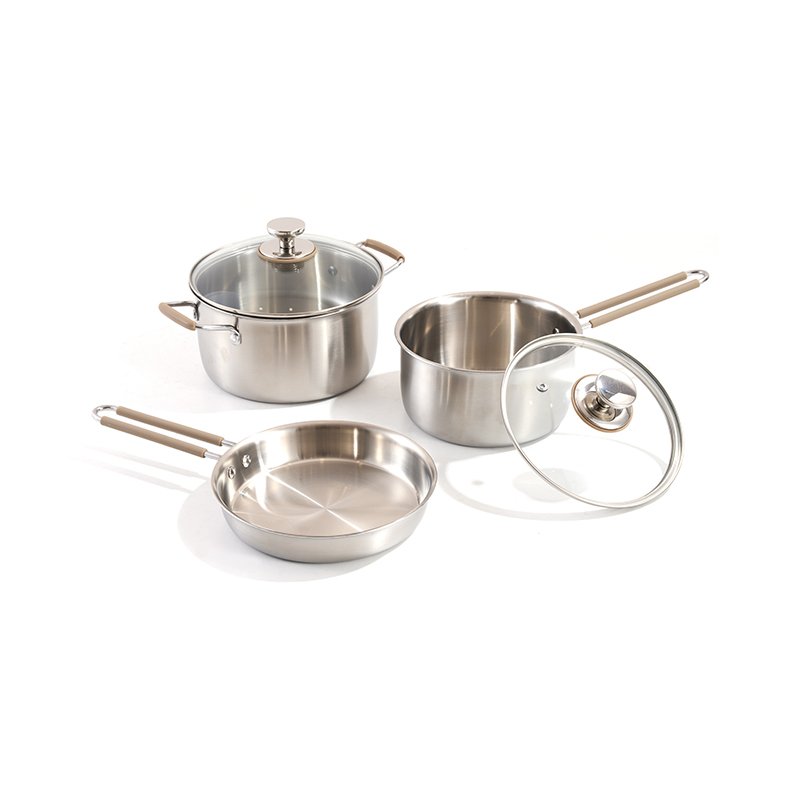
5pcs Stainless Steel Cookware Set With Glass Lid
Product Overview
The 5-Piece Stainless Steel Cookware Set With Glass Lid is designed as a compact but versatile cookware collection. It provides the essential vessels needed for boiling, simmering, reheating, preparing sauces, cooking grains, making soups, and handling smaller family meals.
The product is manufactured from 304 stainless steel. This material is widely used in cookware because it offers a strong balance between corrosion resistance, durability, food-contact suitability, and visual appeal. Compared with lower-grade or poorly finished steel, 304 stainless steel can provide improved resistance to staining and oxidation when properly formed, polished, cleaned, and maintained.
The cookware is intended to work with metal utensils according to the main product description because of its scratch-resistant stainless steel surface. However, the care instructions recommend wooden, nylon, or non-stick-safe utensils to preserve the finish and overall appearance for as long as possible. This recommendation is especially useful for retailers and end users who want the cookware to remain attractive after repeated use.
Silicone handles are included to improve grip comfort and help reduce heat transfer during normal stovetop cooking. Their non-slip surface is useful when lifting a warm saucepan, moving a pot across the cooking area, or pouring a prepared sauce. As with all heat-resistant handle materials, users should follow the relevant temperature limitations and avoid placing silicone-wrapped handles directly over an open flame or exposing them to unnecessary high heat.
The glass lids allow users to monitor cooking progress without repeatedly removing the lid. This can help retain heat and moisture during simmering, reduce unnecessary stirring, and make it easier to observe boiling, bubbling, and sauce reduction. A transparent lid is especially practical for foods that require controlled cooking, such as rice, pasta sauces, vegetables, soups, and delicate cream-based recipes.
The product range includes saucepan sizes of approximately 16 centimeters and 18 centimeters, with stockpot options in approximately 20, 22, and 24 centimeters. Exact combinations may vary by SKU, including WY01, WY02, and WY03. Buyers should confirm the selected configuration, lid arrangement, packaging, and dimensions before placing a production order.
Core Specifications
| Product Type | 5-Piece stainless steel cookware set with glass lid |
| Primary Material | 304 stainless steel |
| Handle Material | Heat-resistant silicone over a supporting handle structure |
| Available Saucepan Sizes | Approximately 16 centimeters and 18 centimeters |
| Available Stockpot Sizes | Approximately 20, 22, and 24 centimeters |
| Suitable Cooking Tasks | Boiling, simmering, reheating, sauces, grains, vegetables, soups, and daily meal preparation |
| Lid Type | Transparent glass lid |
| Recommended Cleaning | Hand washing with hot soapy water and a soft cloth or sponge |
| Available Services | OEM, ODM, sourcing support, certification assistance, and flexible MOQ options |
Why 304 Stainless Steel Matters
Material selection has a direct effect on cookware performance. Stainless steel is valued because it does not rely on a fragile surface coating to provide everyday usability. A properly made stainless steel vessel can withstand repeated stirring, boiling, washing, and storage without the peeling concerns associated with damaged coated surfaces.
304 stainless steel is an austenitic stainless steel grade commonly used in kitchen equipment, food-service products, and household utensils. Its chromium content contributes to corrosion resistance, while its nickel content helps support structural stability and resistance to many common food-related conditions. The exact performance of the finished cookware also depends on thickness, forming quality, surface treatment, base design, welding or riveting, and final inspection.
For buyers, the benefit of 304 stainless steel is consistency. A cookware supplier using a recognized food-contact material can establish clearer product specifications and more reliable quality-control procedures. This is important for importers, distributors, hospitality suppliers, and private-label brands that need repeatable production across multiple orders.
Stainless steel also provides a neutral visual foundation for branding. Its polished surface can be presented as modern, professional, and hygienic. It works well in contemporary kitchens, traditional kitchens, rental apartments, and commercial environments. The material can also be combined with colored silicone handles, printed packaging, customized logos, and coordinated kitchen utensils.
Another important advantage is longevity. The real value of stainless steel cookware is not simply its appearance when new. A well-made piece can remain useful for many years when it is not overheated, cleaned correctly, and stored carefully. This long service potential helps reduce replacement frequency and can make the product more attractive than low-cost cookware that warps, delaminates, or loses its finish after limited use.
Construction Advantages Over Lower-Cost Competitors
Not all stainless steel cookware performs in the same way. Products that appear similar in online photographs may differ significantly in steel grade, wall thickness, base construction, rim finishing, handle attachment, lid quality, and inspection standards.
Low-cost cookware often reduces material usage or simplifies manufacturing in ways that are not immediately visible. A thin body may heat quickly but distribute heat unevenly. A weakly formed rim may become uncomfortable to pour from or lose its shape after repeated use. A poorly attached handle may loosen over time. A lid with an imprecise fit may rattle, release too much steam, or fail to sit securely on the vessel.
The 5-Piece Stainless Steel Cookware Set is positioned as a more complete solution. Its 304 stainless steel body offers a durable foundation, while its practical size selection supports common cooking tasks. Silicone handles add grip comfort, and glass lids increase visibility during cooking. These features help distinguish the set from basic stainless steel collections that focus only on low purchase price.
A coordinated set also offers an advantage over buying unrelated pieces from different suppliers. Matching vessels create a consistent visual identity, simplify packaging, and make it easier for retailers to present a complete kitchen solution. For end users, coordinated sizes can improve cabinet organization and make lid storage more manageable.
The five-piece format is particularly useful for customers who want practical essentials without purchasing an oversized collection. Large cookware sets often include several pieces that are rarely used, increasing storage demands and product cost. A smaller set can appeal to first-time homeowners, college graduates, couples, empty nesters, apartment residents, and customers furnishing a second home.
At the same time, the set can serve as the foundation of a broader cookware collection. Customers may later add a skillet, sauté pan, larger stockpot, steamer insert, kitchen utensils, or cast iron product. This creates opportunities for distributors to develop product families rather than selling one isolated item.
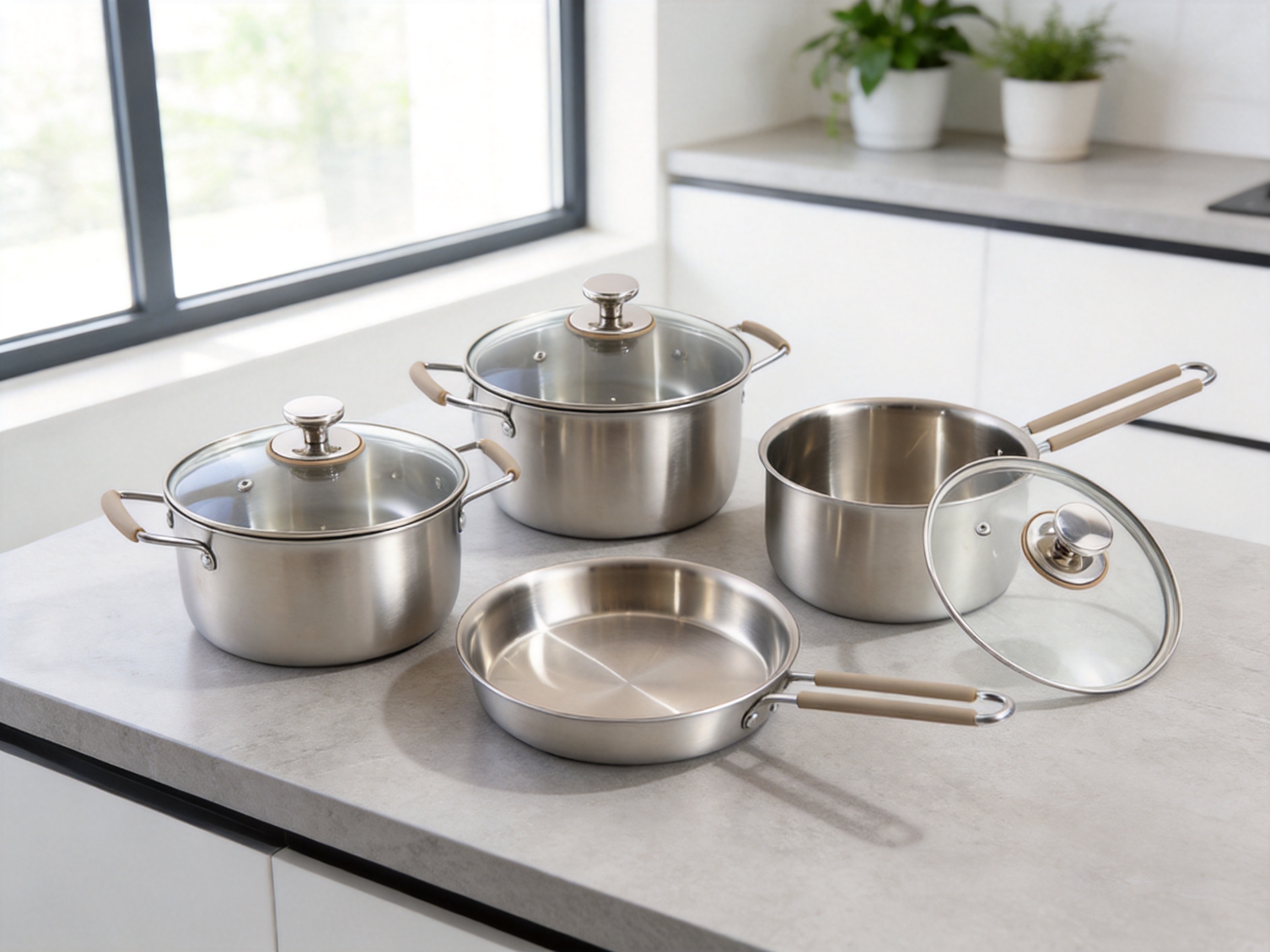
Practical Cooking Performance
Stainless steel cookware is valued for its ability to handle a broad range of cooking techniques. The smaller saucepan is appropriate for warming milk, melting butter, preparing sauces, boiling eggs, cooking a small portion of grains, or reheating leftovers. A medium saucepan offers additional capacity for pasta sauce, vegetables, oatmeal, rice, and soup.
The stockpot options provide greater volume for family meals and meal preparation. Depending on the selected size, users can prepare broth, noodles, potatoes, steamed vegetables, stews, and other liquid-based dishes. The range of 20, 22, and 24 centimeters provides flexibility for different households and market preferences.
Glass lids improve cooking control. Users can watch the contents without lifting the lid, helping reduce heat loss and unnecessary evaporation. This is useful when maintaining a low simmer, checking whether water has reached a boil, or monitoring the consistency of a sauce.
The cookware is suitable for standard stovetop preparation, subject to the final product specification and the compatibility of the selected cooking surface. Users should keep the flame or heat source within the base area rather than allowing it to extend up the sides. This protects the handles, reduces unnecessary discoloration, and helps maintain stable cooking conditions.
Stainless steel is especially useful for foods that benefit from controlled browning, deglazing, and reduction. Although stainless steel requires different heat management from non-stick cookware, it can provide a durable cooking surface for users who appreciate traditional pan techniques. Preheating, using suitable oil, and avoiding excessive heat are important for achieving good results.
The product should not be overheated while empty. Empty cookware can become extremely hot in a short time, which may cause discoloration, damage to handles, or distortion of components. If severe overheating occurs, the cooker should be turned off and the cookware allowed to cool completely before handling or cleaning.
Handle Design and User Safety
Cookware handles are more than decorative components. Their shape, attachment method, insulation, balance, and distance from the cooking surface all influence user confidence and safety.
The silicone handles on this cookware set are designed to provide a softer, more secure grip than bare metal. Silicone can remain more comfortable to hold during normal stovetop use because it slows heat transfer compared with exposed stainless steel. Its textured or flexible surface can also help reduce slipping when the user is moving a warm vessel.
However, heat resistance does not mean unlimited heat tolerance. Silicone handles should not be treated as suitable for every oven, broiler, grill, or open-flame application. Buyers should confirm the final temperature rating and oven-use instructions for the specific production model. For stovetop-focused cookware, silicone handles can provide an excellent balance between comfort and practicality.
Good handle design should also provide sufficient clearance from the burner and vessel rim. This reduces the chance of accidental contact with hot surfaces and creates space for a stable grip. During product development, handle angle, mounting position, wall thickness, and the center of gravity should be reviewed together rather than treated as separate details.
For private-label and OEM customers, handle color is another customization opportunity. Black, gray, red, blue, green, and other colors can be selected to match a brand identity or retail collection. Surface texture and logo placement may also be discussed, subject to tooling and order requirements.
Glass Lid Functionality
A glass lid transforms a standard pot into a more convenient cooking tool. The user can observe the food while retaining much of the heat and moisture inside the vessel. This reduces the need to lift the lid repeatedly, which can interrupt cooking and extend preparation time.
Clear lids are particularly useful for inexperienced cooks because they provide visual feedback. Users can see whether pasta water is boiling, whether vegetables are simmering, or whether a sauce is beginning to reduce. More experienced cooks also benefit from the ability to monitor cooking without disturbing the contents.
Lid quality depends on more than glass clarity. The glass must be formed and finished properly, the rim should be compatible with the cookware opening, and the handle should be securely attached. The lid should sit stably during ordinary use and should be cleaned without sudden thermal shock.
Users should avoid placing a hot glass lid directly onto a very cold or wet surface. Sudden temperature changes can stress glass. It is also recommended to allow the lid to cool before washing it with cold water. These basic practices can help preserve the lid and reduce avoidable damage.
For wholesale buyers, the lid is an important part of the total product presentation. A set photographed with clear lids can communicate completeness and usability more effectively than a collection of uncovered pots. Packaging should protect the glass during transportation with suitable separation, cushioning, and drop-resistance testing.
Manufacturing Process and Quality Focus
Advanced cookware manufacturing is a sequence of controlled processes rather than a single production step. The quality of the final set depends on how well the supplier manages material sourcing, forming, trimming, polishing, component assembly, inspection, packaging, and shipment.
Material Preparation
Production begins with stainless steel sheet or coil that meets the agreed material specification. For this product, 304 stainless steel is the stated primary material. Incoming materials should be checked for surface condition, thickness, identification, and consistency before entering the forming process.
Material control is important because variations in thickness or surface quality can affect forming performance, visual appearance, vessel weight, and heat response. A professional supplier should maintain production records and use approved material sources to support stable repeat orders.
Deep Drawing and Forming
Cookware bodies are commonly formed through stamping or deep-drawing processes. During forming, flat stainless steel material is shaped into a cylindrical or rounded vessel. The process must be controlled to prevent excessive thinning, wrinkles, cracks, uneven walls, or deformation around the base and rim.
Tooling precision is essential. Molds and dies influence the vessel diameter, depth, curvature, and compatibility with lids. Proper lubrication, press settings, material preparation, and staged forming can improve consistency across large production quantities.
For cookware sold in several sizes, each model requires careful tooling coordination. The 16-centimeter and 18-centimeter saucepan options, along with the 20-, 22-, and 24-centimeter stockpot options, must maintain consistent proportions and compatible lid dimensions within the selected configuration.
Rim Processing
The rim is a highly visible and functional area. It should be smooth, even, and free from sharp edges. A well-finished rim improves pouring comfort, supports a better lid fit, and reduces the risk of cuts during handling or washing.
Rim rolling, trimming, polishing, and inspection should be performed with attention to dimensional accuracy. Small deviations may cause a lid to sit unevenly or create gaps that affect cooking performance. For this reason, rim inspection should form part of both in-process and final quality checks.
Base and Heat Distribution
Heat distribution is one of the most important differences between basic and premium cookware. A thin vessel with limited base engineering may develop hot spots, while a carefully designed base can spread heat more evenly across the cooking surface.
High-end cookware commonly uses layered construction, such as stainless steel combined with aluminum or copper. The supplied product information emphasizes that premium cookware often differs from budget lines through layer construction, rim design, and handle attachment. Buyers should confirm the exact base construction of the selected SKU before making technical or marketing claims about multilayer performance.
Where a layered base is included, the bonding process must be controlled to prevent separation, distortion, or uneven contact with the stovetop. Flatness testing is important because a warped base can reduce stability and heat transfer. The base should sit securely on a flat surface without rocking.
Surface Finishing
Stainless steel cookware may receive a polished, brushed, satin, or mirror-like finish. Each finish has a different visual character and maintenance profile. A polished surface creates a bright, premium appearance, while a brushed finish can make minor marks less noticeable.
Finishing operations may include grinding, buffing, polishing, cleaning, and surface inspection. Consistency is important for private-label programs because differences in brightness or texture between production batches can weaken brand presentation.
Surface finishing must also be managed carefully around seams, rims, handle mounts, and base transitions. Uneven polishing can leave visible lines, while excessive grinding may reduce material thickness. A professional production system balances appearance with structural integrity.

Handle Assembly
Handle assembly is a critical stage because the handle must remain stable under repeated lifting and movement. Depending on the product structure, handles may be attached by riveting, welding, screws, or other approved methods. The final attachment design should be evaluated for strength, alignment, cleanability, and resistance to loosening.
The silicone exterior must be properly formed over or integrated with the supporting structure. It should have a consistent surface, secure fit, and clean edges. Inspection should look for cuts, tears, bubbles, incomplete coverage, discoloration, and movement between the silicone and the internal handle.
Handle attachment also affects packaging efficiency. Handles that project too far may increase carton size or create pressure points during transportation. Coordinating handle geometry with nesting design can reduce shipping volume while maintaining user comfort.
Glass Lid Processing
Glass lids require their own quality-control procedures. The glass should be inspected for cracks, chips, scratches, sharp edges, and unacceptable distortion. The metal or silicone rim, if present, should be properly aligned and firmly secured.
Lid handles should be checked for stability and heat resistance according to the agreed specification. Packaging must prevent lids from striking one another or shifting against the cookware during transport. Drop testing, vibration testing, and carton inspection can help identify weaknesses before shipment.
Cleaning and Final Inspection
After forming, polishing, and assembly, cookware should be cleaned to remove manufacturing residues, polishing compounds, dust, and handling marks. Final inspection should cover appearance, dimensions, lid fit, handle attachment, surface cleanliness, base flatness, and packaging condition.
Quality-control checkpoints may be established at incoming material inspection, forming, rim processing, base assembly, handle attachment, polishing, final assembly, and pre-shipment inspection. This staged approach is more effective than relying only on a final visual check.
Supplier Strengths and Manufacturing Support
ECHO KITCHENWARE is positioned as a professional supplier serving buyers who need more than a standard catalog product. Its product scope includes aluminum cookware, stainless steel cookware, cast iron cookware, and kitchen utensils. This broad category coverage allows customers to source multiple product types through one supply relationship.
One-stop sourcing can simplify communication, sample management, packaging coordination, documentation, and shipment planning. Instead of coordinating separate suppliers for pots, pans, utensils, and related accessories, a buyer can explore a more unified product program.
The company also provides OEM and ODM customization. OEM services may include logo application, packaging design, color selection, label development, and agreed product specifications. ODM cooperation can involve adapting an existing design, refining handle details, developing a coordinated product family, or creating a product aligned with a specific market segment.
Flexible MOQ support is valuable for small and medium-sized buyers. New brands often need to test a product before committing to very large quantities. Retailers may require smaller runs for seasonal programs, regional launches, online campaigns, or limited color editions. MOQ terms depend on product complexity, packaging, customization, and material requirements, but flexibility can reduce the barrier to market entry.
Certification assistance is another important supplier capability. Different destinations may require different documents, testing reports, labeling formats, packaging information, and food-contact declarations. A supplier that understands these requirements can help buyers organize the appropriate documentation and coordinate testing where necessary.
The company’s location in Zhejiang provides access to an established manufacturing and export environment. Zhejiang is widely recognized for industrial production, component sourcing, logistics networks, and international trade. This ecosystem can support the development of cookware collections and kitchen accessory programs for overseas customers.
For repeat buyers, supply-chain reliability is closely connected with communication. Clear product specifications, approved samples, inspection standards, packaging drawings, and change-control procedures help reduce misunderstandings. A professional supplier should be able to discuss these elements before mass production begins.
Product Development for Different Markets
The same cookware set may be marketed differently in different regions. In compact urban markets, the emphasis may be on space-saving storage, practical sizes, and suitability for small households. In hospitality markets, buyers may focus on durability, coordinated appearance, replacement availability, and ease of cleaning.
For online retailers, product photography and clear specifications are especially important. Customers need to understand the number of pieces, vessel dimensions, lid compatibility, handle material, care instructions, and intended cooking applications. Accurate descriptions can reduce returns and improve buyer confidence.
For supermarkets and department stores, packaging must communicate the product’s value quickly. The package may highlight 304 stainless steel, glass lids, heat-resistant handles, practical sizes, and the main cooking applications. The final claims should always match the verified product specification.
For hospitality and catering distributors, the set can be positioned as a compact household or guest-kitchen solution rather than a complete heavy-duty commercial range. The five-piece format is useful where storage is limited or where a consistent starter collection is required.
For private-label brands, the product can become part of a broader kitchen identity. Matching frying pans, utensils, cutting boards, storage products, and cast iron items can be developed around a common color, logo, packaging system, and design language.
Care and Maintenance
Proper care helps preserve the appearance and function of stainless steel cookware. The cookware should be washed before first use. Hand washing is recommended when the buyer wants to maintain the appearance of the surface and silicone components.
For routine cleaning, use hot soapy water with a soft cloth or sponge. Food residue should be soaked rather than removed through aggressive scraping. Abrasive pads, harsh powders, and sharp tools may create scratches or dull the surface.
Although stainless steel is durable and can tolerate many utensils, wooden, nylon, or non-stick-safe utensils are recommended for regular use. These materials help reduce unnecessary marks and are suitable for stirring, turning, and serving most foods.
Do not overheat an empty pot or saucepan. Excessive heat can cause rainbow-like discoloration, especially when proteins, minerals, or residue are exposed to high temperatures. Such discoloration is generally an oxide layer rather than a sign that the cookware has become unsafe, but it can affect appearance.
White vinegar or a specialized stainless steel cleaner can often help remove rainbow stains and mineral marks. The cleaner should be used according to its instructions, followed by thorough rinsing and drying. Users should avoid mixing cleaning chemicals.
Do not use the cookware in a microwave. Keep flames or other heat sources within the base of the vessel and away from the sidewalls and handles. If the cookware becomes severely overheated, turn off the cooker and allow the item to cool completely before touching or cleaning it.
Dishwasher use may be technically possible for some stainless steel cookware, but repeated dishwasher cycles can dull polished surfaces and affect exposed components. Hand washing is the preferred method for preserving the original appearance. Buyers should confirm dishwasher guidance for the exact model before printing care instructions on packaging.
Everyday Uses of a Five-Piece Set
A compact cookware collection can cover a surprising number of daily cooking tasks. The small saucepan is useful for breakfast preparation, reheating, melting, and small portions. The medium saucepan can handle rice, grains, vegetables, soups, pasta sauce, and side dishes.
The larger pot options are suitable for family cooking, boiling pasta, preparing soup, cooking potatoes, and making portions for meal preparation. A transparent lid makes it easier to control simmering and reduce the risk of boiling over.
For apartment residents, the set can provide a practical foundation without filling an entire cabinet. The vessels can often be nested or arranged by size, subject to the handle and lid design. Buyers should verify the nesting arrangement for their selected SKU to ensure that the intended storage benefit is achieved.
For first homes, the set provides a useful starting point. New cooks can prepare simple meals without purchasing multiple unrelated pans. Additional items, such as a skillet or larger stockpot, can be added later as cooking habits develop.
For vacation homes and rental properties, a coordinated set creates a more professional kitchen presentation. Durable stainless steel is also easier to maintain across repeated guest use than delicate cookware surfaces that require highly specific handling.
For empty nesters and smaller households, the set supports moderate portions without requiring a large cookware inventory. Its compact format can be more convenient for users who are reorganizing their kitchens or reducing unnecessary household items.
However, the set is not intended to replace every type of cookware. Customers preparing large holiday meals, whole seafood, substantial batches of stock, or very large quantities may need an additional eight-quart stockpot, roasting pan, sauté pan, or specialized skillet.
Competitive Positioning
The product can be positioned between entry-level cookware and highly specialized premium cookware. It offers material and usability features that are more substantial than many basic sets while remaining compact and accessible for everyday consumers.
Its main competitive advantages include 304 stainless steel construction, a coordinated five-piece format, glass-lid visibility, silicone grip comfort, multiple size options, and supplier support for customization. These features create several sales points without relying on exaggerated performance claims.
Compared with coated cookware, stainless steel offers a different ownership experience. It does not depend on a coating that may eventually wear through normal use. It can be suitable for buyers who prefer a long-lasting metal surface and who are willing to learn appropriate heat and cleaning techniques.
Compared with inexpensive thin stainless steel sets, the product can compete through its combination of finish, handle design, lid functionality, and quality-control support. The precise competitive advantage will depend on the final thickness, base structure, packaging, and inspection level selected by the buyer.
Compared with large ten-piece or twelve-piece sets, the five-piece format is easier to store and may represent better value for customers who prefer essential cookware rather than unused accessories. It also enables retailers to offer a lower entry price while maintaining a coordinated appearance.

Quality Assurance Checklist for Buyers
Wholesale and private-label buyers should evaluate more than product photographs. Before confirming mass production, they should request a sample and review the actual cookware body, lid fit, handle comfort, surface finish, base flatness, and packaging quality.
Material documentation should identify the stainless steel grade and any additional materials used in the base, handles, lid rims, and packaging. If the product is marketed as multilayer or induction-compatible, those characteristics should be confirmed in writing for the exact SKU.
Dimensional checks should include vessel diameter, height, capacity, rim diameter, handle position, lid fit, and nesting arrangement. Tolerances should be agreed before production so that both supplier and buyer share the same expectations.
Functional checks may include stability on a flat surface, handle pull strength, lid movement, surface inspection, cleaning assessment, and controlled heating tests. Testing requirements may vary according to the destination market and the buyer’s internal standards.
Packaging checks should confirm carton dimensions, inner protection, labeling, barcode placement, product count, and resistance to ordinary transport conditions. Glass lids require particular attention because a visually attractive product is not commercially successful if breakage occurs during shipment.
For repeat orders, an approved golden sample or sealed reference sample can help control production consistency. Any changes to steel thickness, handle tooling, lid components, polishing method, or packaging should be communicated and approved before implementation.
Q&A
What material is used for the cookware set?
The product is specified as 304 stainless steel cookware. The exact material composition and any additional base layers should be confirmed for the selected SKU and documented in the purchase specification.
What does the five-piece set include?
The product is presented as a five-piece cookware set with glass lids. Available product information lists saucepan sizes of approximately 16 and 18 centimeters and stockpot options of approximately 20, 22, and 24 centimeters. Because combinations may vary by SKU, buyers should confirm the exact piece configuration before ordering.
Are the handles heat resistant?
The handles are made with heat-resistant silicone and are designed to provide a comfortable, non-slip grip during normal stovetop use. They should not be exposed unnecessarily to direct flame, broiler heat, or temperatures beyond the verified product rating.
Can metal utensils be used?
The stainless steel surface is durable and scratch resistant, but the care guidance recommends wooden, nylon, or non-stick-safe utensils to help preserve the cookware’s appearance. Buyers should use the care instructions supplied with the final production model.
Can the cookware be used in a microwave?
No. Stainless steel cookware should not be used in a microwave.
Is the cookware dishwasher safe?
Some stainless steel cookware may technically tolerate dishwasher cleaning, but repeated dishwasher use can dull the finish and affect exposed components. Hand washing with hot soapy water and a soft cloth or sponge is recommended to preserve appearance.
Why can stainless steel cookware develop rainbow stains?
Rainbow-like discoloration can occur when stainless steel is overheated or exposed to minerals and cooking residue. These oxide layers are generally harmless. White vinegar or a suitable stainless steel cleaner may help remove them when used correctly.
Is stainless steel cookware suitable for professional kitchens?
The material and durable design are appropriate for many professional-oriented cooking environments, but the exact suitability depends on the selected construction, thickness, base design, handle rating, local regulations, and operating conditions. Buyers should request technical confirmation for commercial applications.
Can the product be customized?
Yes. ECHO KITCHENWARE offers OEM and ODM services. Potential customization may include logos, handle colors, packaging, product combinations, and coordinated kitchenware collections, subject to design review, tooling, minimum order quantities, and production requirements.
Can the supplier assist with certifications?
The company provides product certification assistance. Requirements vary by destination, retailer, and product category, so buyers should identify their target market early and confirm the required tests, documents, labels, and declarations.
Is this set suitable for small kitchens?
Yes. The five-piece format is intended to provide essential cookware while reducing cabinet space compared with larger sets. The exact nesting and storage arrangement should be checked for the selected model.
What cooking tasks does the set handle best?
The set is suitable for boiling, simmering, reheating, preparing sauces, cooking rice and grains, making soup, preparing vegetables, and handling everyday meals for individuals, couples, and small families.
Does the set replace a large stockpot or skillet?
No. It is a compact essential cookware collection. Customers who prepare large quantities, whole seafood, holiday meals, or high-volume fried foods may require additional specialized cookware.
Why Choose a Specialized Cookware Supplier
Working with a supplier focused on kitchenware can provide advantages beyond purchasing a single finished product. A specialized supplier understands the relationship between material selection, tooling, component sourcing, surface treatment, packaging, and end-user expectations.
For buyers developing a cookware range, this knowledge can shorten product-development cycles. Instead of starting with a generic product and discovering technical issues late in the process, the buyer can discuss design details, target markets, performance requirements, and packaging expectations earlier.
A supplier with multiple product categories can also support collection building. Stainless steel cookware may be combined with aluminum pieces for lighter cooking, cast iron items for high-heat applications, and kitchen utensils for a complete assortment. This can increase order efficiency and help a brand present a consistent kitchen solution.
Customization support is particularly important in competitive retail markets. Product appearance, package structure, colors, logo treatment, and product storytelling can influence consumer choice. ECHO KITCHENWARE’s OEM and ODM capabilities give buyers a route to develop products that reflect their own market positioning rather than relying entirely on unbranded catalog items.
Flexible service is also helpful for small and medium-sized businesses. These buyers may need assistance with sample development, specification confirmation, certification coordination, carton design, and shipment planning. A responsive supplier can make the process more manageable from initial inquiry through repeat production.
Conclusion
The 5-Piece Stainless Steel Cookware Set With Glass Lid combines durable 304 stainless steel construction with practical sizes, heat-resistant silicone handles, and transparent lids. It is designed for the everyday cooking tasks that occupy most household kitchens, including boiling, simmering, reheating, preparing sauces, cooking grains, making soups, and preparing vegetables.
Its compact five-piece format offers a practical alternative to oversized cookware collections. It can serve apartments, starter kitchens, vacation homes, rental properties, smaller households, and customers who want dependable cookware without unnecessary pieces.
The product’s competitive value comes from its complete design approach. Material selection, handle comfort, lid visibility, coordinated sizing, surface finish, and manufacturing consistency all contribute to the final user experience. Buyers should nevertheless confirm exact details such as base construction, oven suitability, dishwasher guidance, capacity, and SKU configuration before making product claims.
Behind the product is a supplier offering broader manufacturing and sourcing support. ECHO KITCHENWARE provides stainless steel cookware and other kitchenware categories, together with OEM and ODM customization, certification assistance, flexible MOQ options, and one-stop product development. These capabilities can help importers, distributors, retailers, hospitality suppliers, and private-label brands build reliable cookware programs.
When properly specified, inspected, packaged, and maintained, this cookware set can provide a durable and commercially attractive kitchen solution. Its combination of stainless steel strength, user-friendly details, compact versatility, and supplier support makes it suitable for buyers seeking a balance between everyday practicality and professional-oriented quality.
References
1. ASTM International. Standard terminology and general guidance relating to stainless steel materials and products.
2. Association of Home Appliance Manufacturers. General consumer guidance for safe cookware use and care.
3. Food and Agriculture Organization. Principles concerning food-contact materials and hygienic food preparation equipment.
4. International Organization for Standardization. Quality-management principles for manufacturing and supply-chain control.
5. U.S. Food and Drug Administration. General guidance concerning materials intended for food-contact applications.
6. European Committee for Standardization. General considerations for household cookware safety and performance testing.
7. Manufacturer-provided product specifications and care instructions for the 5-Piece Stainless Steel Cookware Set With Glass Lid.
Product: 5pcs Stainless Steel Cookware Set With Glass Lid
Recommended Articles
Product Category
Related products
-
-
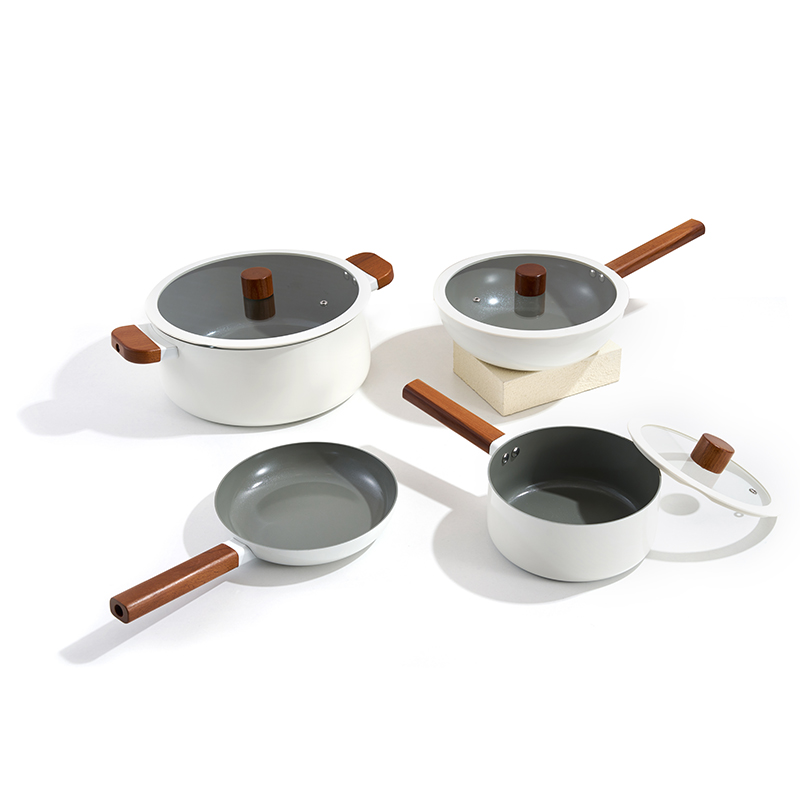
This cookware set has a ceramic non-stick inner liner, a heat-resistant wooden h...
See Details -
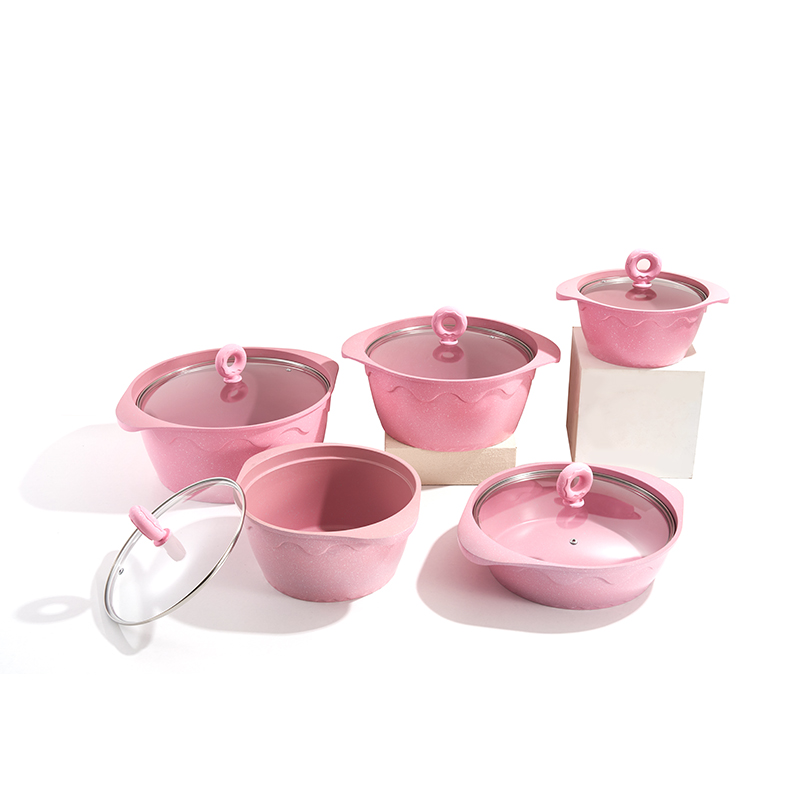
This cookware set is made of food-grade non-stick material, with a unique eye-ca...
See Details -
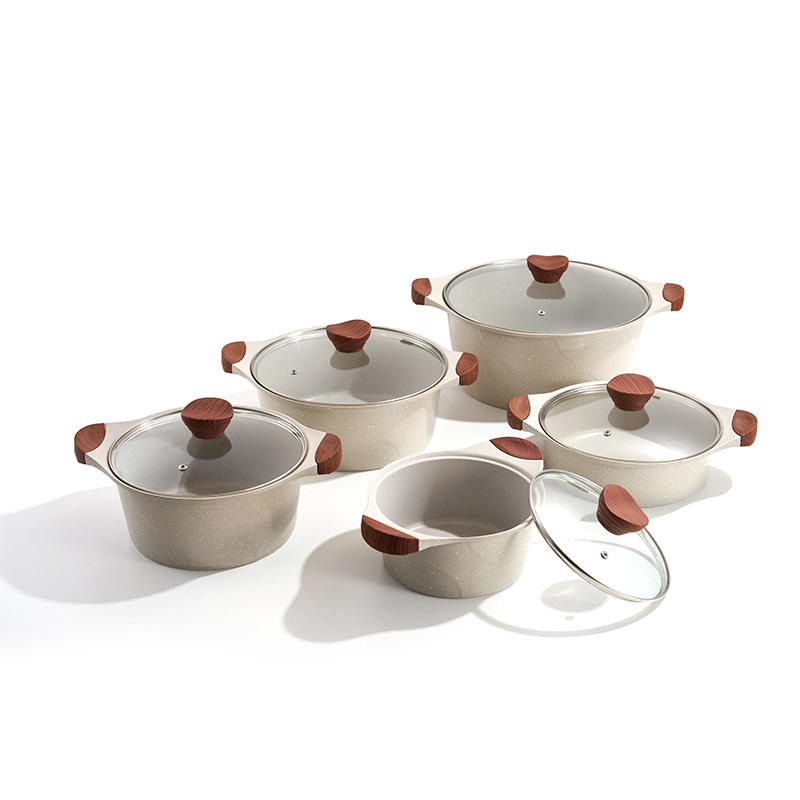
This off-white cookware set is made of wear-resistant non-stick material, with w...
See Details
Whether you're looking for bulk purchases or have any custom requirements, We are here to offer the best
solutions for you.
tiffany.zhong@echocn-trading.com
PHONE
+86-19561173975
+86-19557020621 (Hazel Wu)
ADD
Room 301, Unit 3014, No. 175 Qifeng Avenue, Wenqiao Town, Taizhou, Zhejiang, China
Fill Out the Form for More Information
Copyright © Zhejiang Echo Industry And Trade Co., Ltd.
All Rights Reserved.

China Cookware Set Manufacturer